Hannah Wove Curtains While Tobit Sat Blind in Nineveh
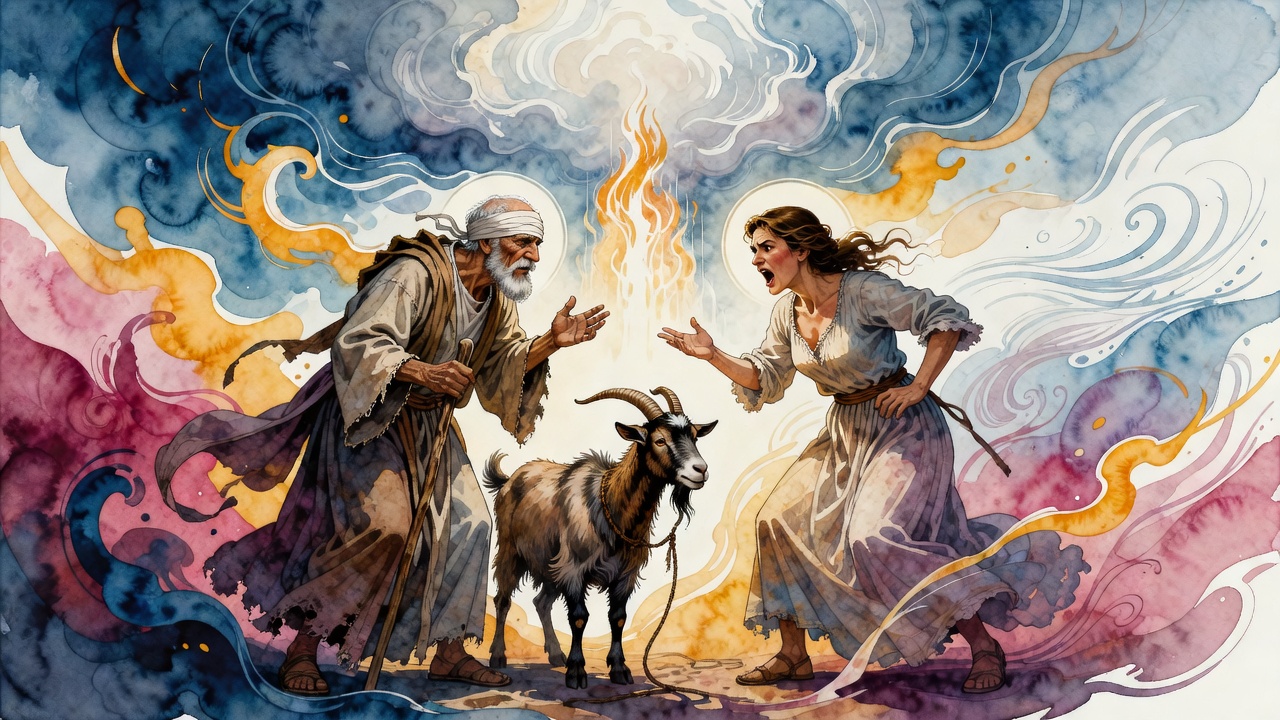
A kid cried in their house in Nineveh. Blind Tobit called it stolen. Hannah asked him where all his charities had gone.
Table of Contents
The kid cried in the dark of the house. Hannah had carried it home from her work, a live payment on top of her wages. Tobit sat where the light no longer reached him. He heard the animal and named it stolen before anyone could explain.
 Click for full size
"Give it back," he said. "Take it to its owners."
She told him it was a gift. He would not hear it. He kept pressing. Restore it. Restore it. The house in Nineveh was small, and the crying filled every corner of it.
A Wife From His Own Family
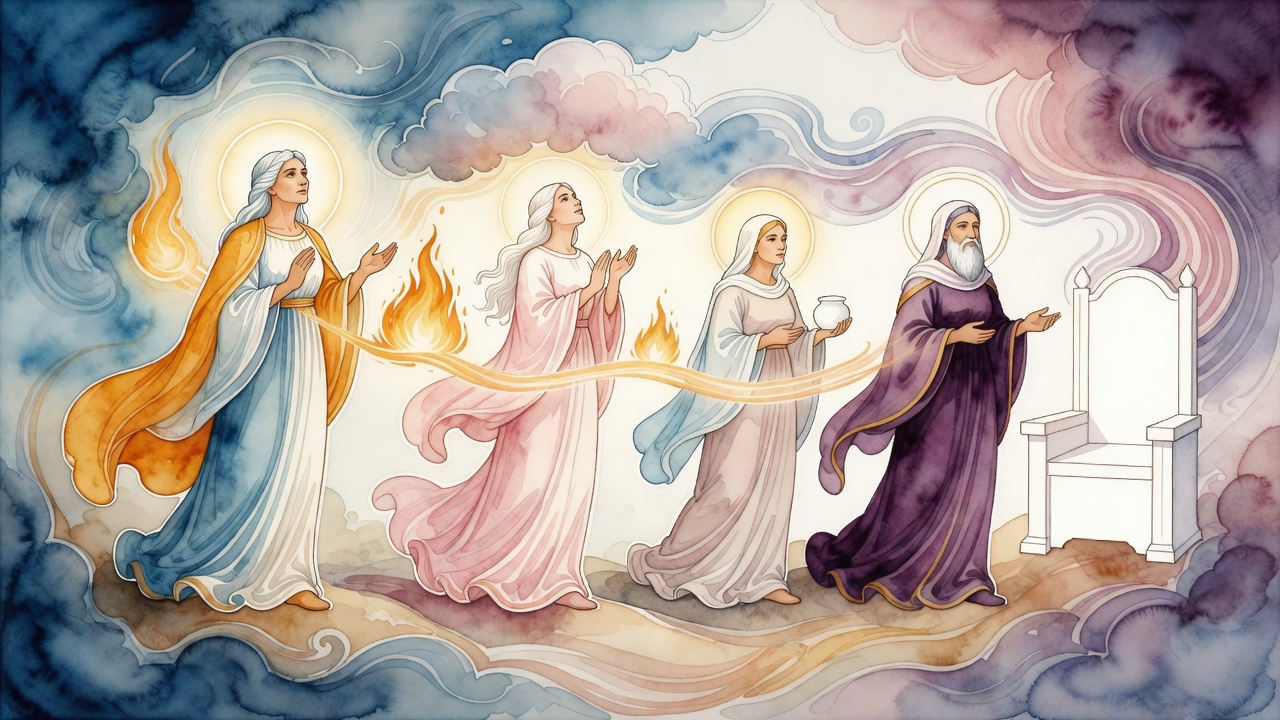
Years before the kid, before the blindness, he had taken a wife from his own family. He wrote it later in a single line, as if a marriage were a door you name and then walk through. Her name was Hannah. She bore him a son, and he called the boy Tobias.
Then the exile took them. He was carried captive from the land of Naphtali to Nineveh, the great city of Assyria. His kinsmen ate the bread of the nations. He would not. He feared God and kept himself from their food, and God gave him favor in the eyes of Shalmaneser, who set him over the royal accounts until that king died.
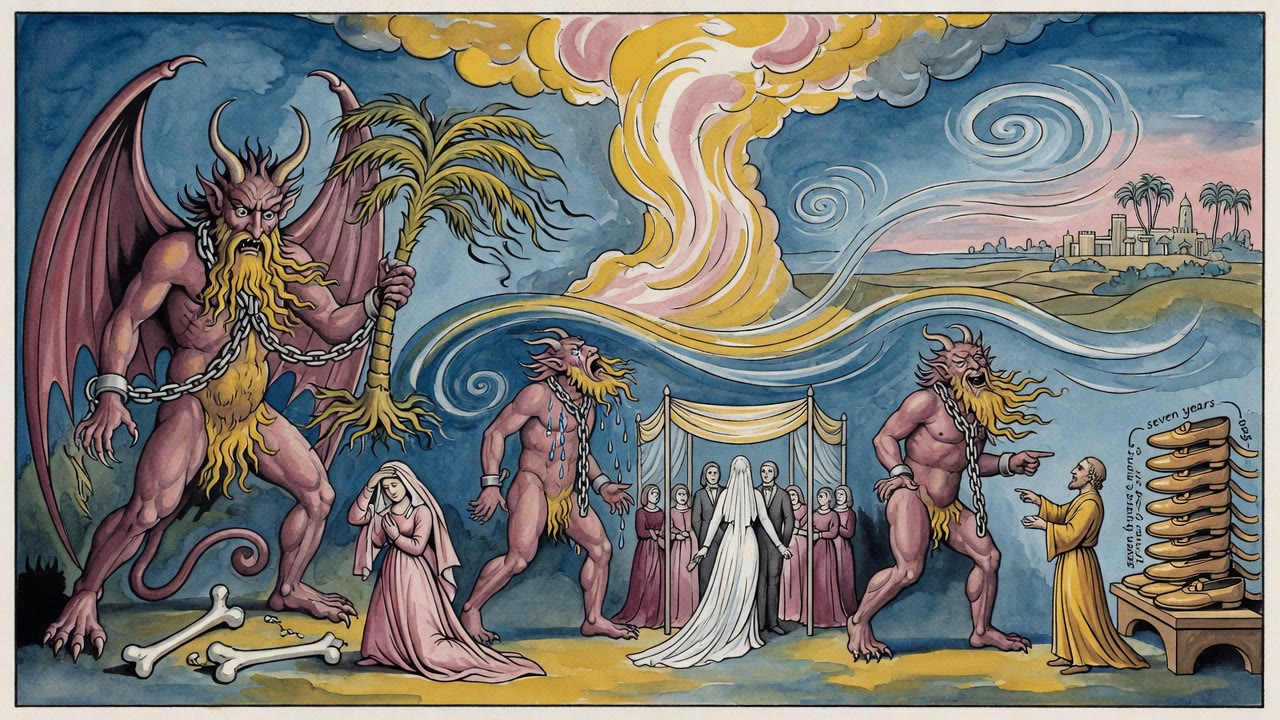
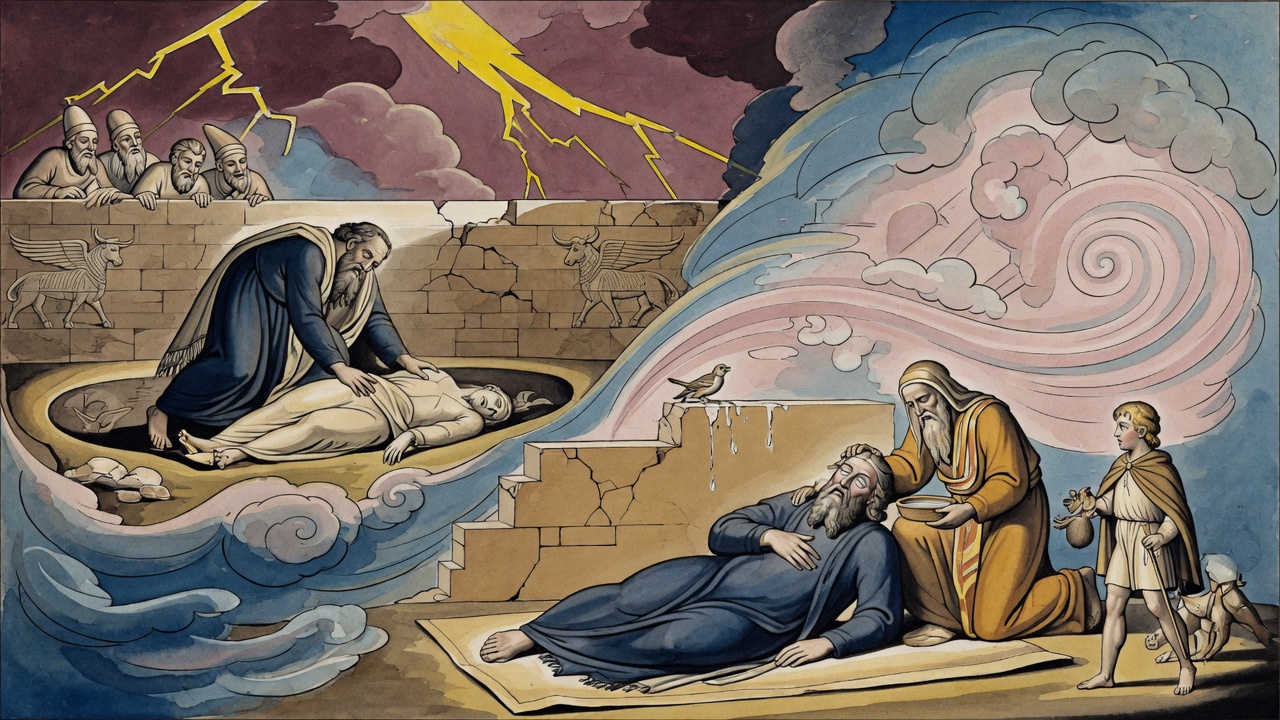
He placed ten talents of silver in the hand of his kinsman Gabael in Media, a store for a later day. He buried Israelites who had been thrown in the street. When Sennacherib came to the throne, that burial became a death sentence. Tobit hid. He slept against a wall. Sparrows nested above him. Their droppings fell into his eyes, and a white film closed over his sight.
Sparrows Left Him Blind
The court work ended with the eyes. The silver in Media might as well have been on the far side of the world. He could not travel. He sat. He prayed. He directed Tobias in almsgiving and in the duty of burial, the same duty that had already cost him a king's favor and then his sight.
Hannah did not sit. The household still needed bread. Exile did not pause because a righteous man had gone dark.
She Wove Curtains for Wages
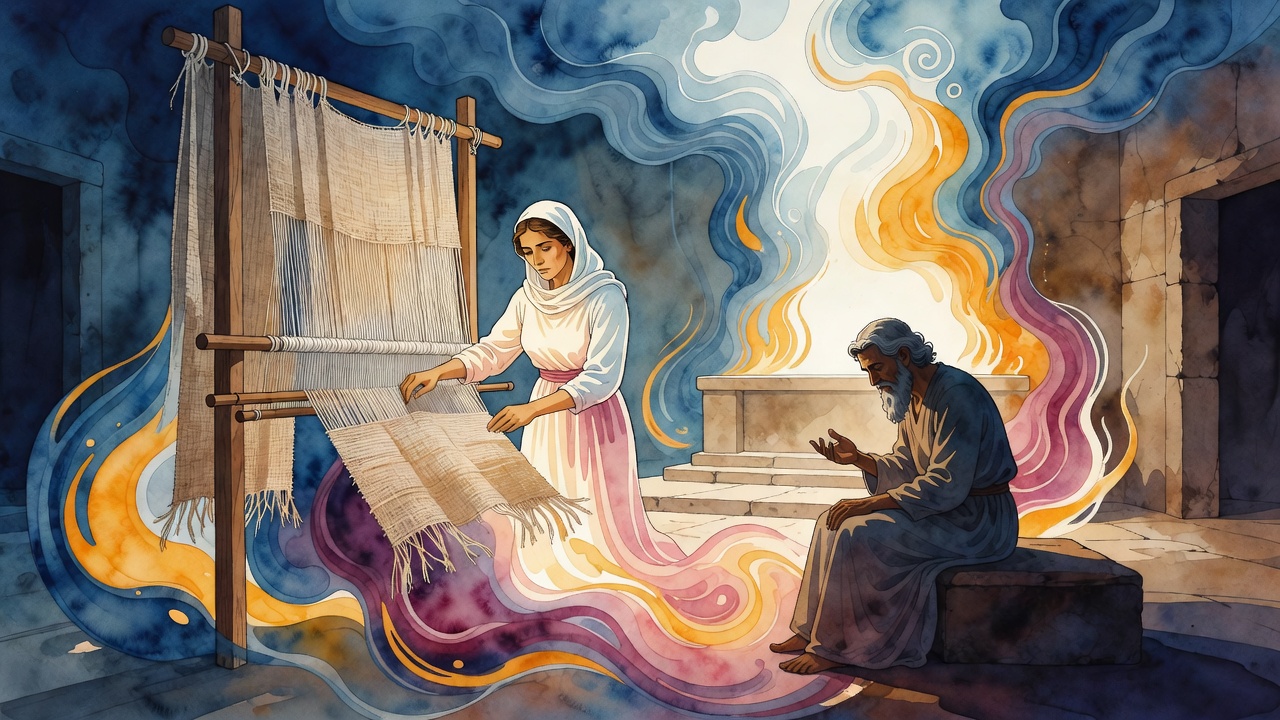
She took in weaving. Women in Nineveh paid her to make curtains, and she collected the wages with her own hands. While Tobit sat in the dark and waited on heaven, she walked the streets with finished cloth and came home with coins. She was the reason there was food. She kept him alive through the exile in the plain way, loaf by loaf, not in the way the neighbors meant when they praised his name.
One day her employer added a kid goat to the pay. Hannah brought it home because a gift is a gift, and a household that lives on wages does not refuse meat. The kid cried. That was all the evidence Tobit needed.
The Kid Cried in the House
He could not see the animal. He could hear it. In his darkness a crying kid meant theft, because a poor house does not suddenly own livestock unless someone has taken it. He had spent years burying the dead and giving alms. He would not eat stolen meat. He told her to return it. He told her again.
She stood with the day's work still in her fingers, the way cloth leaves a stiffness after the last fold, and she looked at the man whose piety the neighborhood praised.
"Where are your charities?" she said. "Where are your righteous acts? Behold, all is known of you."
The words went into the dark where he sat. She named what the street already knew. His almsgiving, his burials, his fasting, had not kept him from blindness, from exile, from poverty, from living on a wife's labor. People could recite his good deeds. They could also see who brought the bread. She had watched both from inside the marriage, day after day, and she was finished being patient about a goat.
Tobias Left and She Would Not Be Comforted
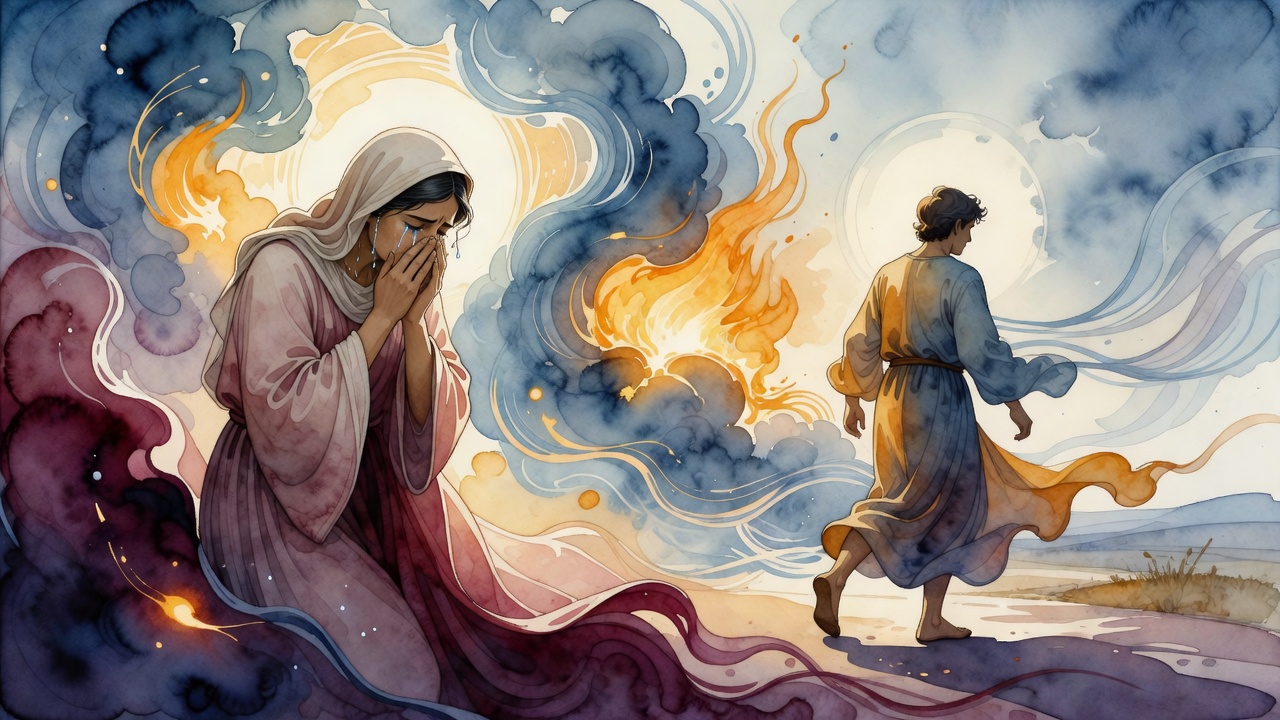
He did not answer her well. The quarrel sat in the house like a third person. Later, when he sent Tobias to Media to recover Gabael's silver, Hannah's mouth opened again, and this time it was not anger. It was a mother's fear. The road was long. The son was the one child. She had kept the household alive through the exile, and now the last living piece of it was walking out the door with a stranger for a guide.
She wept. She would not be talked out of weeping. Tobit spoke of angels and of wages stored with God. She spoke of a boy on a road. No one in the room rushed to make her quiet. She had earned the right to a cry that did not have to be pious.
The kid had been a small sound. Her question had been the larger one. Where are your charities, she had asked a blind man, and the house had kept the animal, and the son had still had to leave. She remained the one who wove. He remained the one who prayed. Nineveh did not care which of them was righteous. Nineveh wanted the curtains on time.
← All myths