What the Mystic Saw When the Throne Held Lions
Anaphiel swung the last gate. Five hundred and twelve eyes turned. The mystic's knees went first, then his back hit the floor.
Table of Contents
The mystic had already passed six palaces. Names had gotten him that far. Seals had gotten him that far. At the seventh door his own legs stopped being enough.
 Click for full size
Anaphiel swung the gate.
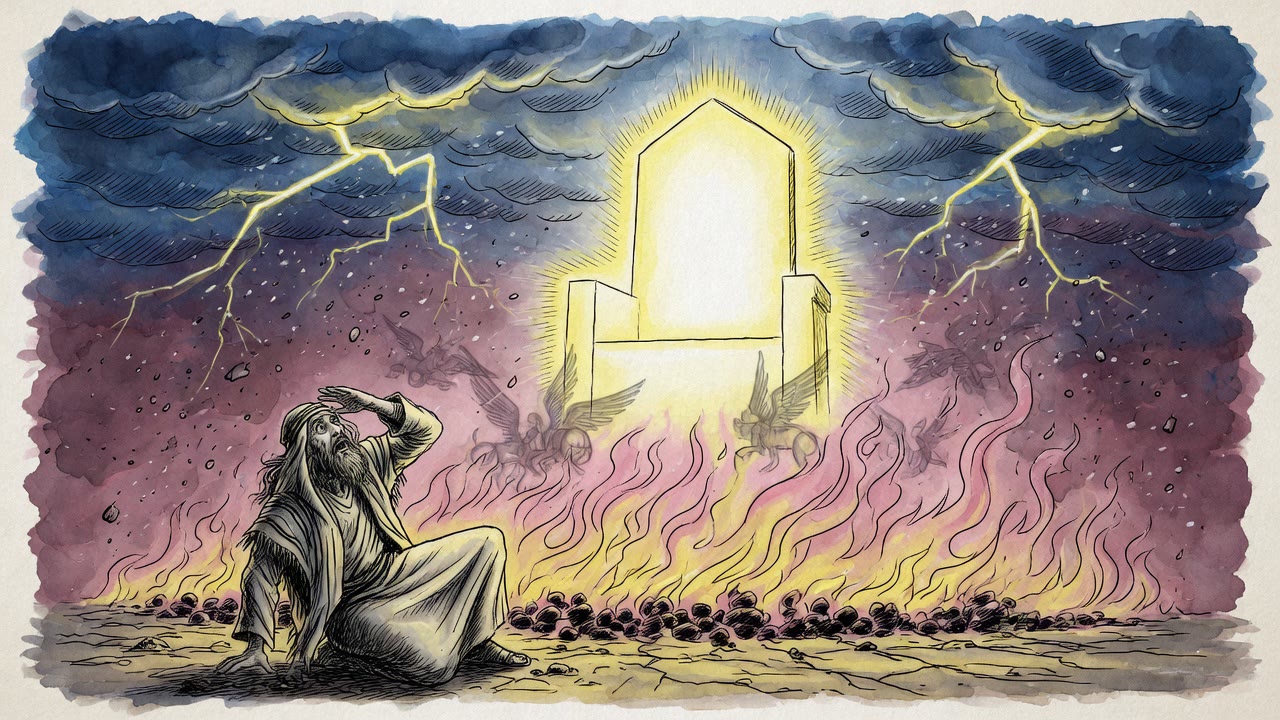
The man swayed. He trembled. He started backward. Fright came, then terror, then a faint that dropped him onto his back. Heat from the threshold reached him before any picture of the room could form. Whatever composure he had carried through six palaces left him on the floor.
His Knees Went First
He had spoken the right names at six checkpoints. Gate guards whose eyes ran like lightning had already looked him over and let him pass. The last palace waited behind a door he could not open alone.
When the door moved, his knees went before his mind did. He did not choose the fall. The body registered the room and failed at standing. His hands searched the floor for a hold that was not there.
Sixty-three gatekeepers stood with Anaphiel. They did not catch him. They watched him go down. Help at this height did not look like a hand under the elbow. It looked like a gate held open for a man already on his back.
Anaphiel Opened the Seventh Gate
The mystic could not enter under his own power. That was the rule, not the exception. Anaphiel, whose name belongs to the seventh palace, swung the great gate for any devoted person who desired to descend to the Merkavah (מרכבה), the throne-chariot of God.
Descend is the old word, even though the road goes up. The palaces are climbed by names and seals. At the last door the climber is let in. He does not walk through as a craftsman who finished a job. He is admitted as a body that has already lost the argument with gravity.
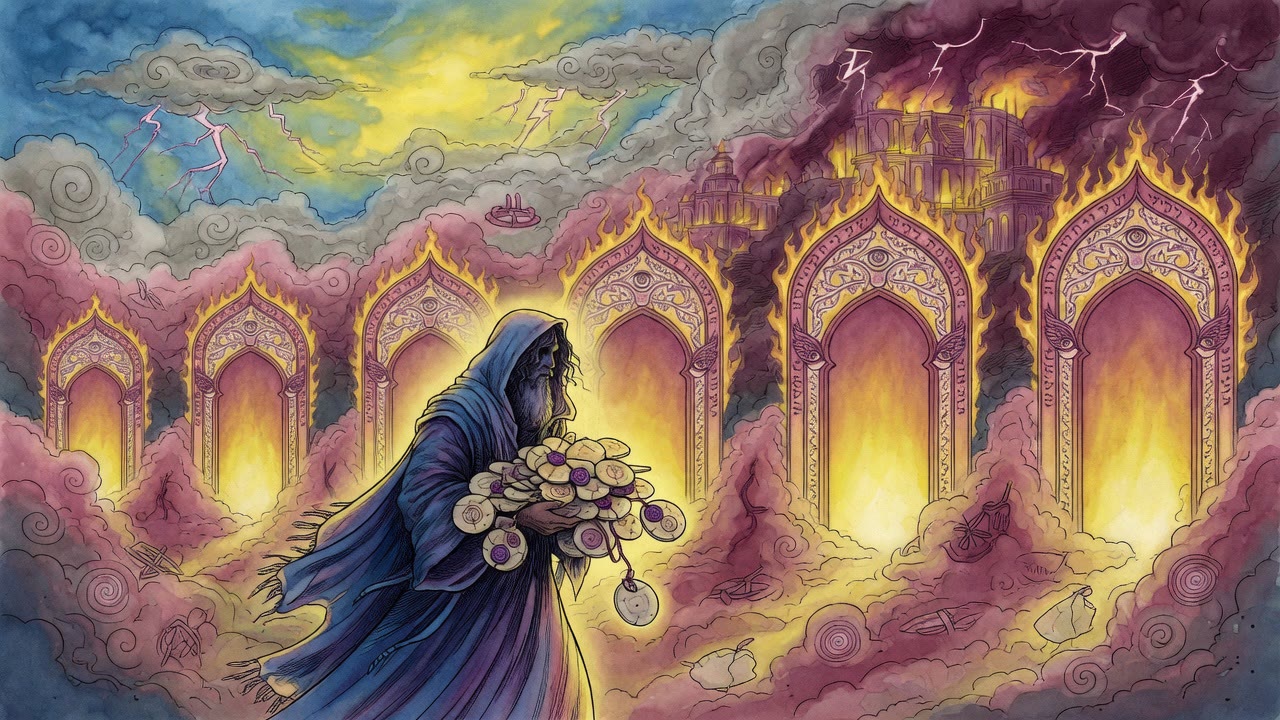
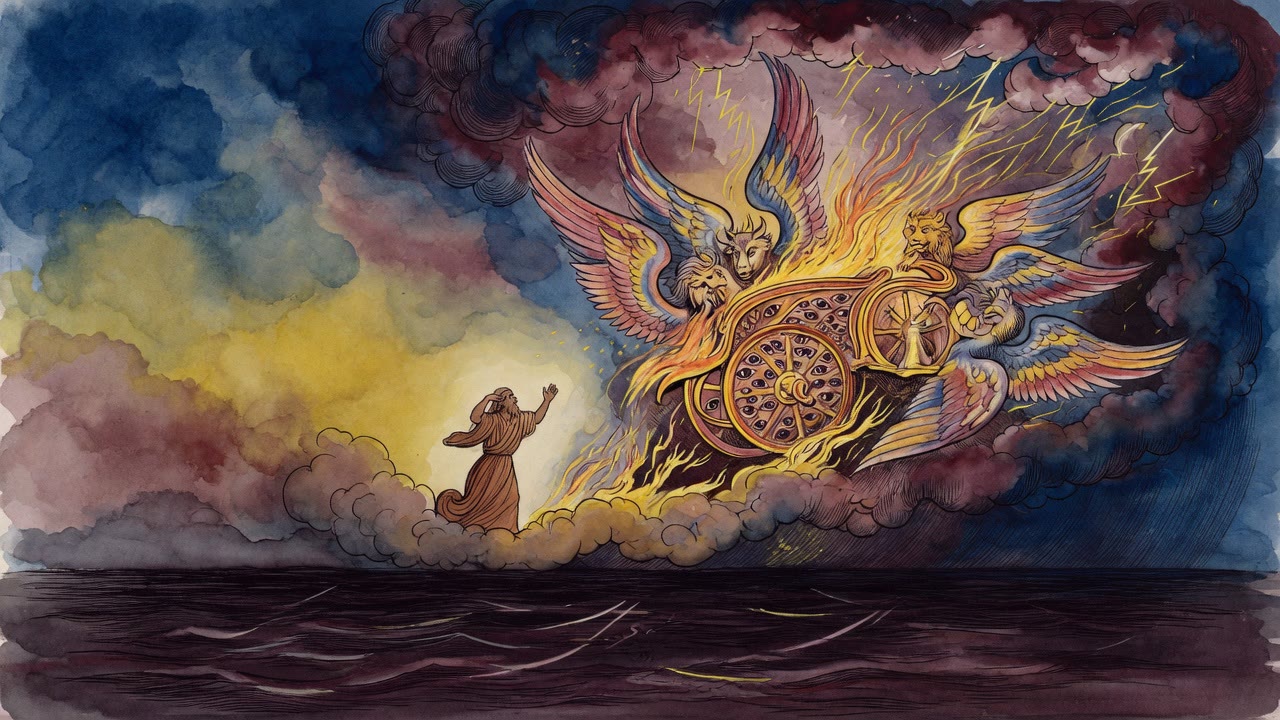
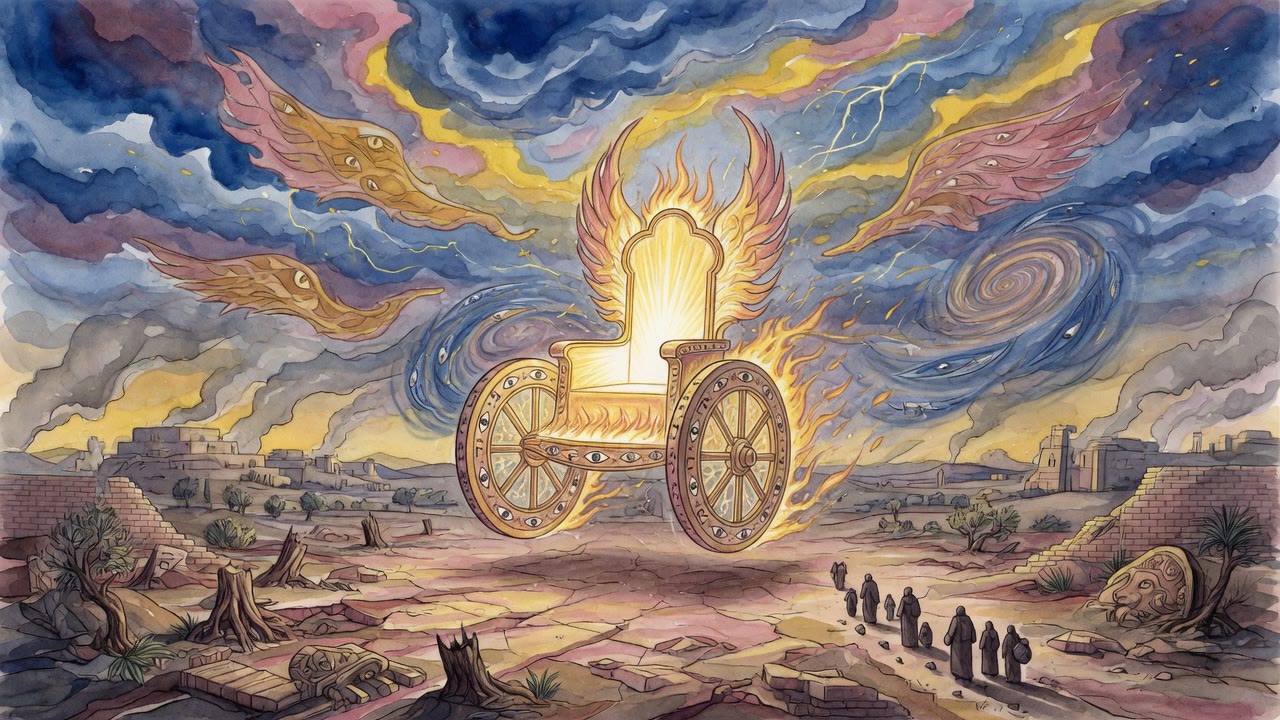
The holy beasts turned their faces toward the entrance. Five hundred and twelve eyes lifted. They ran like lightnings (Nahum 2:4). The eyes of the Cherubim gathered there too, and the eyes of the Ofanim, wheels whose gaze burned like torches of fire and coals of juniper.
Each set of eyes passed through him. He was still on the floor.
Five Hundred and Twelve Eyes Turned
Judgment at that door was not a spoken verdict. It was a count of eyes. Five hundred and twelve of the holy beasts, then the Cherubim, then the wheels of fire. The mystic had survived six palaces by speaking. Here speech would not have helped. The room looked, and looking was enough to keep him down.
Anaphiel did not close the gate because the man had fainted. The gate stayed open. A devoted person who wanted the Merkavah was supposed to come apart at the threshold. The body spoke when the mouth could not.
He was let in anyway.
When he could lift his head, he saw what the seventh palace held.
The Throne Held a Living Lion
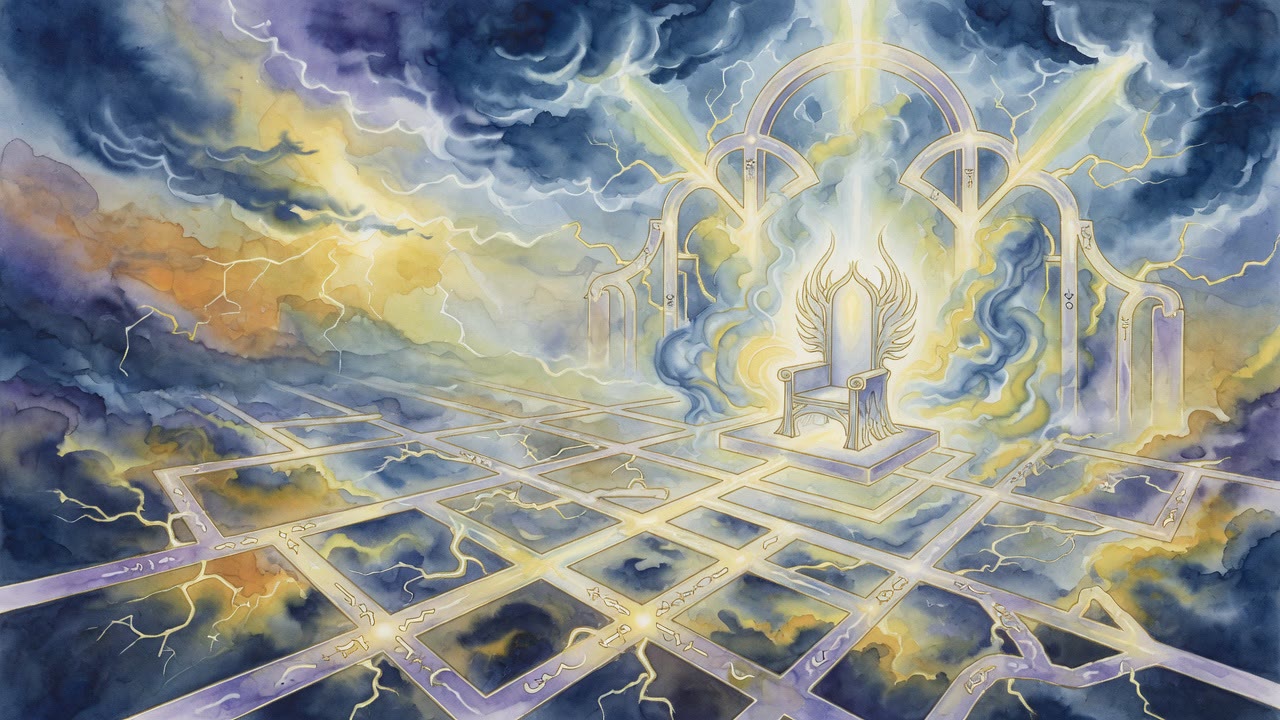
Inside, the throne was not a chair.
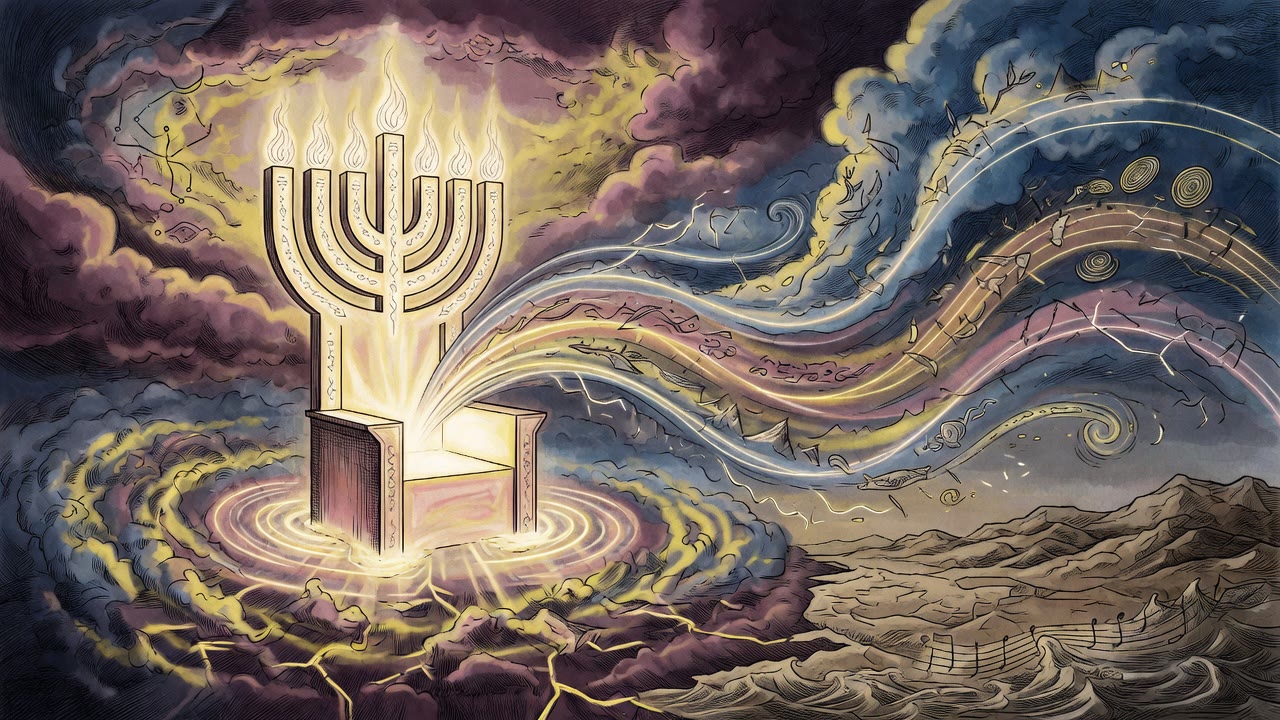
A lion had been fixed into its structure. Not painted. Not carved as ornament. Fixed, present, roaring with the fear and awe that lions carry in themselves. "The most lofty of wild beasts is the lion," the voices around the seat said. "The likeness of a lion hast Thou fixed in Thy throne." The throne required the thing the lion carries, its nature, not a picture of a cat.
Above the lion, the eagle. "The most lofty of birds is the eagle. The likeness of an eagle hast Thou fixed in Thy throne." The eagles of that seat moved as eagles move. They were swift. They flew. They soared. They were filled with the same fear of God that filled the lions.
Together they brought height and ferocity from the highest beasts and the highest birds and set them in one place. The man who had fallen backward at the gate now lay inside a room where the seat of God roared.
He would have to stand again to leave. The six palaces behind him had taken names. This one had taken his balance. What he would carry back was not a description of furniture. It was what happens to a body that stands at the outer edge of divine fire, falls down, and is let in anyway.
← All myths