What the Mystic Carried Through the Gates
At the fourth palace two seals are demanded, right and left. At the sixth, the wrong companion does not survive what he is sent to witness.
Table of Contents
 Click for full size
The Fourth Palace and What the Seals Were
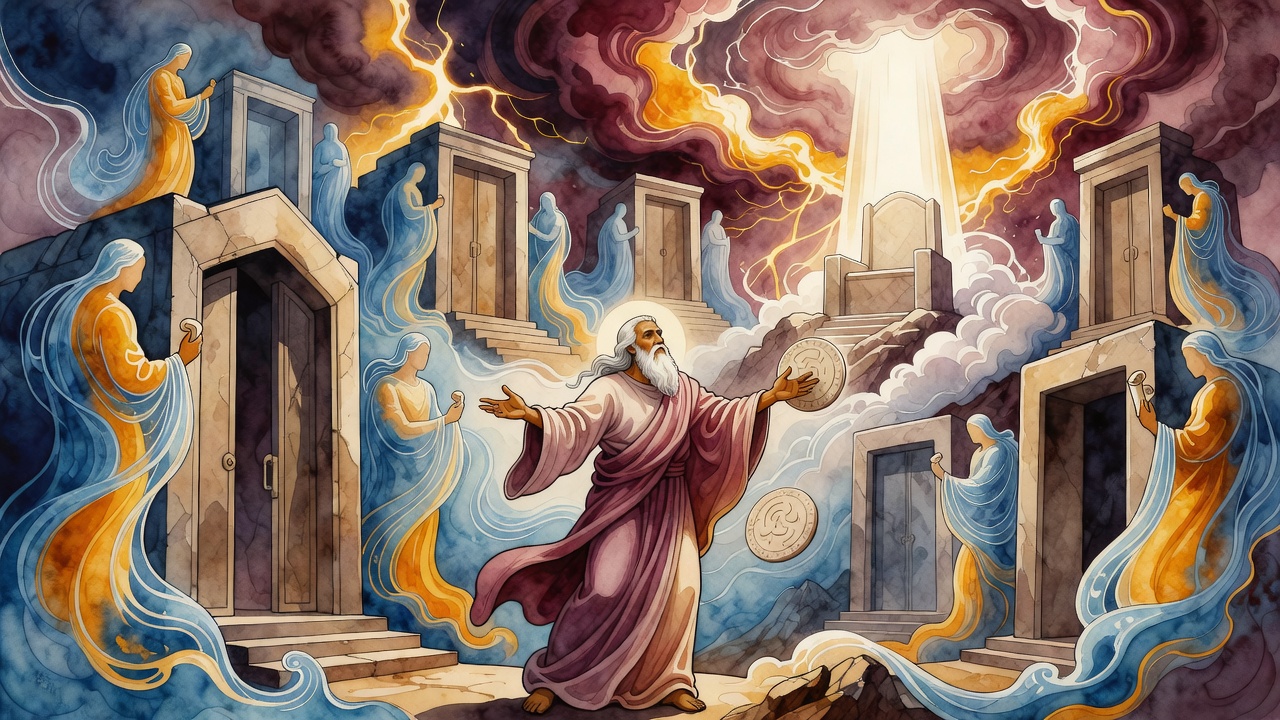
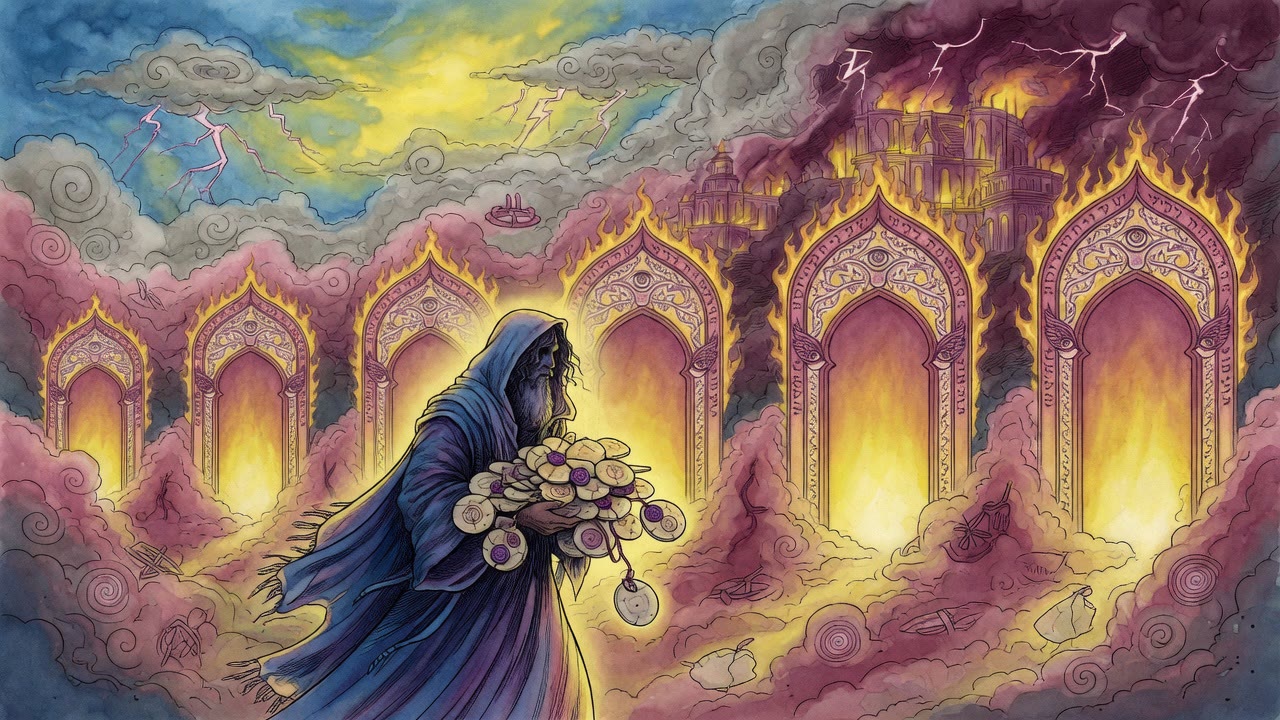
The mystic had memorized the names. That was the minimum. Names of angels, names of seals, names attached to specific positions in the heavenly hierarchy, each one required at a specific gate. At the fourth palace, two seals were needed simultaneously: one for those standing to the right, one for those on the left.
The seal for the right belonged to Zurtak, named in the text as the Lord of that position. The seal for the left belonged to Dehabhyoron, named Prince of the Presence. Neither seal was metaphorical. They were specific names attached to specific angelic offices, and the mystic's ability to produce the right name at the right side of the gate was the test that determined whether the approach continued or ended.
A second passage names different seals at what appears to be a parallel checkpoint: Totrakhiel for the right, Zehaphtariai for the left. The doubling is not confusion. It reflects the nature of a system that was transmitted, copied, and elaborated across generations of mystics, each preserving slightly different versions of a protocol that all agreed was real. The gate required credentials. The credentials had names. The names had to be correct.
The Sixth Palace and the Problem of Witnesses
The sixth palace was where the wrong companion died.
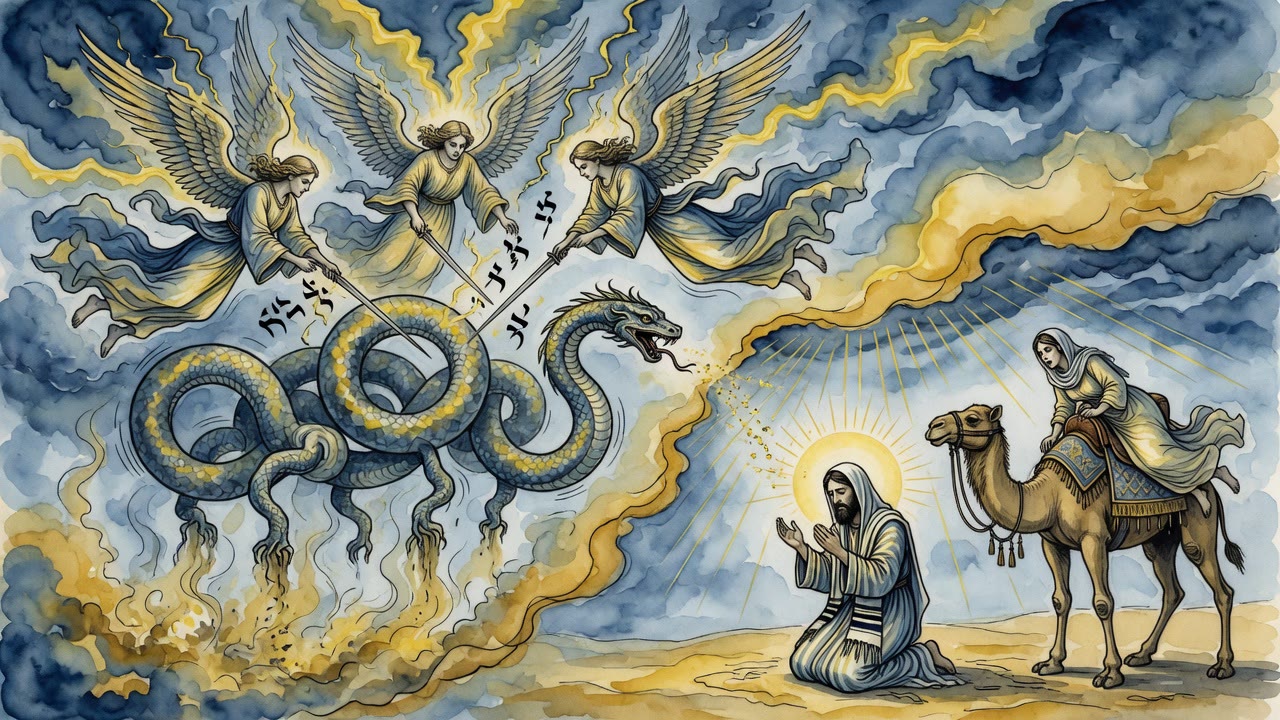
The text addresses the figure who descends to the Merkavah (God's chariot-throne at the summit of heaven) but also does not descend, a person who participates in the ascent without being the primary ascender. These companions were not carried along for company. They were brought deliberately, positioned either above or before the ascending mystic, and given a specific function: to witness, to listen, and to record everything spoken and heard during the passage.
The sixth palace was the test of whether a companion was fit for that position. The text does not describe what happened to someone who failed there, but the urgency of the selection criteria implied that the palace itself made the judgment. A witness who could not survive the sixth palace had no business standing beside the ascender at the seventh. The selection was not a courtesy extended to friends. It was a filter, and the palace applied it without appeal.
How a Witness Turned the Vision Into a Document
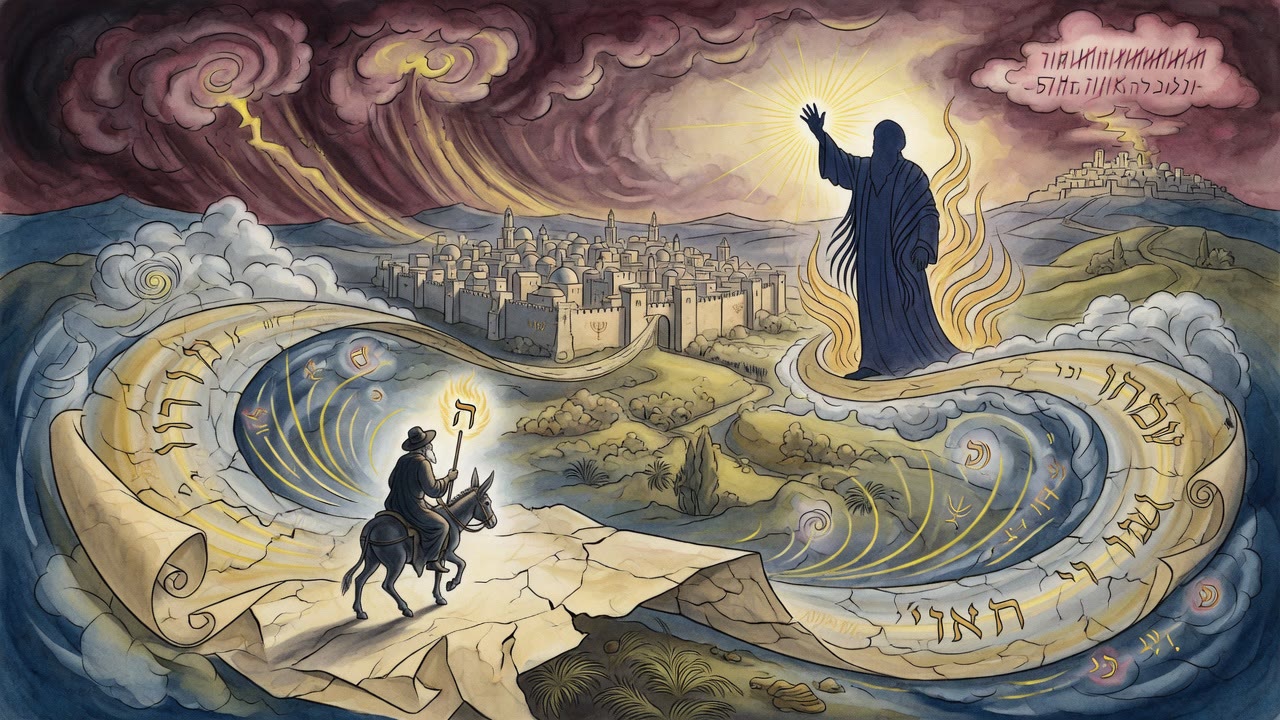
The requirement for witnesses changed what kind of operation the ascent was. A solitary mystic climbing alone through a private vision was one thing. The Heikhalot system was something else. It was a documented procedure. What the ascending mystic encountered at the throne would be spoken aloud, recorded by the witnesses positioned above and before him, and carried back to the world below.
This is why the companion had to be placed within hearing, not left behind at a lower gate. The witness was the instrument that captured the words. The throne room was not a secret to be kept and buried with the one who saw it. It was testimony to be preserved, repeated, and handed forward to mystics who had not yet made the climb. The vision survived only if someone reliable had been standing close enough to hear it spoken.
Why the System Required This Much Equipment
A person who approached the fourth palace without the right seals was turned away. A person who brought inadequate witnesses to the sixth palace would not have reliable testimony to bring back. A person who reached the seventh palace without Anaphiel opening the door could not enter at all.
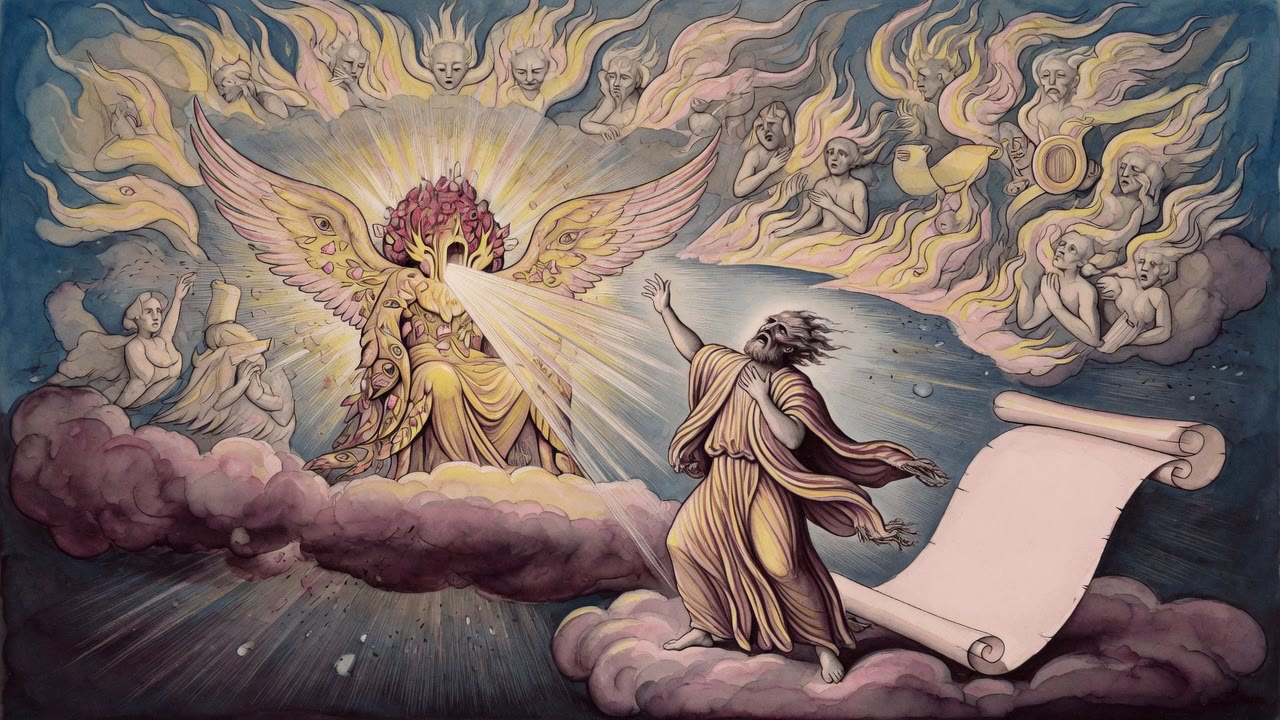
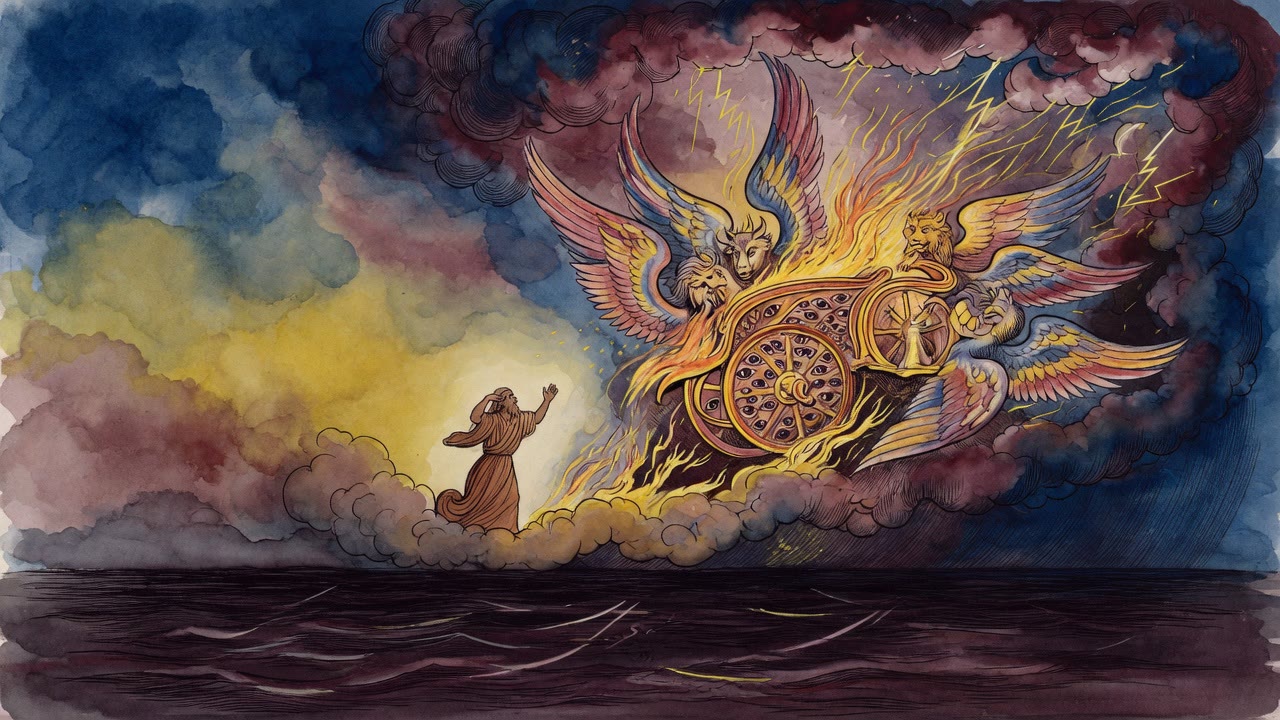
Each requirement pointed to the same underlying argument. The ascent to the Merkavah (the divine chariot) was not achievable through spiritual intensity alone. It required correct procedure at each stage, correct credentials at each gate, and correct companions at the point where the experience became too large to carry without help. The mystic who arrived at the throne had survived a sequence of checkpoints designed to eliminate anyone who had merely worked himself into a state of exaltation.
The seals were not magic. They were evidence that the mystic had learned the system from someone who actually knew it. The witnesses were not audience. They were the mechanism by which the vision became transmissible. Together the seals and the witnesses turned an individual ascent into a communal document.
← All myths