185 myths · Page 6 of 7
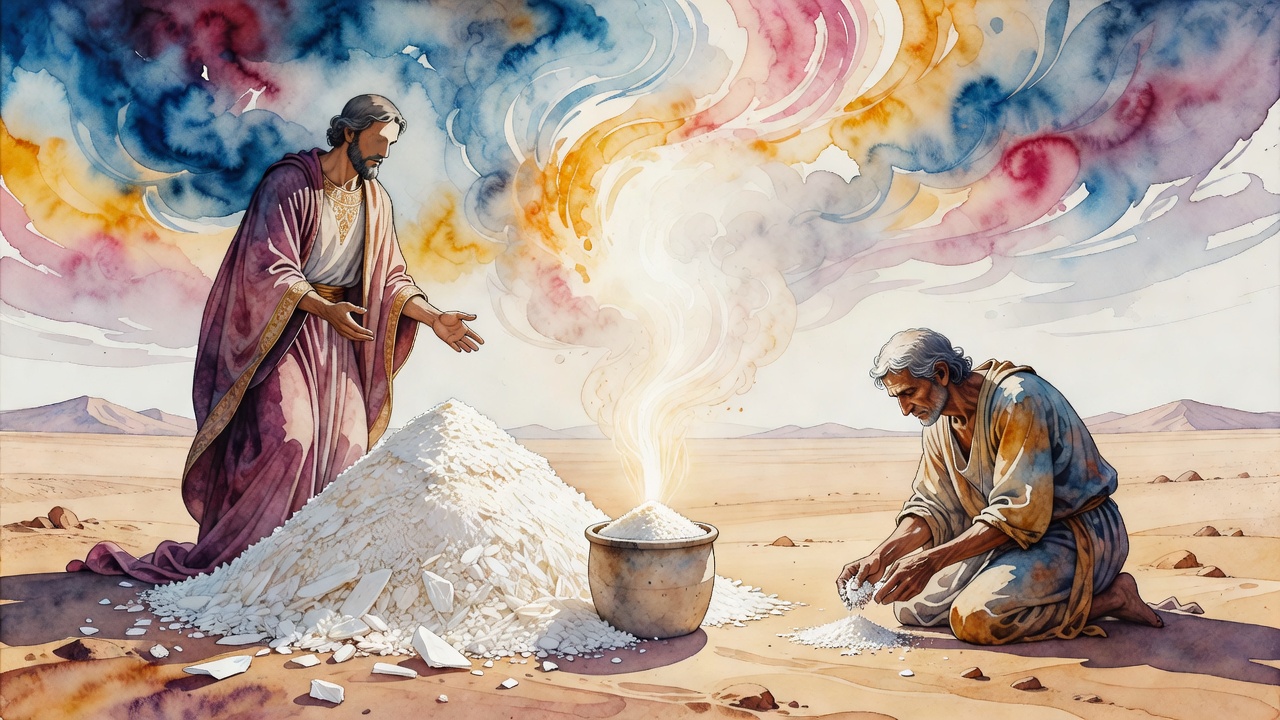
Nachshon sent his whole household out to gather. A poor man went out alone. When they measured, both jars stopped at the same line.
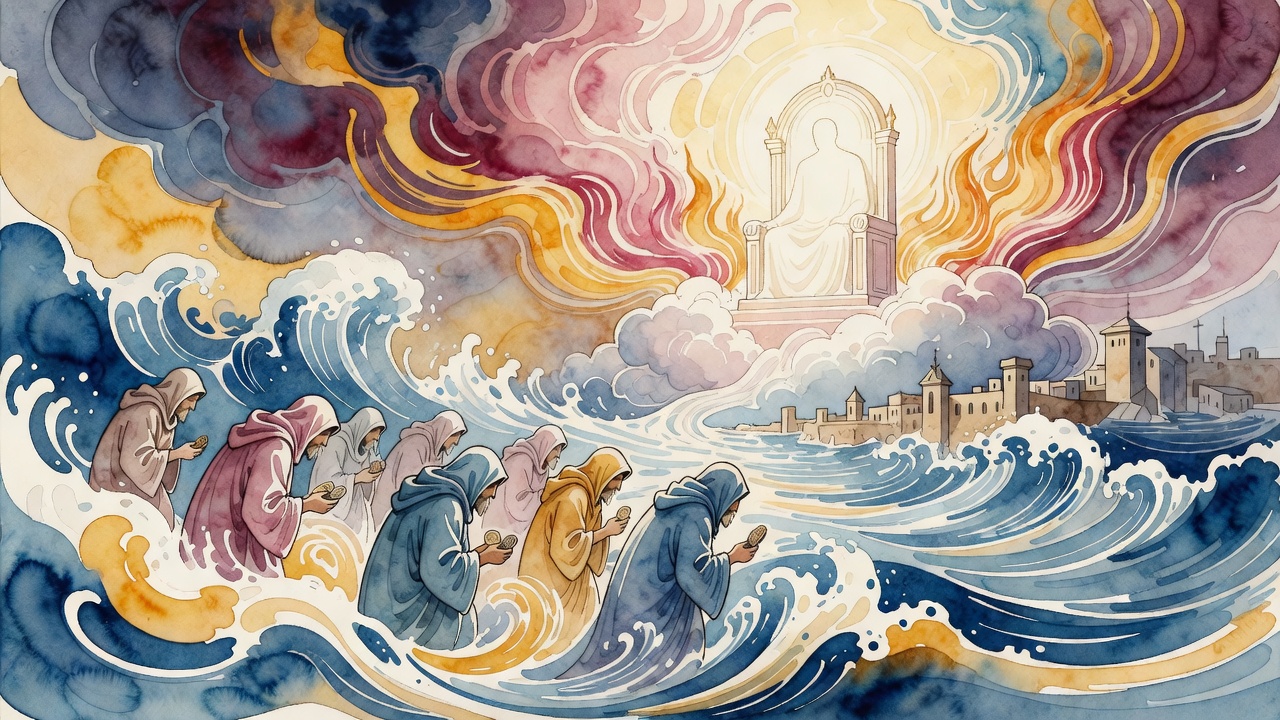
A man set down a basket of lupine beans in the market. Neighbors pinched it empty by dusk. No court would hear a case that small.
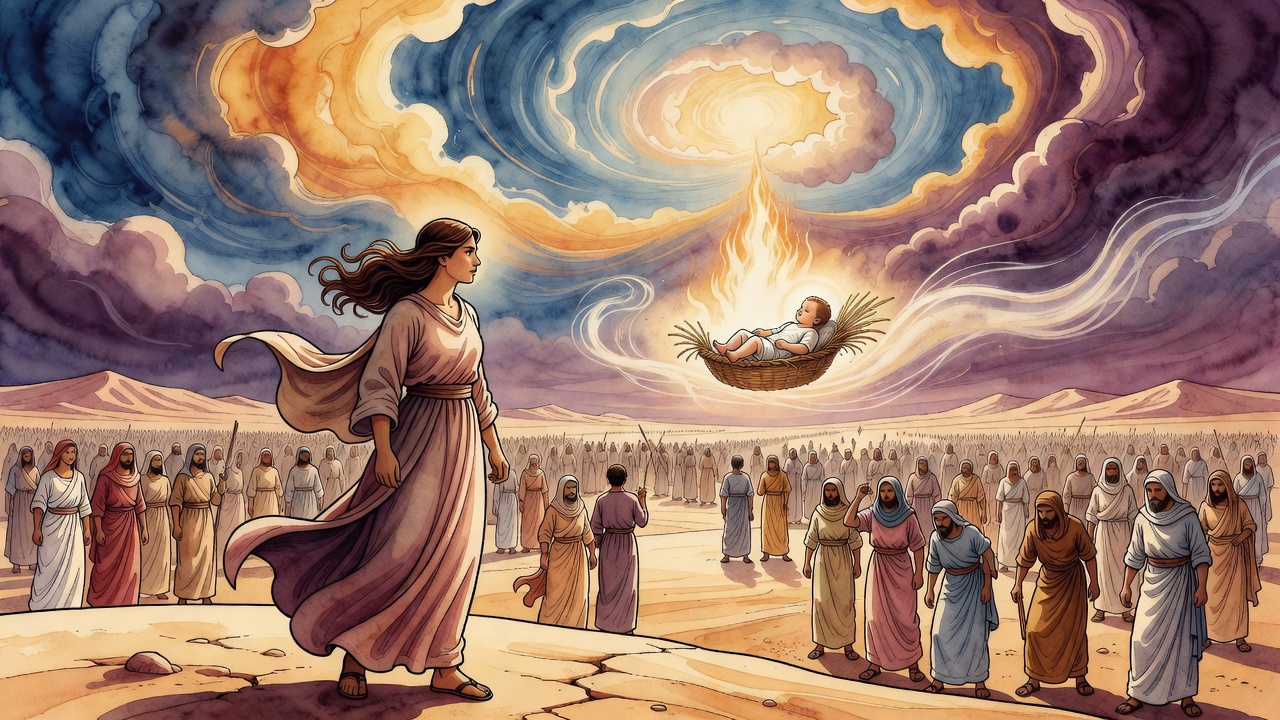
Miriam stood watch over her floating brother for an hour. Heaven paid it back at seven days interest, with the entire nation frozen in the desert for her.
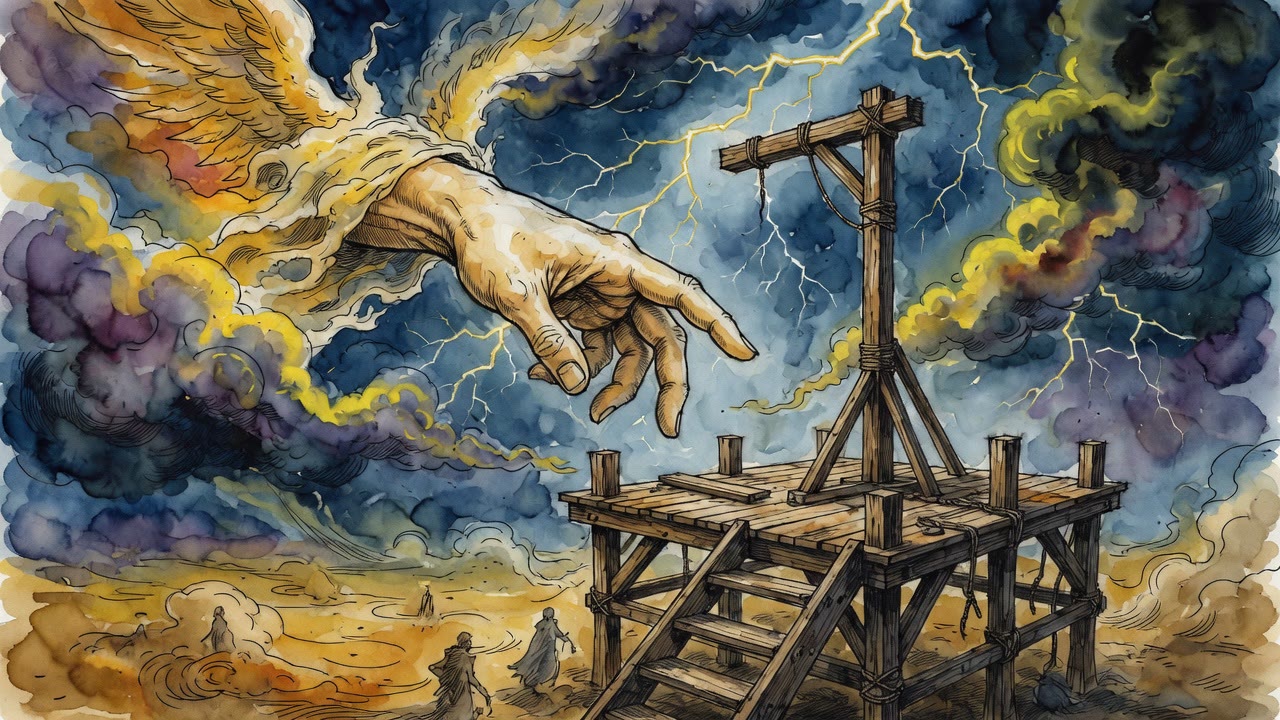
Haman came to the palace at dawn to ask for a hanging. The king spoke first and asked how to honor a favored man, and Haman described a parade for himself.
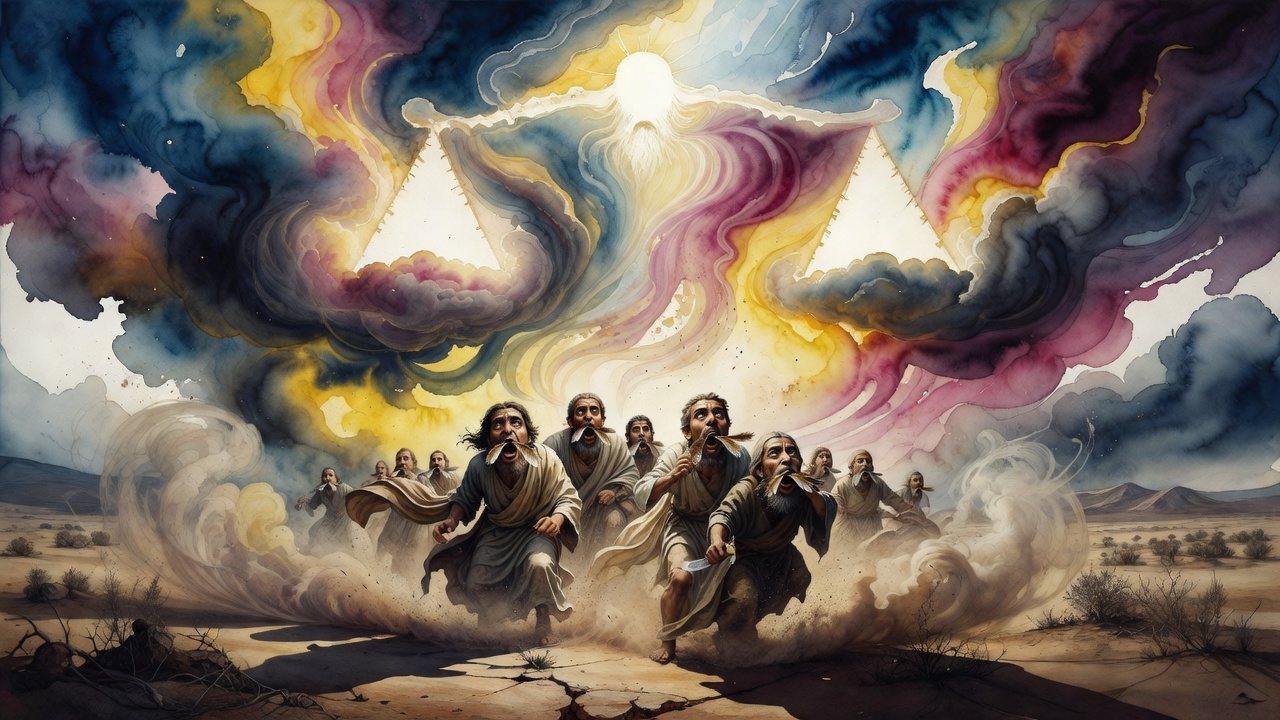
The quail were still in their mouths when the plague hit. The Mekhilta reads the wilderness to learn how God measures punishment against the size of a sin.
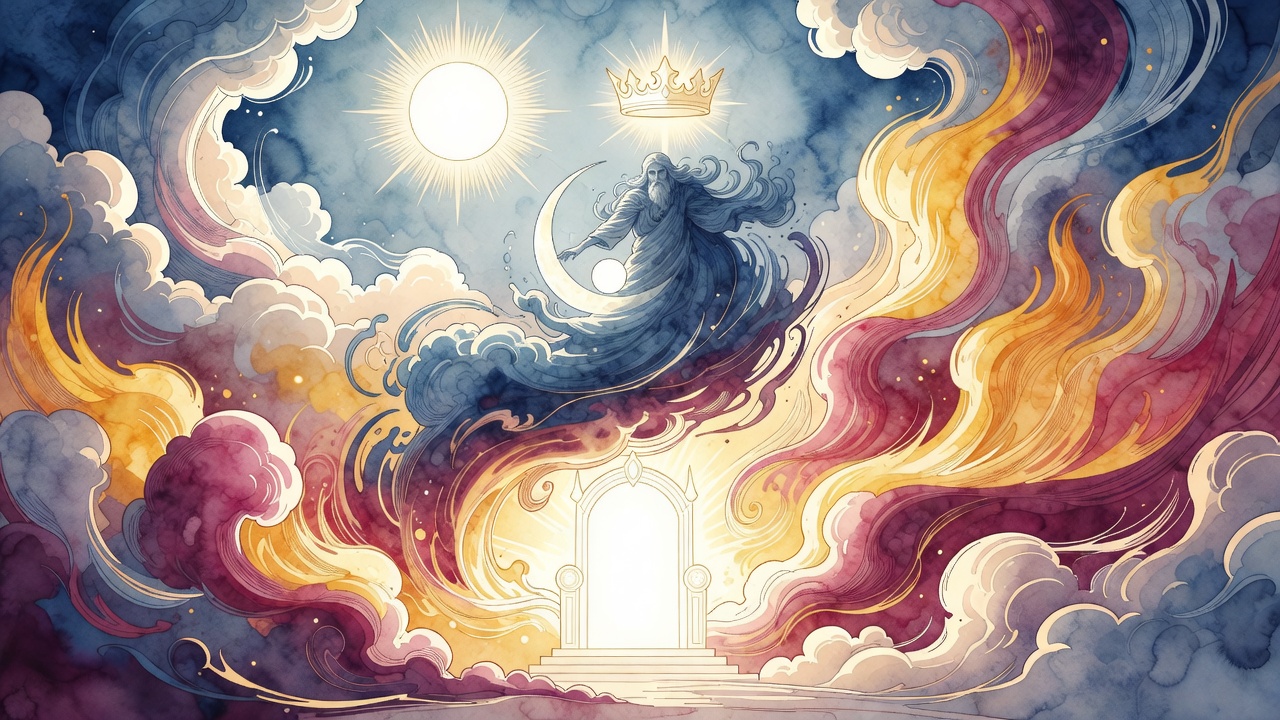
Two great lights, one crown. When the moon is shrunk to the lesser lamp she storms the court for justice, and heaven ends up owing her a debt.
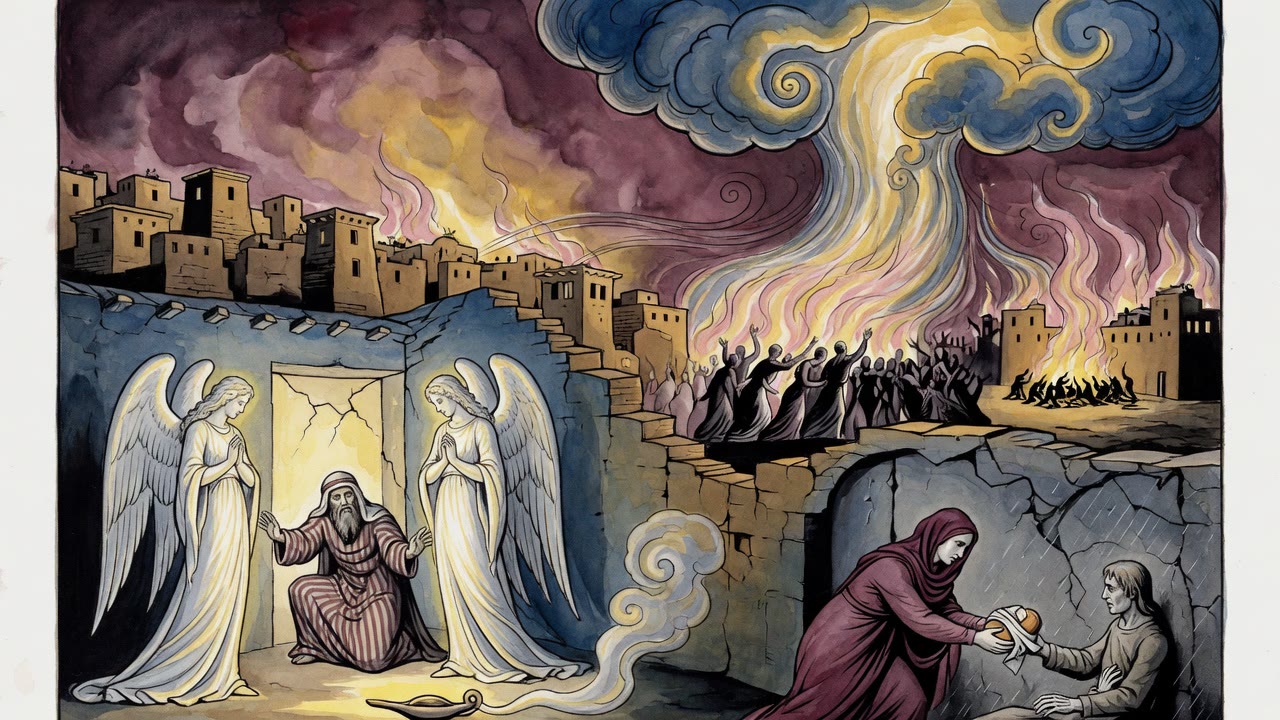
In a city where feeding a stranger means death by fire, Lot hides two angels and his daughter Plotit smuggles bread to a starving man.
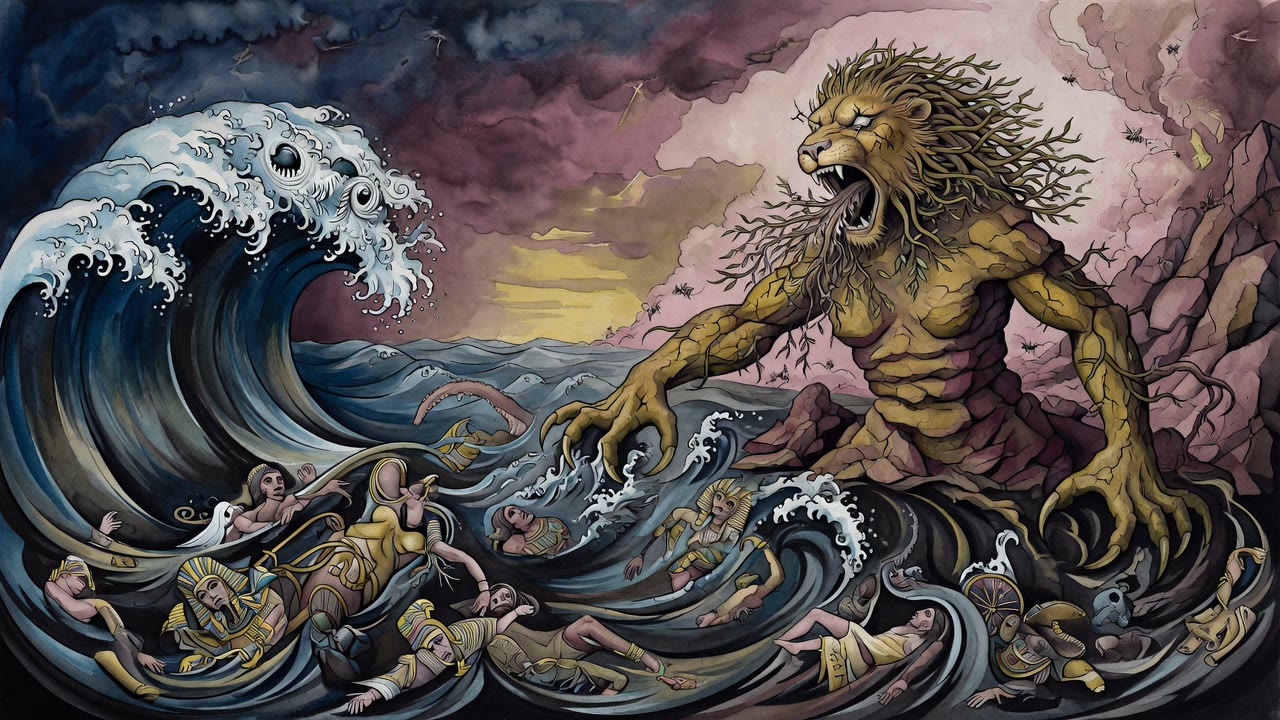
God orders Rahab to swallow the waters of creation. He refuses and is slain, and then the sea and the earth quarrel over who must take the dead.
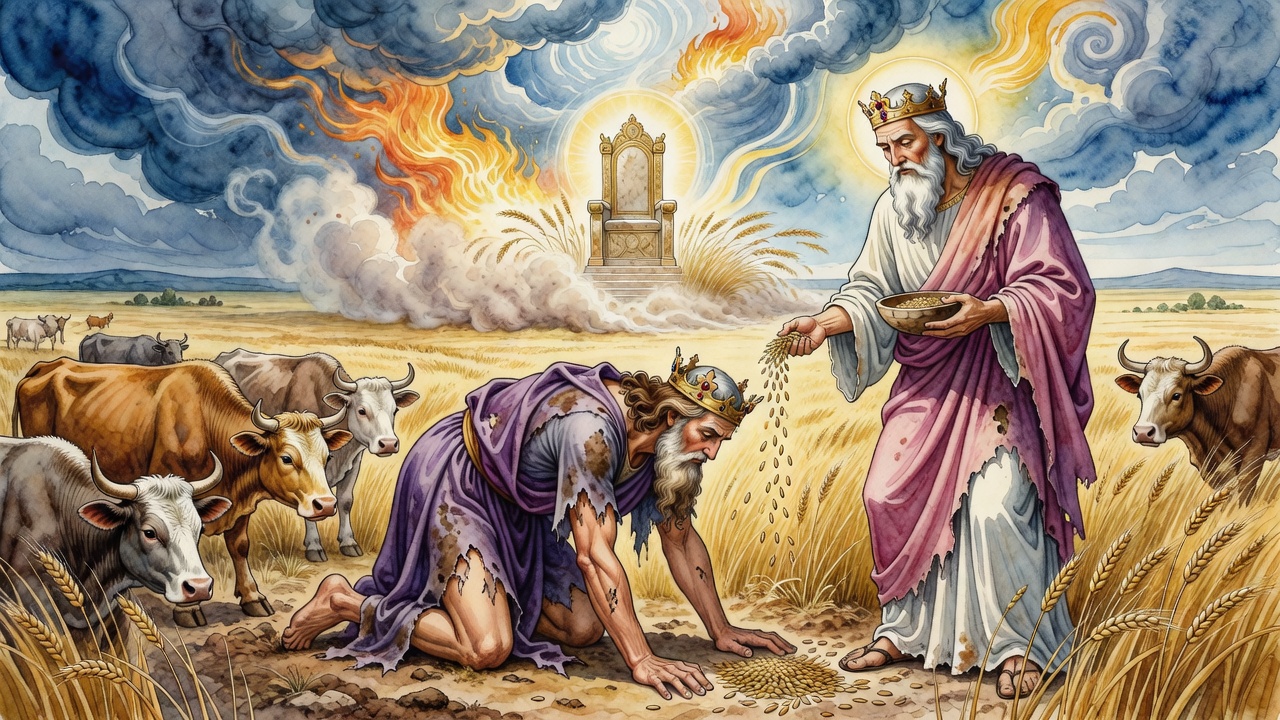
Nebuchadnezzar fed a sworn king barley and grazed him before the nations, so God drove the emperor onto all fours in his own field.
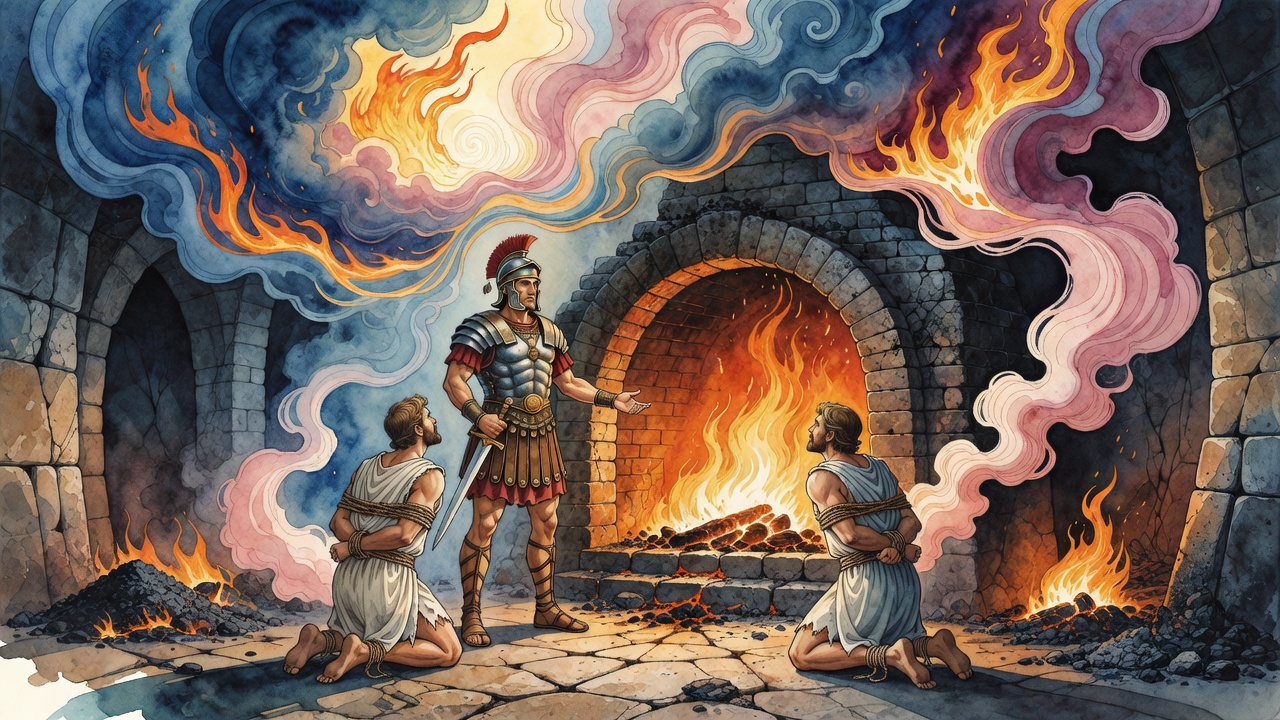
Trayanos told the two bound brothers to beg God for a rescue like the one in Nebuchadnezzar's furnace. They said no. They were not that righteous.
The boy was hidden in the Holy of Holies and lived. Years later his princes called that proof he was a god, and Joash believed them.
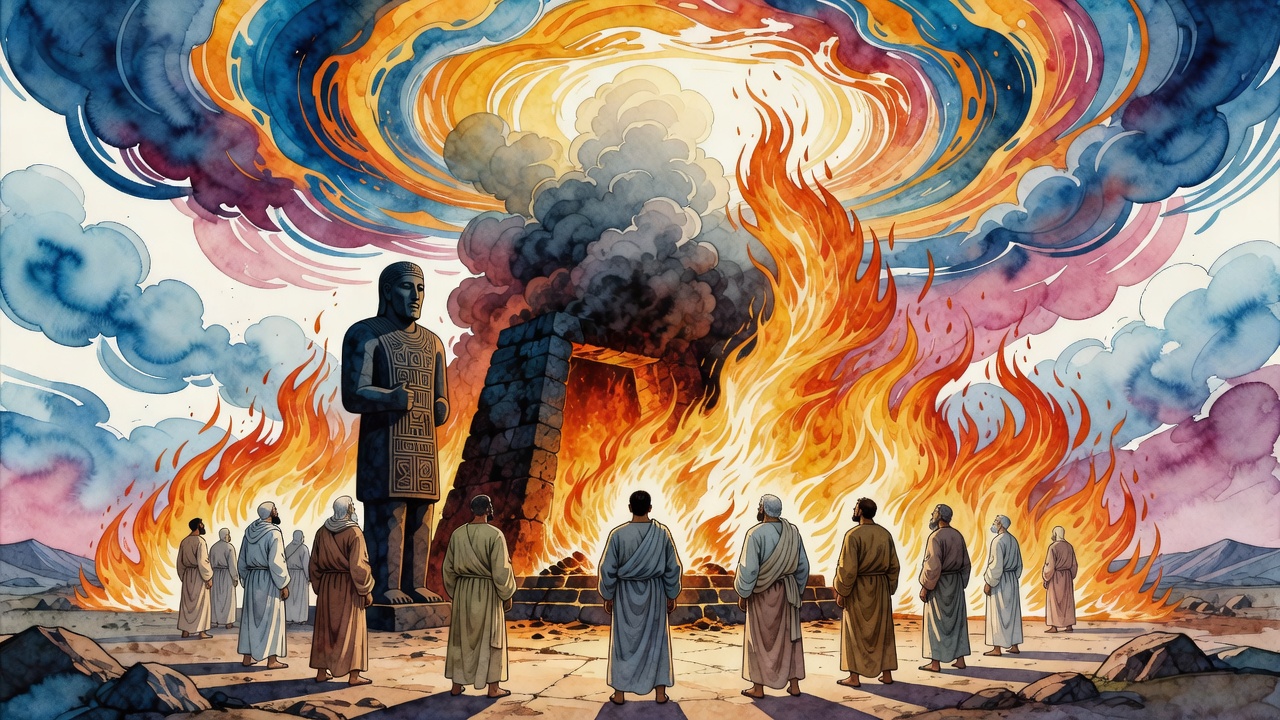
An idol, a furnace, and seven men who would not bow, until heaven sent the lord over fire to turn the tyrant's flames back on his own servants.
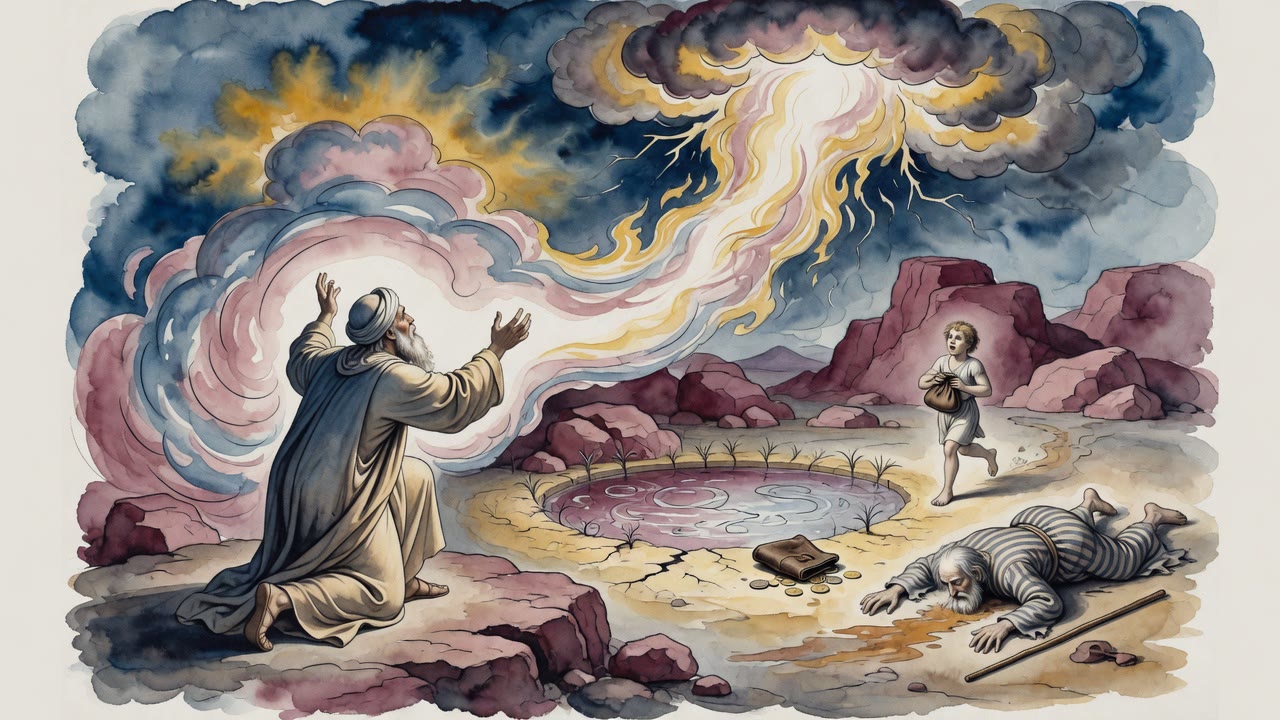
On Sinai Moses begged to see the law behind the world, and God led him to a spring where one lost purse left a boy rich and an old man dead.
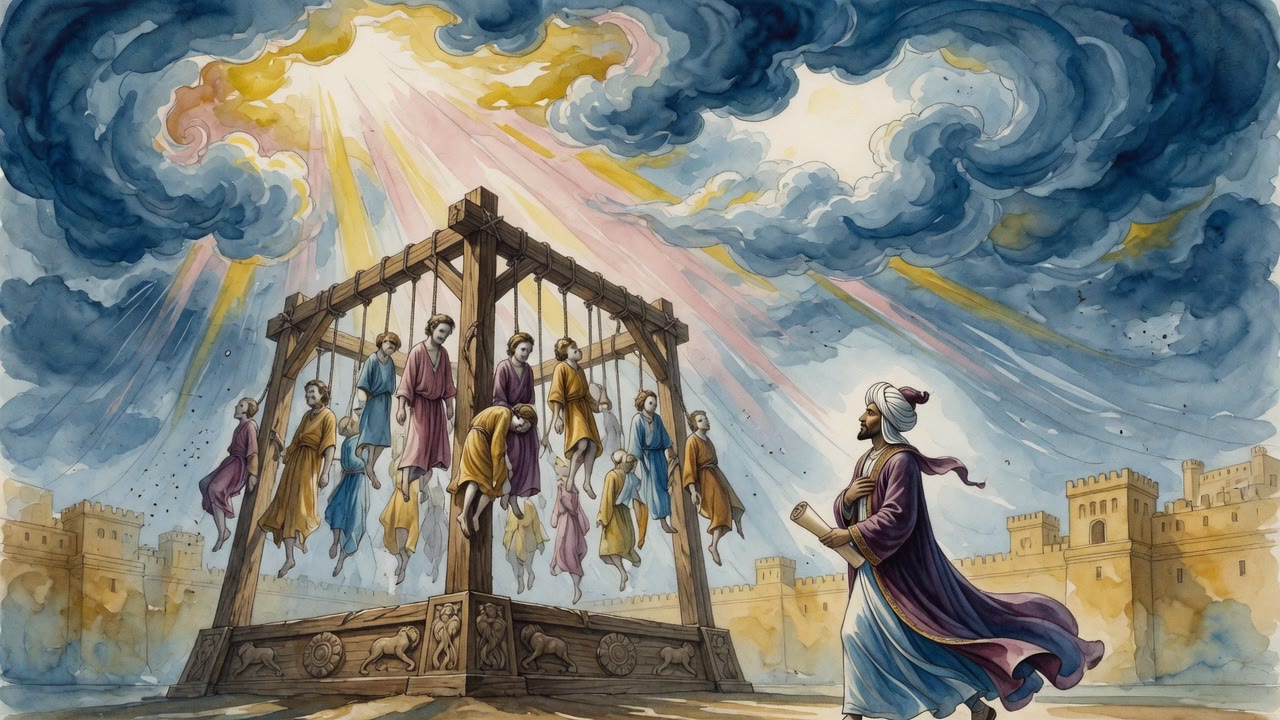
Behind Haman stood Zeresh, who closed every escape but the gallows and measured the beam, until the wood she built took her own sons.
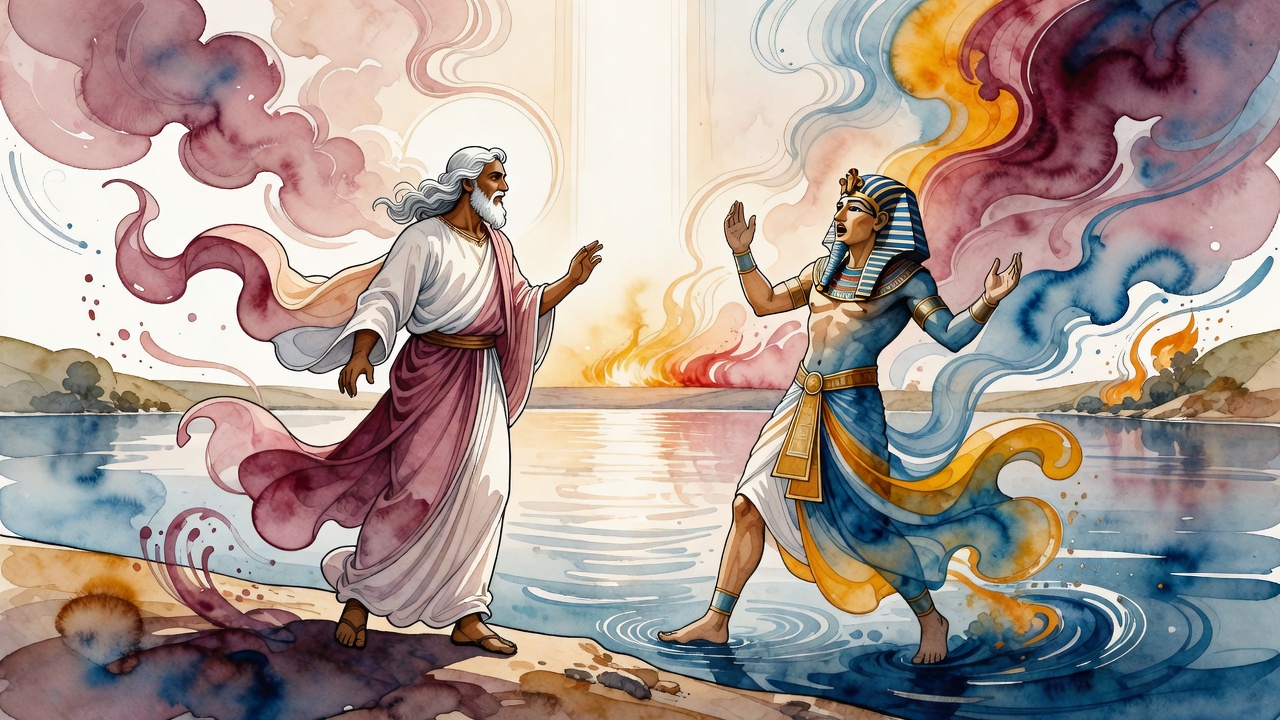
Every dawn Pharaoh slipped alone to the Nile. Moses seized him there and asked if any god must relieve himself.
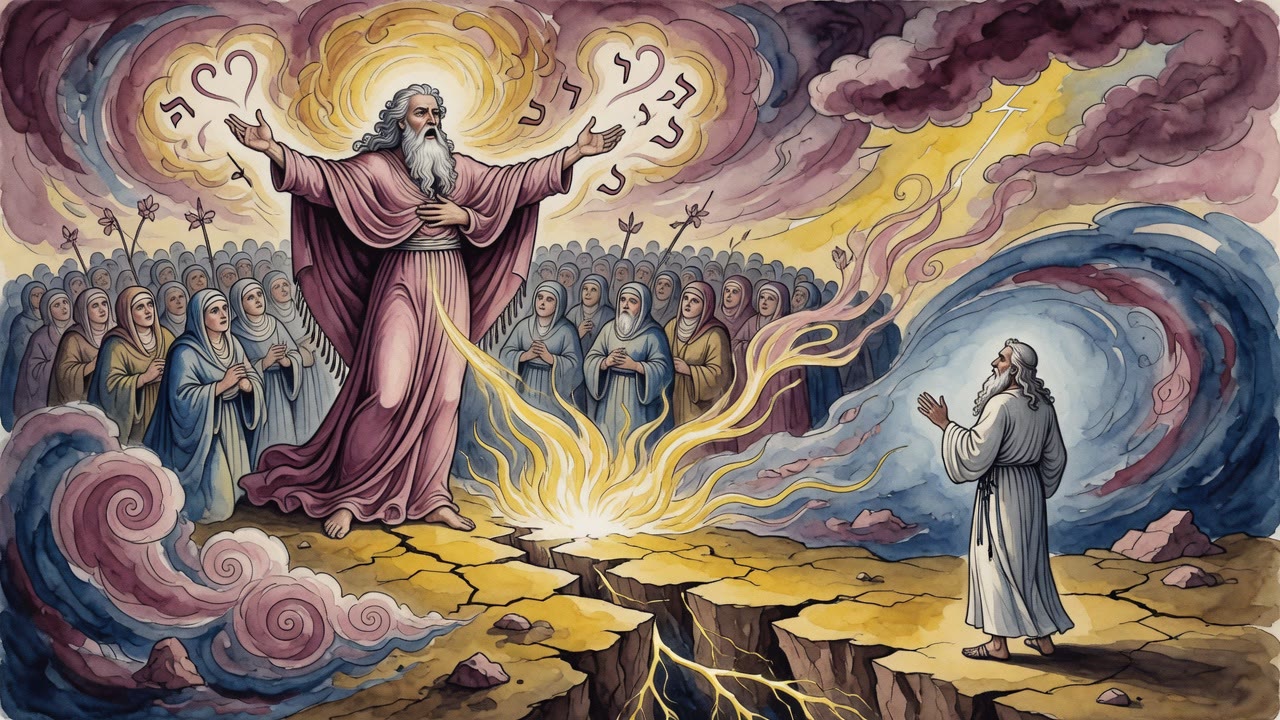
After the sea splits, the land and the water fight over Egyptian corpses, each refusing burial until God swears by His right hand.
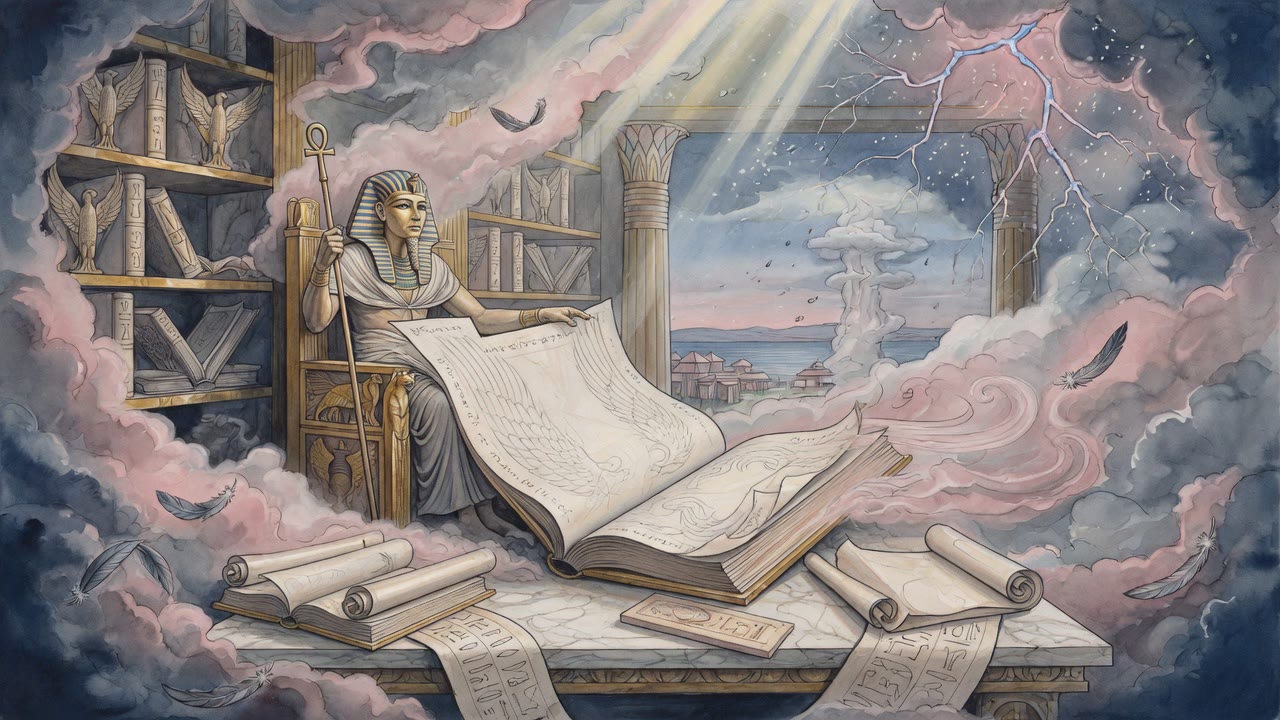
Pharaoh ran a finger down every name Egypt feared. The Name Moses carried was not written in the Book of the Angels.
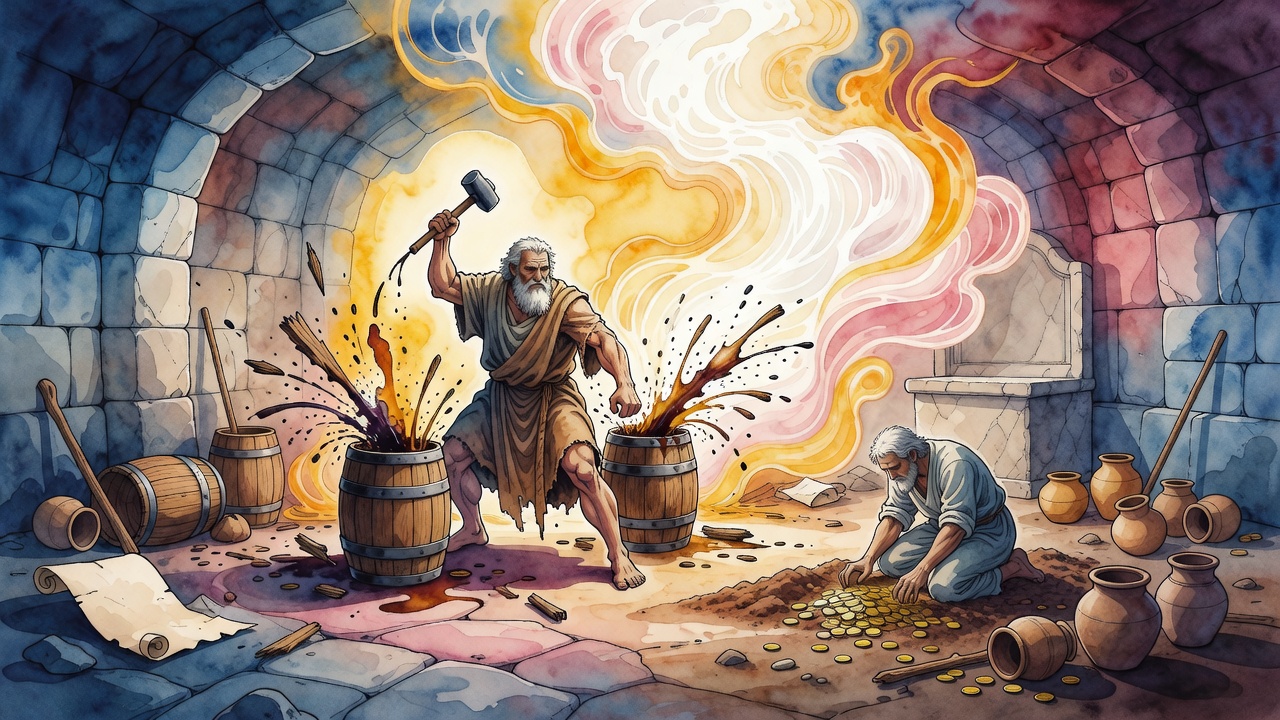
A harvest lord smashed his own casks rather than give the tithe, while another man buried gold in clay and returned to empty jars.
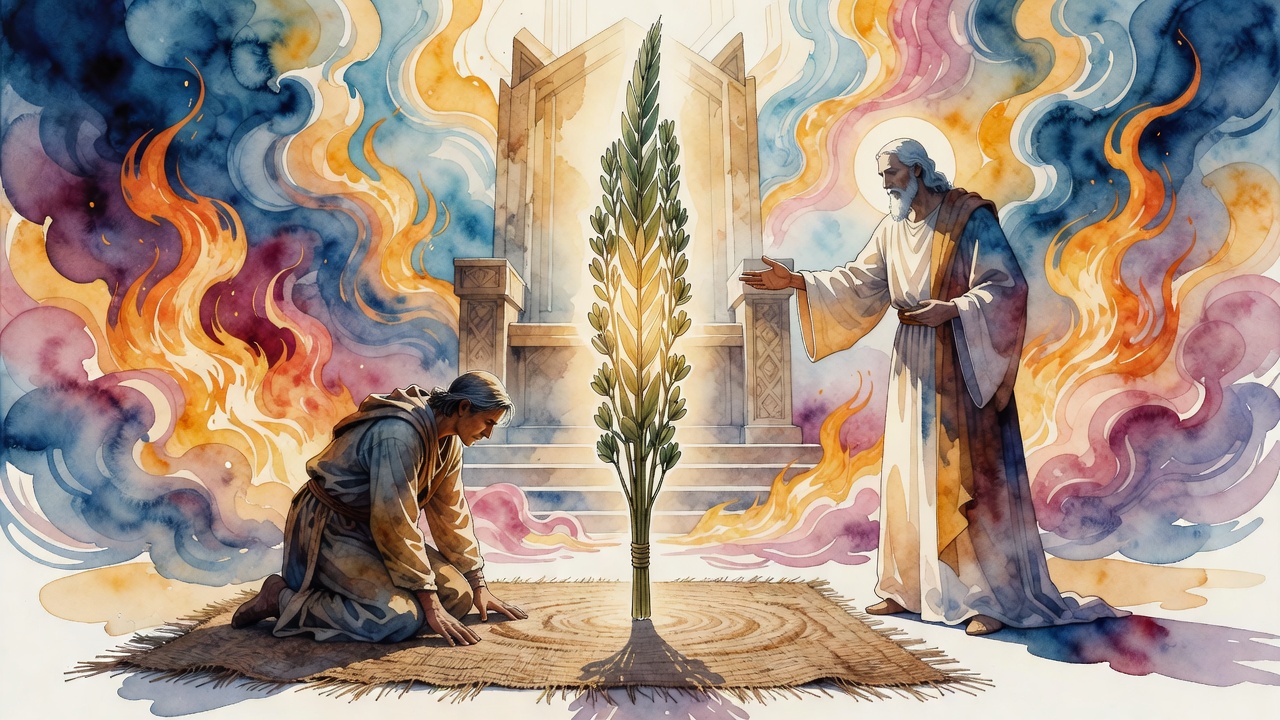
A bandit returned a rug to buy a defender and met that defender as his accuser. So a stolen lulav (palm branch) testifies on Sukkot.
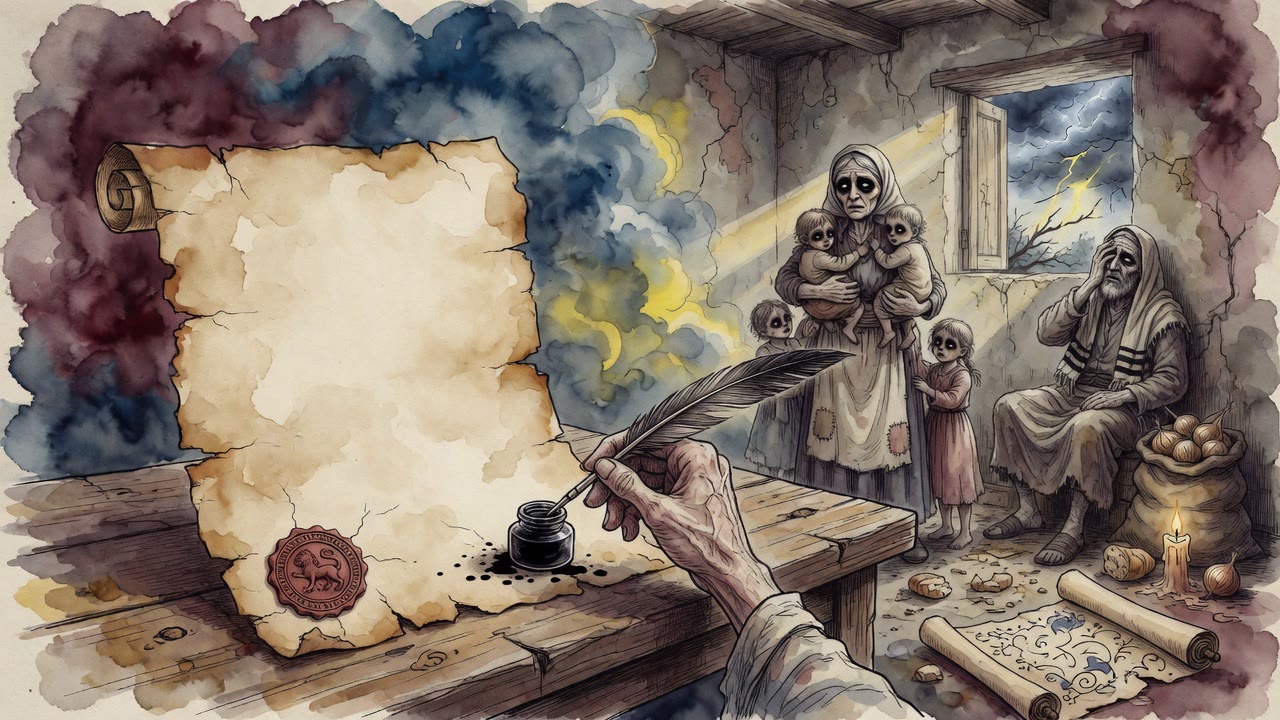
Cain cried that everyone who found him would kill him. Adam and Eve were nearly the whole earth. The Voice that used to meet him had already gone.
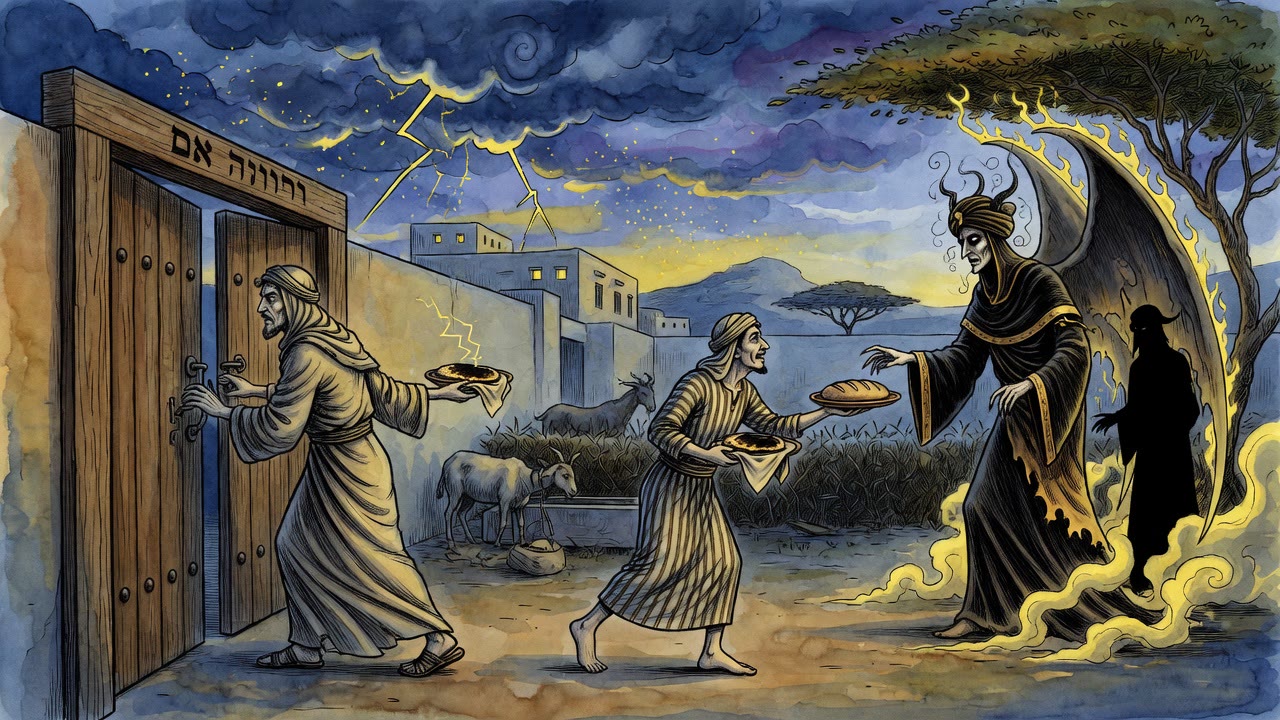
Job locked his gate against the Accuser, then sent burnt bread. The servant swapped it. Satan took the threat home to Job's flesh and his wife's hair.
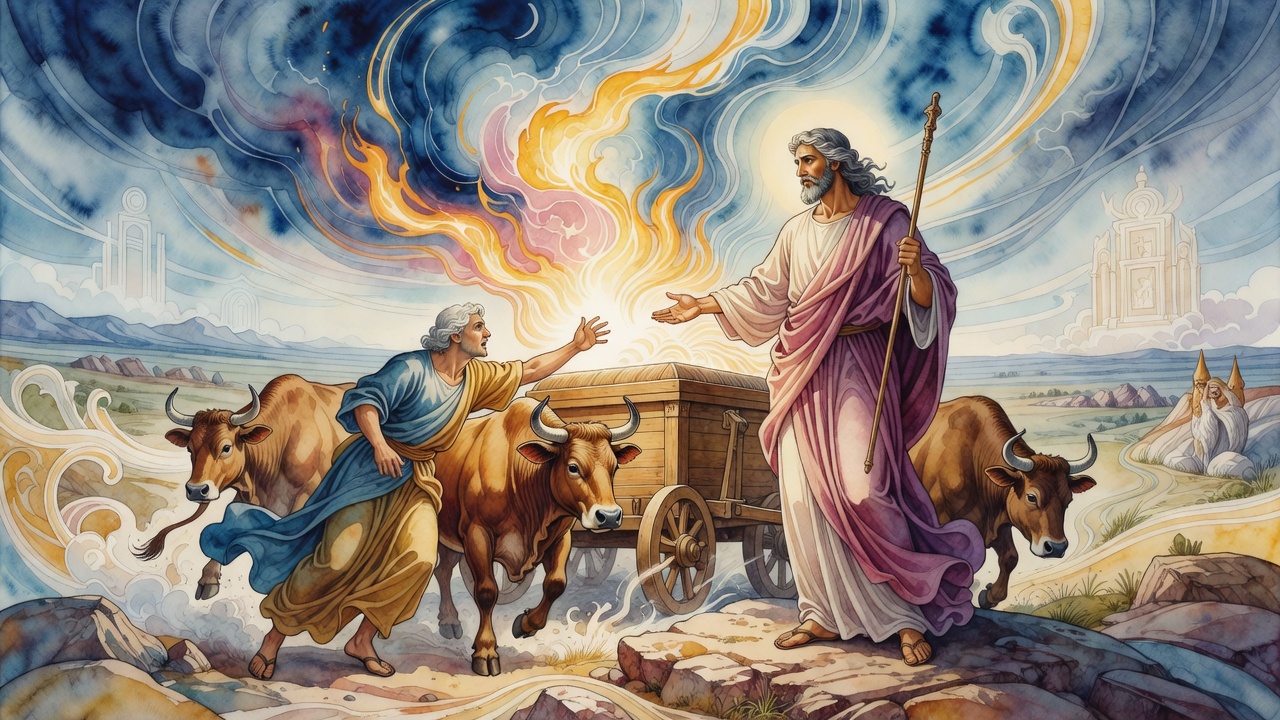
The oxen stumbled and the chest leaped off the wagon. Uzzah put out his hand to save it, and he fell dead before the harps could stop.
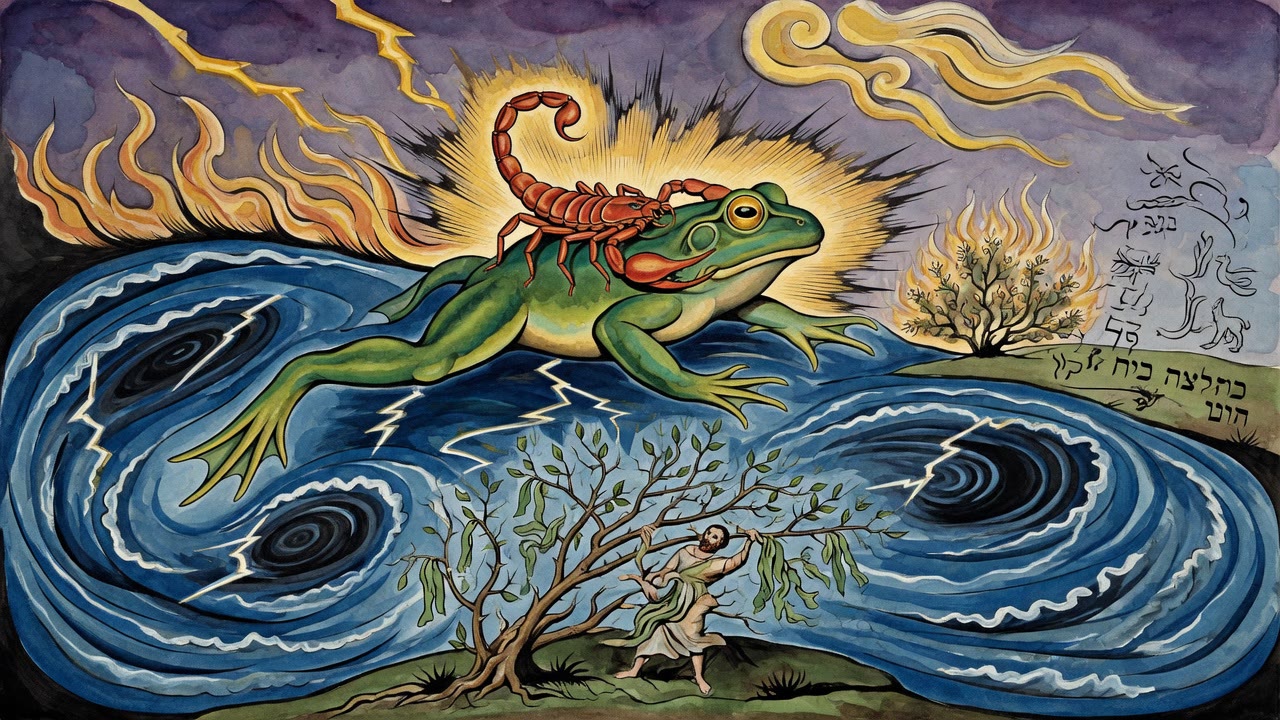
A frog ferried a scorpion to its kill and back. A shrub saved a man until he stripped it off. In Vayikra Rabbah, every creature keeps a mission.
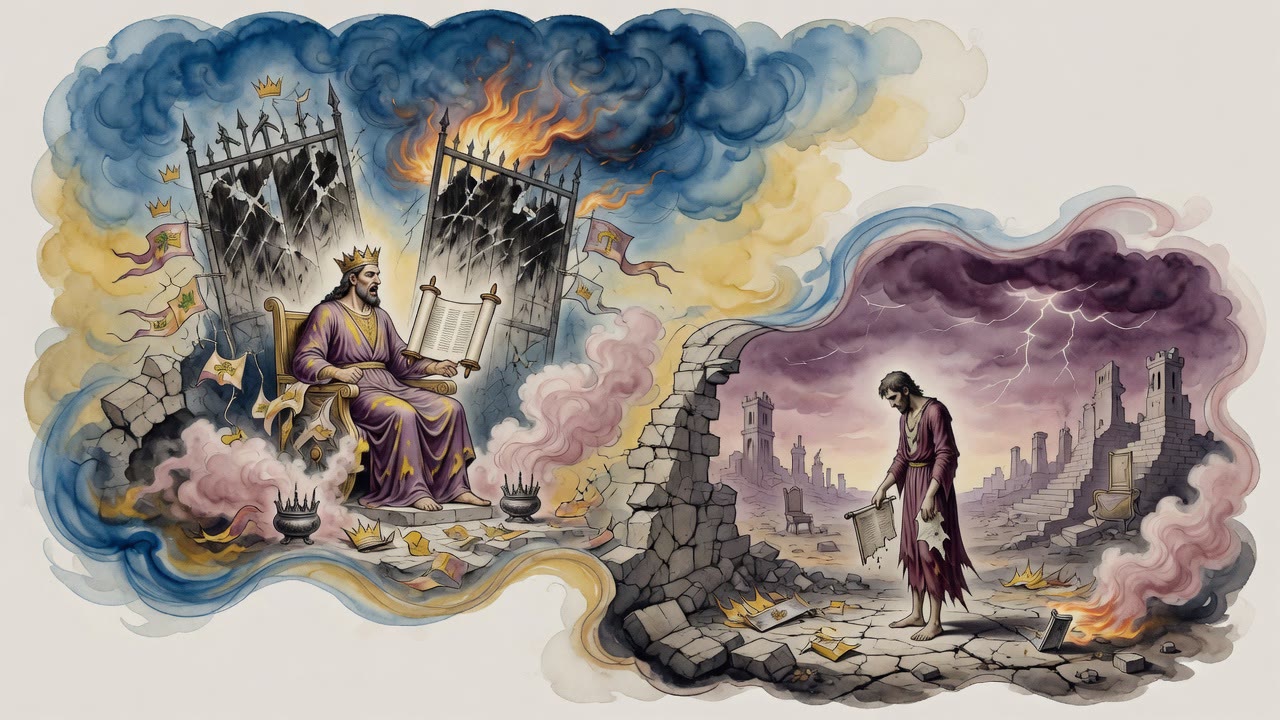
Ahab ruled two hundred and fifty-two kingdoms and denied God on his own gates, yet clutched the Torah. His son Joram kept only the ruin.
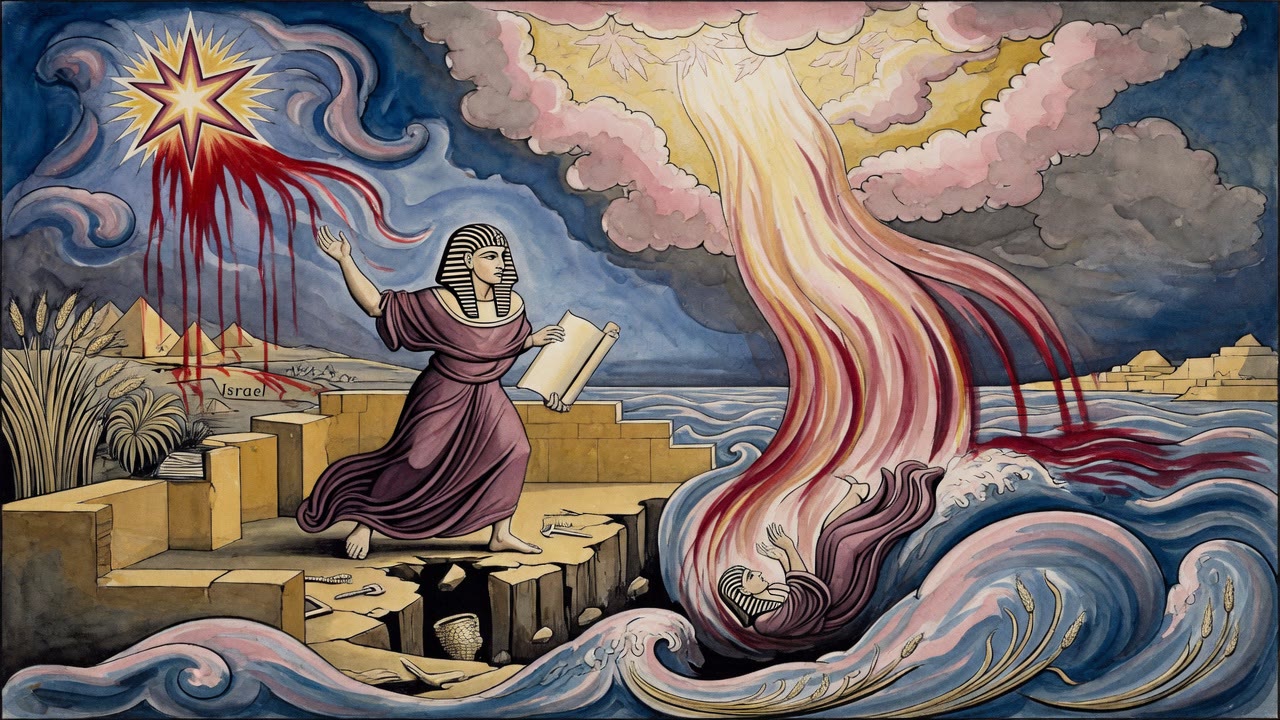
Pharaoh read a star named Evil rising to bleed Israel, but God turned the omen into covenant blood and the sea took the man who dug the pit.
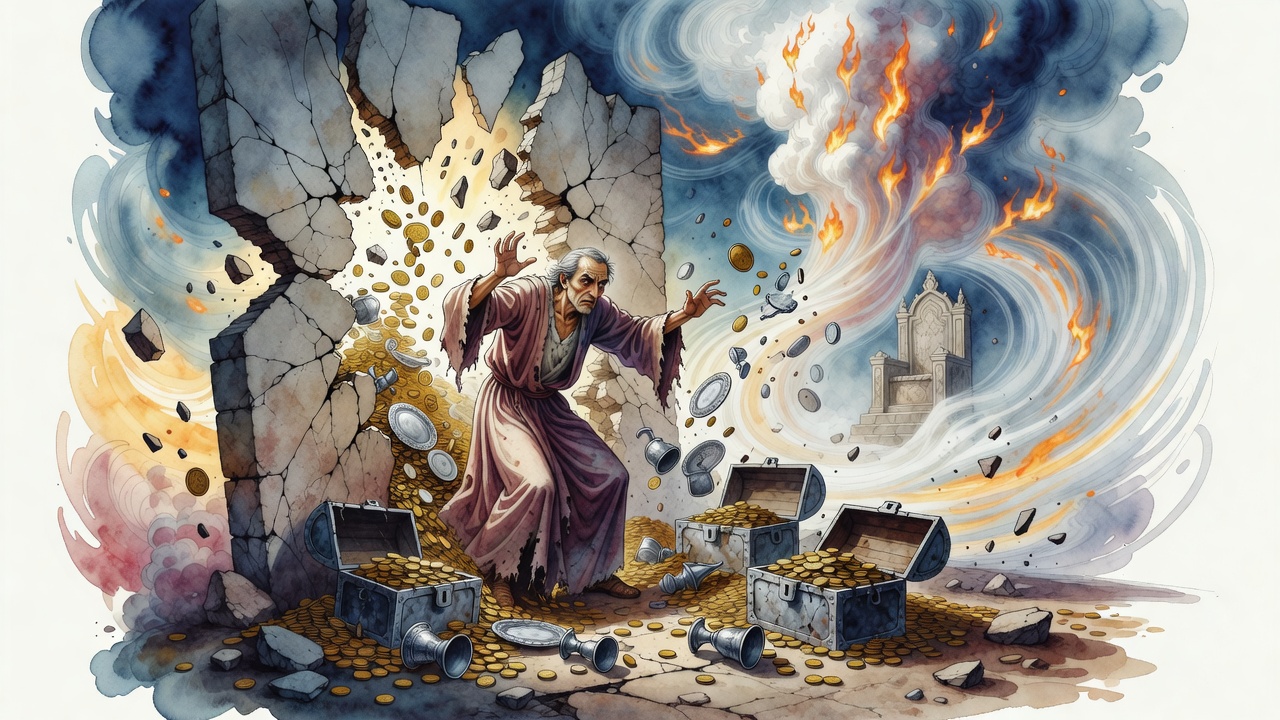
A stingy man swore he owned no scythe, no axe, nothing to lend, until a plague tore his walls open and spilled his hidden hoard for all to see.
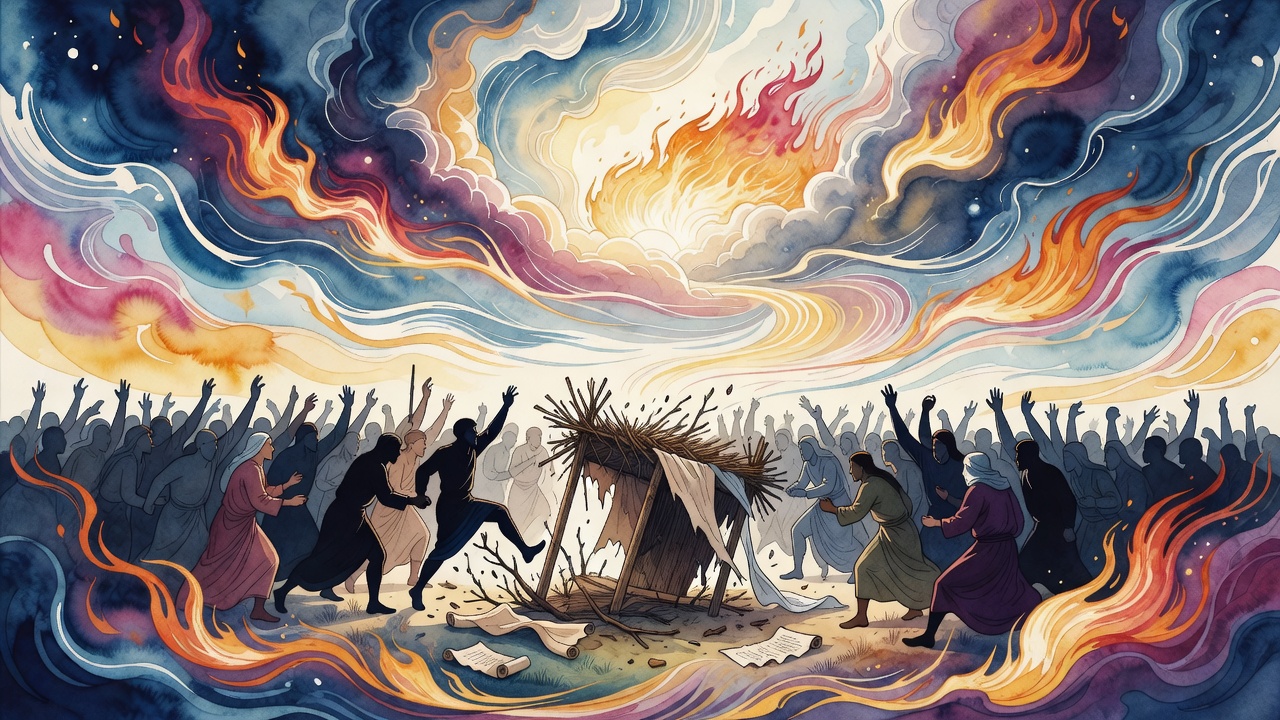
At the final reckoning the nations crowd in for Torah's wages, kick apart the one booth God grants them, and the whole account falls to a single line.
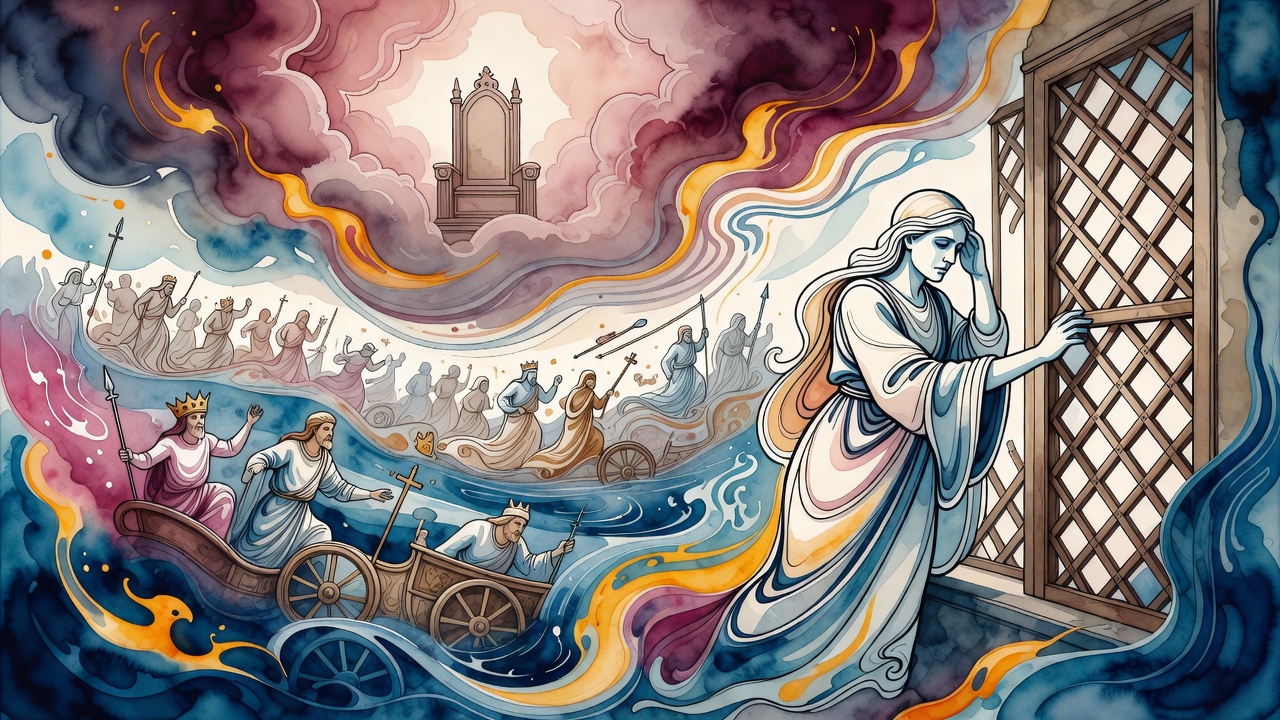
Thirty-one kings marched to drink Israel's waters and drowned at Kishon, while Sisera's mother counted the hours for a son who would never come home.
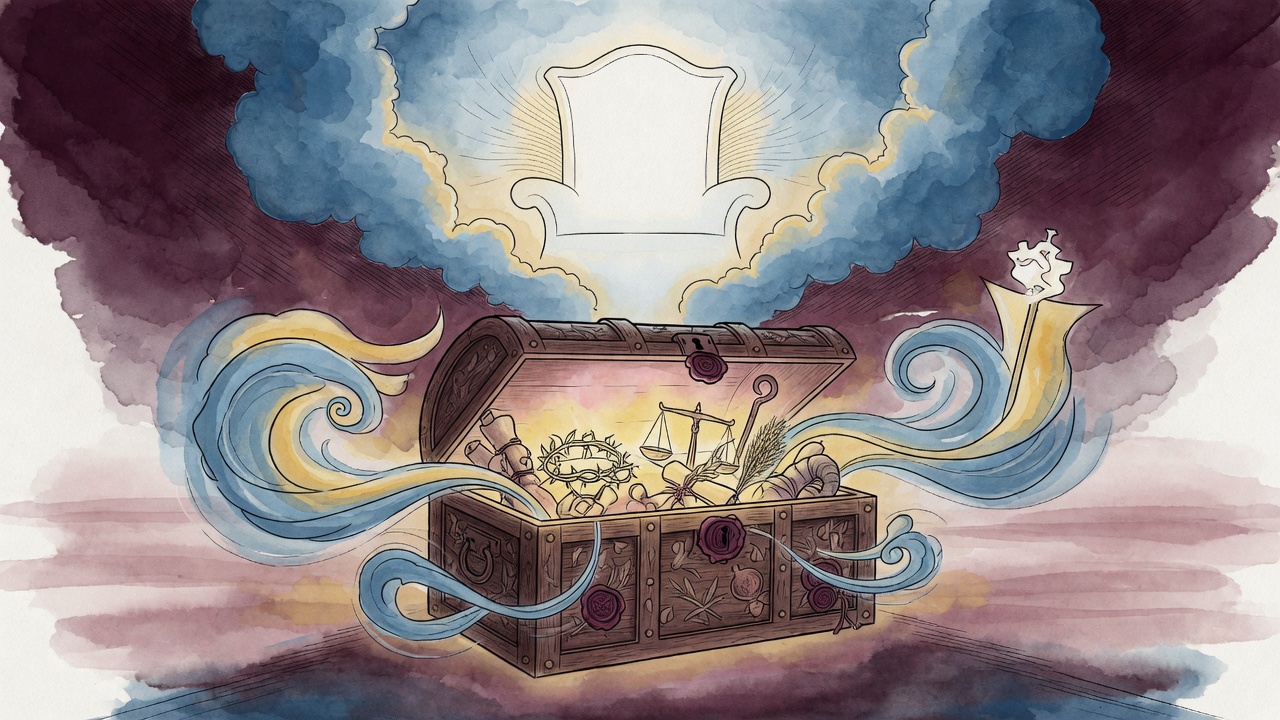
Before light or sea, the name and spirit of the King Messiah waited among God's treasures, sealed until the age when he judges the poor with righteousness.
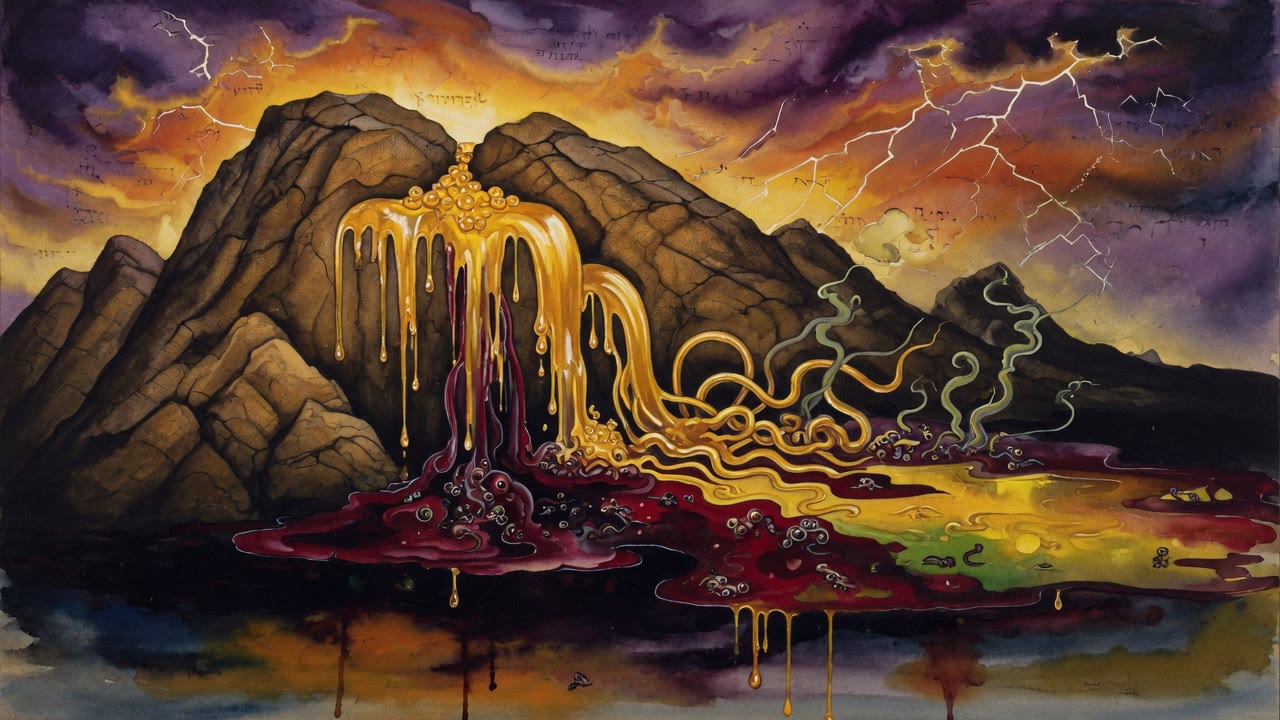
The rock had no seam. Israel put its mouth to the stone and drank honey. Then oil ran from flint, and the nations would not give one coin.
