1,432 texts · Page 10 of 30
Jewish tradition has a fascinating way of grappling with this very idea, especially when we talk about the concept of tikkun (spiritual repair) olam, the "repair of the world." The...
Something breaks – a relationship, a dream, maybe even just a really nice vase – and the pieces are scattered. But what about when something cosmic breaks? Something fundamental to...
Jewish mysticism understands that feeling. It’s baked right into the cosmic process of repair. We’ve talked before about the Sefirot, the ten emanations of divine energy that struc...
Jewish mysticism has a fascinating way of explaining this feeling, diving deep into the structure of the divine itself. We're going to explore an idea from the Kalach Pitchei Chokh...
We've talked before about Zeir Anpin and Nukva – key concepts in Kabbalah often understood as representing the masculine and feminine aspects of the divine, or perhaps more accurat...
It turns out, this ancient Jewish text might just have something to say about that very human experience. We're diving into a fascinating concept from the Kalach Pitchei Chokhmah (...
Jewish mysticism touches on this very feeling, especially when it talks about the concept of Chochmah, or Wisdom. But here's the thing: there's Chochmah, and then there's Chochmah,...
The Tikkunei (spiritual repair) Zohar, meaning "Rectifications of the Zohar," is a later addition to the Zohar, a central text of Kabbalah. It's a deep dive into the mysteries of c...
Jewish mysticism, especially in texts like the Tikkunei (spiritual repair) Zohar, gives voice to this feeling – not just for us, but even, remarkably, for the Divine. The passage w...
Jewish mysticism teaches that this feeling echoes a cosmic reality – a separation, an exile, that affects everything. The Tikkunei (spiritual repair) Zohar, a central text of Kabba...
Maybe, just maybe, the answer lies in a very ancient idea about our connection to the Divine. to a passage from the Tikkunei (spiritual repair) Zohar, a cornerstone of Kabbalistic ...
The Tikkunei (spiritual repair) Zohar, a central text of Kabbalah, certainly sees the connection. It explores this idea in a powerful passage, linking the love between God and Isra...
The Jewish mystical tradition, especially the Zohar, understands this feeling deeply. Exile, both literal and spiritual, is a central theme. But within that feeling of distance, th...
We've got morning, afternoon, and evening prayers. But did you know there's a fascinating distinction made between them? It all comes down to this idea of obligation versus… well, ...
Jewish mysticism, especially when we dive into texts like the Tikkunei (spiritual repair) Zohar, often feels that way at first. But trust me, there's a light to be found, even in t...
The Tikkunei (spiritual repair) Zohar, a core text of Kabbalah, offers a powerful image of just that – a world brimming with voices yearning for connection and redemption. Imagine ...
Take the very first letter of the Torah, the Beiyt (ב) in Be-REiShYT (בראשית) – "In the beginning." The Tikkunei (spiritual repair) Zohar, a central text of Kabbalah, sees this let...
It might even have cosmic implications. to a passage from Tikkunei (spiritual repair) Zohar 42, a section of the Tikkunei Zohar, which is itself a companion and expansion upon the ...
Jewish tradition has a powerful way of describing that feeling: exile. But not just our exile, the exile of the Shekhinah (the Divine Presence). The Shekhinah, often translated as ...
The mystics have been wrestling with this idea for centuries. to a passage from Tikkunei (spiritual repair) Zohar 42 and see what it has to say about God, the Shekhinah, and this i...
The Shekhinah (the Divine Presence)… it's a concept that dances on the edge of definition. We often think of it as the divine feminine, the immanent presence of God dwelling within...
Jewish mysticism understands that feeling, and it gives it a name: exile. Not just the historical exile of the Jewish people, but a deeper, more personal exile that each of us expe...
What does it even mean to say the Shekhinah (the Divine Presence) is in exile? The Tikkunei (spiritual repair) Zohar, a central work of Kabbalah, gives us a stunning metaphor. It d...
Maybe that feeling isn't just in your head. The Tikkunei (spiritual repair) Zohar, a central text of Kabbalah that expands on the Zohar, gives us a glimpse into a cosmic perspectiv...
The mystics of the Zohar, that foundational text of Kabbalah, certainly did. They saw the world as fractured, in need of repair. And at the heart of that repair lies a profound cry...
It turns out, according to some mystical interpretations, it's a lot more than just a marker of time. The Tikkunei (spiritual repair) Zohar, a profound and intricate expansion of t...
They even saw it playing out on a cosmic scale. to a passage from the Tikkunei (spiritual repair) Zohar, specifically Tikkun 47, a section that deals with some pretty heavy stuff: ...
Jewish mysticism has a way of naming those feelings, of giving them a context within the cosmic drama. The Tikkunei (spiritual repair) Zohar, a later expansion on the Zohar itself,...
The Tikkunei (spiritual repair) Zohar, a central text of Kabbalah, paints a powerful picture of what happens when things aren't quite right with the world, and how it affects our c...
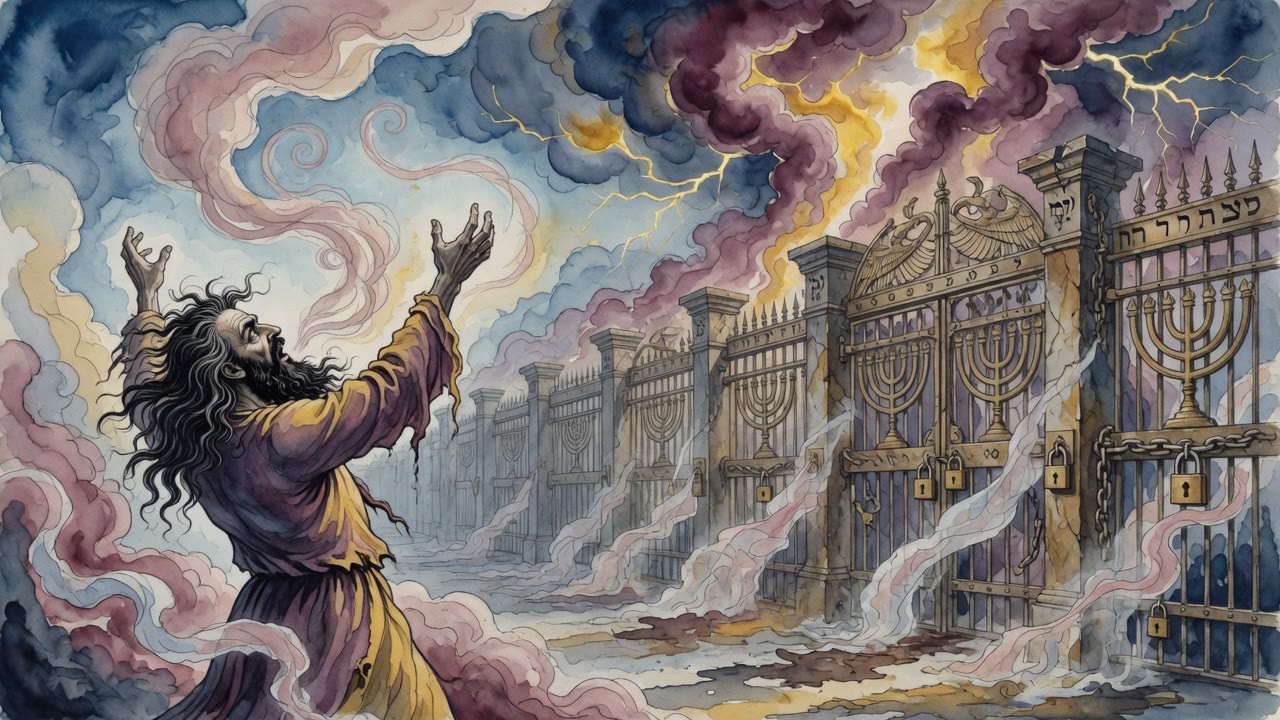
The Tikkunei (spiritual repair) Zohar, a central text of Kabbalah that expands on the Zohar itself, speaks of hidden chambers, spiritual spaces locked away until the right key unlo...
Jewish tradition has a way of grappling with these feelings, of acknowledging the darkness even while holding onto hope. one small but powerful idea from the Tikkunei (spiritual re...
Yeah, you heard me right. Tears. The Tikkunei (spiritual repair) Zohar, a central text of Kabbalah and a companion to the Zohar, tells us that the only gate that’s always open is t...
The passage begins with "Be-REiShYT" – "In the beginning." This isn't just a starting point; it's described as "an Utterance which is the first of all, comprised of all 'ten saying...
Jewish mysticism, especially the Zohar, often feels that way. But sometimes, a small piece clicks into place and suddenly, you glimpse a bigger picture. one of those pieces today, ...
The Kabbalah, the mystical heart of Judaism, speaks of just such a hidden treasure: the Shekhinah, the Divine Presence, in exile. It’s a powerful image, isn’t it? The Shekhinah, of...
In the Tikkunei (spiritual repair) Zohar, a companion work to the Zohar, that foundational text of Kabbalah, we find an intriguing connection between the maror – that bitter herb w...
It might be hiding in plain sight, in the way we treat those closest to us. The Tikkunei (spiritual repair) Zohar, a central text of Kabbalah, hints at this very idea, connecting r...
Sometimes, just sometimes, the mystical texts offer a glimpse, a fleeting impression of that cosmic perspective. The Tikkunei (spiritual repair) Zohar, a later, deeply esoteric exp...
It’s an image of a God who is responsive, moved by our struggles, and ready to shift from judgment to mercy.It all hinges on a verse from the Song of Songs (7:2): "How beautiful ar...
The Tikkunei (spiritual repair) Zohar, specifically Tikkun 69, paints a breathtaking picture of the relationship between Israel, the Shekhinah, and the very Name of God. It's a com...
The ancient mystics did. They saw the divine presence, the Shekhinah, as intimately connected to our actions, our prayers, even our posture. And they poured these insights into tex...
Jewish mysticism has a powerful image for that feeling: the exile of the Shekhinah (the Divine Presence). The Shekhinah, often translated as the Divine Presence, is, in Kabbalistic...
Sometimes, those pieces are hidden in plain sight, tucked away in ancient texts waiting to be rediscovered. Today, let's dust off a passage from the Tikkunei (spiritual repair) Zoh...
Jewish mysticism suggests that they absolutely do. And what's more, our generosity – or lack thereof – plays a profound role in the unfolding of creation itself. to a passage from ...
It holds the key to understanding exile, blessing, and ultimately, redemption. When the prophet saw Israel in exile, what gave him hope? According to the Tikkunei Zohar, he saw no ...
Jewish mysticism often grapples with this feeling, this sense of lack. And nowhere is it more poignant than in the image of the lone Hei. What's a Hei? It's the fifth letter of the...
The Tikkunei (spiritual repair) Zohar, a mystical extension of the Zohar itself, grapples with this very feeling. It suggests that during times of exile – not just a physical exile...
You're not alone. Jewish mystical tradition, especially the Zohar, sees the world as a constant interplay of divine energies, a celestial chess match played out on a grand scale.It...