Idolatry

179 texts · Page 3 of 4

The prohibition against idol worship, the smashing of Abraham's father's idols, and the rabbinic war against avodah zarah.

Every Activity Is a Manifestation of Something Deeper

Kabbalah Kabbalah & Mysticism

What if everything we experience, everything we perceive as solid and concrete, is just… a manifestation? A sort of shimmering reflection of something deeper, something beyond our ...

Levi Studies Torah

Kabbalah Kabbalah & Mysticism

We all probably have at some point. But what happens when that unwavering commitment actually causes harm? That's the kind of sticky situation that Baal HaSulam, in his remarkable ...

When Truth and Falsehood Meet Physical Reality

Kabbalah Kabbalah & Mysticism

And it’s a question that Rabbi Yehuda Leib Ashlag, known as Baal HaSulam (Master of the Ladder) grapples with in his preface to the Zohar, that foundational text of Jewish mysticis...

What Happens When You Try to Think in Pure Abstractions

Kabbalah Kabbalah & Mysticism

That’s kind of what Baal HaSulam, in his “Preface to Zohar,” is getting at when he talks about "abstract forms." He's diving deep into how we perceive reality, and specifically, th...

Four Modes of Perceiving Reality

Kabbalah Kabbalah & Mysticism

And the answer, according to the great Kabbalist Baal HaSulam in his "Preface to Zohar," lies in how we perceive the world around us. Baal HaSulam breaks down our perception into f...

Light and Vessels of Beria

Kabbalah Kabbalah & Mysticism

But Rabbi Yehuda Leib HaLevi Ashlag, known as Baal HaSulam ("Master of the Ladder"), offered a critical key to unlocking its secrets in his preface to the book. What if I told you ...

Four Categories of Desire from Mineral to Human

Kabbalah Kabbalah & Mysticism

The great Kabbalist Baal HaSulam, in his preface to the Zohar, gives us a framework for understanding the root of our desires, and it's a fascinating one. He breaks it down into fo...

Heart of Understanding

Kabbalah Kabbalah & Mysticism

It’s a fascinating question, and Kabbalah, particularly through the wisdom of Baal HaSulam in his “Preface to Zohar,” offers a pretty compelling answer. He breaks down our nourishm...

How Higher Worlds Imprint Their Qualities on Lower Ones

Kabbalah Kabbalah & Mysticism

And the answer, according to Kabbalah, is…imprints. Think of it like this: each world, each level of existence, leaves its mark on the one below. It’s a cascading effect, a divine ...

Baal HaSulam's Guide to the Wisdom of the Zohar

Kabbalah Kabbalah & Mysticism

That feeling is understandable, especially when we dive into texts like the Zohar. The Zohar, a foundational work of Kabbalah (Jewish mysticism), is a sprawling, poetic, and often ...

Our Actions Ripple Through the Cosmic Structure

Kabbalah Kabbalah & Mysticism

We’re down here, muddling through our lives, and the Zohar, that mystical heart of Kabbalah, suggests our actions ripple all the way up, somehow affecting the very structure of the...

Vessels and Sparks of Atzmut

Kabbalah Kabbalah & Mysticism

That feeling, that elusiveness, might actually be built into the very fabric of reality, at least according to some profound mystical teachings. We're going to delve into a passage...

Ein Sof Before Creation and What We Cannot Know

Kabbalah Kabbalah & Mysticism

That’s kind of what we’re up against when we talk about Ein Sof (the Infinite, God beyond all attributes). What is Ein Sof, anyway? The term literally translates to "without end," ...

The First Thought Contains Everything That Will Ever Be

Kabbalah Kabbalah & Mysticism

And while we can never truly grasp the infinite, Jewish mystical tradition, especially the Zohar, offers some tantalizing glimpses. According to Baal HaSulam, in his preface to the...

Ein Sof's Initial Thought Already Contained Everything

Kabbalah Kabbalah & Mysticism

And the answer, according to some of the deepest Kabbalistic teachings, is more mind-bending than you might think. The great Kabbalist, Baal HaSulam (Rabbi Yehuda Leib HaLevi Ashla...

The Gap Between Potential in Atzilut and Actuality Below

Kabbalah Kabbalah & Mysticism

It’s a question that has driven mystics for centuries, and it all boils down to understanding the difference between potential and actuality. Baal HaSulam, in his preface to the Zo...

The Cosmic Blueprint and How Creation Unfolds

Kabbalah Kabbalah & Mysticism

It’s a fascinating question, and one that leads us straight into the heart of Baal HaSulam's profound insights in his "Preface to the Zohar." (That's Rabbi Yehuda Leib Ashlag, for ...

Everything Already Exists in Potential Within Ein Sof

Kabbalah Kabbalah & Mysticism

Jewish mysticism offers a fascinating perspective: that the very thing we're striving for – complete rectification, total connection – already exists. It’s not about creating somet...

Nothing Truly Originates in This World

Kabbalah Kabbalah & Mysticism

Baal HaSulam, in his preface to the Zohar – that mystical, foundational text of Kabbalah – offers a fascinating perspective. He suggests that nothing truly originates in this world...

From Ein Sof Through the Four Worlds to Our Reality

Kabbalah Kabbalah & Mysticism

Kabbalah, the Jewish mystical tradition, offers a breathtaking answer. It tells us that everything – absolutely everything – originates from the ultimate source, a realm beyond com...

What 'His Life' Means in the Language of the Zohar

Kabbalah Kabbalah & Mysticism

Specifically, let's look at a passage explained by Baal HaSulam, one of the most important commentators on the Zohar. He wrote a famous preface that is like a map to help us naviga...

He, His Life, and His Attributes Are One

Kabbalah Kabbalah & Mysticism

That feeling is central to understanding the Zohar, the foundational text of Jewish mysticism, and especially as illuminated by Baal HaSulam in his profound prefaces. He grapples w...

The Lamp That Never Dims No Matter How Many Candles You Light

Kabbalah Kabbalah & Mysticism

It’s a question that’s captivated mystics and philosophers for centuries. Baal HaSulam, in his preface to the Zohar, offers a beautiful analogy to help us understand this concept. ...

How Perception Shapes Our Experience of the Divine

Kabbalah Kabbalah & Mysticism

That’s kind of what we’re talking about today. It's a concept that dives deep into how we perceive the Divine, how we understand the very nature of reality itself. And it all stems...

Why the Zohar's Concealed Matters Are Easily Misunderstood

Kabbalah Kabbalah & Mysticism

It's... dense. Beautiful, profound, but definitely dense. And that's why I'm so grateful for the work of people like Baal HaSulam (Rabbi Yehuda Leib Ashlag), a 20th-century Kabbali...

Perceiving Ein Sof Through Sefirot Like Stained Glass

Kabbalah Kabbalah & Mysticism

It’s a question that has haunted mystics and theologians for centuries. How can we, bound by time and space, truly perceive Ein Sof, the Endless One? The answer, according to Kabba...

Words About God Can Never Define God

Kabbalah Kabbalah & Mysticism

You grasp for words, knowing they’ll always fall short. And that, in a nutshell, is a tiny piece of the challenge we face when we talk about the Divine. Because here's the thing: w...

God Wants Us to Perceive Changes in His Attributes

Kabbalah Kabbalah & Mysticism

And when we talk about the Zohar, that foundational text of Jewish mysticism, we need to talk about the commentaries that help us understand it. One of the most important is by Baa...

She Is Gathering the Pieces - The Shekhinah Repairs

Kabbalah Kabbalah & Mysticism

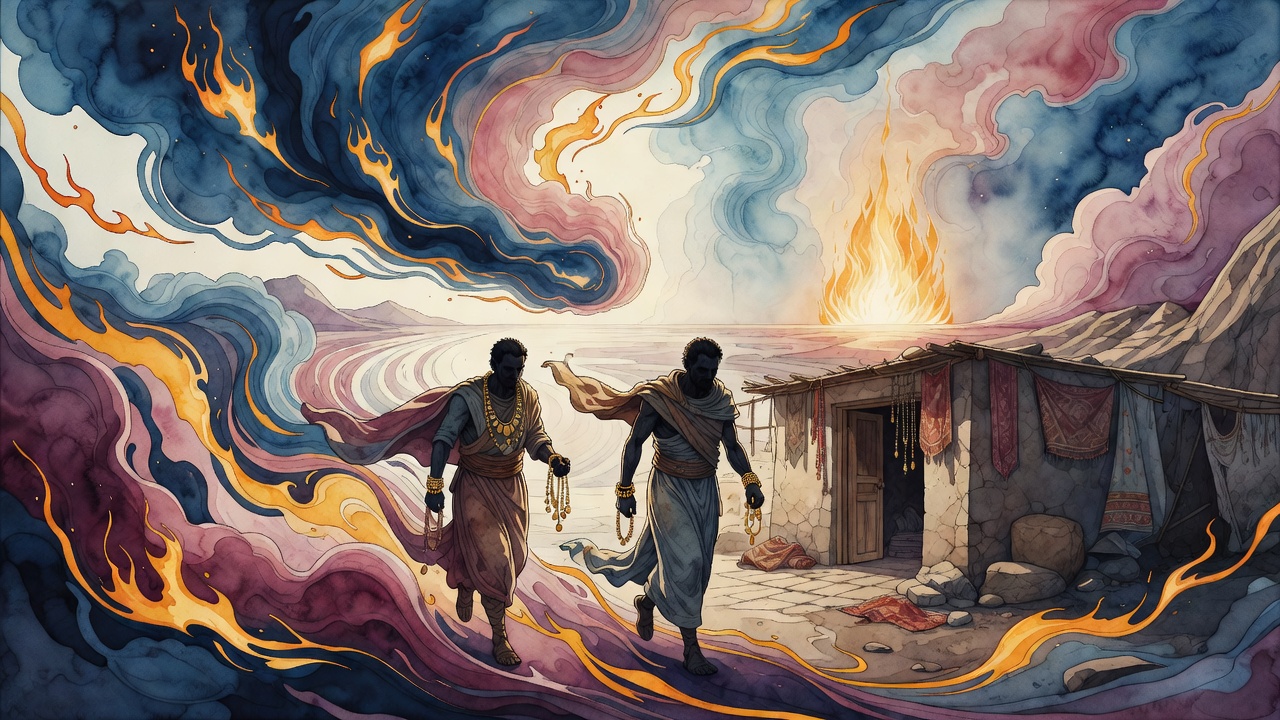
Broken promises, broken systems, broken hearts... What if I told you that even in the face of such destruction, there's a force, a She, that's actively shattering the idols we clin...

Nathan says — Judgments (2) upon judgments (2) — They rotted

Mekhilta DeRabbi Yishmael Mekhilta DeRabbi Yishmael

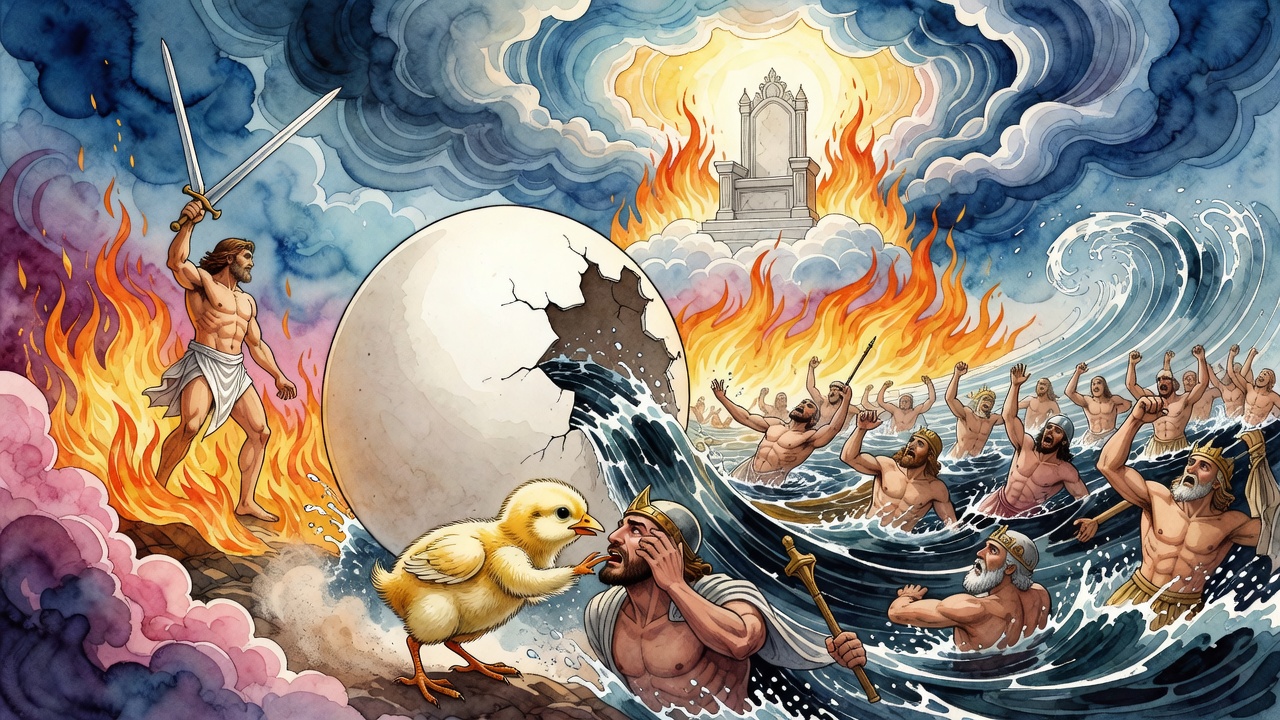
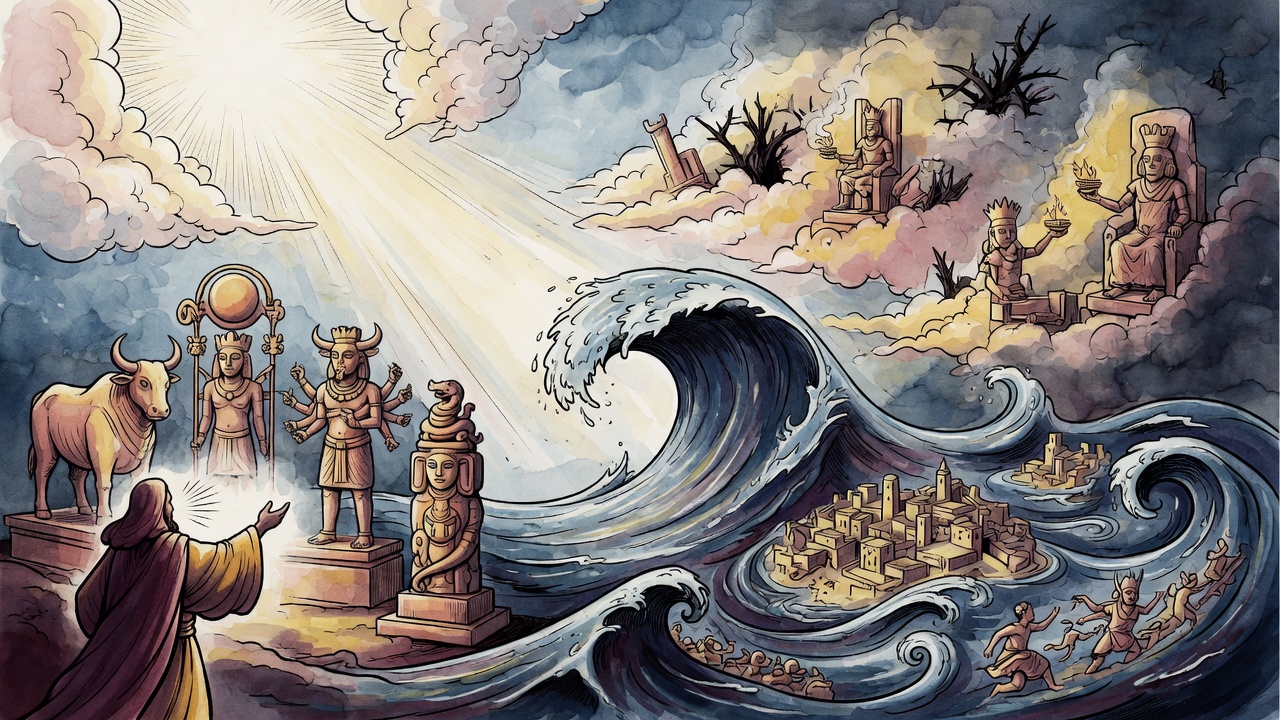
Rabbi Nathan counts the destruction with a mathematician's precision and arrives at a devastating tally. The gods of Egypt were not merely destroyed — they were destroyed four time...

Variantly — "Chiroth" connotes the place of their (Israel's)

Mekhilta DeRabbi Yishmael Mekhilta DeRabbi Yishmael

The place where Israel camped before crossing the Red Sea bore a name loaded with meaning. The Mekhilta offers multiple interpretations of "Chiroth" — and each one tells a differen...

before Ba'al Tzefon" — Only Ba'al Tzefon remained of all

Mekhilta DeRabbi Yishmael Mekhilta DeRabbi Yishmael

Of all the idols in Egypt, only one survived the plagues: Ba'al Tzefon. The Mekhilta explains that God deliberately left this single idol standing — and then commanded Israel to ca...

and they overtook them camping by the sea … (Ibid

Mekhilta DeRabbi Yishmael Mekhilta DeRabbi Yishmael

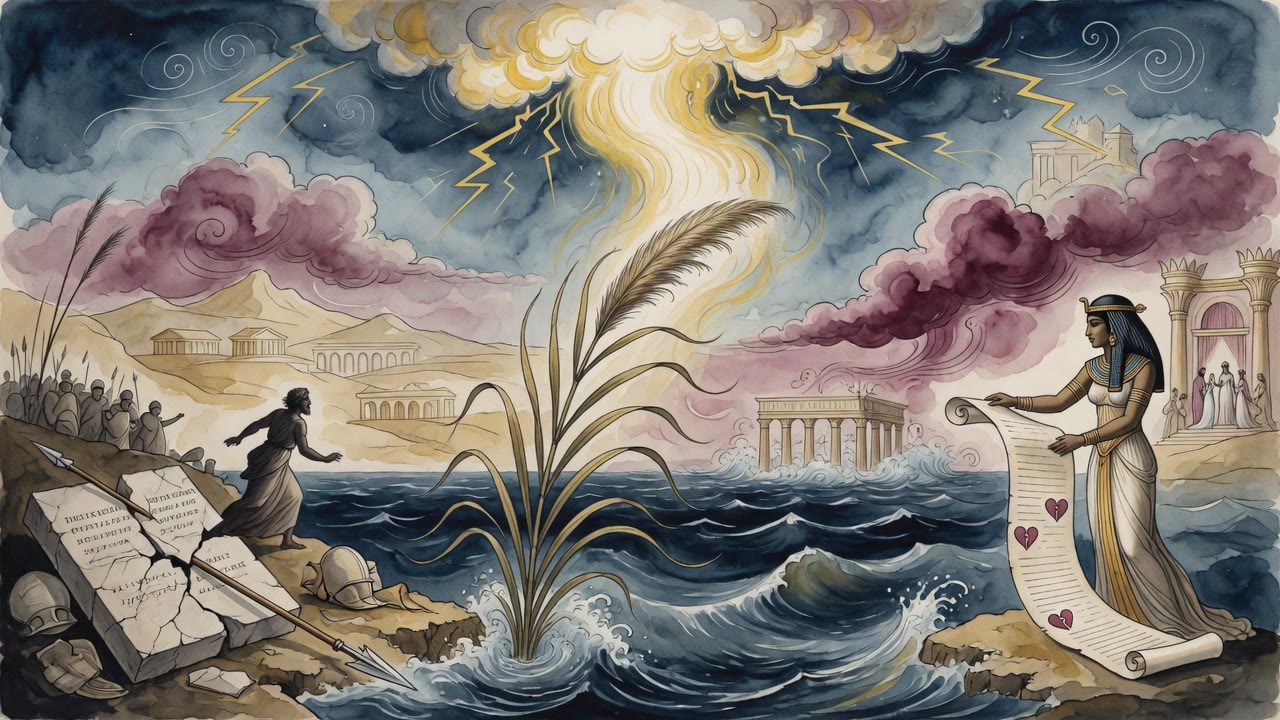
The Mekhilta reveals a darkly ironic scene at the shore of the Red Sea. Pharaoh caught up with the Israelites camped by the water, and the Torah says he "pressed ahead." But the Me...

And not only did Israel alone break out in song

Mekhilta DeRabbi Yishmael Mekhilta DeRabbi Yishmael

Israel was not the only nation that broke into song at the Red Sea. According to the Mekhilta, all the peoples of the world joined in. The destruction of Pharaoh and his army sent ...

And thus do you find to be the lot of idolatry—that the

Mekhilta DeRabbi Yishmael Mekhilta DeRabbi Yishmael

The Mekhilta takes the worldwide rejection of idolatry at the Red Sea and projects it forward into the future. What happened momentarily at the sea — when all nations opened their ...

Similarly, (Numbers 25 — 18) "Kazbi, the daughter of a prince

Mekhilta DeRabbi Yishmael Mekhilta DeRabbi Yishmael

The Mekhilta asks a question about Kazbi (also known as Cozbi), the Midianite woman who played a central role in the sin at Baal Peor. The verse calls her "the daughter of a prince...

Elazar Hamodai says — When will the name of these go lost

Mekhilta DeRabbi Yishmael Mekhilta DeRabbi Yishmael

Rabbi Elazar Hamodai posed a question that pointed toward the end of history itself: When will the name of Amalek finally be erased from the earth? The answer was not tied to any b...

And Yithro heard" — Yithro had seven names — Yether, Yithro

Mekhilta DeRabbi Yishmael Mekhilta DeRabbi Yishmael

Yithro, the father-in-law of Moses, had seven names — and the Mekhilta explains that each name encoded a different aspect of his extraordinary character. Yether — because he "added...

than all the gods" — They said — There was no idolatry in the

Mekhilta DeRabbi Yishmael Mekhilta DeRabbi Yishmael

The Mekhilta deepens the significance of Yithro's confession by pointing out that he was uniquely qualified to make it. "There was no idolatry in the world that Yithro did not come...

who took you out from the land of Egypt" — They were

Mekhilta DeRabbi Yishmael Mekhilta DeRabbi Yishmael

The Mekhilta DeRabbi Yishmael pauses on a single phrase from the Ten Commandments to ask a question about dignity. When God declared "who took you out from the land of Egypt," what...

There shall not be unto you" — What is the intent of this

Mekhilta DeRabbi Yishmael Mekhilta DeRabbi Yishmael

The Mekhilta DeRabbi Yishmael identifies a crucial legal distinction hidden in the commandment "There shall not be unto you other gods." The question is deceptively simple: what ex...

Eliezer says — "elohim acherim" — They "renew" gods for

Mekhilta DeRabbi Yishmael Mekhilta DeRabbi Yishmael

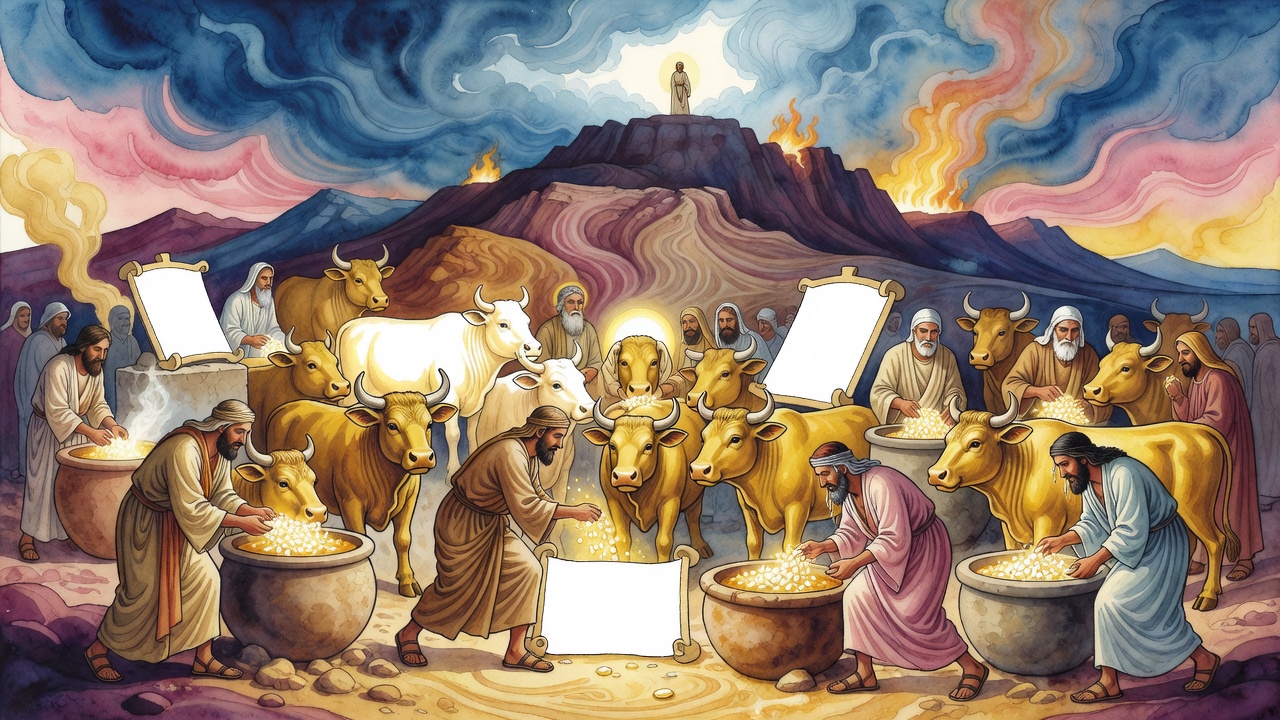
Rabbi Eliezer offered a mordantly funny interpretation of the phrase "elohim acherim" (other gods) in the Mekhilta DeRabbi Yishmael. He connected "acherim" not to "otherness" but t...

Even a Wood Chip Can Become an Idol if You Crown It

Mekhilta DeRabbi Yishmael Mekhilta DeRabbi Yishmael

Rabbi Chanina ben Antignos offered one of the sharpest anti-idolatry arguments in the entire Mekhilta, and he did it with a single devastating observation about language. The Torah...

before My presence" — What is the intent of this

Mekhilta DeRabbi Yishmael Mekhilta DeRabbi Yishmael

The Mekhilta DeRabbi Yishmael examines the phrase "before My presence" in the prohibition against idolatry, asking what this seemingly redundant qualifier adds. The answer reveals ...

4) "You shall not make for yourself an idol (lit

Mekhilta DeRabbi Yishmael Mekhilta DeRabbi Yishmael

(Ibid. 4) "You shall not make for yourself an idol (lit., "a carving")": I might think that he may not make one that projects but he may make one that is flat. It is, therefore, wr...

A certain philosopher asked R

Mekhilta DeRabbi Yishmael Mekhilta DeRabbi Yishmael

A certain philosopher asked R. Gamliel: It is written in your Torah "for the L–rd your G–d is a wrathful G–d." Now is there power in idolatry to arouse wrath (in G–d)? One here is ...

It is written "There shall not be unto you any other gods

Mekhilta DeRabbi Yishmael Mekhilta DeRabbi Yishmael

Idolatry and adultery are the same sin. The Mekhilta DeRabbi Yishmael, a 3rd-century CE halakhic midrash (rabbinic interpretive commentary), makes this case by pointing to the stru...

And all who are haughty of heart cause the land to be

Mekhilta DeRabbi Yishmael Mekhilta DeRabbi Yishmael

And all who are haughty of heart cause the land to be defiled and the Shechinah to depart, as it is written (Ibid. 101:5) "The haughty of eyes and the broad of heart, him will I no...