5,036 texts · Page 32 of 105
"This is the statute of the Paschal offering." Scripture speaks of (both) the Pesach (Passover) of Egypt and the Pesach for all the generations. These are the words of R. Oshiyah. ...
The Torah commands: "The entire congregation of Israel shall offer it" (Exodus 12:47). The Mekhilta asks why this verse is necessary at all, given that the Torah already instructed...
God spoke to Moses with a command that sounds absolute: "Sanctify unto Me every first-born" (Exodus 13:1-2). Every first-born — of humans, of animals, of everything that opens the ...
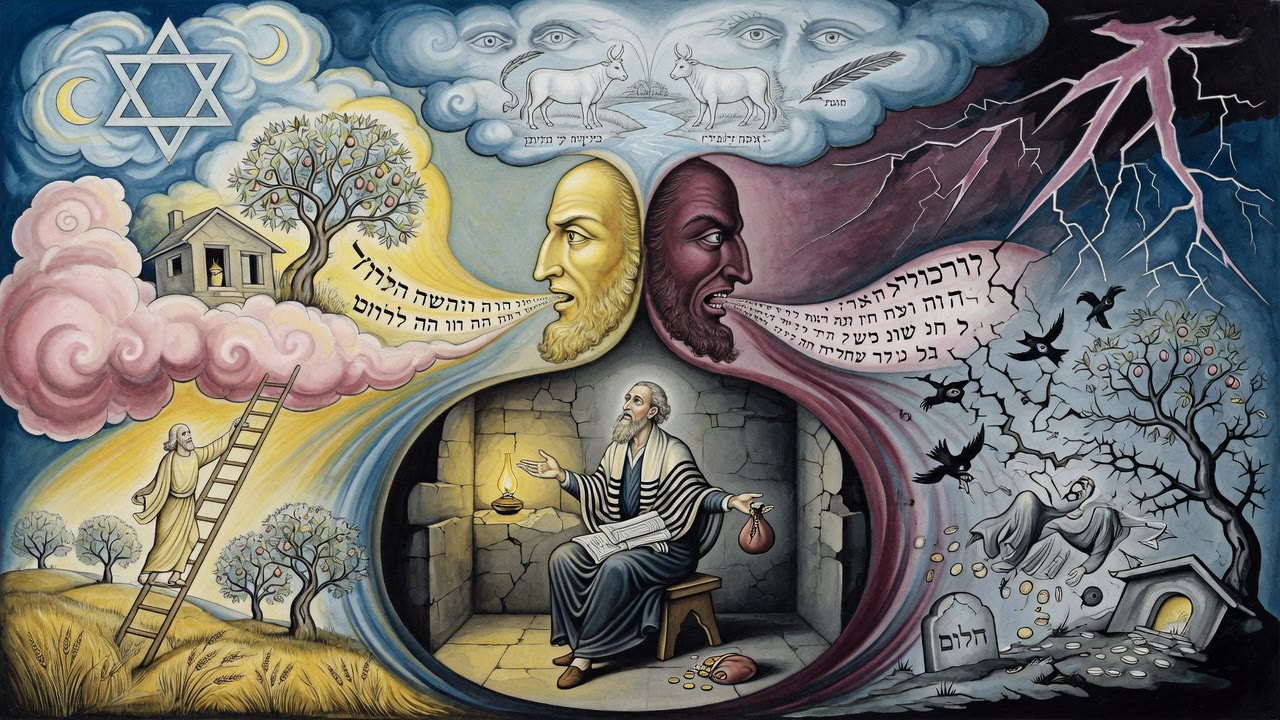
The students of a great teacher reported that he expounded a striking principle using the words of the prophet Jeremiah: "Therefore, behold, days are coming, says the Lord, when it...
Moses commanded the people: "Remember this day when you went out of Egypt" (Exodus 13:3). The Mekhilta notices that this verse, taken alone, refers to the daytime — "this day." The...
The sages say: "the days of your life"—in this world; "all the days of your life"—to include the days of the Messiah. Ben Zoma said to them: Israel is destined not to mention the e...
Rabbi Nathan noticed something striking in the Torah's language about the Exodus. The text uses two verbs — "who brought up" and "who brought" — when describing God's act of taking...
Rabbi Nathan offered a striking interpretation of the word bakosharoth from (Psalms 68:7), "He takes out the bound bakosharoth." Rather than reading it as a single word, he split i...
Rabbi Elazar ben Azaryah, one of the most prominent Tannaitic sages, made a bold claim about why God chose to liberate Israel from Egypt. It was not because of anything the enslave...
Variantly (Psalms 68:7) "G–d settles the solitary in their homes. He takes out the bound bakosharoth. But rebels dwelling in dryness, etc.": They were rebels, in spite of which He ...
"This day you go out in the month of Aviv" (Exodus 13:3) — a verse that seems to state the obvious. Of course Israel left in the month of Aviv (spring). The Torah already told us t...
(Exodus 13:5) speaks of the land "which He swore to your forefathers." The Mekhilta asks a direct question: where exactly in the Torah did God swear this oath to each of the patria...
(Exodus 13:9) speaks of the account of the Exodus serving "as a sign upon your hand." The Mekhilta derives from this verse a specific ruling about the construction of tefillin — th...
There are four sons: a wise son, a wicked son, a simple son, and one who does not know how to ask. What does the wise son say? "What are the testimonies and the statutes and the ju...
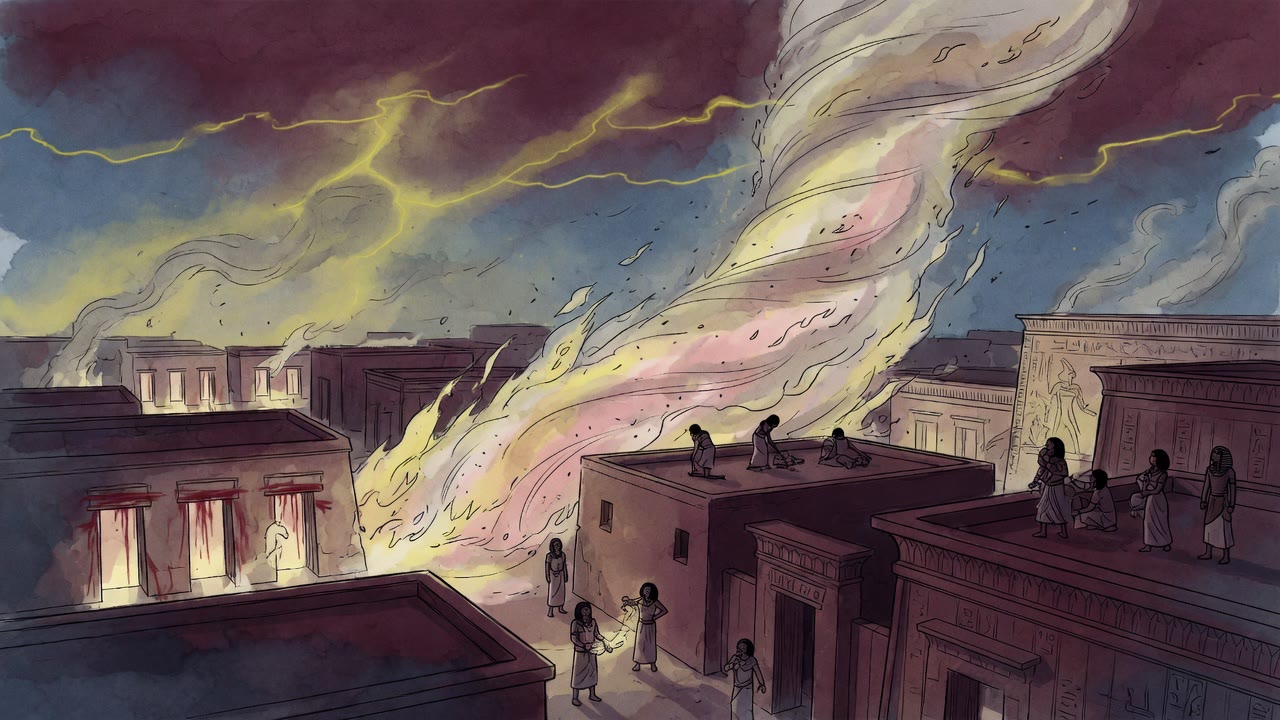
The Torah draws a direct line between the tenth plague and a permanent commandment: "And the Lord killed every first-born... therefore, I sacrifice to the Lord every male first-bor...
(Exodus 13:17) "And it was, when G–d sent ("shalach") the people": "sending" in all places is accompaniment, viz. (Genesis 18:16) "And Abraham went with them to send them," (Ibid. ...
"by way of the land of the Philistines, for it was near": Near (i.e., "close") is the thing of which the Holy One Blessed be He spoke to Moses (Exodus 2:12): "When you take the peo...
(Ibid.) "for the L–rd said: Lest the people bethink themselves when they see war": This is the war of Amalek, viz. (Numbers 14:45). "Variantly: "for the L–rd said, etc.": This is t...
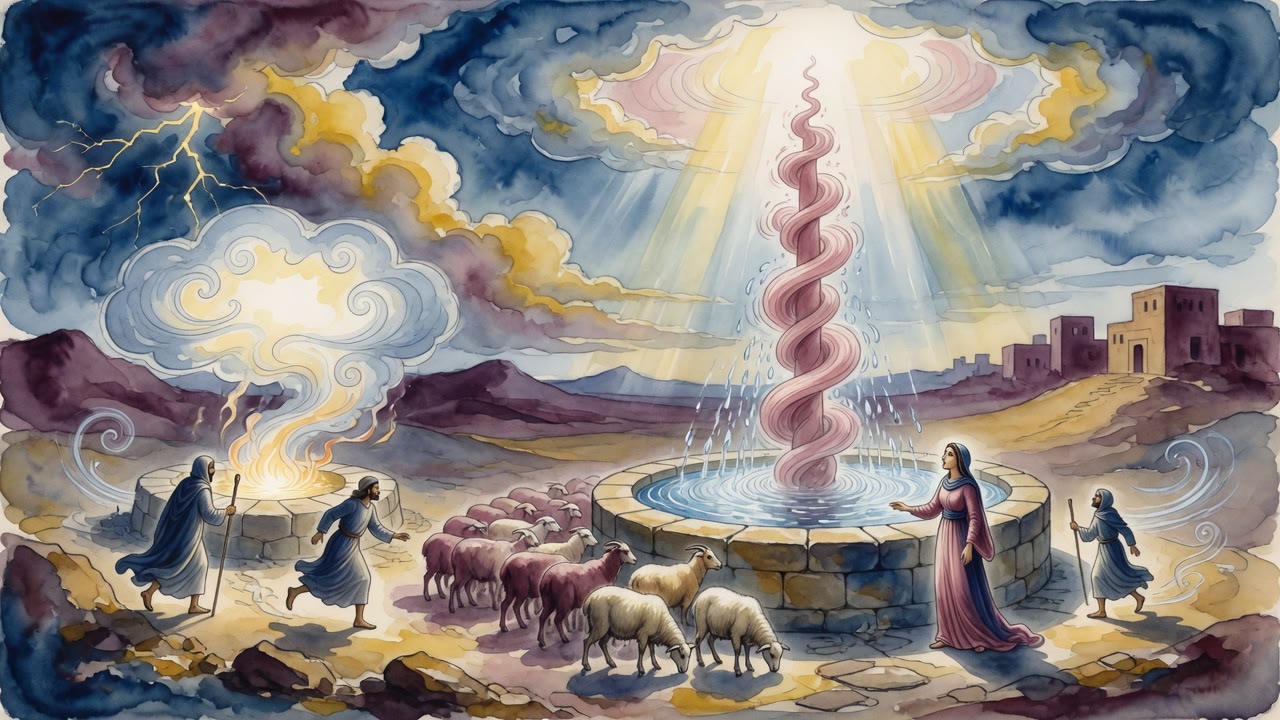
(Exodus 13:18) "And G–d led the people circuitously by way of the desert to the Red Sea": in order to perform miracles and mighty acts with the manna and the quail and the well. R....
(Ibid.) "And chamushim did the children of Israel go up from the land of Egypt": "chamushim" indicates "armed," as in (Joshua 1:14) "Then you shall cross over chamushim" (in contex...
R. Nehorai says: I swear: Not one in five hundred went up. For it is written (Ezekiel 16:7) "(In Egypt) I made you as numerous as the plants of the field," and (Exodus 1:7) "And th...
(Exodus 13:19) "And Moses took the bones of Joseph with him": This apprises us of the wisdom and saintliness of Moses. All of Israel were occupying themselves with the spoils (of E...
Do not wonder at this phenomenon. For it is written (II Kings 6:5-6) "As one of them was felling a tree, the ax blade fell into the water, and he cried out 'Alas, master, (Elisha);...
To teach us that as one metes it out to others, so is it meted out to him. Miriam waited a short time for Moses, viz. (Ibid. 2:4) "And his sister stood from afar to know what would...
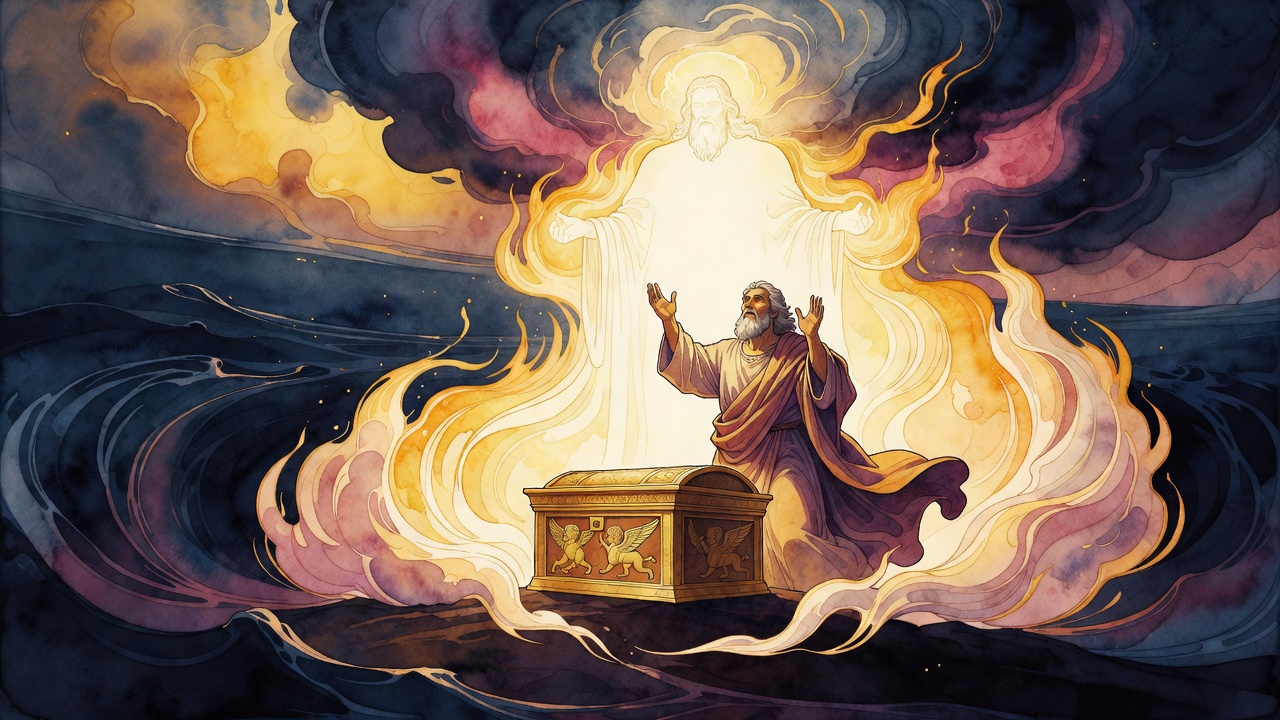
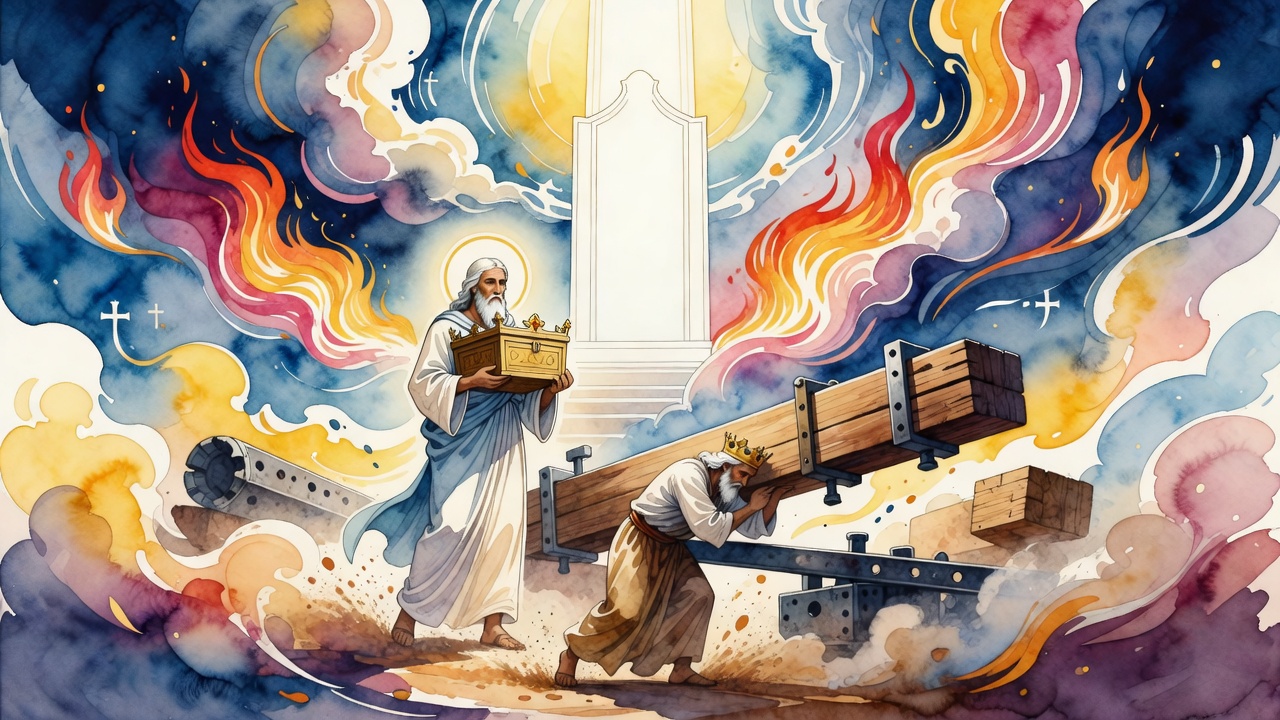
What is more, with (the casket of) Jacob there went up the servants of Pharaoh and the elders of his household, while with Joseph there went up the ark and the Shechinah and the Co...
In what lies in the other ark it is written (Exodus 20) "I am the L–rd your G–d," and of Joseph it is written (Genesis 50:19) "Am I in the place of G–d?" In what lies in this ark i...
(Exodus 13:19) "For hashbea hishbia the children of Israel": He (Joseph) had made them (his brothers) swear ("hashbea") that they would beswear ("hishbia") their children. R. Natha...
Joseph made his brothers swear a solemn oath, and the Mekhilta records the exact logic behind his request. He said to them: "My father went down to Egypt of his own free will, and ...
Joseph spoke a prophecy to his brothers before he died: "God will surely remember you" (Genesis 50:25). The Hebrew uses a doubled verb — "pakod yifkod" — and the Mekhilta finds in ...
(Exodus, Ibid. 21) "And the L–rd went before them by day": We are hereby taught that as one metes it out to others, so is it meted out to him. Abraham accompanied the ministering a...
Thus did the Holy One Blessed be He impress upon the nations of the world His love of Israel—He Himself walking before them, so that they (learn to) treat them honorably. And let a...
(Exodus 14:1-2) "And the L–rd said to Moses, saying: Speak to the children of Israel that they return and encamp": R. Shimon b. Yochai says: Wherever it is written "saying and tell...
The place where Israel camped before crossing the Red Sea bore a name loaded with meaning. The Mekhilta offers multiple interpretations of "Chiroth" — and each one tells a differen...
The children of Israel journeyed from Ramses to Succoth, and from Succoth to Eitam, and from Eitam to Pi Hachiroth. On the fifth day (of the week) they journeyed from Egypt, and th...
Of all the idols in Egypt, only one survived the plagues: Ba'al Tzefon. The Mekhilta explains that God deliberately left this single idol standing — and then commanded Israel to ca...
(Exodus 14:3) "And Pharaoh will say about the children of Israel: They are nevuchim in the land": "nevuchim" is "confounded," as in (Joel 1:18) "How the beasts groan! The herds of ...
(Exodus 14:4) "And I shall strengthen Pharaoh's heart": for it was divided, whether to pursue or not to pursue. "and I will be honored through (the downfall of) Pharaoh and all of ...
"and I will be honored through Pharaoh": Scripture here apprises us that when the L–rd exacts punishment of the nations, His name is aggrandized in the world, as it is written (Isa...
When Moses gave the order to turn back toward Egypt — seemingly marching straight into danger — the people obeyed without argument. The Mekhilta says: "And they did so." Three word...
Pharaoh was told "that the people had fled" (Exodus 14:5). But had Israel actually fled? The Torah itself states in (Numbers 33:3) that "on the morrow of the Pesach, the children o...
In the past, Pharaoh's servants said to him (Exodus 10:7) "How long will this one be a stumbling block to us?" and now (Ibid. 14:5) "What is this that we did in sending Israel away...
An analogy: A man sent to his servant: Go and bring me a fish from the marketplace. He goes and buys him a rotten fish, at which the master says to him: Either eat the fish, or rec...
"And the heart of Pharaoh was reversed" (Exodus 14:5). The Mekhilta reads this reversal not as a change of mind about letting Israel go, but as the collapse of an empire. When Isra...
The nations will clang to us like a bell, saying: Now if these (Jews), who were under their thumb, they let go and they left, why should we send to Aram Naharayim and to Aram Tzova...
What is written of the fourth kingdom (Aram)? (Ibid. 23) "This is what he said: The fourth beast: There will be a fourth kingdom upon the earth which will be different from all the...
Rabbi Yossi HaGlili told a parable to explain one of the most staggering miscalculations in the history of Egypt. A man inherited a beth kor of land — a sizable property — and sold...
Rabbi Shimon ben Yochai offered his own version of the parable about Egypt's catastrophic miscalculation, and his telling amplified the scale of the blunder dramatically. A man inh...
The Torah says simply that Pharaoh "harnessed his chariot" (Exodus 14:6). The Mekhilta reads those four words as a revelation of just how consumed Pharaoh was by his obsession to r...