308 myths · Page 3 of 11
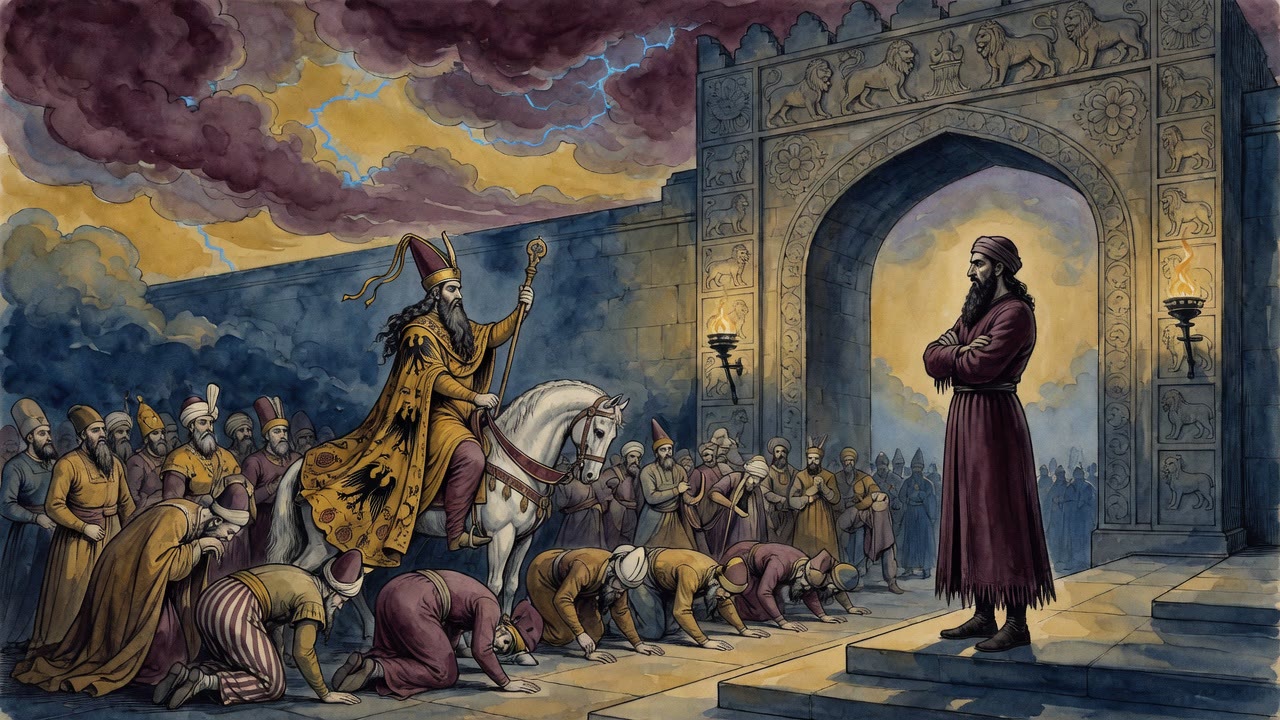
Haman passes through the gate of Shushan and every back bends but one. Mordecai stays upright, and the court has a taunt ready for him.
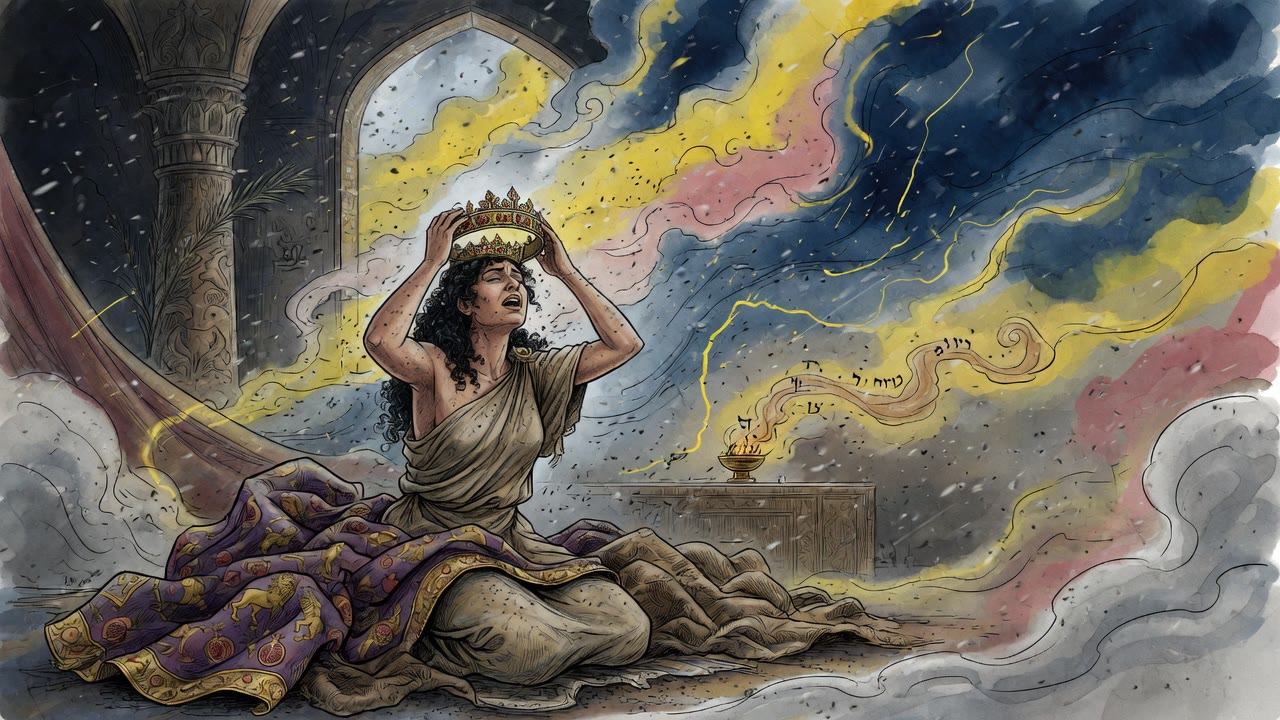
Three days without food. The decree was already on the road. On the palace floor Esther named herself an orphan and began with Abraham.
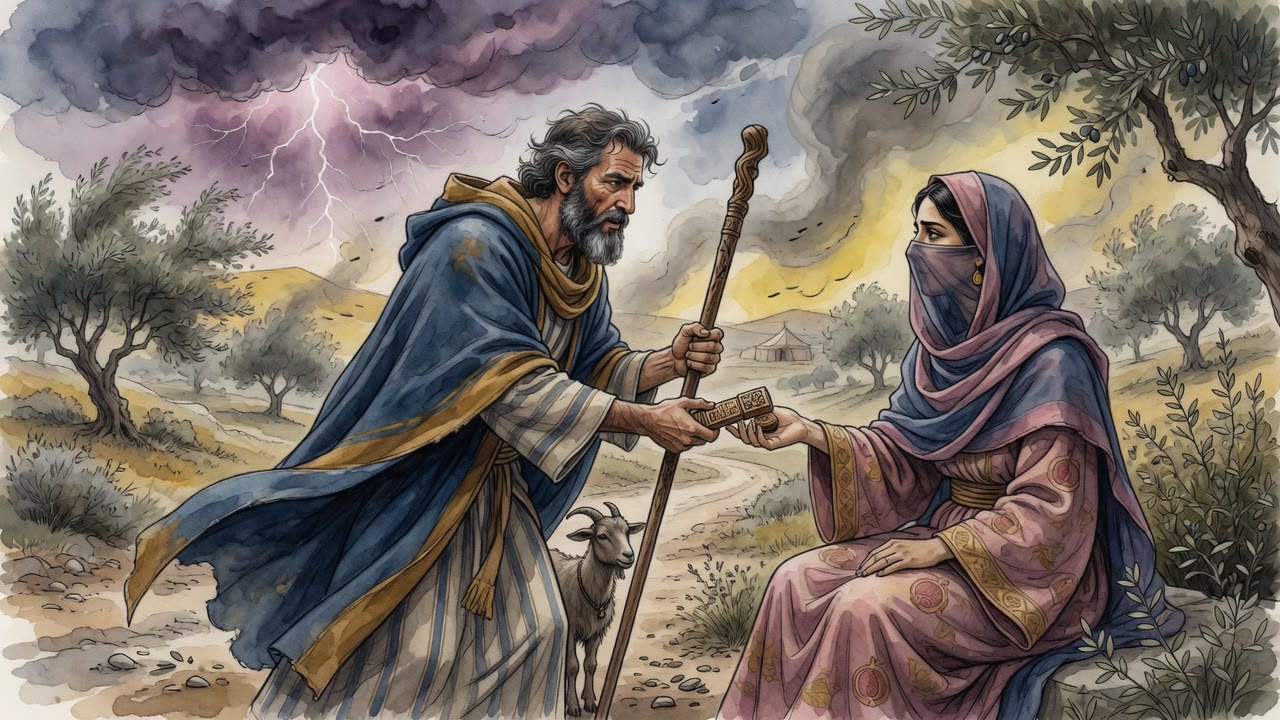
He had killed a lion bare-handed and dragged a king off his horse. At a town gate, drunk, he handed a veiled stranger the three signs of his rank.
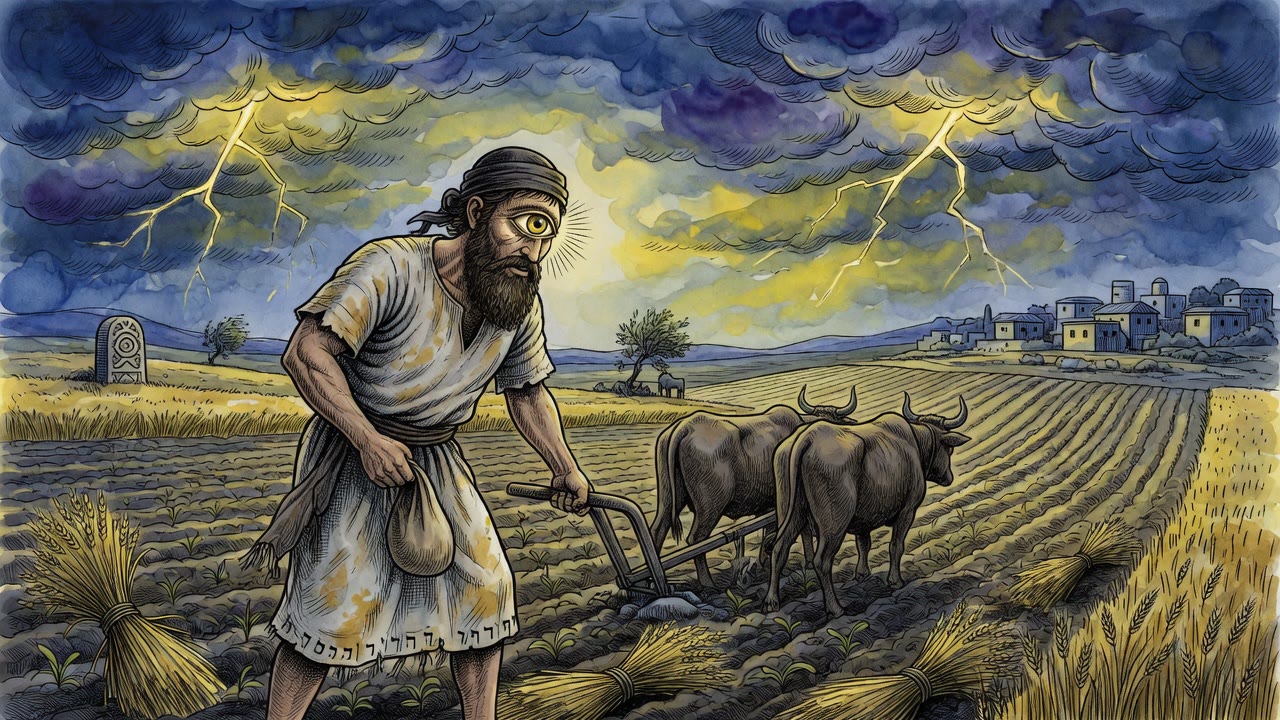
Two sisters argued in a field in Haran over a handful of apples. The price they settled on was one night with their husband, and the child was Issachar.
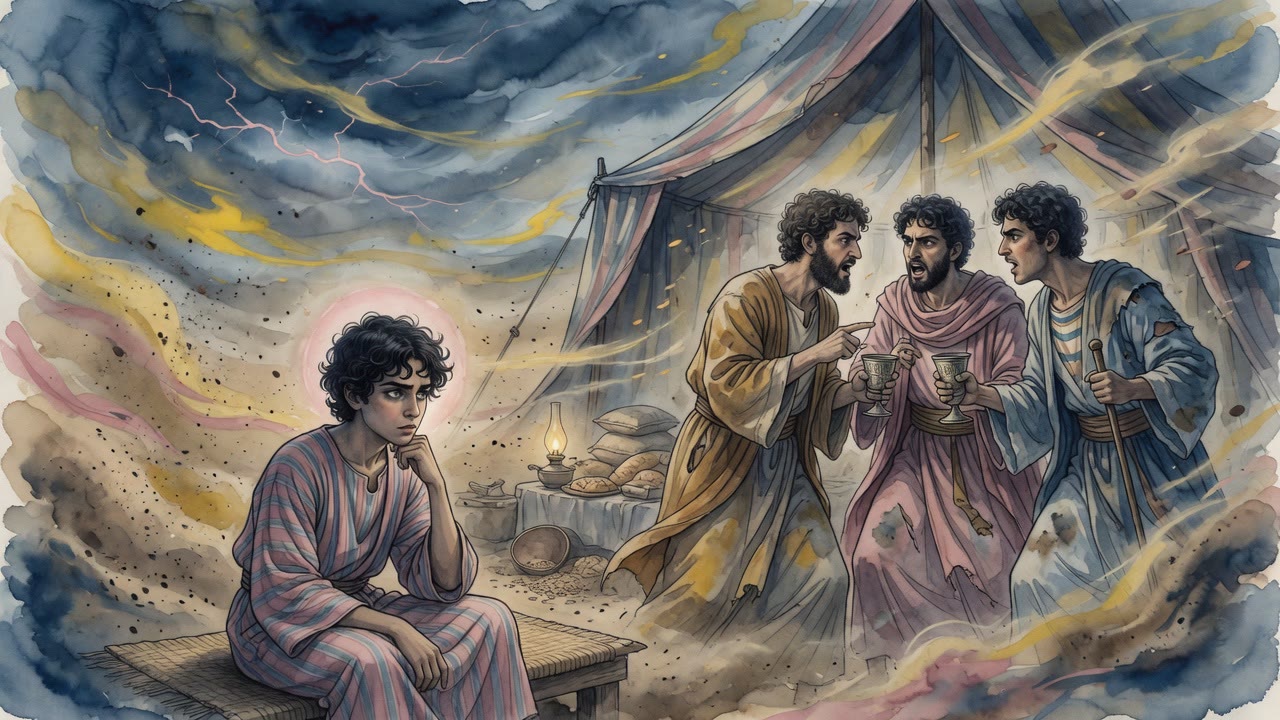
When Benjamin went to Egypt, Joseph pulled him aside and asked what their brothers had told Jacob. The answer revealed a mercy his brothers never knew about.
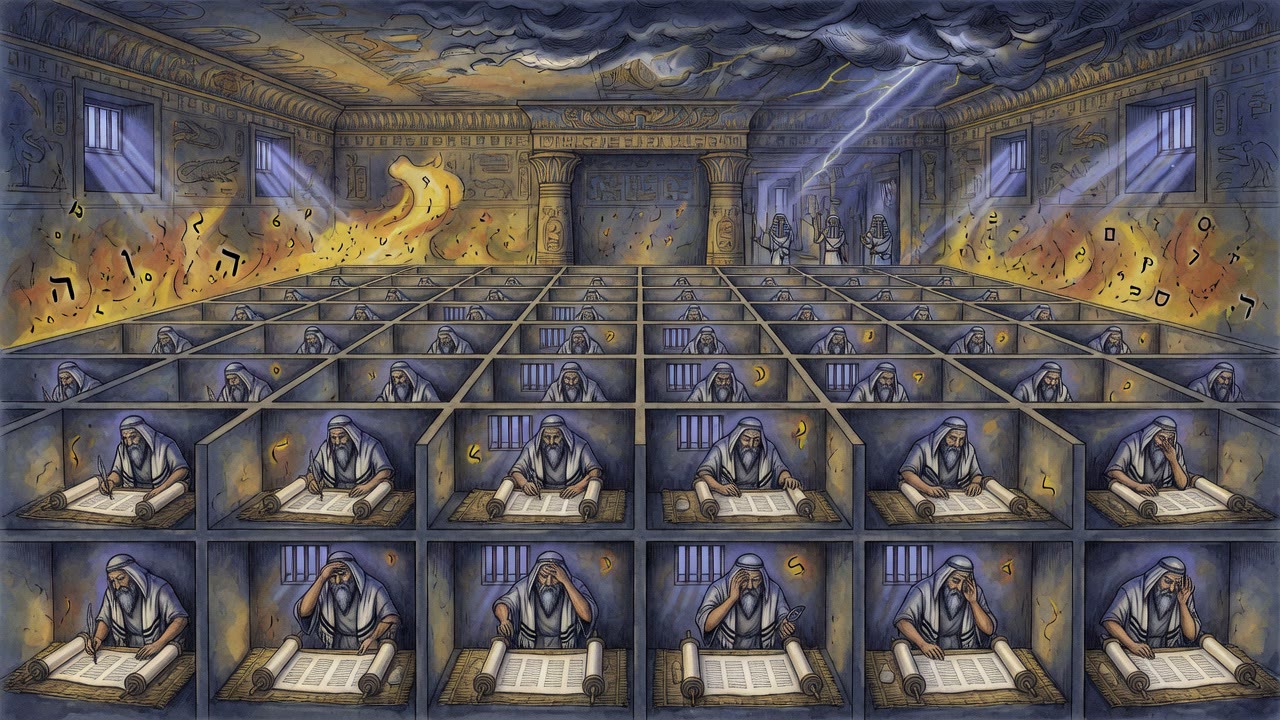
Ptolemy put seventy-two Jewish scholars in separate rooms and demanded a Greek Torah. Each made the same thirteen changes without consulting the others.
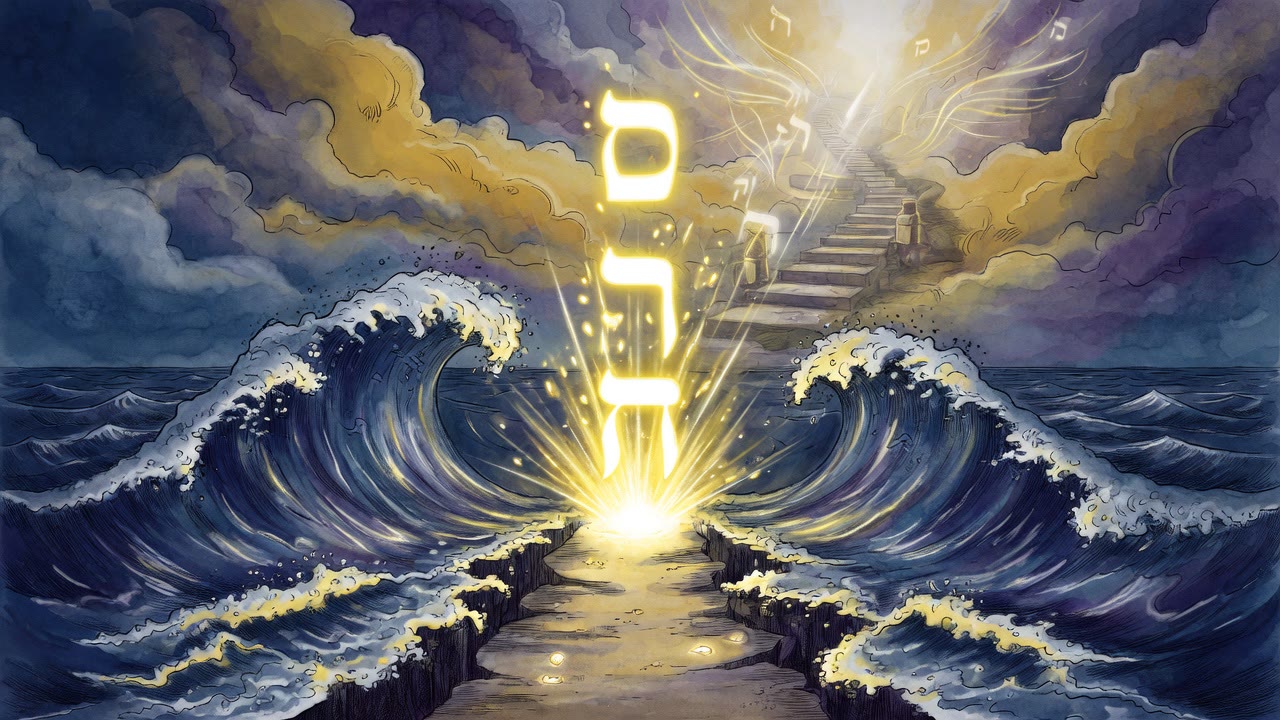
The sea did not split for the crying people at the water's edge. It split because of one word God spoke at Beth-el, long before.
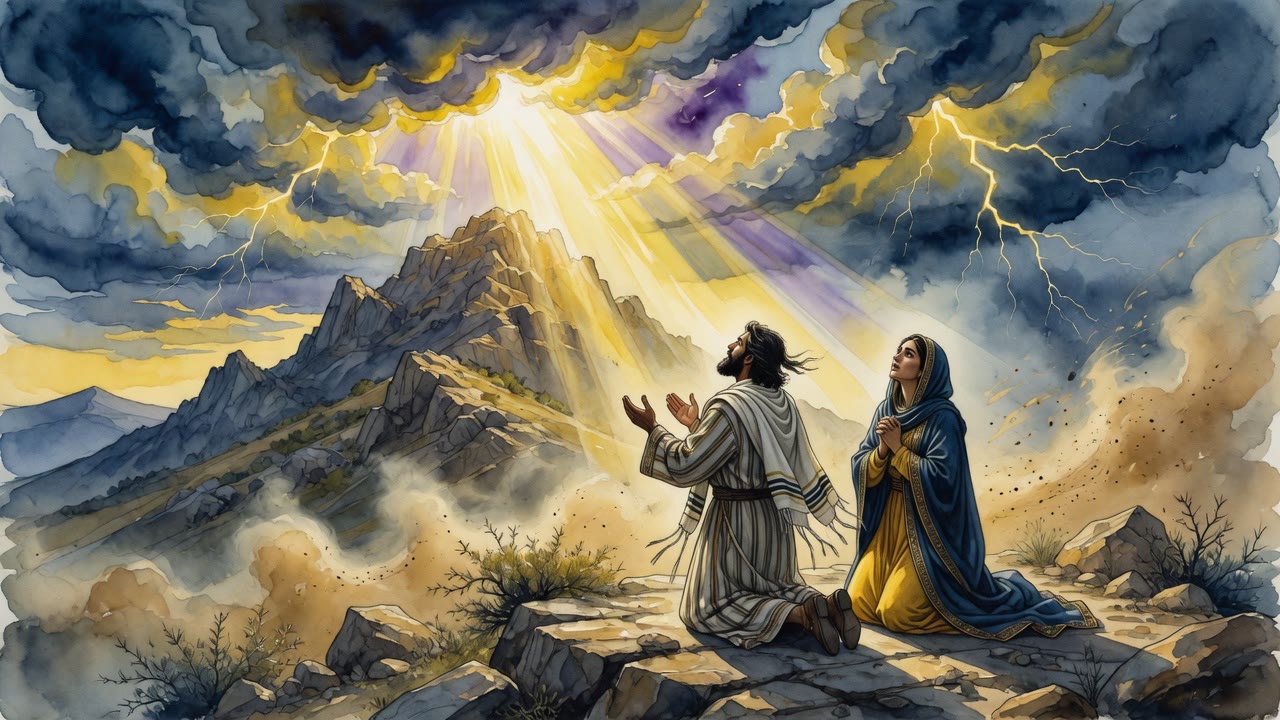
Twenty-two years of barrenness. Isaac took Rebecca to the mountain where he had once been bound and laid on the altar. He knew what the place could do.
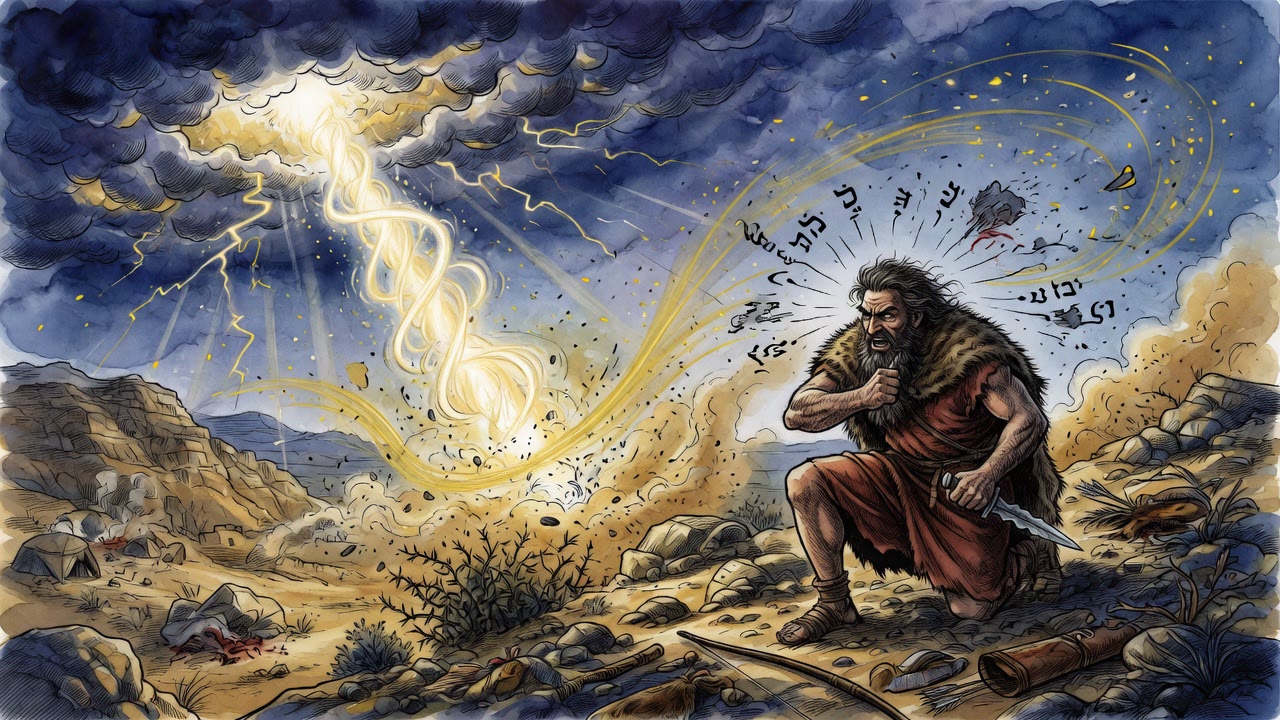
Esau never moved his lips. The murder plot stayed sealed in his heart, three deaths in careful order, until God spoke every word of it aloud.
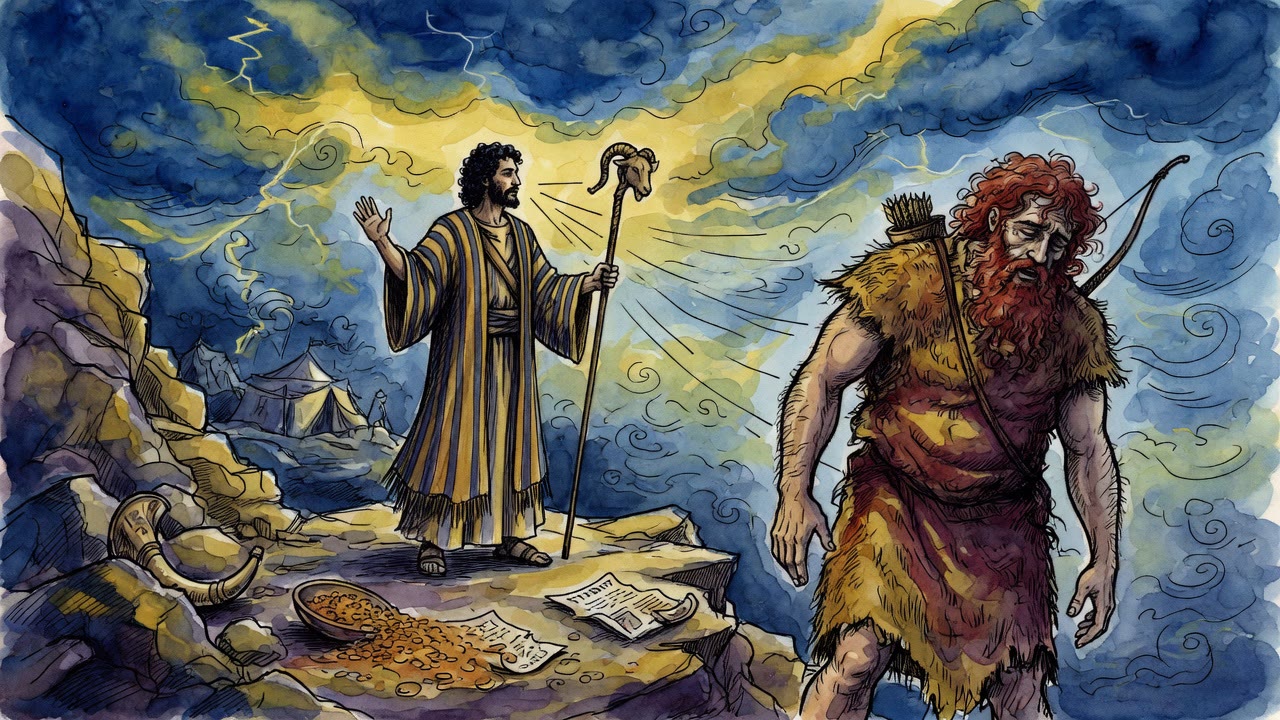
Jacob's sons named Esau's hunt and the four hundred men. Esau named the pit at Dothan. Joseph came in still feeding the men who sold him.
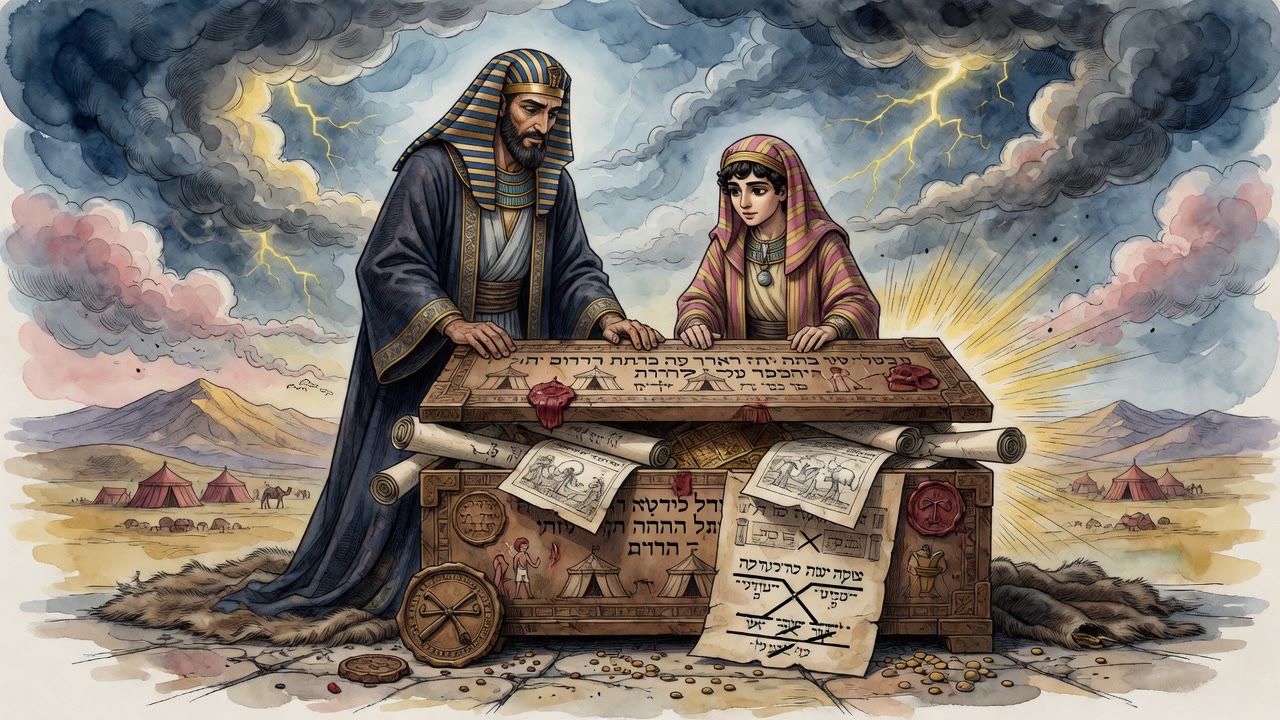
The tribes accused Esau of hunting his brother, and Esau pointed at the pit where they threw Joseph. Only Joseph and Benjamin had clean hands.
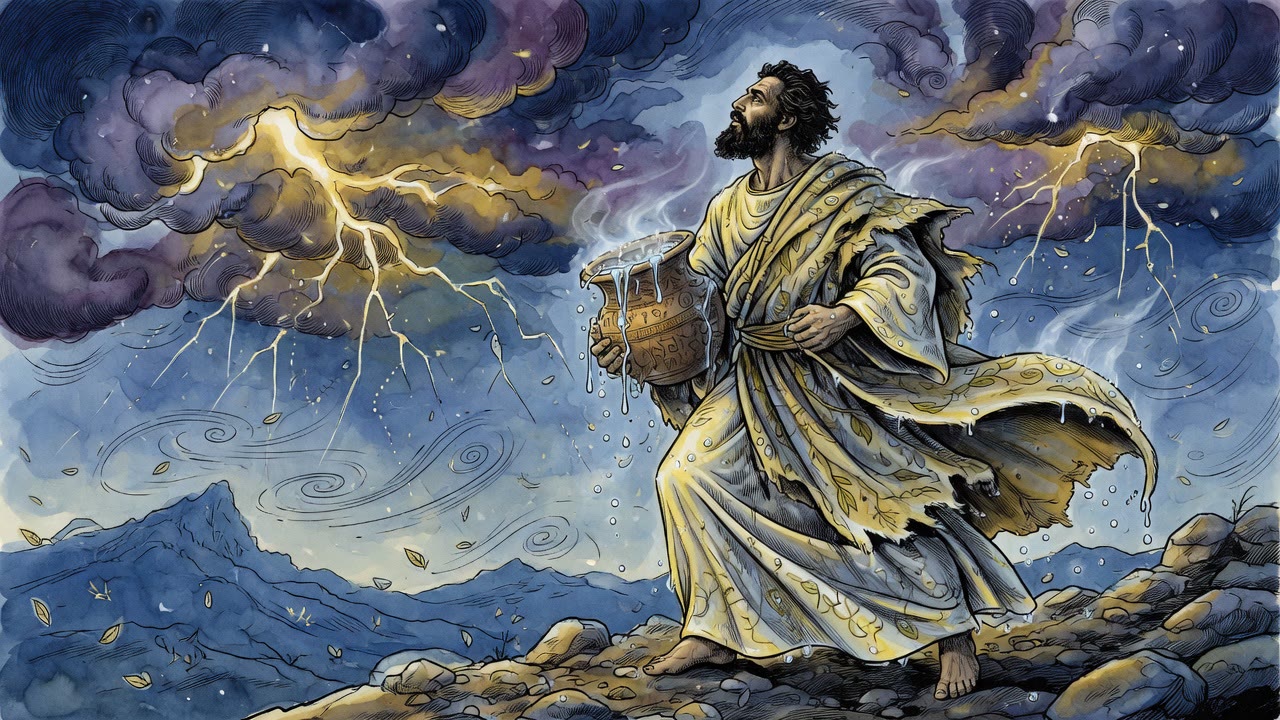
Isaac's hands found goat hair. His ears caught Jacob's voice. His nose found a field after rain, older than either son.
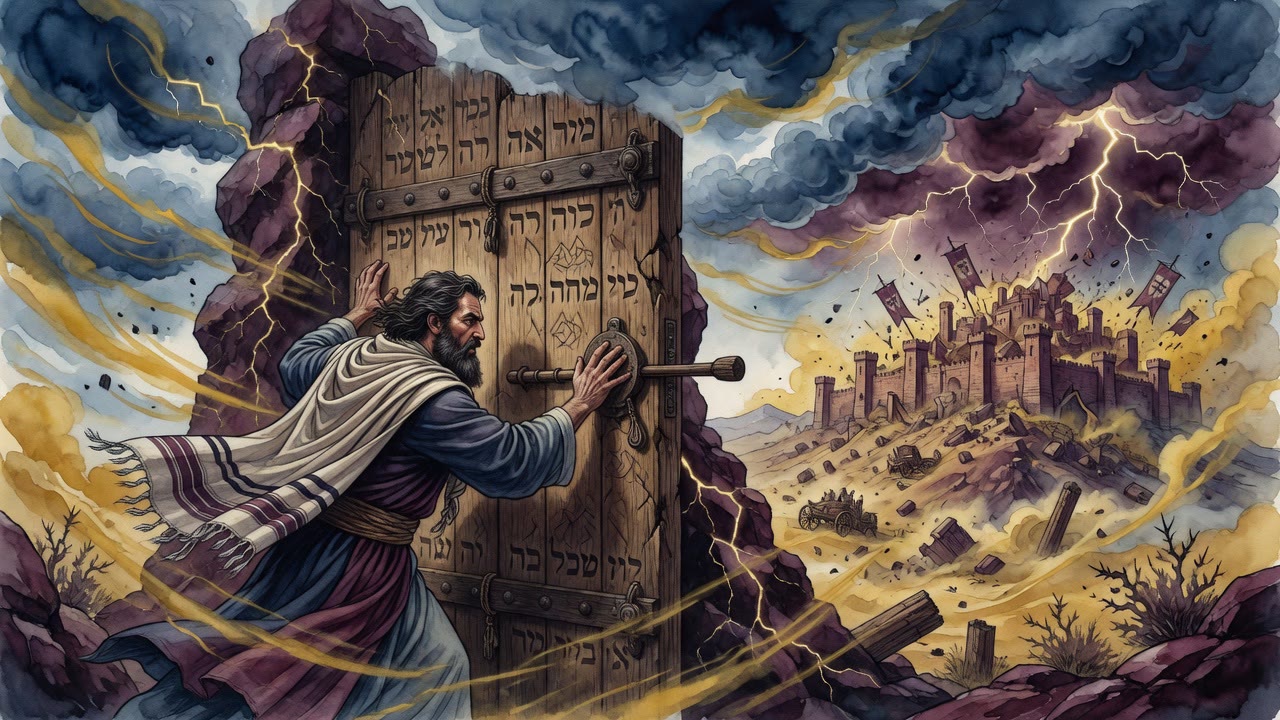
Jacob did not run because courage failed him. Aggadat Bereshit says he closed the door until Edom's kingdom spent its hour.
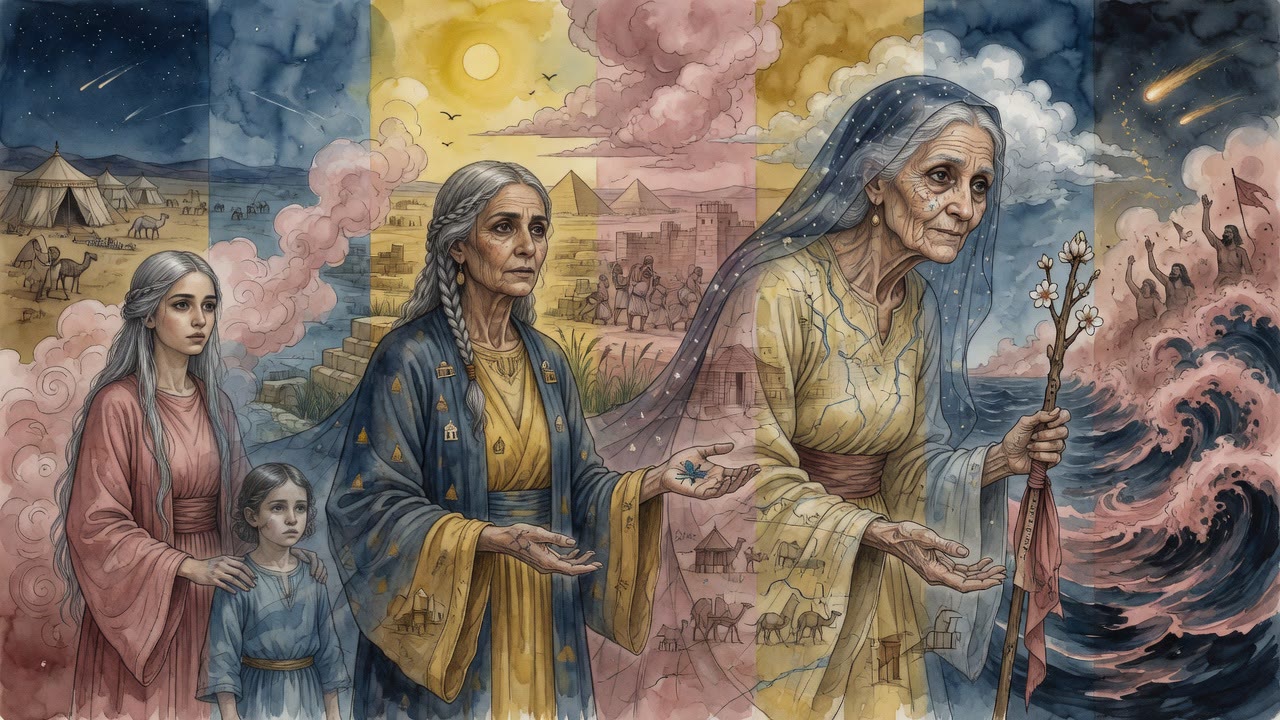
She appears in Genesis, then again in Numbers a generation later. The rabbis asked the obvious question and found an answer hidden inside a harp song.
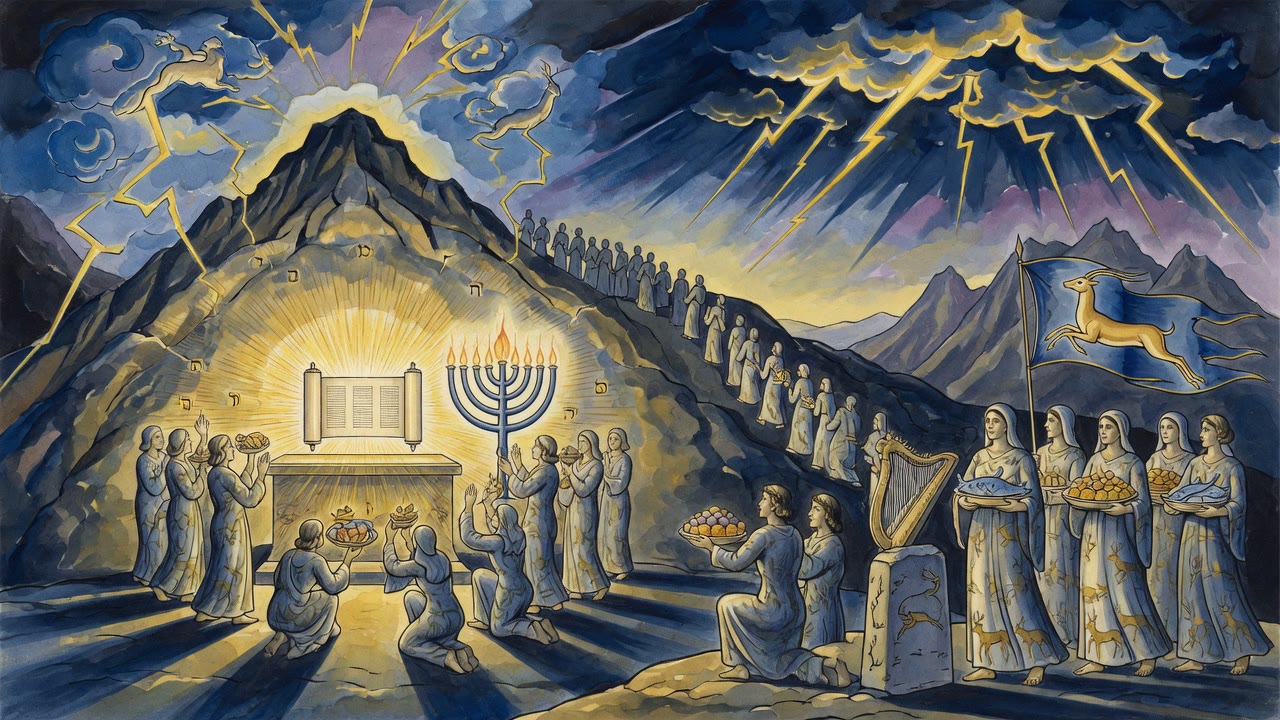
Twelve princes brought identical offerings on twelve straight days. Asher came eleventh, Naphtali last. The rabbis heard the words honey for me in his name.
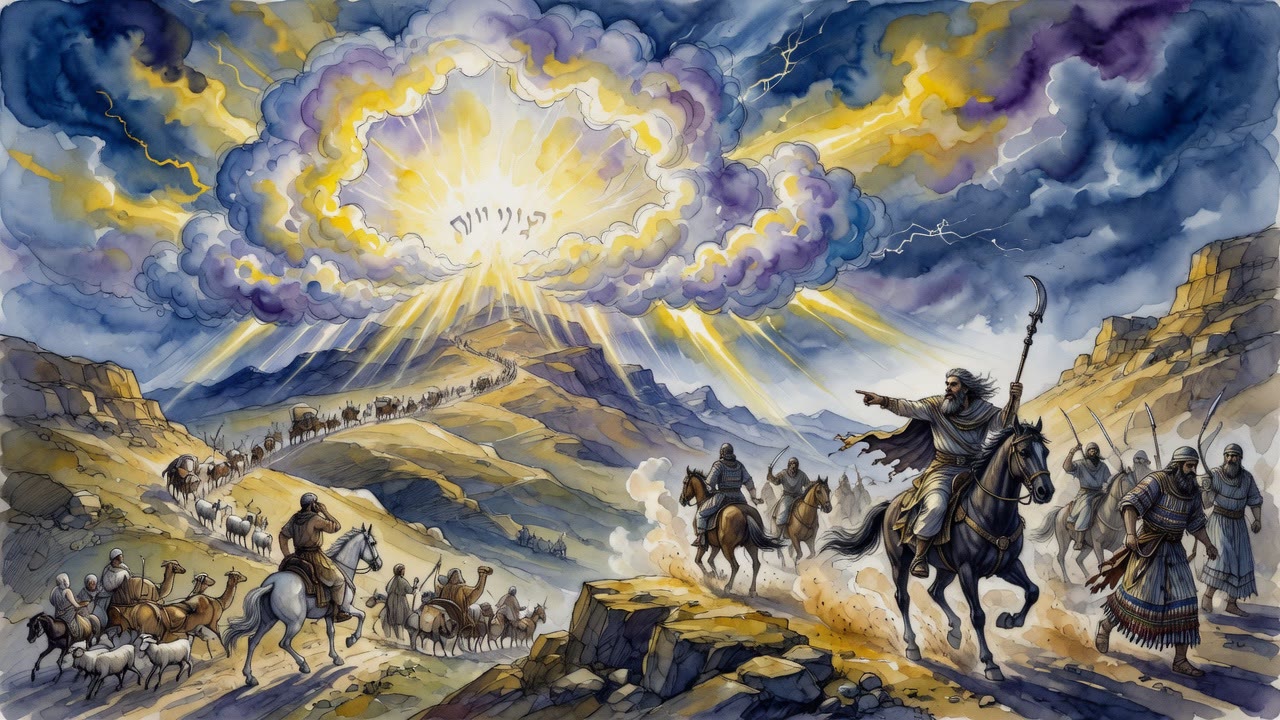
Jacob swore that whoever had taken Laban's gods would not live. He did not know his wife was sitting on them in a camel basket ten feet away.
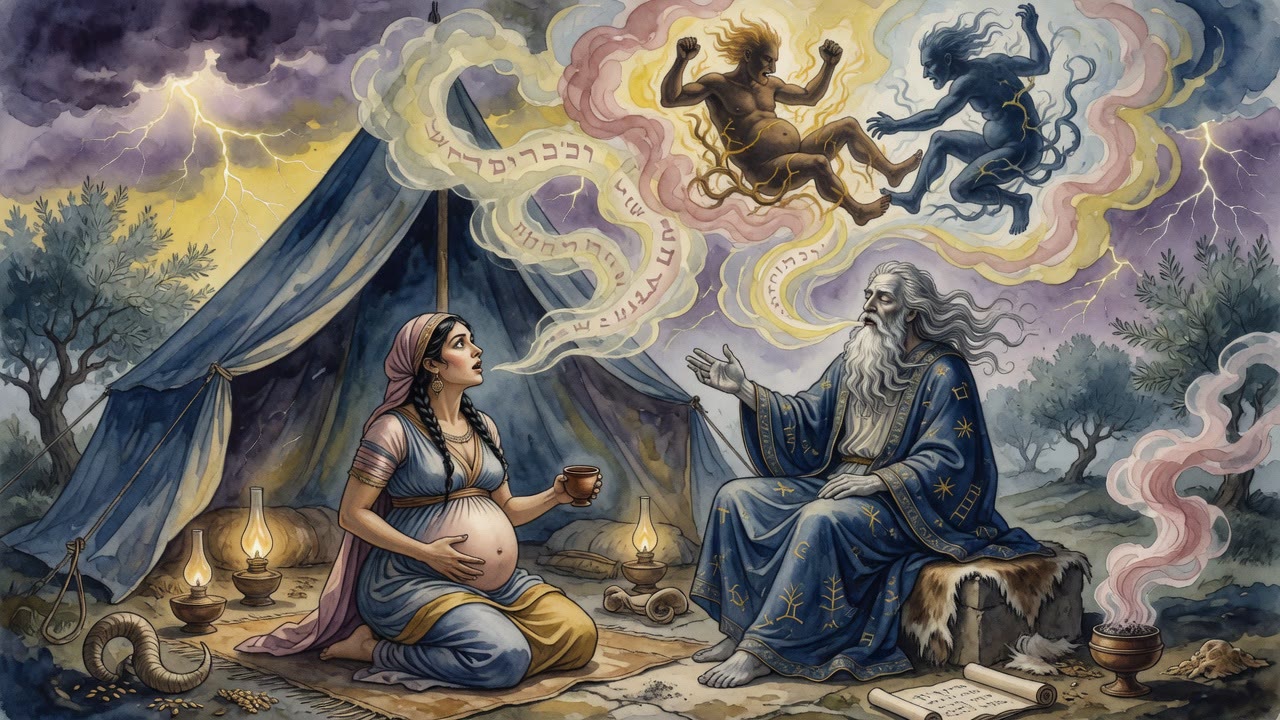
Rebecca sought God while the twins struggled inside her. The midrash says the answer came through Shem, not straight from heaven.
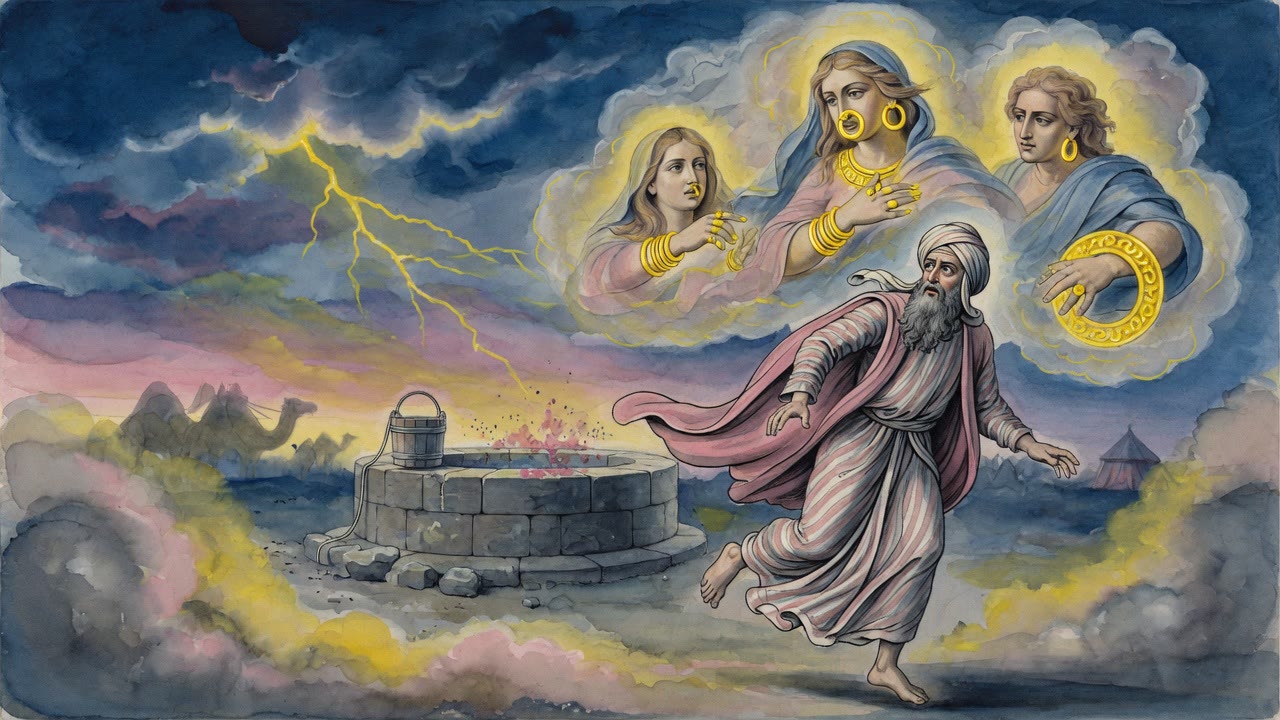
Laban looked like a gracious host when he ran to greet Abraham's servant. Bereshit Rabbah says he was chasing the jewelry.
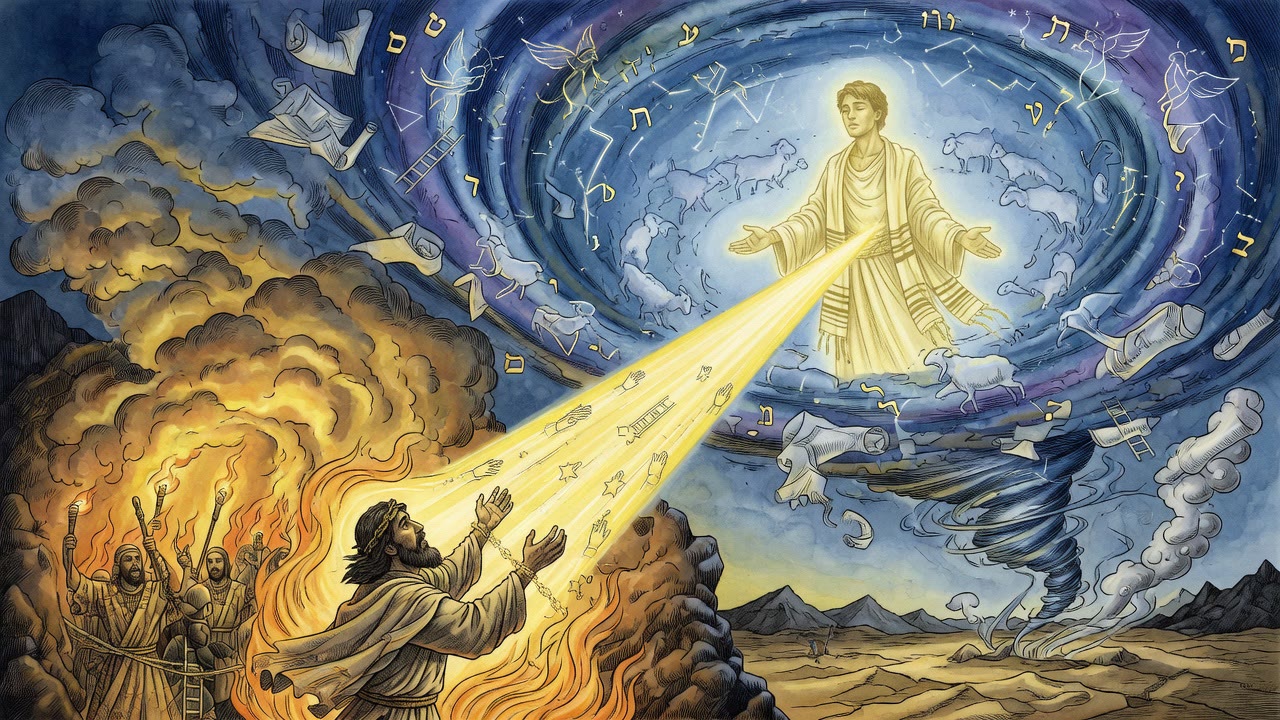
When Nimrod threw Abraham into the fire, God did not save him for his own sake. The rabbis say it was Jacob, not yet conceived, who earned Abraham's rescue.
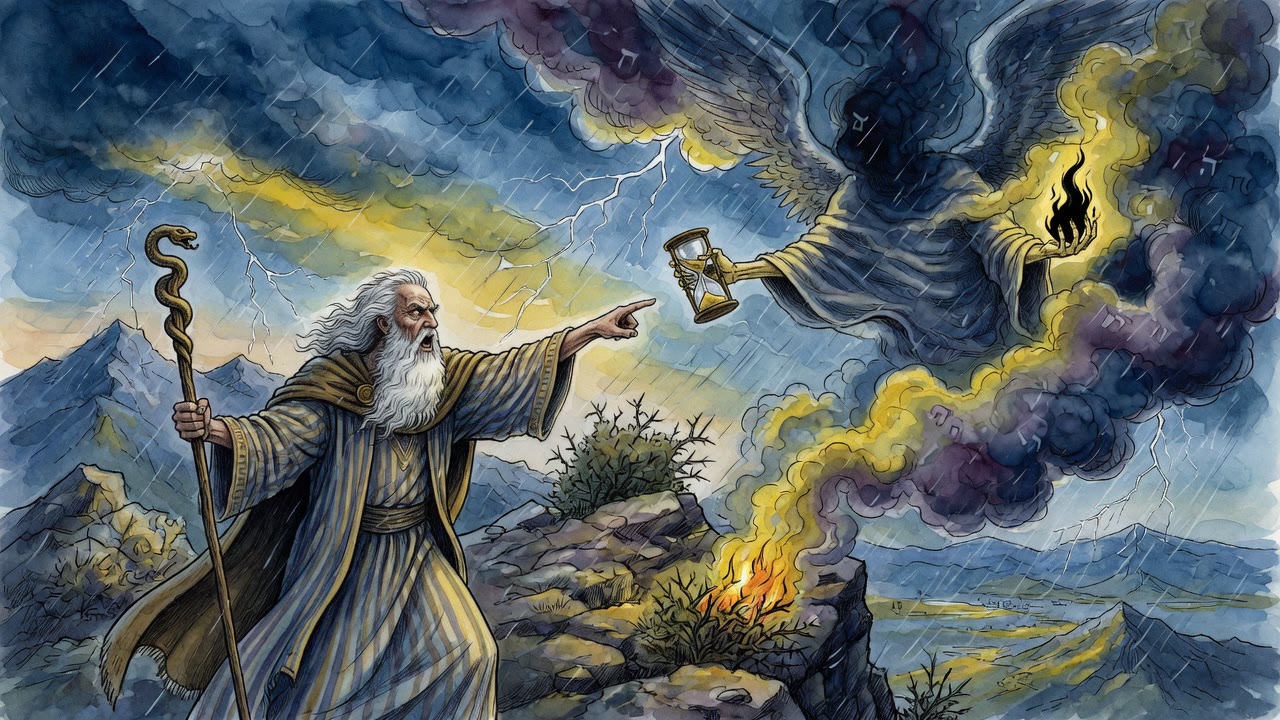
The Angel of Death came into the tent, and Moses spoke the Ineffable Name at him until he fled. On the third approach Moses met him with open hands.
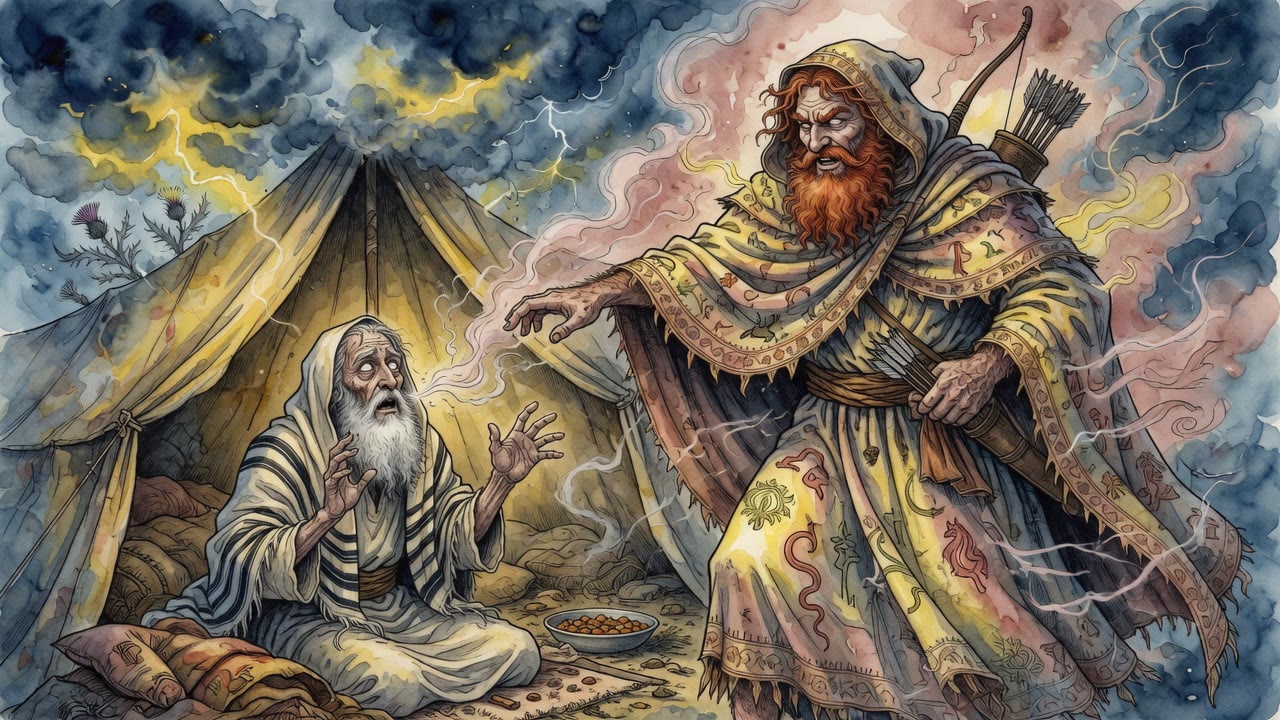
The clothes Rebecca put on Jacob were not costumes. They carried Adam, Nimrod, Esau, and the terror of power passing hand to hand.
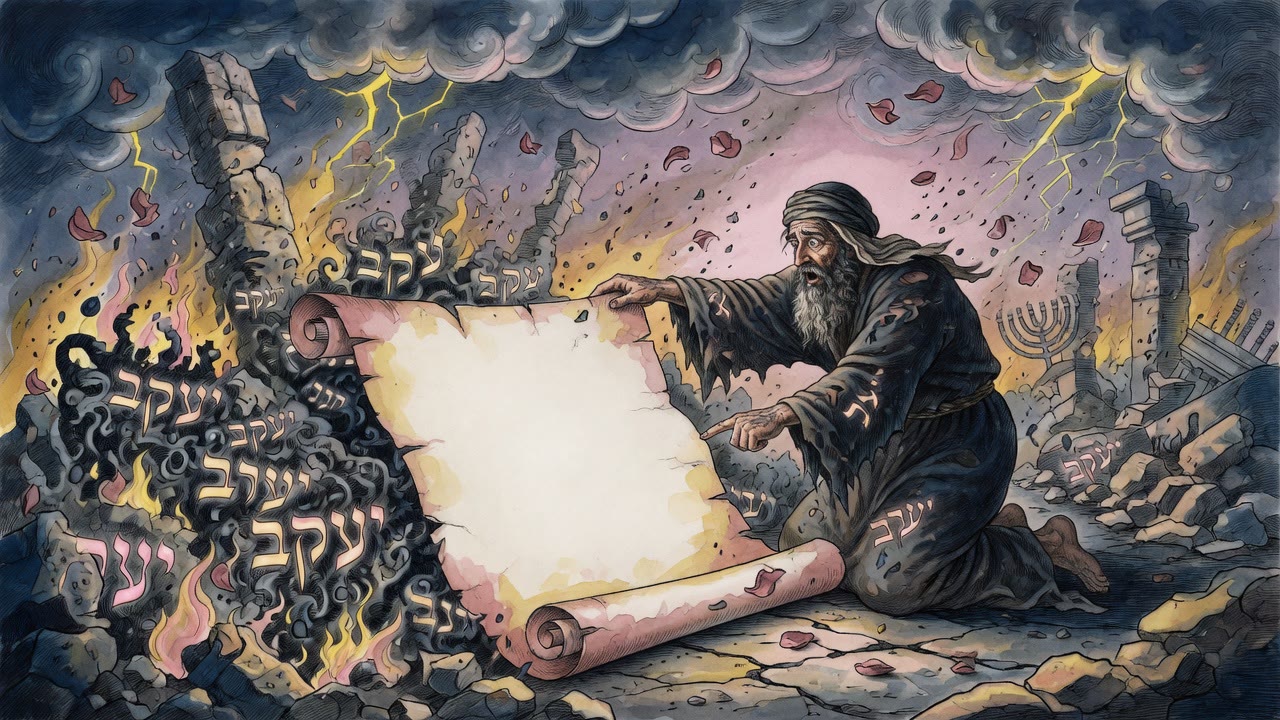
The people carry two names, Jacob and Israel. Lamentations uses only Jacob when it describes ruin, and Resh Lakish wanted to know why.
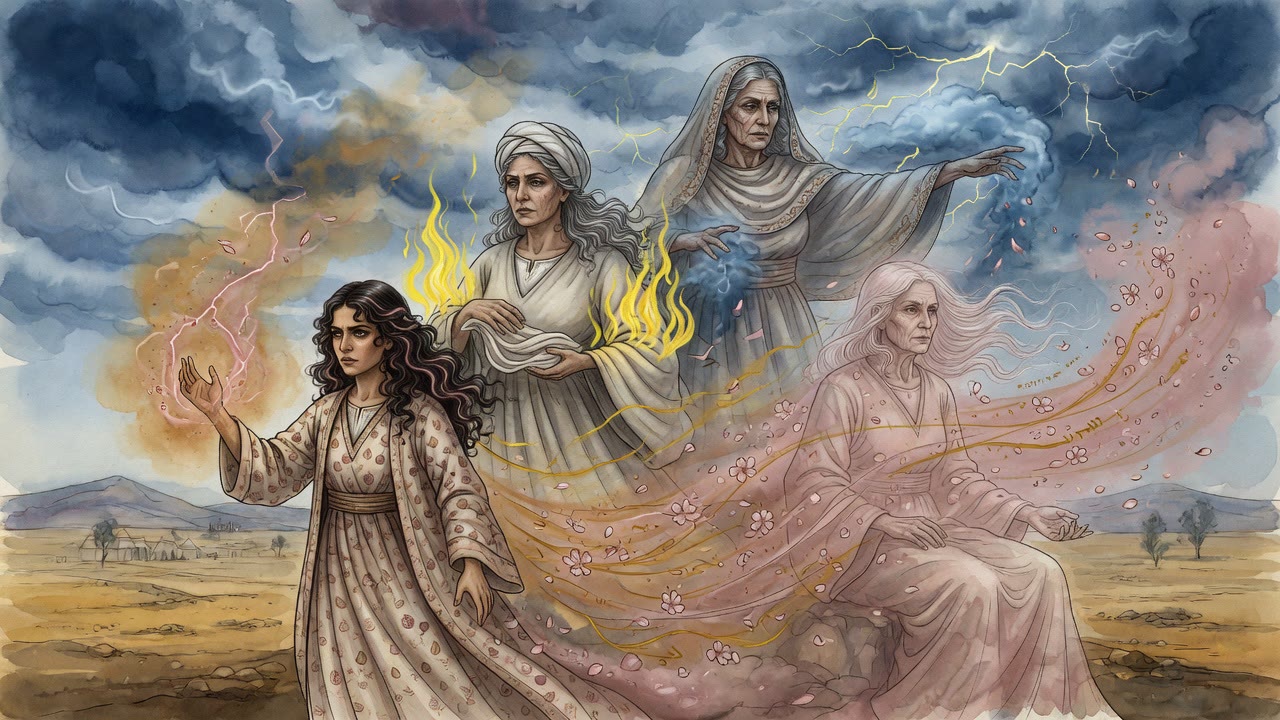
Rabbi Akiva woke his students with one number: Sarah lived 127 years, and Esther ruled 127 provinces across Persia for Israel.
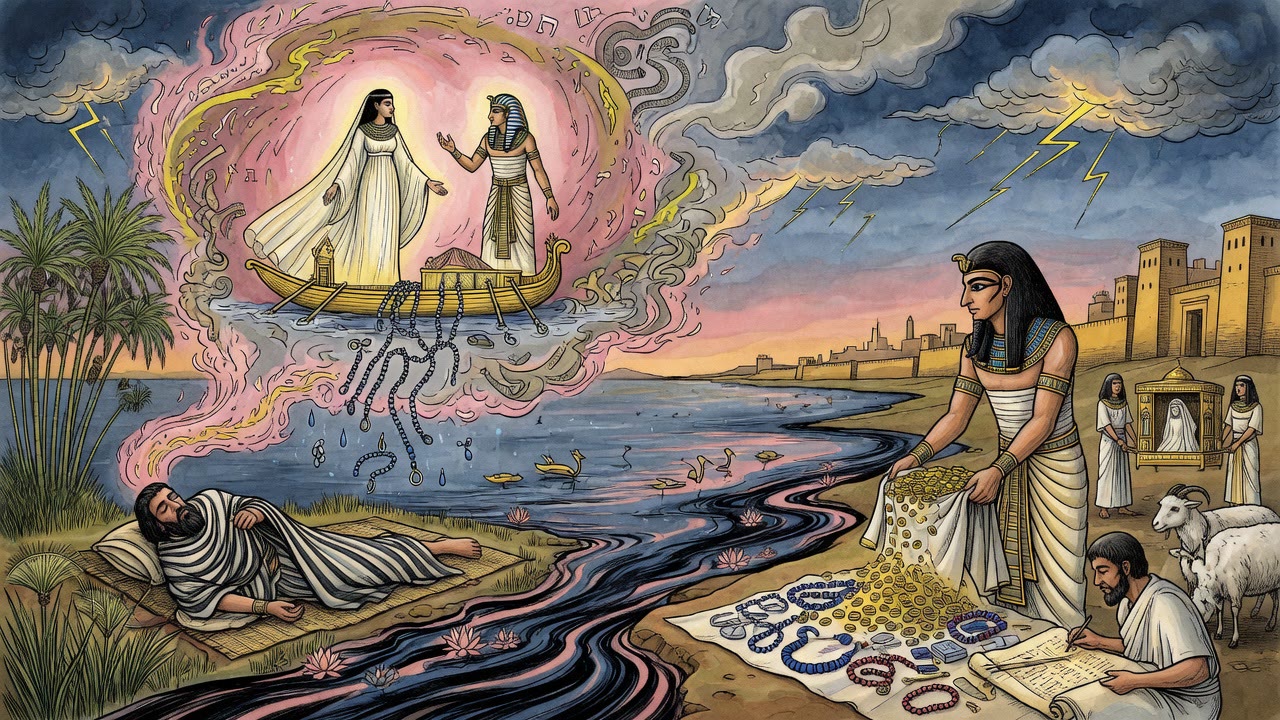
Hebron had no bread left in the famine. At a branch of the Nile, a palm spoke in Abraham's sleep and bargained for the cedar beside it.
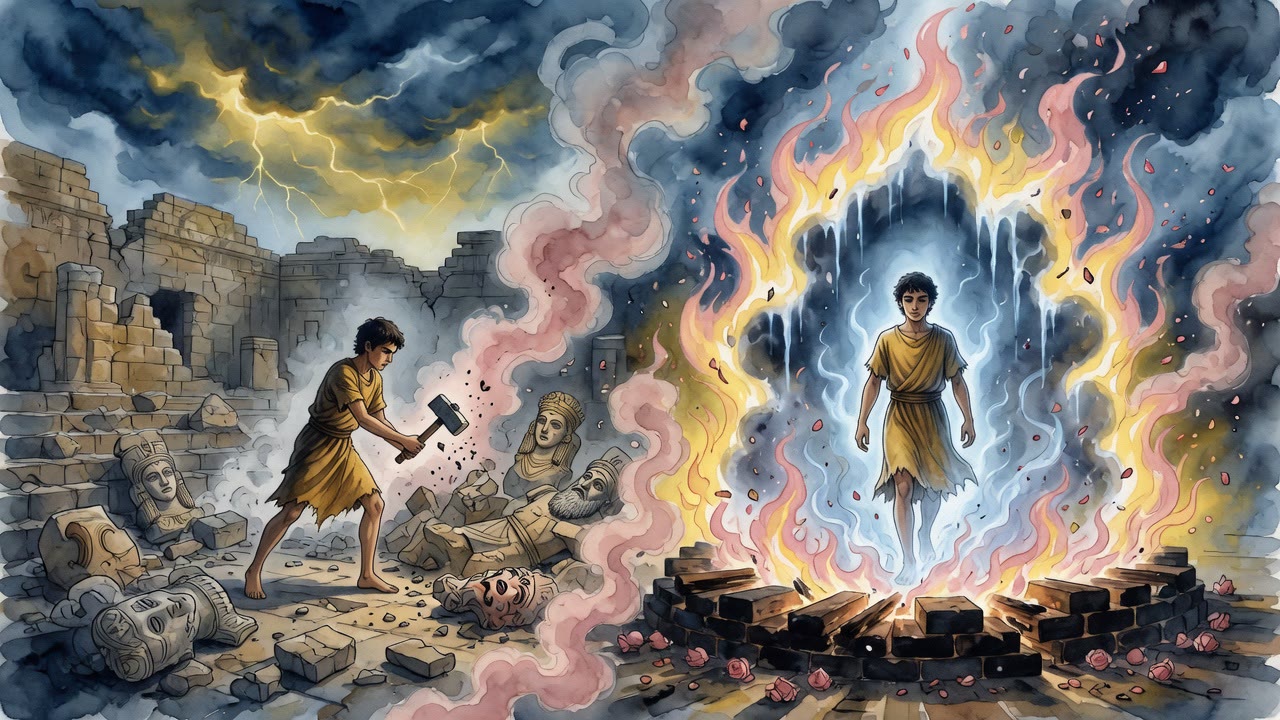
Terah found the shop in pieces and a hatchet in the biggest idol's fist. His son said the large one had fought the others for the meat.
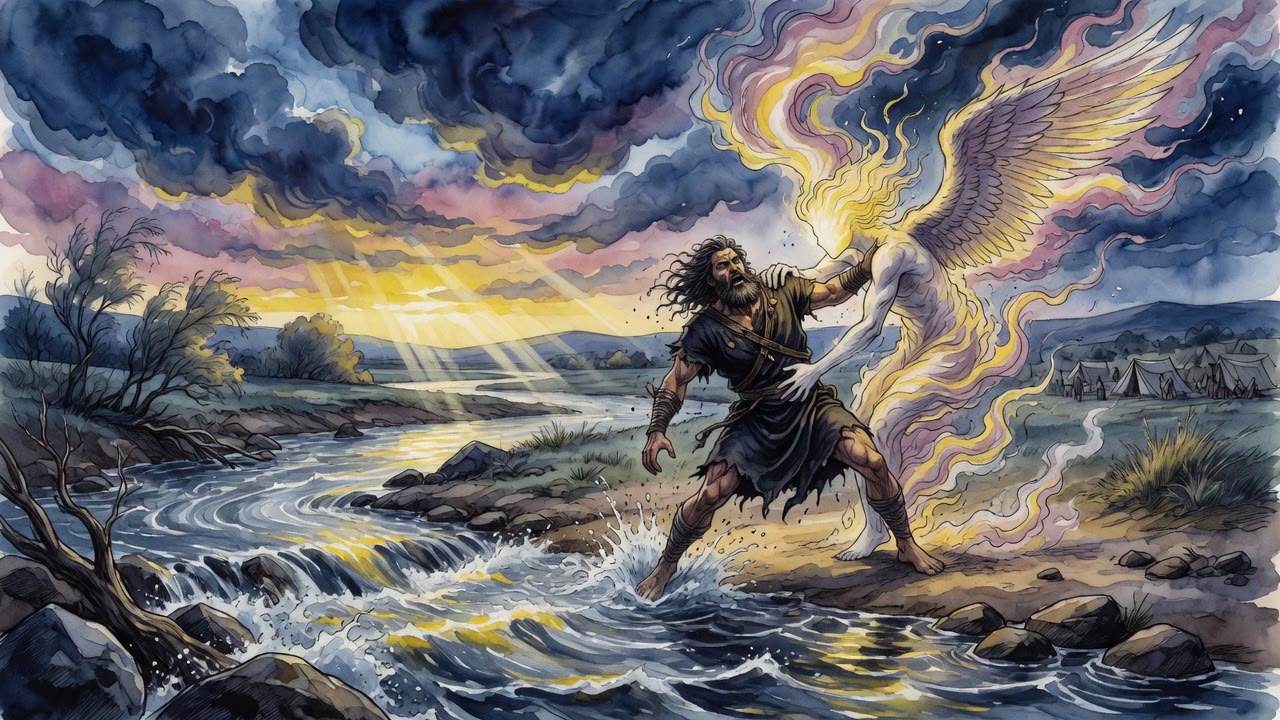
Jacob crosses the Jabbok alone at night and struggles until dawn with a being who will not say its name but gives him a new one.
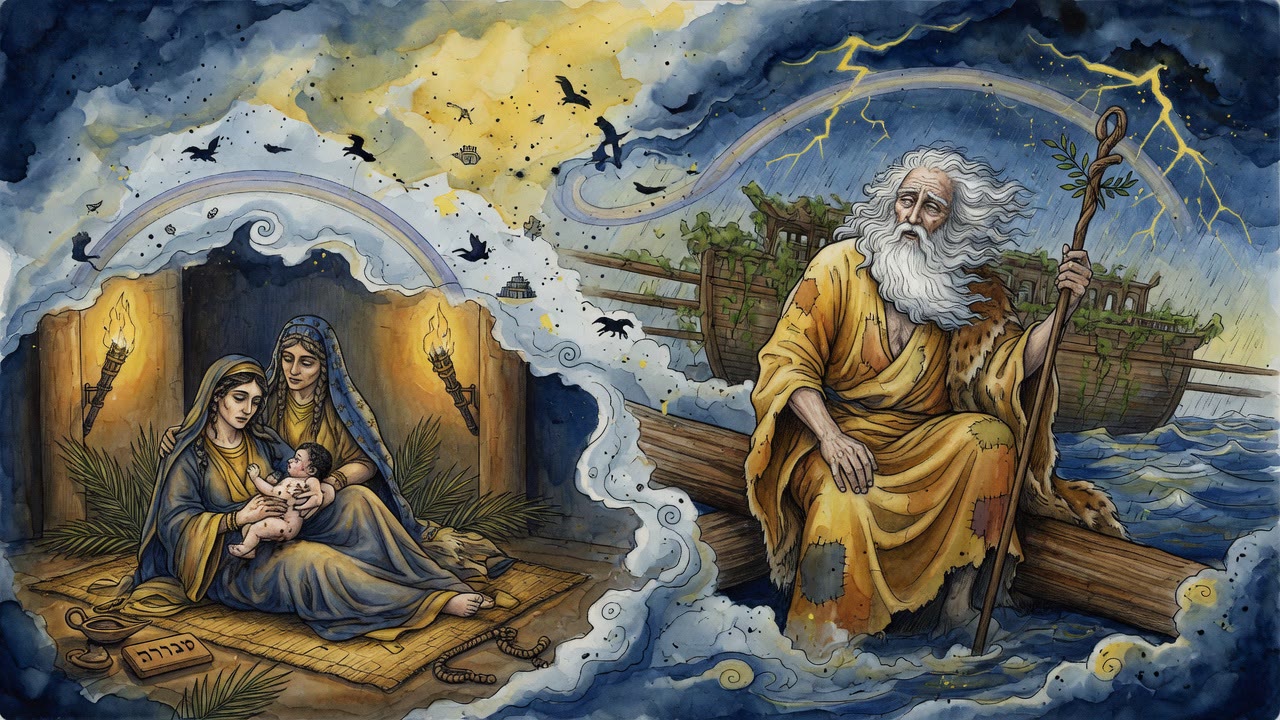
The chronologies of Jubilees place Abraham and Noah in overlapping lifetimes. The man of the flood and the father of the nation shared the same world.
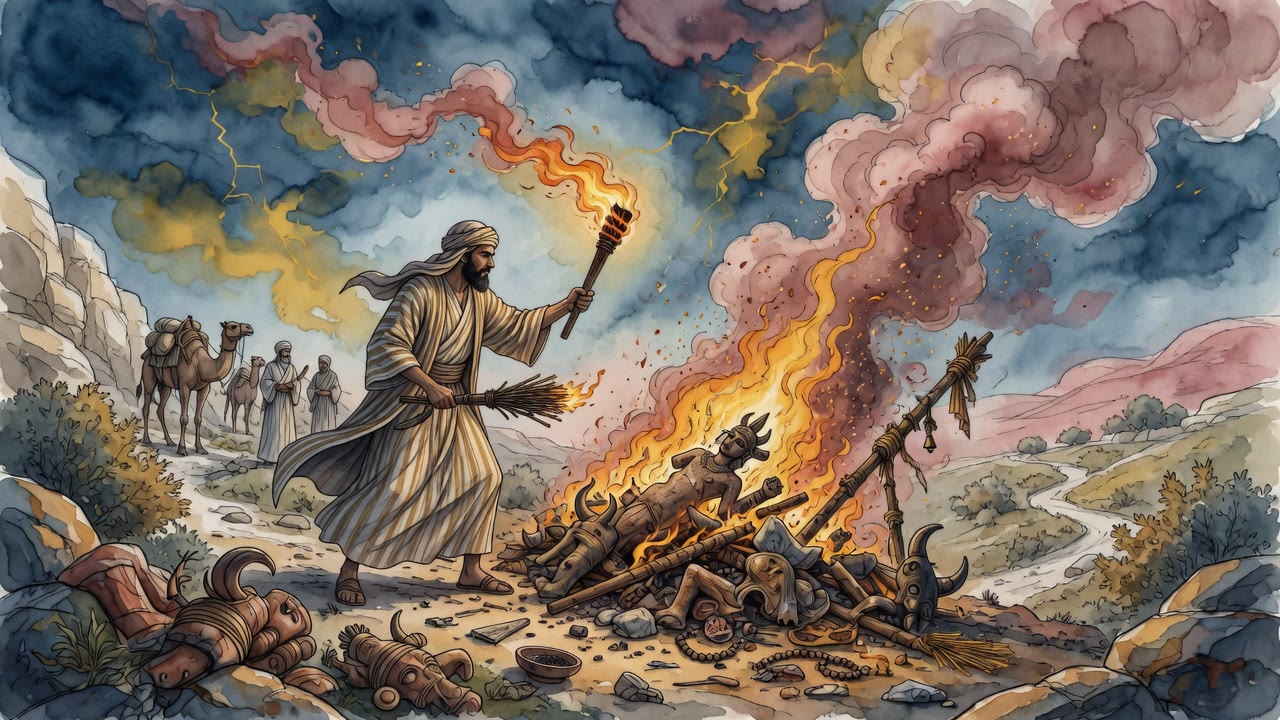
Rachel put her father's stolen gods into Jacob's hands last. He burned them before the household climbed toward Bethel.
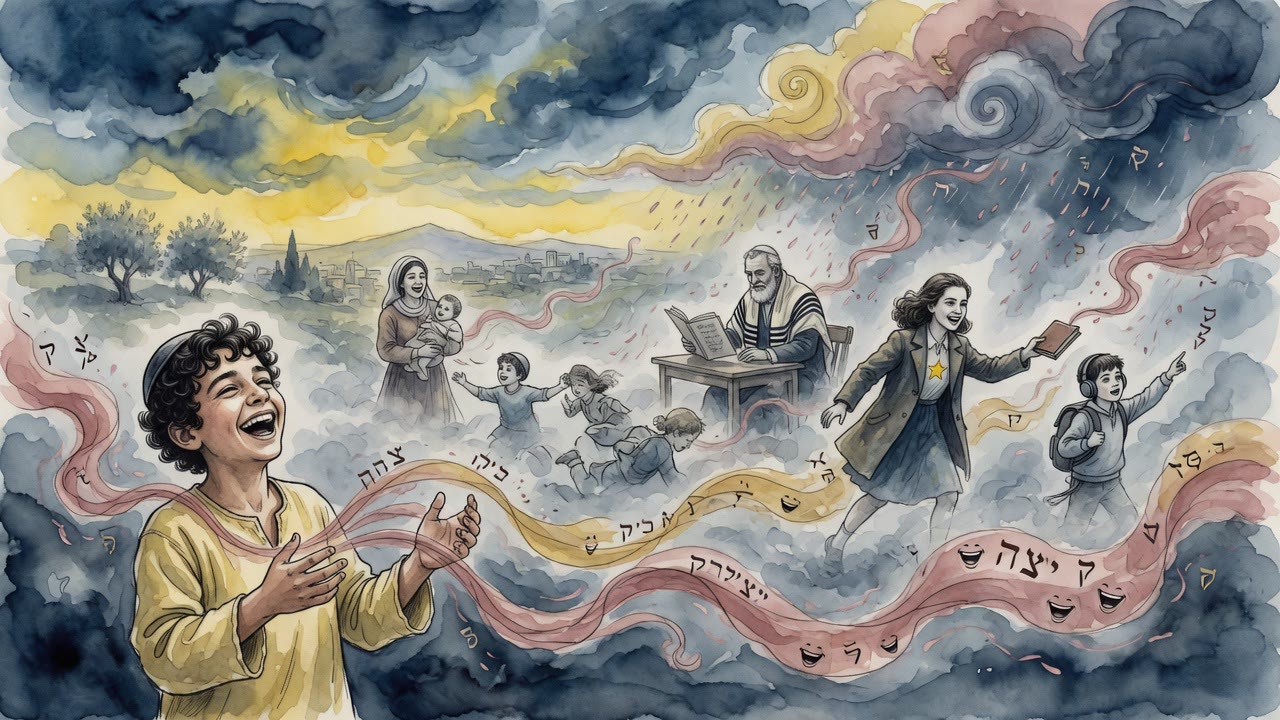
Og the giant came to the weaning feast and said the boy was small enough to crush with one finger. Isaac was the first child who needed a cradle.
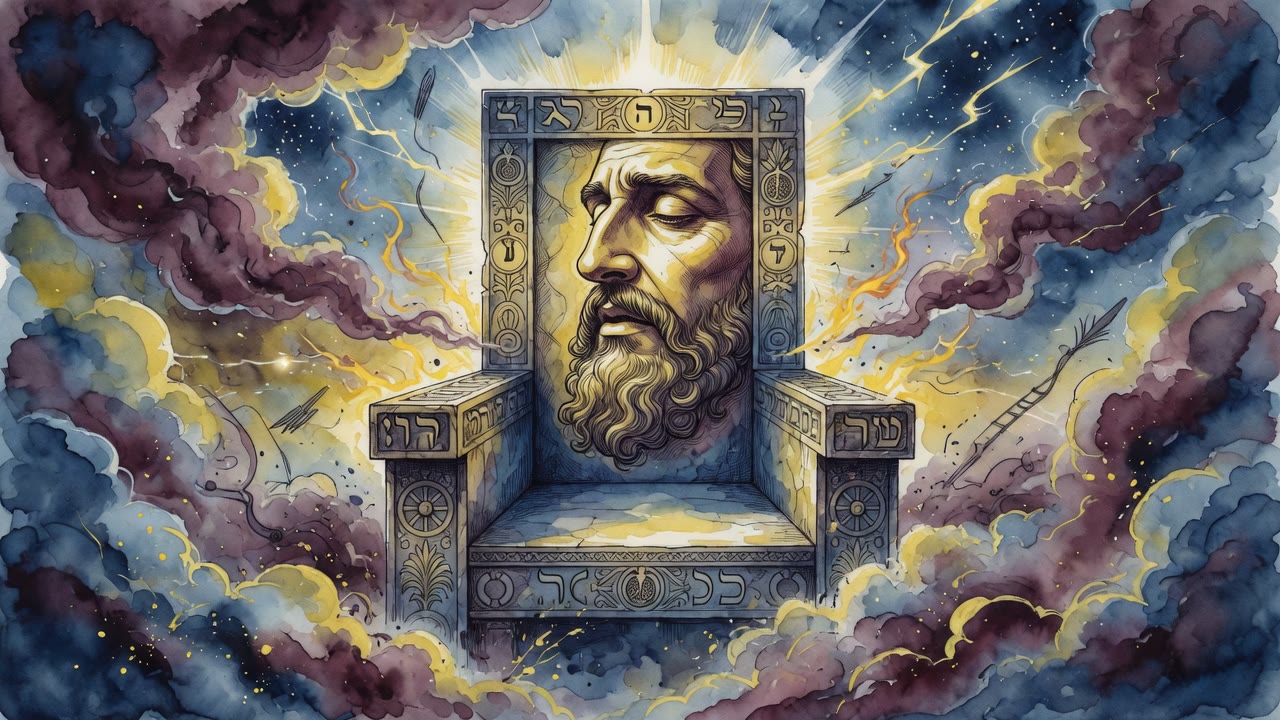
He was a fugitive sleeping on a stone. Overhead, the angels were already praising God by his name, and what he saw woke him in fear.
