237 myths · Page 5 of 8
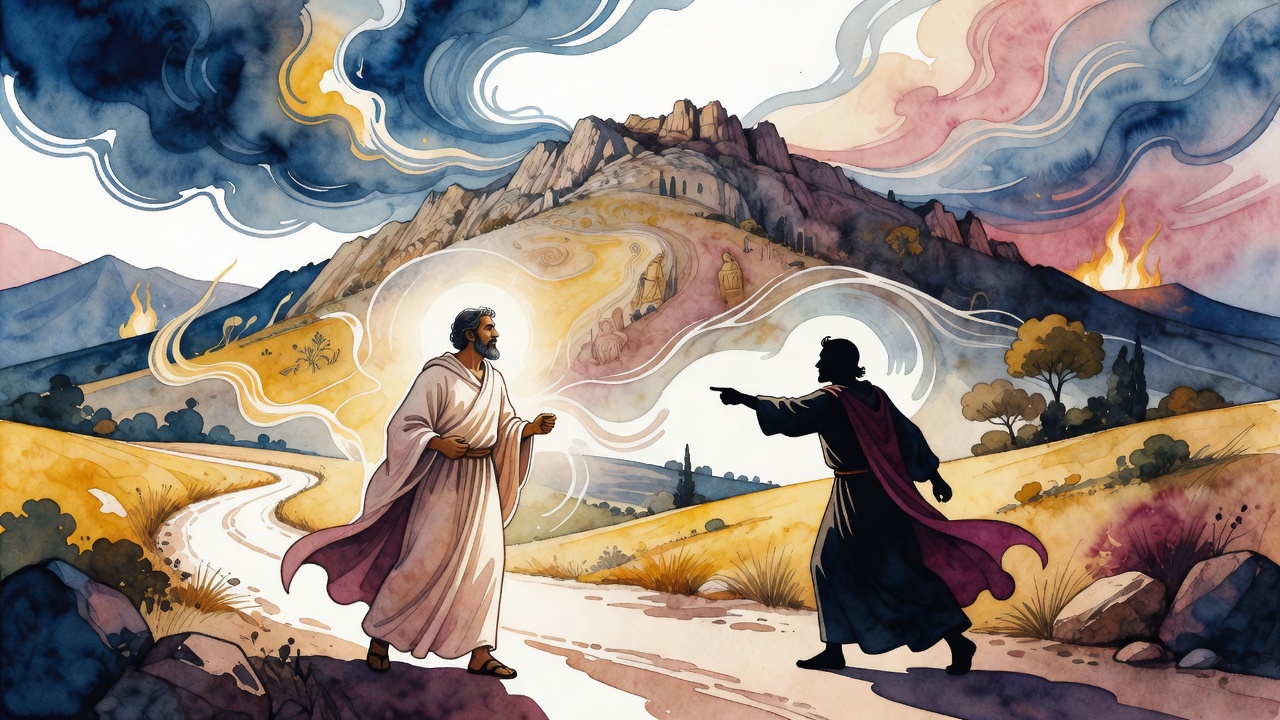
A man on Gerizim asked why walk to Jerusalem's ruins. Rabbi Ishmael named the refuse under the mountain, then ran for his life after dark.
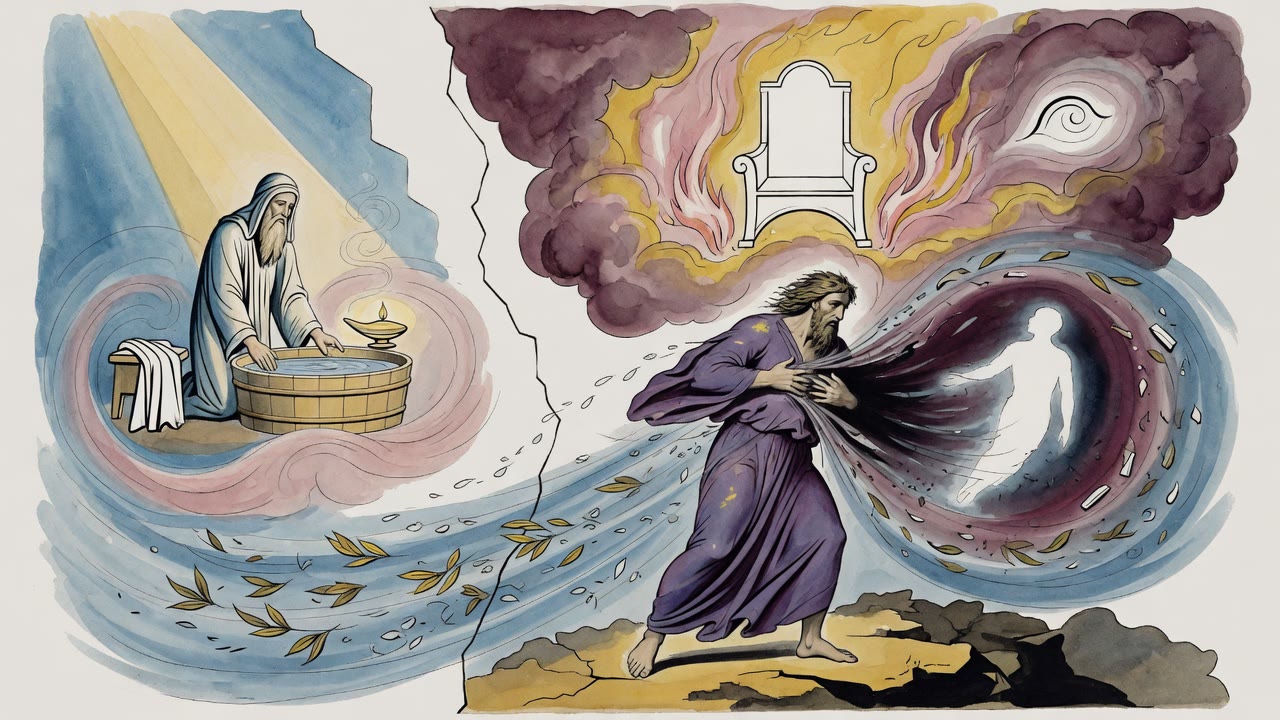
Hillel answered absurd questions three times without losing his temper, then served a cold meal to a very late guest and called it a pleasure.
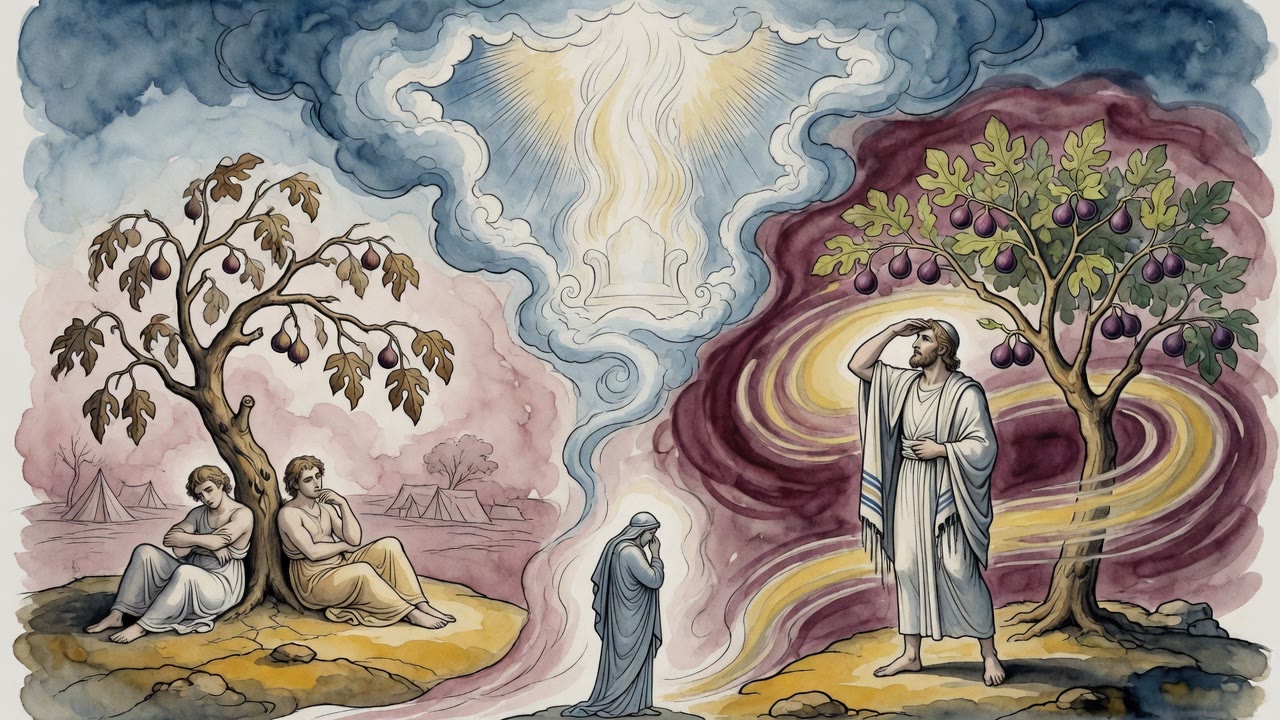
A skeptic demanded the whole Torah on one foot. Hillel gave him a single sentence, then added three words that turned the summary into an obligation.
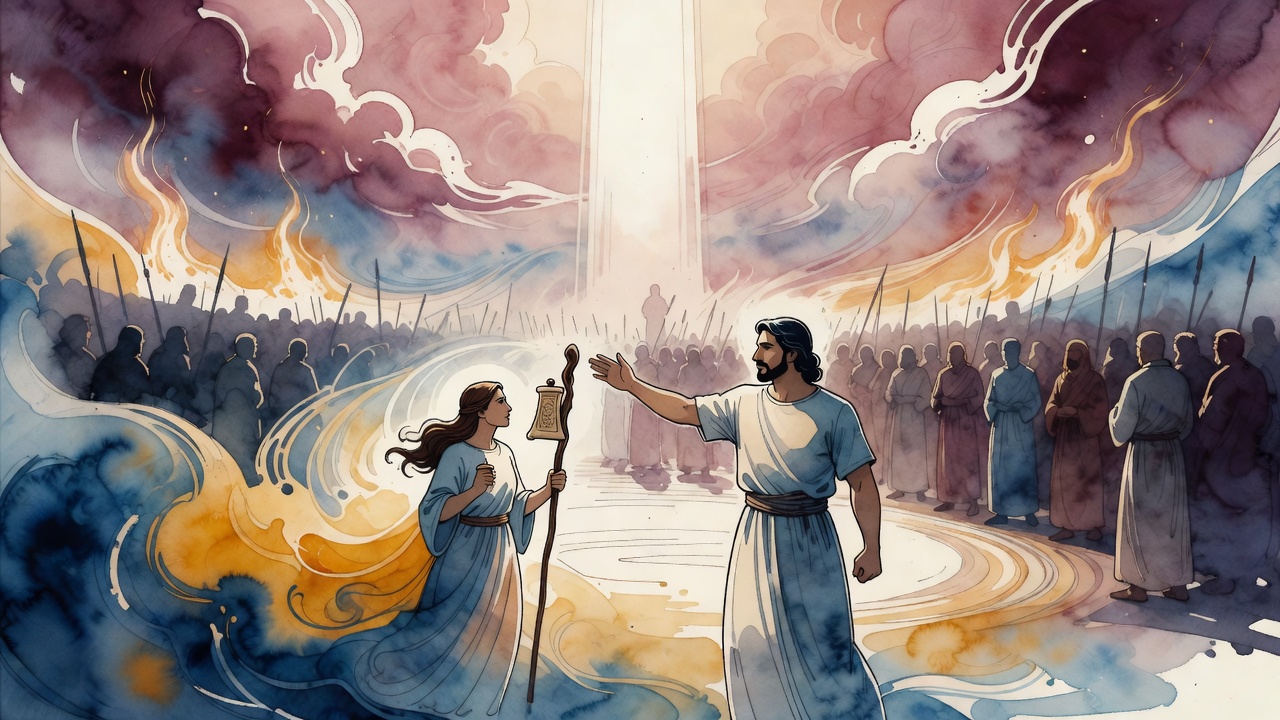
His roar carried four hundred parsangs. Hushim son of Dan heard it in Canaan and jumped. Egypt came close to turning over that afternoon.
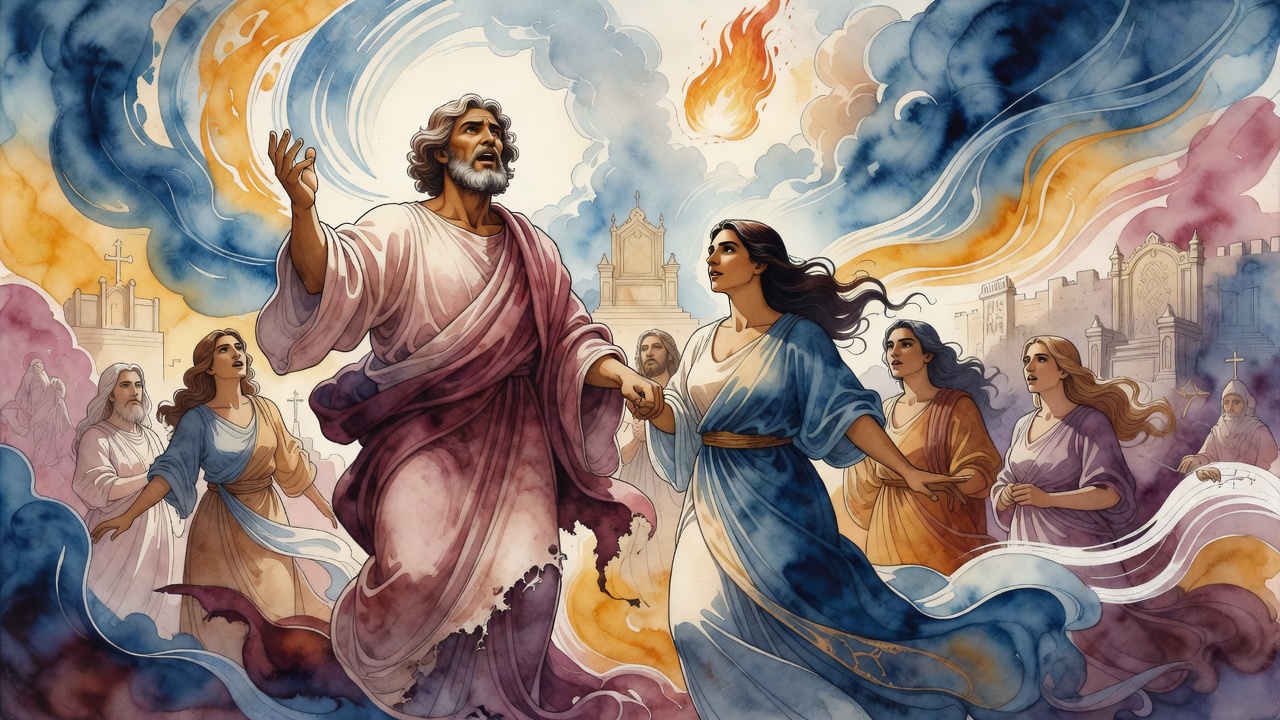
One of his wives asked him to bow to her father's idols. He had already ruled that women do not count, she said, so what harm was it? He bowed.
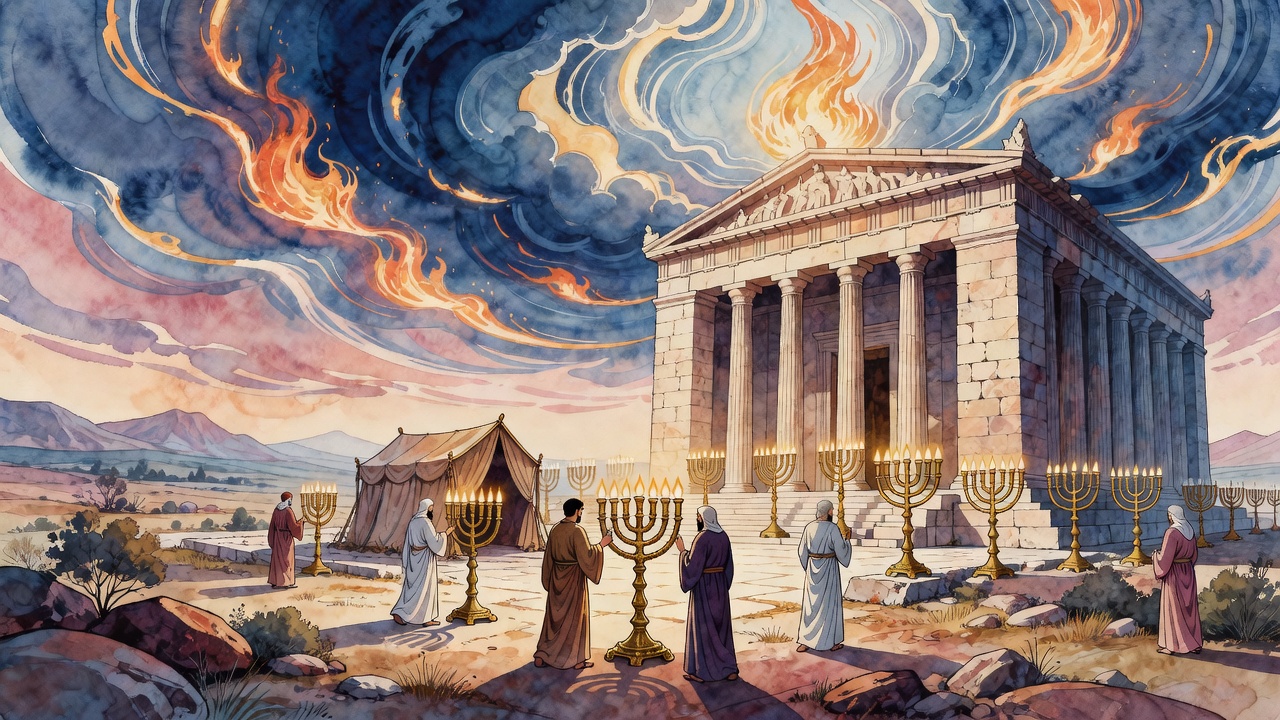
One Temple candelabra came out of the mold heavier than the wilderness lamp by a single coin's weight. It went back into the furnace eighty times.
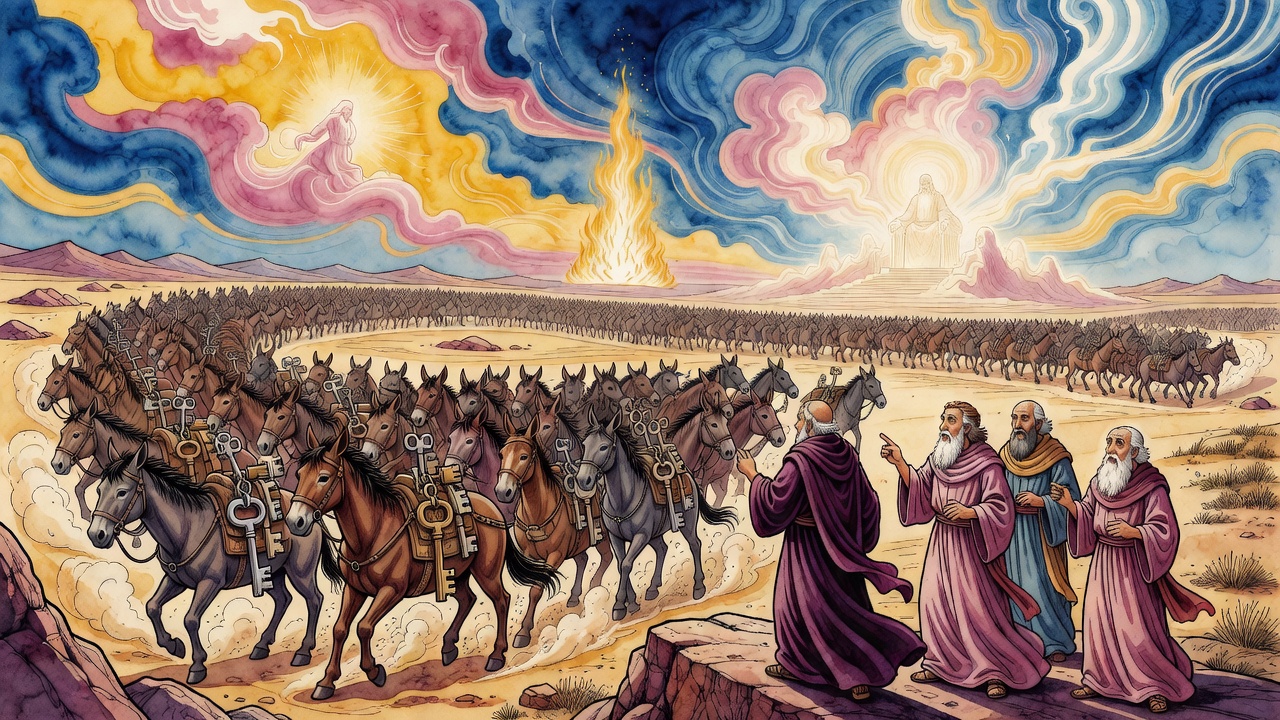
Three hundred white mules carried only the keys to his vaults. Korah came home shaved from the Levite rite, and his wife named it disgrace.
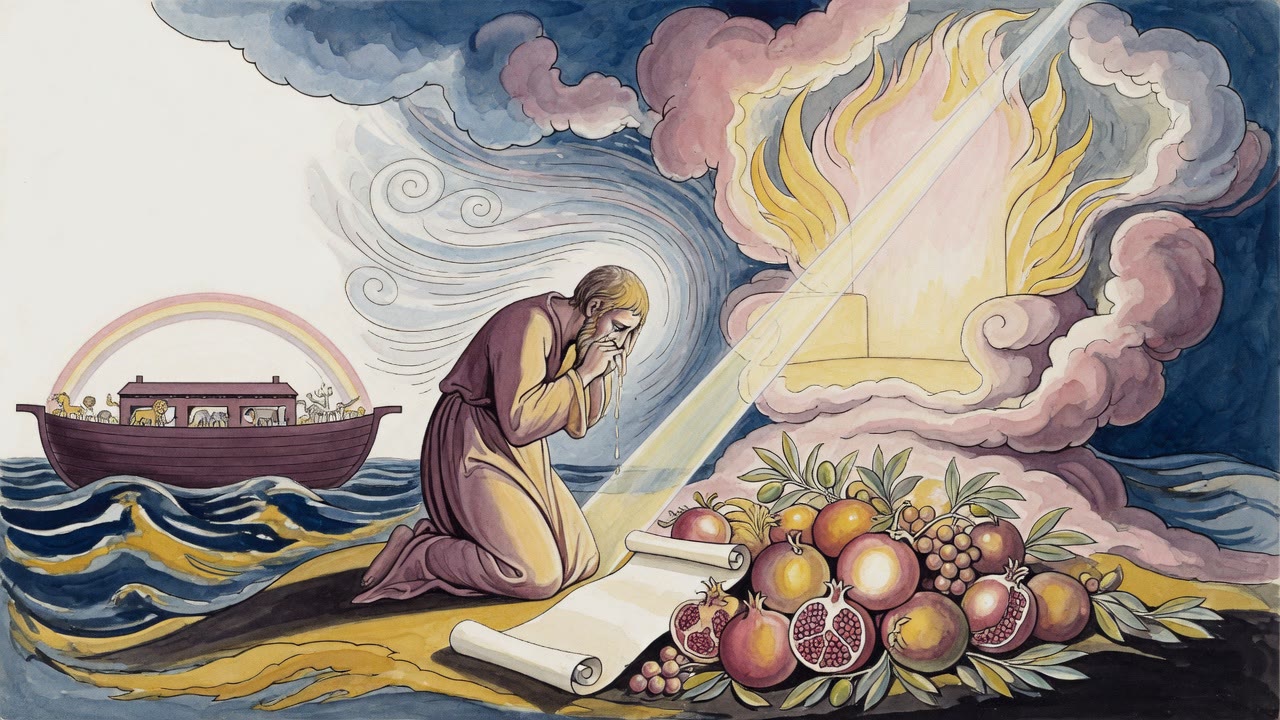
Noah had three sons. He also had twelve months of waking in the dark to feed every animal in the ark at its own hour, and he came out emaciated.
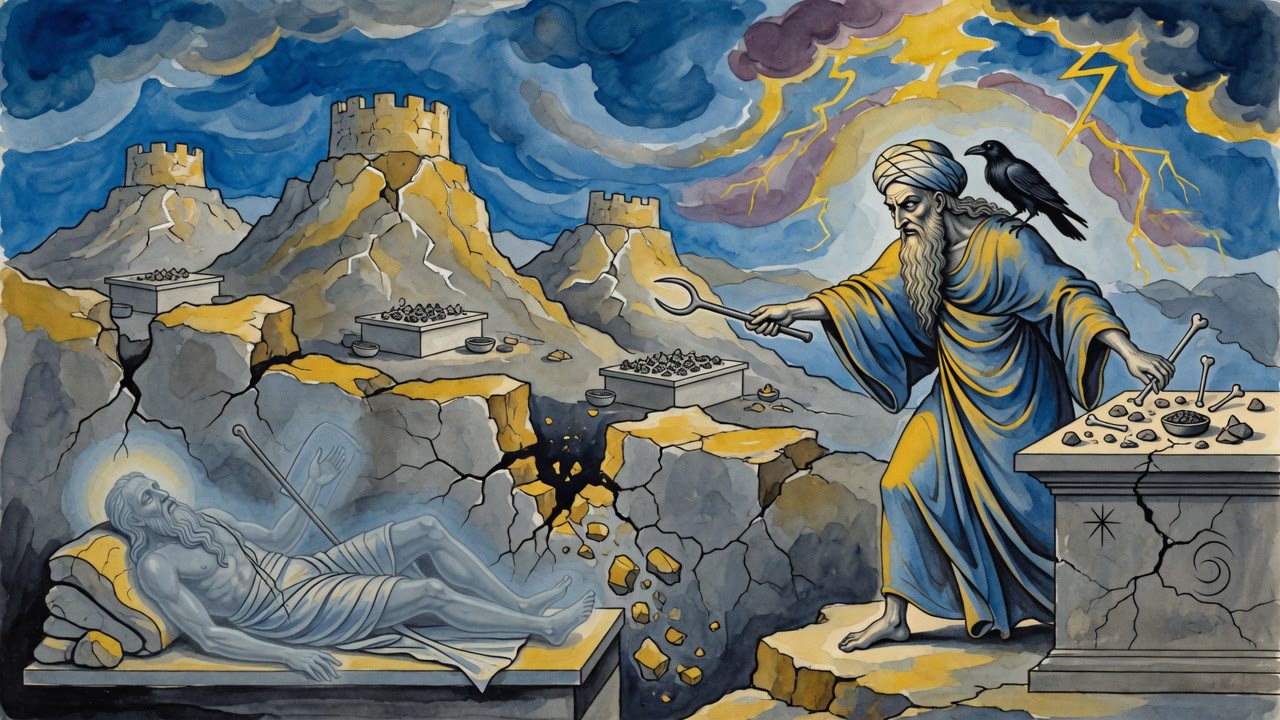
Balaam said of himself that he knew the knowledge of the Most High. He could not see the angel in the road, and his donkey could.
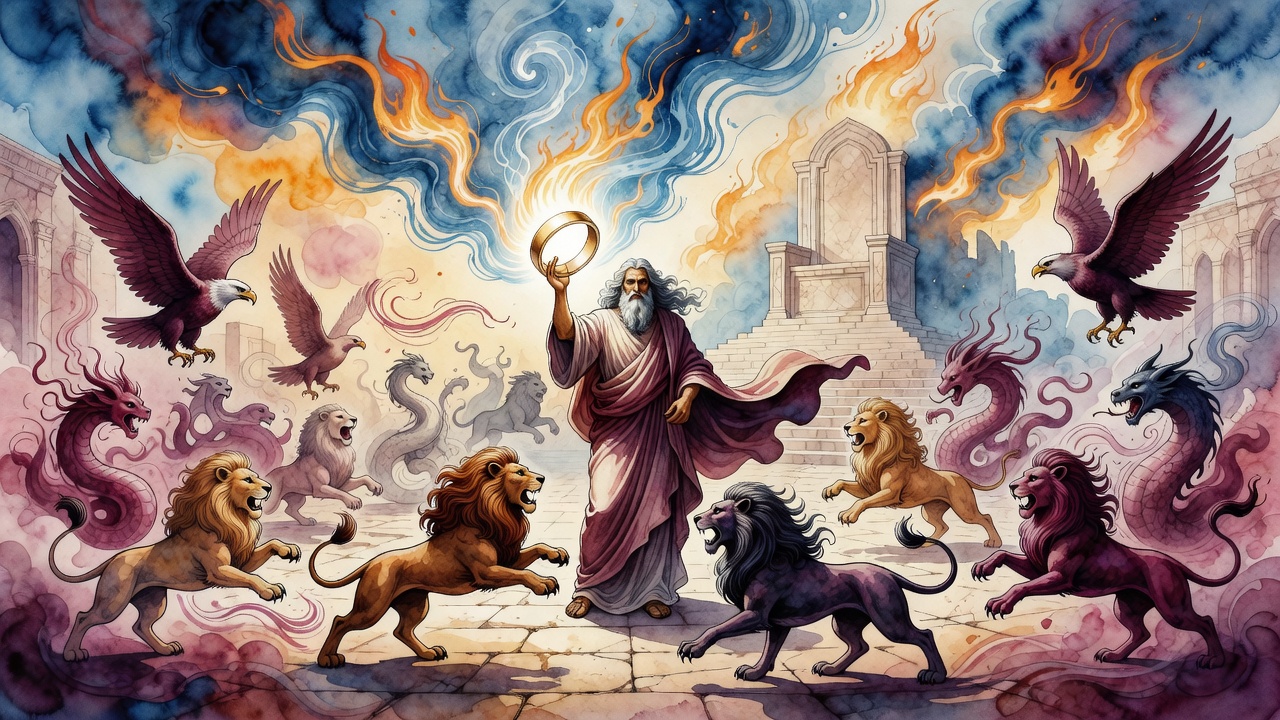
Solomon used a ring inscribed with God's name to call every beast, bird, and demon to his table. Every creature came dancing. Then one did not appear.
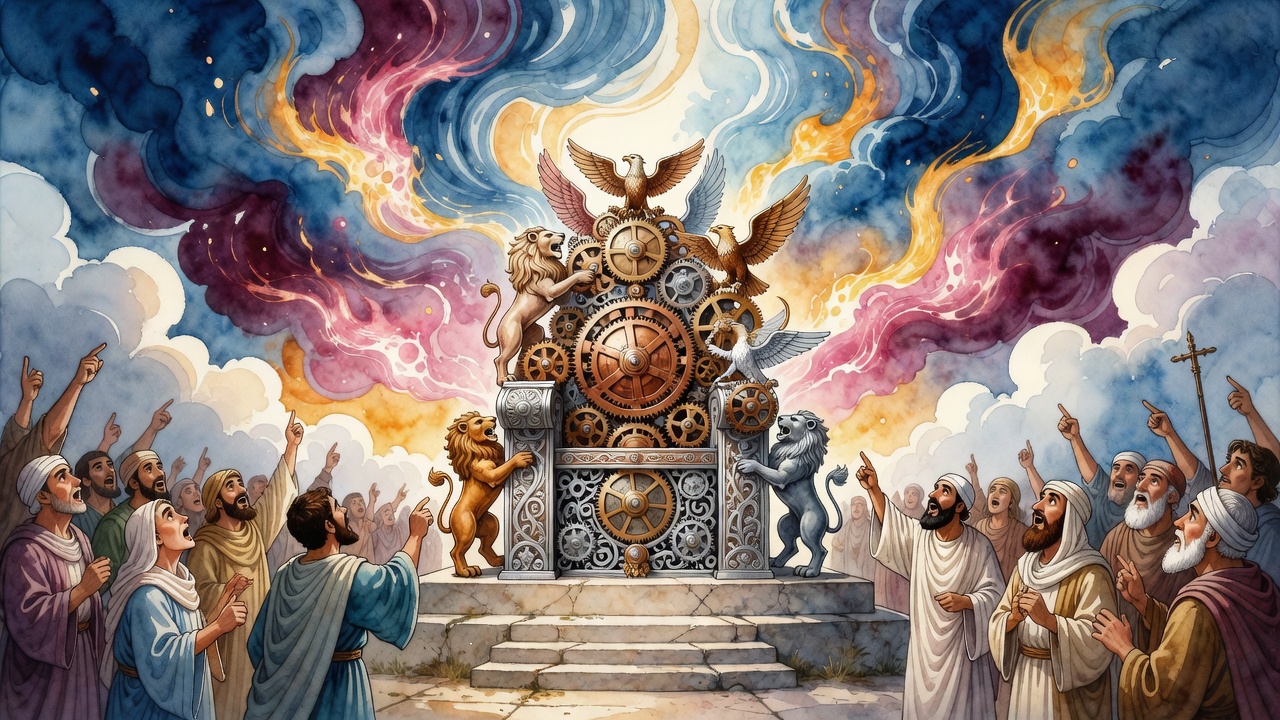
The drawing kept collapsing. Nothing held until God made repentance and set it down beside the Throne, before there was any light to see it by.
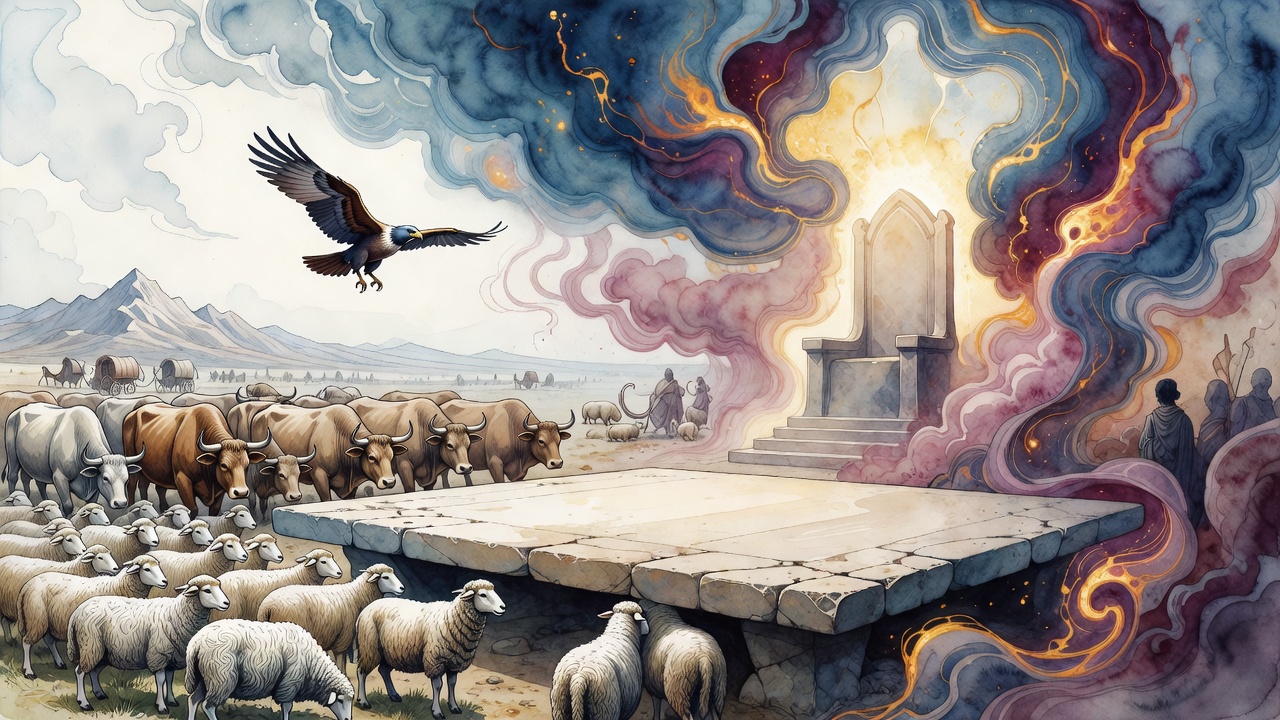
Every day ten oxen, a hundred sheep, and a bird from Barbary carrying itself to the kitchen. The world came to Solomon unbidden. Then it stopped coming.
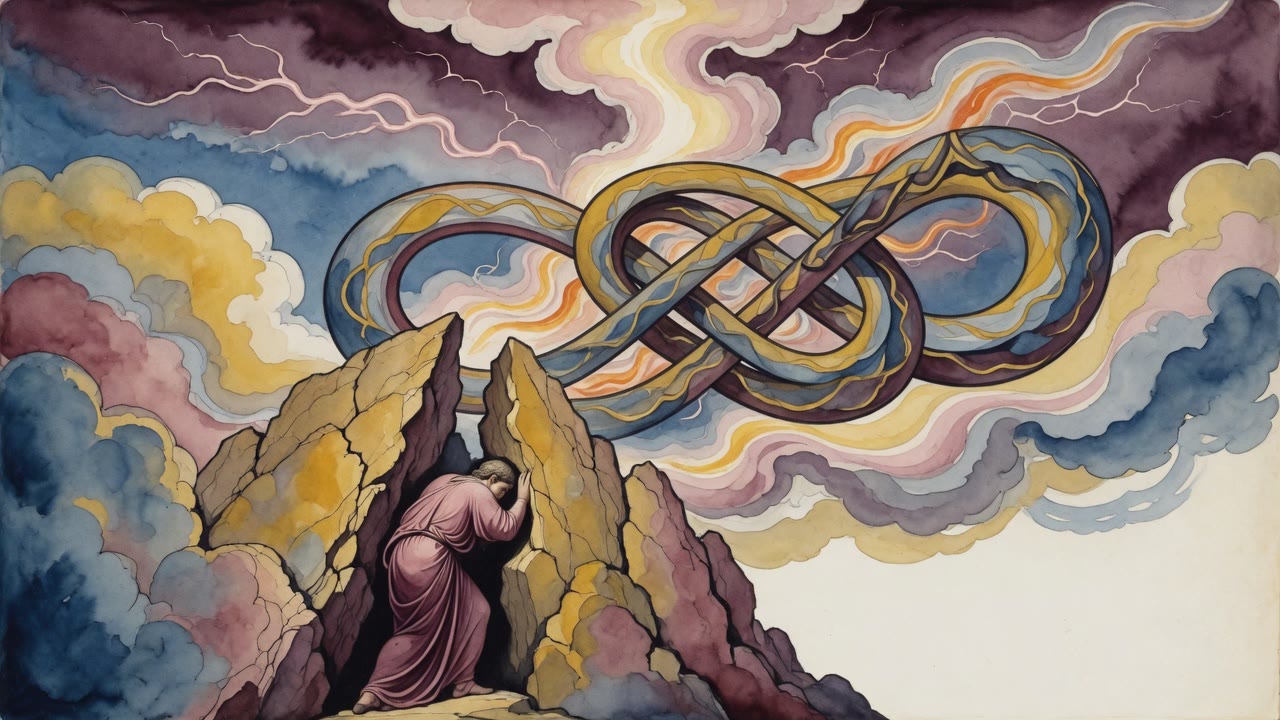
No king who came after Solomon could replicate his throne. The problem was not the gold or the ivory. The throne was built to humble whoever sat on it.
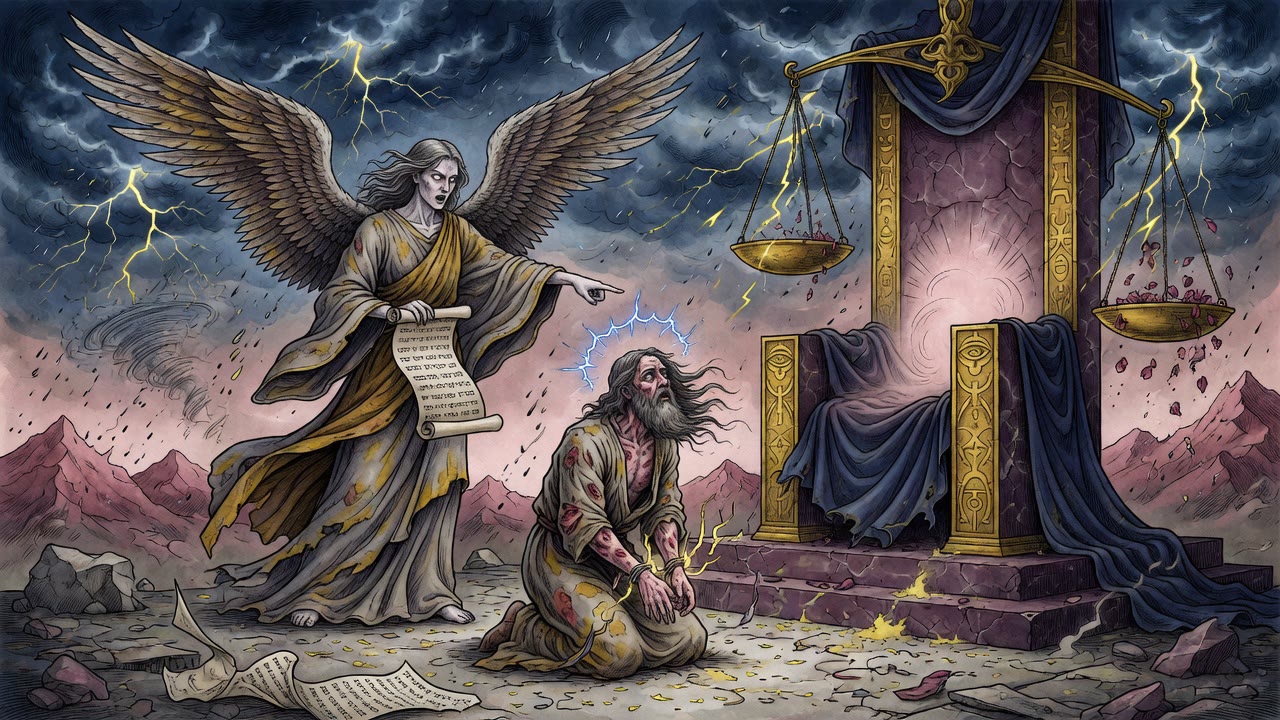
Jacob would not release the stranger until the sky paled. Job, married into that house, demanded a hearing. Solomon set both faces on a lamp of gold.
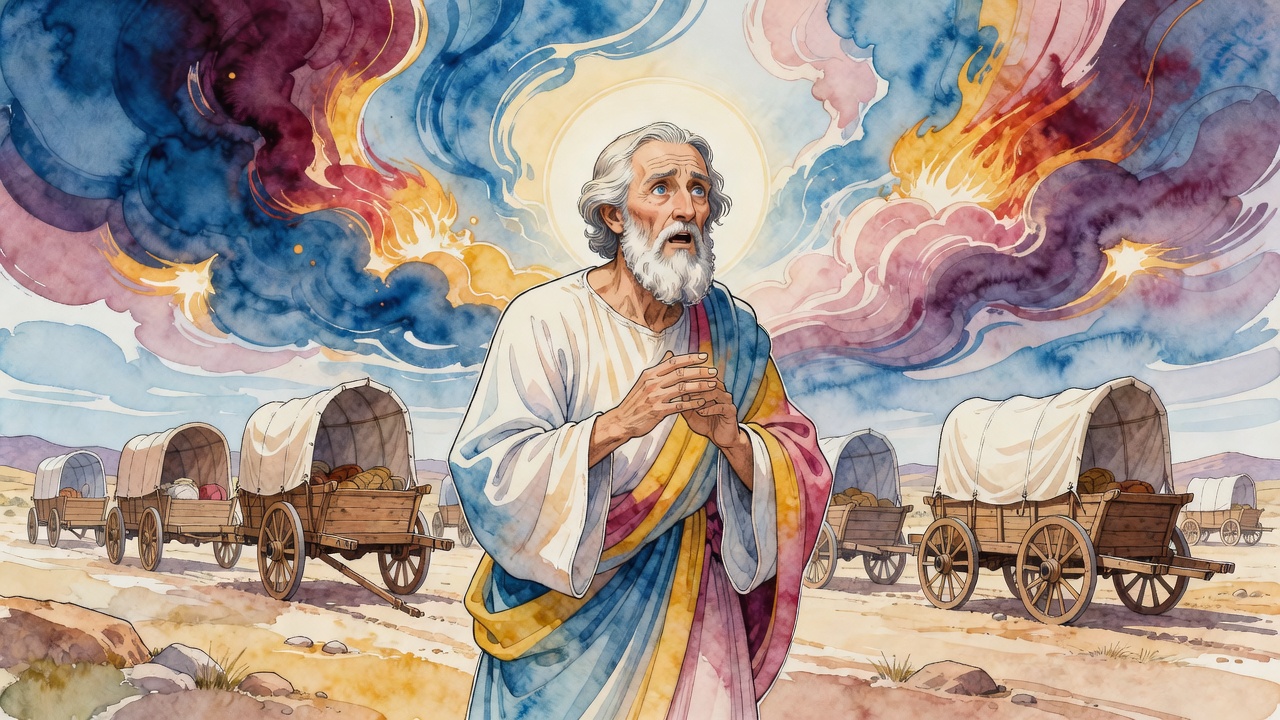
Jacob had not received prophecy in twenty-two years. When the wagons arrived from Egypt carrying proof that Joseph was alive, the spirit returned in an instant.
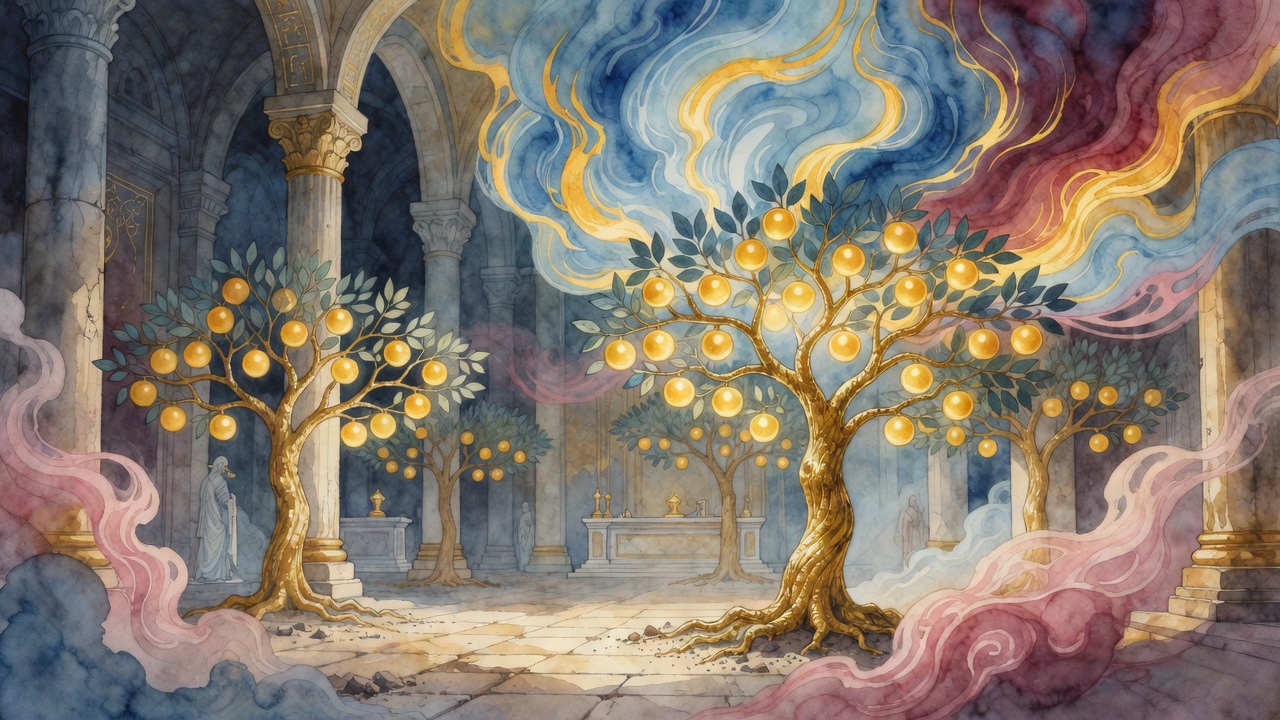
The Torah never asked for trees inside the Temple. Solomon planted them in gold anyway, and they bore fruit until Babylon burned the Temple down.
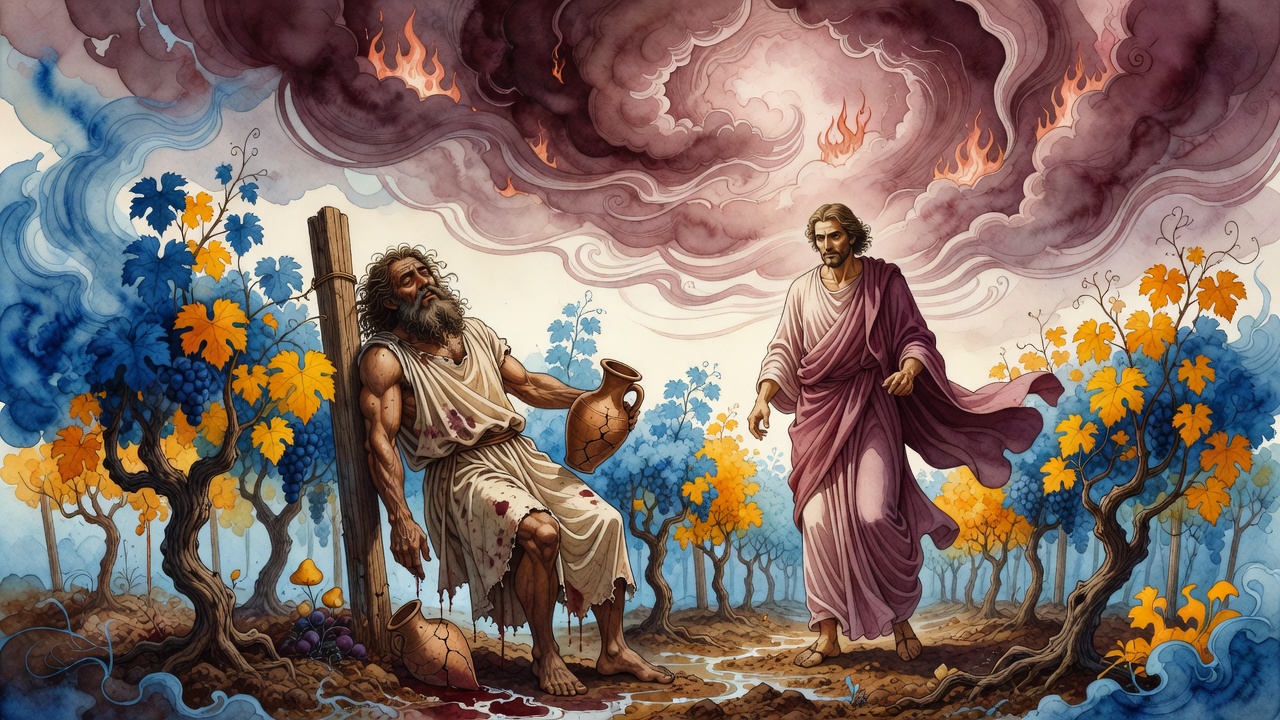
After the flood Noah planted a vineyard, drank wine, and became drunk. Most traditions see failure in it. Philo of Alexandria read the same verse and disagreed.
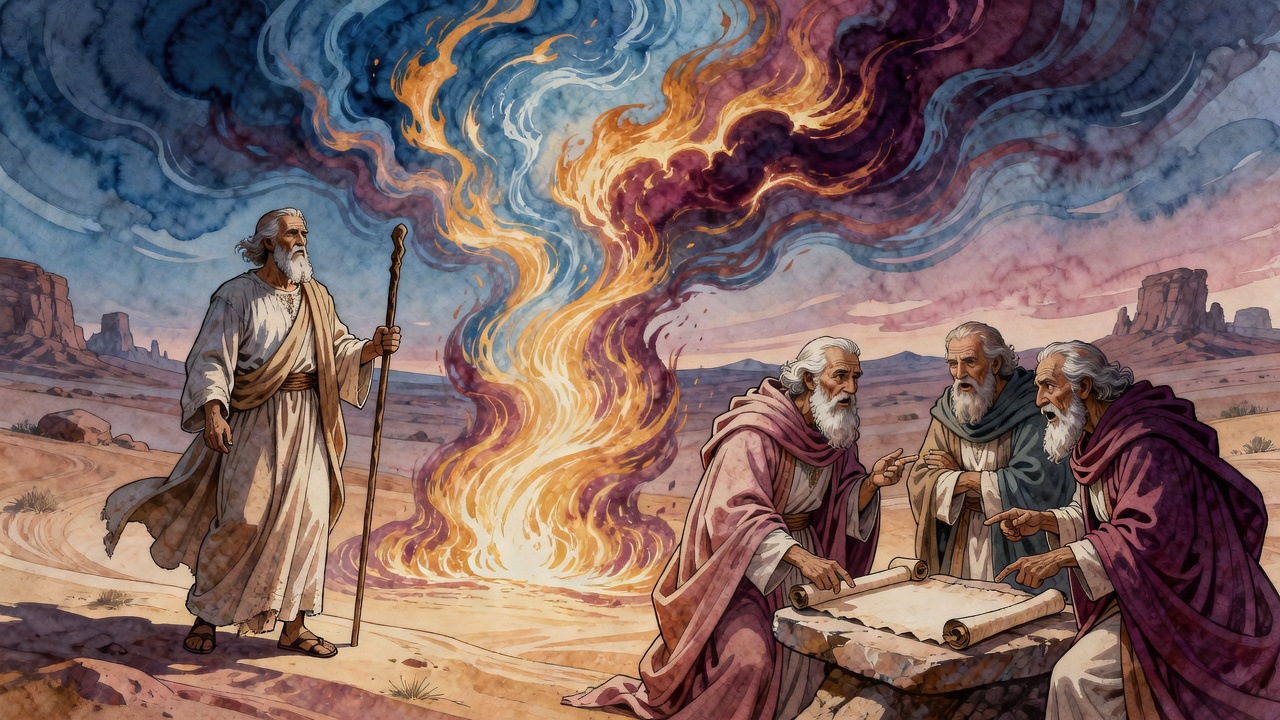
Jethro sent word ahead before he arrived. God told Moses to go out and meet him. Three sages disagreed about what Jethro's message actually said.
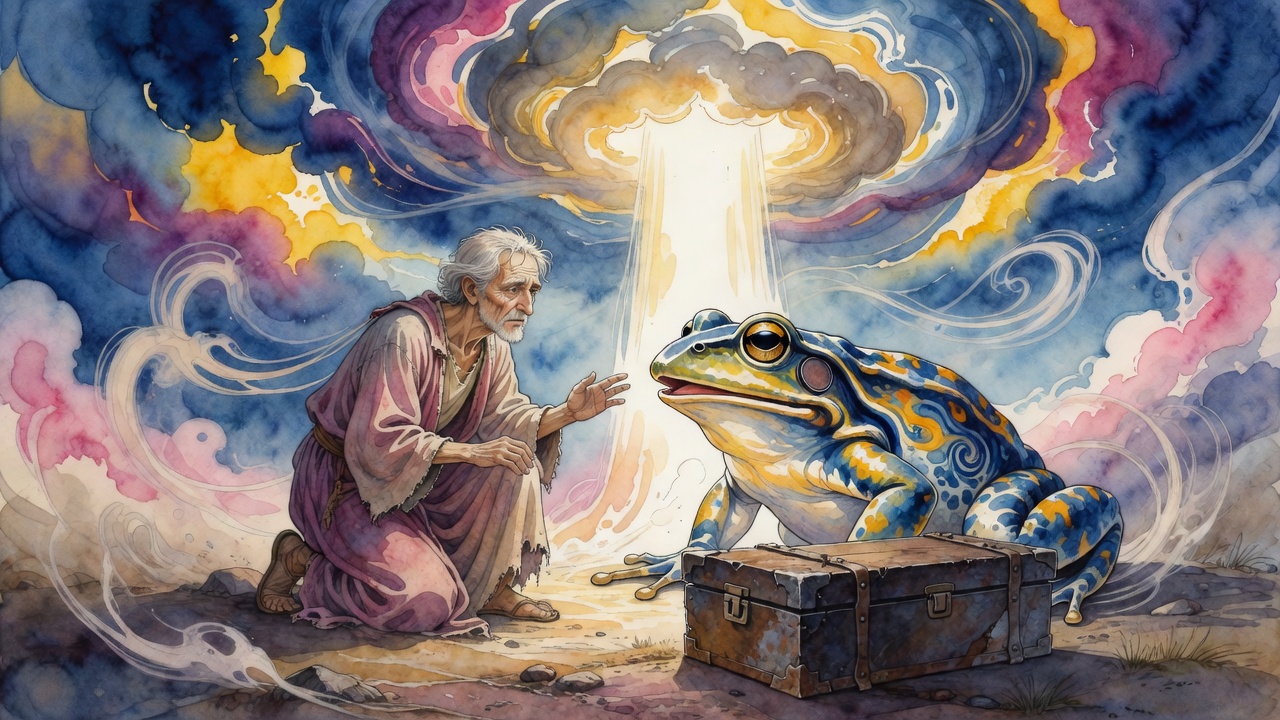
A poor man obeyed his dying father and bought a sealed casket, then fed a frog that grew into a teacher of Torah and all seventy human tongues.
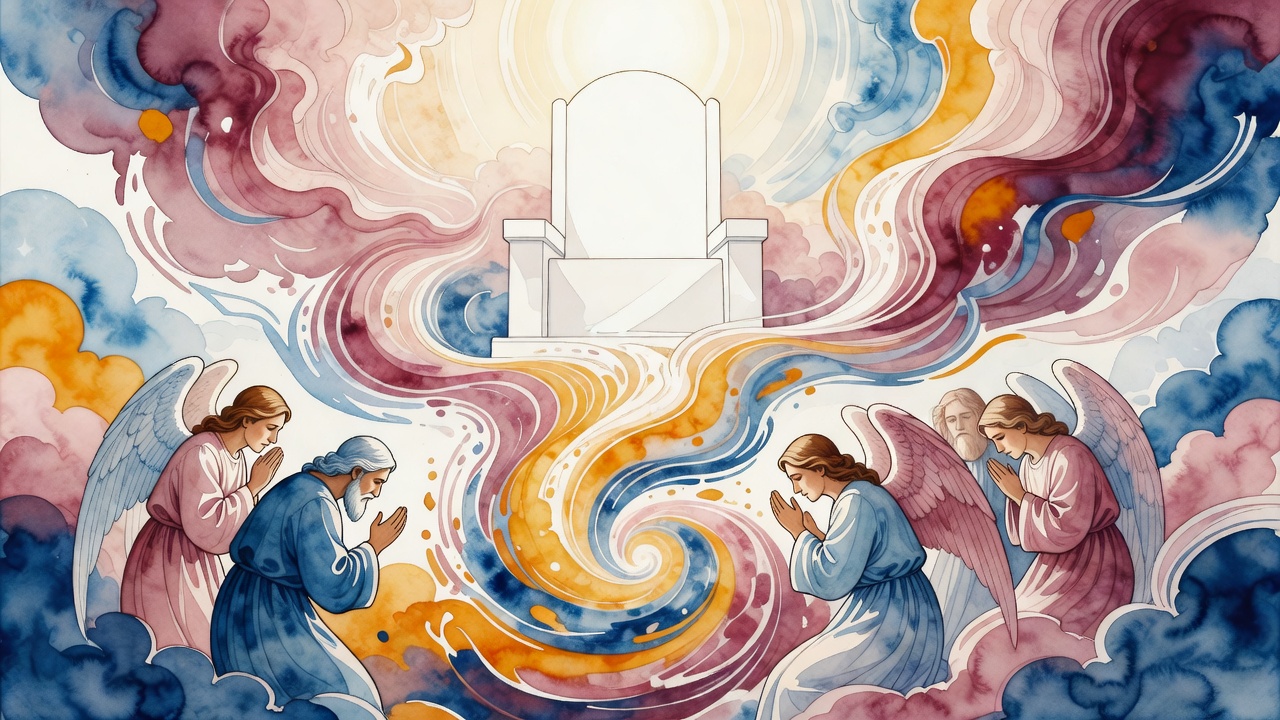
A guarded heavenly secret causes grief among God's own servants until a voice beneath the Throne calls out Rabbi Akiva's name.
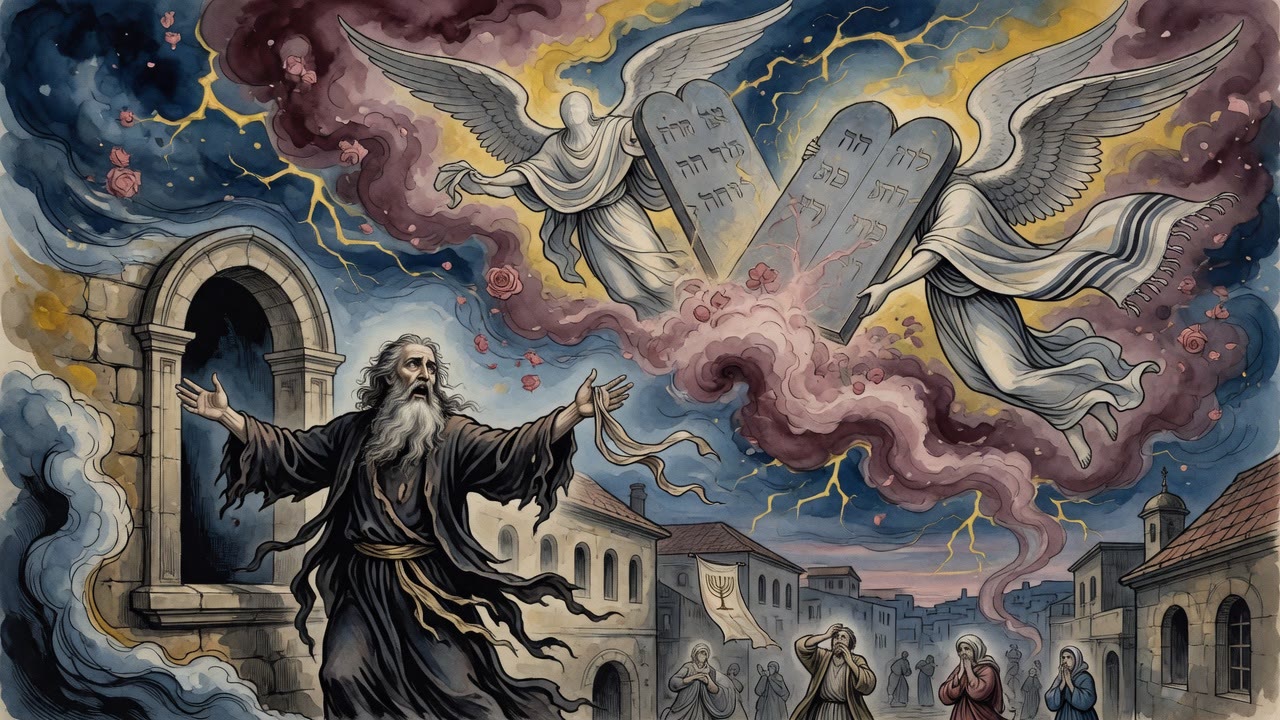
Abaye laid down a zuz. Rava stood empty-handed. Bar Hedya read the same night-images two ways, and both of those readings came true.
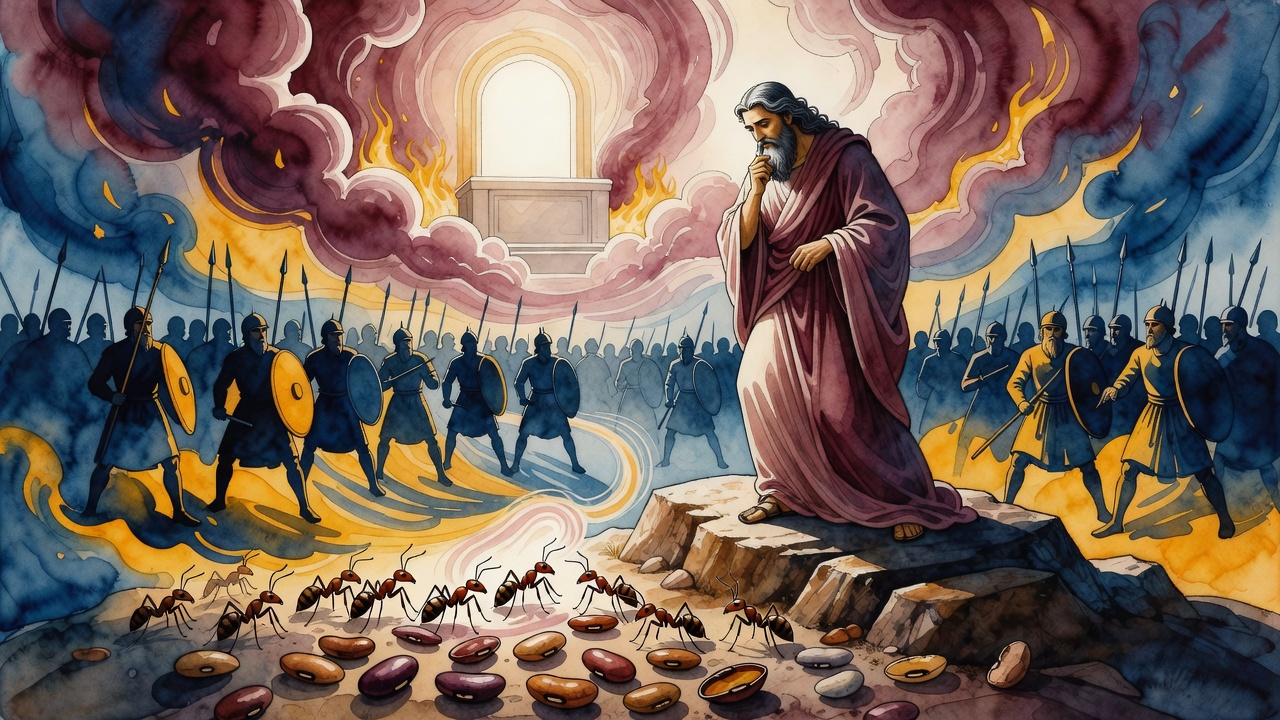
The king who speaks every language hears an ant warn her colony before his army crushes them and learns his glory looks like danger from the ground.
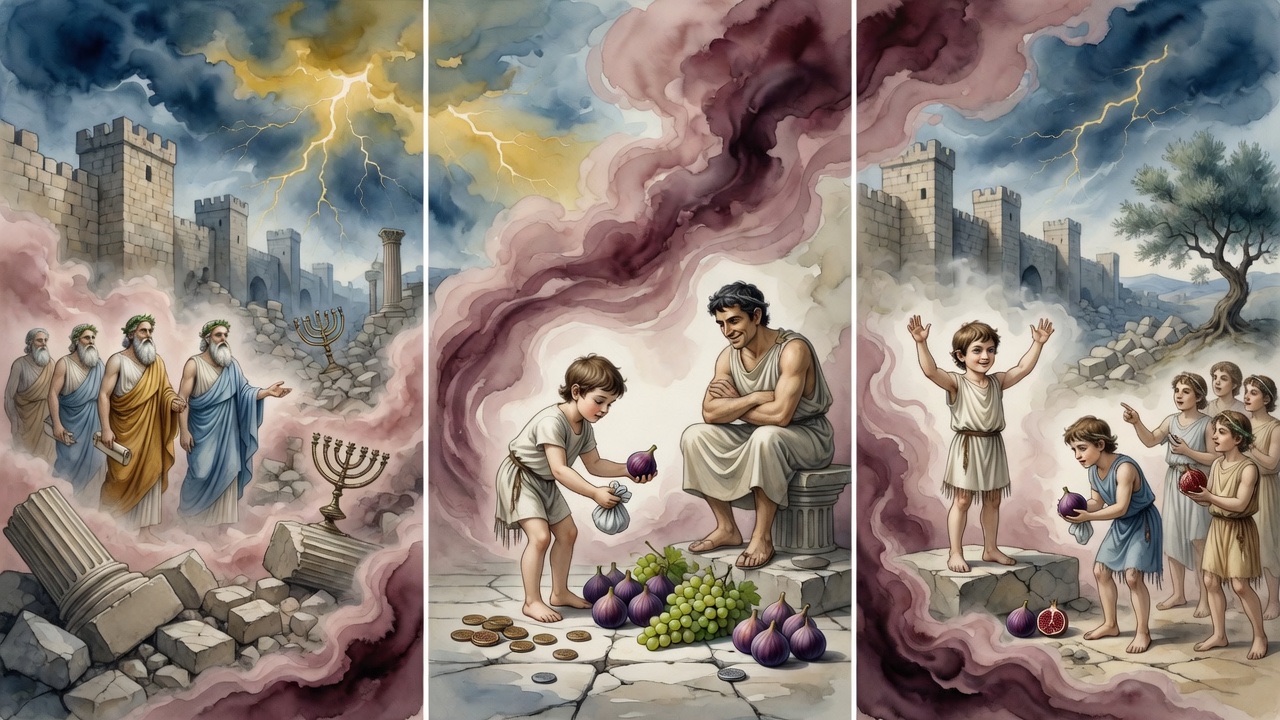
An Athenian sent a boy to buy food he could eat, fill up on, and still carry away. The boy came back with salt, and he was right.
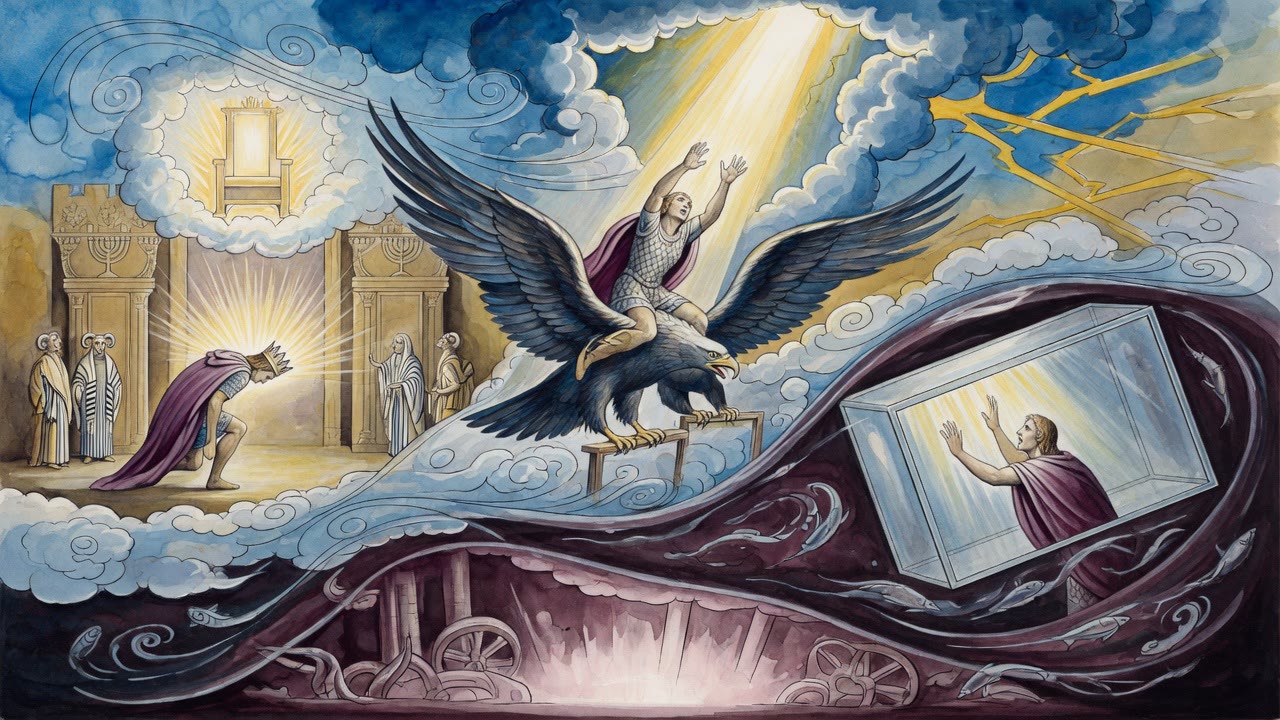
Jaddua would not break his oath to Darius. Alexander marched up from Gaza to punish him. He bowed to the Name cut in gold on the priest's mitre.
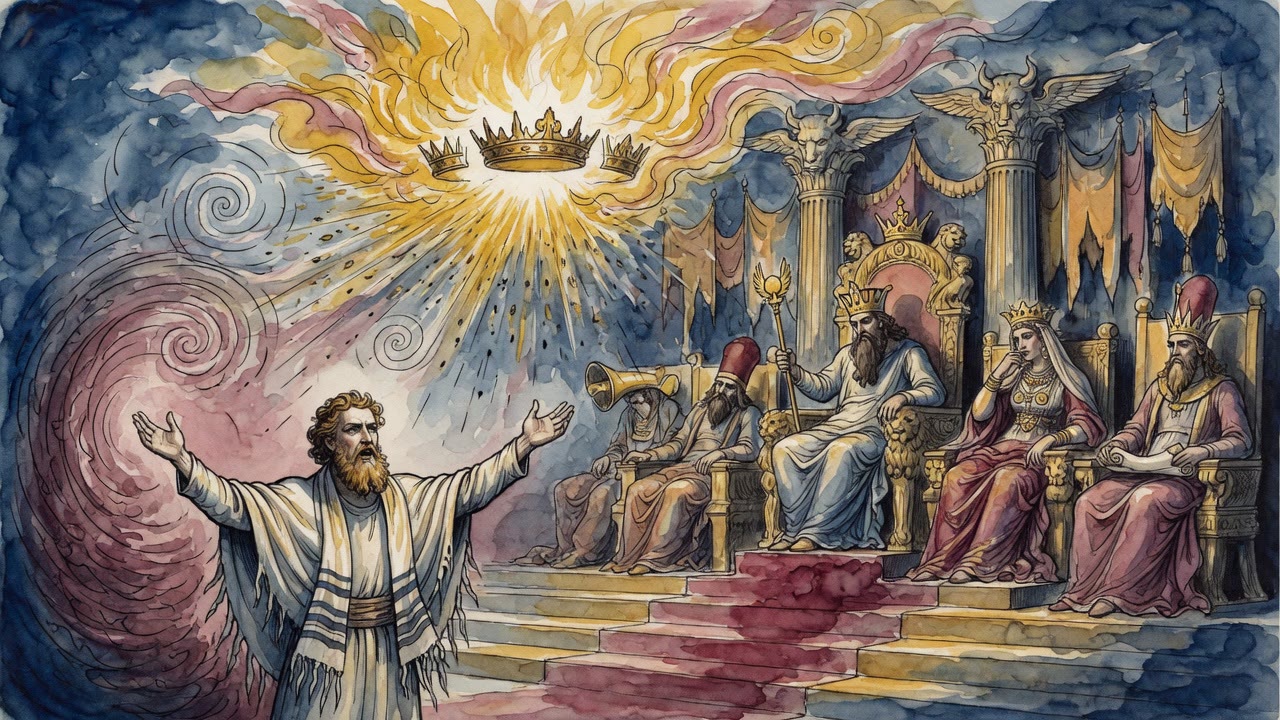
Daniel had grown too old to hold a court together. He walked out to the camp of the exiles, took a man by the hand, and brought him back as his replacement.
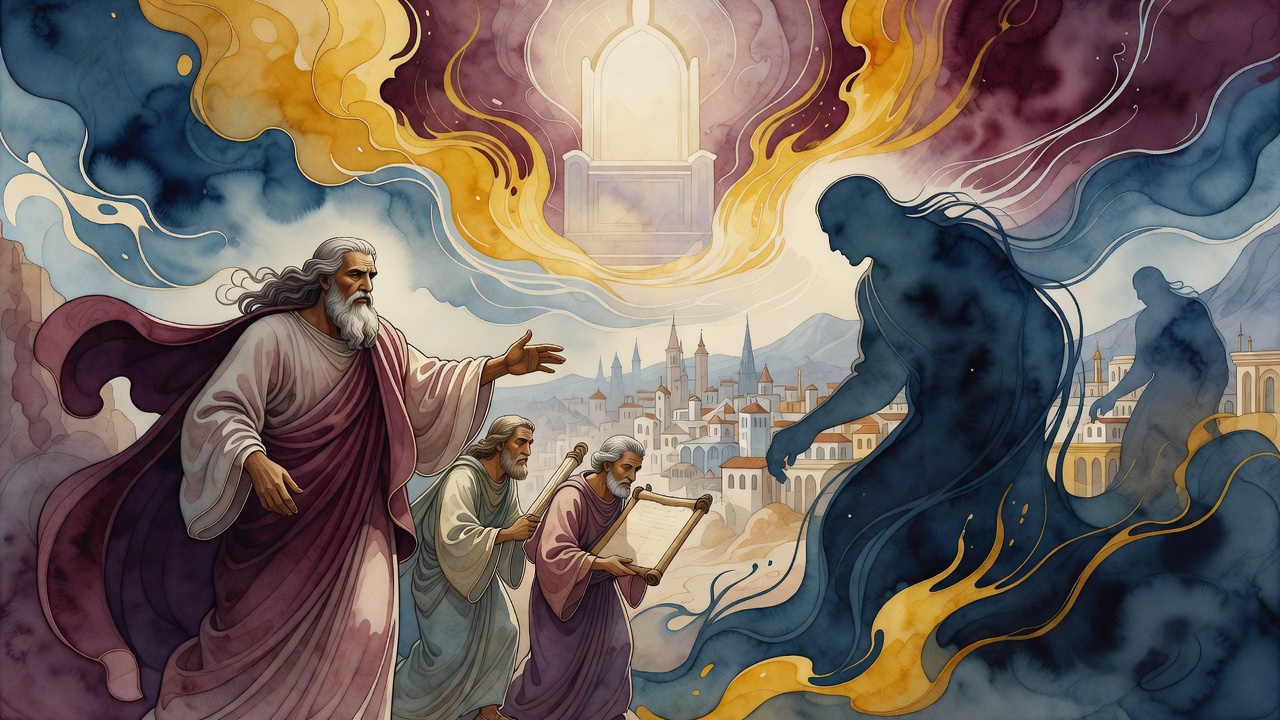
Elihoreph and Ahijah reached the gate of Luz still breathing. The Angel of Death had needed them exactly there.
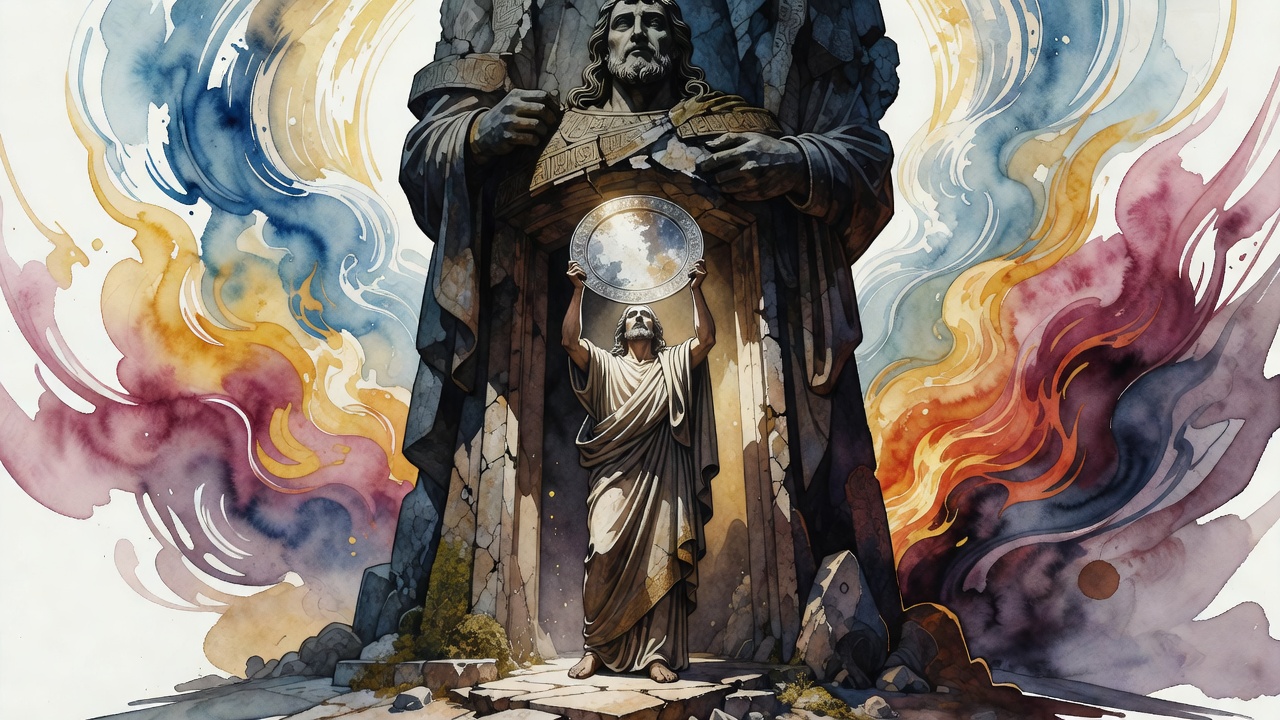
Solomon finds a silver plate deep in a statue that speaks of Shadad ben Ad, who ruled a thousand thousand kingdoms and vanished at a touch.
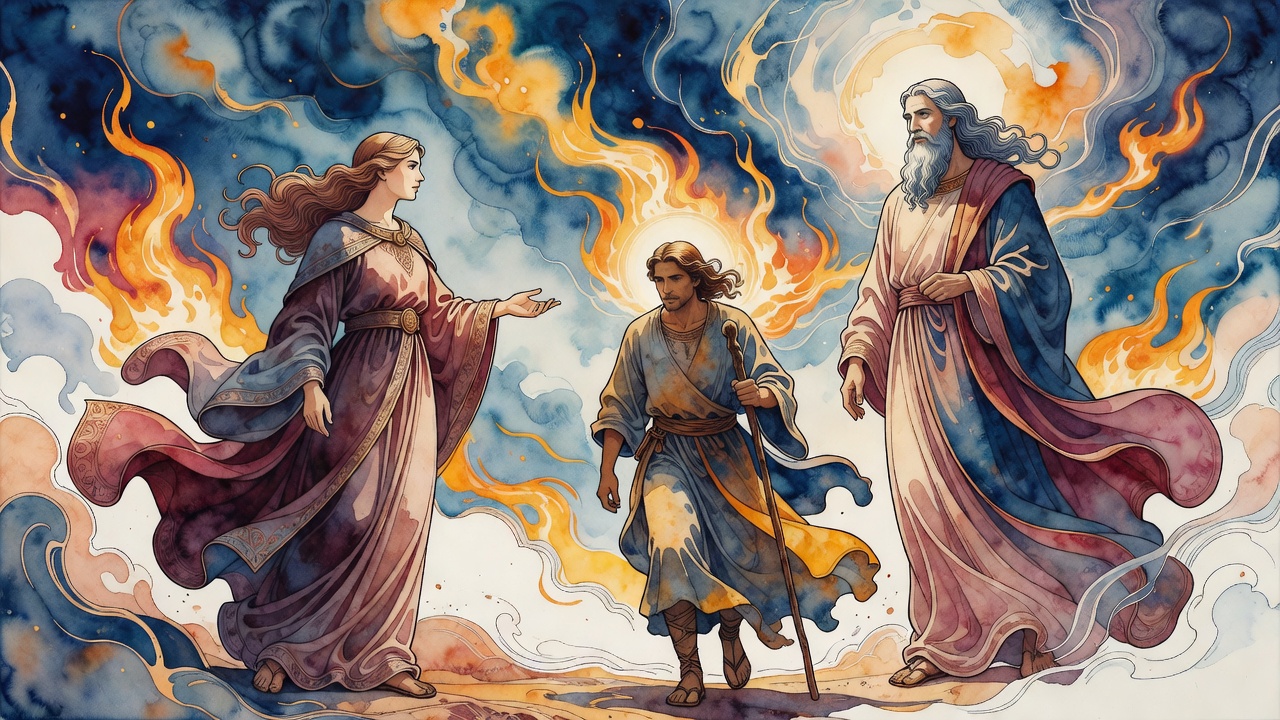
She married the shepherd and lost her father's house. Twelve years later she told a neighbor she would send him away for twelve more.
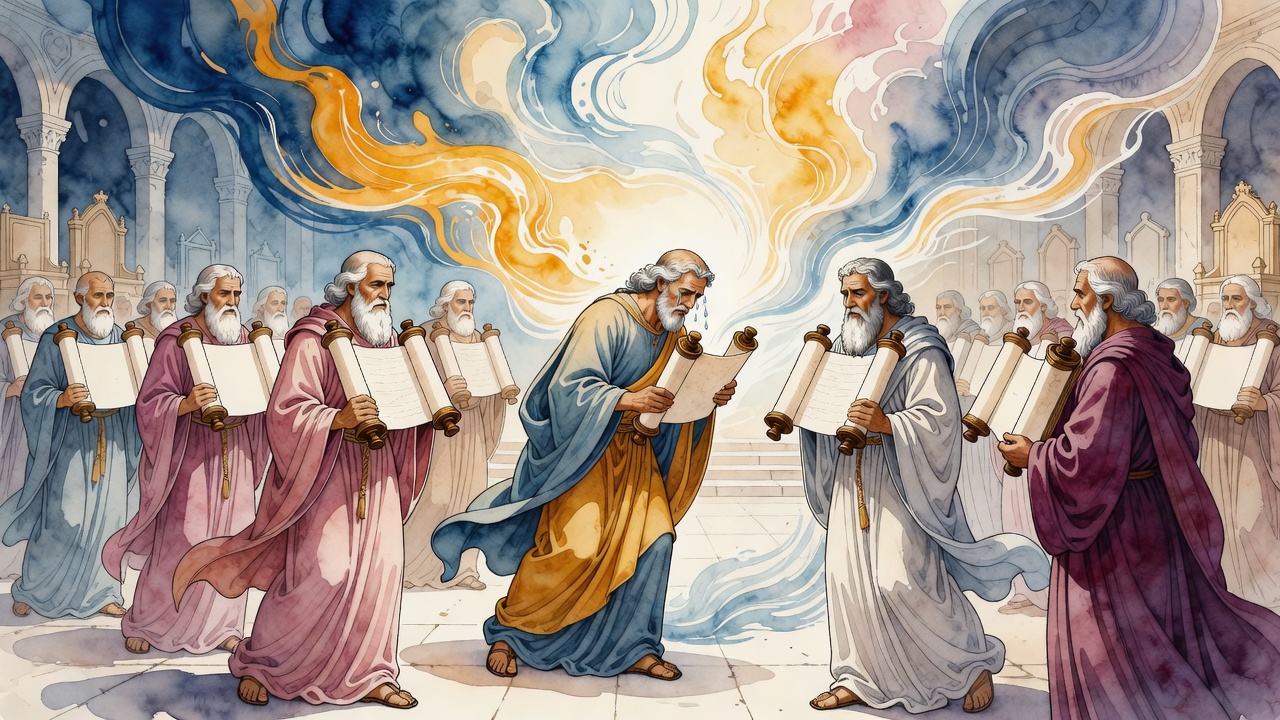
Seventy-two elders carried the Torah from Jerusalem into the Greek king's hall. He asked why no king before him had ever been given this book.
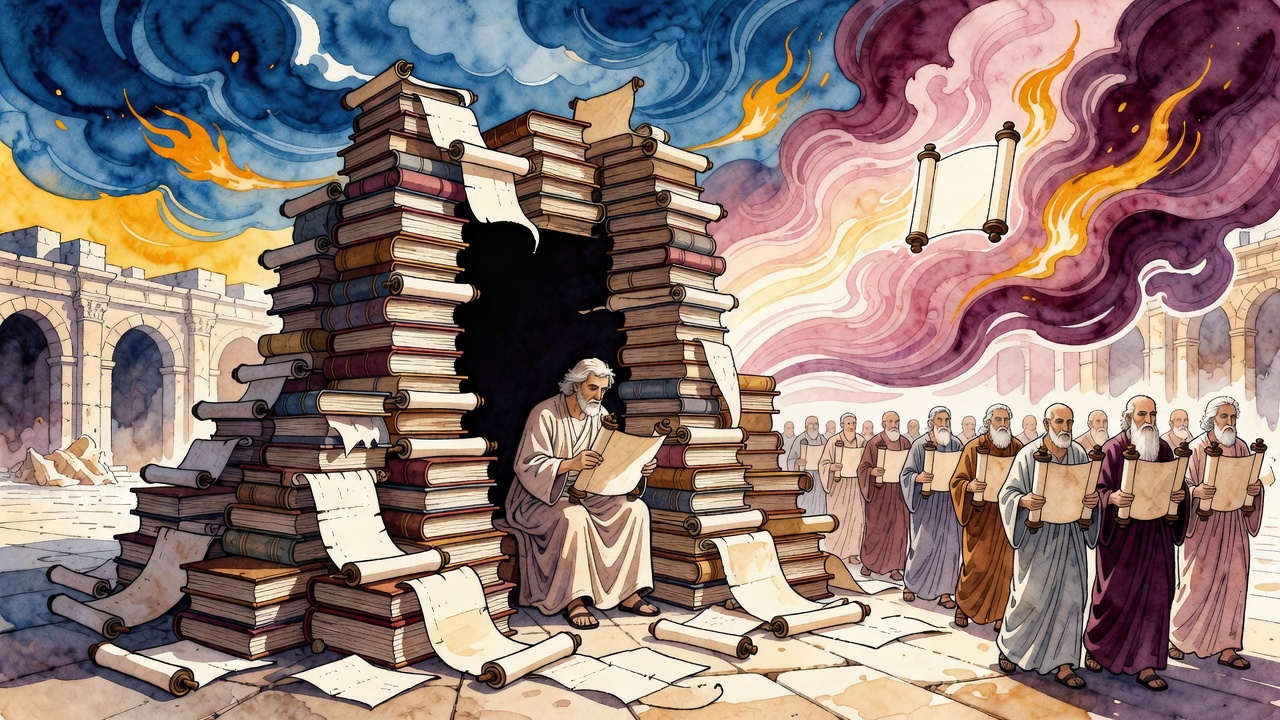
The shelves held more than two hundred thousand scrolls. The Jewish law was not among them. It still lived in Hebrew, in Jerusalem.
