Abraham Set Barisat Before the Fire and the God Burned
Terah's donkey threw five wooden gods into the road. Three shattered. Abraham threw the fragments in the river, and the river did not answer.
Table of Contents
 Click for full size
Five Gods on a Donkey
Terah made five gods and put them in his son's hands. "Sell these," he said. Abraham saddled his father's donkey, loaded the idols, and set out toward the town street to find buyers.
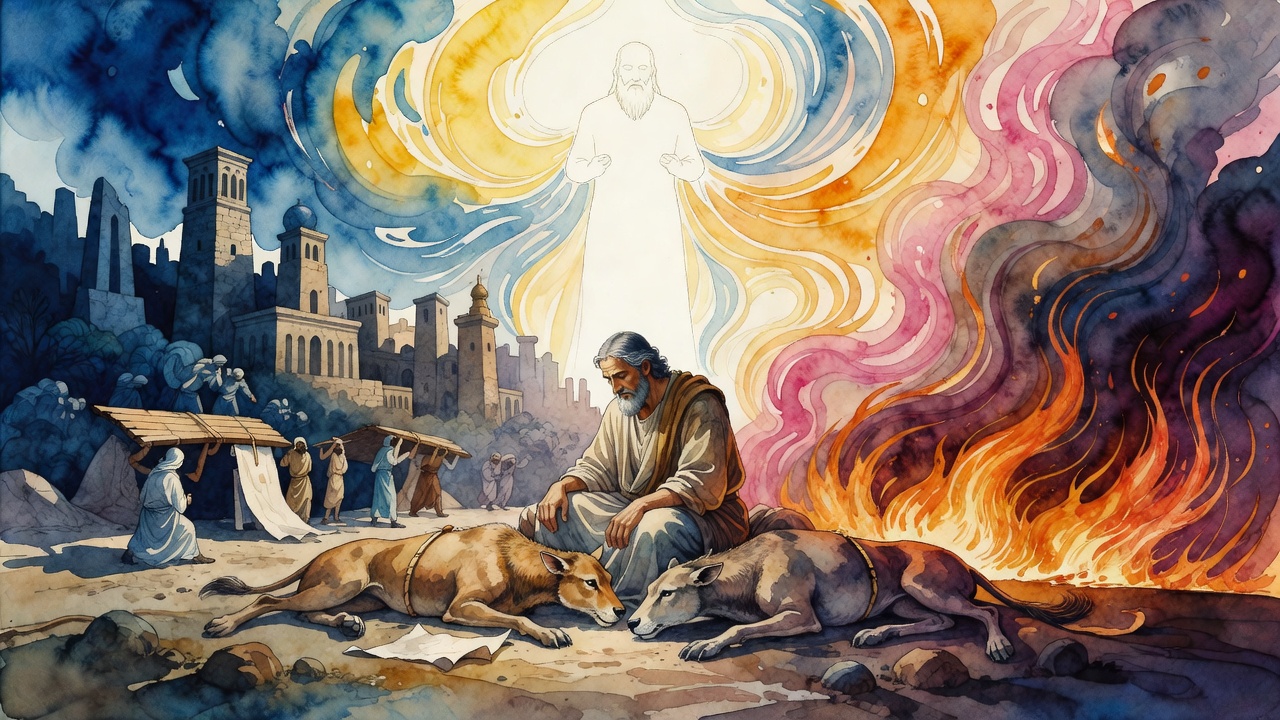
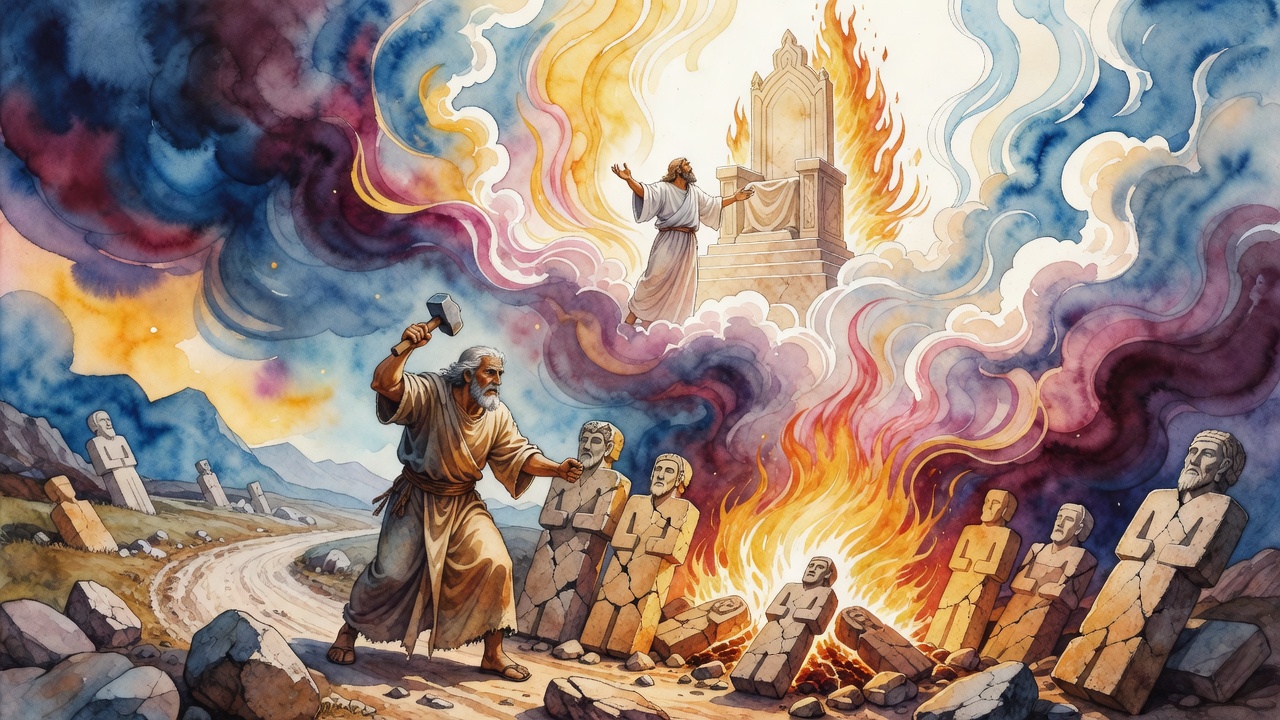
Merchants from Fandana in Syria were on the same road, camels bound for Egypt. Abraham began talking with them. Then one of their camels groaned, a low sound, and the donkey panicked. It bolted sideways and threw the gods onto the road. Three of the five shattered. Two survived.
The merchants were delighted. They offered to buy the two intact idols and pay for all five, broken ones included. Abraham took the money. He gathered the fragments and threw them into the river as he walked back to report the loss. The river received them without ceremony. They sank. No omen came. The gods did not protest. The silence of the river was the first argument, and it required no words at all.
Barisat Fed the Fire
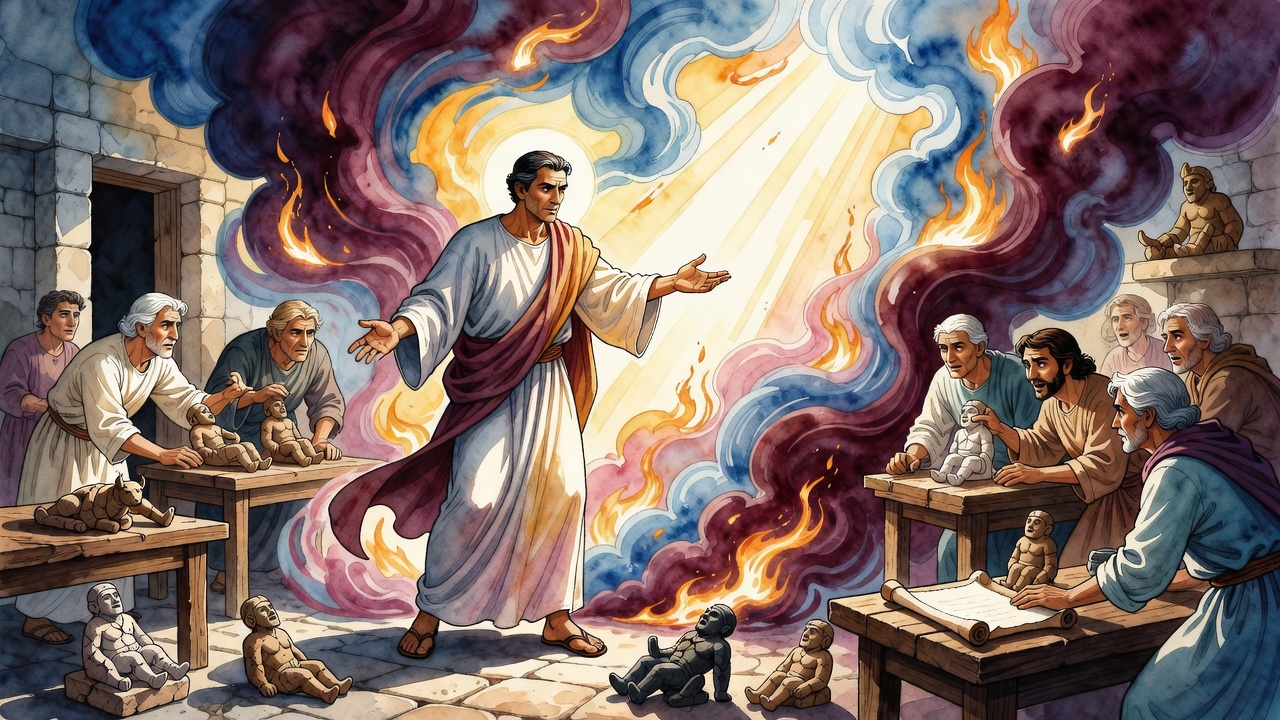
Back at the house, Terah sent him to collect wood scraps for the midday meal. Under the chips Abraham found a small wooden idol that had been lying among the brush on his left. On its forehead was carved: GOD BARISAT. Son of fire.
He said nothing to his father about the find. He laid the scraps in the cooking fire and set Barisat in front of the flames with a mock ceremony. "Pay attention, Barisat," he said. "Do not let the fire go out. If it dims, blow on it until it burns again."
When he returned, the cooking fire had eaten Barisat entirely. The son of fire had fed the fire. The god whose name invoked flames had become fuel. Abraham looked at the ash. A god made of wood, placed in front of a fire, given instructions it could not follow, consumed by the element it named. His father had spent a life making things like this. The house was full of things like this.
Terah Would Not Listen
Abraham argued with his father through the rest of that day. He worked through the materials. The stone gods break. The wooden gods burn. The silver and gold ones cannot save themselves from a thief with strong arms. Terah's anger rose with each example. He would not stop carving. He would not stop sending his son to market with freight that shattered on a groan.
"Why will you not hear me?" Abraham said.
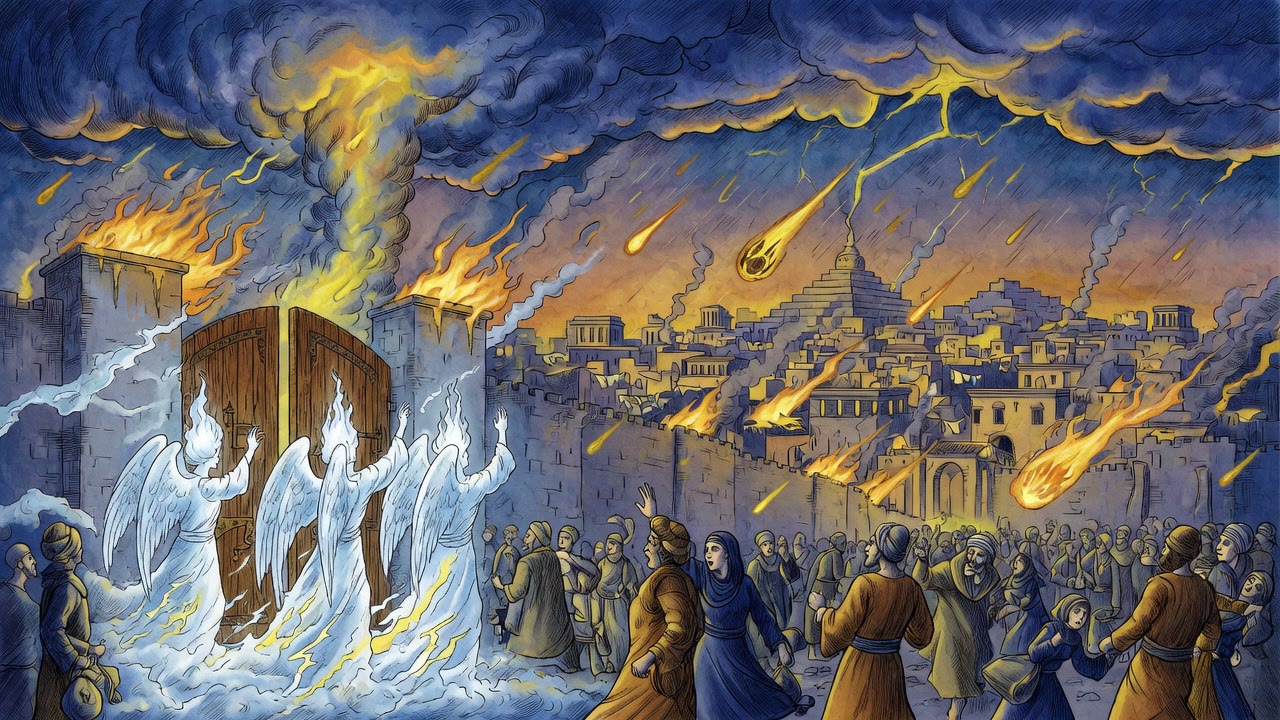
Terah drove him off with that anger still hot. Fire fell on the house. The household that would not leave the idols died in it. Terah perished with the work of his hands. Abraham was taken out. The gods that could not keep a cooking fire from eating Barisat could not keep a house from burning. They had never been able to keep anything.
The Picture of All Creatures
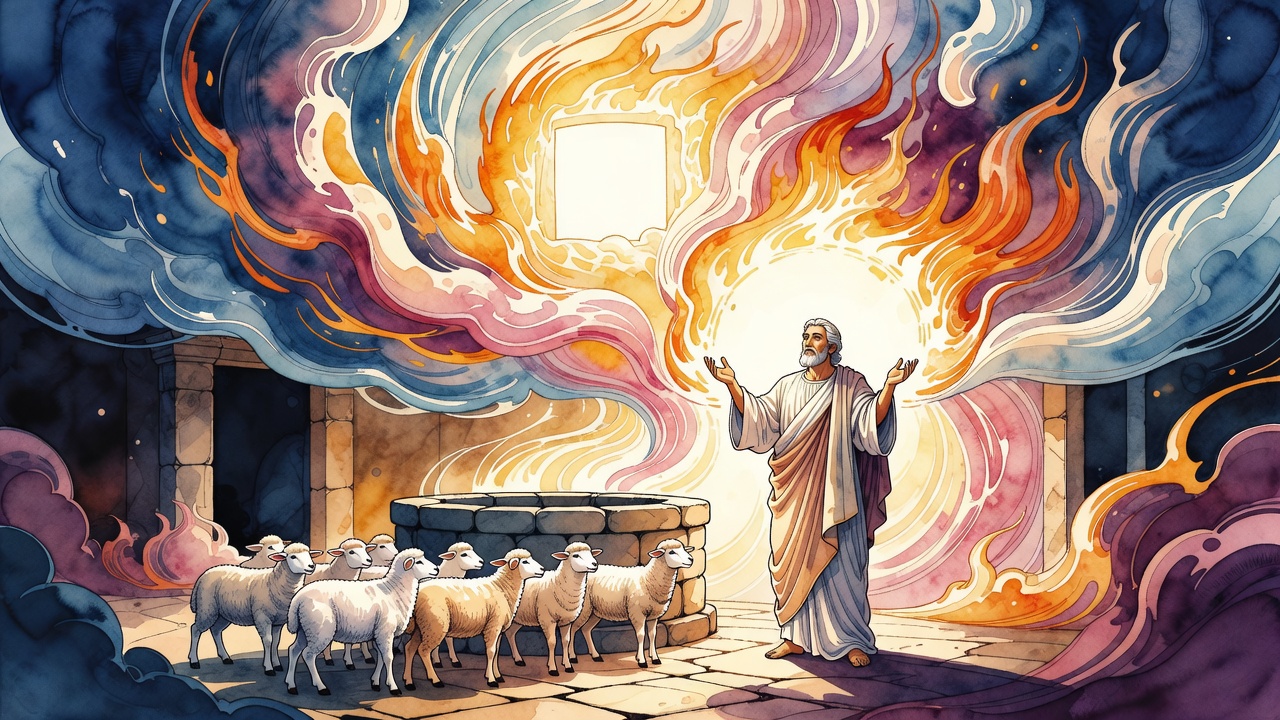
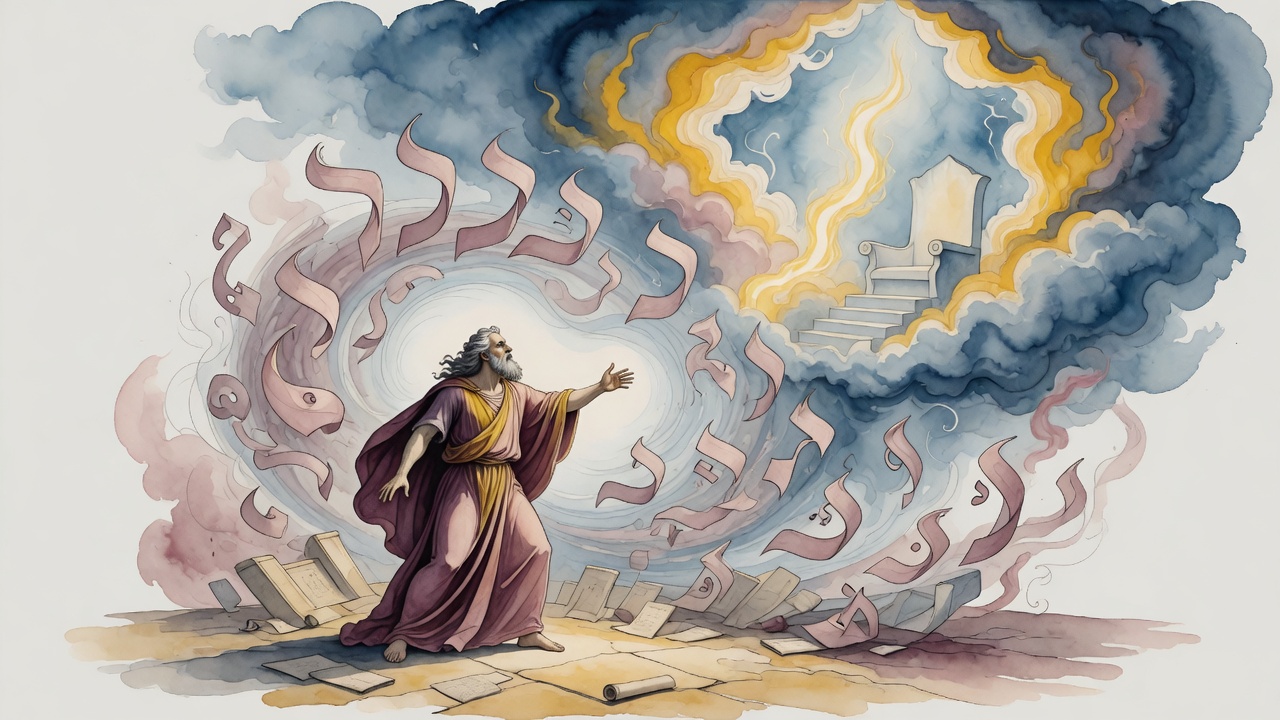
God took Abraham up after that day. In a vision above the earth he was shown a picture of all the creatures, all of history, everything that would happen from the beginning through the end of the ages. The pattern was complete before Abraham could ask a question about it. Whatever had been determined to be was already planned in that picture, and it had stood before God before it was created.
Abraham asked anyway. "O Eternal, Mighty One. Why have You established that it should be so, and then proclaimed the knowledge of it?"
God answered with a question of His own. "Hear, Abraham. Why did your father Terah not listen to your voice? Why did he not cease from idolatry until he perished, and his whole household with him?"
Abraham said, "Because he chose not to listen. I did not follow his works."
God said, "As the counsel of your father was in him, and as your counsel is in you, so the counsel of My will is in Me, ready for the coming days, before you have knowledge of them." Evil exists because choice exists. The creatures whose suffering Abraham saw in the vision were not victims of a fixed machine. They were inhabitants of a world in which refusal is real. The same freedom that made it possible for Abraham to break the idols made it possible for Terah to keep making them. The picture contains both because freedom cannot be partial.
Abraham looked again at the picture. He had already watched five gods hit the road and a sixth become ash. He had already heard a river take fragments and give nothing back. The question about evil had been answered in his father's house before it was asked in heaven. Terah had chosen. That choice had burned. The counsel of each person stays in that person, and God would not unmake the counsel in order to tidy the picture.
← All myths