7 min read

Achior Woke to the Head Judith Carried Out of the Camp

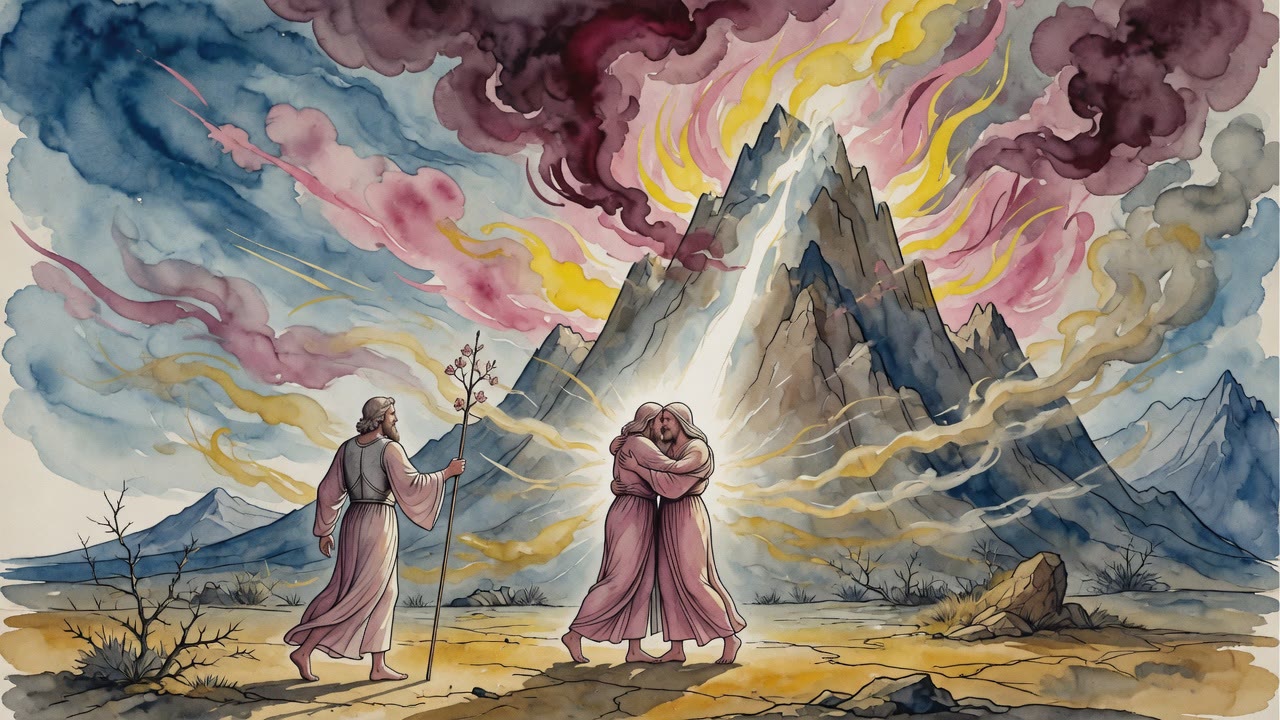
Holofernes mustered the world against the hill country, and the captain who warned him woke to find the conqueror a head in a stranger's hand.

Curated by Arthur · Told by Maggid ·
Table of Contents
  1. The Captain Who Told the Truth in the Wrong Tent
  2. A Widow Walks Out Through the Pickets
  3. The Head in a Stranger's Hand
  4. The Hand That Was Guided

The captain woke in a locked house in Bethulia expecting to die at dawn. An army that did not want him had bound him to a tree below the town and left him, and the men of the hill country had cut him loose and carried him up through their own gate. All night he listened for the trumpets that would mean the wall had fallen. The trumpets did not come. Footsteps came instead, and a hand on the door, and a voice telling him he was summoned.
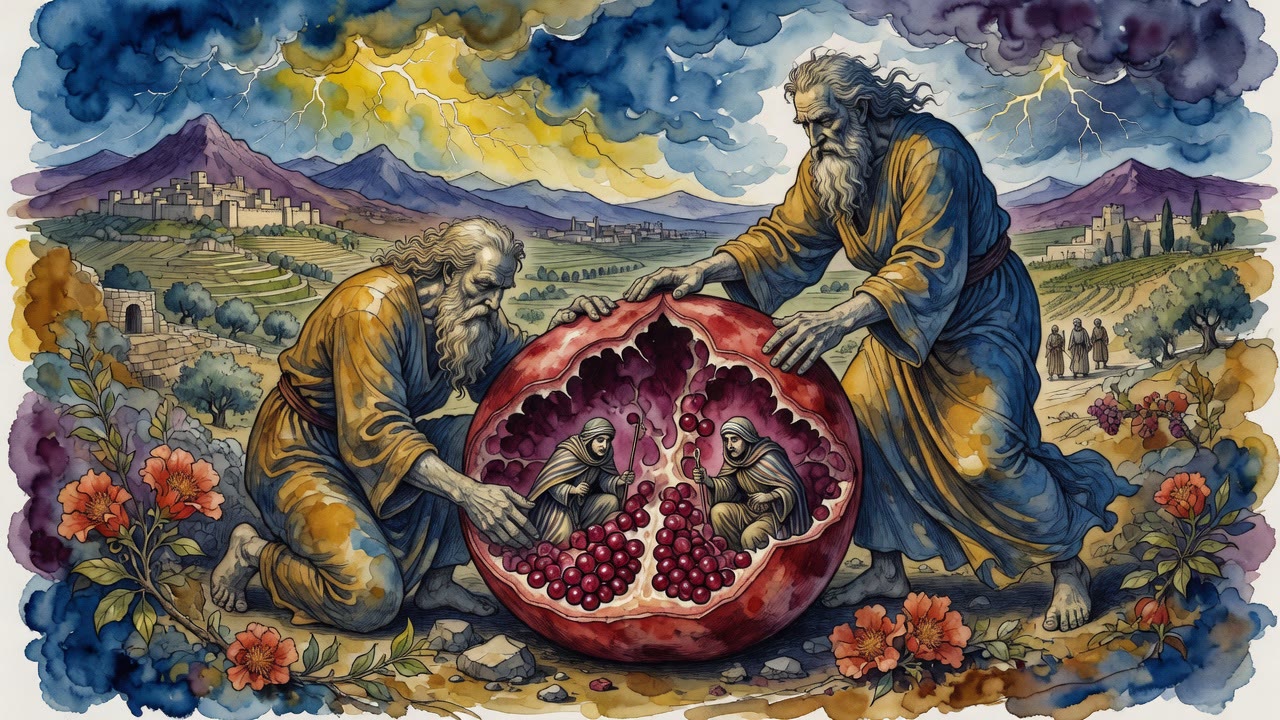
His name was Achior, an Ammonite who had once stood in the war tent of the greatest soldier in the world and told him the truth.

The Captain Who Told the Truth in the Wrong Tent

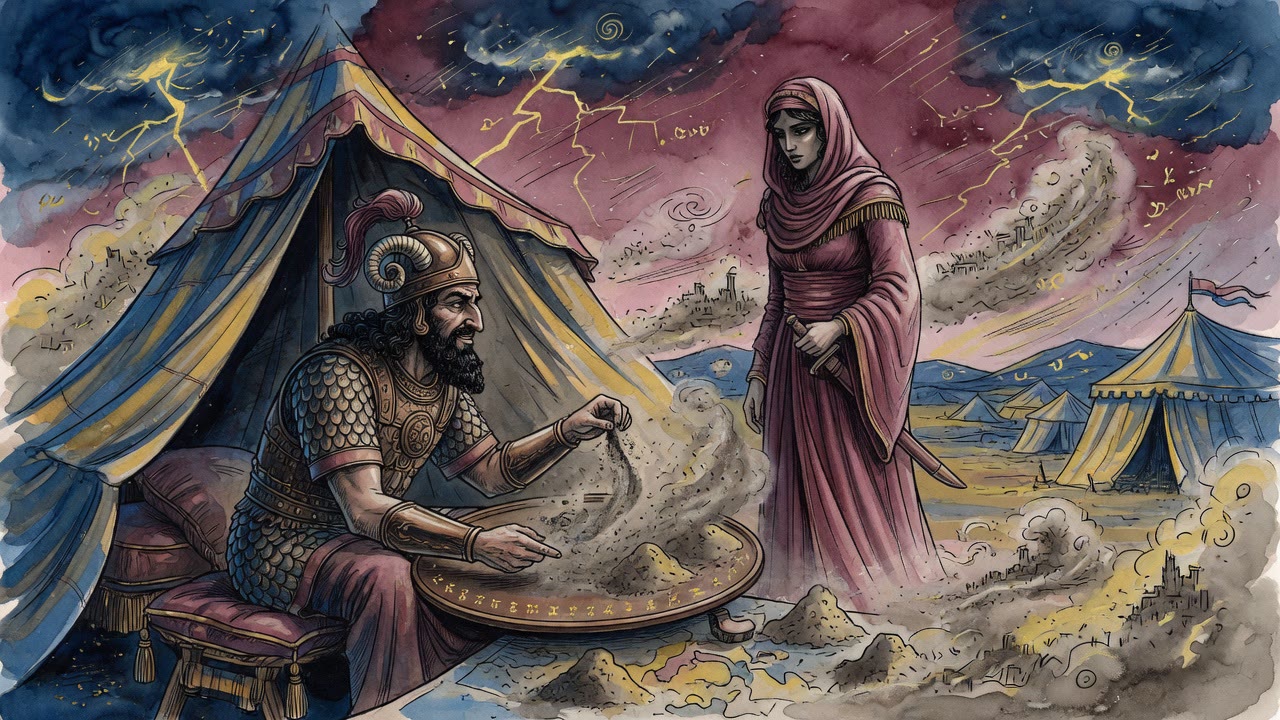
Holofernes, general of the armies of Nebuchadnezzar, had come west to break every people that had refused the king. He had shut the passes of the hill country, fortified the high places, and dropped obstacles across the open plains, and then he had called a council to learn the shape of the small nation still in his way. He summoned the chiefs of Moab, the captains of Ammon, the governors of the coast, and he put his question to them with the boredom of a man who already knows the answer. "Tell me now, you sons of Canaan," he said, "who is this people that dwell in the hill country, and what is the multitude of their army, and wherein is their power, and what king is set over them?"

Achior answered him. He told where this people came from, how they had gone down into Egypt and been brought up again, how they could not be beaten while they kept faith with their God, and how they fell only when they sinned. It was not flattery and it was not fear, and Holofernes had no use for either. To speak of a god who guarded a town of farmers, in a tent that held the power of an empire, was an insult. The general had Achior dragged out, bound, and set below Bethulia, so that when the town fell he would fall with it. "You shall not see my face again," Holofernes told him, "until I take revenge on this nation." That was the last word between them.

A Widow Walks Out Through the Pickets

While Achior sat tied to his tree, a widow of the town had done the thing no council of governors imagined. Judith had washed and dressed and gone down out of the gate with one servant and a bag of her own food, walked into the pickets of the besieging army, and asked to be brought to the general. She told the soldiers she had fled her doomed people to bring Holofernes the hour his enemy would be defenseless, and they marveled at her face and led her in. For days she ate her own provisions, went out at night to pray, and let the general believe he was hunting her while she was hunting him.

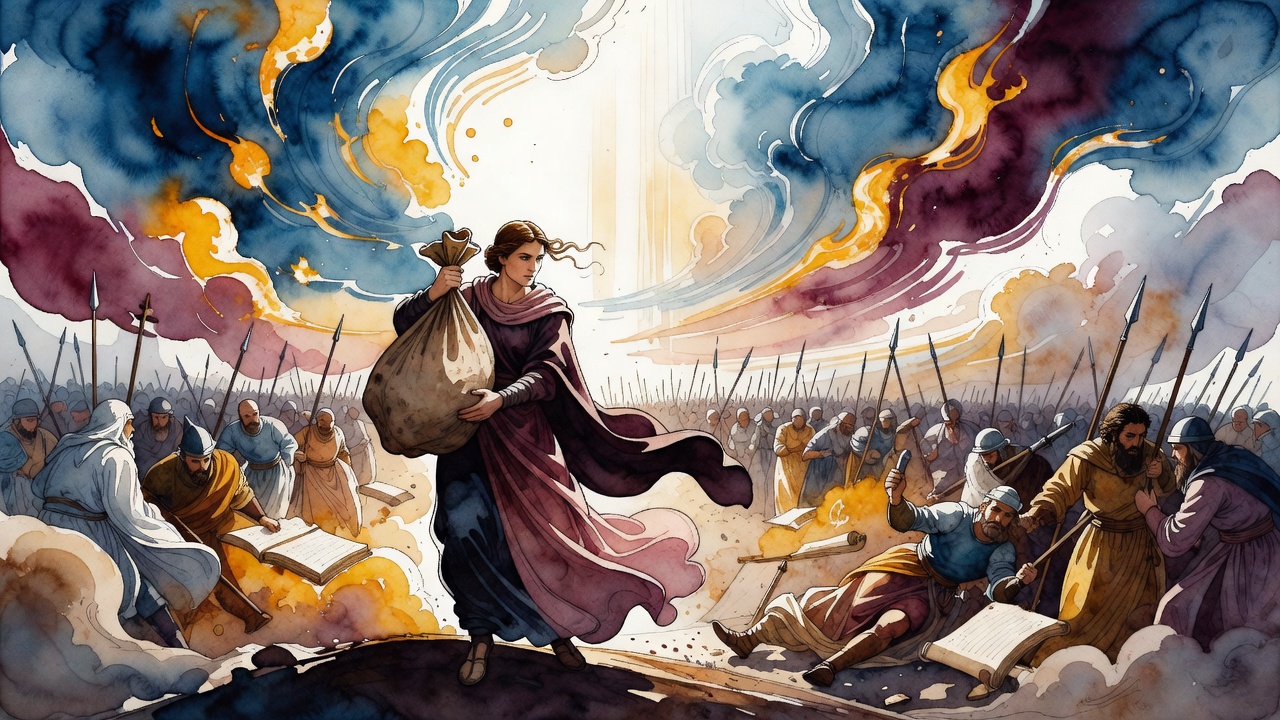
On the fourth night Holofernes feasted, and drank more than he had ever drunk in his life, and had her brought to his tent for himself. The slaves went out. The lamp burned low. The general lay across his bed too heavy with wine to lift his head, and the widow stood over him alone. She took down the sword that hung above the bed. She prayed once, under her breath, and then she struck his neck twice and took off his head, and rolled the great body from the bed, and pulled the canopy down after it. She put the head in the food bag her servant carried, and the two women walked back out through the camp as they had every night, to pray, and no one stopped them until they were inside the gate of Bethulia again.

The Head in a Stranger's Hand

By the time Achior was led into the assembly, the town was awake and packed into the square around the one thing every man wanted to see. Judith held it out of the bag in the lamplight. The face of Holofernes, the face that had filled a war tent and silenced kings, hung now from a fist in a crowd of farmers.

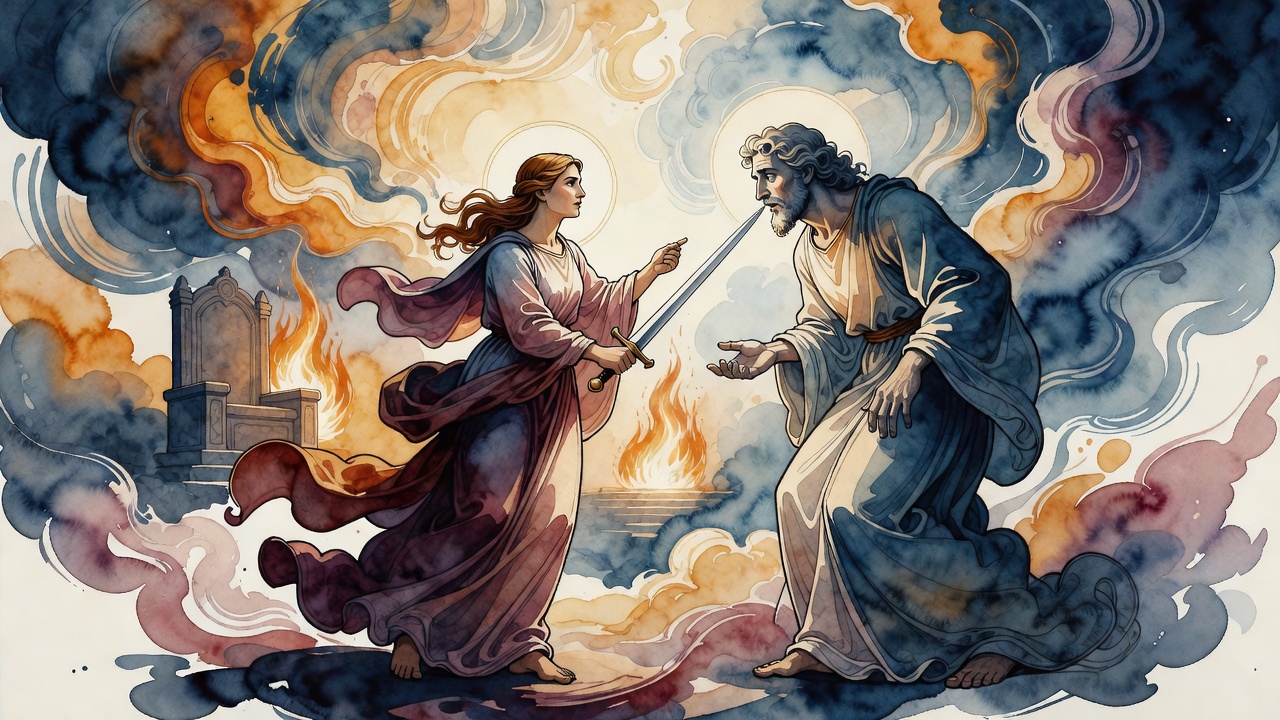
The men brought the Ammonite forward through the press. When he came close enough to see what the hand held, when he understood whose head it was, the strength went out of his legs and he dropped on his face in the dust and fainted dead away. They had to lift him and bring him back to himself. When he could stand, he did not turn to the elders or to the soldiers. He went to the feet of the widow and bowed to the ground before her. "Blessed are you in every tent of Judah," he said, "and in every nation, for they that hear your name will be troubled." And then Achior the Ammonite, who had told the truth in the wrong tent and lived, believed in the God of Israel from that hour, and was circumcised, and was joined to the house of Israel to this day.

The Hand That Was Guided

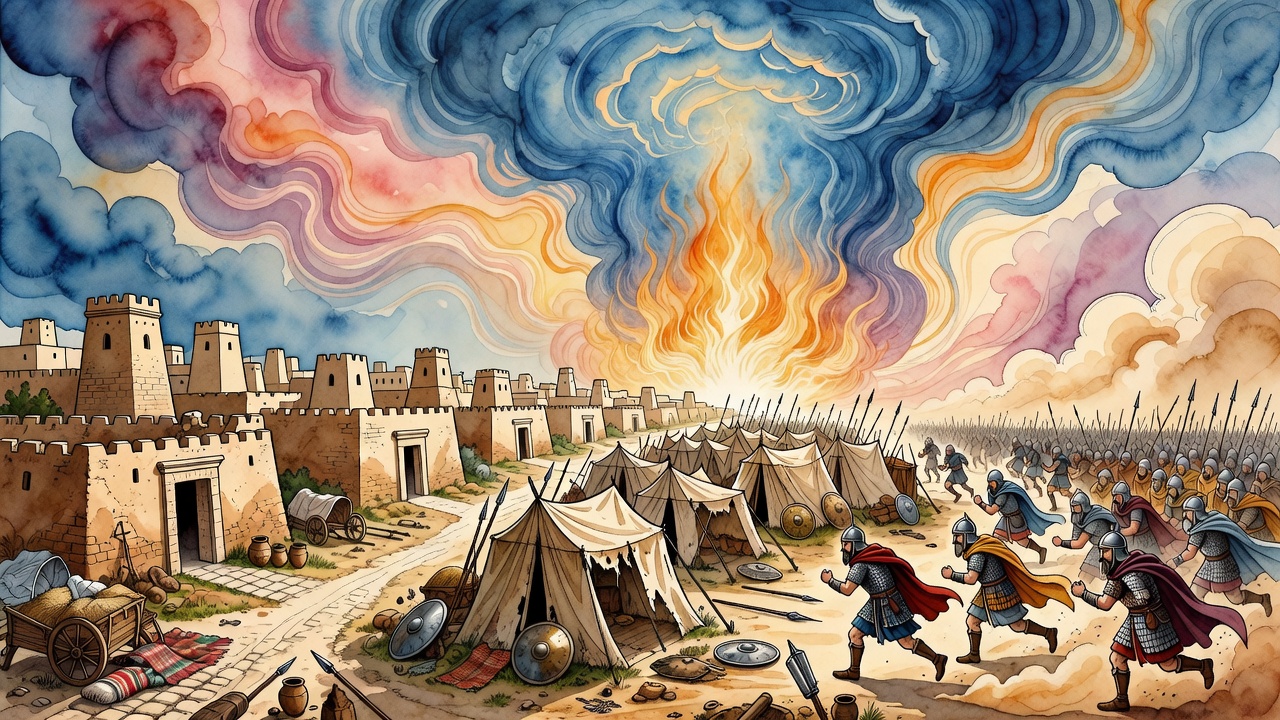
Word ran up to the watch on the wall, and the people did with the head what Judith told them. They hung it from the battlement where the dawn would catch it, facing the camp, so that the first thing the Assyrians saw when they came to wake their general for the assault was the general himself, looking back at them off the wall of the town he had come to erase. The army came apart. Men ran for the tent, found the canopy down and the body without its head, and the panic went through the lines faster than any order. Israel came down out of the hills behind them.

And the people blessed her, and they did not bless only her. "Blessed is the Lord God," they sang over the widow, "who created the heavens and the earth, who guided you in cutting off the head of the chief of our enemies." Her courage would not depart from the hearts of men, they said, and they would remember the power of God forever, because she had not spared her own life when the nation was crushed but had walked a straight path before their God. The widow stood in the square with the empty bag, and above her on the wall the head of the conqueror kept watch over an army that was no longer there.


← All myths
From the tradition

Sources

4 sources

The texts this telling draws on, in full. Open a card to read inline, or expand it for a wider, quieter read.

Book of Judith 5:5Book of Judith

See, Holofernes, the general of Nebuchadnezzar's army, was on a mission. A mission to crush any resistance in his path. And he's hearing whispers about this stubborn group of people holed up in the hill country.

Instead of just rolling over them, Holofernes, in the Book of Judith, takes a more…strategic approach. He's all about intel gathering. He wants to know exactly what he's up against. So, he's gone and secured the high ground, blocked off the mountain passes, and even planted obstacles in the plains. He "had shut up the passages of the hill country and had fortified all the tops of the high hills and had laid impediments in the open plains."

Holofernes, feeling a bit prickly, calls a war council. He summons the bigwigs from Moab and Ammon, plus all the coastal governors. And he's got a question for them, a question dripping with disdain.

"Tell me now, you sons of Canaan," he demands, "who is this people, who dwell in the hill country, and which cities do they inhabit, and what is the multitude of their army, and wherein is their power and strength, and what king or captain of their army is set over them?"

He wants the full scoop. What cities are they hiding in? How big is their army? What’s the source of their power? And who’s calling the shots? You can almost hear the condescension in his voice. He’s looking down on them, these "sons of Canaan," assuming they'll have all the answers. He clearly thinks he's dealing with just another ragtag group of rebels.

But what Holofernes doesn't realize is that he's about to get a crash course in the power of faith and resilience. He thinks he's preparing for a simple military campaign. What he's actually walking into is a story for the ages, a tale of courage embodied by a woman named Judith. A story that reminds us that true strength comes not just from numbers or weapons, but from something much, much deeper.

The scene is set, isn't it? The stage is ready for an epic showdown. And the question Holofernes poses is more than just a request for information. It's a challenge, a dare, almost an invitation to the divine to prove him wrong. What happens next? Well, that's where the real story begins.

Full source
Book of Judith 14:8Book of Judith

The Israelites, mere days ago trembling before the might of Holofernes and his Assyrian army, are now poised for victory. But before the final charge, before they unleash their pent-up fury, there's one more crucial piece to this incredible story.

Judith, the brave and cunning widow who infiltrated the enemy camp, has a request. She tells her people, "So then you, and all who inhabit the coast of Israel, will pursue them and overthrow them as they go. But before you do these things, call Achior the Ammonite to me, so that he may see and know him who despised the house of Israel and who sent him to us as if to his death."

Who is Achior, you ask? Well, he's a Ammonite captain, a foreigner who dared to speak the truth to Holofernes, to warn him that the Israelites were protected by their God. For his honesty, for his unwavering belief, Holofernes scorned him and left him to die at the gates of Bethulia.

Judith wants Achior brought before her. Can you imagine what must be going through his mind? He’s been held captive, expecting death, and now he’s being summoned to witness… what?

The verse reads, "Then they called Achior out of the house of Uzziah; and when he arrived and saw the head of Holofernes in a man's hand in the assembly of the people, he fell down on his face and fainted."

The sight of the severed head – the head of the seemingly invincible general – is too much for him. He collapses, overwhelmed by the sheer impossibility of what he's witnessing. It’s a moment of profound shock, a evidence of the power of the unexpected. The audacity of faith rewarded.

But it doesn't end there. "But when they had revived him," the story continues, "he fell at Judith's feet and reverenced her and said." What does he say? What words could possibly capture the magnitude of this moment? That's a question we'll explore next time.

But Achior, the outsider, the one who believed in the strength of the Israelite God even when his own leader mocked him, is now face to face with the instrument of that God's salvation. It's a powerful reminder that sometimes, the greatest faith resides in the most unexpected places. And sometimes, the truth is revealed in the most shocking ways imaginable.

Full source
Book of Judith 13:29Book of Judith

It's the stuff of legends. And in the Book of Judith, we get a glimpse into the immediate aftermath of her incredible act, the moment when the people realize just what she's done.

The text The Israelite people are understandably ecstatic. And their praise isn't just directed at Judith, but at something far greater.

“And blessed is the Lord God, who has created the heavens and the earth, who guided you in cutting off the head of the chief of our enemies.”

Notice the connection being made here. It's not just about Judith’s bravery, although that’s certainly a huge part of it. It’s about recognizing the divine hand at work. It's about acknowledging that God, the creator of everything, was with her, guiding her. It’s a powerful statement of faith, isn't it? It suggests that even in the darkest times, God is present, working through unexpected people in unexpected ways.

And then, the people turn their attention back to Judith, recognizing the lasting impact of her actions.

“Because of this, your resoluteness will not depart from the heart of men, who will remember the power of God for ever.”

They understand that Judith’s courage isn’t just a fleeting moment. It’s something that will resonate through generations. It's a reminder of what's possible when faith and bravery come together. They see her act as a evidence of the power of God, something that will inspire future generations to stand strong in their own faith.

And finally, a blessing, a wish for continued good fortune:

“And may God turn these things to your benefit as a perpetual praise, to assist you in good things because you have not withheld your life during the affliction of our nation, but have revenged our ruin, walking a straight path before our God.”

This isn’t just a thank you; it’s a prayer. It’s a hope that Judith’s selflessness will be rewarded, that her actions will continue to bring blessings. The phrase "walking a straight path before our God" is particularly striking. It suggests that Judith's actions were not just brave, but also morally righteous, aligned with God’s will.

So, what can we take away from this? Maybe it’s the reminder that even one person can make a difference. Maybe it’s the idea that faith can empower us to do things we never thought possible. Or maybe it's simply the enduring power of a good story, a story of courage, faith, and the triumph of good over evil. Whatever it is, the story of Judith continues to resonate, reminding us that even in the face of overwhelming odds, hope remains.

Full source
Book of Judith 14:13Book of Judith

Judith. She steps forward, a woman of courage and faith, and changes everything. And in Chapter 14, we witness the aftershocks of her incredible act.

"Blessed are you in all the tents of Judah, and in all nations, who when they hear your name will be astonished." These are the words, dripping with awe and gratitude, that greet Judith upon her return. Can you imagine the scene? The relief washing over the people, the sheer disbelief at what she accomplished? It's a moment of collective catharsis. The siege is broken, their lives are saved, and it's all thanks to this one woman.

Then the request: "Now therefore tell me all the things which you have done in these days." They want to know everything. Every detail of her audacious plan, every heart-stopping moment in the enemy camp. And Judith, in the midst of the people, recounts her story. She doesn't hold back. She lays bare the risks she took, the faith that guided her, the divine providence that paved her way.

We aren't given the specifics of her telling here, but we can envision it. The hushed silence as she speaks, the gasps of astonishment, the tears of relief. You can almost hear her voice echoing through the city, a evidence of bravery and unwavering belief.

And when she had finished speaking, the people shouted with a loud voice and made a joyful noise in their city. A roar of jubilation erupts! Imagine the sound, a collective expression of gratitude, relief, and renewed hope. It’s more than just noise; it’s a harmony of survival.

But the impact of Judith's actions extends beyond her own people. There's Achior, the Ammonite captain who initially warned the Assyrians about the Israelites' faith. Remember him? He's been held captive, punished for speaking truth to power.

And when Achior had seen all that the God of Israel had done, he believed in God greatly; and he circumcised the flesh of his foreskin and was joined to the house of Israel unto this day. Talk about a conversion! Achior, witnessing the power of the God of Israel firsthand, embraces the faith. He undergoes circumcision, the ultimate symbol of commitment, and becomes part of the Jewish people. His transformation highlights a central theme of the Book of Judith: the universality of God's power and the potential for redemption, even for those who were once adversaries.

So, what does this all mean for us? What can we take away from this incredible chapter? Perhaps it's the reminder that even in the darkest of times, one person, armed with courage and faith, can make an unbelievable difference. Or maybe it’s the realization that witnessing acts of goodness and divine intervention can inspire profound change within ourselves.: Judith's story isn't just about a miraculous victory; it's about the ripple effect of faith, courage, and the enduring power of hope. It is a reminder that even when we feel powerless, we all have the potential to be agents of change. And that, perhaps, is the most astonishing thing of all.

Full source