Judith Hung the Head and the Assyrian Army Broke
She called for the gate from the dark and lifted a general's head from a meat bag. At dawn the camp could not wake the man who had owned it.
Table of Contents
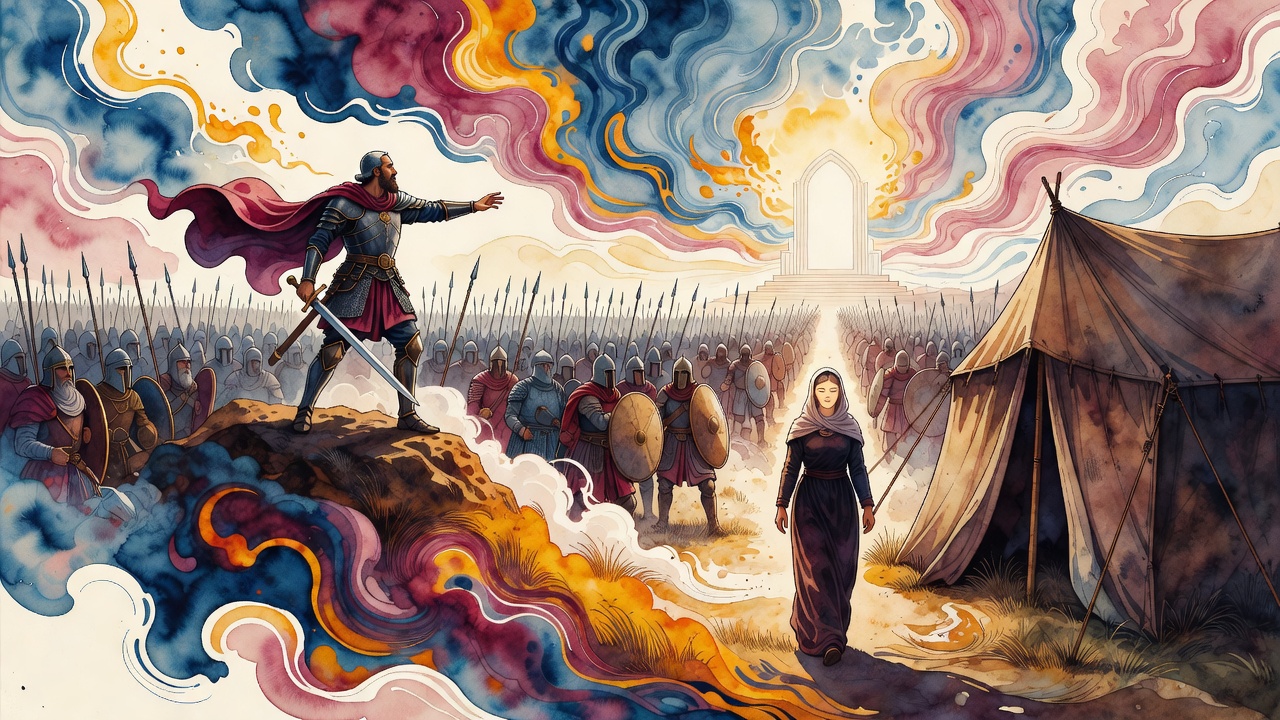
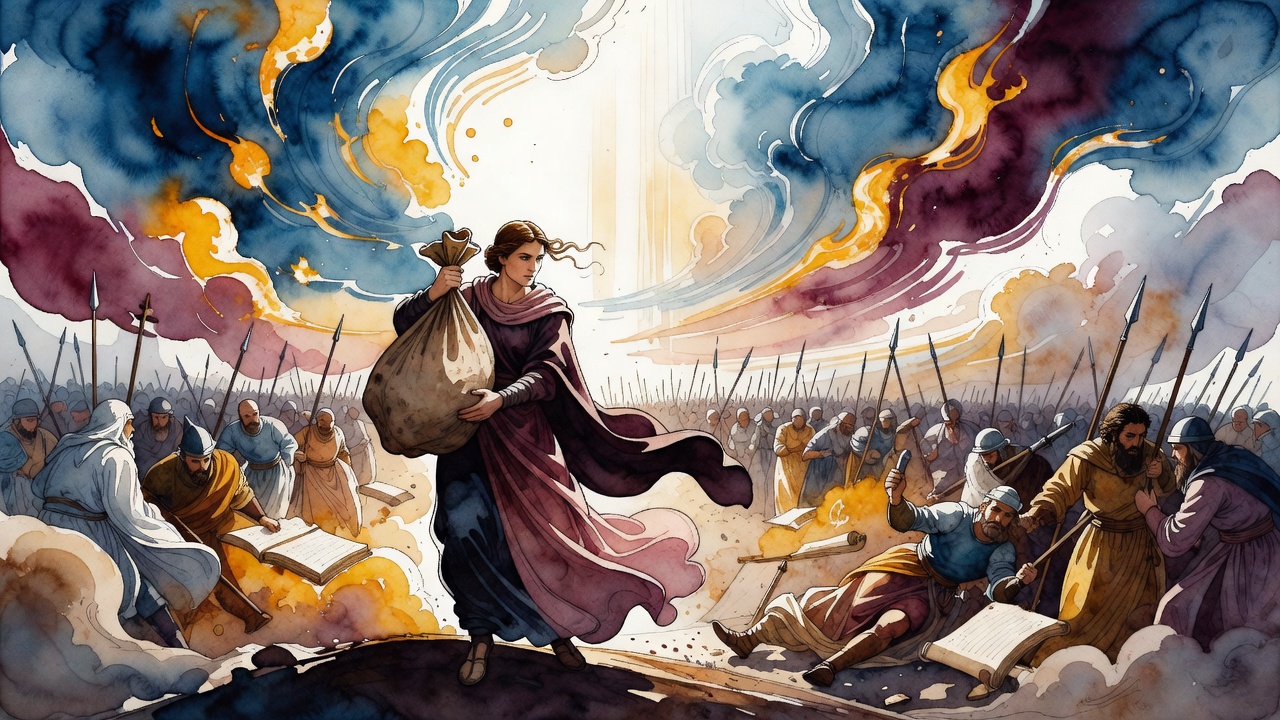
She put the head in the food bag. Her maid carried it. Then they left as they always left, going to prayer, passing through the camp and circling the valley and climbing the mountain of Bethulia in the dark. The guards let them pass, as the guards had let them pass every night for three days. The prayer walk Judith had built was now the road out. She did not run. She moved in the shape of piety the enemy had already learned to ignore.
 Click for full size
At the gate she called from a distance. "Open, open the gate now. God, our God, is with us."
The whole city ran together, small and great, astonished that she had come back. They made a fire for light. They stood around her. Then she lifted the head from the bag and showed them.
Hang It on the Highest Place
"Hear me," she said. "Take this head and hang it on the highest place of your walls. Then at dawn, when the sun rises, take up your weapons and march out toward the camp as if to attack. Their guards will run to wake Holofernes, and when they cannot wake him, fear will take hold of them, and they will run."
Ozias and the elders did as she said. The head went up on the wall while the city still smelled of the fire they had lit to see her face. Below, in the valley, the Assyrian tents slept around an empty pillow.
Judith did not stay to watch the wall. She had already done the part that could not be undone. The rest was timing.
Bagoas Knocked and No One Answered
In the morning Bagoas went to wake his master. He thought Holofernes had slept with Judith. He knocked at the tent door. No answer. He knocked again. He opened the flap and went into the bedroom.
Holofernes lay on the floor, dead, and his head had been taken from him.
Bagoas cried with a loud voice, with weeping and sighing and a mighty cry, and he tore his garments. He ran to the tent where Judith had lodged. She was not there. He dashed out to the people and shouted, "These slaves have dealt treacherously. One woman of the Hebrews has brought shame on the house of king Nebuchadnezzar. Behold, Holofernes lies on the ground without a head."
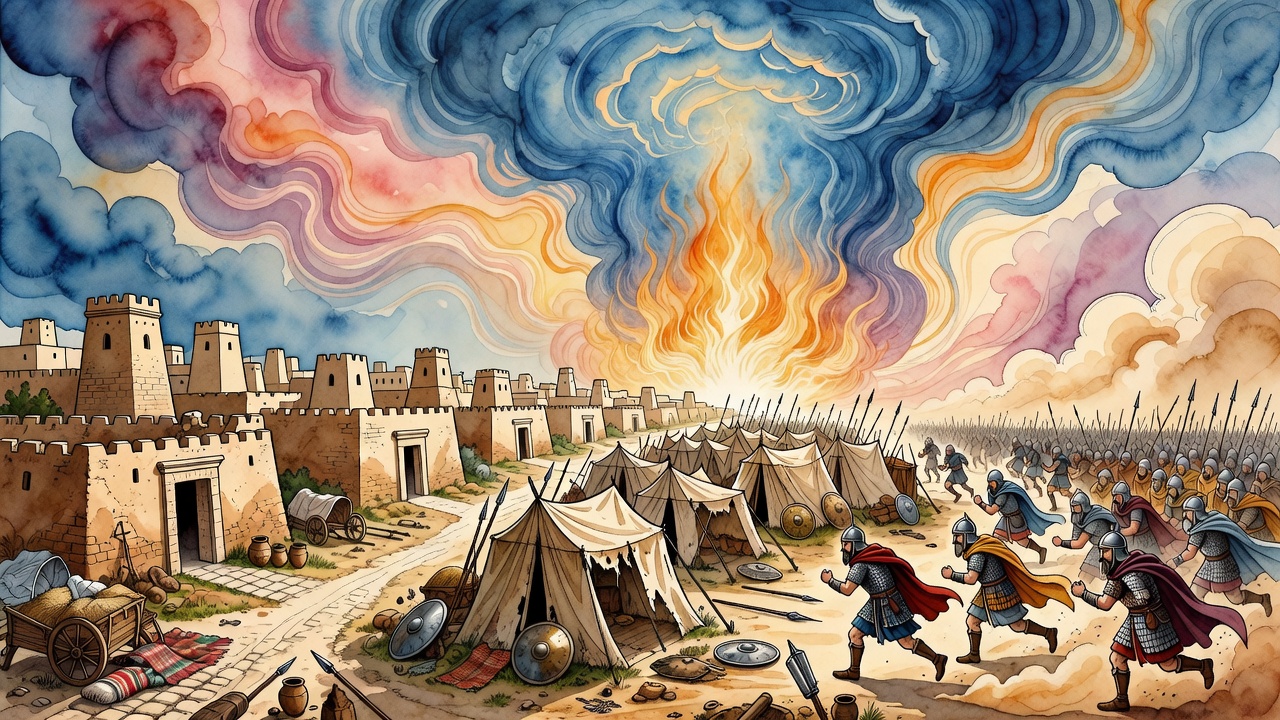
The captains of the Assyrian army heard the words and tore their coats. Their minds went to pieces. A cry and a very great noise moved through the camp, tent to tent, until there was no man who dared remain in the sight of his neighbor. They rushed out together and fled in every direction of the plain and of the hill country. Those who had camped in the mountains around Bethulia fled too.
Israel Came Down the Mountain
Then every warrior among the children of Israel rushed out upon them. Ozias sent to Betomasthem, to Bebai, to Chobai, to Cola, and to all the coasts of Israel, to declare what had happened and to tell them to rush forth on their enemies. When the children of Israel heard it, they fell upon the Assyrians with one consent and slew them all the way to Chobai. Men from Jerusalem and from all the hill country did likewise. Those in Gilead and in Galilee chased them with a great slaughter until they were past Damascus and its borders.
The remnant who lived at Bethulia fell upon the camp of Assur and pillaged them. They were greatly enriched. The army that had stopped the torrents and covered the hills with horsemen ceased to exist as a fighting force. Assur had come out of the mountains of the north with ten thousands, bragging that he would burn the borders, kill the young men, dash the infants, and take the virgins as spoil. He ran from a head on a wall.
She Sang Before She Dedicated the Spoils
Judith stood before the whole assembly with Ozias and the elders of Israel and sang. "Begin to my God with timbrels," she sang. "Sing to my Lord with cymbals. Tune to Him a new psalm. Exalt Him and call upon His name. God breaks the battles. Among the camps, in the midst of the people, He delivered me out of the hands of those who persecuted me."
Then they went up to Jerusalem. As soon as they entered they worshipped the Lord. When the people were purified they offered burnt offerings and free offerings and gifts. Judith dedicated all the belongings of Holofernes which the people had given her, and she gave the canopy she had taken out of his bedroom as a gift to the Lord. The people feasted in Jerusalem before the sanctuary for three months, and Judith remained with them.
The canopy that had shaded a general's bed hung in the House. The head that had planned the burning of the borders had already done its last work on the wall at Bethulia.
← All myths