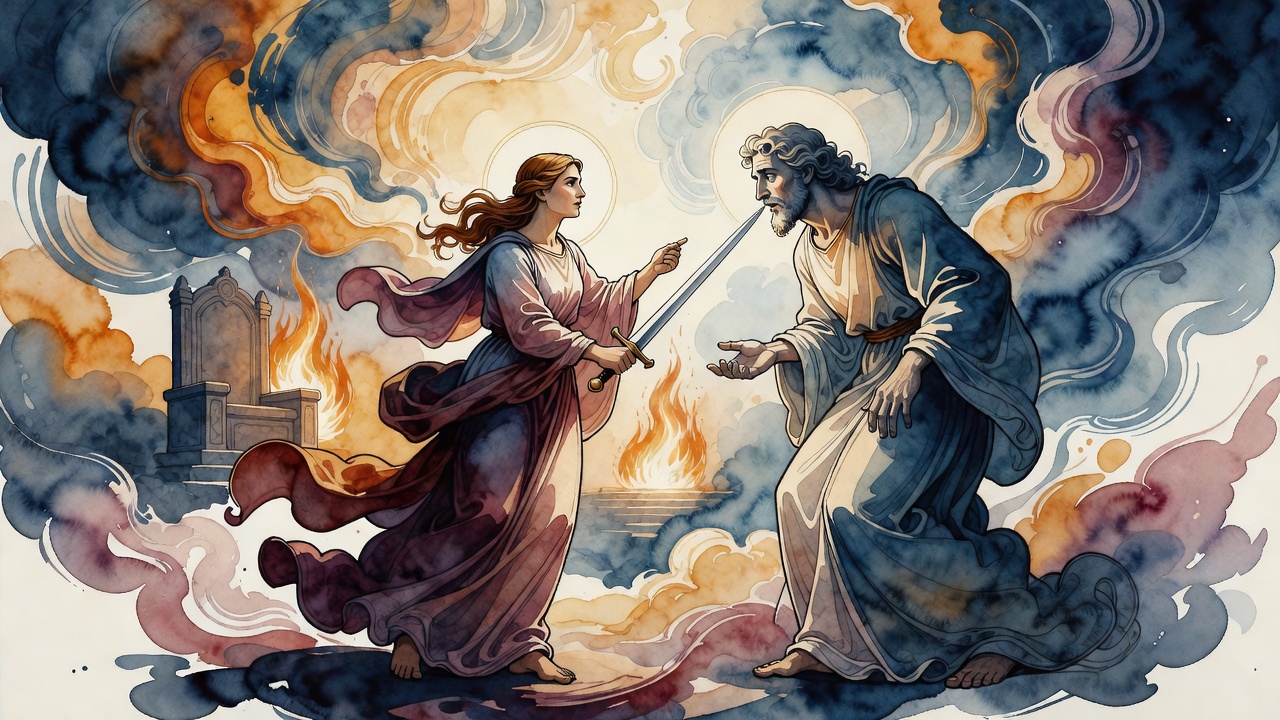
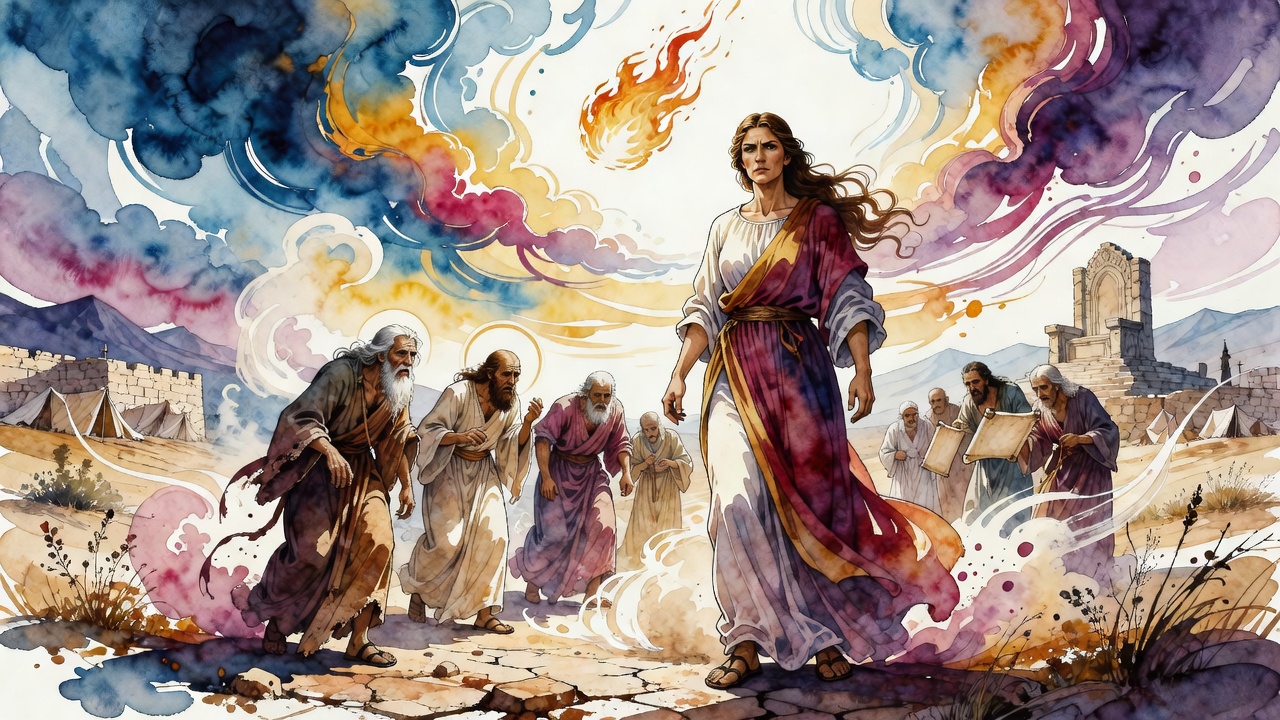
Holofernes Musters His Army as Judith Walks Into His Camp
A general reviews 120,000 infantry while a widow prepares to walk alone into his tent. The Book of Judith stages the confrontation across two scenes.
Table of Contents
 Click for full size
The Army Passes Before Its General
Holofernes left the king's presence with the world's largest commission. Nebuchadnezzar had told him to punish the west for refusing to join his campaign against Arphaxad. Every nation that had sent no soldiers, every city that had ignored the summons, all of them were to be subdued. The campaign was not punitive in any modest sense. It was meant to make Nebuchadnezzar the only name that mattered from one end of the known world to the other.
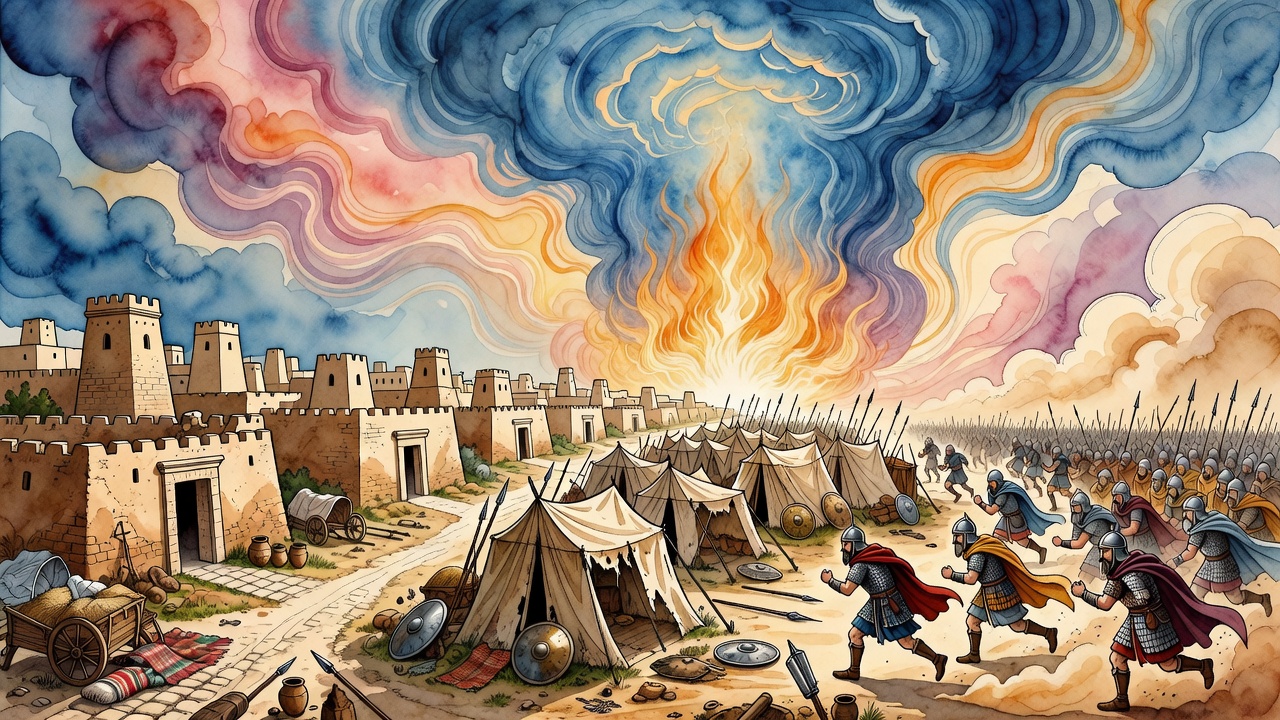
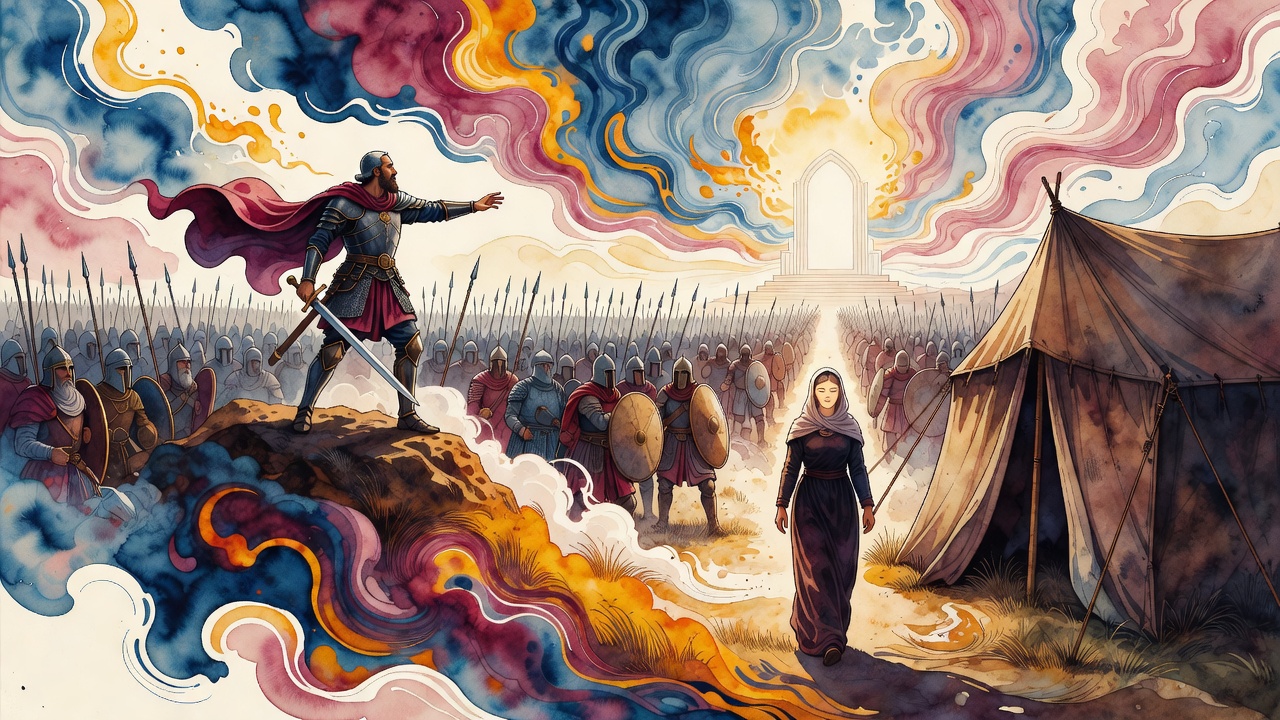
The army assembled before Holofernes in formation. One hundred and twenty thousand infantry stood in ranks that ran past the limit of his sight. Twelve thousand archers waited on horseback, their bows unstrung and slung across their backs. Behind them came the baggage: innumerable camels and donkeys loaded with provisions, and flocks and herds so vast the Book of Judith declines to count them. Holofernes walked the line, looked at the force he had been given, and saw that it was enough.
The March That Left Nothing Standing
Then he moved. He burned what lay in his path. He razed the holy places of every nation along the advance, pulling down the high places so that no god but Nebuchadnezzar would be called on in the lands he crossed. No city resisted and survived. The cities that tried were destroyed, their walls broken open and their defenders cut down in the gaps. The cities that surrendered gave him everything and were spared, their young men conscripted into the ranks behind him, their walls garrisoned with his soldiers.
He crossed from Syria down through the coastal plain. The sea lay on one side and the mountains of Judea on the other, the road narrowing between them. He came to the valley near Dothan, below the hill town of Bethulia that guarded the pass into the highlands, and there he stopped the whole machine and made camp. The tents of a hundred thousand men spread across the plain. He cut off the spring that fed the town above him, and he waited for thirst to do the work of the siege.
Judith Puts Off the Sackcloth
Inside besieged Bethulia, the governor had given Israel five days. If God did not act by then, the city would open its gates. Judith had heard the oath, and she answered it first with her body. She went into her tent, wrapped herself in sackcloth, threw ashes on her head, and spent the night on the ground in prayer, a widow asking the God of her father to put strength into a woman's hand.
In the morning she put the sackcloth away. She bathed and anointed herself with precious ointment. She combed and bound her hair and set a headband on it. She opened her husband's chest and took out the garments and jewelry she had worn when Manasseh was still alive, the festival dress of a married woman, and she put on the rings and the bracelets and the anklets one by one until she was made beautiful enough to deceive the eyes of any man who looked at her.
Two Women Walk Down to the Camp
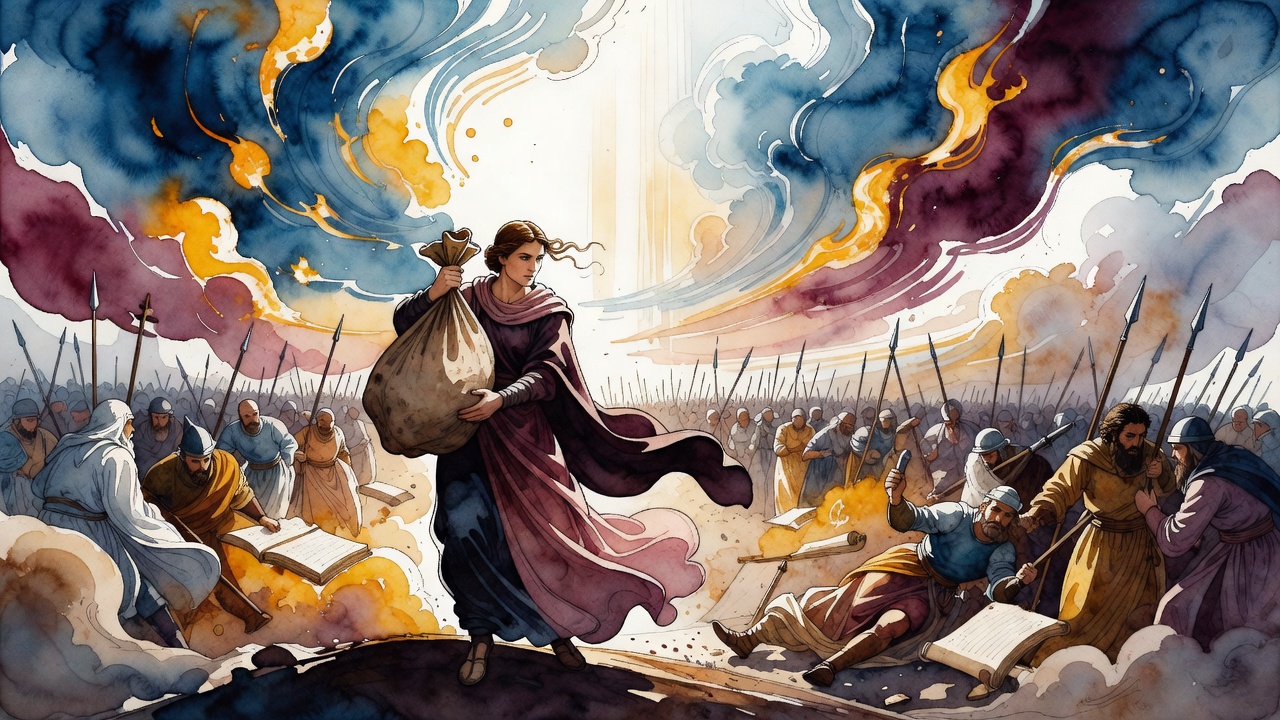
She gave her maidservant a skin of wine, a jug of oil, a pouch of roasted grain, dried fig cakes, and pure bread. The food was kept strictly separate from anything the Assyrians might have touched, sealed away in its own bag, for they would be lodging in the enemy camp for some days and Judith would eat only what she had carried in with her own clean hands.
When she came to the gate of Bethulia, the elders were waiting there, and at the sight of her they could not speak. She was transformed past recognition. She asked them to open the gate, and they swung it back, and she walked out of the city with her maidservant beside her and went straight down the hill toward the Assyrian lines. The men did not take their eyes from her as long as she was in view. The soldiers on watch in the valley saw two women descending through the dark toward the tents, stopped them, and took them under guard to the tent of Holofernes.
← All myths