Judith Refused to Put God on a Five-Day Clock
Bethulia ran out of water and gave God five days. Judith told the elders they had no right to set a deadline for the plans of the Lord.
Table of Contents
 Click for full size
The City That Fell Down Before It Fought
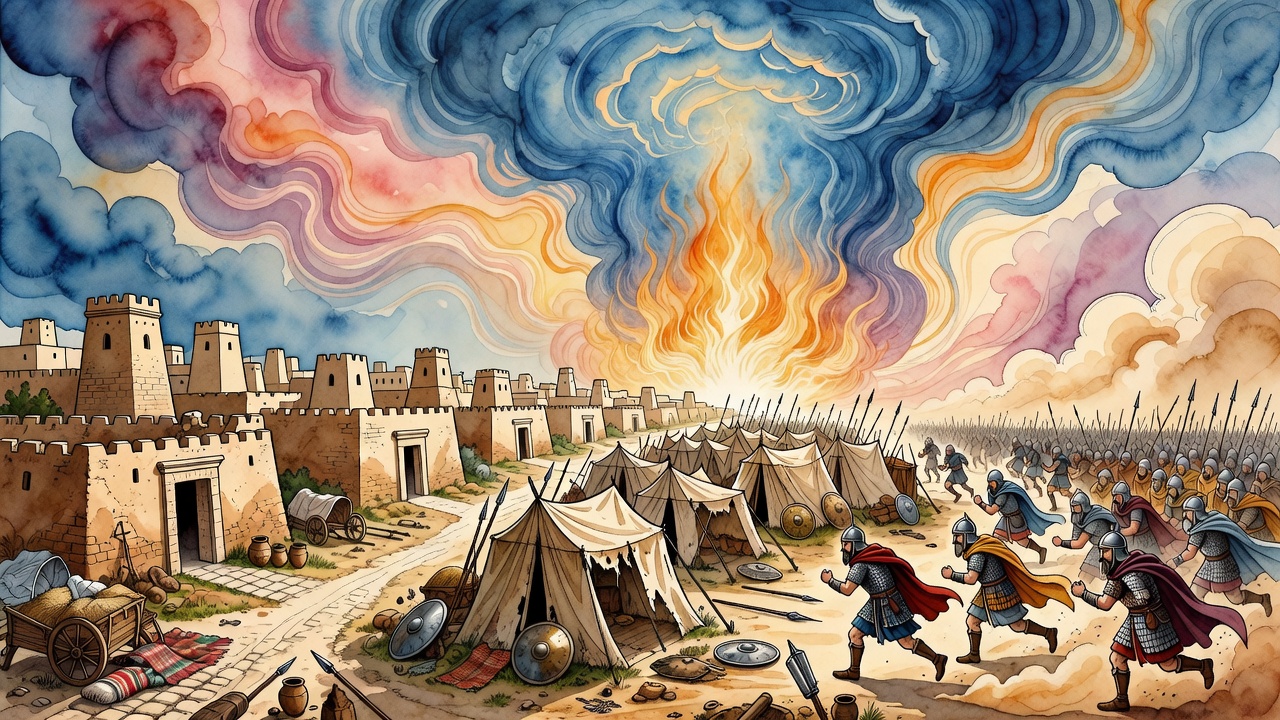
Holofernes could not take Bethulia by direct assault. The city sat on its mountain with a narrow approach and soldiers capable of defending it. So he listened to the counsel of the surrounding peoples and chose a different method. Find the springs. Seize the water sources. Let the mountain city drink itself dry.
Before the siege tightened, the people of Bethulia had fallen to the ground and worshipped. They cried to the God of heaven: "behold their pride, and pity our low estate, and look upon the face of those who are sanctified for you this day." The posture was not defeat. It was the first defense, the recognition that what stood across the valley from them was not only an army but a pride large enough to swallow nations. They called all night on the God of Israel.
Then Holofernes' plan began to take effect. His men captured the water sources. The springs that fed Bethulia went to the enemy camp. The cisterns inside the city began to empty.
The Elders and the Five Days
When the cisterns ran dry, the people gathered and the weight of it broke them. "God has sold us into their hands," they said to the elders. "We have no helper. Call them to you and deliver the whole city. It is better to be taken captive than to die of thirst. The children are fainting. The young men are falling in the streets. If we wait, there will be no one left to surrender."
Uzziah, the elder, did not offer hope. He offered a schedule. "Be courageous for five more days." If God does not intervene by then, he would surrender the city. The people wept. Uzziah's five days were not faith. They were the last units of endurance before capitulation.
Judith in the Upper Room
Judith heard what the elders had sworn.
She was a widow, three years and four months past her husband Manasseh's death. She had lived since then in a tent on her roof, fasting except for Shabbat and festival days, dressed in mourning except when she descended to the city. She was wealthy, beautiful, and had refused to remarry. She had been practicing a kind of severity for years that Bethulia had not seen as relevant to the crisis in its streets. It became relevant now.
She summoned Uzziah, Chabris, and Charmis, the three elders who had made the five-day oath. They came to her house. She told them directly that what they had done was wrong. Not merely ineffective. Wrong.
You Have No Right to Test God This Way
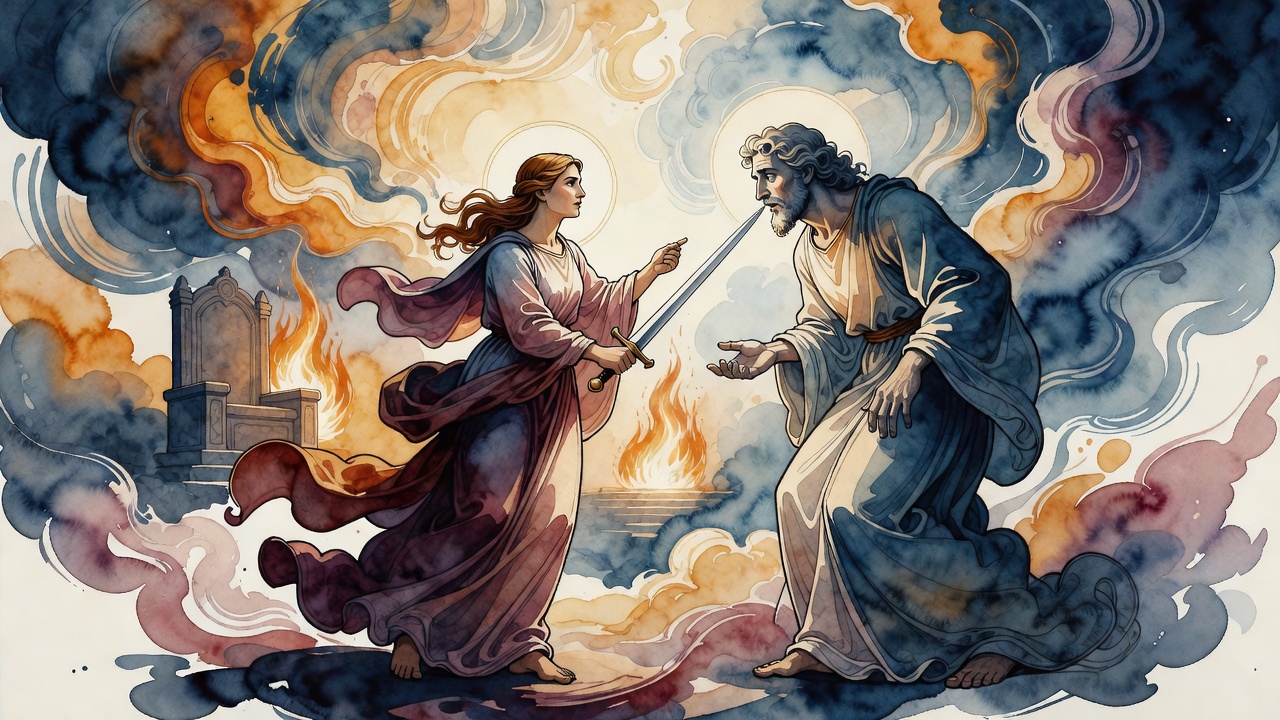
"Who are you," she asked, "that you have put God to the test today? You have set a deadline for the mercy of God, as if five days were the limit of divine patience. You have placed yourself between the people and heaven and announced the terms on which you will wait for rescue. This is not humility before God. This is a demand dressed in the language of humility."
"God is not like a man who can be threatened," she said. "God is not like a son of man who would be wavering. You cannot exhaust God's options by exhausting your own. The fact that the cisterns are empty does not mean heaven is empty. The fact that you cannot see a path forward does not mean no path exists. Do not bind the plans of the Lord our God to five days."
She told them something else: the God who allowed the siege to happen was the same God who was watching what Bethulia did inside it. Suffering was not abandonment. It might be testing. It might be the approach of a mercy that required the people to remain faithful past the point where faithfulness felt reasonable. A faith that held only while the cisterns were full was not faith.
What She Was Going to Do
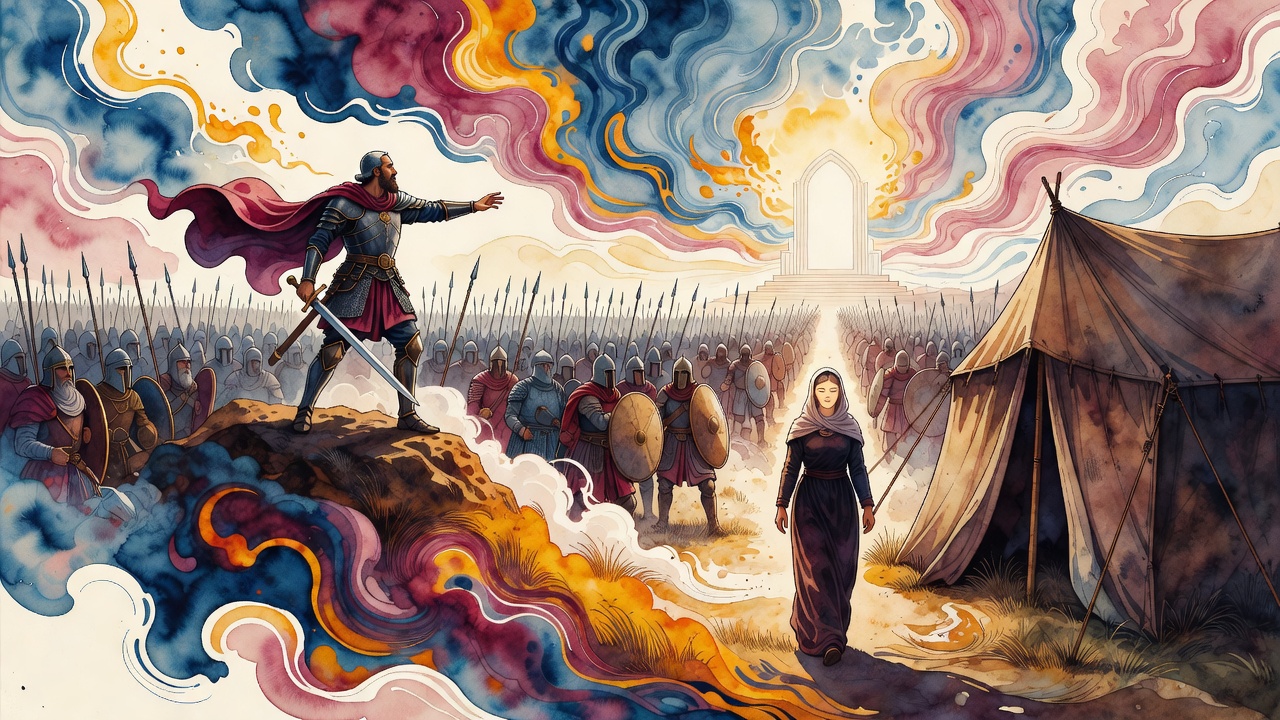
Judith told the elders to stand at the gate that night and leave it open for her and her servant to pass through. She would not tell them what she intended. The plan was hers, and she would tell them only that God would deliver Israel by her hand.
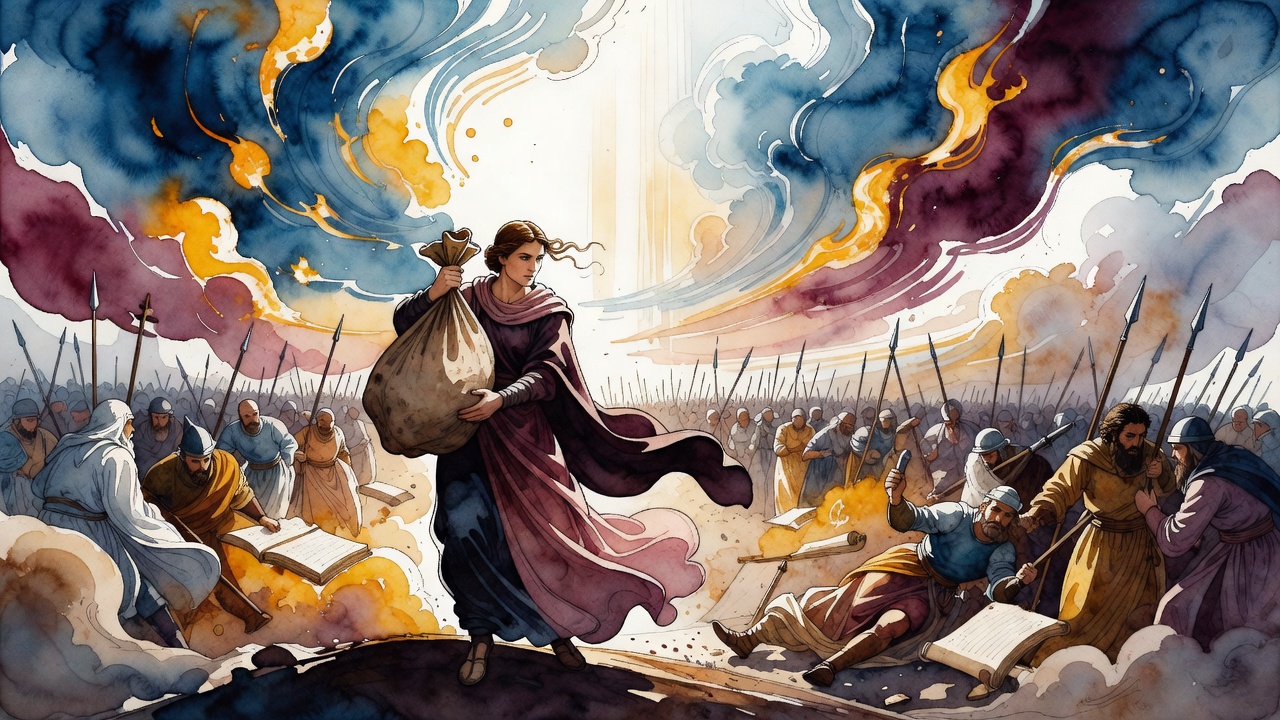
She went up to the roof and prayed. She asked God to look at the arrogance of the enemy, to pity the low estate of Israel, to remember the covenant. Then she came down from the roof, removed her mourning garments for the first time in three years, washed herself, applied perfume, braided her hair, put on festive clothing, and took sandals. She put on every ornament she owned. She filled a bag with food: roasted grain, figs, clean bread, a flask of wine, olive oil, and grain for the road.
At nightfall she and her servant walked down the mountain toward the Assyrian camp. She had five days. She intended to need fewer.
← All myths