Bar Shalmon Breaks Four Oaths and the Demon Bride Collects
The princess did not tear his house down. She carried every broken oath to a court of human judges. Then she asked for one last kiss.
Table of Contents
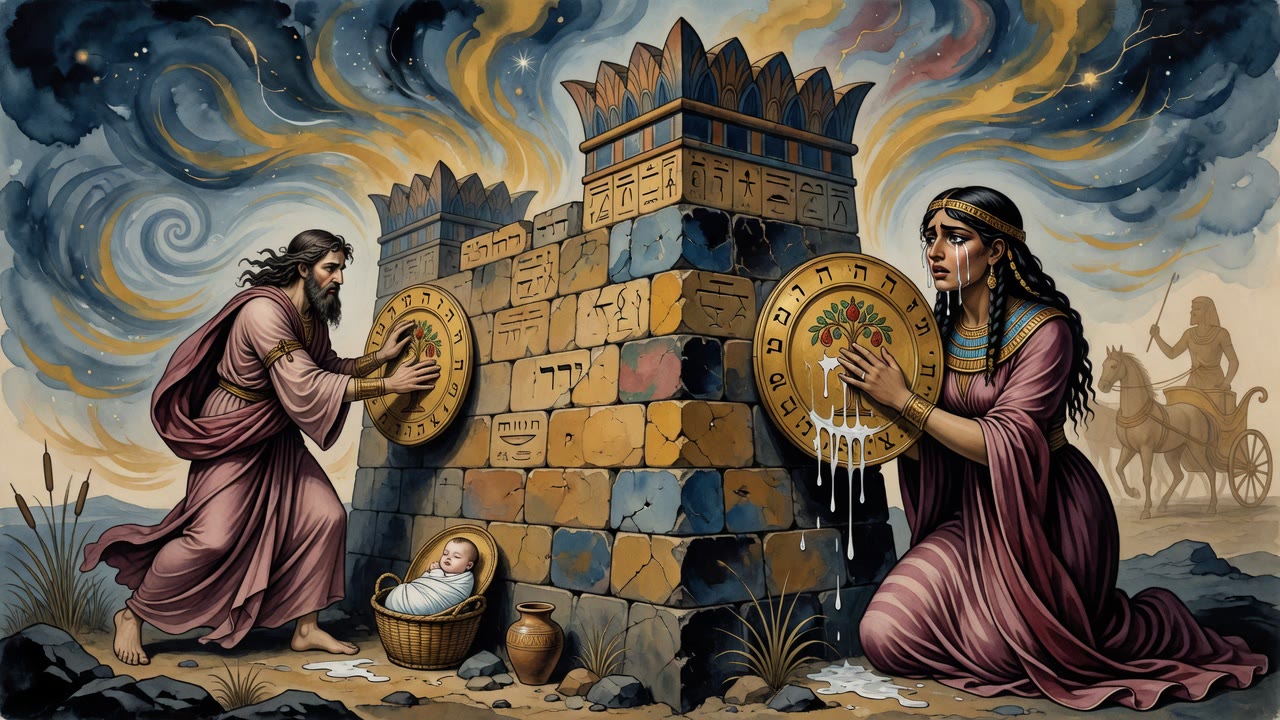
A dying man can ask for anything, and Bar Shalmon's father asked for only one thing. "Swear to me," he said, "that you will never cross the sea." The son knelt at the bed, took his father's cold hand, and swore it before heaven. An oath like that does not dissolve when the breath behind it stops. It waits.
 Click for full size
Then the ship came.
The Captain Who Unmade an Oath
It arrived with a story too good to refuse. A fortune lay across the water, money owed to his father that had been gathering on a far shore for years, and only a man named Bar Shalmon could claim it. He told the captain about the vow. The captain smiled the smile of every man who has ever talked another man into the wrong thing.
"Your father was sick," the captain said. "His mind was gone. An oath sworn to a man out of his senses binds no one." Bar Shalmon turned the words over and found in them exactly what he wished to find. He believed it because he wanted the gold. He boarded, and the sea let him sail four whole days before it remembered him.
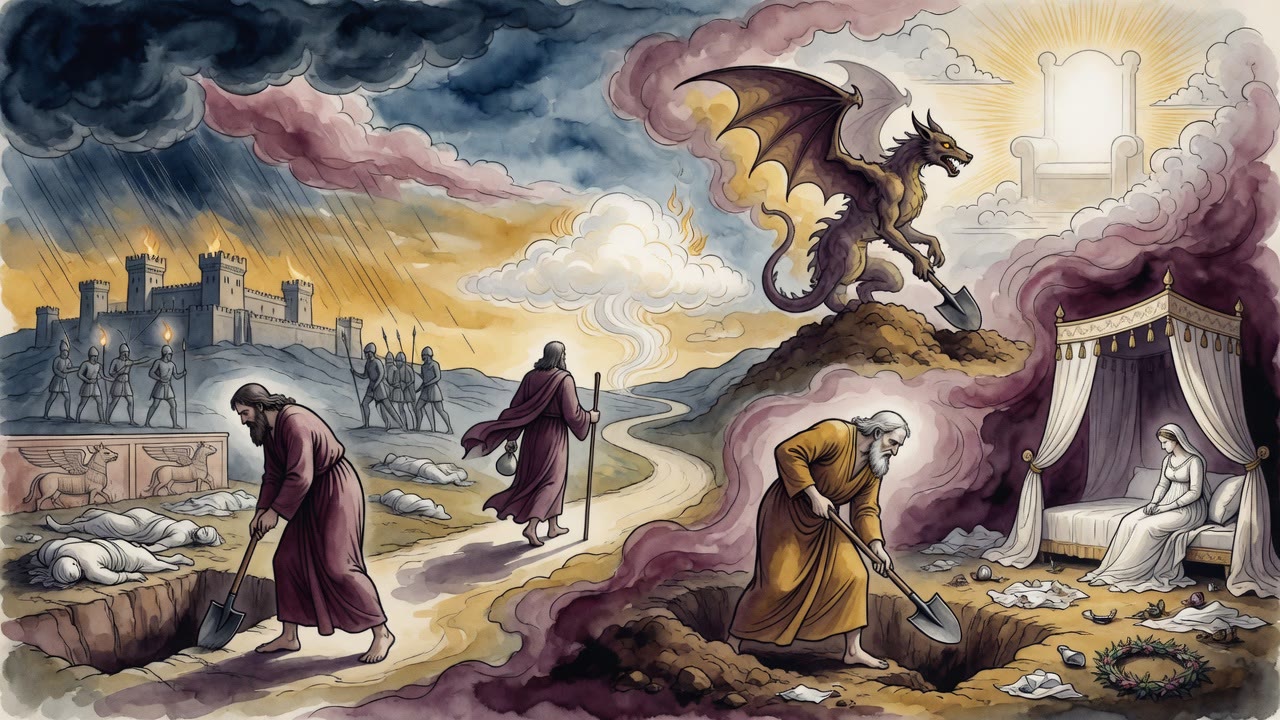
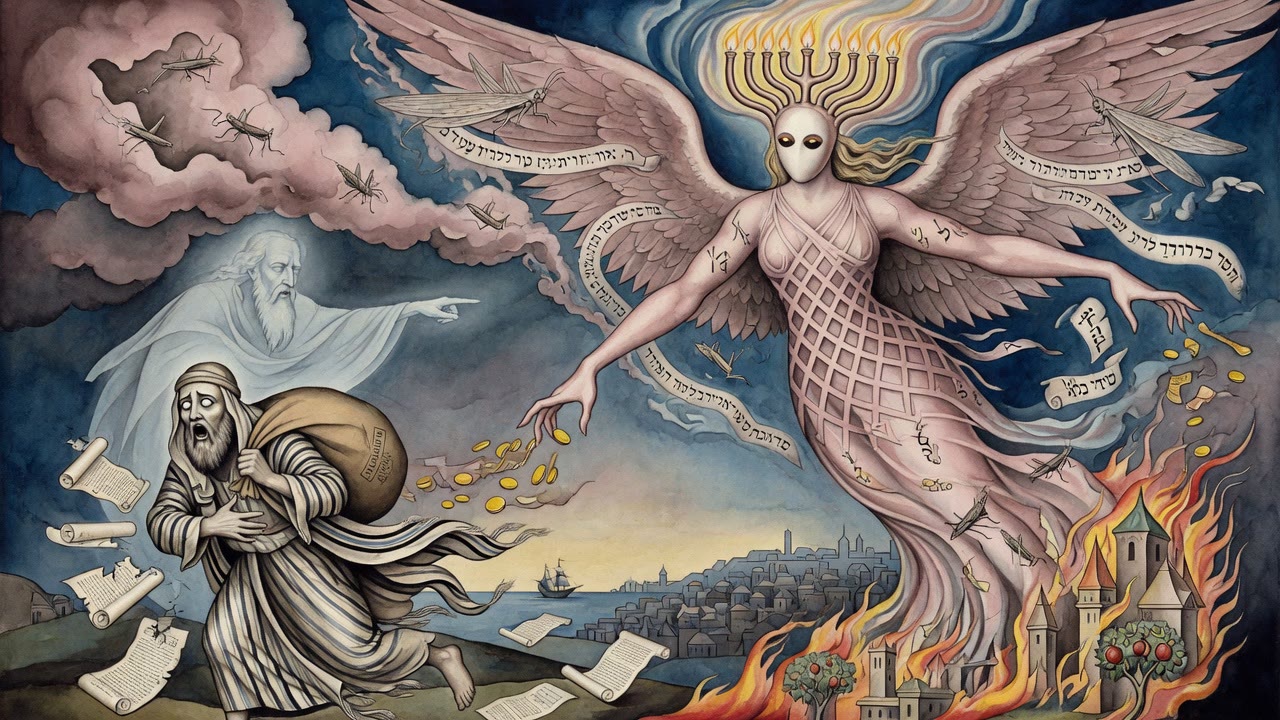
On the fourth day the wind died and the ship kept moving anyway. No sail bellied, no oar dipped, yet the hull cut forward as though something below had hooked it and was reeling it in. It struck a sandbank no chart had ever marked and threw him onto a coast that did not exist. The crew were gone. The ship was gone. He stood alone on the shore of nowhere.
Carried by Lion and Eagle to a City of Shedim
Night fell and a lion drove him up a tree and waited beneath it with patience that was almost personal. At dawn an eagle took him in its claws and carried him through the open air for a full day until he tore himself loose and crashed into the branches above a strange city. The first roof he saw was a synagogue. The boy who came to lead him there had wings folded against his back like a coat and feet split into cloven hooves.
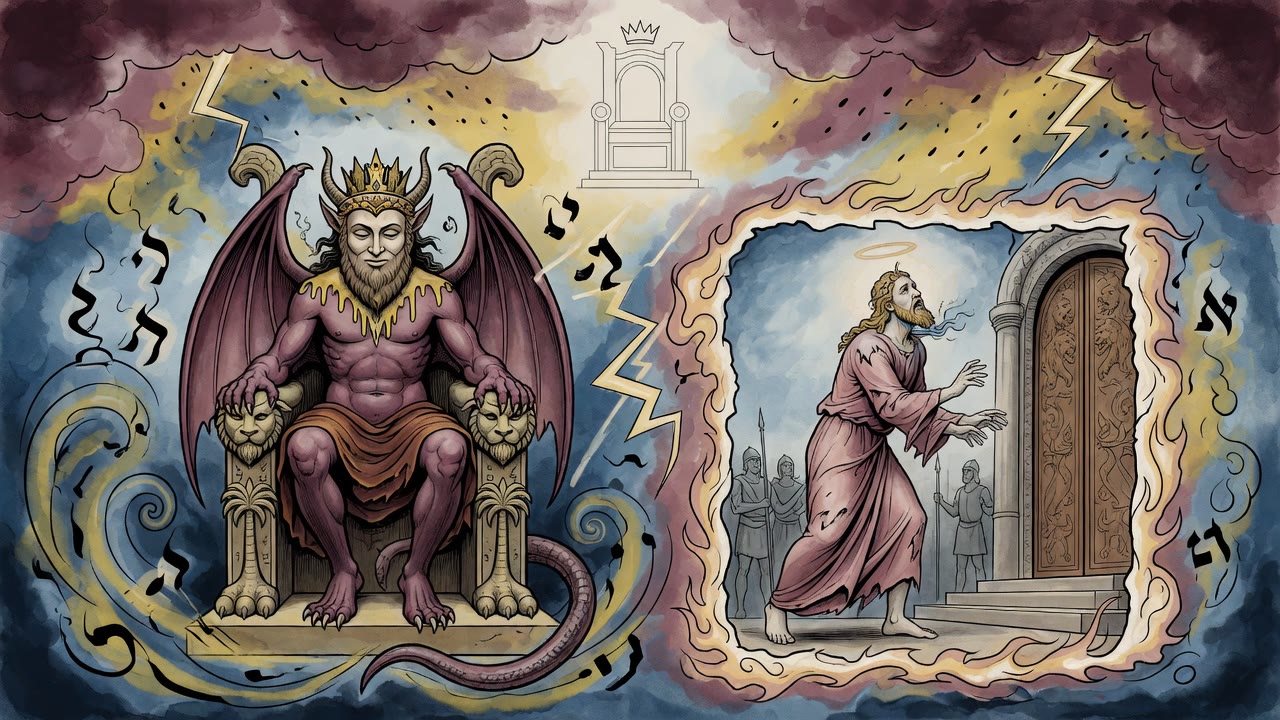
An old rabbi clapped his hands and a table of food rose out of empty air. Then the rabbi told him where he had landed, and the food turned to ash in his mouth. This was Ergetz, the country of demons and shedim and fairies, ruled by Ashmedai, king of all demons, the same crowned sheyd who in older tellings haunts the marriage bed and kills bridegrooms before the wedding night is through. Mortals who fell into Ergetz were torn into pieces. The rabbi knew this because he too carried mortal blood, from a great-grandfather who had fallen here and somehow lived.
That blood did not buy mercy. The rabbi dragged him before a court of demons that howled for the perjurer's death, every voice in the hall screaming that a man who breaks an oath to his dying father deserves to be unmade.
The Forbidden Door and the Throne of Gold
They spared his life. Sparing him was the cruelest thing they could have done.
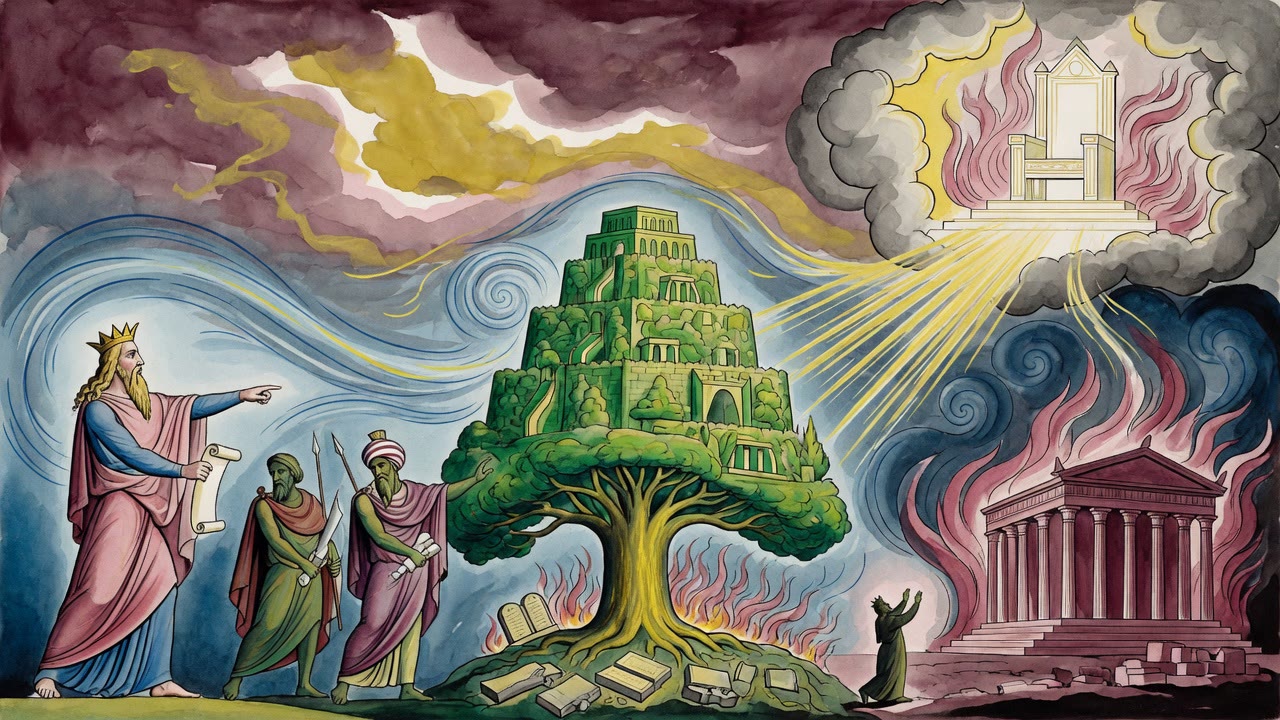
He was made tutor to the crown prince of the demons and handed the keys to a thousand rooms, with one room forbidden. He held a thousand keys and thought only about the one. When he finally turned it, the door swung open on a chamber where the king's own daughter sat on a throne of gold, waiting, as though she had always known the lock would lose.
"Marry me," she said, "or die." There was no third door. He married her. Standing in the demon-king's hall he swore again, swore to love her always, and the words came easily because words always came easily to him. A man who can talk himself past his father's deathbed can promise anything to anyone.
The Oath He Left Behind in Ergetz
For a while he was a prince among demons, and then the old hunger turned him toward home. He left Ergetz the way he left everything, quietly and at night, with another broken vow behind him. He crossed back into the world of men, back to the city he came from, and let himself believe the water had closed over all of it.
It had not. She came after him.
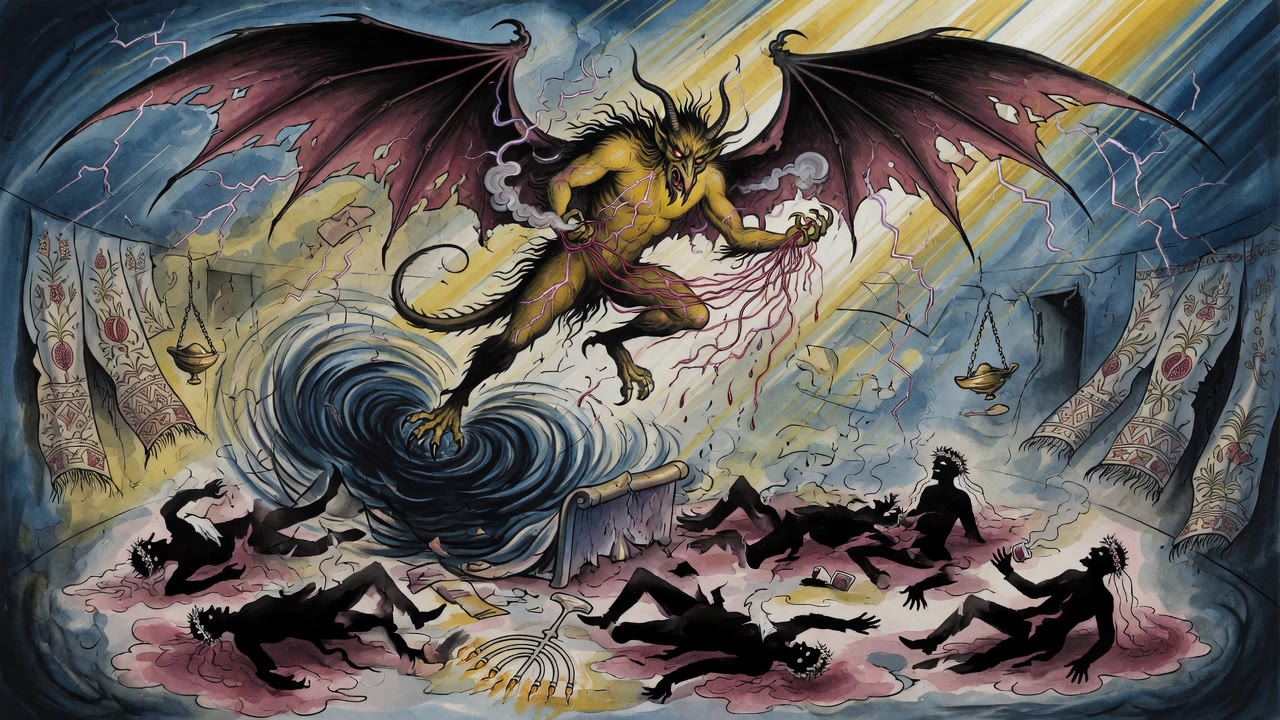
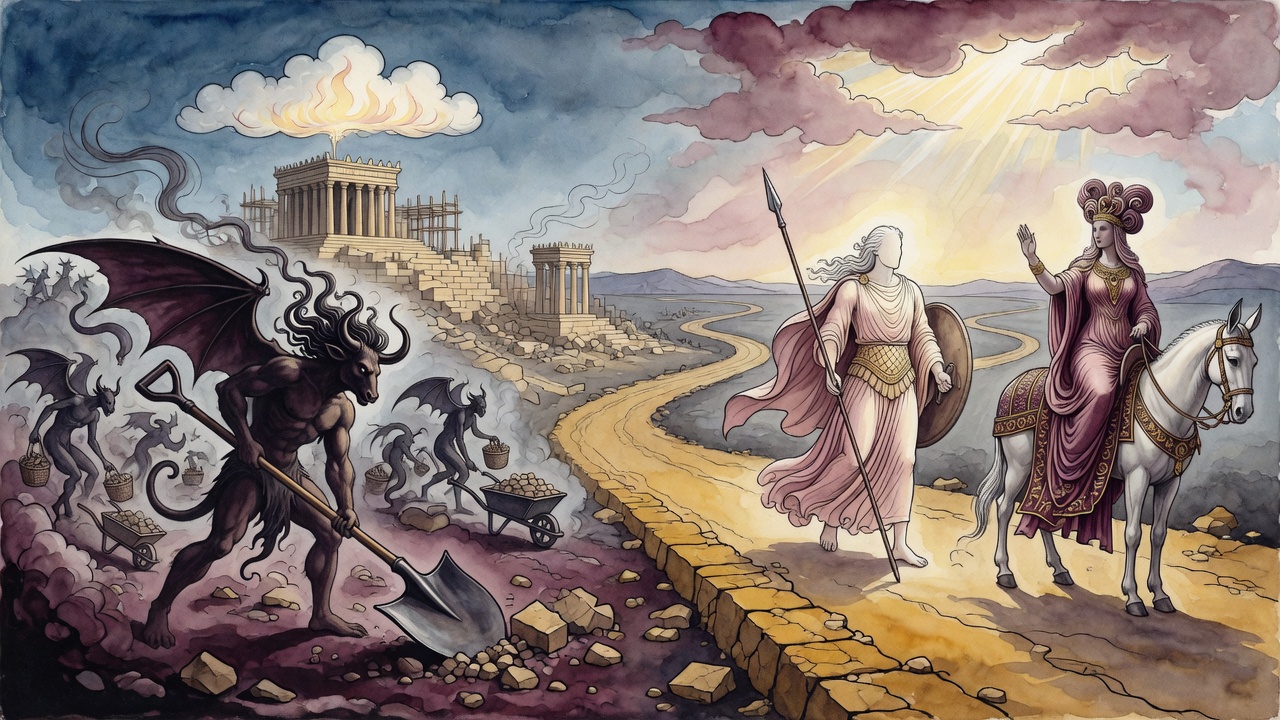
The princess crossed the sky in a storm, a darkness with a shape inside it, and arrived in his city not raging but calm, which was worse. She did not tear his house apart. She went to the human court, the court of judges and law, and she asked for the one thing she knew the world could not deny her. Justice. She laid out the oath he had sworn to her father, the oath he had sworn to her, and the older oath he had sworn over a deathbed and then sold to a smiling captain for gold. Every promise he had ever made was a creditor, and they had all come to be paid at once.
A Kiss Comes to Collect
The judges could find no fault in her. The law was the law, and he had broken every form of it.
She asked for one last thing before she went. A final kiss. The court, relieved to be rid of so terrible a plaintiff so cheaply, granted it. She crossed the floor to him. She took his face the way a bride takes her husband's face, and she pressed her lips to his.
Bar Shalmon fell dead where he stood. Not for the gold, not for the sea, not for any one of the four broken oaths alone, but for all of them together, paid in full at last. The promise to his father. The promise to her father. The promise to her. And under all of them, the promise to God, who had stood as witness over a dying man's bed and never once looked away.
← All myths