6 min read

Asmodeus Stole Solomon's Throne and Face

A headless demon named Envy wanted Solomon's head. Soon Asmodeus wore the king's face, while Solomon begged to be recognized.

Curated by Arthur · Told by Maggid ·
Table of Contents
  1. The Demon Wanted a Head
  2. The Throne Answered with a Stranger
  3. The Beggar Kept the Name
  4. The Daughter Saw Through the Dust
  5. The Hidden Feet Betrayed the Mask
  6. The Crown Returned with a Scar

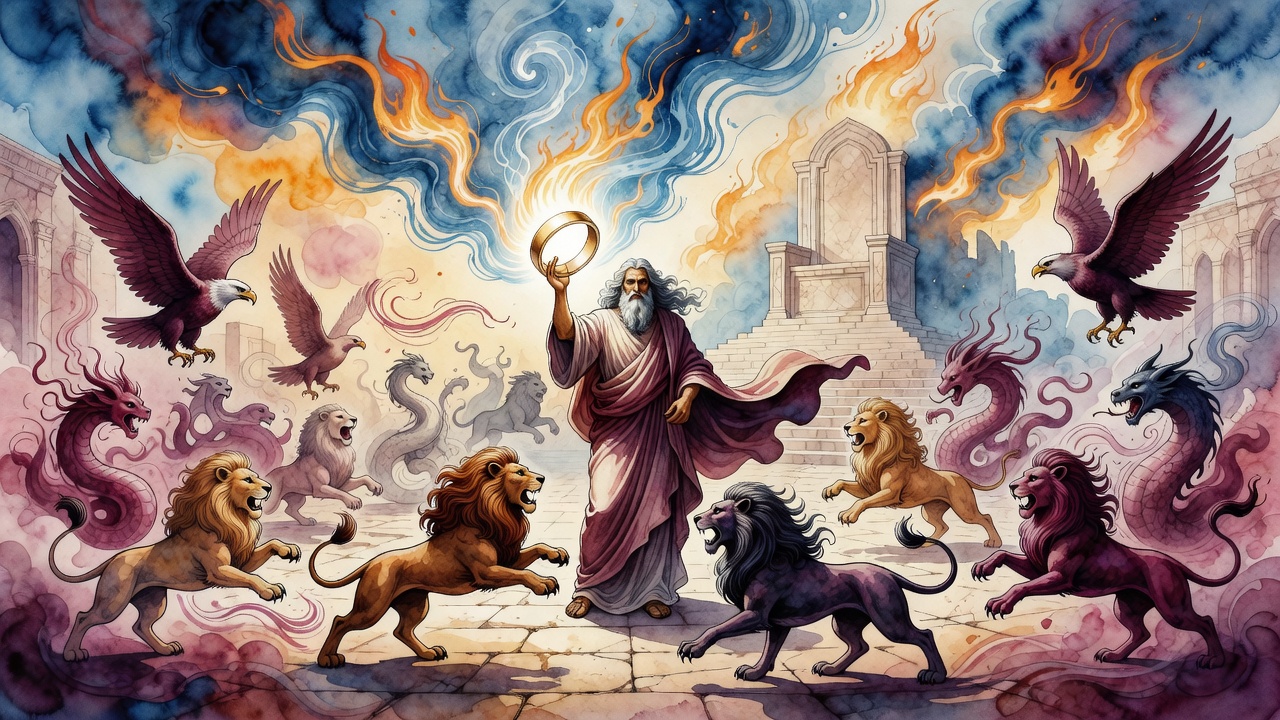
The demon had arms, legs, and a human shape, but no head. It stood before Solomon in the Temple court and named itself without shame. Envy. It devoured heads because it wanted a head of its own, and the head it wanted most belonged to the king.
The Demon Wanted a Head

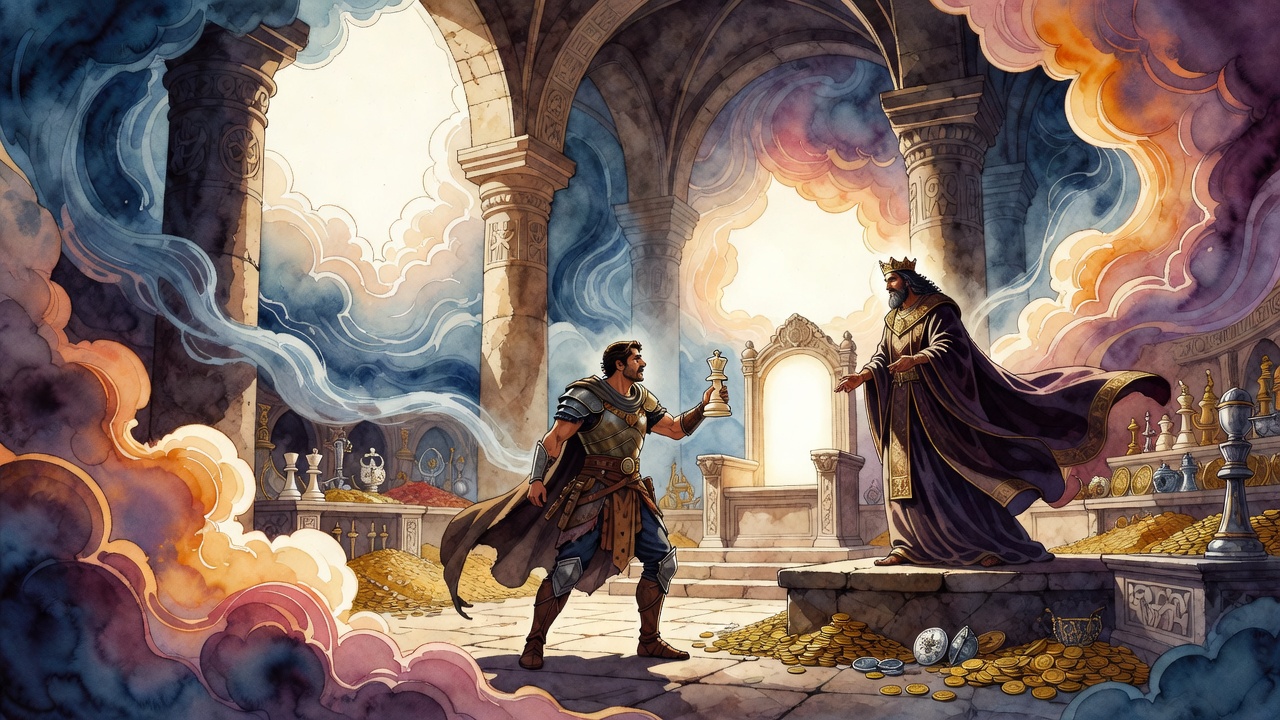
Solomon had become used to impossible petitioners. During the building of the Temple, spirits and demons came before him for judgment. Some were sentenced to labor. Some carried water. Some worked with fire in the making of precious metal. Some were locked away. The king listened, questioned, assigned, bound, and moved on to the next case.

Envy should have been another entry in that long day of judgments. It had no disguise. It did not claim injury. It did not ask for mercy. It wanted what it lacked and fed on the thing it wanted. That was its whole nature. The headless creature looked toward the wisest head in the room and spoke its appetite plainly.

Solomon heard the demon, sentenced it to work, and let the court continue. The Temple rose stone by stone. The king still sat high. Nothing in the room announced that the desire standing before him would soon spread past one demon's body.

The Throne Answered with a Stranger

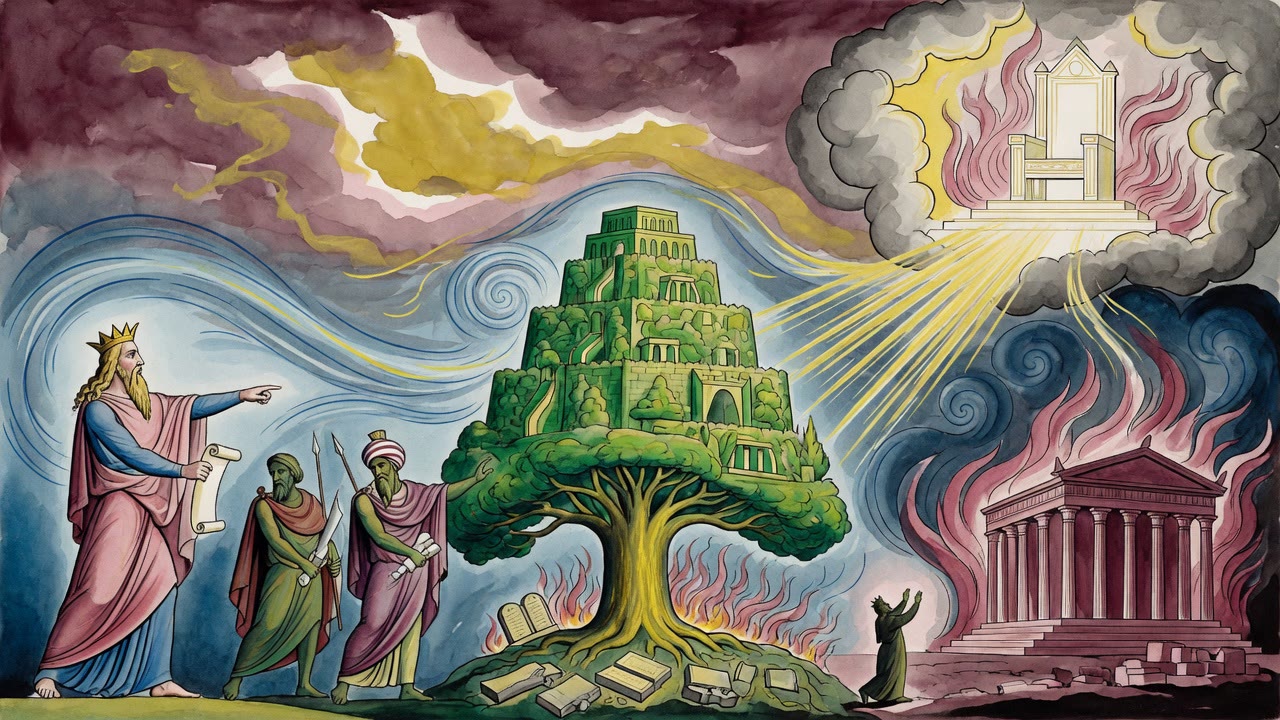
Solomon had been warned about kings. A king must not multiply wives. A king must not multiply horses. A king must not heap up silver and gold. These commands were not written for weak kings only. They were written because power breeds private exemptions, and private exemptions harden into public ruin.

Solomon crossed all three lines. He had foreign wives. He had horses in abundance. He had treasure enough to make warning sound theoretical. The thought that ruined him was not open rebellion. It was smaller and more poisonous. He could hold the danger and remain clean. He could step past the boundary and still be Solomon.

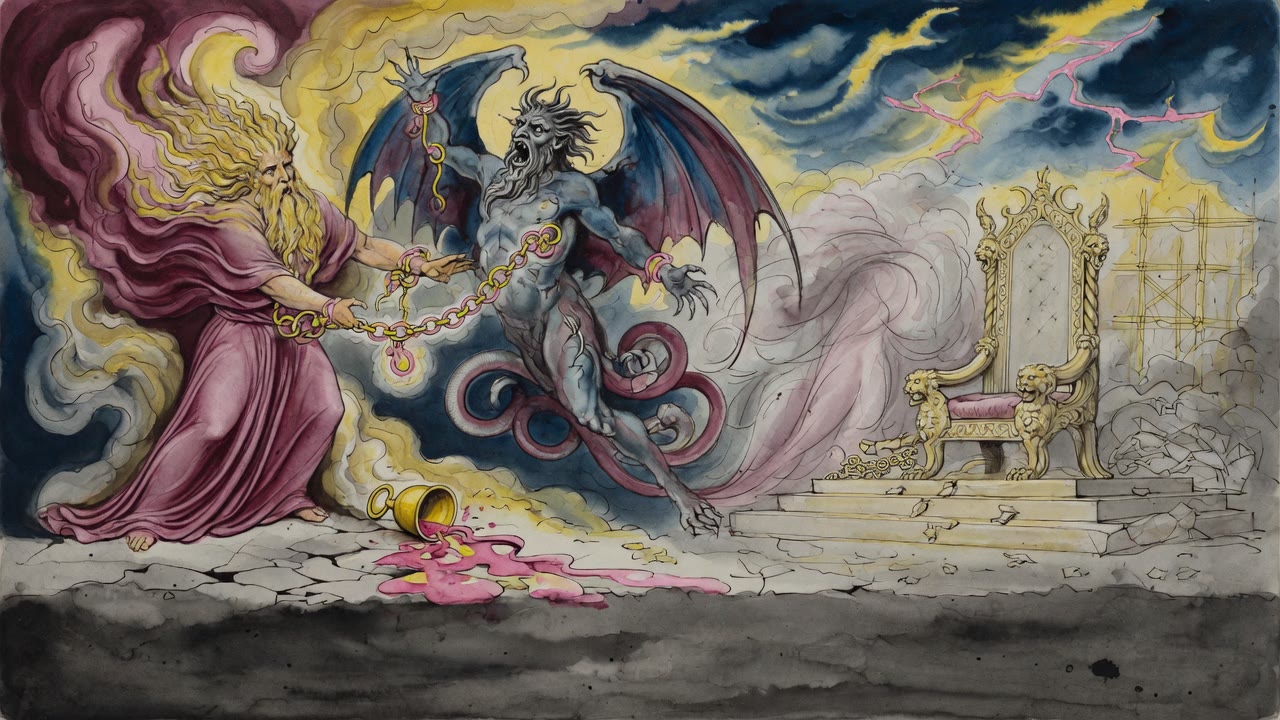
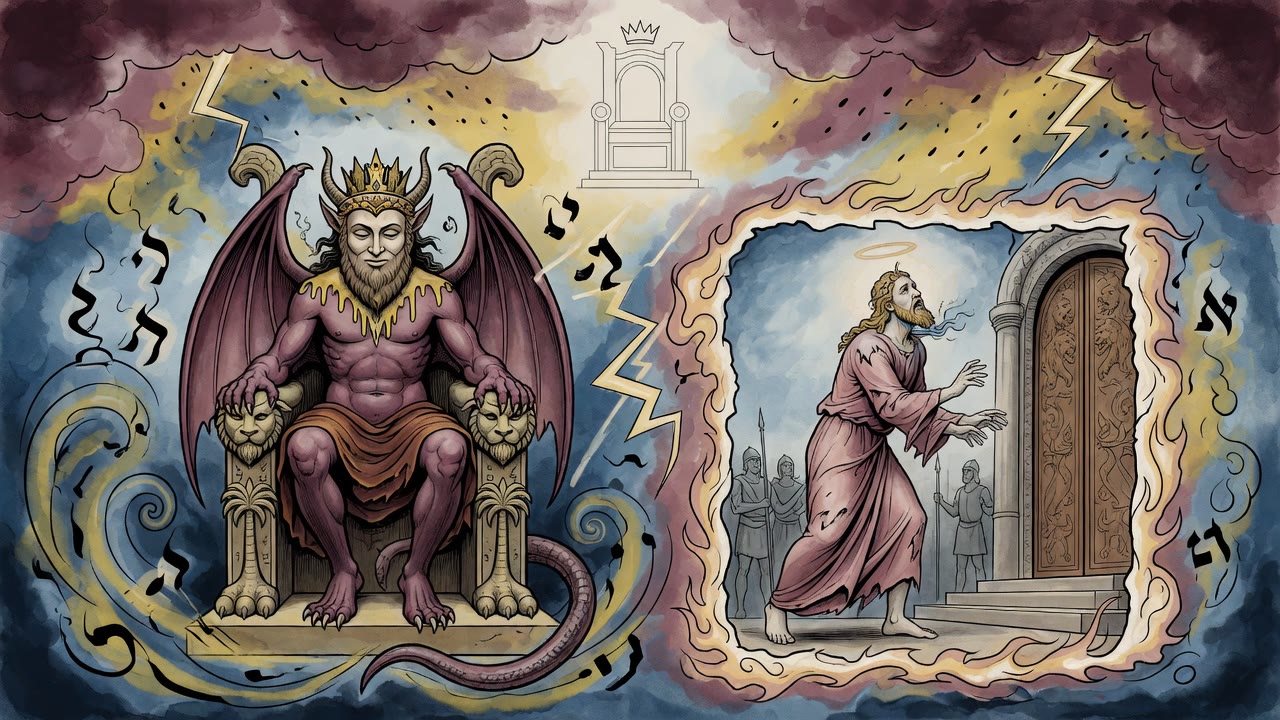
In heaven, the measure closed. The throne that had made him visible to the world became the place from which he was removed. Asmodeus, the demon king Solomon had once captured and used, took the king's likeness. The face remained in Jerusalem. The crown remained in Jerusalem. The real king was thrown outside his own life.

The Beggar Kept the Name

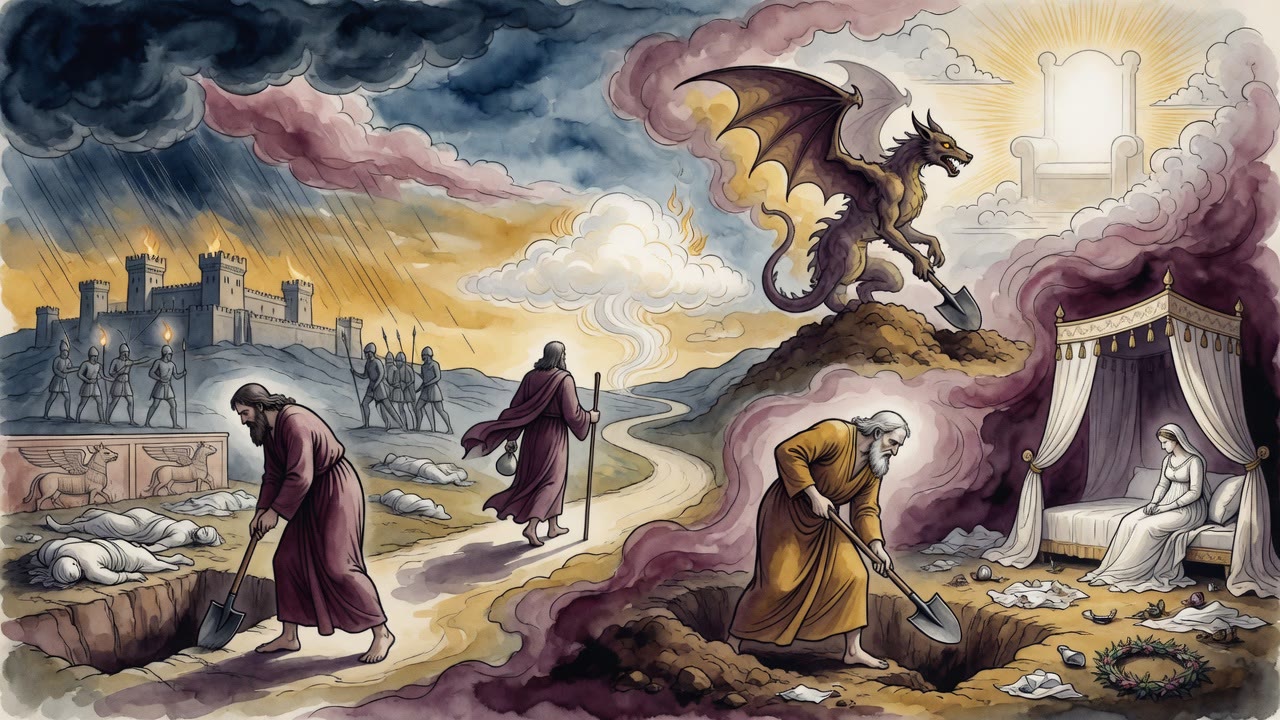
Solomon wandered with a staff. He entered synagogues and study houses and said the only sentence he still possessed: I am Kohelet. I was king over Israel in Jerusalem.

People heard madness. They saw a poor man with dust on him, a beggar insisting that a throne had been stolen by a creature wearing his face. They struck him with reeds. They set a bowl of grits before him. The wisest man alive had become a nuisance at the door.

Still he kept saying it. I am Kohelet. I was king.

The sentence must have sounded thinner each time. A king can lose guards, gold, robes, courtiers, and palaces. After that, only the name remains. Solomon carried his name like a coal in his hand. It burned him, but he would not put it down.

The Daughter Saw Through the Dust

His wandering brought him to Ammon, where an old matter of blood waited in a foreign court. A cook and his wife had vanished under royal command. The king of Ammon denied murder and spoke instead of banishment, but Solomon knew the shape of evasion. Even stripped of his throne, judgment had not left him.

The queen was called. Recognition moved faster than argument. She knew the ragged man before her. He was not a lunatic from the road. He was her father.

For a moment, the stolen throne in Jerusalem was far away. A daughter stood in a court and looked at the beggar everyone else had misread. The dust did not erase him. The reeds had not beaten him into someone else. The bowl of grits had fed a king.

The Hidden Feet Betrayed the Mask

In Jerusalem, the lie also began to fray. Benaiah son of Jehoiada, who knew Asmodeus too well, had not been admitted to the king's presence. Solomon's wives saw behavior that did not belong to their husband. Bathsheba saw enough to be disturbed. The figure on the throne avoided the ordinary marks of royal life. He hid his feet.

A demon can borrow a face and still fail at the edges. The feet betrayed him. The king's household and the court understood at last that the man sitting under the crown had the wrong body beneath the robe.

The Sanhedrin gave the ring back to the beggar who had never stopped saying his name. The ring carried the divine Name, the force before which Asmodeus could not stand. Solomon entered the throne room. The pretender saw him and fled.

No battle followed. No army retook the palace. The stolen face vanished before the Name, and the true king stood where the false one had been sitting.

The Crown Returned with a Scar

Solomon recovered the throne, but recovery did not restore the old illusion. He had ruled demons and judged kings. He had built the Temple and heard cases no other court could hear. Then he had wandered as a man no one believed, repeating his own name to people who fed him like a beggar and dismissed him like a fool.

Later, the royal voice of Kohelet would sound like a man who had held the whole world and watched it thin out in his hands. Solomon placed himself among those whose wisdom did not spare them from damage. Adam reached once and changed the condition of the world. Noah drank and woke to a curse inside his tent. Solomon had multiplied what kings were told not to multiply, and Asmodeus wore the result.

Envy had asked for Solomon's head. It did not receive that. It received a season in which the king's face, crown, and room could be occupied by another, while the king himself learned how little a name weighs when no one will believe it.


← All myths
From the tradition

Sources

2 sources

The texts this telling draws on, in full. Open a card to read inline, or expand it for a wider, quieter read.

Legends of the Jews 5:89Legends of the Jews

The ancient stories are full of that kind of energy. And no one knew it better than King Solomon, the wisest of all men.

Solomon, holding court, his legendary wisdom radiating outwards. But it wasn’t just petitioners and dignitaries who sought his counsel. He had dominion over spirits, too. And one day, he summoned a particularly… unsettling demon.

This wasn't your run-of-the-mill horned beast. According to Ginzberg's Legends of the Jews, this demon had all the limbs of a man... but no head. Can you picture it? A headless humanoid, shuffling before the king.

"I am called Envy," the creature rasped. "For I delight to devour heads, being desirous to secure for myself a head; but I do not eat enough, and I am anxious to have such a head as thou hast."

Wow. Talk about direct. The demon literally embodies envy, consuming what others possess, yet never satisfied, always craving more – specifically, Solomon’s own wisdom, his own position. It’s a chilling metaphor for the corrosive nature of jealousy, isn’t it?

But it didn’t stop there. A hound-like spirit named Rabdos appeared, bringing with him a valuable piece of knowledge: the location of a green stone, perfect for adorning the Temple in Jerusalem. Even these dark entities, it seems, could be compelled to serve a higher purpose.

Then came a parade of other demons, male and female, including the "thirty-six world-rulers of the darkness." It’s a powerful image – a whole hierarchy of evil brought to heel before Solomon's authority. What do you do with that kind of power?

Solomon, ever the pragmatist (and divinely appointed builder), put them to work. Some were forced to haul water for the Temple. Others were imprisoned, their dark influence contained. Still others were set to the grueling task of working with fire, forging gold and silver, preparing the very infrastructure for their own demonic confinement.

Talk about poetic justice.

It's a fascinating glimpse into a world where the lines between the spiritual and the physical are blurred. Where even the most malevolent forces can be harnessed for good. And it leaves you wondering: what "demons" are we wrestling with in our own lives? What envy, what darkness, can we transform into something useful, something beautiful, something… sacred?

Full source
Legends of the Jews 5:141Legends of the Jews

Not just any king, but King Solomon himself.

In our continuing saga, we find Solomon not exactly sitting pretty. He's been dethroned, remember? The demon Asmodeus, in a classic bait-and-switch, had taken his place. Now, Solomon, disguised and humbled, is trying to reclaim his rightful place.

One particularly intriguing episode involves a legal matter. Solomon, even in his reduced state, still possessed a keen sense of justice. He brings the king of Ammon before his tribunal, accusing him of murdering a cook and his wife. Now, the king of Ammon denies the killing, claiming he only banished them. Solomon then calls forth the queen. And guess what? The king of Ammon recognizes her as his own daughter! This little side adventure, while not directly about Solomon’s main struggle, shows us his unwavering commitment to justice, even in exile.

How did Solomon get his throne back? It certainly wasn't a cakewalk. The people of Jerusalem, understandably, thought he was completely mad, ranting about being the real Solomon. Can you blame them?

But a glimmer of hope emerges. The members of the Sanhedrin (the Jewish high court) started noticing irregularities. They realized it had been a long time since Benaiah, Solomon's trusted confidant, had been allowed near the king. That alone is suspicious. Then, the women of the court – Solomon's wives and even his mother, Bathsheba – chimed in. They confirmed that the king’s behavior had drastically changed. It was unbecoming of royalty and nothing like the Solomon they knew.

And here's a creepy detail: this new "Solomon" was always careful to keep his feet hidden. Why? Because, of course, he was a demon, and demons have tell-tale signs! This reminds us of so many folktales where the demon or a demon is revealed by his cloven hooves.

The Sanhedrin, now thoroughly suspicious, decided to act. They retrieved Solomon's magic ring – the one that gave him power over demons – and gave it to the wandering beggar who claimed to be the king. Talk about a pivotal moment! Imagine the tension as the true Solomon, now empowered, stood before the imposter on the throne.

As soon as Asmodeus, the demon king, saw the ring and the true king revealed, he knew his game was up. According to the stories, he fled "precipitately." In other words, he took off like a shot! The Zohar, the foundational text of Jewish mysticism, often speaks of the power of sacred objects and names. Here, the ring serves as a potent symbol of Solomon's divinely granted authority.

So, Solomon, after enduring hardship and humiliation, finally reclaimed his throne. It's a evidence of his inherent right to rule, a right that even a cunning demon couldn't ultimately usurp.

What does this whole episode tell us? Perhaps it's a reminder that even when we're down on our luck, stripped of our status, and doubted by everyone around us, the truth has a way of surfacing. And sometimes, all it takes is a little bit of magic – or perhaps, just the unwavering belief in who we truly are – to reclaim our rightful place in the world.

Full source