4 min read

Solomon Trapped Benaiah With a Stolen Chess Piece

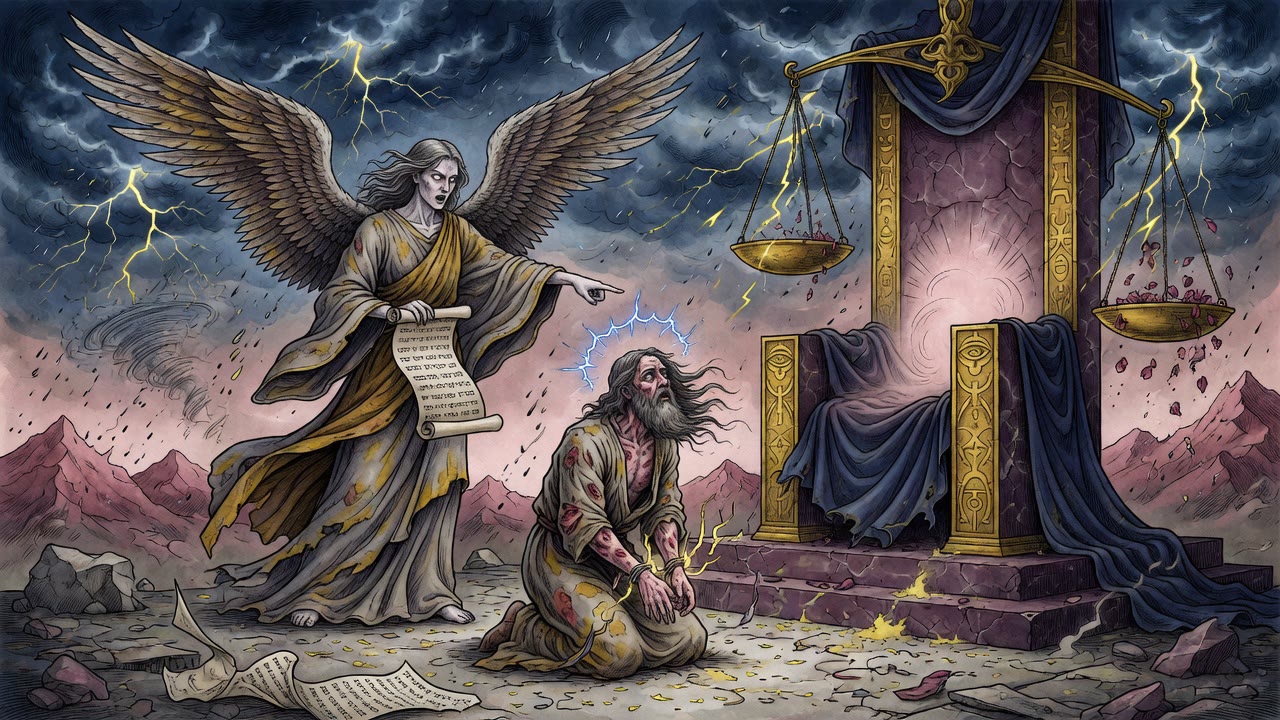
Benaiah stole one chess piece and won. Solomon answered with a treasury trap that made the general confess in front of the court.

Curated by Arthur · Told by Maggid ·
Table of Contents
  1. The Board Remembered the Theft
  2. The King Entered His Own Treasury in Disguise
  3. Benaiah Heard the Question Under His Own Skin
  4. Two Meals and a Tower

Solomon knew the board well enough to know when a piece had vanished.

He played chess with Benaiah, his general, and the king always won. The pattern was steady enough to become dangerous. One day a noise rose from the street, sharp enough to pull Solomon to the window. In that small turn of the king's head, Benaiah reached across the board and took a piece.

When play resumed, Benaiah won.

The Board Remembered the Theft

Solomon did not accuse him at once.

He reconstructed the game afterward, move by move, the way a wise king can walk back through a room after everyone else has left. The missing piece explained the impossible victory. Benaiah had stolen from the king in the smallest form possible, not gold, not land, not a weapon from the armory. A chess piece.

Small thefts are useful because they do not feel large enough to expose a man.

That was the danger. A general who would never steal a crown might let his fingers close around one carved piece while the king looked away. The board gave him permission to treat theft as cleverness. The win gave the theft a crown of its own.

Solomon could have confronted him privately. He could have shamed him in anger. Instead, he built a second board, and this time the pieces were thieves, treasuries, judges, and Benaiah's own conscience.

The King Entered His Own Treasury in Disguise

Solomon disguised himself and found thieves.

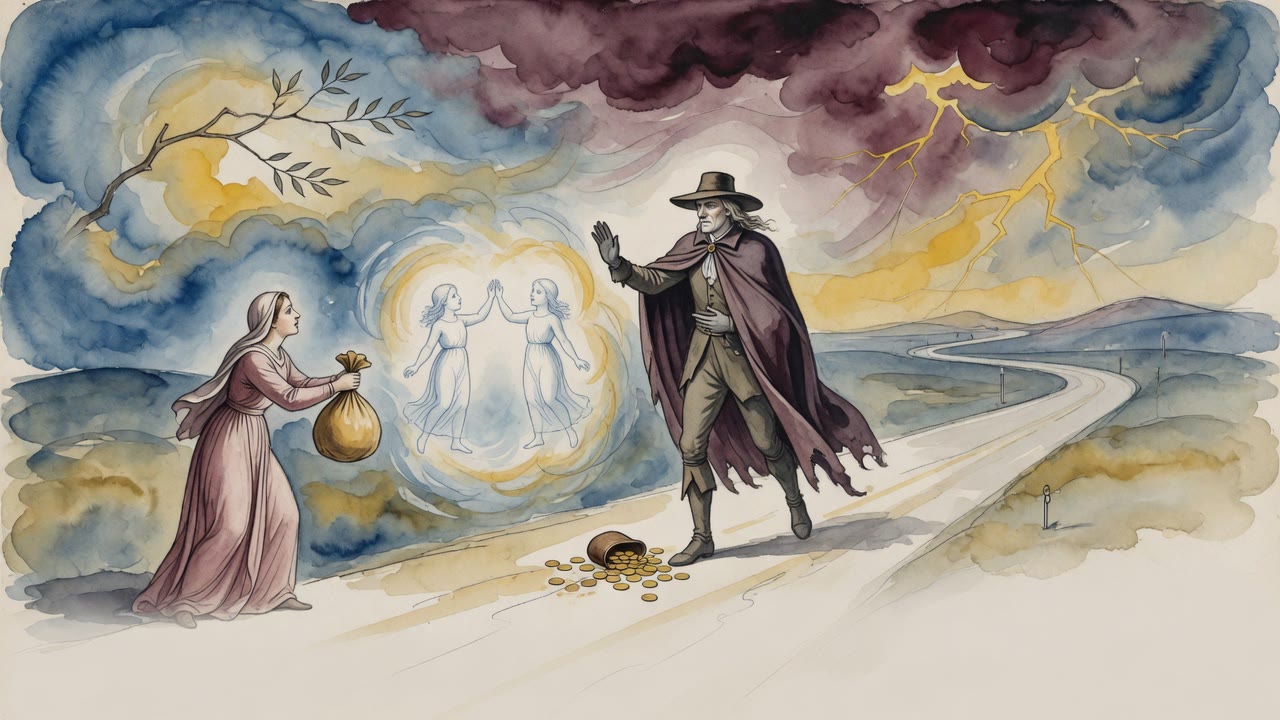
He drew them into the royal treasuries and locked them in the innermost chamber. By morning, a real theft had been staged inside the palace. The treasury held men who had come to steal, but their capture was not the end Solomon wanted. They were bait for another confession.

He summoned the Sanhedrin. Benaiah sat among them as one of the judges, the general who had stolen from the board now sitting in judgment over men who had stolen from the king's property.

Solomon asked the question plainly. What punishment does a man deserve for stealing something from the king.

The chamber tightened around Benaiah.

He was no longer facing ivory and squares. He was sitting among elders with royal property in the question and the king's eyes on the room. The small act had been moved into a larger frame, and the larger frame made hiding impossible.

Benaiah Heard the Question Under His Own Skin

He thought the trap had closed on him.

The stolen chess piece grew in his mind until it filled the treasury. Solomon had not named the board, but guilt named it for him. Benaiah confessed publicly. He had taken the piece. He had won by theft.

Solomon smiled.

He had been speaking, he said, about the thieves in the treasury. The confession had done its work. Benaiah had judged himself before the court could judge anyone else.

No guard had searched his house. No witness had been dragged in. Solomon let guilt supply the missing evidence. The stolen chess piece came back through Benaiah's own mouth.

That is the precision of Solomon's wisdom in the tale. He did not force the truth out by threat. He arranged a room in which the truth found the guilty man and made him speak.

Two Meals and a Tower

Other Solomon tales sharpen the same blade.

He could teach with two meals: one rich table made bitter by a cruel host, one poor table of herbs made sweet by love. He could try to protect his daughter from a decree by hiding her in a tower surrounded by water, guarded by seventy elders, only to discover that wisdom cannot wall off what heaven has decreed.

The chess trap belongs beside those stories. Solomon's wisdom is not merely knowing facts no one else knows. It is staging reality so that hidden things become visible. A meal reveals the soul of wealth. A tower reveals the limits of control. A treasury reveals the theft hidden on a board.

Benaiah stole one piece while the king looked out the window. Solomon moved the whole palace until the missing piece spoke. A board game had become judgment, and the king won without touching a single square again.


← All myths
From the tradition

Sources

5 sources

The texts this telling draws on, in full. Open a card to read inline, or expand it for a wider, quieter read.

Exempla of the Rabbis, No. 426Exempla of the Rabbis (Gaster, 1924)

King Solomon was an excellent chess player. He played with Benaya his general and always won. Once a noise in the street drew Solomon to the window. Benaya took a piece from the board and won the game. Solomon surprised, reconstructed the game afterwards and found out what Benaya had done. Determined to make him confess publicly, he disguised himself and drew some thieves into the treasuries of the king and locked them in the innermost chamber. In the morning he called the Sanhedrin (the supreme rabbinic court) together, Benaya being one of the members. He asked what punishment a man deserved for stealing some of the king’s property. Benaya believing that he was meant confessed his guilt publicly. King Solomon smiled and said, “I am referring to some thieves in the treasury,” and was satisfied that he had made him confess by this clever ruse.

Full source
Exempla of the Rabbis, No. 246Exempla of the Rabbis (Gaster, 1924)

King Solomon, the wisest of all kings, once taught a lesson about wealth and poverty using the simplest of demonstrations: two meals.

The first meal was served in the house of a rich man. The table groaned under the weight of roasted meats, fine wines, delicacies imported from distant lands, golden plates, and silver cups. But the host was a cruel and bitter man. He berated his servants, insulted his guests, quarreled over debts, and turned every bite into a miserable ordeal. The finest food in Israel tasted like ashes in the mouths of everyone present.

The second meal was served in the house of a poor man. There was nothing but a dish of herbs, simple vegetables, the food of those who cannot afford meat. But the host loved his guests. The conversation flowed with warmth and laughter. Stories were told. Children played at the edges of the room. Every person at that humble table felt welcome, seen, and valued.

Solomon pointed to these two scenes and spoke the words that became (Proverbs 15:17): "Better a dinner of herbs where love is, than a fatted ox and hatred with it."

The Midrash Hagadol on Deuteronomy preserves this teaching as a window into Solomon's philosophy of the good life. Wealth without love is a curse. Poverty with love is a feast. The king who possessed more gold than any ruler in history understood, better than anyone, that gold was never the point.

Full source
Exempla of the Rabbis, No. 6Exempla of the Rabbis (Gaster, 1924)

The story of Solomon's daughter and the bastard, the mamzer, is one of the most poignant tales in rabbinic literature. The Midrash (Tanhuma, Introduction) tells how Solomon, despite all his wisdom, could not prevent the fulfillment of a divine decree concerning his own child.

Solomon saw through astrology. Or through prophetic insight, that his daughter was destined to marry a man of the lowest social status: a mamzer, a person born from a forbidden union, someone who occupied the very bottom of the Jewish social hierarchy.

The king did everything in his power to prevent this fate. He locked his daughter in a tower surrounded by water, guarded by seventy elders, provisioned for years. No man could reach her. No suitor could penetrate the defenses Solomon had built around his child.

One cold night, a poor young man, freezing, homeless, desperate, found the carcass of a large ox by the roadside. He crawled inside it for warmth. A great eagle, mistaking the carcass for carrion, seized it in its talons and flew it to the roof of the very tower where Solomon's daughter was imprisoned.

The young man emerged from the carcass and found the princess. They fell in love. He was learned, kind, and brilliant, everything a father could want in a son-in-law, except for the accident of his birth. When Solomon learned what had happened, he did not rage. He said: "Blessed is God who pairs couples." If God could use an eagle and a dead ox to bring two souls together, then no wall, no tower, and no father's power could prevent what heaven had decreed.

Full source
Legends of the Jews 5:144Legends of the Jews

The story goes that after his encounter with Asmodeus – that powerful, not-exactly-pleasant demon – Solomon was so shaken by Asmodeus's "forbidding ugliness" that he couldn't rest easy. This king, who commanded spirits and ruled over vast lands, needed a squad of valiant heroes guarding his bed just to feel safe. We read of this in Ginzberg's Legends of the Jews.

It makes you wonder, doesn't it? What did Solomon really see? What was it about Asmodeus that burrowed so deep into the king's psyche? The text doesn't spell it out, but it hints at a vulnerability, a crack in even Solomon's seemingly impenetrable armor.

Speaking of Solomon's court, it was quite the gathering place. Just as David, his father, had surrounded himself with scholars and heroes, Solomon's court was a magnet for the best and brightest of the land. According to tradition, the most important of them all was Benaiah the son of Jehoiada.

Benaiah was a legend in his own right. A man of unparalleled learning and piety, unmatched during both the First and Second Temple periods, Benaiah held the esteemed position of chancellor. He was Solomon's right-hand man, privy to the king’s trust and favor.

Solomon enjoyed Benaiah's company and would often invite him for a game of chess. Now, Solomon, being the wise king he was, naturally always won. But one day, something strange happened. Solomon had to step away from the chessboard for a moment. Benaiah, seizing the opportunity, subtly removed one of Solomon's pieces. And you guessed it: Solomon lost.

This seemingly small incident sparked a deeper unease in Solomon. He couldn't shake the feeling that Benaiah had acted dishonestly. The king, in his wisdom (or perhaps his pride), decided to teach his chancellor a lesson. What that lesson would be, we don't know yet, but the stage is set for a fascinating confrontation.

It begs the question: Was Benaiah truly being dishonest? Or was he trying to show Solomon something, perhaps a flaw in his thinking, a vulnerability in his strategy? Maybe, just maybe, Benaiah knew that sometimes, even a king needs to lose to truly learn.

Full source
Legends of the Jews 5:141Legends of the Jews

Not just any king, but King Solomon himself.

In our continuing saga, we find Solomon not exactly sitting pretty. He's been dethroned, remember? The demon Asmodeus, in a classic bait-and-switch, had taken his place. Now, Solomon, disguised and humbled, is trying to reclaim his rightful place.

One particularly intriguing episode involves a legal matter. Solomon, even in his reduced state, still possessed a keen sense of justice. He brings the king of Ammon before his tribunal, accusing him of murdering a cook and his wife. Now, the king of Ammon denies the killing, claiming he only banished them. Solomon then calls forth the queen. And guess what? The king of Ammon recognizes her as his own daughter! This little side adventure, while not directly about Solomon’s main struggle, shows us his unwavering commitment to justice, even in exile.

How did Solomon get his throne back? It certainly wasn't a cakewalk. The people of Jerusalem, understandably, thought he was completely mad, ranting about being the real Solomon. Can you blame them?

But a glimmer of hope emerges. The members of the Sanhedrin (the Jewish high court) started noticing irregularities. They realized it had been a long time since Benaiah, Solomon's trusted confidant, had been allowed near the king. That alone is suspicious. Then, the women of the court – Solomon's wives and even his mother, Bathsheba – chimed in. They confirmed that the king’s behavior had drastically changed. It was unbecoming of royalty and nothing like the Solomon they knew.

And here's a creepy detail: this new "Solomon" was always careful to keep his feet hidden. Why? Because, of course, he was a demon, and demons have tell-tale signs! This reminds us of so many folktales where the demon or a demon is revealed by his cloven hooves.

The Sanhedrin, now thoroughly suspicious, decided to act. They retrieved Solomon's magic ring – the one that gave him power over demons – and gave it to the wandering beggar who claimed to be the king. Talk about a pivotal moment! Imagine the tension as the true Solomon, now empowered, stood before the imposter on the throne.

As soon as Asmodeus, the demon king, saw the ring and the true king revealed, he knew his game was up. According to the stories, he fled "precipitately." In other words, he took off like a shot! The Zohar, the foundational text of Jewish mysticism, often speaks of the power of sacred objects and names. Here, the ring serves as a potent symbol of Solomon's divinely granted authority.

So, Solomon, after enduring hardship and humiliation, finally reclaimed his throne. It's a evidence of his inherent right to rule, a right that even a cunning demon couldn't ultimately usurp.

What does this whole episode tell us? Perhaps it's a reminder that even when we're down on our luck, stripped of our status, and doubted by everyone around us, the truth has a way of surfacing. And sometimes, all it takes is a little bit of magic – or perhaps, just the unwavering belief in who we truly are – to reclaim our rightful place in the world.

Full source