6 min read

Behemoth and Leviathan Will Feed the Righteous at the End

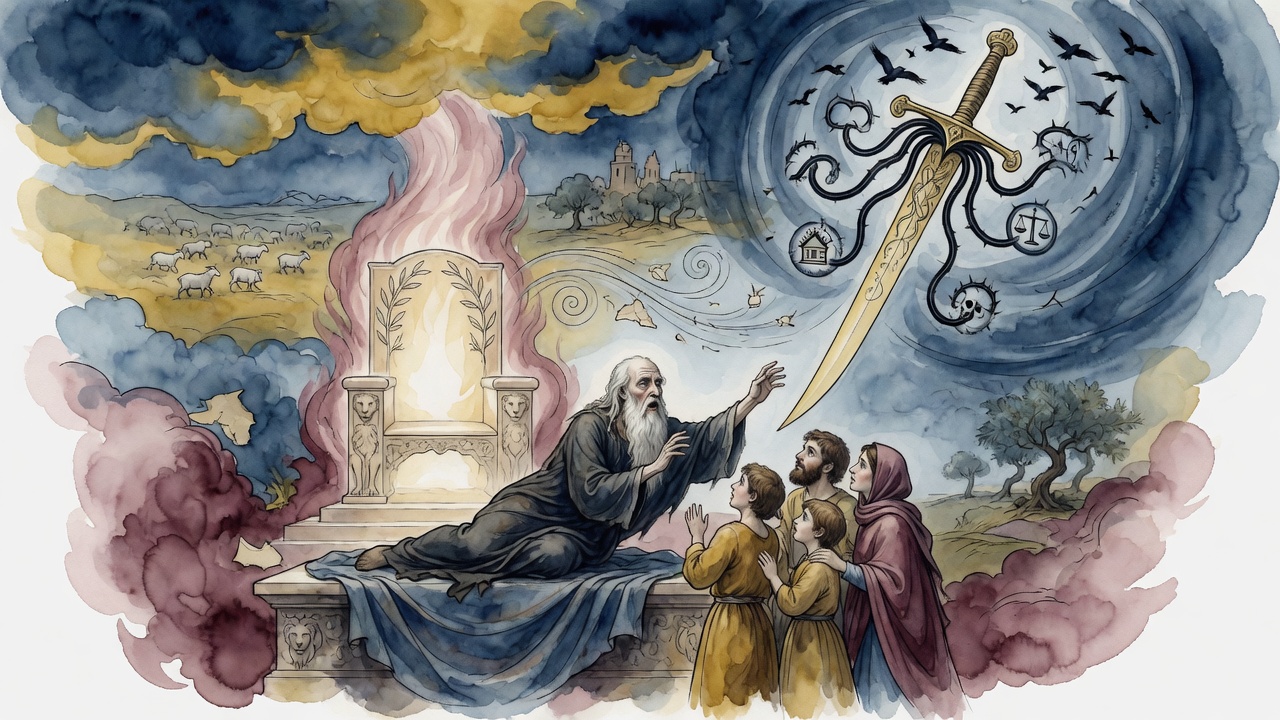
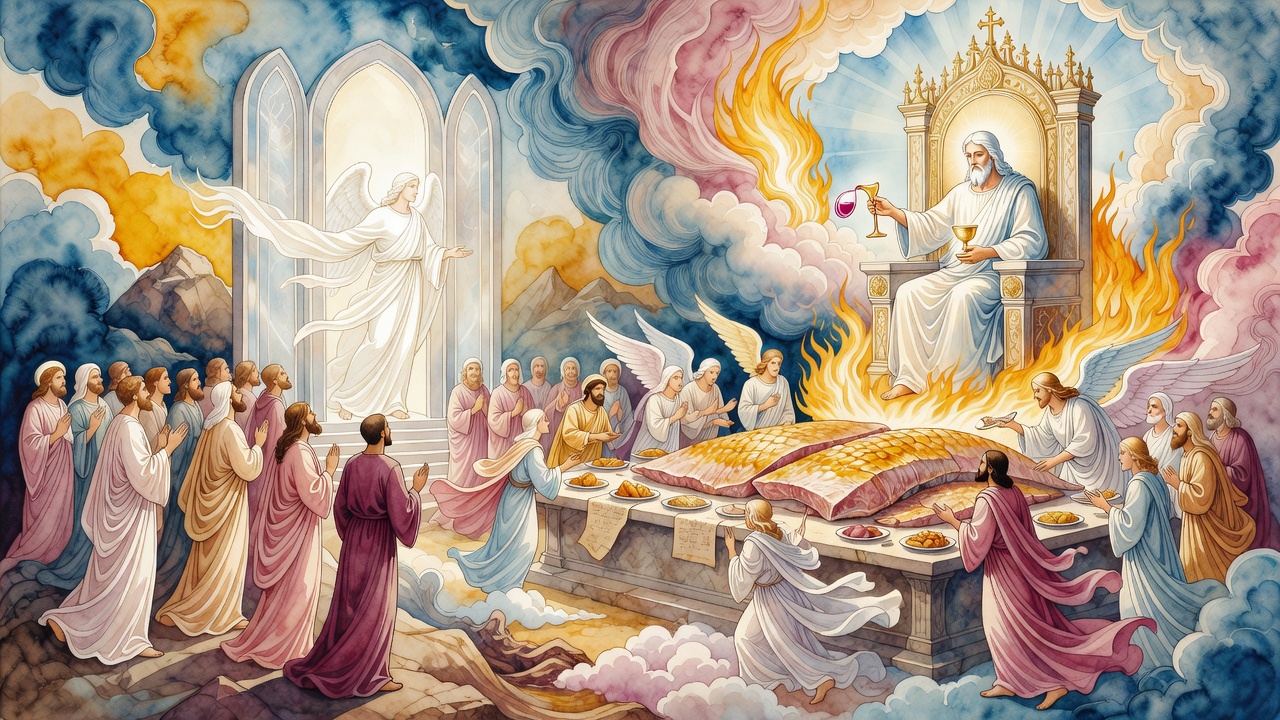
God made two monsters before time was ordered and kept them apart. At the end of days they will destroy each other, and their flesh will feed the righteous.

Curated by Arthur · Told by Maggid ·
Table of Contents
  1. Before the World Was Ordered
  2. Why They Were Kept
  3. The Problem of Kosher Law
  4. What the Monsters Represented Before They Were Food
  5. The Tent Made of Leviathan's Skin

Before the World Was Ordered

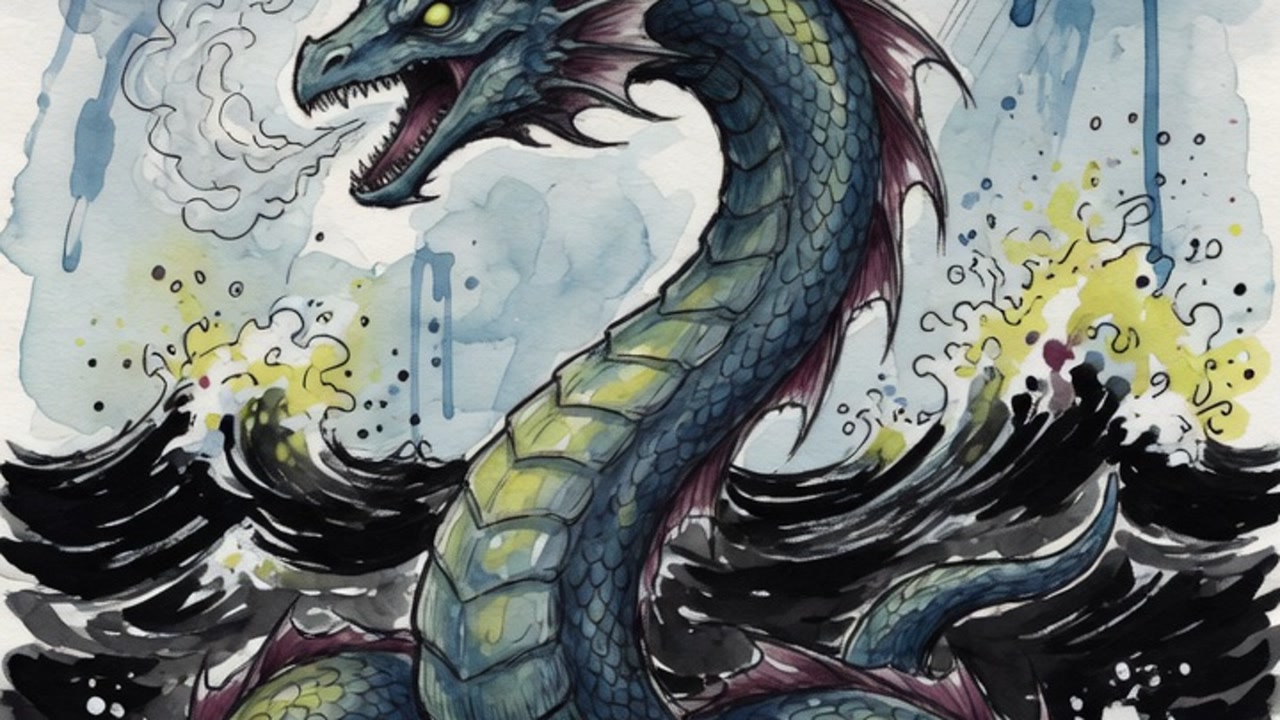
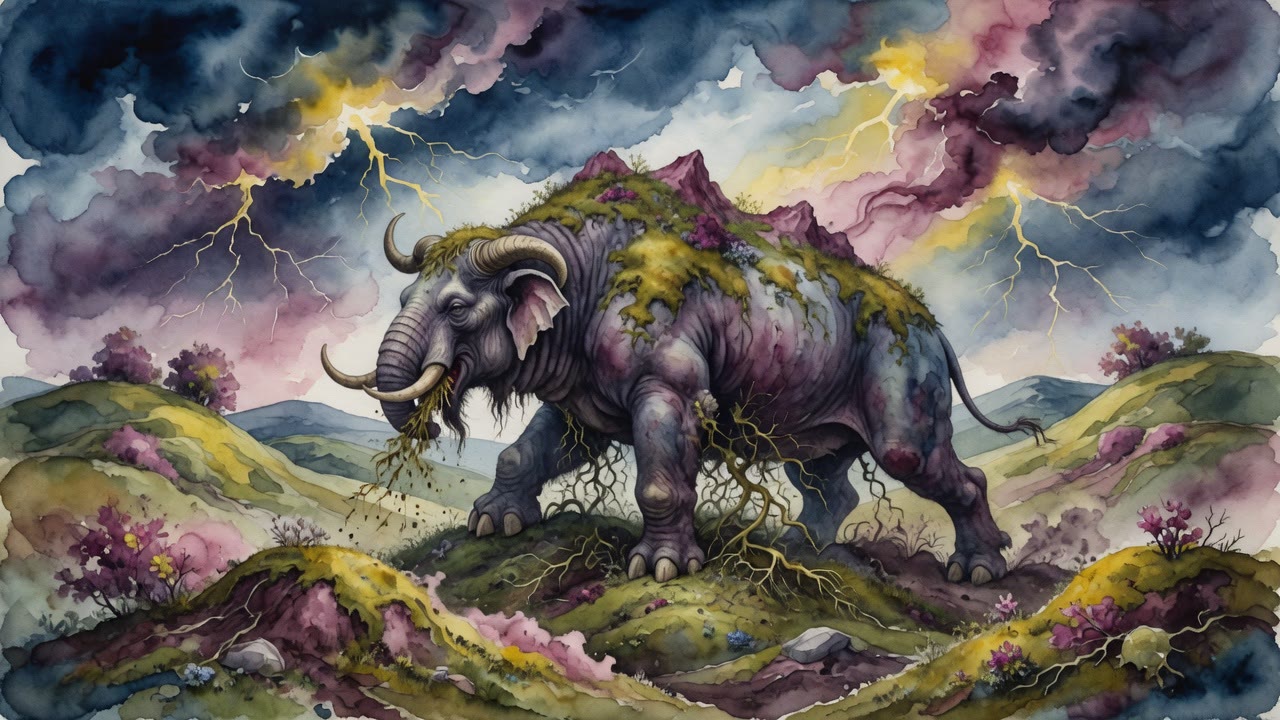
Before the land was dry and the sea had its borders, God made two monsters. Behemoth ruled the land. Leviathan ruled the sea. The Book of Job describes them both in language that refuses to be tame: Behemoth, whose strength is in his loins, whose power surges in the muscles of his belly, who drinks up a river without haste; and Leviathan, before whom the mighty are afraid, who makes the depths boil like a pot, who leaves behind him a shining wake (Job 40-41).
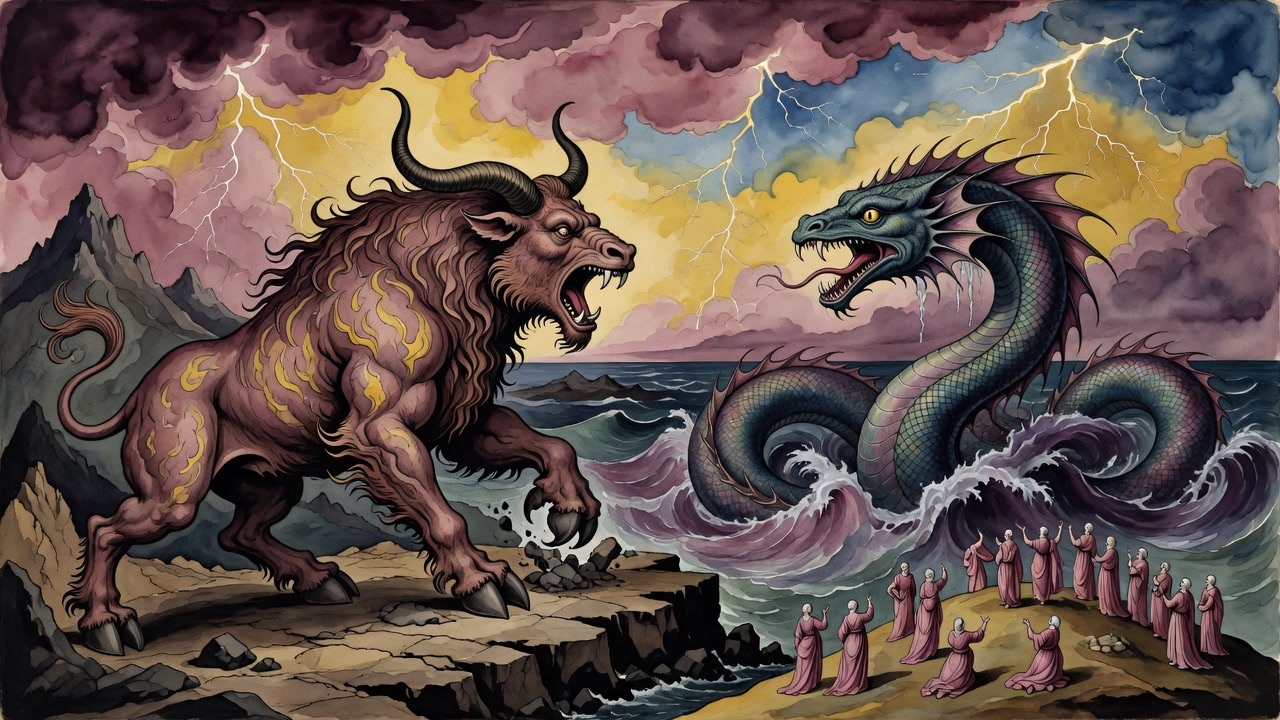
In the beginning, God had made a male and female of both. Then, looking at what he had made, he made a calculation. If these two creatures reproduced, the world could not contain them. The female Leviathan was slain, and her flesh preserved in salt for a future occasion. The male lived on alone, waiting in the depths of the sea. Behemoth, the male alone, grazed in the mountains of a thousand hills and drank from rivers that took their source from Jordan.

Why They Were Kept

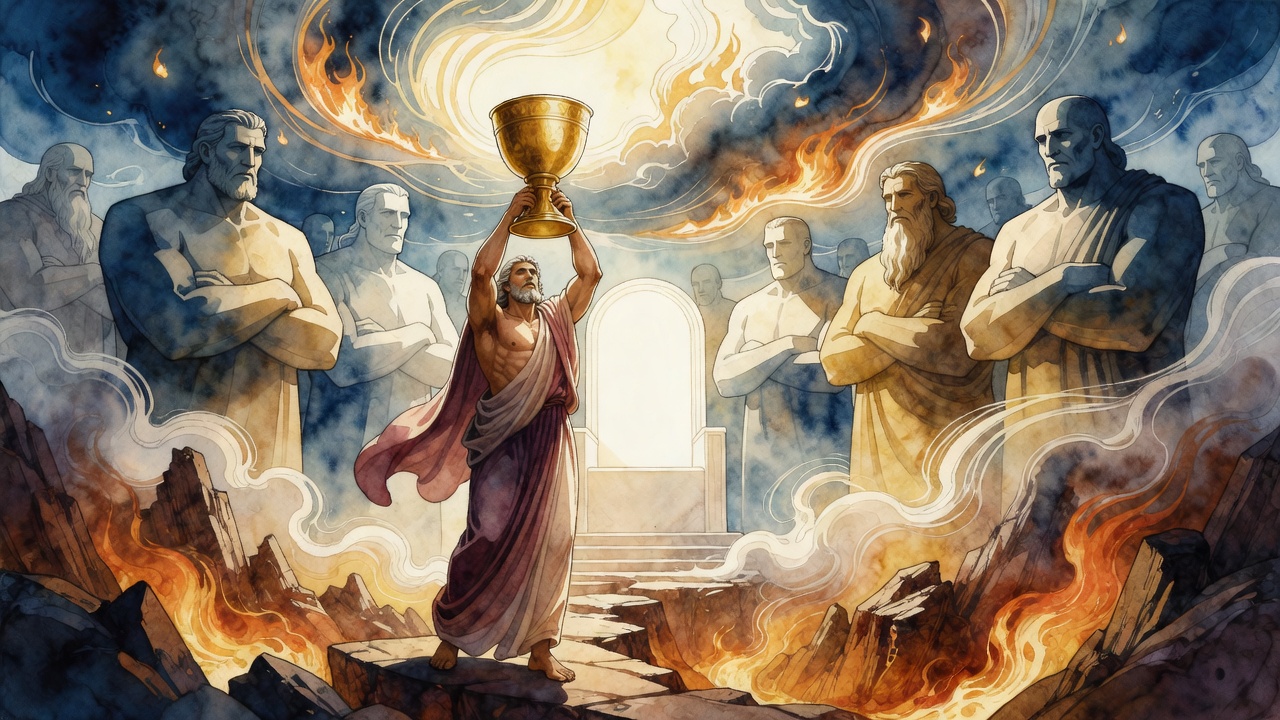
The Jewish Encyclopedia of 1906, summarizing the rabbinic tradition, recorded the tradition plainly: the flesh of both monsters was reserved for the righteous at the coming of the Messiah. Rabbi Yudan bar Rabbi Shimon, in the midrashic collection of homiletical teachings preserved in texts such as Vayikra Rabbah, developed this into a full scene. At the end of days, Behemoth and Leviathan would fight each other. Behemoth would gore Leviathan with his horns; Leviathan would tear at Behemoth with his fins. Each would deal the death blow to the other. Their flesh would become the central provision of the great banquet that awaited the righteous.

The image is vivid and deliberately excessive. The two most powerful creatures in the world, locked in mutual destruction, providing the feast table for the people who had survived history. There is a logic in it: the creatures too large for the world to contain during ordinary time would become, at the end of ordinary time, exactly the right size for one final meal.

The Problem of Kosher Law

The rabbis, being rabbis, did not let the feast proceed without raising a question. How would the meat of Leviathan be permissible? The laws of shechita, the ritual slaughter required for kosher meat, specified that an animal must be killed by cutting its throat with a sharp blade in a precise manner. Leviathan was not an animal that anyone could slaughter by conventional means. Its scales alone were described in Job as so tight that no air could pass between them, shields fused together, impenetrable.

The resolution some traditions offered was that the slaughter itself would be carried out by the Almighty, and that the action of the creatures destroying each other would count as sufficient. Others argued that at the end of days, with the full messianic redemption in effect, the categories that governed ordinary time would operate differently. The question itself was significant: the tradition took the feast seriously enough to apply halakhic logic to it, treating the final eschatological banquet as subject to the same rules as an ordinary Shabbat meal.

What the Monsters Represented Before They Were Food

Scholar Heinrich Gunkel, writing in the late 19th and early 20th centuries, proposed that Leviathan and Behemoth corresponded to primeval cosmic forces. He pointed to Babylonian parallels: Tiamat the sea dragon, Kingu her consort. The argument was that the Hebrew monsters carried the memory of a creation narrative in which the world was ordered by defeating chaos rather than simply by divine fiat.

The rabbis were not interested in Babylonian parallels. They were interested in the monsters as creatures God had made and controlled. Leviathan was not a force God defeated in the beginning; it was a creature God created, paired, separated, and preserved for a specific purpose. God had not conquered chaos. God had been planning the final feast since before the first Sabbath, and the two largest creatures in existence had been waiting their entire lives to be the main course.

The Tent Made of Leviathan's Skin

The tradition elaborated the feast in other directions as well. The skin of Leviathan would be used to make a great tent over the banquet, providing shade for the righteous gathering underneath. What could not shelter a normal-sized world would be exactly the right size to shade the righteous at the end of time. The scales, each one a shield, would become the walls and ceiling of the space where the people of Israel would finally eat their inheritance.

The verse the tradition anchored to was Psalm 74:14: You crushed the heads of Leviathan; You gave him as food to the people inhabiting the wilderness. The present giving had been a foreshadowing of the final giving. The monsters created before the world was fully ordered had a destination. Everything in creation, the tradition insisted, had been made for a purpose, and even the creatures too large to be in the world during normal time had a purpose that would be revealed at the end of it.


← All myths

From the tradition

Sources

2 sources

The texts this telling draws on, in full. Open a card to read inline, or expand it for a wider, quieter read.

Vayikra Rabbah 13:3Vayikra Rabbah

As Rav teaches us, the mitzvot (commandments) were given to Israel to refine us, to elevate us. Why? "He is a shield for all who rely on Him" (Proverbs 30:5). Because God protects those who rely on Him, He gave Israel mitzvot in order to refine them and make them fit for the World to Come. It’s about becoming our best selves, prepared for something truly amazing.

Speaking of the World to Come…get this.

Rabbi Yudan ben Rabbi Shimon paints a vivid picture. He says that the Behemoth and the Leviathan, these mythical beasts of immense power, will engage in an epic battle before the righteous in the future! Can you imagine? It's like the ultimate showdown! And anyone who didn't go to the really horrible ancient Roman animal fights in this world (and let's be honest, who wants to see that kind of cruelty?) will merit seeing this one in the World to Come.

So, how does this cosmic clash go down? Well, the Behemoth will supposedly stab the Leviathan with its horns, tearing it open. And the Leviathan? It'll smash the Behemoth with its fins and stab it to death. It's… intense.

But wait a minute. Here's where it gets even more interesting. The Sages ask a crucial question: is this even kosher? Is this a valid ritual slaughter, a proper shechita? I mean, we learn in the Mishna Ḥullin (1:2) that there are specific rules about slaughtering animals. You can’t use just anything. No serrated sickles, no saws, no animal teeth, no fingernails – because those methods strangle the animal, causing undue suffering.

So, how can this celestial battle result in kosher meat?

Rabbi Avin bar Kahana offers a stunning answer. The Holy One, blessed be He, says: "For [a new] Torah will emerge from Me" (Isaiah 51:4). A novel Torah ruling, a new law, will emerge from Me! The conventional laws regarding ritual slaughter will be temporarily suspended.! Even the rules we hold so dear can be superseded by God's will in the ultimate future.

Rabbi Berekhya, citing Rabbi Yitzḥak, takes it a step further. The Holy One, blessed be He, is destined to make a feast for His righteous servants in the future. And here's the kicker: anyone who didn't partake of unslaughtered carcasses – meaning animals that died in any way other than ritual slaughter, which are forbidden to us – in this world will be privileged to partake in it in the World to Come!

It all comes back to our choices here and now.

That’s what's hinted at in (Leviticus 7:24): "And the fat of an unslaughtered carcass and the fat of a mauled animal may be used for all labor; but you shall not eat it [ve’akhol lo tokheluhu]." The doubling of the word "eat" – lo tokheluhu – is significant. As the commentary Matnot Kehuna explains, in order to eat of the feast in the World to Come, one must refrain from eating forbidden foods in this world. That's why Moses cautions Israel: "These are the living beings that you may eat" (Leviticus 11:2). It’s a preparation, a training, for the ultimate reward.

So, what does it all mean? It means that the mitzvot, the challenges, the restrictions, they aren't just arbitrary rules. They're shaping us. They're preparing us for a future beyond our wildest imaginations, a future where even the laws of nature, the laws of kashrut, can be transformed. It's a future worth striving for, a future that begins with the choices we make today. What will you choose?

Full source
Jewish Encyclopedia, "Leviathan and Behemoth" (1906)Jewish Encyclopedia (1901-1906)

"Behemoth" denotes the hippopotamus, though the Biblical description contains mythical elements suggesting these were not ordinary animals. The creatures appear in Job xl, where behemoth is described as "the first of the ways of God" and leviathan as the unconquerable king of water creatures, while behemoth rules the land animals.

Scholar Gunkel proposes these monsters corresponded to figures in Babylonian mythology. Tiamat (the abyss) and Kingu (a serpent), representing primeval cosmic forces rather than realistic beasts.

In rabbinic tradition, God originally created both male and female leviathans but slew the female to prevent world destruction. Her flesh was reserved for the righteous at the Messiah's coming.

The Talmud describes the leviathan's immense size through a parable: a fish entering "the jaws of the leviathan" measures three hundred miles in length. When hungry, the creature releases heat making "all the waters of the deep boil." Its Mediterranean habitat receives Jordan's waters directly into its mouth.

The leviathan's body, particularly its eyes, supposedly possessed great illuminating power. However, despite supernatural strength, it feared a tiny worm called "kilbit" that kills large fish.

Rabbinic literature emphasizes the leviathan's role in messianic times. A great banquet will serve the creature's flesh to the righteous at resurrection. Those abstaining from pagan sports will enjoy hunting both leviathan and behemoth.

Gabriel would attempt killing the monster, though God's divine intervention would be necessary. One tradition describes leviathan battling "the ox of the mountain," resulting in mutual destruction.

The leviathan's hide would provide practical items: tents for the pious, girdles, chains, and necklaces. Remaining hide would illuminate Jerusalem's walls with brilliant light.

Commentators interpret these narratives allegorically. Maimonides understood the banquet as representing "spiritual enjoyment of the intellect." He derived the name from a root meaning "to join" or "unite," designating an imaginary composite monster combining various animal features.

Cabalistic interpreters identified the "piercing leviathan" and "crooked leviathan" with Satan-Samael (the angel of death) and Lilith. Others, including Kimchi and Abravanel, understood these expressions as referencing destruction of forces hostile to Jews.

The Book of Enoch describes leviathan and behemoth as monsters produced on the day of judgment, the female leviathan dwelling in ocean depths, the male behemoth occupying a wilderness east of paradise where the righteous dwell.

According to II Esdras, both monsters were created on the fifth day and separated because waters couldn't contain them together. Behemoth received the dried land with thousand mountains providing sustenance; leviathan received the water-filled seventh part of earth.

The Syriac Apocalypse of Baruch predicts these creatures emerging from seclusion to serve as food for survivors during Messianic times.

A third creature, the "ziz" (a gigantic bird from (Psalm 1:1)1), supplemented the messianic banquet alongside behemoth and leviathan. This tripartite tradition reflects Persian Zoroastrian cosmology, which featured primeval representatives of animal classes. Zoroastrian parallels include the Kar fish (leviathan), three-legged ass Khara (behemoth predecessor), ox Hadhayosh, and bird Chamrosh.

Full source