7 min read

Ben Sira Answered the King's Riddles of Beast and Body

A captive child of seven faces Nebuchadnezzar, who fires riddle after riddle about beast and body, hoping to break him before the lamps are lit.

Curated by Arthur · Told by Maggid ·
Table of Contents
  1. The First Riddle Reached Back to the Garden
  2. The Cat That Forgot Its Own Master
  3. The Beasts That Are Still Waiting on a Promise
  4. The Single Hair and the Single Raindrop

They brought the boy to the throne room before the lamps were lit, while the marble still held the cold of night. Nebuchadnezzar had heard the rumors. A child of seven, born to no woman in the ordinary way, who could read the language of beasts and the engineering of the body. The king did not want a marvel. He wanted to crack one. He leaned forward in his seat and let the silence stretch until it had teeth.
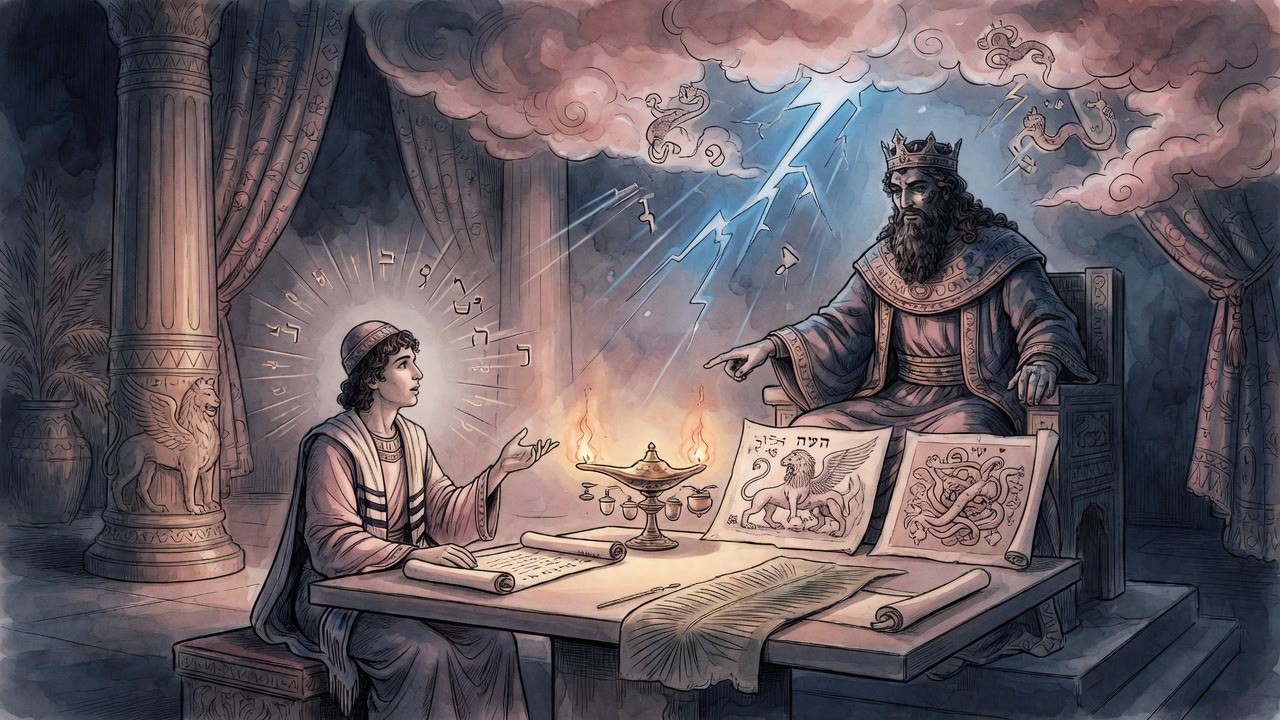
"They tell me you answer everything," the king said. "I will ask you the things no one can answer. When you stammer, I will know you are a fraud, and frauds in this court do not leave it."

The boy, Ben Sira, folded his small hands and waited. He did not look afraid. That alone unsettled the men along the walls.

The First Riddle Reached Back to the Garden

"Why," the king began, "do the dog and the cat hate each other? Put one in a room and watch. They cannot share a roof."

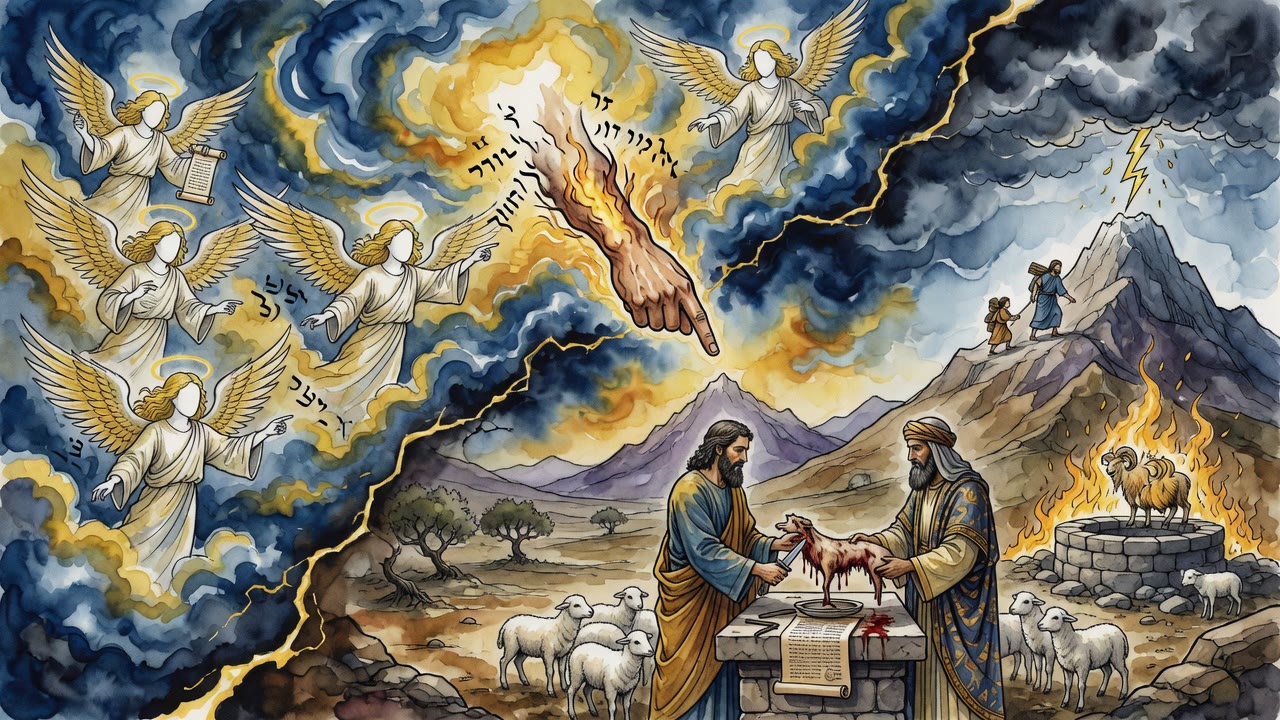
Ben Sira answered as though he had been there. Long ago, he said, the dog and the cat hunted together, partners, until the game thinned and hunger came between them. The dog proposed they part. One would go indoors to live off a master's table, the other would keep the wild. They swore an oath on it, a single hard condition. They would never, either of them, serve the same man.

The cat went to Adam, found mice in the corners, and grew fat and content. Adam was delighted. "God has sent me a great gift," he said. The dog's road ran the other way. He threw in with the wolf, who nearly got him killed sending him against intruders. The monkey drove him off. He guarded a flock of sheep until his own barking led the wolves straight to the fold, and the flock was torn apart in the dark. Homeless, starving, the dog wandered until he came to Adam's door.

And Adam took him in. That very midnight the dog heard footsteps in the black, woke the man, and the two of them drove the wild things off with a spear. "Come live with me," Adam said. "Eat my food, drink my water." It was the oldest partnership in the world, sealed in one night of shared danger.

But the cat saw the dog cross the threshold and went rigid with rage. "You broke our oath." The dog tried for peace. "I will not touch your food. I will not come near your place." The cat would not hear it. The dog fled at last to the house of Adam's son Seth, and kept trying to mend it, year after year, and was never forgiven. "The practice of the ancestors is the practice of the descendants," Ben Sira finished, "whether among animals or among people." A broken oath, he said, echoes down every generation that comes after.

The Cat That Forgot Its Own Master

The king's mouth tightened. "Then tell me this. A dog knows its owner across a crowd. A cat looks at the hand that feeds it as though it has never seen the man before. Why?"

Ben Sira reached for a teaching the sages kept. Whoever eats bread a mouse has nibbled, he said, loses his memory. The forgetfulness rides in the mouse. Now follow it. If a crumb a mouse merely touched can rob a man of his learning, what of the cat, who swallows the whole mouse, fur and bone and all? The cat devours the very wellspring of forgetting. It eats more of it than any creature alive. "No wonder," the boy said, "it cannot hold the memory of the one who feeds it." He had taken the king's own contempt for the animal and made an iron argument of it, lesser to greater, the way the sages reason, and the small absurdity of an ungrateful cat now had a chain of cause behind it reaching back to the first kitchen.

The Beasts That Are Still Waiting on a Promise

Nebuchadnezzar tried to make him flinch with something crude. "The donkey. It sniffs another's dung, it fouls another's water. Explain that, if your God is so orderly."

At creation, Ben Sira said, the donkey looked around and saw the unfairness of it. Every creature had some dignity, some gift. The donkey had only the load on its back, generation after generation, hauling and hauling with nothing to show. So the donkey went to the horse and the mule, the other beasts of burden. "We toil endlessly," it said, "and have no benefit at all." Together the three of them prayed to God for a reward.

The answer came strange. "When the time comes that your urine flows like rivers and your dung smells like perfume," God told them, "then I will give you your reward." So the donkeys keep checking. They sniff, they inspect, they wait, generation after generation, in case this is the day the promise has finally come due. It has not. Not yet. But they go on performing the same small ritual of hope every single morning, beasts holding a divine appointment that has never once arrived.

The Single Hair and the Single Raindrop

The king changed his ground, from the field to the body itself. "Everywhere on a man there are two hairs to a follicle. On the head, one. Tell me why your Maker built it so."

Precise engineering, the boy said. Pack two hairs into every opening on the scalp and the weight and density of it would press down and darken a man's sight. One hair to a follicle was the exact measure that spared the eyes. Then Ben Sira lifted the answer off the body and threw it across the whole sky. The rain works the same way. Each drop falls from its own opening above. Let two drops fall from every opening instead of one and the downpour would drown the world past even the Flood that drowned it once. The single hair and the single drop were the same mercy in two scales, a restraint built into creation to hold back disaster. Wherever God set a danger, the boy said, God set its limit in the same breath.

Nebuchadnezzar sat with that. The throne room had gone quiet in a different way now, no longer the silence of a trap waiting to spring. The king who had promised the boy would not leave alive looked at him a long moment. "How fortunate you are, my son," he said at last, "that the Holy Blessed One has revealed so much to you." The interrogation had become a contest, and the king had already lost it. He had only one weapon left, and it was praise.


← All myths
From the tradition

Sources

4 sources

The texts this telling draws on, in full. Open a card to read inline, or expand it for a wider, quieter read.

Alphabet of Ben Sira 39Alphabet of Ben Sira

The Alphabet of Ben Sira, a medieval text composed between 700 and 1000 CE, tells the longest and wildest origin story for why dogs and cats can't stand each other. It goes all the way back to Adam.

Originally, the cat and the dog were hunting partners. But food grew scarce. The dog proposed a split: the cat would go live with Adam and eat well indoors, while the dog would fend for himself in the wild. One condition - they swore an oath never to serve the same master. The cat agreed, moved into Adam's house, found mice to eat, and thrived. Adam was delighted: "God has sent me a great gift!"

The dog's luck was the opposite. He tried staying with the wolf, who sent him to fight off intruders and nearly got him killed. The monkey chased him away. He tried the sheep, but his barking led wolves straight to the flock - and they devoured the sheep. Homeless and desperate, the dog wandered from place to place until he finally came to Adam's door.

Adam took him in immediately. At midnight, the dog heard footsteps and alerted Adam, who grabbed a spear. Together, man and dog chased off the wild animals. "Come live with me," Adam said. "Eat my food and drink my water." It was the beginning of humanity's oldest partnership.

But when the cat saw the dog walk in, he was furious. "You broke our oath!" The dog tried to make peace: "I won't take your food, I won't come into your space." The cat refused to listen. The dog eventually fled to the house of Adam's son Seth. He kept trying to reconcile, but the cat never forgave him.

"The practice of the ancestors is the practice of the descendants," the text concludes, "whether among animals or people." A broken oath echoes forever.

Full source
Alphabet of Ben Sira 40Alphabet of Ben Sira

Any cat owner knows the feeling: your cat looks right through you like you're a stranger who happens to operate the food dish. According to the Alphabet of Ben Sira, composed between 700 and 1000 CE, there's an ancient reason for this - and it has to do with what cats eat.

Nebuchadnezzar asked Ben Sira a simple question: why can a dog recognize its owner, but a cat can't? Ben Sira's answer draws on a Talmudic teaching from Tractate Horayot (13a): anyone who eats food that a mouse has nibbled on will suffer memory loss. It was a well-known folk belief in the rabbinic world - mice carried forgetfulness in their teeth, essentially.

Ben Sira takes this principle and applies it with devastating logic. If merely eating bread that a mouse touched causes you to forget your studies, then a cat - who devours the entire mouse, body and all - should lose far more of its memory. The cat eats the concentrated source of forgetfulness itself. No wonder it can't remember who feeds it.

It's a perfect example of the rabbinic reasoning method called kal va-chomer - an argument from lesser to greater. If a small exposure causes a small effect, then a massive exposure must cause a massive effect. The humor comes from applying this perfectly serious logical tool to explain why your cat ignores you. The Alphabet of Ben Sira loves doing exactly this: using the forms of rabbinic wisdom to explain the absurdities of everyday life.

Full source
Alphabet of Ben Sira 38Alphabet of Ben Sira

The Alphabet of Ben Sira, composed between 700 and 1000 CE, doesn't shy away from the crudest questions about the natural world. When Nebuchadnezzar asked why donkeys urinate on one another's urine and smell each other's dung, Ben Sira had a theological answer ready.

Back at creation, the donkey looked around and noticed something unfair. Every creature seemed to have some special benefit, some purpose that brought it dignity. But the donkey? The donkey just worked. Generation after generation, donkeys hauled burdens, carried loads, and had nothing to show for it. So the donkey went to the horse and the mule and said, "We toil endlessly and have no benefit at all."

Together, the three beasts of burden prayed to God for some kind of reward. God's answer was... unusual. "When the time comes that your urine flows like rivers and your excrement smells like perfume," God told them, "then I will give you your reward."

So the donkeys keep checking. They sniff and inspect, generation after generation, hoping that maybe this time the promise has been fulfilled. It hasn't. Not yet. But they keep waiting. It's a deeply funny little story, but there's something oddly poignant about it too - the idea of creatures patiently waiting for a divine promise that hasn't arrived yet, performing the same ritual of hope every single day.

Full source
Alphabet of Ben Sira 33Alphabet of Ben Sira

Nebuchadnezzar noticed something odd about the human body and asked Ben Sira to explain it. Everywhere on the body, each hair follicle holds two hairs. But on the head, each follicle holds only one. Why?

In Alphabet of Ben Sira, a medieval work composed between 700 and 1000 CE, the answer comes down to divine engineering. If God had placed two hairs in every follicle on the head, the weight and density would have darkened a person's vision. One hair per follicle was the precise calibration needed to protect the eyes.

Then Ben Sira draws a stunning parallel to the natural world. Raindrops, he says, work the same way. Each raindrop falls from its own "follicle" in the sky. If two drops fell from every opening instead of one, the resulting deluge would surpass even the Great Flood. The world itself would be destroyed.

The underlying principle here is one of the Alphabet of Ben Sira's recurring themes: wherever God created a problem, God also created its remedy. This mirrors a teaching found in the Talmud (Bava Batra 16a), which the text references directly. Every affliction has a built-in cure. Every danger has a built-in limit. The restraint that holds back disaster is itself a form of mercy - whether it's a single hair on the scalp or a single raindrop from the heavens. Nebuchadnezzar was so impressed by this answer that he told Ben Sira, "How fortunate you are, my son, that the Holy Blessed One has revealed so much to you."

Full source