Daniel Killed a Dragon With Straw and Nails, Then Refused a Kingdom
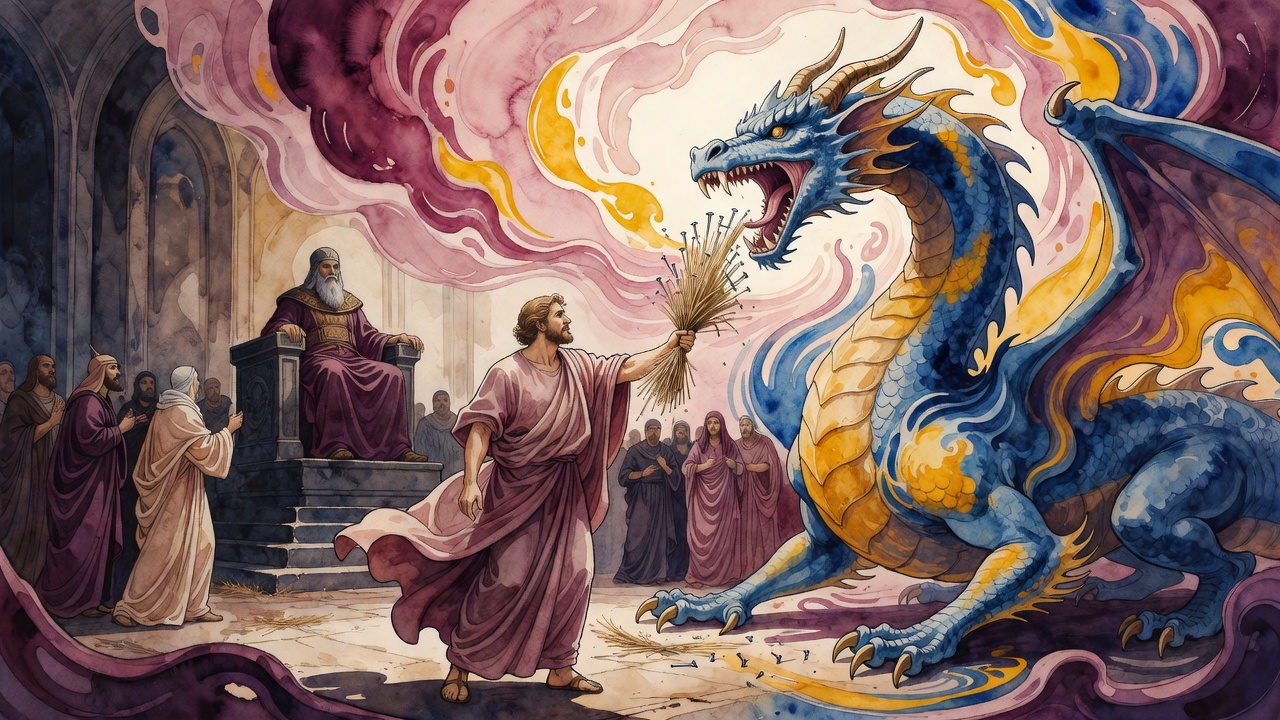
Nebuchadnezzar presented Daniel with a living dragon the court worshipped. Daniel asked to approach it without a sword and fed it straw packed with nails.
 Click for full size
The Creature in the Court
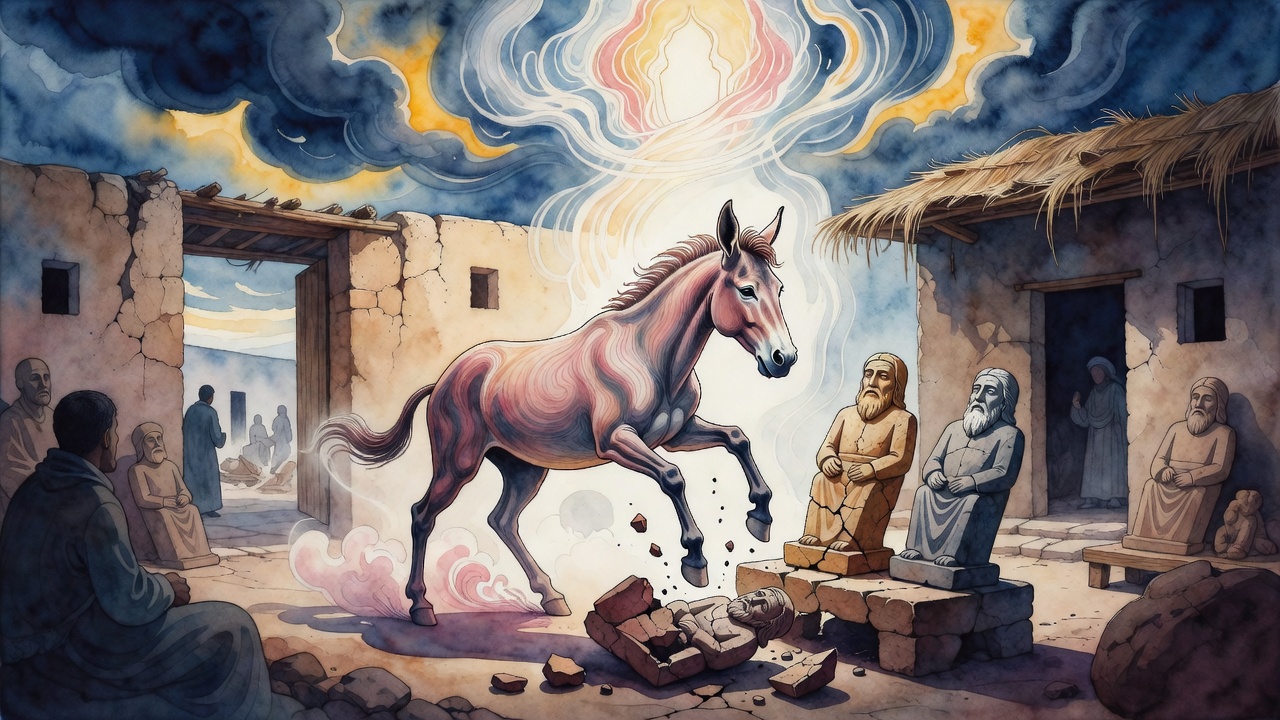
Nebuchadnezzar presented it the way a chess player presents an unavoidable sacrifice. The creature was real: a great beast, fire-breathing, capable of devouring people who displeased it, maintained in the Babylonian court as an object of worship. The logic of its divinity was not complicated. It was alive. It was dangerous. It would eat you if you provoked it. These seemed like sufficient grounds for reverence, and they were the grounds on which the court had been operating for years.
The king brought Daniel before it. How, he asked, do you argue that your invisible God is greater than this? The creature was right there. It breathed fire. It had eaten people who doubted it. An invisible God is a matter of faith. A fire-breathing dragon is a matter of evidence.
Daniel asked for permission to approach the dragon without a sword.
Straw and Nails
The king, curious enough about what Daniel intended to give permission, agreed. Daniel gathered his materials. He mixed straw and nails together, compressed the mixture into a compact mass, and presented it to the dragon as food.
The creature swallowed it.
The straw and nails worked on the dragon from the inside. The tradition records that the creature burst, that the mixture expanded or tore or worked through the creature's internal structure in a way that ended it. Daniel had killed a fire-breathing dragon with what amounted to a stuffed pita, and he had done it without a sword, without a blade, without anything that looked like a weapon, in front of the entire court, and the court was left standing around a dead dragon that had been an object of their devotion that morning.
The Inheritance Offer
After this, Nebuchadnezzar offered Daniel an inheritance. The tradition does not always specify the exact terms, but the shape of the offer was a share in the kingdom, an acknowledgment that the man who could kill the court's god with cooking ingredients had demonstrated something that deserved reward and alliance.
Daniel refused.
He refused on principle. Not because the offer was inadequate, not because the terms were unclear, not because he distrusted Nebuchadnezzar's sincerity in the moment of making it. He refused because accepting a share in the kingdom of Babylon would have meant situating himself within that kingdom as a beneficiary of it, and he had spent his entire time in Babylon operating from a position that was loyal to the empire's legitimate demands while refusing to become the empire's own creation. Taking an inheritance from Nebuchadnezzar's hand would have changed that. So he declined.
Before the Lions
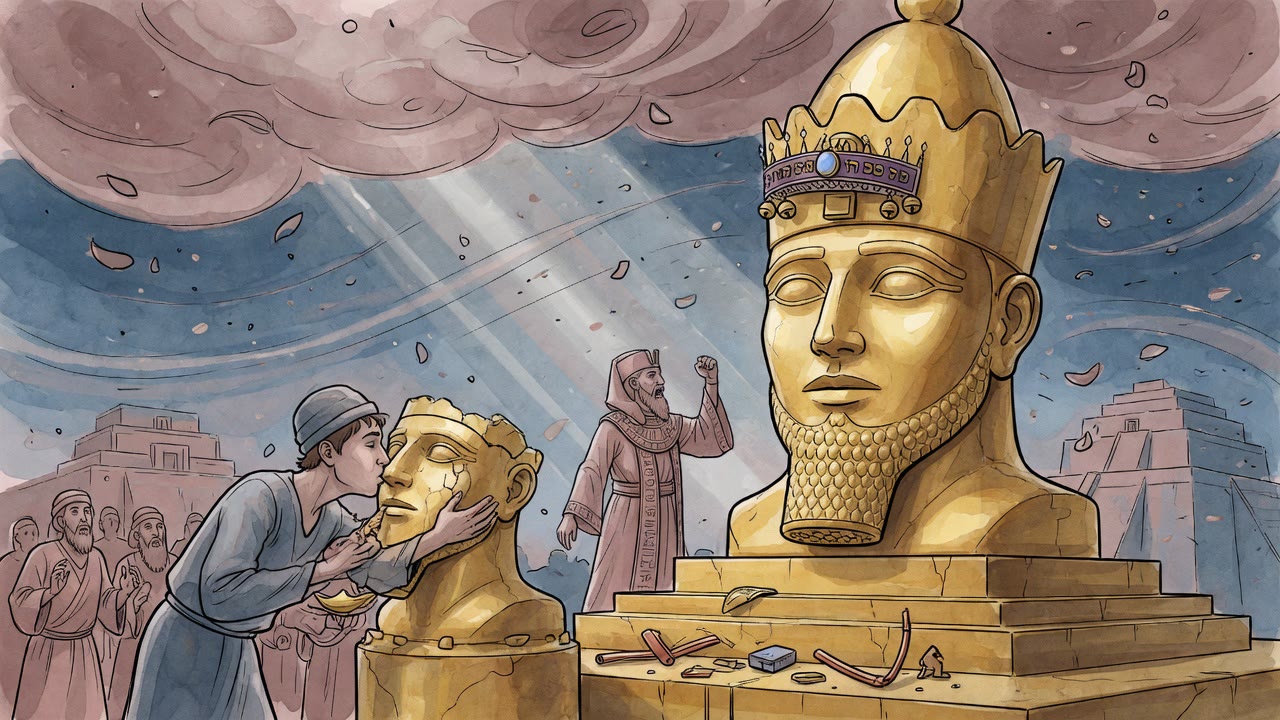
The standard account of Daniel's life focuses on the lion's den, the night in the pit, the morning when King Darius ran to the opening and called out the prophet's name. The dragon comes before this. The idol's speaking diadem comes before this. The furnace in Dura, which Daniel missed because Nebuchadnezzar had sent him away beforehand, comes before this. The life the tradition records is a series of confrontations between Daniel and the various forms that Babylonian and Persian power used to demand spiritual capitulation, and in each confrontation Daniel found a way to address the actual mechanism of the demand rather than the surface of it.
The dragon was a demand framed as a question: how do you argue your God is greater than this? Daniel answered not by arguing but by killing it, and then refused the reward for killing it, because accepting the reward would have been a form of the same capitulation the dragon had represented. You cannot refuse worship of the dragon and then take pay from the man who owned the dragon.
← All myths