Hanina's Frog Taught Him Seventy Languages
A poor man obeyed his dying father and bought a sealed casket, then fed a frog that grew into a teacher of Torah and all seventy human tongues.
Table of Contents
 Click for full size
Buy the First Thing Offered
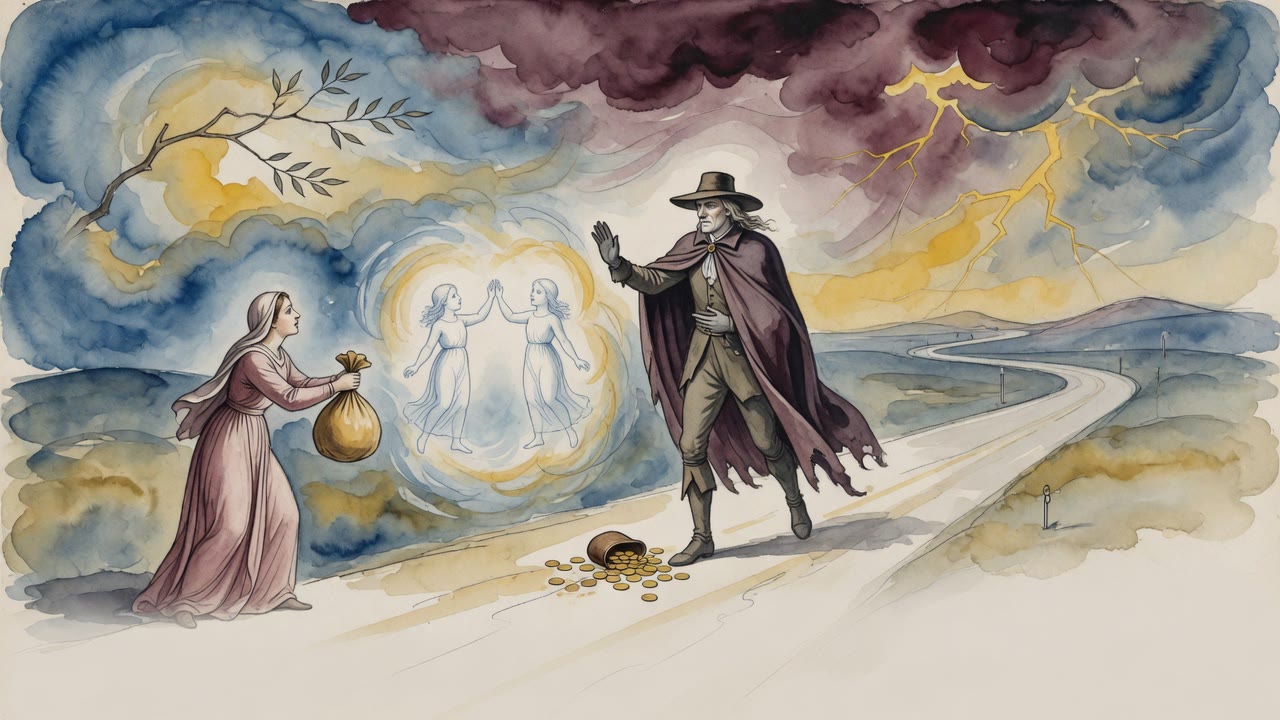
Hanina's father had almost nothing left to leave him, so what he left was an instruction. "Go down to the market. Whatever is put in front of you first, buy it, and do not ask the price twice."
The old man died, and the money sat untouched in the house until the day before Passover, because the sentence was going to cost Hanina every coin of it the moment he obeyed, and there is no third option between obeying a dead father and not obeying him. He went down to the market with nearly all of it in his hands.
The Casket Inside the Casket
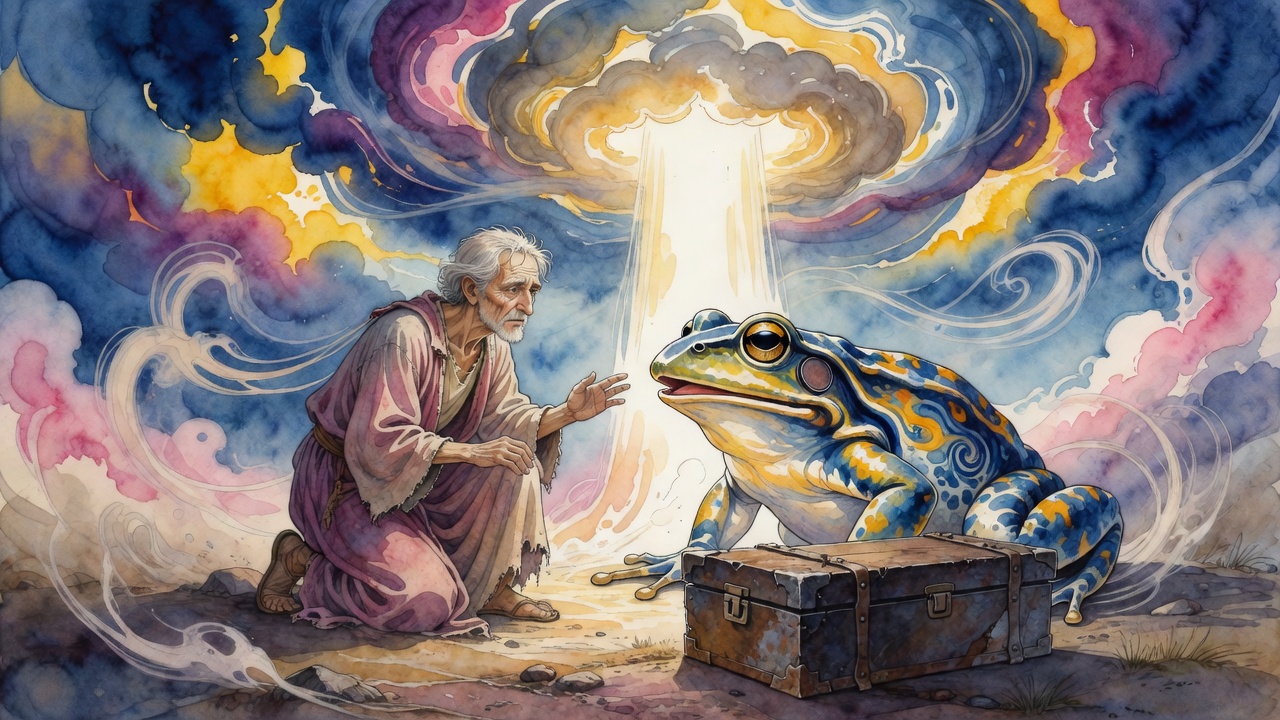
The first man to reach him was carrying a sealed silver casket. He named a price that took almost everything Hanina had brought, and Hanina paid it without asking what was inside, since asking would have been the beginning of deciding, and he had not been left the right to decide.
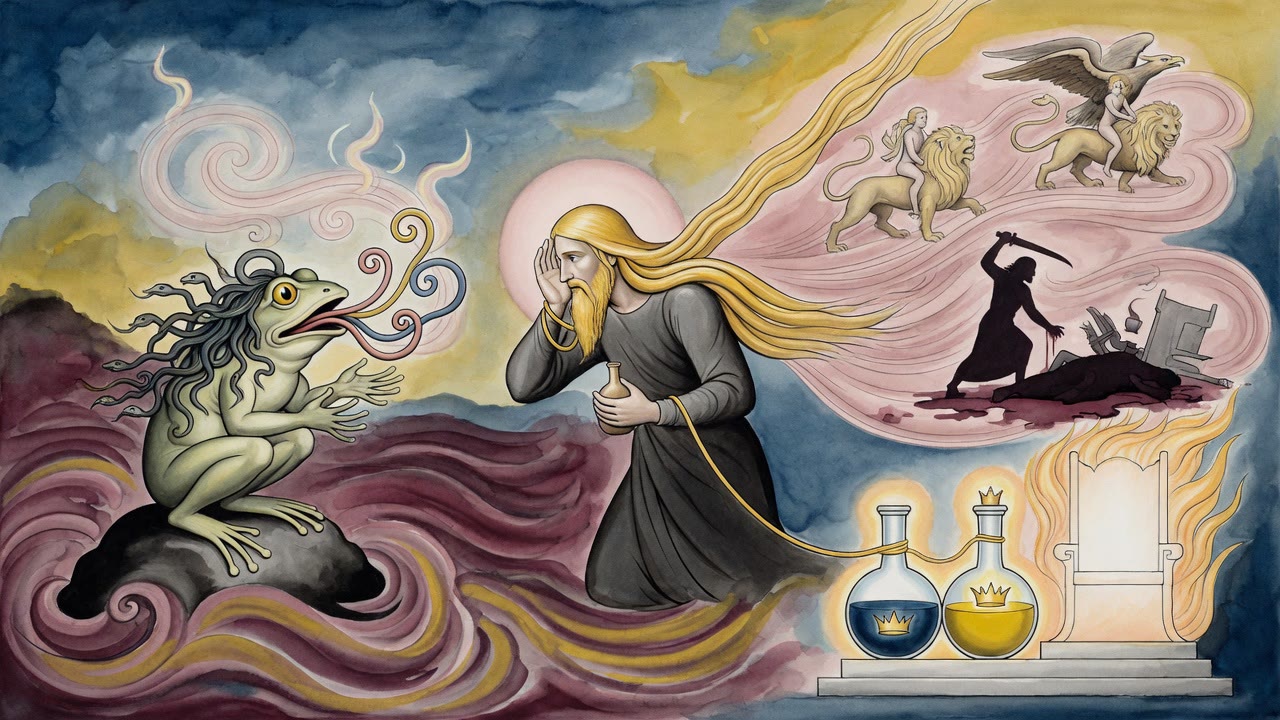
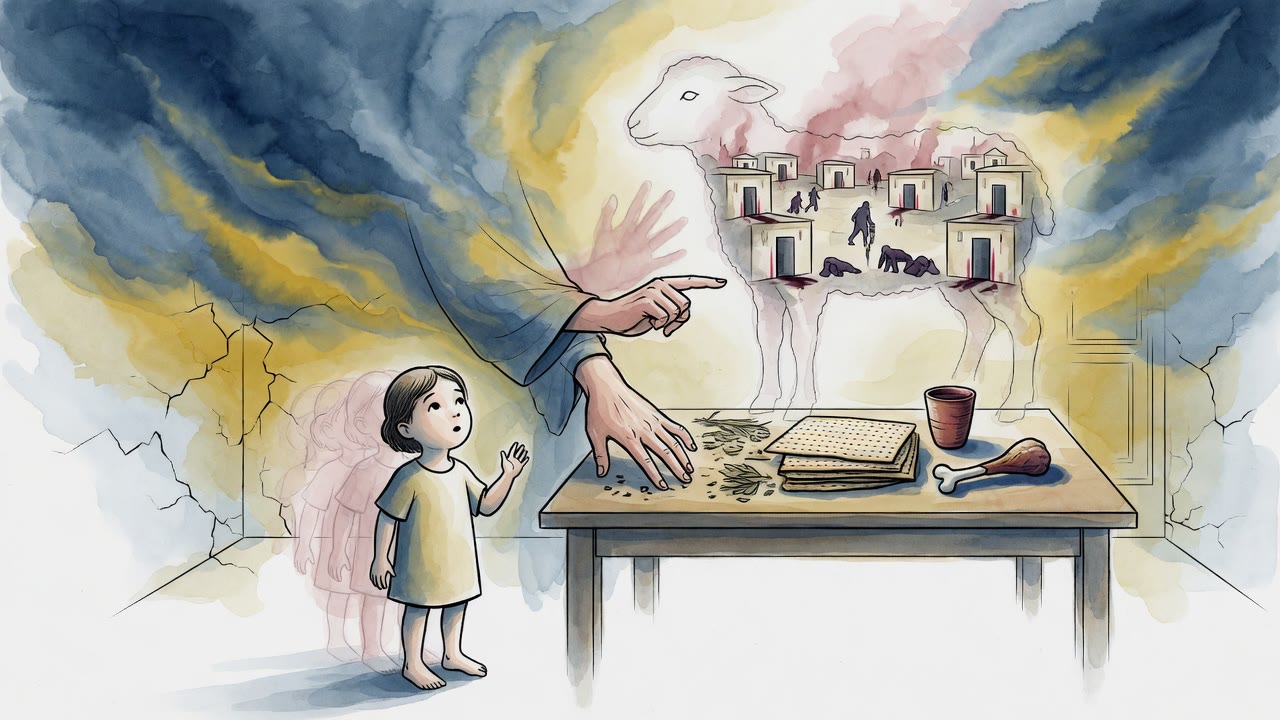
He opened it at the festival meal with his wife watching, on the eve of the festival that remembers the night the river of Egypt sent frogs up into the ovens. Inside the silver casket was a second casket. Inside that one was a third. Inside the third, a frog.
The House That Went Into a Frog
His wife fed it off the table, and it ate what she gave it and turned its head for more. By the end of the festival week it no longer fit in the room. It ate through the stores, and then it ate through whatever they sold in order to replace the stores, and by the time the year came around again the furniture was gone, the grain was gone, and most of what makes a household a household had gone with it. Honoring a dying father had turned into a shed at the back of the property with a thing in it that got larger every week and gave nothing back at all.
Ask
Then the frog spoke. They had kept it and fed it and had never once put it out, it said, and so it meant to repay them. "Ask."
Hanina had an emptied house behind him and his wife standing in the doorway of it, and the obvious sentence was already sitting in his mouth, because he knew to the measure what a year of grain cost and he could have named the figure without thinking. He stood there long enough for his wife to hear him not say it. Then he asked for the Torah.
The frog wrote. It put the whole Torah onto strips of paper, and then it put the seventy languages of the nations onto more of them, and it told him to swallow the lot. He swallowed them. The knowledge went down into him the way food goes down, and it stayed.
What Came With the Seventy
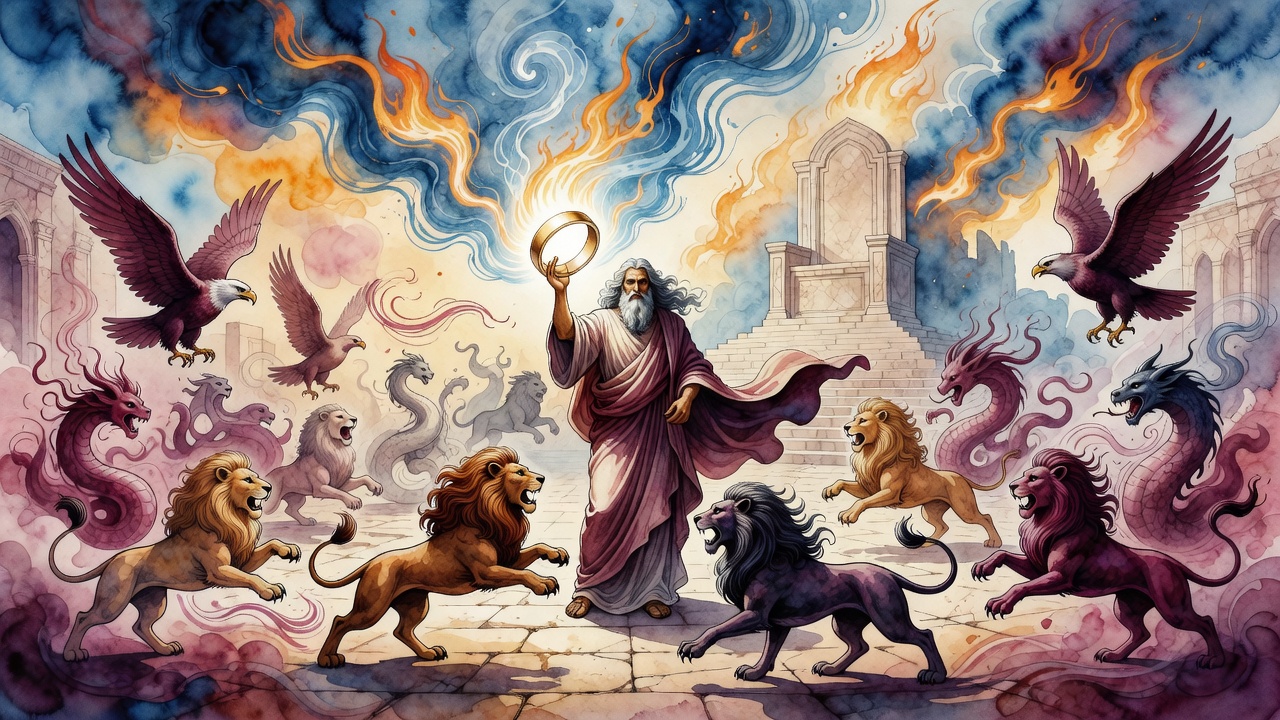
Those seventy tongues had a birthday, and it was not a gentle one. Over the tower at Babel the Word of the Lord came down with seventy angels, one for each nation that was about to exist, and every builder on the scaffolding woke up inside a different language with a different script in his head. A man asked the man beside him for a brick. The man beside him heard noise. Scripture says only that they stopped building, but the Targum says why they stopped: one of them killed the other, and then it spread along the scaffolding, and the tower was abandoned because the builders had started removing one another. The bricks had never been the difficult part of it.
All seventy of those languages were in Hanina now, along with the Torah, in one stomach. He could hear both sides of every question a neighbor had once failed to answer.
Into the Stream
The creature was not finished. It called into the forest and the birds came, and the insects and the beasts came, and roots and herbs came up whose uses he suddenly knew, and stones came out of the ground worth more than everything it had eaten. So Hanina got his year back several times over, along with healing in his hands and a name across the district.
Then it told him what it was. A hidden child of Adam, able to take whatever shape it chose, and it had chosen this one and sat in a silver box to find out whether obedience could survive disappointment.
It went down the bank and into the water. Along that same water live frogs of a kind that will lie down in the mouth of a hungry creature and let themselves be swallowed, which is all they have and they give it. The stream closed over the back of it. Hanina stood there with the Torah and seventy tongues inside him and nothing at all to say in any of them.
← All myths