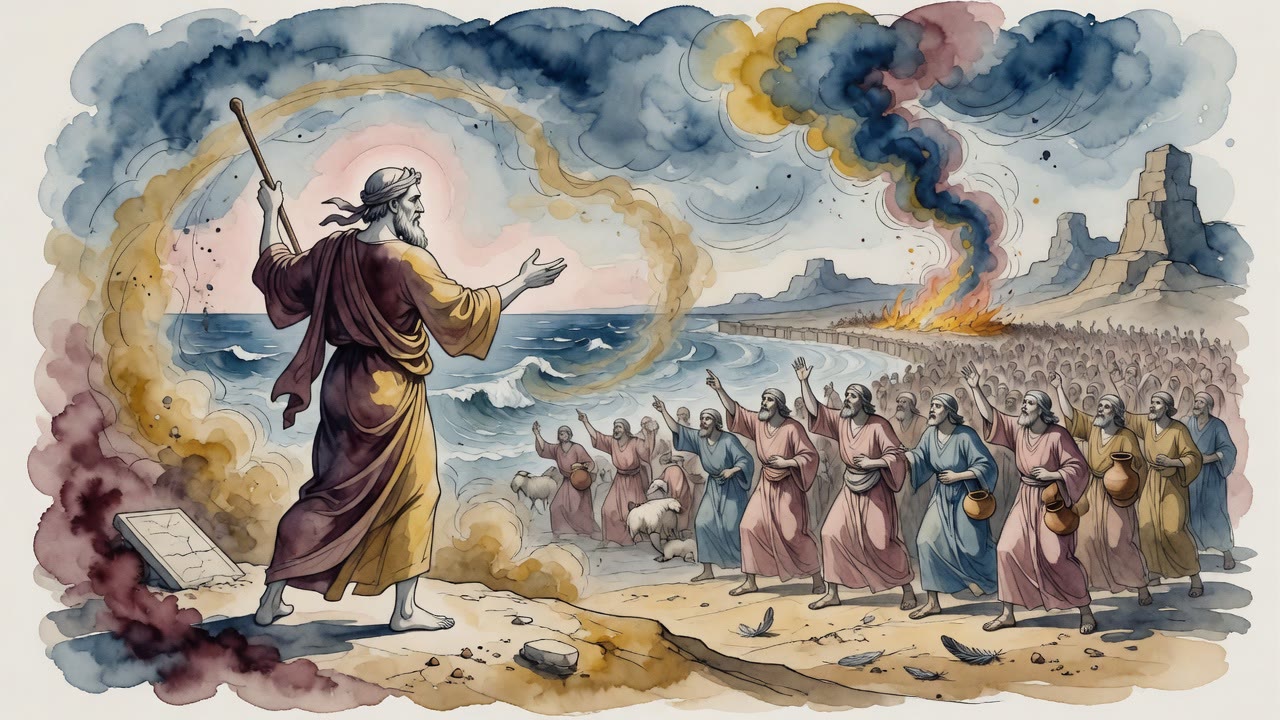
The Sword Went Blunt on Moses's Neck and an Angel Wore His Face
Datan said one sentence in the street to win a quarrel. By morning Pharaoh's executioner had the sword on Moses's neck.
Table of Contents
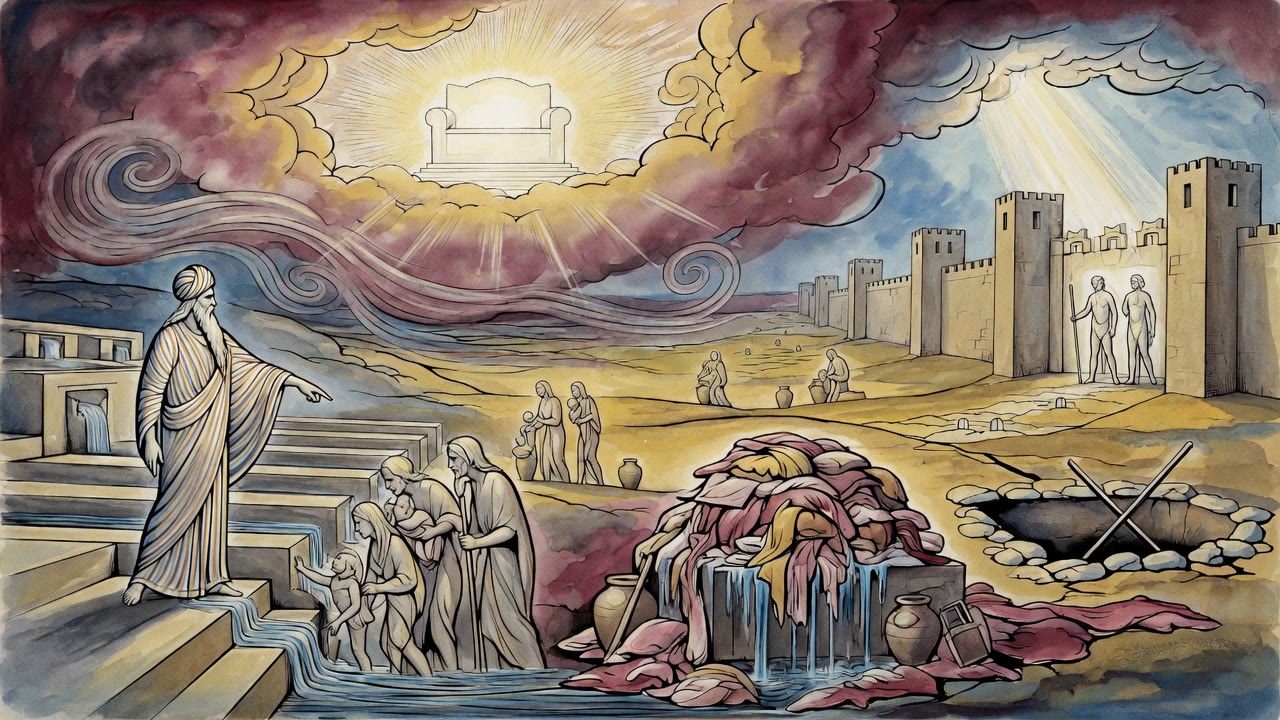
The taskmaster had a Hebrew on the ground and was still swinging. Moses looked one way, then the other, and saw nobody. He struck the Egyptian down, dug a hollow in the sand with his hands, and rolled the body into it (Exodus 2:12).
 Click for full size
Sand was the right grave. Sand can be carried from one end of Egypt to the other and it never says a word about where it has been.
The Sand Kept No Sound
The sand was not the only thing watching. Two Hebrews had seen the arm come down. Their names were Datan and Abiram.
The next morning those two were at each other in the open, and Moses walked into the middle of it. "Why are you striking your own neighbor?" he said.
Datan did not back away. "Who made you a man, a prince and a judge over us? Do you mean to kill me the way you killed the Egyptian?" Moses was twenty that year, twenty years of it spent inside Pharaoh's palace. "You are Yocheved's son," Datan said. "Be satisfied that they call you the son of Batya."
So the thing was known. A sentence spoken to win a quarrel in the street walked to the court on its own legs.
Pharaoh had been hearing reports about the Hebrew in his household for years and had swallowed every one of them. He did not swallow this one. "I have heard many things and kept quiet," he said. "Now that he has come to bloodshed, take him."
The Sword Went Blunt on His Throat
They read the sentence out loud where the court could hear it, then walked him to the block. The executioner set the edge against the side of his neck and swung.
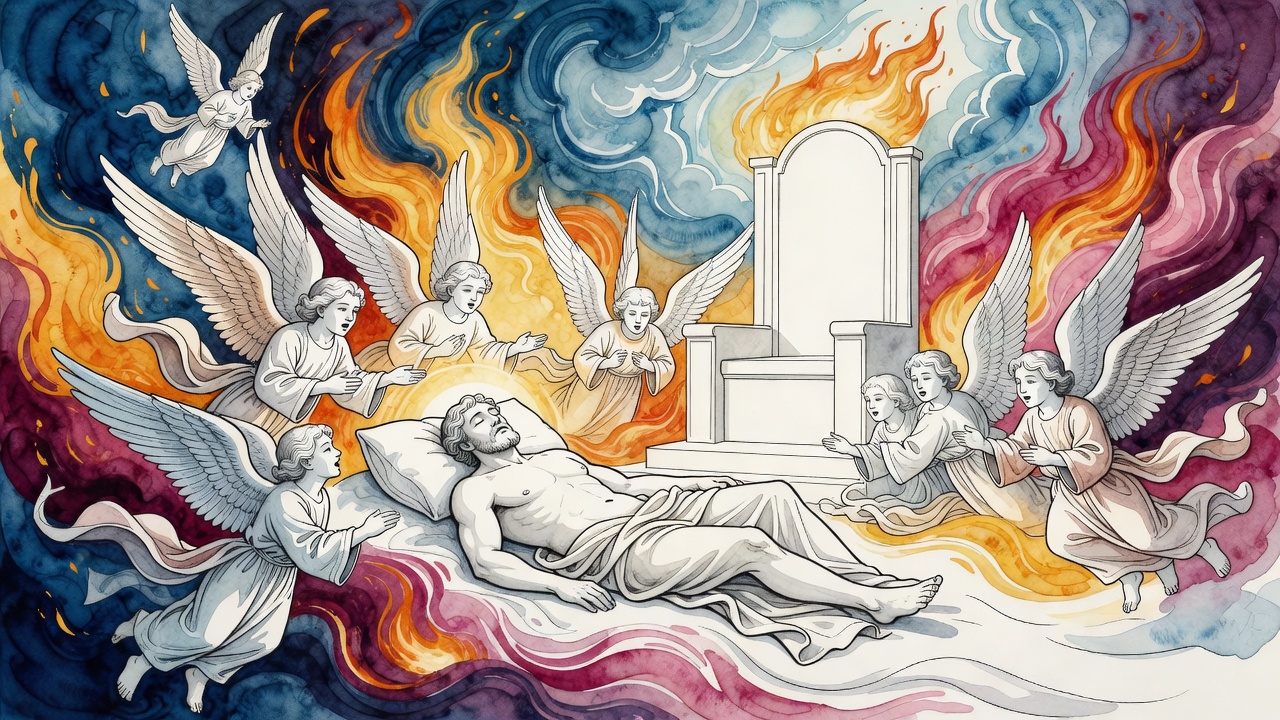
The blade stopped. It did not cut and it did not bruise. The skin under it had gone white and hard and cold, and the sword came away dull, the way a sword comes away from stone. His throat had turned to marble. Some later called that neck a tower of ivory. The executioner stood there holding a ruined weapon.
Some tell it worse. The blade turned in the air and went back the way it had come, and it was the executioner who dropped in the sand while Moses stood untouched. God had promised to deliver Moses from the sword of Pharaoh. He had promised nothing to the man swinging it.
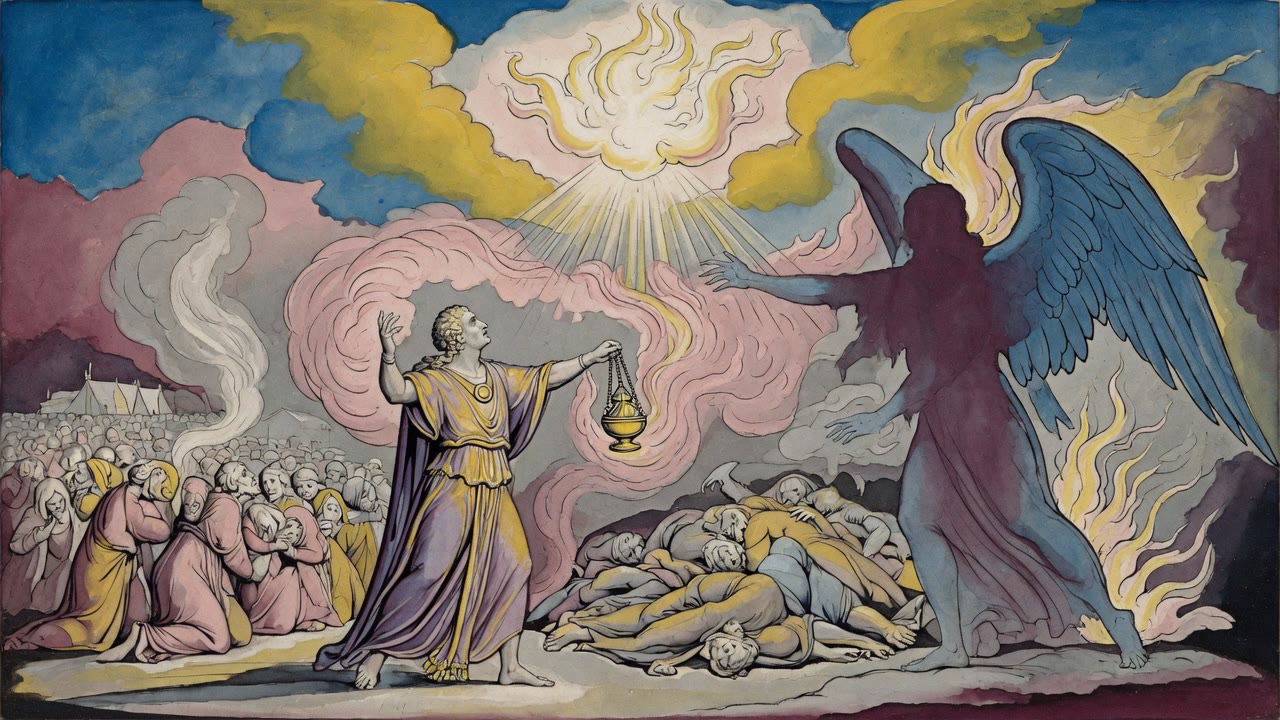
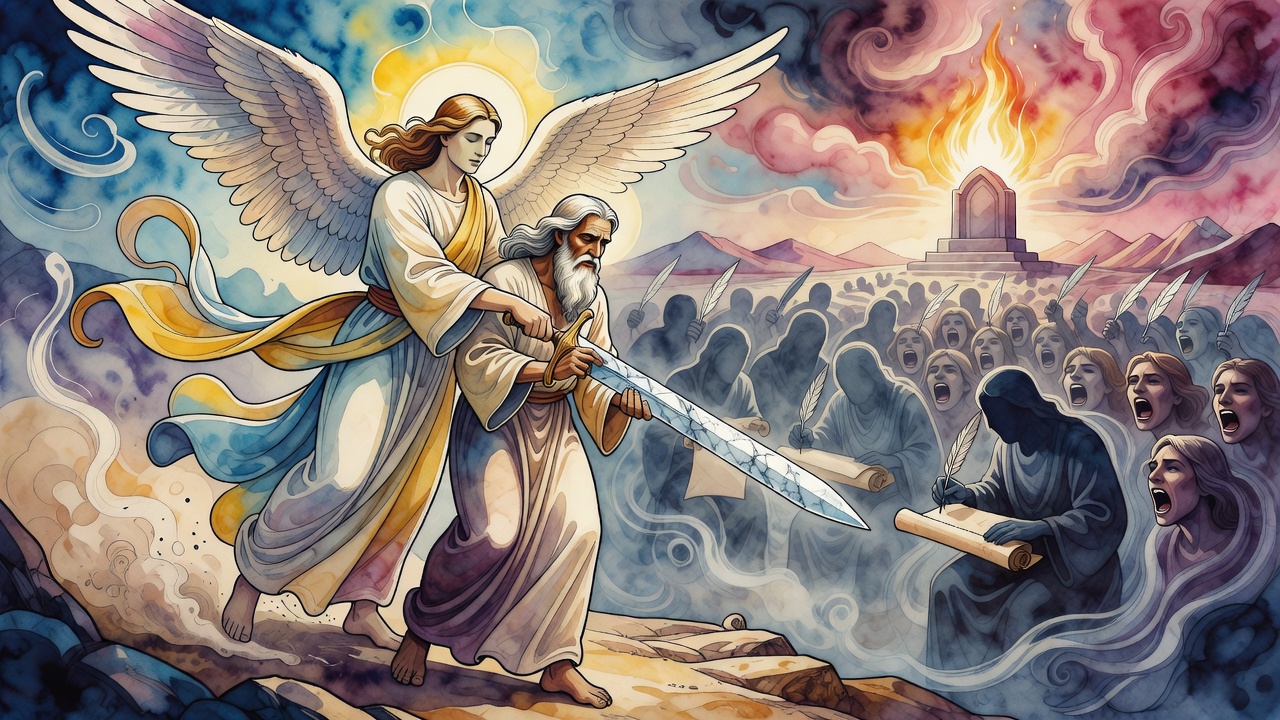
In the noise an angel came down, wore Moses's face, and ran. The guards chased the face they recognized. Pharaoh kept scholars who could have named the trick. Some of them found their tongues stopped. Some could not hear the shouting. Some opened their eyes onto nothing at all. Moses walked out through the middle of them, and not one of them saw him go. The angels who guard a man can wear his face, blunt a sword, and shut a palace's eyes in the same hour.
The Angels Reported and God Kept Answering
A man buys himself a patron. He is arrested, and his friends run to the patron and say, one of your household has been taken, and the patron says, I will stand for him. Then the man is dragged out to be killed, and the patron is nowhere.
The ministering angels came before the Holy One and said, "Moses of your household has been seized."
"I will stand for him."
"He is standing in front of Pharaoh."
"I will stand for him."
"They are reading his sentence. They are taking him out to be killed."
"I will stand for him."
He stood. The neck went to marble. The face ran the other way. Moses crossed into Midian with nothing and sat down at a well, and there, with a death sentence still standing against him in the country behind him, he sang. Sixty years later he was in front of a bush that would not stop burning, making excuses about his mouth. God cut him off. Who gives a man a mouth? Who makes him mute, or deaf, or blind? "I stood with you then. Do you think I will not stand with you now?"
A Scribe Stood Beside Every Mouth
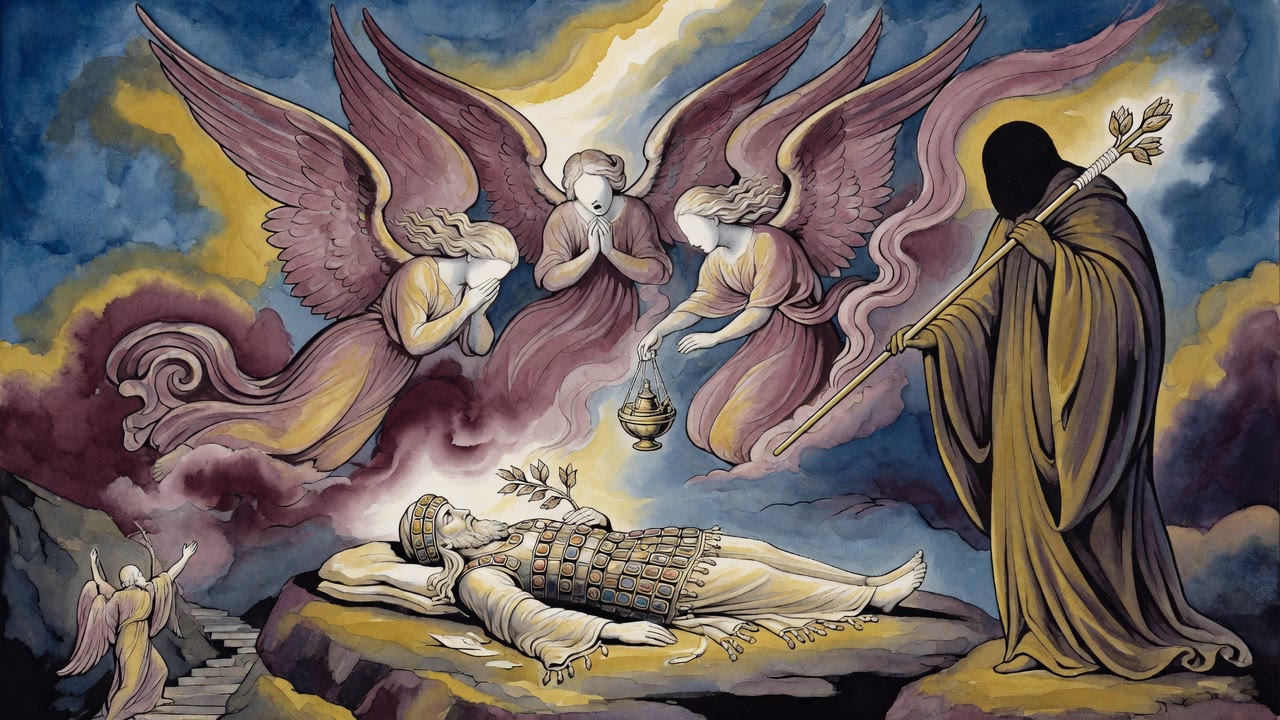
Datan was never charged with anything. He had said one sentence to win a quarrel, and that sentence nearly took a man's head off. A person tells himself he can speak against his neighbor in a shut room and nobody will ever know. God sends an angel to stand at his shoulder and write down every word he says about another person. A bird of the heavens carries the voice. The winged creature that repeats the matter has six wings, and it leaves nothing out. They record every human word.
"Do not allow your mouth to bring sin upon your flesh" (Ecclesiastes 5:5). The mouth commits it. The flesh pays it. Miriam spoke about her brother, and her skin went white to the wrist.
The sand had kept no sound. The angel with the pen had. Datan's sentence outlived the Egyptian in the hollow, outlived the blunt sword, and walked with Moses all the way to Midian.
He Marked Three Cities He Would Never Enter
Years later, in the wilderness, Israel brought God a complaint. "You promised us long life for keeping the commandments. What about the man who kills without meaning to, and the dead man's brother catches him on the road? He dies before his time."
"They speak well," God said to Moses. "Set aside cities."
Moses was old by then, and he had already been told he would never cross the Jordan. He marked out three cities of refuge on the eastern bank anyway, in country he would enter only on a map. The three on the western side could not open for years, not until the land was taken and he was dead. He set his aside that same day.
One who has eaten the dish knows its flavor. Moses had run once. He knew exactly what a man's legs do when he hears feet behind him on the road and cannot tell how far back they are. So an old man walked the eastern bank, marking out three towns for killers who had not yet killed anyone, because a word in a street had once put a sword on his own neck, and an angel had had to wear his face to get him out.
← All myths