Ikkor Out-Thinks a Death Sentence Shaped Like a Palace
The wisest man in Assyria sat childless among thirty wives until a forged letter and a sky-high command turned his own trap back on its makers.
Table of Contents
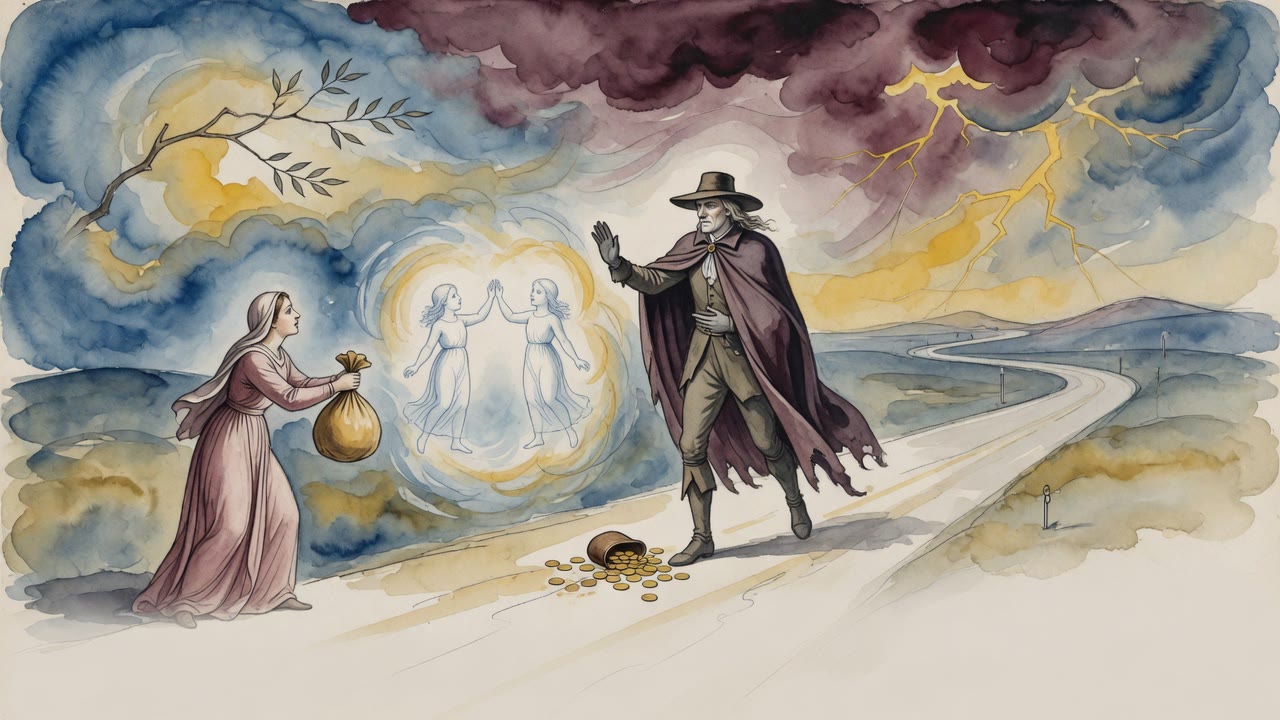
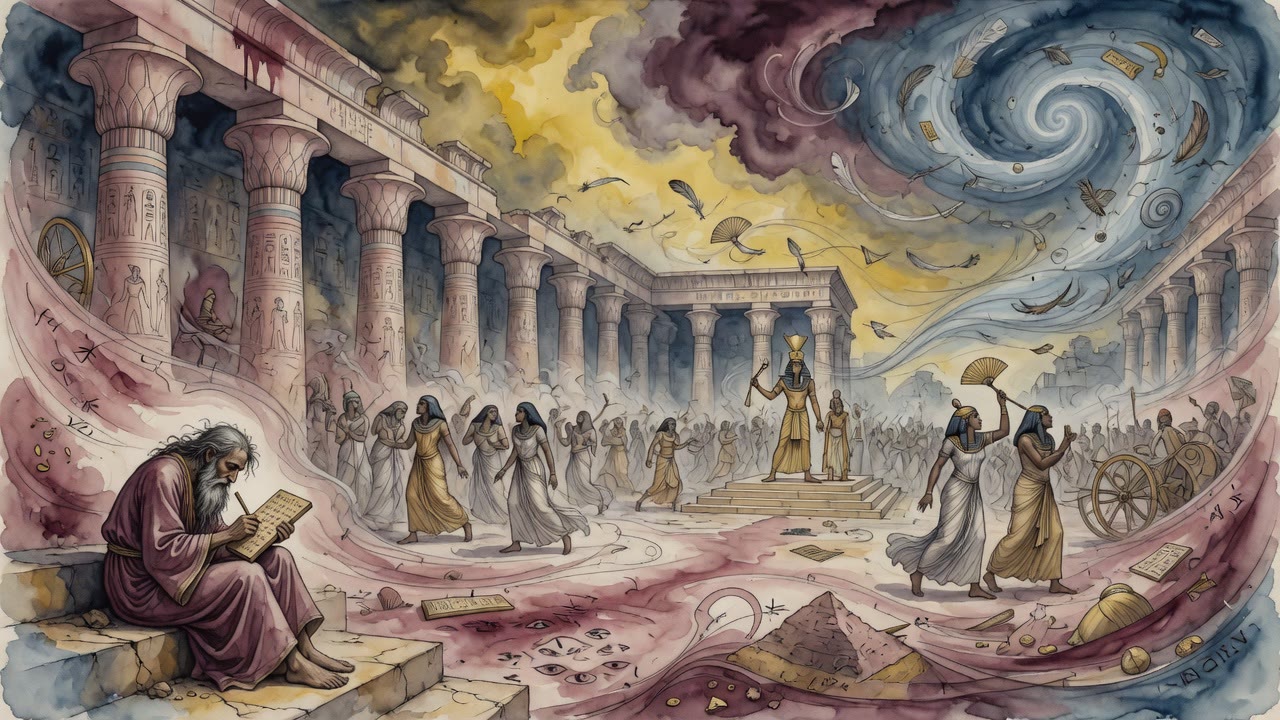
Ikkor had thirty wives and not one child, and at night the wisest man in Assyria sat alone in his great house and wept while other men's children laughed in the streets below. He owned the king's ear and the kingdom's secrets, and none of it filled the empty rooms. So when a voice in a dream told him to raise his sister's son as his own, he opened his doors before morning. The boy was Nadan, sharp and quick, and Ikkor poured into him every proverb and stratagem he knew, the way a man pours wine he is afraid to spill.
 Click for full size
The Two Forged Letters
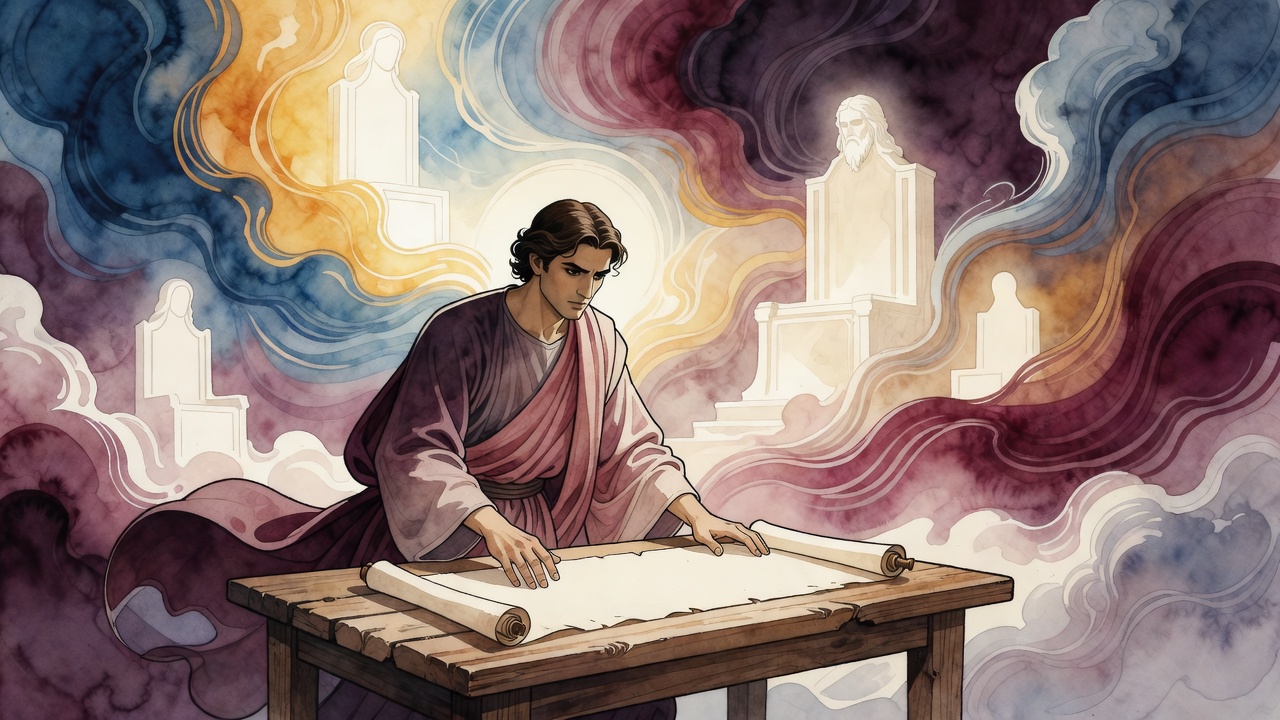
Nadan grew impatient to inherit. He learned to forge his uncle's hand the way Ikkor had taught him everything else, then wrote two letters. The first, signed in Ikkor's name, promised Pharaoh of Egypt that the vizier would deliver Assyria into Egyptian hands. The second, sealed with the king's own stolen seal, ordered Ikkor to muster armed men and stage a mock charge against the throne during the yearly review, as a show of the kingdom's might.
Ikkor obeyed the seal he trusted. On the day of the review he wheeled his men toward the king as the second letter commanded. Then Nadan pressed the first letter into the king's hands. To the court it looked like nothing but treason, the vizier's spears turning on the crown while a promise to Egypt lay open on the king's knee. The king did not wait for an answer. He ordered Ikkor's head struck off and flung a hundred ells across the ground.
The Head on the Roof and the Man in the Cellar
The executioner was Nabu Samak, who owed Ikkor his own life from years before. He could not lift the sword. Instead he found a condemned highwayman of the vizier's build, beheaded that man in a locked yard, and carried the ruined head to the rooftop where the city could see it. The crowd wailed for the wisest man in Assyria. They were weeping over a thief.
Below them, in a cellar dug beneath Nabu Samak's own floor, Ikkor sat in the dark and lived. Bread came down to him at night. The seasons turned overhead unseen, and his beard grew until it pooled on the stone.
The Command to Build a Palace in the Clouds
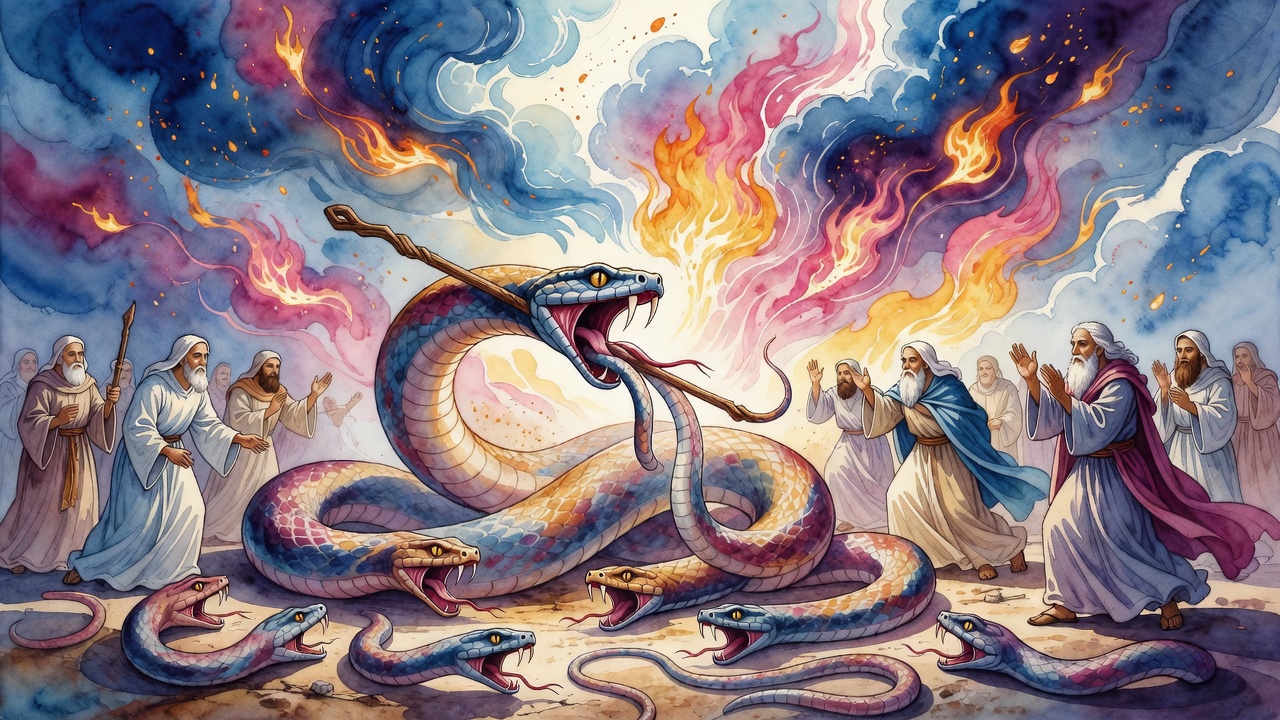
A year passed, and Pharaoh, certain the wise man was rotting, sent Assyria a death sentence shaped like a courtesy. Build me a palace that stands in the open sky, between heaven and earth, touching neither. Do it, and Egypt will name Assyria the greater kingdom. Fail, and pay Egypt tribute as long as the king draws breath.
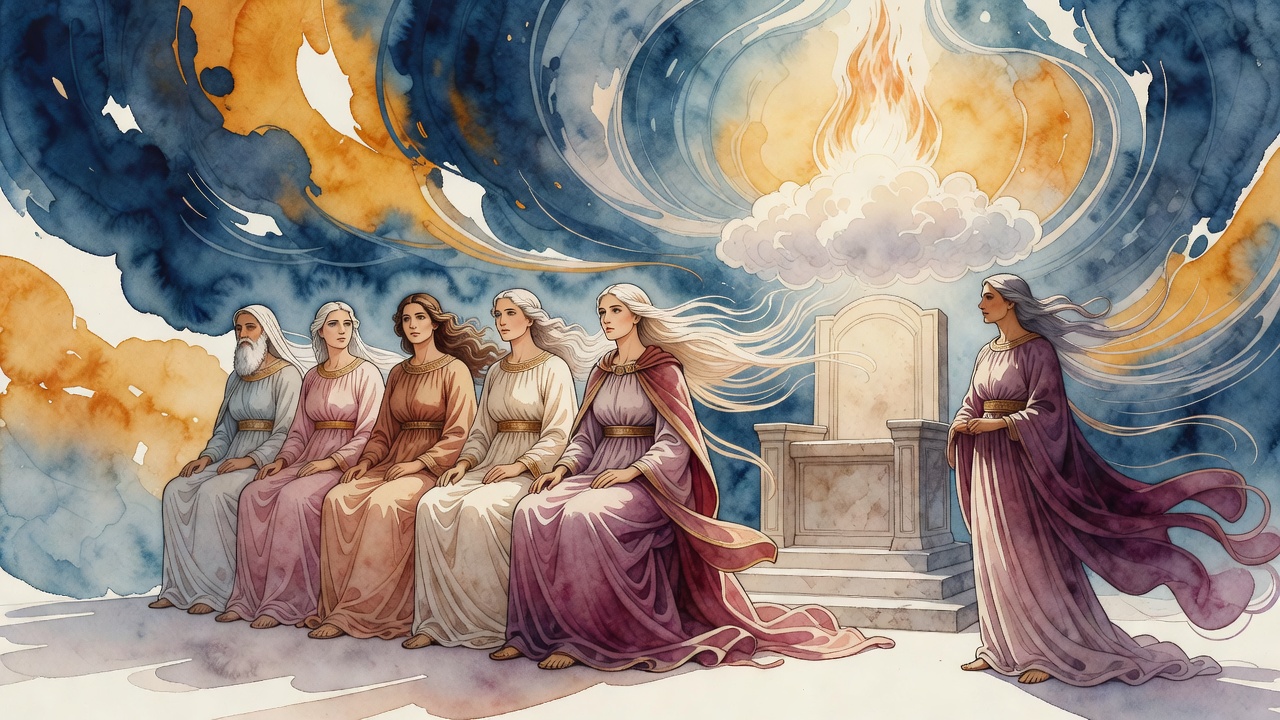
The king turned to Nadan, who held the vizier's seat now. He had stolen the office but never the mind that filled it, and before the throne he could only stammer about engineers and ropes and the impossibility of it. The king tore his robe and cried that he would give a quarter of his kingdom to set Ikkor before him alive for one hour.
Nabu Samak fell to the floor and pressed his forehead to the stone. "Spare me your judgment," he said, "and I will give you more than a quarter of your kingdom. The vizier lives. He is under my house." Then he went down into the cellar and brought up a thin old man with a beard like a fallen banner, and the king embraced him and wept into it.
The Eagles and the Foundation in the Sky
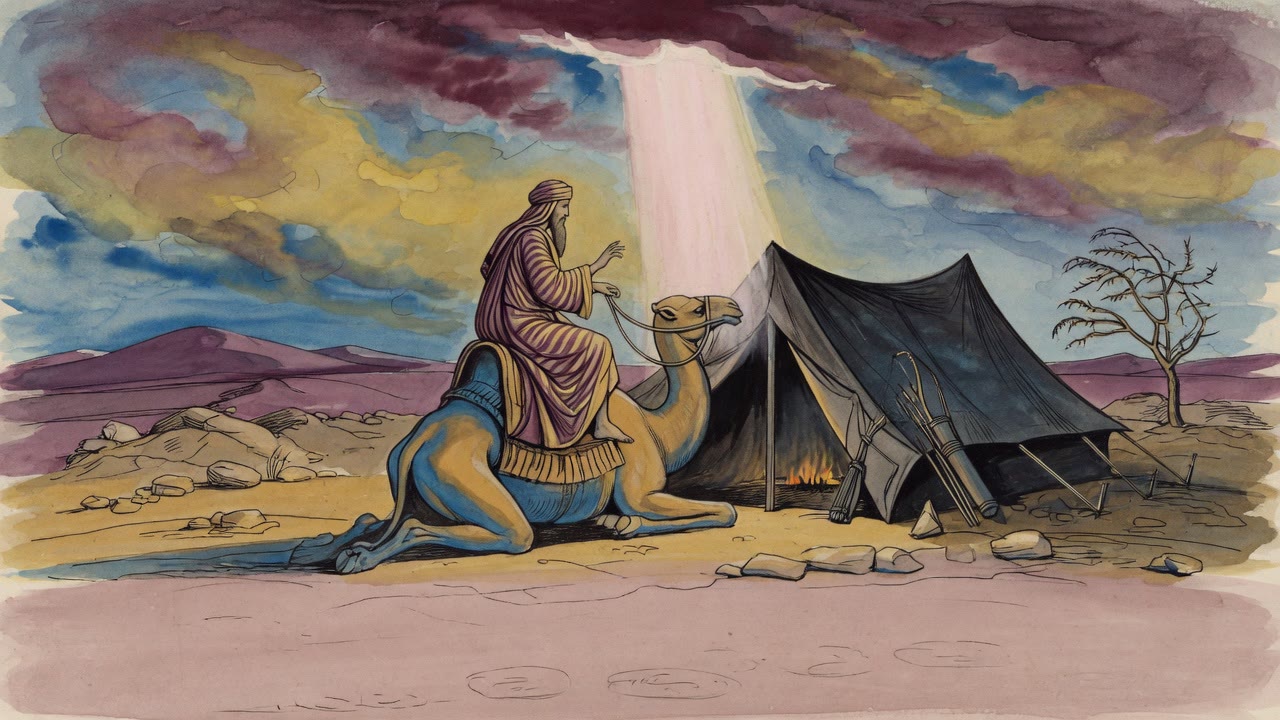
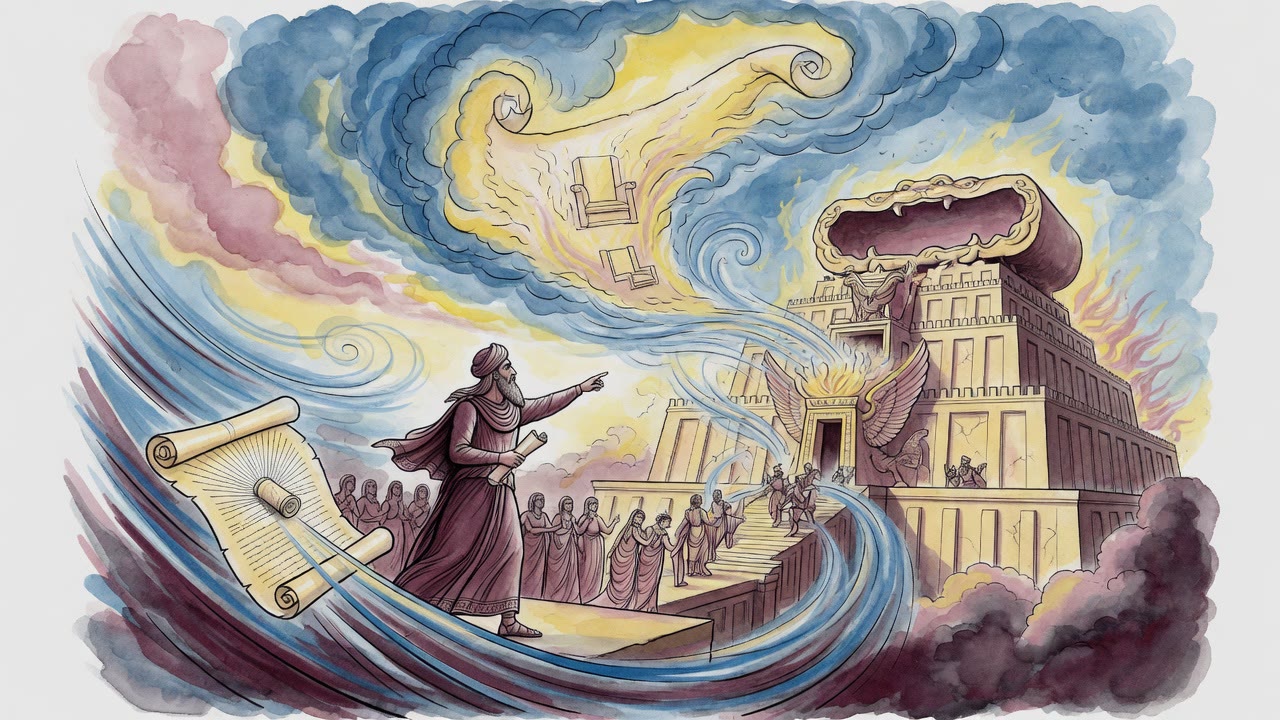
Ikkor asked only for time to grow strong, and then he went to Egypt himself. He brought four boys he had trained and a clutch of eagles raised from the shell to lift weight on command. In a field outside Pharaoh's city, before the whole court, he tethered each boy to an eagle and let the birds climb until the four hung high in the open air, stretching ropes between them into a wide square frame against the clouds.
Ikkor had decided to out-think the trap rather than meet it. "There is your foundation," he called up to Pharaoh, pointing at the boys hanging in the sky. "It stands between heaven and earth, touching neither. Send up your bricks and your mortar and your masons, and my men will lay the first course this hour."
Pharaoh stared at the square hanging over the field and understood that no brick in Egypt would ever reach it. He changed the contest. "Before that," he said, "my wise men require a thread spun out of sand." Ikkor bored a small hole in the eastern wall and waited for a finger of morning light to slant through it. Then he blew a handful of fine sand slowly through the beam, so that the grains turned and glinted in a single shining line across the hall. "There is your thread," he said. "Cut a length to your liking, and my women will match its weight in spun sand by evening."
The Vizier Goes Home and the Heir Is Never Seen Again
Pharaoh bowed to a wit he could not bend and called the wager closed in Assyria's favor. Egypt would send no tribute, and the greater kingdom would be named in the north. Ikkor sailed home with gifts heaped to the rails, his head restored by the same king who had ordered it off.
He asked for one prisoner only, and Nadan was given to him. What passed between the old vizier and the nephew he had filled with proverbs, the tellers do not all agree on, but every version ends the same way. The boy who forged his uncle's hand and stole his seal was never seen in Assyria again, and Ikkor sat at last among rooms that no longer felt empty.
← All myths