Israel Will One Day Ask the Nations Where Their Gods Went
The nations gave their gods armies, taxes, and the fat of sacrifices. Rabbi Yehudah said a reckoning was coming and the gods would have nothing to show for it.
Table of Contents
Somebody in the study house said it out loud, which was the part that could not be taken back. Not as the authority You give us is the authority You give them.
 Click for full size
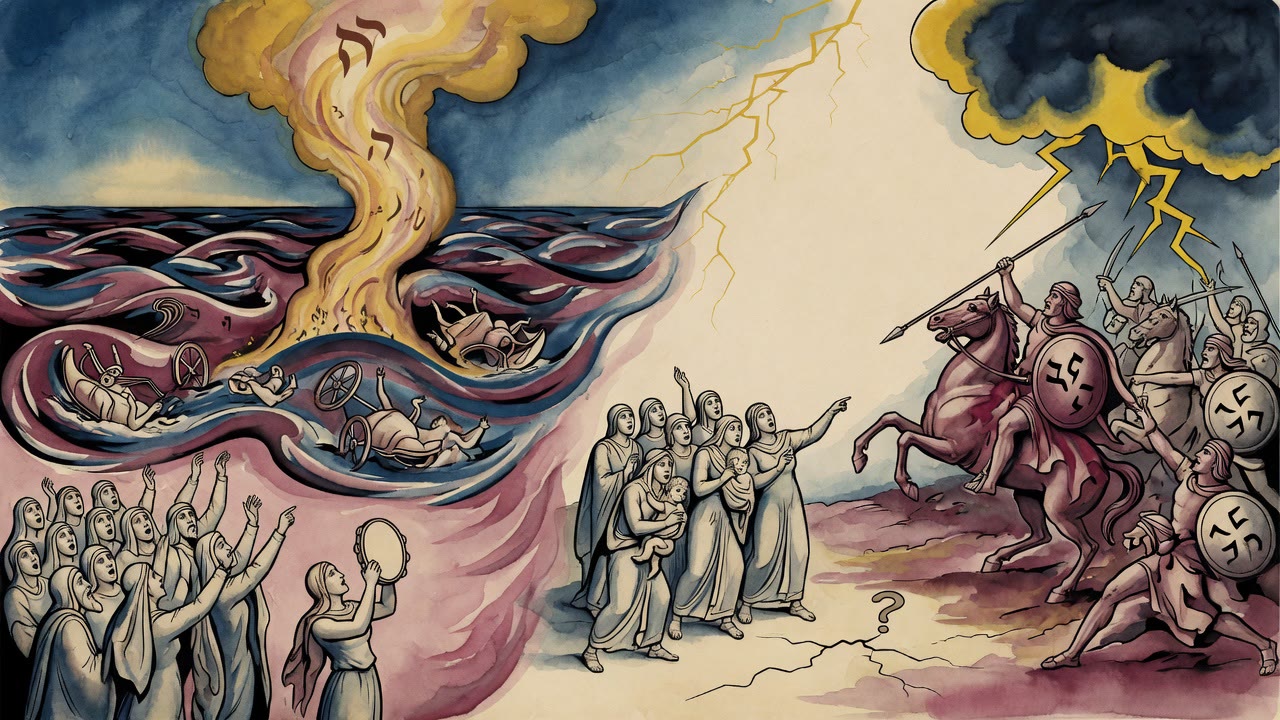
The room was in Roman Palestine in the second century, so nobody had to be told what the sentence meant. Authority handed to the nations came back down as soldiers in a village at dawn. They kill us, the complaint runs, they burn us, they crucify us. The men saying it had seen the uprights standing outside towns with the crossbeams still in the carpenter's yard, waiting, because the wood was reused.
Our Enemies Are Judges
Rabbi Yehudah did not soften it, though he was the one everybody in the room was waiting on. He took the other half of the verse instead, the part that says our enemies are judges, and he held it against the Torah's own rule for a courtroom. A man who is not an enemy, a man who has not sought the accused's harm, is the one who may sit on a capital case. That was the law given at Sinai. In Caesarea the bench was full of men who had every reason to want the defendant dead, and because there was no other bench, that was the bench.
Where Are Your Consuls
Yehudah's answer did not arrive in that generation, and he said so plainly, since the alternative was to promise something the century was not going to deliver. It arrived later, in a scene he described the way a man describes a room he has already stood in.
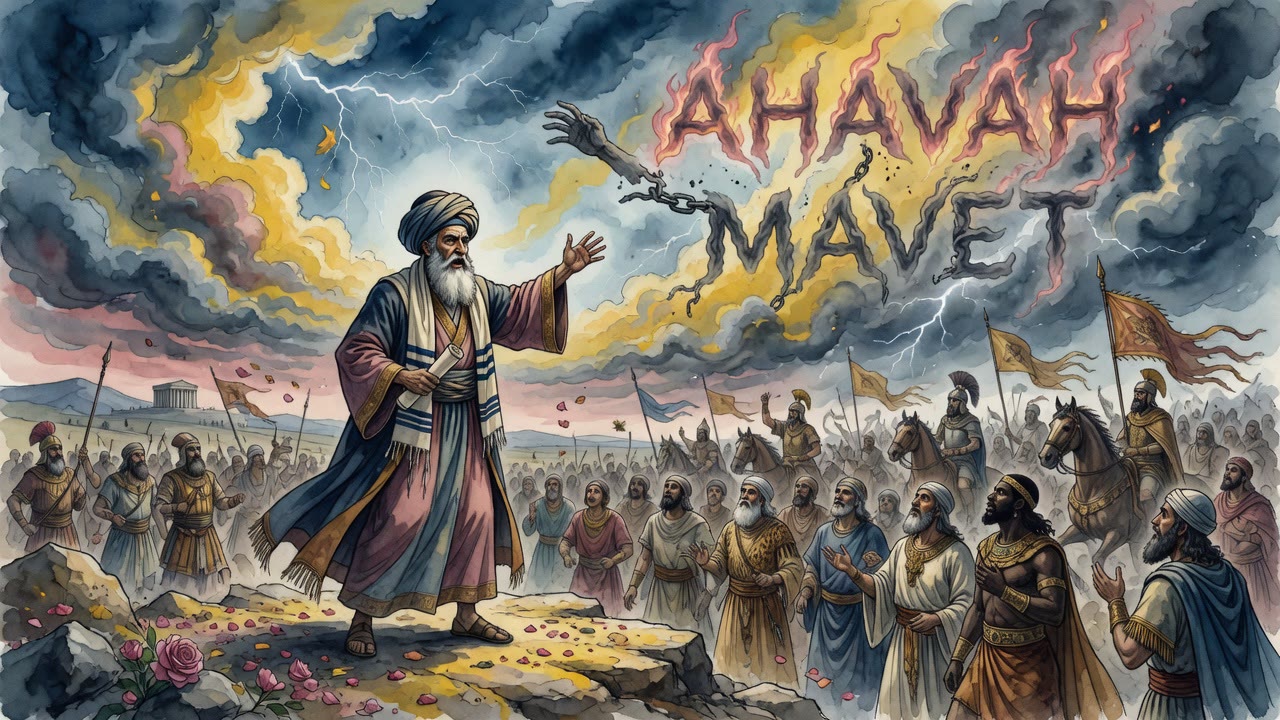
One day Israel turns to the nations and asks them one question. Where are your consuls? Where are your commanders? Produce them.
He wanted the demand understood as an accounting, because the nations had paid for those gods on a scale that left records. They gave them recruits. A god took the year's young men off the threshing floors the way a governor takes them, and their mothers watched them go. They gave them officers, the best men in the province assigned to temple service instead of to anything that fed anybody. They gave them taxes, real coin, counted and carried. Then, on top of all that, they ate the fat of their sacrifices, which means the herds were opened up and the best portion burned off in smoke while the people who raised the animals stood downwind of it.
They had put in everything a nation has, so a nation was owed something back. That was Yehudah's whole point. The gods were funded like armies and staffed like armies, and when the accounting came they would be asked to perform like armies and would have nothing to show. The consuls would not step forward, since there had never been any consuls, and the smoke of all those sacrifices had gone up and stayed up.
The Wine of Sodom
The same chapter of the song has a harder line in it, and the room went to that next. For their vine is of the vine of Sodom, and of the fields of Gomorrah; their grapes are grapes of poison. The question on the floor was simple. Whose vine?
Rabbi Nechemiah said the nations. That was the reading the room wanted, because it fit everything that had just been said about consuls and commanders and burned fat.
Yehudah said Israel.
He said it in a house full of men who had buried people that season, to an audience whose complaint against heaven he had just repeated without flinching, and he did not walk it back or wrap it in anything. The man who had built the future audit of the nations turned around and put the wine of Sodom in his own people's cup. Nobody in the room could accuse him of comfort. He had refused the two easy answers at once: that the suffering was undeserved and that the enemy was the only rot in the field.
A Man at a Well in Midian
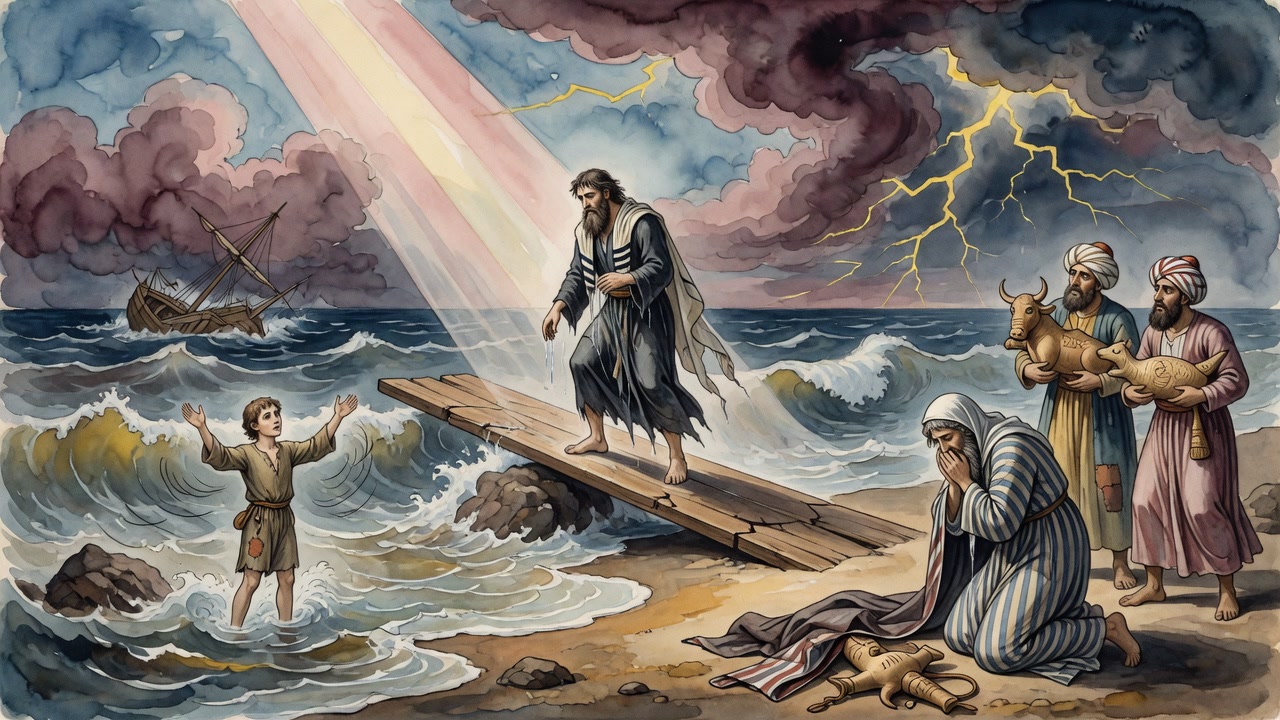
The question was older than the study house. Moses had carried it out of Egypt with the sand of a fresh grave still on his hands, and when he sat down by a well in Midian the first thing that occupied him was not his own safety. It was why Israel suffered more than every other nation on earth.
An angel took him forty days' journey away from Egypt, far enough that fear stopped working on him and he could think. But the distance did not help, because the trouble was not behind him. When he came back among his own people he heard what they said about each other in the doorways, the talebearing, the man ruining his neighbor's name over nothing, and the question in his mouth changed into a worse one. Aaron was preaching to them. So were the five sons of Zerah. Nobody was listening, and Moses stood there and wondered whether this people deserved to be redeemed at all.
He was not answered, though he waited. Their own contempt for each other was part of why Pharaoh's hand had come down as hard as it did, so the arithmetic was not even in their favor. God had mercy on them anyway, in spite of all of it, and did not explain Himself to the man He was about to send.
Then Moses was sent. He went back down into Egypt with the question still unsettled in him, and centuries later a rabbi in an occupied province was still holding the same one, and answering it with a demand nobody alive would be there to hear anyone make.
← All myths