Job Saw Rain Fall and Still Refused to Blame Anyone
God asked who had eaten. Adam pointed at his wife. Job sat in ash with ten children gone and would not lift a finger at anyone.
Table of Contents
God came walking in the garden at the cool part of the day, and the two of them went into the trees. He called. Adam answered from the leaves that he was naked and afraid. Then came the question that mattered. Had he eaten from the tree.
 Click for full size
Adam had one sentence to spend. He spent it on a finger pointing sideways. The woman. The woman You gave to be with me. She gave me from the tree and I ate.
That is two accusations, not one. He blamed his wife out loud. He blamed the one asking under his breath, because the woman had been a gift, and a man who blames the gift is putting it on whoever handed it over. Eve was standing right there when he did it.
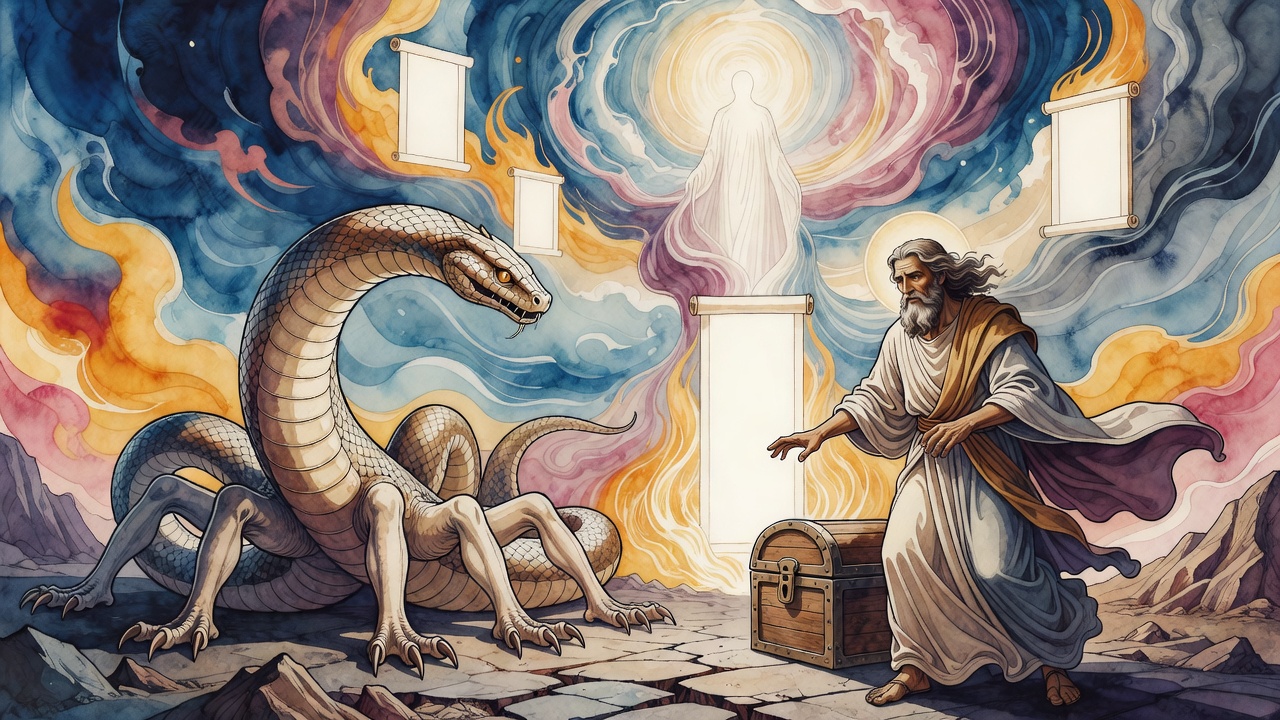
She was asked next and she pointed at the serpent. It had lured her. It had lied. Then it had walked off and left her holding the debt.
I Ate and I Will Eat Again
Adam was not confessing. He was declaring. Put the tree back in front of him, give him the same afternoon, and he would do it again, and he said as much while God was still standing there in the garden He had made.
That was the sentence that emptied the place. The fruit was not what got him thrown out. What got him thrown out was what came out of his mouth afterward. The gate shut behind him with a blade of fire turning in front of it.
God had planted a vineyard on a fertile hill, cleared the stones, put in the best vines, cut a winepress out of the rock, and waited for grapes. What came up was sour.
Ten Graves Before Night
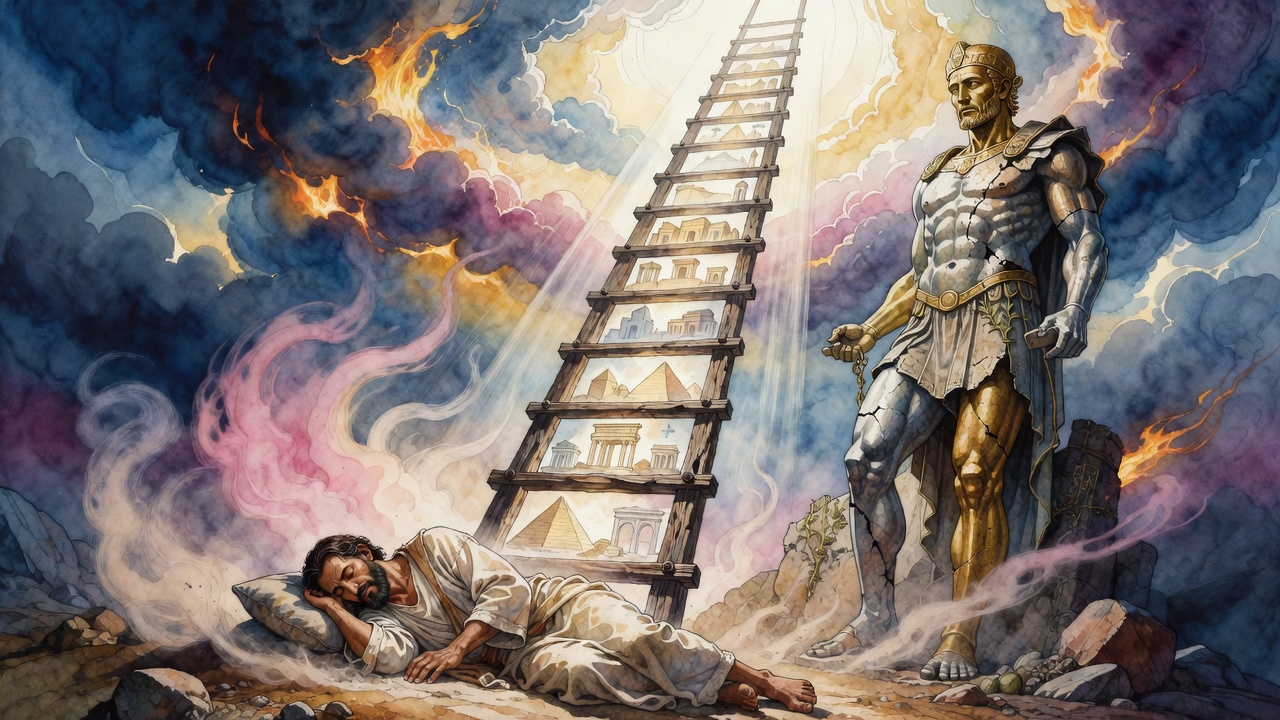
Generations later Job lost ten children in one afternoon, in one house, under one wind off the desert that took all four walls at once. He lost the herds the same day. Each messenger came running in before the last one had finished speaking, so the oxen and the sheep and the camels and the children arrived in his ears almost together.
He tore his coat. He shaved his head. He said the Lord had given and the Lord had taken, and he blessed the name.
Then his skin went, sole to scalp. He took a shard of broken pottery and sat down in the ashes outside the town and scraped himself with it. Three friends came from three directions. They saw him from a distance and did not know him. They sat on the ground beside him for seven days and seven nights and none of them said a word, because the pain was very great.
He had a better case than Adam ever had. Adam lost a garden after breaking one rule he had been told once, in person, by the owner. Job had broken nothing at all. Everyone sitting with him knew it.
She Offered Him the Exit
His wife came and stood over him. She was Dinah, Jacob's daughter. A disgusting act had already been done to her once, and she had learned what a mouth can cost.
"Are you still holding on to your integrity? Curse God and die."
It was a kind of mercy. Say the word. Put the weight down. Let it end tonight.
He looked up out of the ash. "You are talking the way a vile woman talks," he said. Then he asked her whether they should accept the good from God and not accept the bad.
They. Not I. He was the one covered in sores, and he still counted her inside the sentence with him.
Adam had listened to his wife and eaten. Job listened to his and did not move. He had a wife to blame and raiders to blame and a sky to blame, and he blamed nobody, and he did not sin with his lips.
With his lips. What went on behind them, on the ash pile, in the dark, nobody wrote down.
Rain on Land Where Nobody Lives
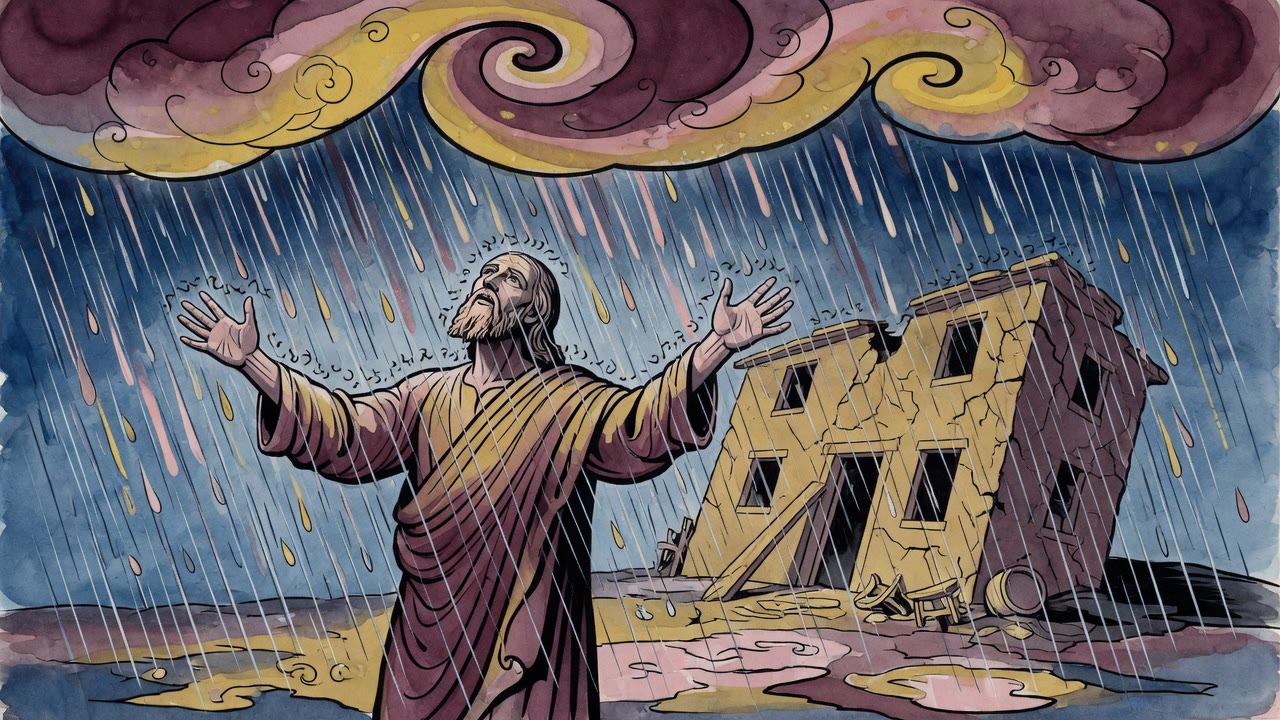
When the answer came at last it came out of a storm, and it was not about Job at all. It was weather. Who cut the channel for the torrent and the road for the thunderbolt. Who fathers the drops of dew. Who sends rain on a country with no man in it, on a wilderness where there is nobody, to soak the waste ground and bring grass up where no one will ever walk.
The rain fell on empty country with the same force that had once spoken a world into being. Great things, and no fathoming them. Water placed in the heavens with a sound. Depths calling to depths in the noise of the channels.
Job put his hand over his mouth.
He would not blame anyone in the world for what had happened to him, and what he got back was not an explanation. It was rain falling on empty country, for nobody, forever. He looked at that and stopped talking.
← All myths