Jonah Did Not Run From God. His Three Souls Did.
Jonah paid full fare to Tarshish and fell asleep in the storm. The Tikkunei Zohar says his three souls had separated. He slept like the dead.
Table of Contents
 Click for full size
The Full Fare to Tarshish
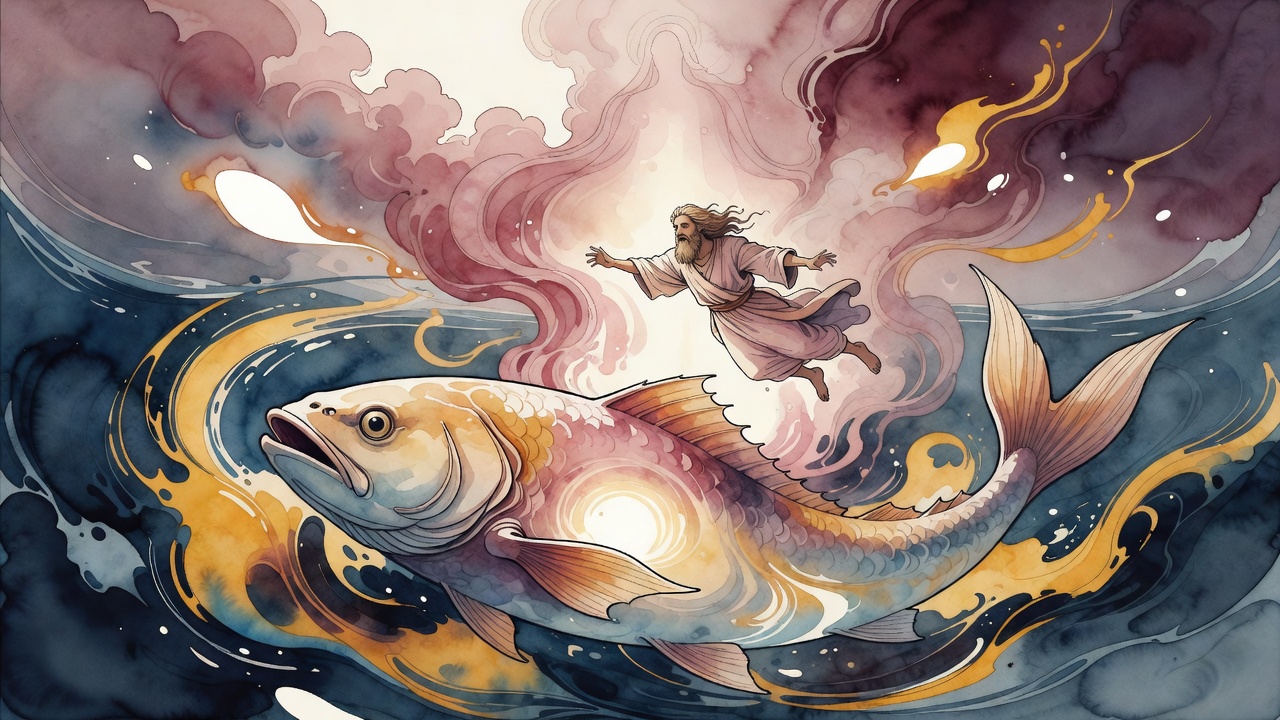
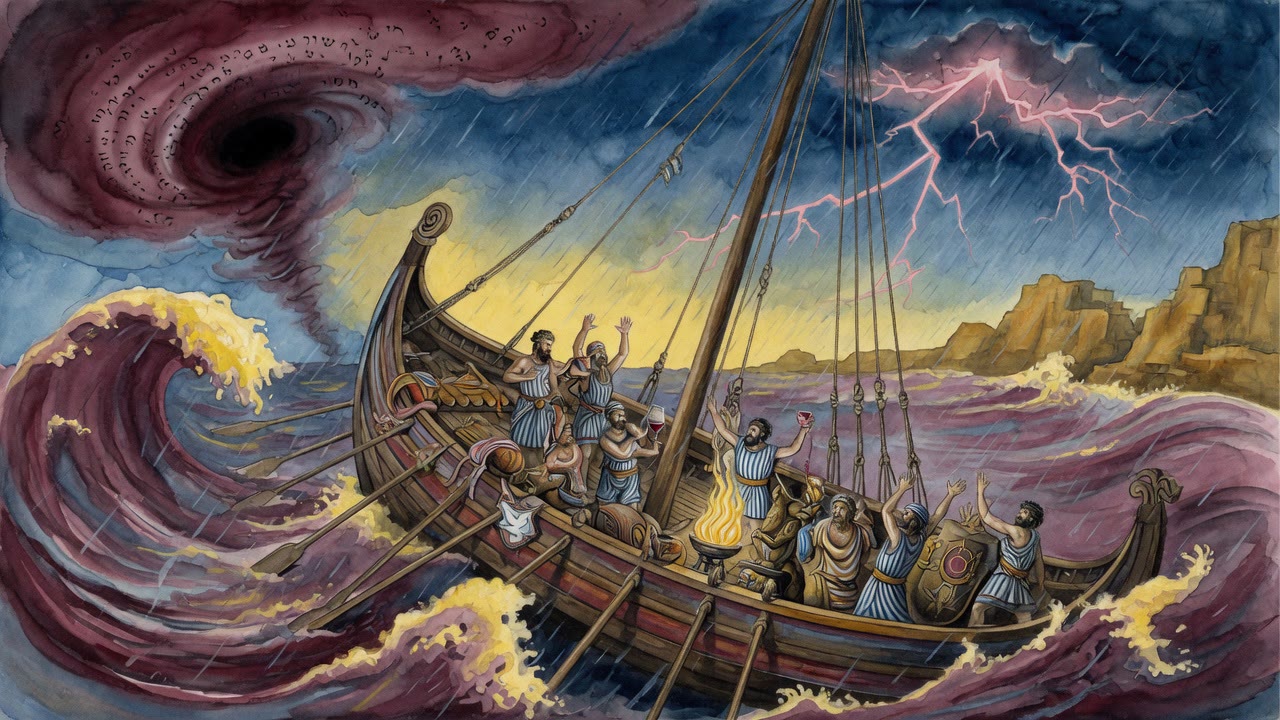
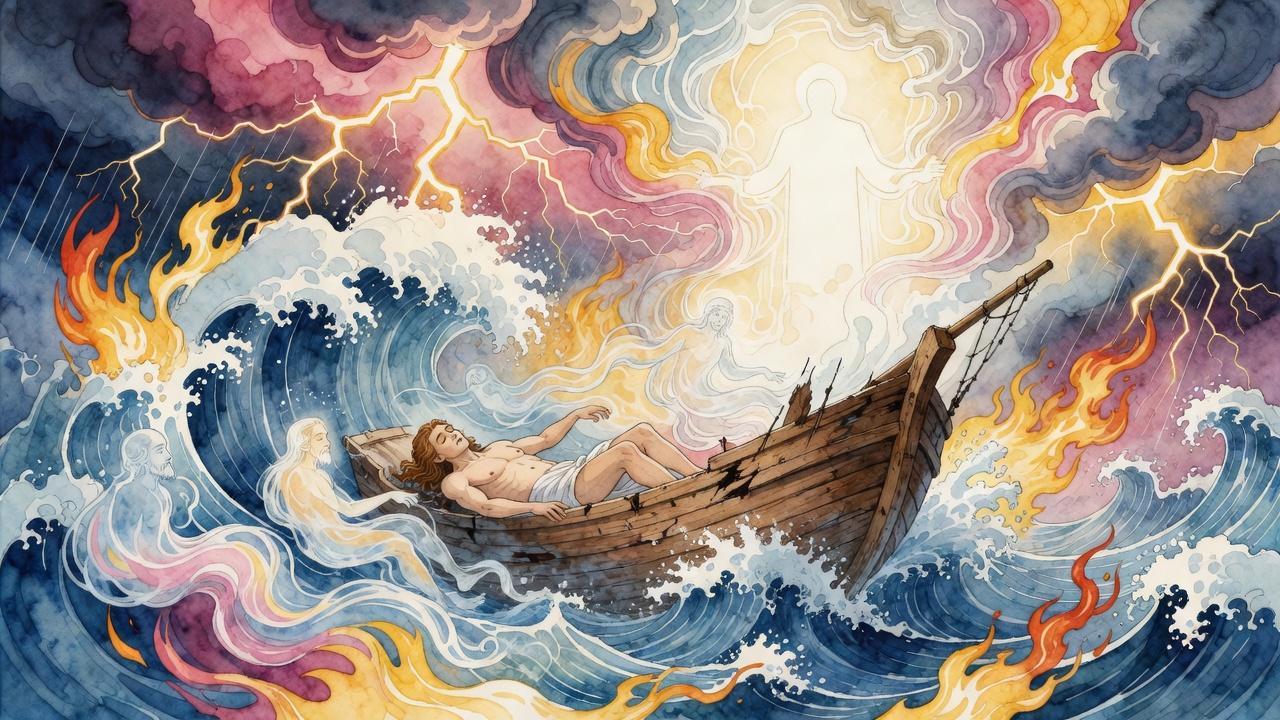
The word of God came to Jonah and told him to go to Nineveh. He rose and went to Joppa instead. He found a ship going to Tarshish and paid the full fare and went aboard. The text specifies the full fare, as if the act of paying completely for his own escape made the flight more definitive: this was not a borrowed passage, not a last-minute flight. He had committed to it with money, with planning, with the deliberate act of a man who has made up his mind. He went down into the hold of the ship and lay down and fell into a deep sleep while the storm built above him.
The question that every reader of this scene asks is the obvious one: what kind of person sleeps through a storm like that? The sailors were terrified. The captain came down and shook Jonah awake and told him to call on his God. But before the shaking, before the captain arrived, Jonah was sleeping in the bottom of the ship while the storm threatened to break the vessel apart. The Tikkunei Zohar has a precise answer. He was a man whose soul had gone into exile. And a soul fragmented into exile sleeps the way the dead sleep: with complete indifference to weather.
The Three Layers of the Soul
The Kabbalistic tradition preserves a tripartite understanding of the soul that the Tikkunei Zohar applies exactly to the Jonah narrative. The nefesh is the vital soul, the most basic animating force, seated in the blood, present from birth. It never fully departs even in sleep. It is what keeps the body alive and breathing. The ruach is the spirit, the emotional and volitional dimension, the one that gives a person the capacity to respond, to feel the weight of a prophetic calling and either accept it or flee it. The neshamah is the highest layer, the breath of God breathed into Adam at creation, the divine element in the human person, the dimension that connects a human being to the source.
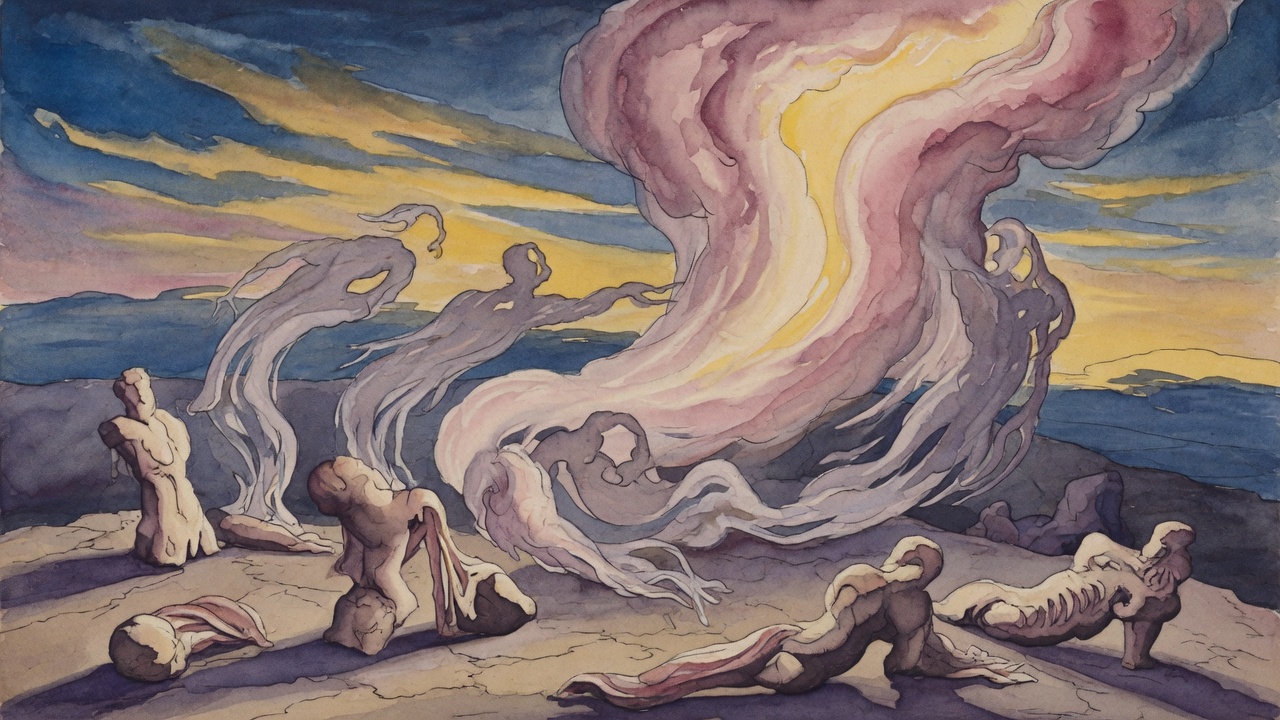
These three are meant to operate in concert. When they function together, a person is integrated, awake to what is happening around them, capable of the responses that life and calling require. When they separate, when exile drives a gap between the layers of a person's inner life, the result is the profound disconnection that Jonah displays: body still breathing, going through the motions of flight, but no longer fully present, no longer responsive to the signals that the world is sending.
What Exile Does to a Soul
Jonah's flight to Tarshish is not simple disobedience. The Tikkunei Zohar reads it as a form of inner exile. The prophet knows what God wants. He knows he is running from it. And the running itself is the act that fragments the soul. When the ruach, the volitional spirit, decides to flee the prophetic calling, it goes one way. The neshamah, which is the divine element and cannot truly flee the divine, remains connected to what the ruach is fleeing. The gap between them is the exile. And in that gap, the sleep of the nearly-dead becomes possible: a body lying in the hold of a ship going the wrong direction, breathing, alive, completely insensible to the storm.
The captain who comes down to wake Jonah is, in the Tikkunei Zohar's reading, a figure of the force that interrupts this sleep: the external world demanding that the fragmented self wake up and confront what it has been running from. The storm is not punishment. It is the gathering of consequences that makes the flight unsustainable, the world refusing to cooperate with the soul's decision to exile itself.
Jonah the Dove, Noah's Dove
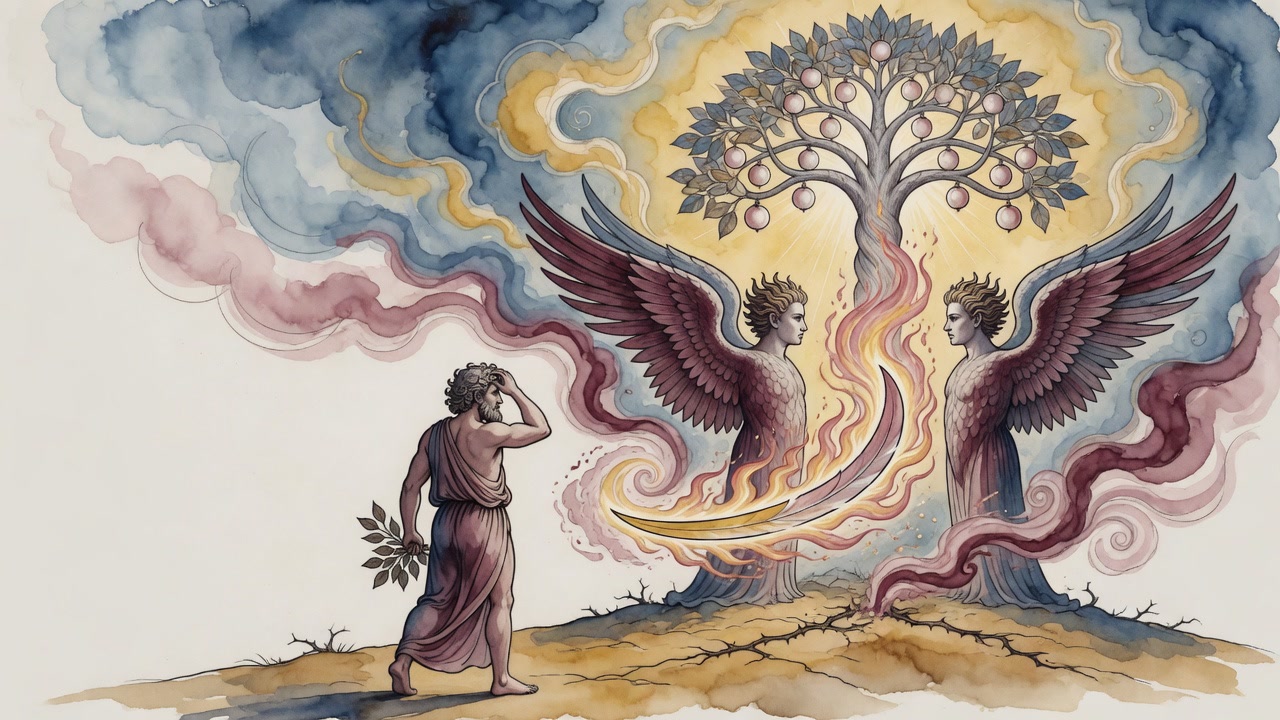
The tradition preserved in midrashic sources identifies Jonah with the dove that Noah sent from the ark after the flood. The dove went out over the waters and found no resting place for the sole of its foot and returned. The second time, it came back with an olive leaf. The third time, it did not return. This dove, the tradition says, was the soul of Jonah, already at work in the world before his birth into it, already performing the prophetic function of exploring what the waters of chaos cover and what they reveal.
The dove that cannot find a resting place over the flood waters, the prophet who flees to the sea to avoid his calling, the soul in three layers going out in different directions: all three are the same pattern. The Tikkunei Zohar finds in Jonah not a story of disobedience and correction but a story of the soul learning what it is, what it was built for, what happens when it tries to be something other than what the divine breath made it.
← All myths