Joseph Made All Egyptians Strangers in Their Own Land
Egypt had sold him its silver, its cattle, and its fields. Then Joseph emptied its towns and moved the whole population, and his brothers never learned why.
Table of Contents
By the second year of the famine, Egypt had nothing left to sell Joseph but itself.
 Click for full size
The silver went first, carried to the granary in sacks and weighed out for grain. Then the herds came up the road, cattle and donkeys and flocks handed over by men who had fed them since they were born. Then the fields. By the end of it Pharaoh held the title to nearly every furrow between the delta and the cataracts, and the people who had worked those furrows stood in the road waiting to be told what they were now.
The Order Nobody Questioned
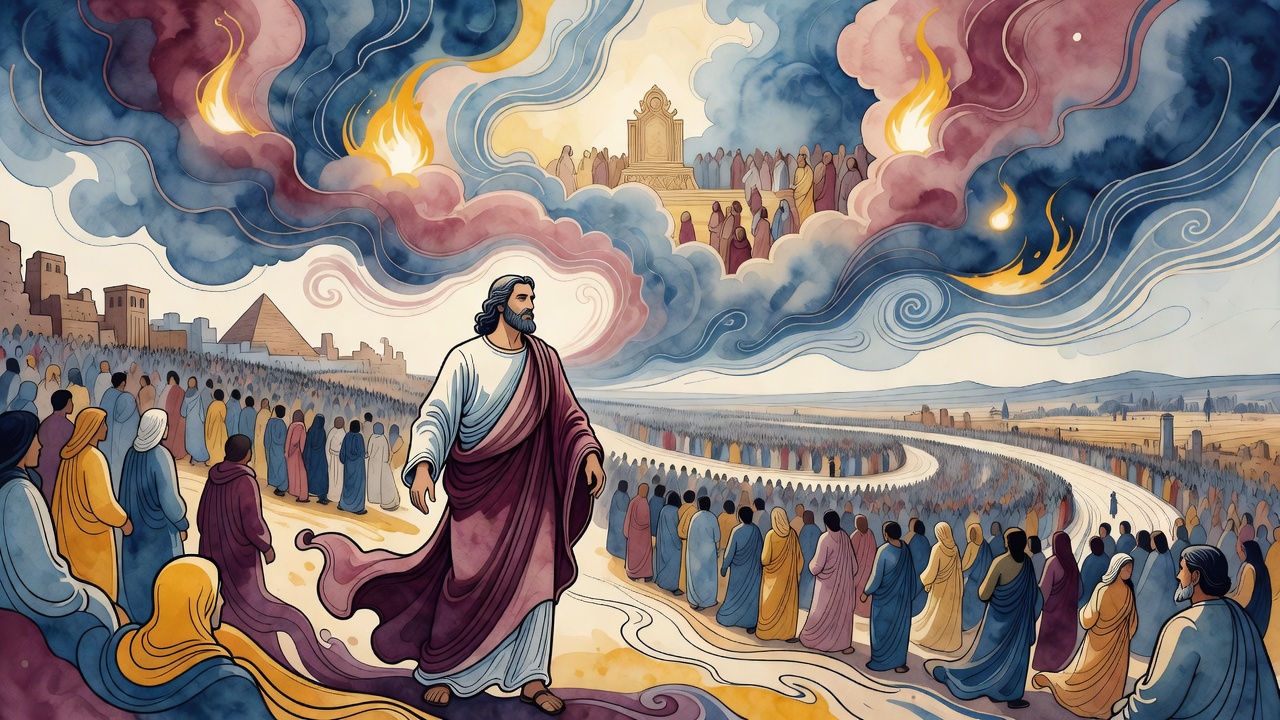
Joseph moved them, town by town, city by city, across the whole country.
A man who had cut barley in the same field as his father and his grandfather loaded a cart and left it. He did not go far. He went to the next district, or the one past that, into a town where the roads ran the wrong way and the well was somewhere he had to ask about and the neighbors had also just arrived and were also asking. The order came down from the palace with a reason attached, and the reason was good. The crown owned the land now and the workforce had to sit where the land needed it.
Nobody in Egypt saw the second reason. It was not for them.
What Joseph Heard Coming
His father and his brothers were on their way down from Canaan with their flocks, and they were going to settle in Goshen, and they were shepherds.
Egypt despised shepherds. It despised them the way settled countries always despise the people who arrive with animals and no address. And these were not only shepherds, they were newcomers, foreigners with the wrong clothes and the wrong accent, moving into a land where every family could name the ground its great-grandfather had worked.
Joseph knew what was waiting in that arithmetic, because he had been a foreigner in that country himself for twenty-two years. He had been sold into it. He had learned the language in a prison. He wore an Egyptian name now, Sephantiphans, given to him by Pharaoh, and he was married into the priestly house at On, and none of it had ever made him one of them.
He could hear the sentence forming, the one that would be waiting for his nephews in the marketplace in thirty years and for their children in a hundred. Exiles. Sons of exiles. Wanderers with no soil of their own.
He Moved the Country Instead
He could not make his family native. So he unmade everybody else.
By the time Jacob's household came through the border and settled in Goshen, the man on the next plot had been in Goshen for a season. His fathers were buried somewhere else. His well was as new to him as it was to Benjamin. He had no ground under his feet from which to look down at anyone, because the ground under his feet had been handed to him the same month, by the same official, for the same reason.
The taunt was still available. It simply had nobody left to say it. A country of people who have all just been moved cannot call anyone a wanderer without hearing the word come back.
The Kind of Man Who Governed Like That
Egypt was quiet in those years, and the quiet was traced back to him.
He walked upright and took no bribes. He showed no preference to the rich man over the poor one when they came before him, and he judged everyone in the land the same way. Pharaoh's kingdom ran in order, and it was said that in all that time there was no accuser in it and no wicked man in it. That was the peace: not a golden age, but a country where the man at the top could not be bought and did not enjoy watching people bend.
He had been at the bottom of that country. He never seems to have forgotten what the view was like from there.
His Father Would Not Be Buried There
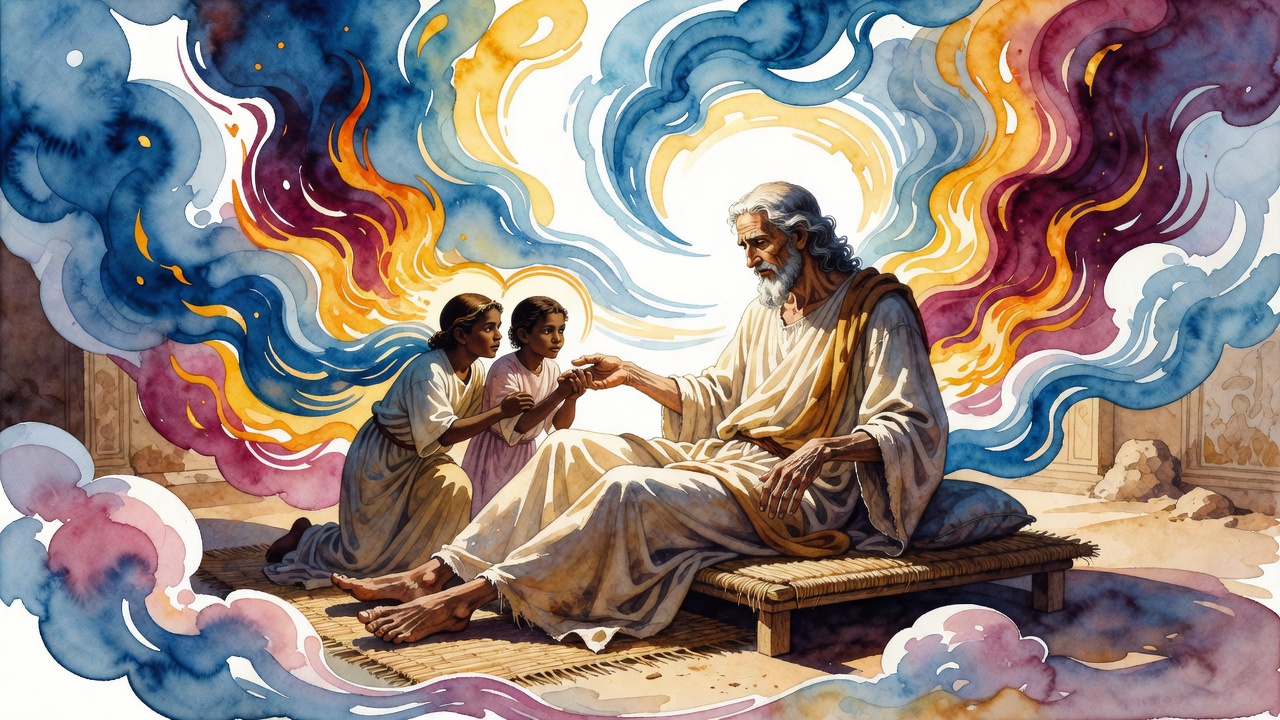
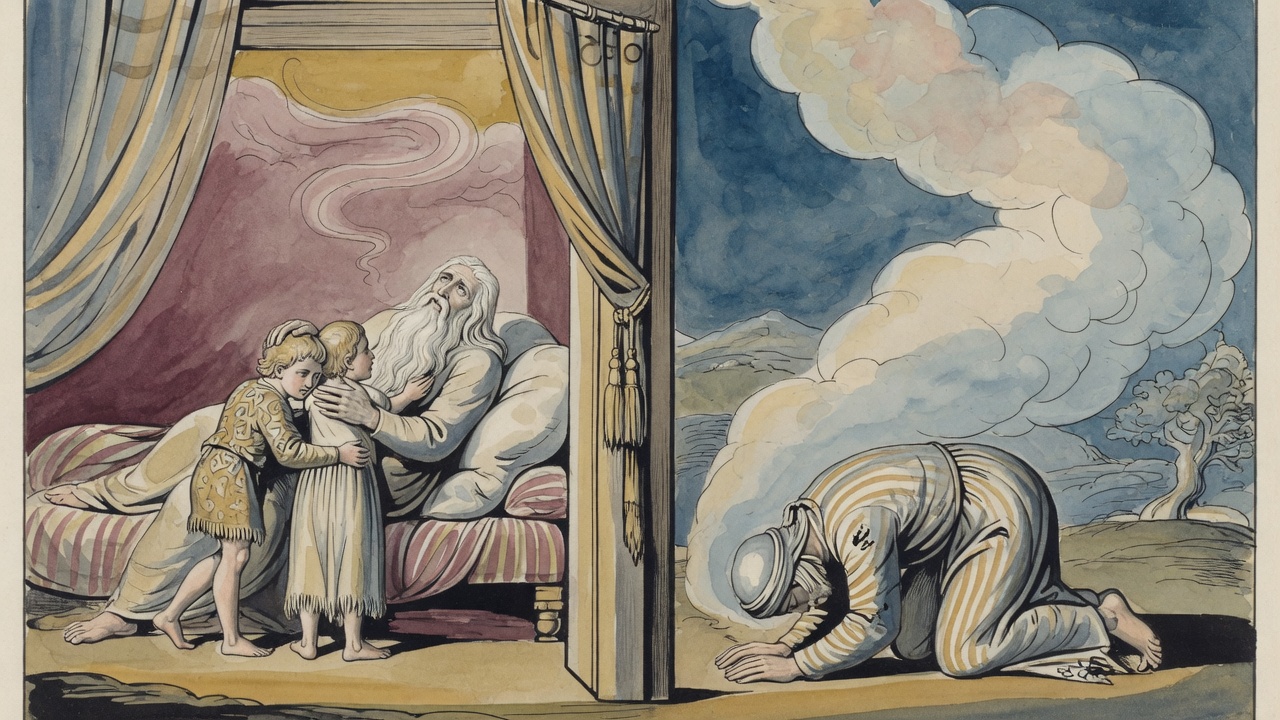
Then Jacob was dying, and he called Joseph in and asked him for something.
"If I have found favor in your eyes, do not bury me in Egypt." Only for your sake did I come down here at all, he said. Only for your sake did I say, now I can die.
"Carry me out of the land of idols. Bury me where God has made His name dwell, in the place where four husbands and four wives are to lie, and I will be the last of them." And do it, he said, as a real act of love. Not because you are afraid of me. Not because it is what a son is supposed to do.
Joseph swore it.
He had rearranged an empire so that no Egyptian could ever call his family strangers in Egypt, and the old man on the bed, who had let himself be brought down here for one reason only, still would not consent to be left in the ground of it.
← All myths