Moses Recited Psalm 91 Against Ketev Meriri, the Noon Demon
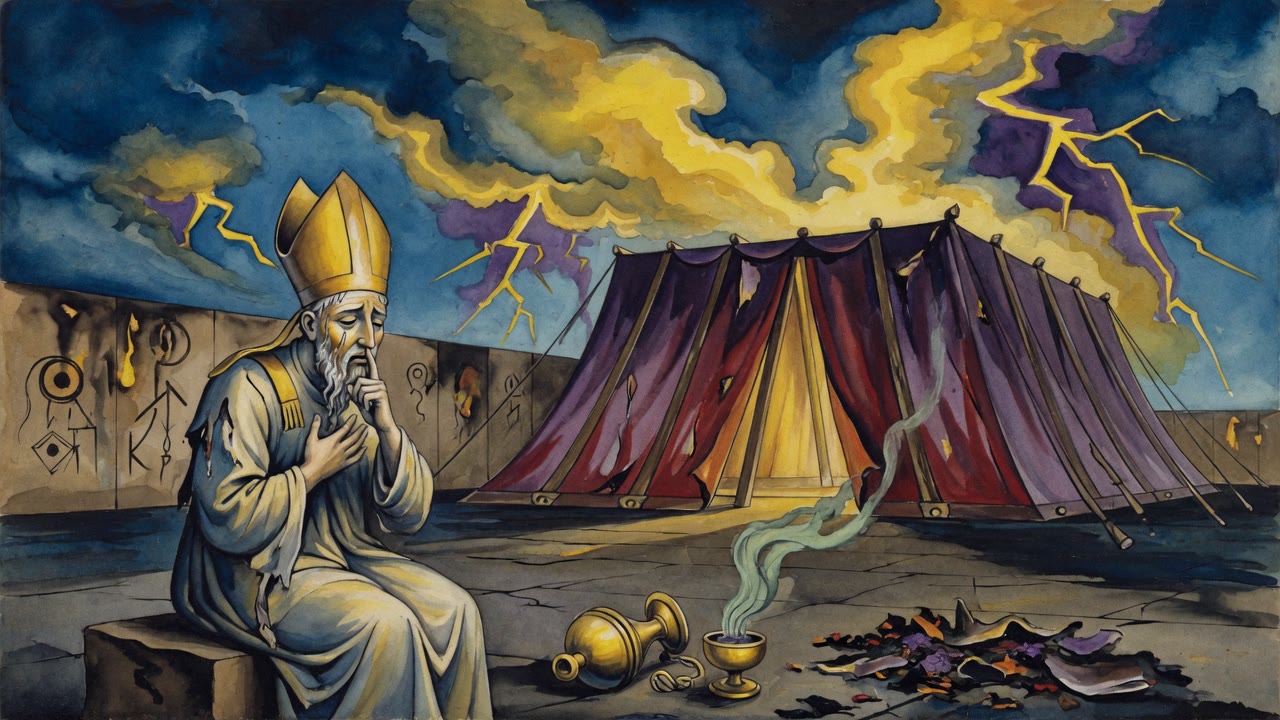
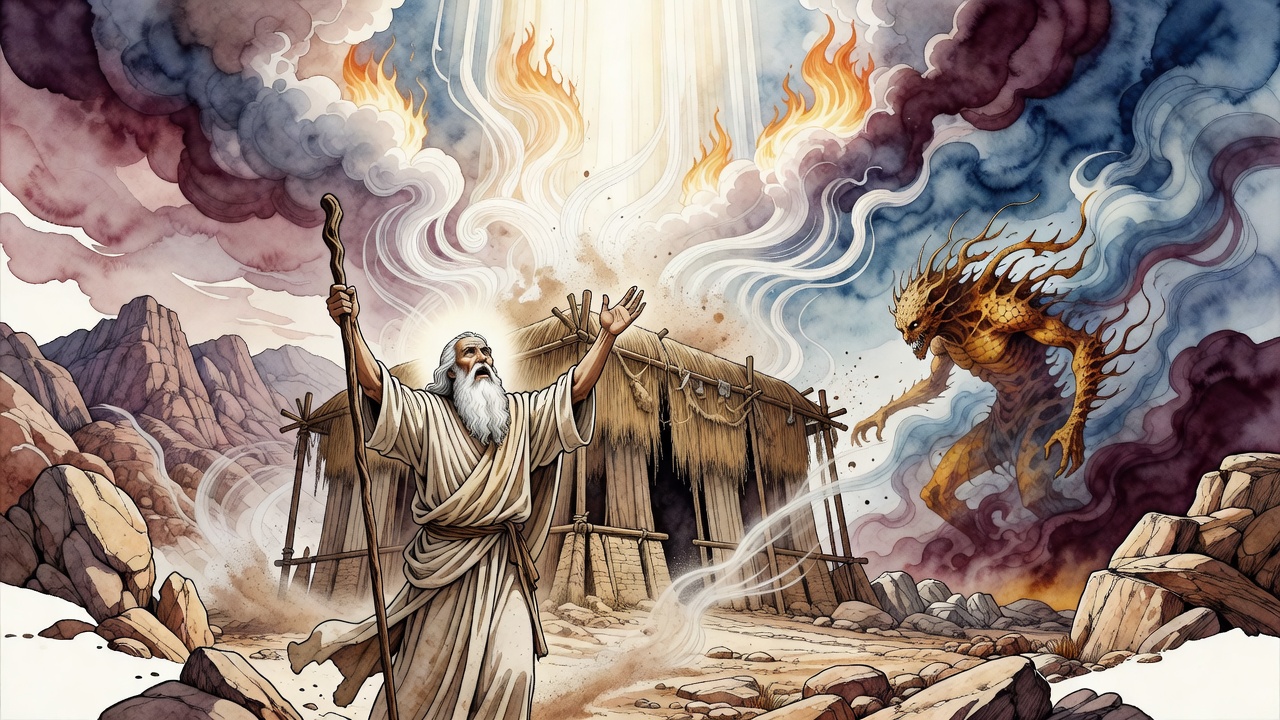
Moses recited Psalm 91 on Sinai to ward off demons, and when the Mishkan rose, the noon demon Ketev Meriri lost dominion over the world.
Table of Contents
 Click for full size
What Walked at Midday
Moses climbed Mount Sinai every time with a prayer. Not because he was afraid of height or of God. Because of what walked between earth and the divine presence at certain hours, and noon was one of them.
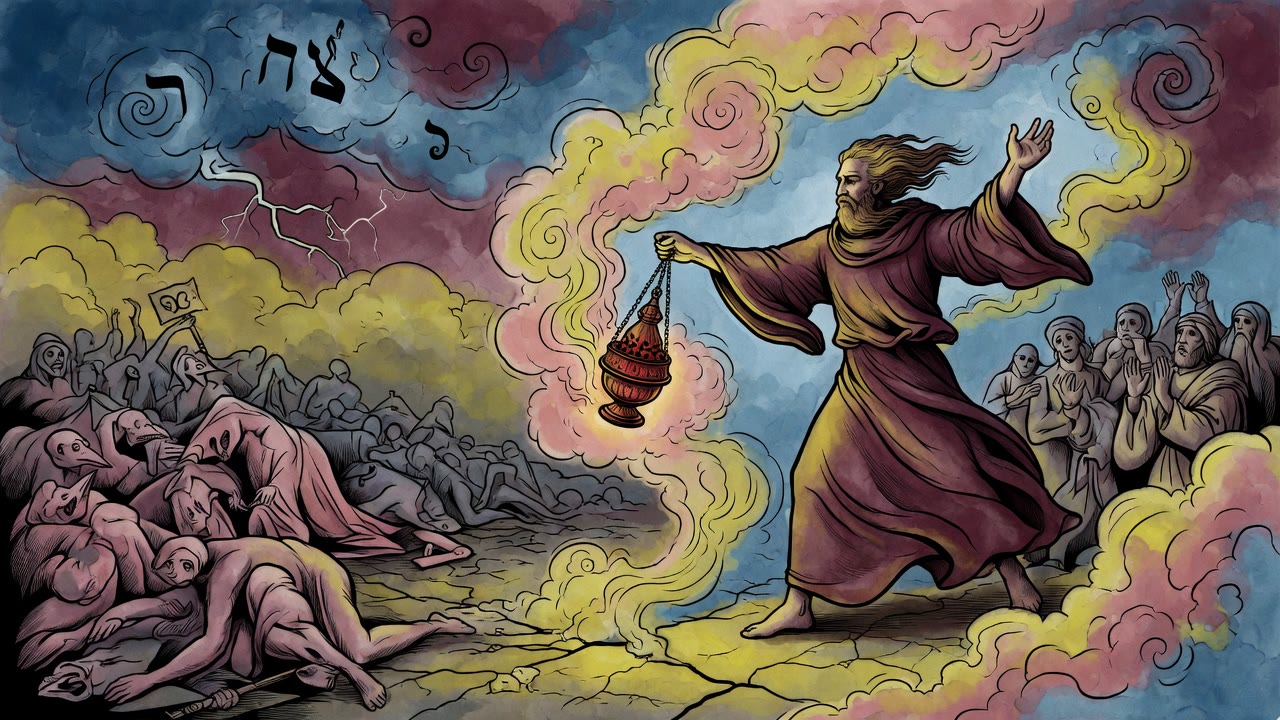
The psalm he recited is the ninety-first. In the tradition it is Moses's psalm, written when he entered the cloud on the mountain. Its language is precise about what it protects against. Terror by night. Arrow by day. Pestilence that walks in darkness. The destroyer that operates at noon. Rabbinic literature reads this line not as poetry but as documentation: the destroyer at noon has a name, and the name is Ketev Meriri.
The Demon in the Gap Between Shadows
Sifrei Devarim, the tannaitic midrash on Deuteronomy from late antiquity, reads the destruction described in Deuteronomy 32 as a profile of specific supernatural forces. The verse about being consumed with hunger and attacked by reshef is glossed as a description of demonic assault. Ketev Meriri operates in the hours between ten in the morning and two in the afternoon, specifically in the shadow-gap of the summer months, between the seventeenth of Tammuz and Rosh Hashanah. It is partially blind, moving through heat, feeding on the desolation that gathers in unshaded places when the sun is highest.
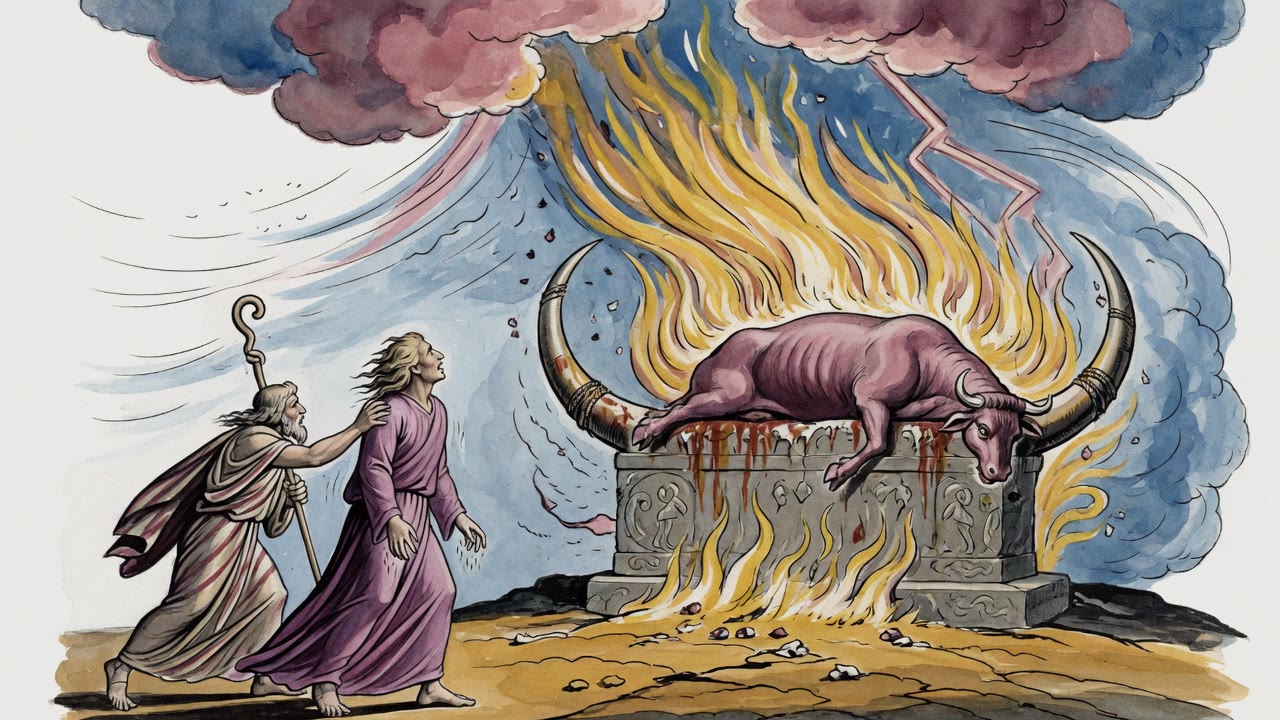
Bamidbar Rabbah 12, the midrash on Numbers compiled in late antiquity, places Psalm 91 directly in Moses's mouth on Sinai. Rav Huna, citing Rav Idi, reads the opening verse, He who dwells in the shelter of the Most High, as a description of Moses entering the cloud. The cloud is the shelter. Moses is the one dwelling in it. The protection promised by the psalm came to him first, and he recited it every time he climbed because the psalm was written from exactly that experience.
The Day the Mishkan Removed the Demons
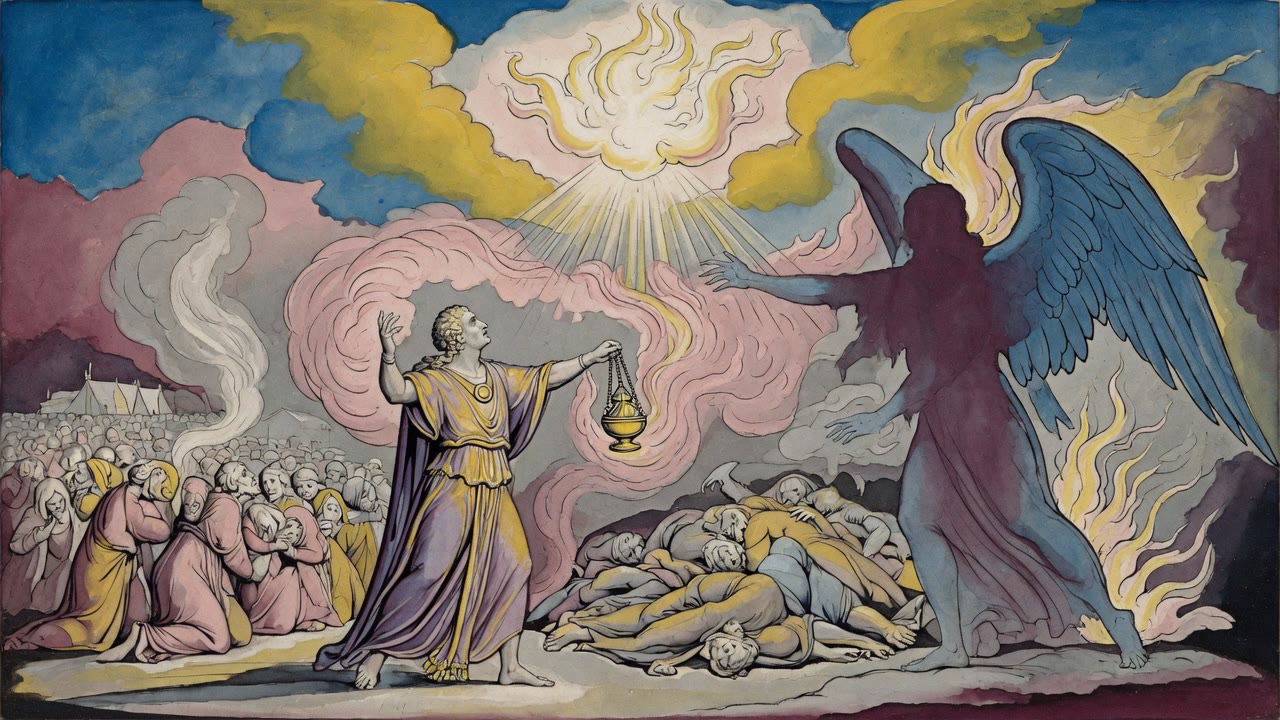
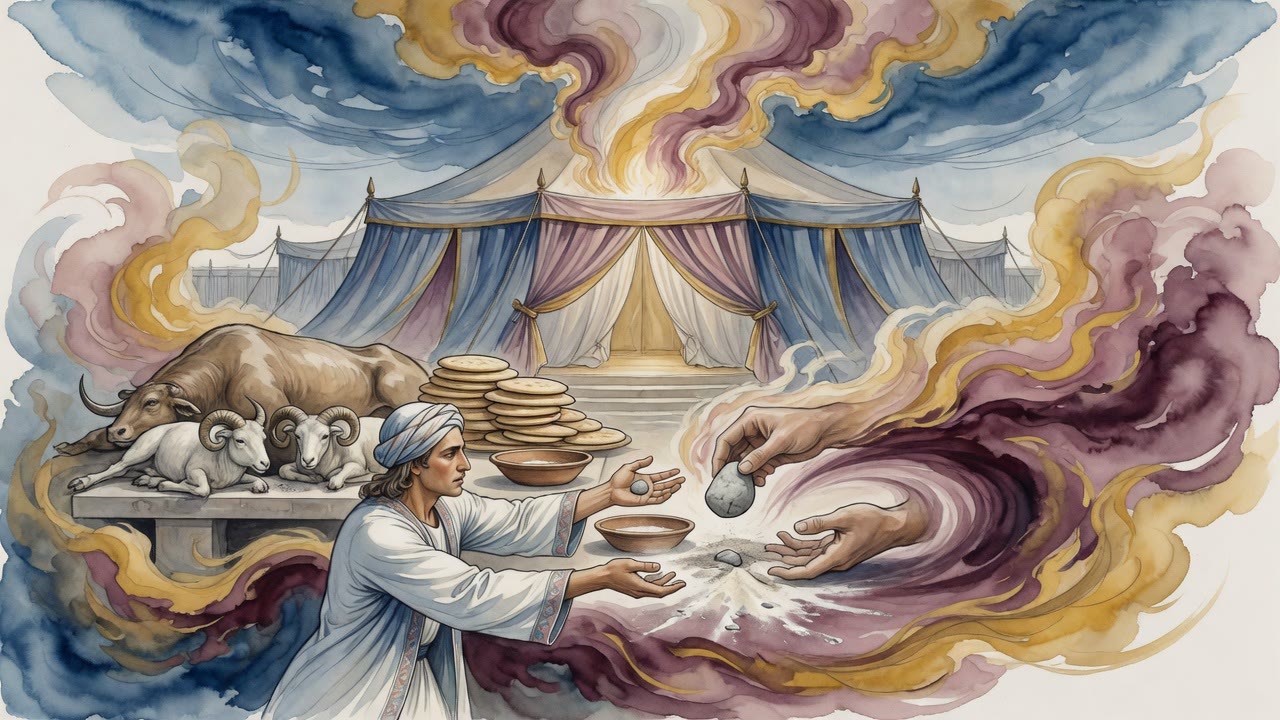
Midrash Tanchuma Nasso 23 provides the date: the day Moses completed the Tabernacle. The verse in Numbers says, So it came to pass on the day that Moses had finished. Rabbi Johanan read the word for finished, from the Hebrew root klh, as a pun on the word for annihilation from the same root. On the day Moses finished the Mishkan (the portable wilderness sanctuary), the destructive demons were annihilated from the world.
Before that day they were ordinary. Ginzberg's Legends of the Jews records that the demons had free range of the earth before the Mishkan stood, wandering wherever they wished. Even Moses had to recite Psalm 91 on every ascent of the mountain to protect himself from them. Then the sanctuary rose and the terms changed. The demons were not all destroyed. But their freedom to move through the human world without restriction ended when the divine presence chose a fixed earthly address.
What the Protection Required
Psalm 91 works as protection in the tradition not because it is a beautiful poem but because it was spoken in the right place at the right time by the right person. Moses spoke it in the divine shelter on the mountain. The psalm's power derives from that original utterance. When Israel recites it, they are repeating the words Moses said when the protection was first needed and first given.
Ketev Meriri is not destroyed by the psalm. It is driven back. It operates in the hours when the sun makes no mercy, when heat accumulates and shadows vanish and the unprotected stand exposed. Psalm 91 is the protection against that exposure. The person who recites it places themselves in the cloud where Moses stood, inside the shelter that a noon demon cannot enter.
After the Mishkan, the rules of demonic presence shifted. The supernatural forces that once wandered freely were constrained by the existence of a place where God's presence concentrated. Ketev Meriri still had the gap between shadows. But it no longer had the whole world.
← All myths