Luz, the City Where Death Could Not Enter
Solomon sent his scribes through the hollow almond tree. The Angel of Death was already waiting at the gate they thought was safe.
Table of Contents
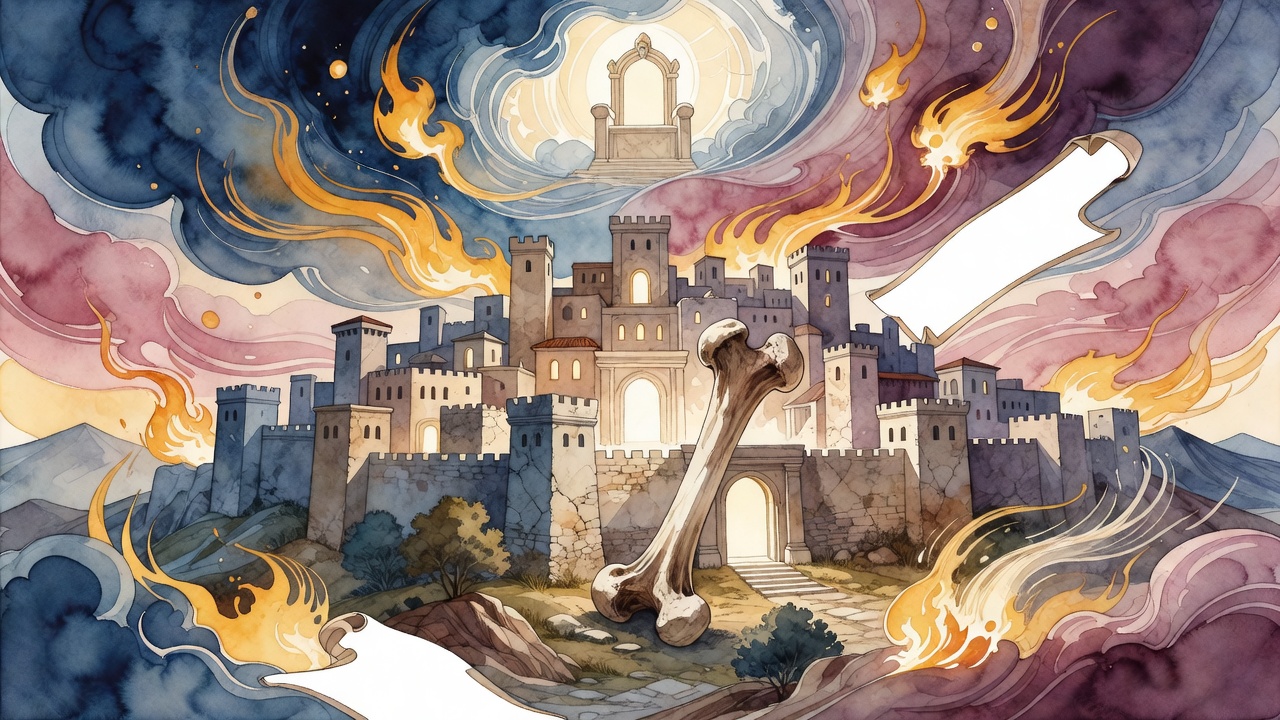
The almond tree stood hollow at the city's edge. A living man had to duck through the trunk, then through a cave, then into Luz. The Angel of Death stopped at the bark.
 Click for full size
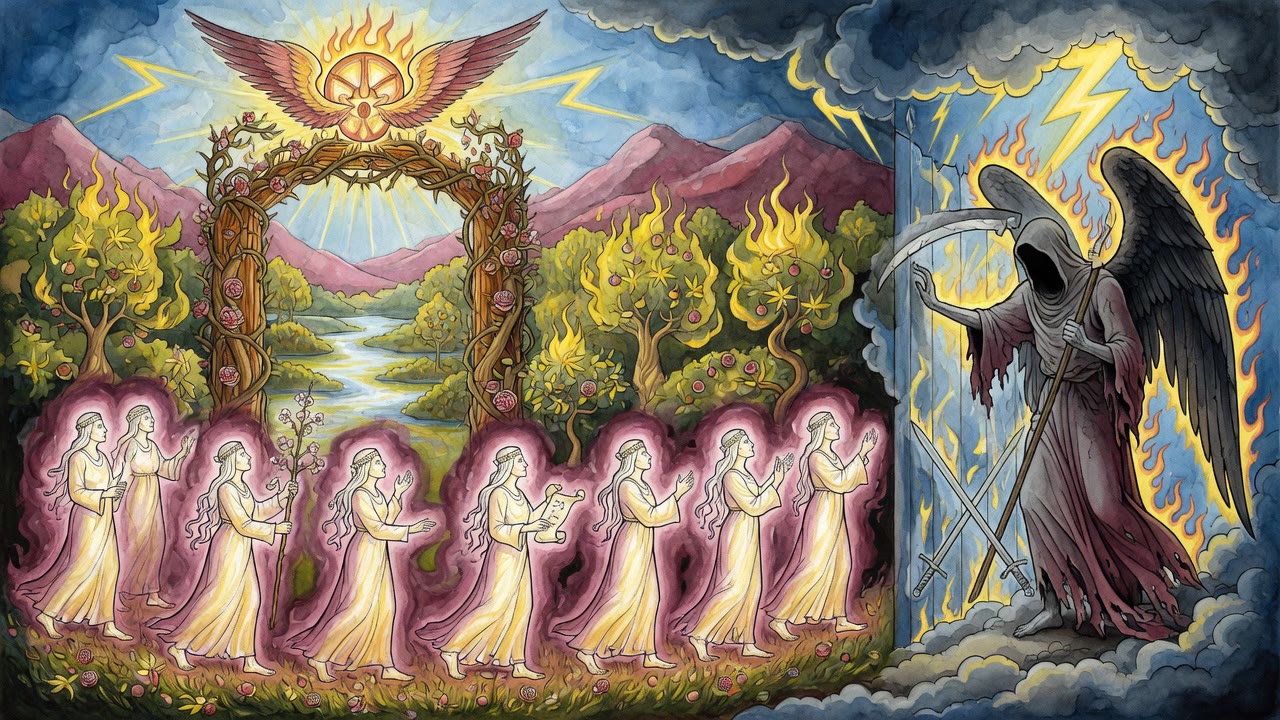
Inside, the histories had a hole in them. No war. No plague. No death recorded on any ledger. Sennacherib had come and had not mixed the place. Nebuchadnezzar had come and had not burned it. Old men who grew tired of living walked back out through the tree, past the wall, and died in the open air, because that was as close as the Angel was allowed to stand.
A Finger at the Hidden Door
The city began with a betrayal that looked like kindness. Spies from the house of Joseph watched a man leave the old Luz of the Canaanites and stopped him. "Show us the entrance of the city, and we will deal kindly with thee" (Judges 1:24).
He pointed with a finger. They put the city to the sword. They let him go, and his family with him, because they had promised. He walked into the land of the Hittites and built a new Luz and gave it the old name, and the name stuck.
He had not spoken much. He had not walked far. One finger, and his seed was spared for every generation after. The new Luz dyed techelet there. It sat on the ground where Jacob slept with a stone for a pillow and dreamed a ladder, and the holiness that came down that night did not lift when he walked on (Genesis 28:12).
Two Scribes at the Gate
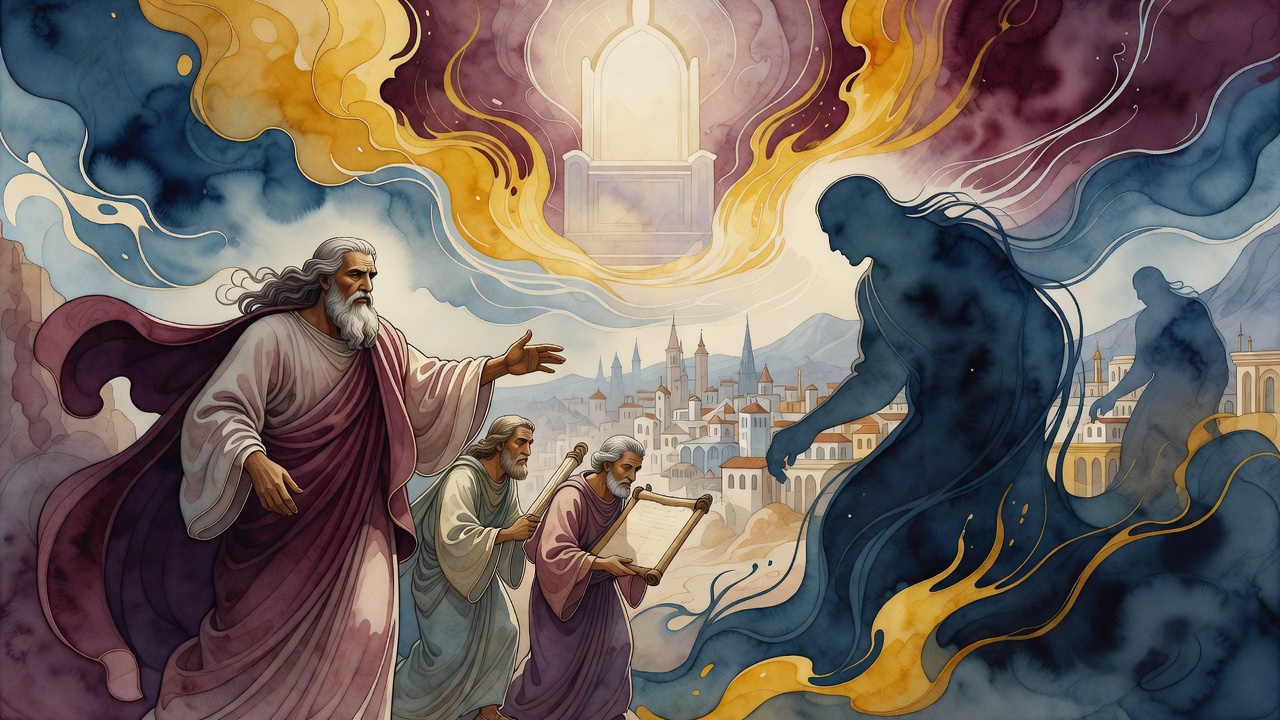
Solomon looked at the Angel of Death one morning and saw trouble on that face. Not pity. A job that would not sit still. The king asked what the Angel was hunting. The Angel named Elihoreph and Ahijah, sons of Shisha, the keepers of the kingdom's records.
Solomon ordered the demons to carry the two scribes to Luz at once, because Luz was the one spot on earth where that Angel had no power. The demons did it in a breath. The scribes reached the hollow tree, reached the gate, and died there, at the exact edge of safety.
The next morning the Angel stood in the palace looking satisfied. "Thou didst transport those two men to the very spot in which I wanted them." He had not been allowed inside. He had needed them at the gate. Solomon's wisdom had delivered the package.
The Bone on the Anvil
The same name sits in the spine. Hadrian asked Rabbi Joshua ben Chanania from what the dead would be rebuilt, if the body goes to dust. "From Luz in the backbone," the rabbi said. The emperor told him to prove it.
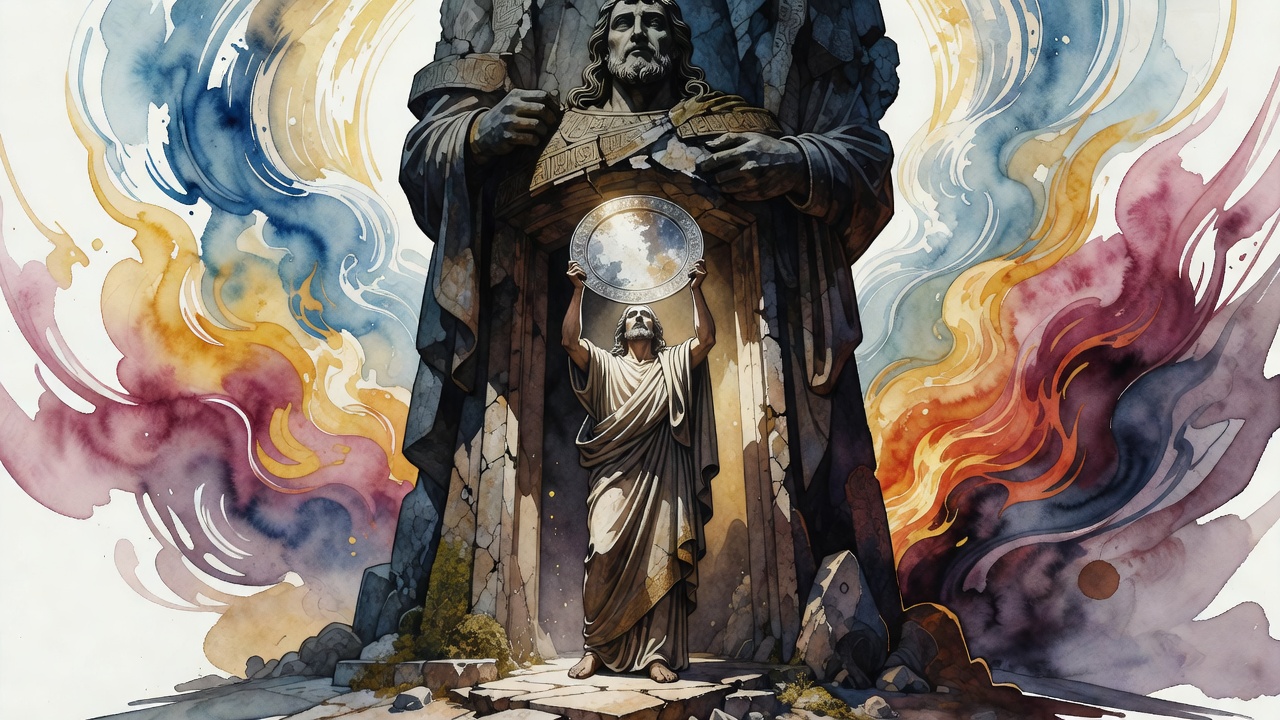
Joshua took the small bone, shaped like an almond, and put it in water. It did not soften. He put it in fire. It did not burn. He put it in a mill. It would not grind. He set it on an anvil and struck with a hammer. The anvil split. The hammer broke. The bone sat there, the size of the nut the city was named for.
Every body, he said, would be raised from that piece, the way a plant comes from a seed. Death could take the rest. It could not take Luz.
The Ones Death Never Touched
There were people the Angel never touched at all. Enoch walked and was not, because God took him. Serach bat Asher told Jacob that Joseph was alive, and Jacob said the mouth that brought that news would not taste death. Bityah, Pharaoh's daughter, drew Moses from the river, and her wage was to keep her life. They did not need a hollow tree. They went into the Garden still breathing.
Luz was for everyone else. A city a man could enter through an almond and leave when living became too long. Solomon's scribes never made it inside. The bone in the back would outlast mill and fire and the emperor's hammer, because the remnant death cannot eat has always been small, hard, and named for a nut.
← All myths