Mar Ukva Hid in a Furnace So the Poor Man Would Not See Him
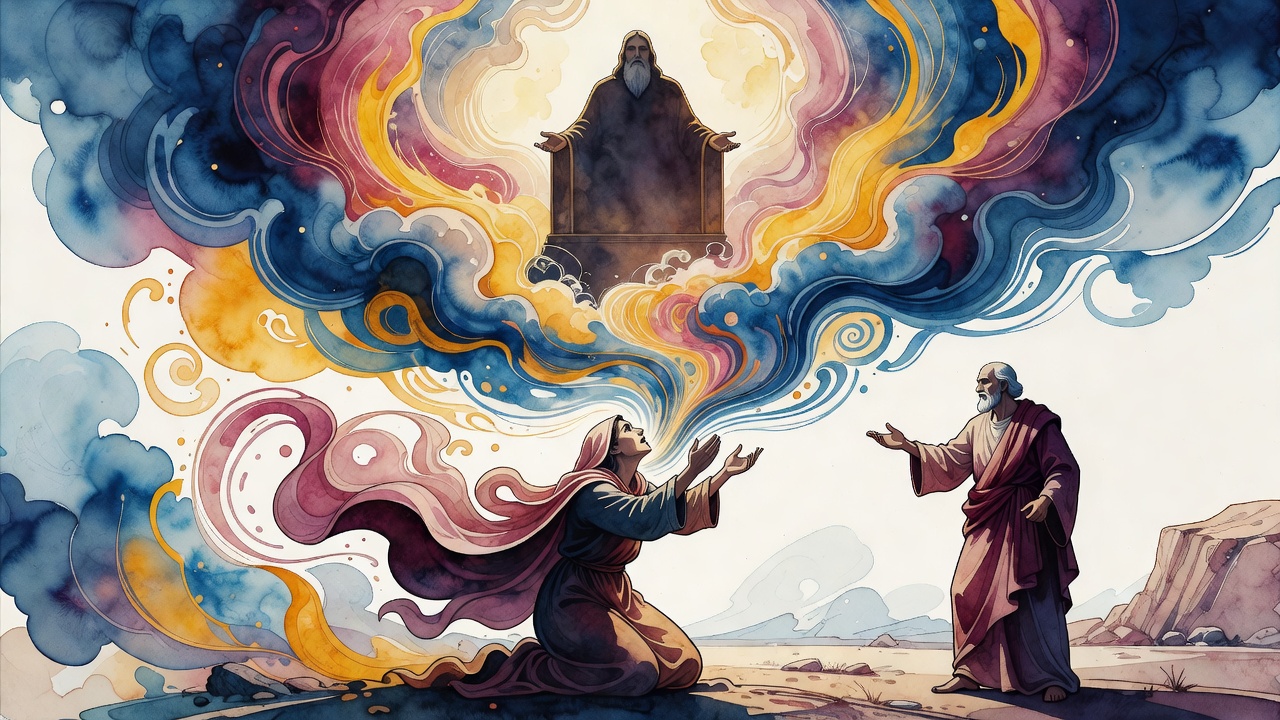
Coins appeared under a doorpost for years. Then the poor man opened the door, and the giver ran toward a furnace still hot from the day's fire.
Table of Contents
Every evening Mar Ukva walked a street in Babylonia with coins in his fist and one rule in his mouth. The poor man must never see the face that fed him.
 Click for full size
He slipped the coins into the socket of a doorpost and kept walking. Inside, a man found money and did not know whom to thank. That was the use of the socket. Thanks would have been an injury. The charity had to arrive without a face.
Years went by that way. The poor man ate. Mar Ukva's name stayed off the gift.
The Door Opened
Curiosity outlasted hunger. The poor man put his eye to a crack one evening and waited. A figure came down the street, paused at the post, and reached toward the socket.
The door flew open.
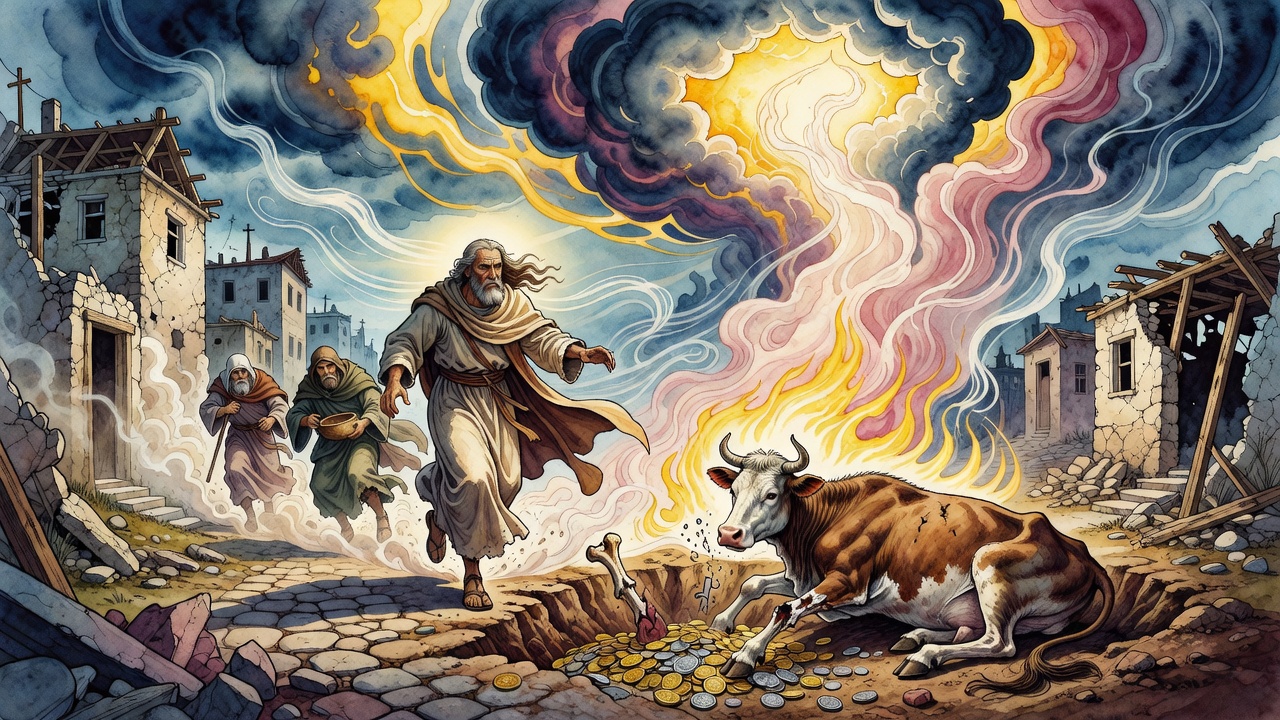
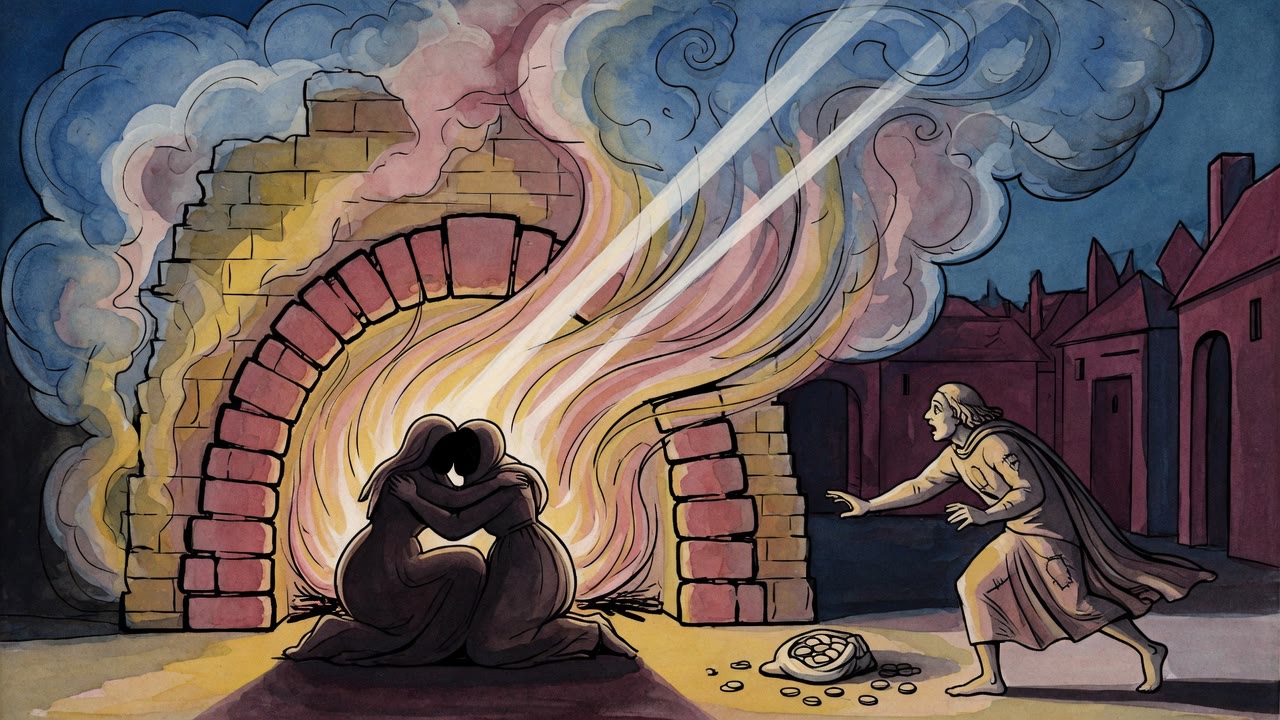
Mar Ukva saw the light from inside and ran. His wife was with him that night. She ran too. They turned down an alley and found a furnace that had been used that day, still hot at the rim, the air above it shivering. They ducked inside.
Footsteps followed, then slowed, then stopped. The poor man hunted a face in the dark and did not find one. He went back to his door. The coins were in the socket again, and still had no name.
Stand on My Feet
Heat came up through the floor of the furnace. Mar Ukva's feet began to burn. The leather of his sandals went thin. He shifted, and the shift did not help.
His wife told him to stand on her feet.
He stepped onto them. Two people stacked in a dark oven. Her skin did not blister. His stopped burning only where it left the floor and found hers. They stayed that way until the alley went quiet.
When it was safe to come out, he asked why the fire had taken his skin and left hers.
She said, "I am always at home. When a poor person comes to my door, I give food. Not coins to be turned into food later. Bread, now. He leaves full."
Mar Ukva's coins were careful and delayed. Her bread was immediate. The heat had gone around her and not around him.
Wine for a Man Who Had Lost a House
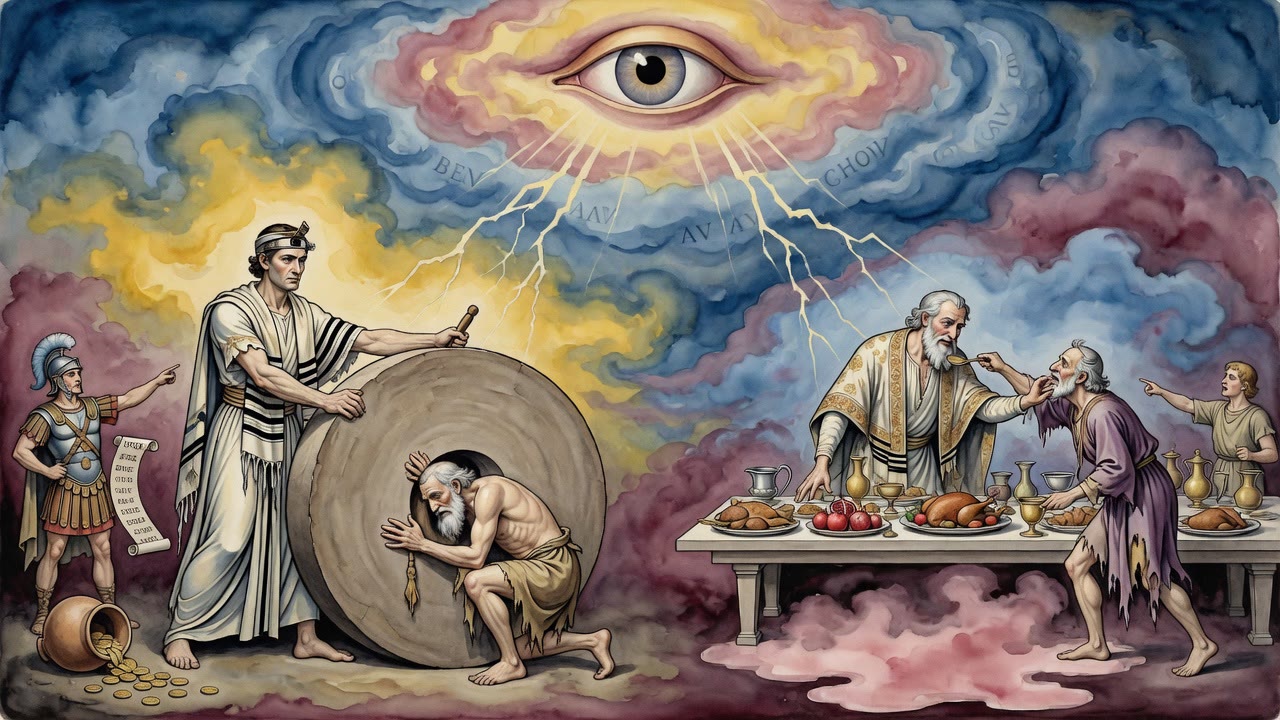
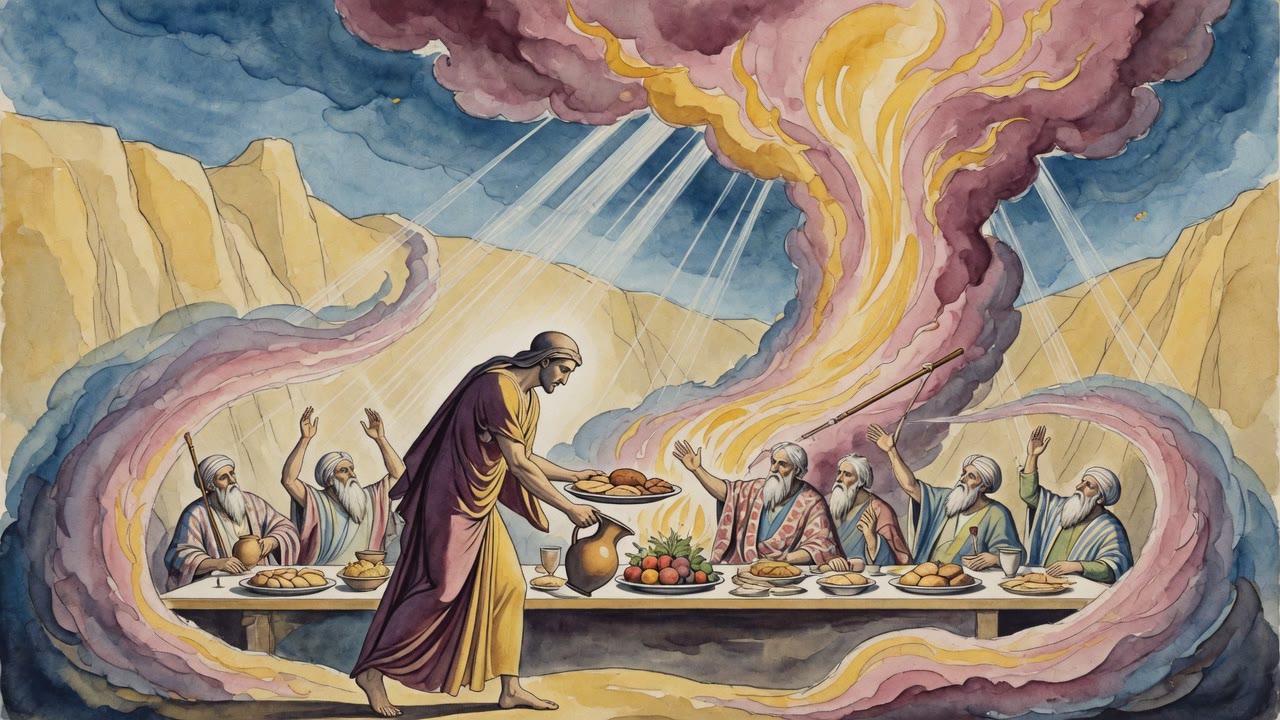
The same no-face rule ran through the rest of his giving. One of the men he supported had not been born poor. He had been an aristocrat, wine with every meal, fine linen on the bed. After the Temple fell, the household went. He was hungry now in a way that still remembered cups and cloth.
A messenger came back to Mar Ukva and said the man did not look like he needed alms. The messenger had seen old wine on the table.
Mar Ukva doubled the gift that day. He added what the wine cost, and what the linen cost. Plain bread would have kept the man from dying. It would not have kept him as himself. A former aristocrat fed like a beggar is still deprived, even if he is not starving.
The coins still went without a name. The man drank wine he could not have named a donor for. That was how Mar Ukva wanted it.
Seven Thousand Dinars
Near the end he asked for an accounting. Seven thousand gold dinars given over a lifetime of sockets and side streets. He sat with the number and found it small for the years he had been given.
He sent half of what remained out of the house to the poor before he died. No socket this time. A last transfer, still without a speech, still without a face at anyone's door.
The man who had stood on his wife's feet in a furnace so a hungry neighbor would not have to say thank you left the world still trying to give more than the ledger showed. The furnace cooled. The gold left. Nobody in the street was told whose hand had opened.
← All myths