Metatron Keeps Heaven Steady While Israel Provokes Below
The moment the desert Tabernacle rose, a mirrored sanctuary locked into place above it. Metatron runs the upper one. Bilam ran his mouth with iron in it.
Table of Contents
 Click for full size
Two Tabernacles Going Up at Once
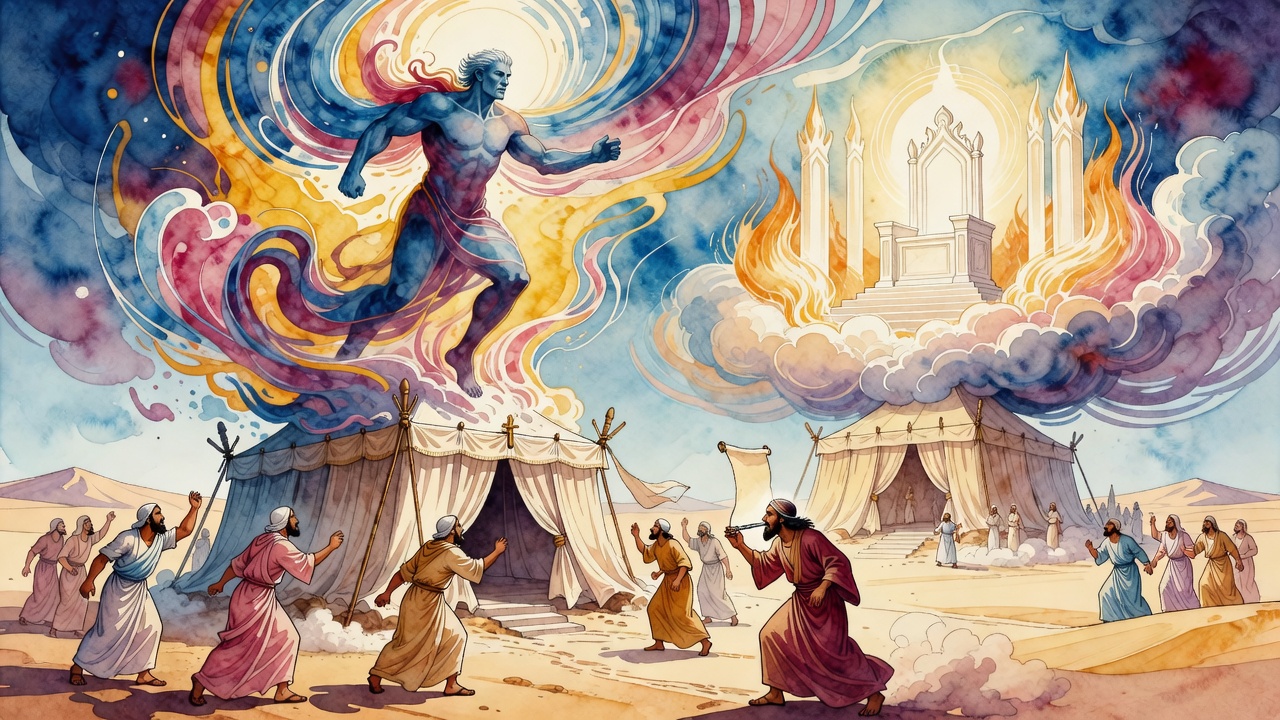
When God told Moses to raise the Tabernacle in the desert, Rabbi Simon imagined the instruction going out in two directions simultaneously. Moses received it and relayed it to the craftsmen below. At the same moment, the same instruction arrived in the heights.
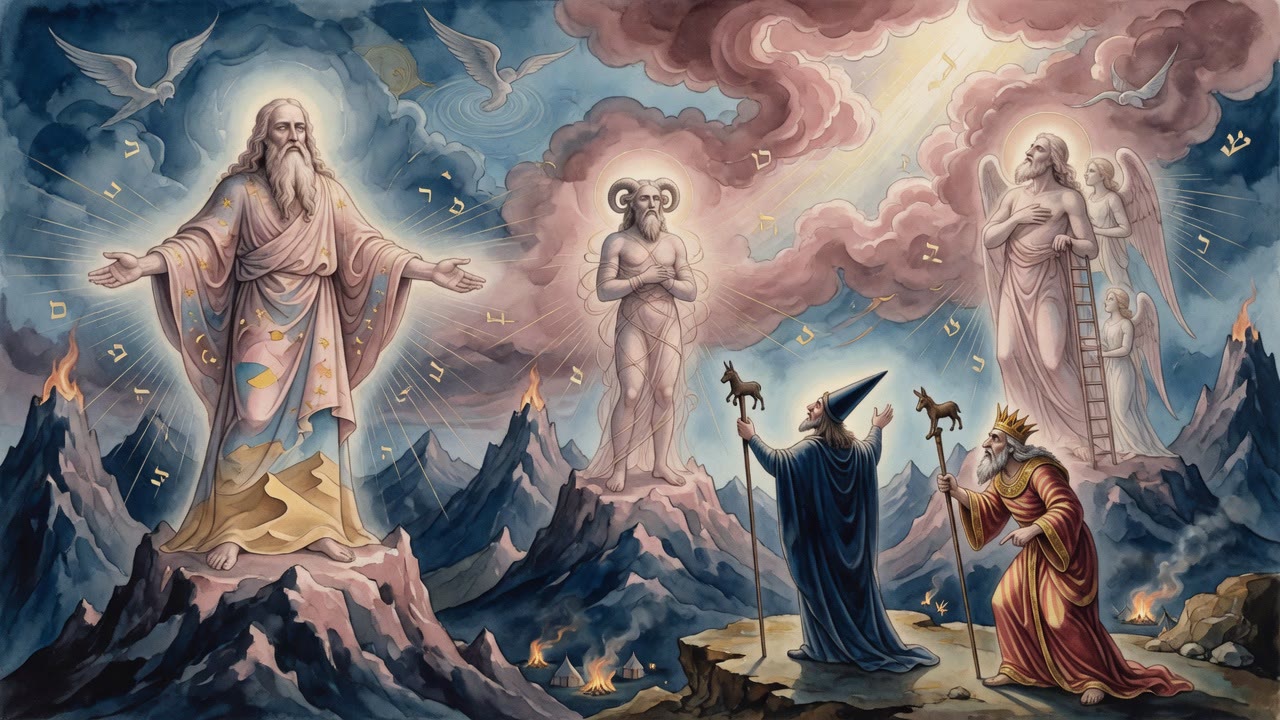
The two structures rose in lockstep. The moment the desert poles slid into their bronze sockets below, a mirrored sanctuary locked into place above. Same blueprint, different building materials. Below: acacia wood, gold, silver, linen, dyed wool, animal skins. Above: what the angels handle and what fire holds together.
And the heavenly one had a caretaker. Metatron, the angel the later mystics would call the Prince of the Presence, presides over the upper sanctuary. His job description in this text from Bamidbar Rabbah is stark. He offers the souls of the righteous as atonement for Israel while Israel is in exile. The earthly Tabernacle was not a copy of a heavenly original. It was the second half of a single act of construction that required both worlds to complete itself. Moses built the bottom. Metatron maintains the top. The exile has been running on this arrangement ever since the earthly building burned.
God's Patience and Its Outer Edge
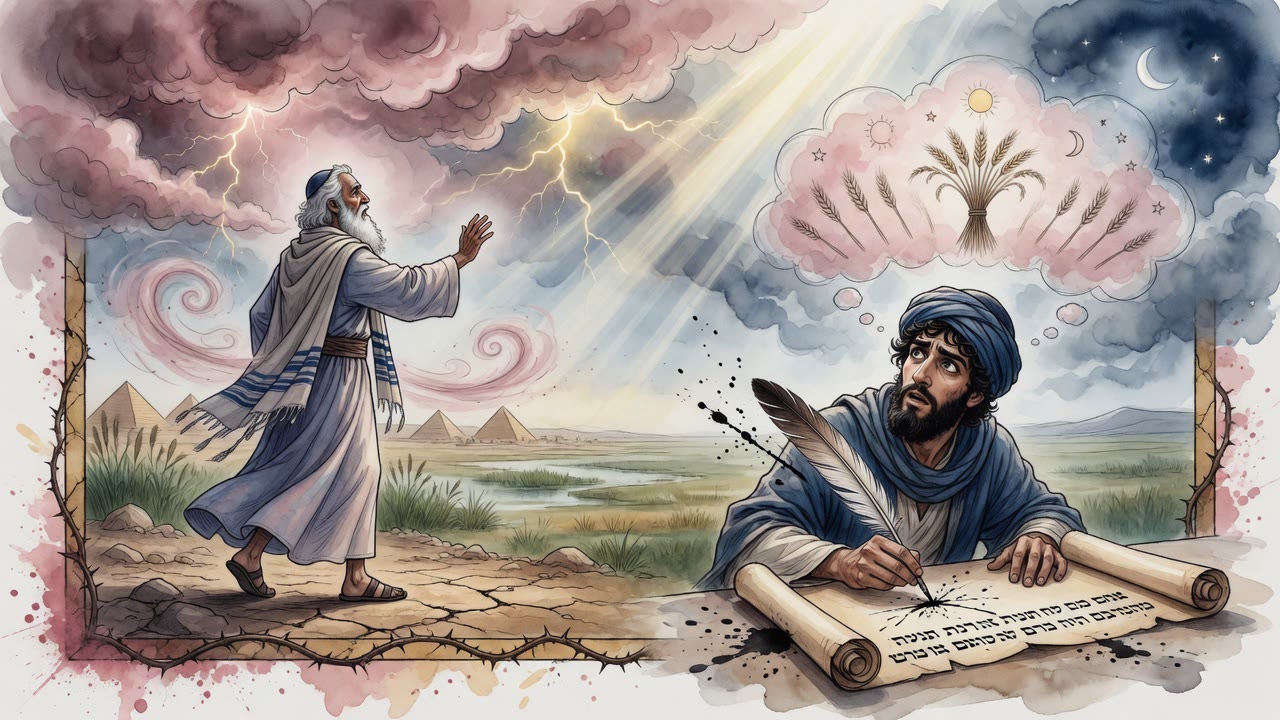
Numbers 14:11 records a moment when God's question breaks through the Torah's surface with unusual rawness: How long will this people provoke me? Bamidbar Rabbah could not read this as a rhetorical flourish. The rabbis took the question literally. They heard a specific limit being named, a point past which the provocation could not go without consequence.
Rabbi Yochanan and Rabbi Shimon bar Lakish debated what the limit was. Rabbi Yochanan said God's patience was the thing that made Israel's survival possible at all. The people had provoked Him with the golden calf, with the quail, with the spies, with Korach, and yet the punishment had never been final. The question was not a threat. It was a statement of astonishment. How long, and yet they continue.
Rabbi Shimon bar Lakish heard it differently. God's question was the voice of a parent who has absorbed blow after blow and is asking, not to the children, but to himself, how much more can this hold? The answer Bamidbar Rabbah gave was: more than you expect. The patience that held the people together from Egypt to Sinai to the Land was not a passive tolerance. It was a capacity that had been built, from the beginning, to absorb what a human community in the desert would inevitably do.
Bilam and the Iron Bit
Then the sorcerer arrives. Bilam ben Beor, hired by Balak king of Moab to curse Israel as they camped on the plains before the Jordan. The man who could open a divine address and make his words stick. Balak believed that if Bilam cursed from the right hilltop at the right moment, the curse would travel and Israel would weaken.
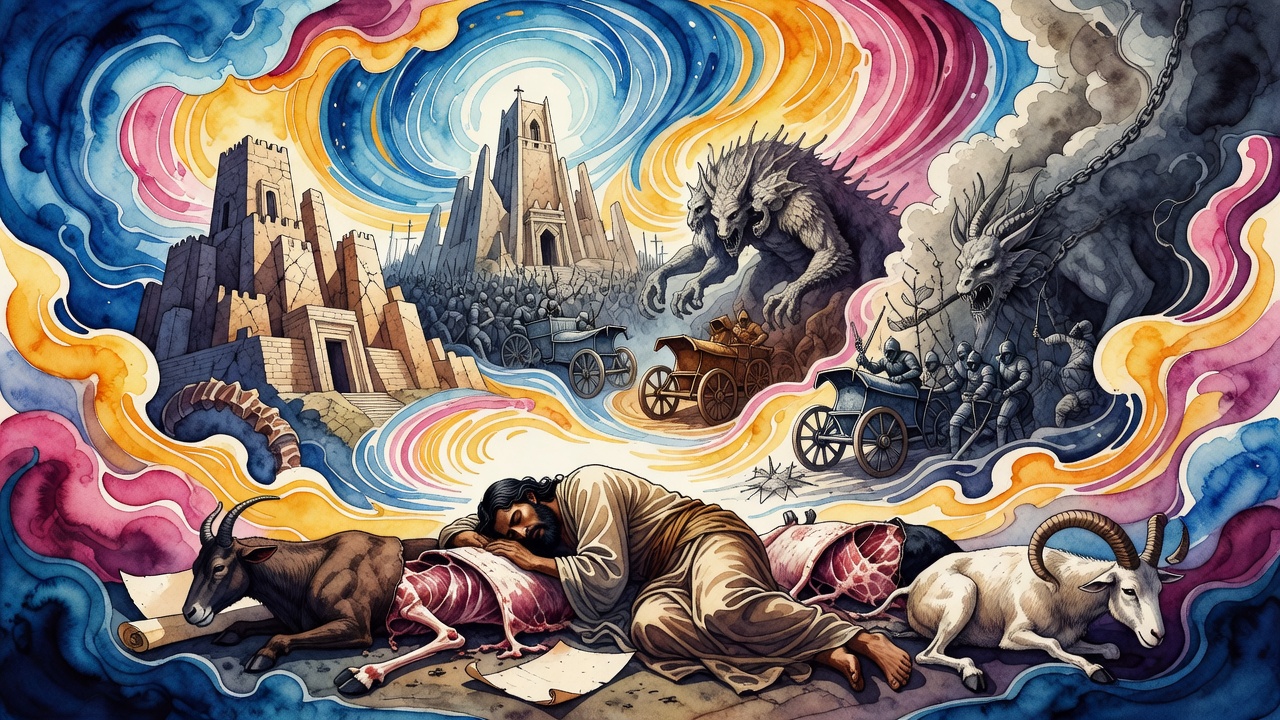
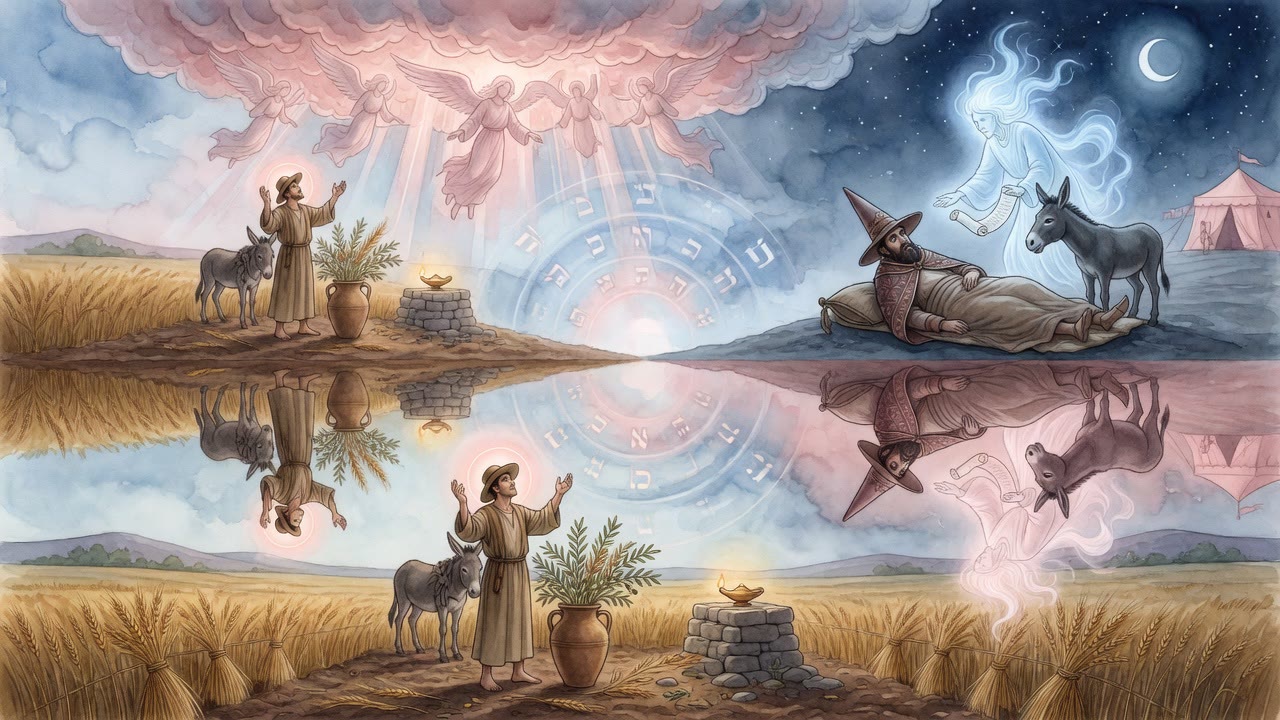
Bamidbar Rabbah described what happened to Bilam's mouth when he tried to curse. God put an iron bit in it. Not metaphorically. In the midrash's reading, Bilam's jaw was controlled the way a horse's jaw is controlled by a rider: he could open his mouth, he could form words, but the direction of the words was no longer his to determine. The curses that assembled themselves in his mind and traveled to his tongue came out as blessings. Numbers 23:8: How shall I curse whom God has not cursed?
Bilam knew what was happening. He was not confused. He was a professional who had lost control of his own tool. He could hear himself blessing while he was trying to curse, and there was nothing he could do about it. He stood on the heights of Peor and opened his mouth and out came the words that would be spoken in every synagogue every morning for the rest of Jewish history: How goodly are your tents, O Jacob, your dwelling places, O Israel (Numbers 24:5).
The Two Sanctuaries and the Sorcerer Who Made One Beautiful
Bamidbar Rabbah placed Bilam's blessing inside the same framework as Metatron's maintenance of the upper sanctuary. Both are about what happens to forces that operate against Israel when they come within range of something that holds the covenant in place. The iron bit in Bilam's mouth was not a punishment. It was the same force that made the Tabernacle poles slide into their sockets in perfect alignment with the heavenly structure above. The design does not tolerate opposition well. The words that leave Bilam's mouth are shaped by the same architecture that Metatron maintains above.
The Tabernacle below is still standing, in the sense that Torah still circulates and the structure of the covenant still operates. The Tabernacle above is still being maintained, in the sense that Metatron still offers the souls of the righteous as the earthly building no longer can. And the sorcerer's words, shaped into beauty against his will, are still being sung every morning as evidence that the design holds even when the people provoke and even when the enemies assemble on the heights.
← All myths