The Farmer Who Woke Up and Crowned Himself a Nazirite
Heaven calibrates to the vessel you build. A farmer who vows away wine gets treated like a High Priest. Bilam, hired to curse, gets God only at night.
Table of Contents
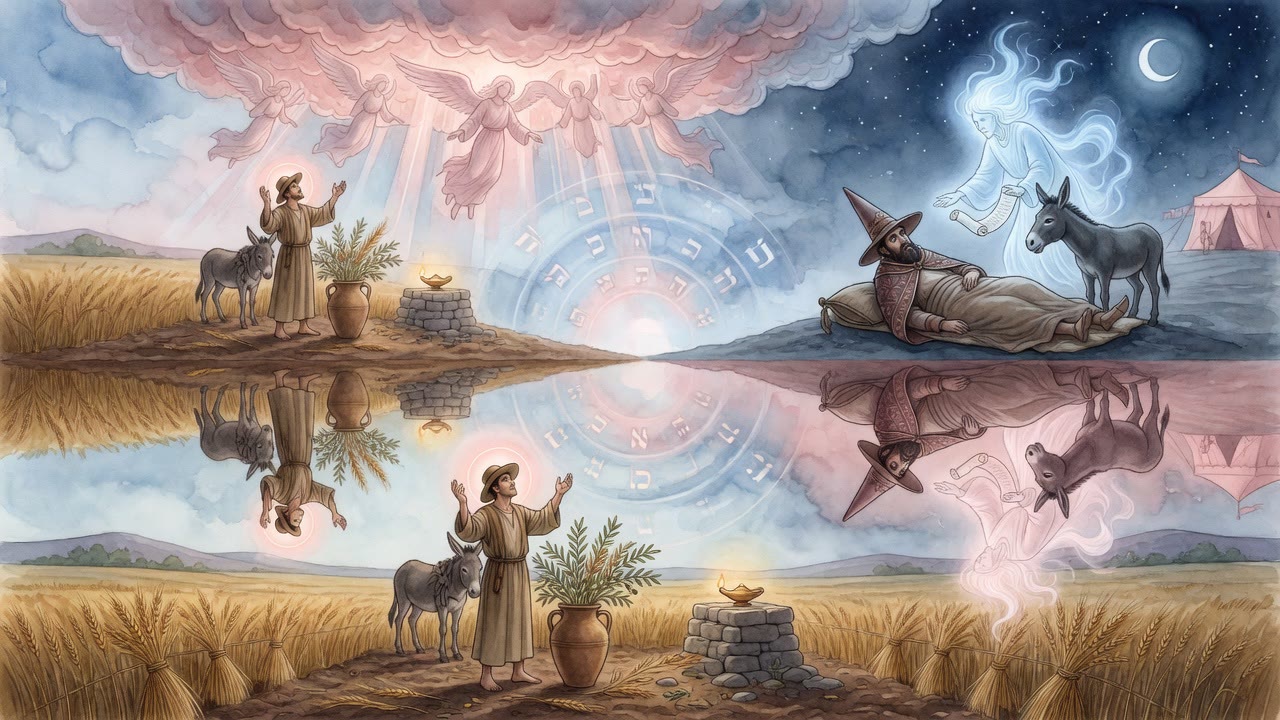 Click for full size
Nobody asked him
The nazirite is not a priest. Nobody appointed him. No tribe gave him the role. No law required him to stand up one morning and vow off wine and haircuts and the proximity of the dead. He is a shepherd or a farmer or a craftsman who decided, on his own, to close a set of doors around himself and walk more carefully for a while.
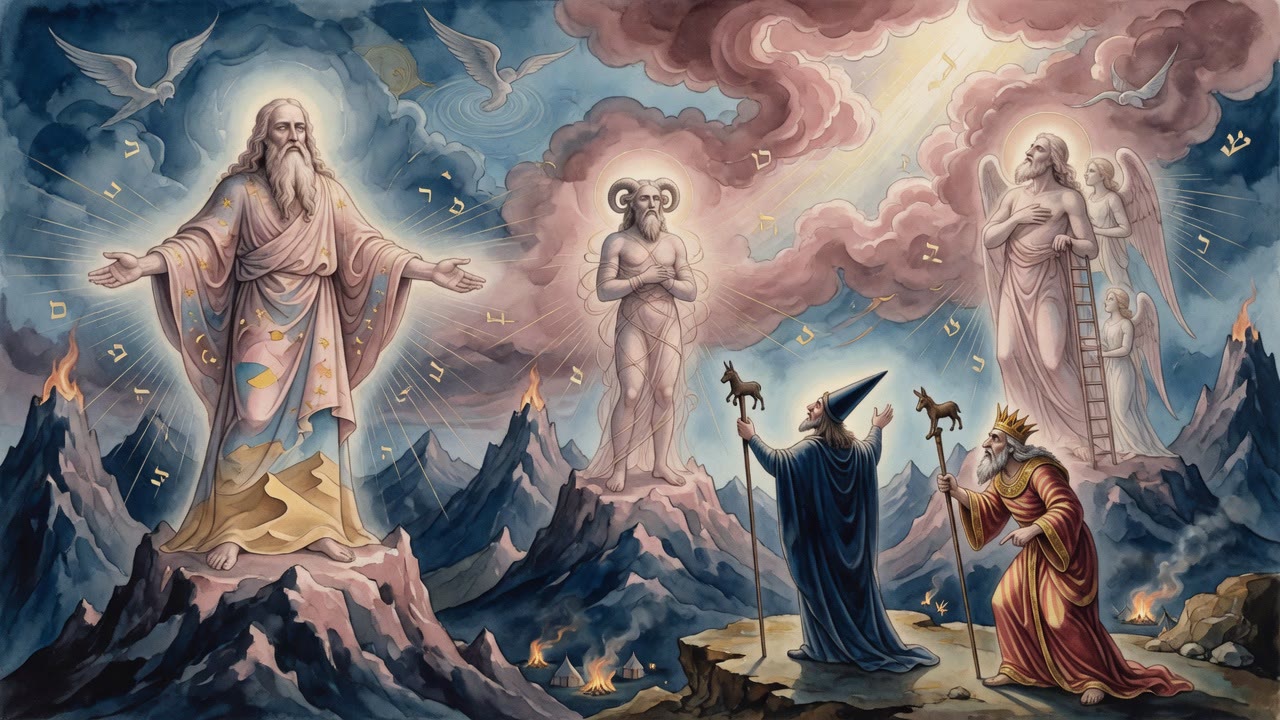
Bamidbar Rabbah 10:11 called this the cleanest possible test case for one of its central claims. Anyone who sanctifies himself below, they sanctify him above. Build a vessel of a certain capacity down here, and heaven pours into you accordingly. The nazirite is the proof, because nobody below sanctified him. He sanctified himself, and so the calculation falls entirely on the response from above.
The Torah gave him the High Priest's title
The rabbis looked at the language used for both figures and found the same word. The High Priest, anointed and consecrated through days-long ritual, is called holy in the Torah. The nazirite, who vowed without ceremony on an ordinary morning, is also called holy in the Torah, specifically in the verse that forbids him from approaching the dead: all the days of his abstinence to God.
To God. Not to a tribunal. Not to a priestly overseer. The nazirite's separation is addressed directly upward, to the same address as the High Priest's. The level of sanctification a person builds below determines what level they can reach above. The nazirite built something real, and the cosmos rearranged around his head to match it.
Bilam waits for nightfall
Then the midrash turned to someone who had not sanctified himself and watched what God did with that.
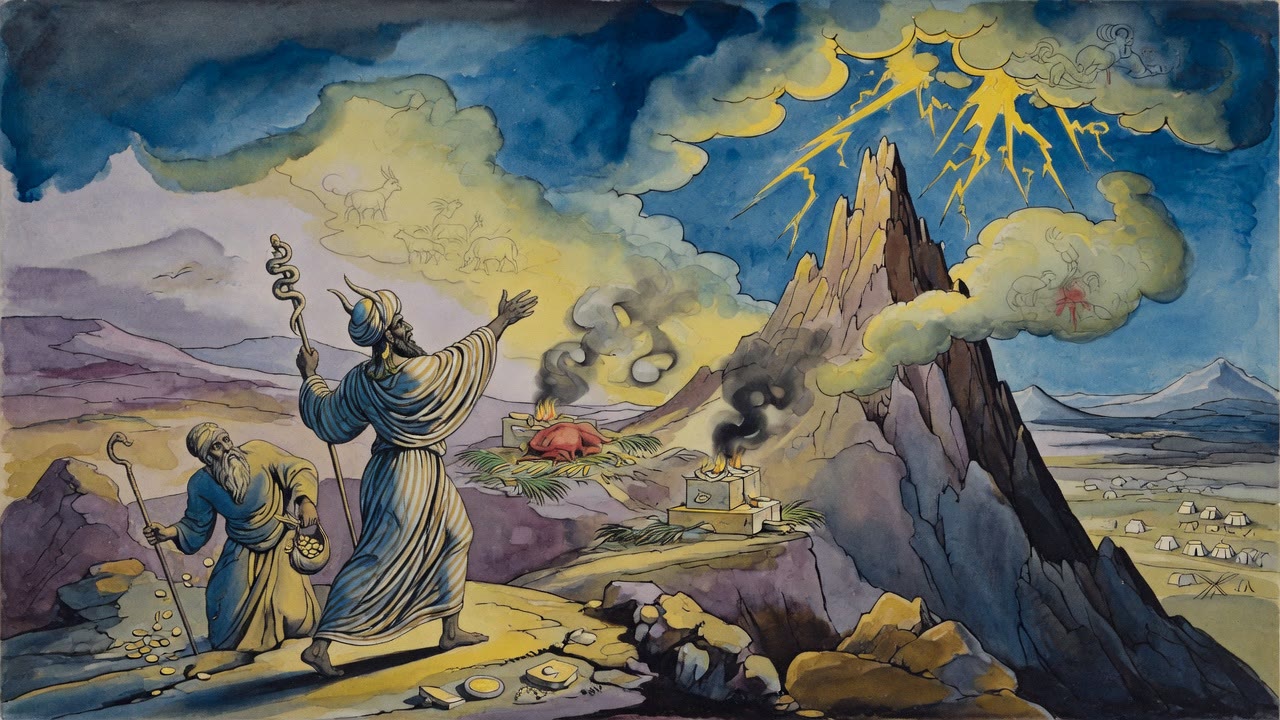
Bilam the prophet was hired to curse Israel. He was a genuine prophet, the rabbis acknowledged that. God did speak to him. The evidence was in the text of Numbers. But the rabbis noticed when God spoke to him and when God did not.
God came to Bilam at night. Not in the morning, not in the clarity of day, not in the broad open hours when the light was full. God came to Bilam in the dark, the way God came in dreams to Lavan who was chasing Jacob with bad intentions, and to Avimelekh who had taken another man's wife without knowing it. God came at night to those whose contact with the divine was managed rather than free, conditional rather than clean.
The night that was different
The midrash strung together a series of nighttime divine appearances across scripture to show the pattern. The plague of the firstborn in Egypt struck at midnight. The Red Sea split in the dark. Jacob wrestled with the figure at the ford of the Jabbok after the sun had set. The nighttime encounters were not accidental. They mapped the relationship between the divine and the recipient. Night was when God arrived for those who could not handle the full transaction in daylight.
Bilam had built a vessel too, but it faced in the wrong direction. His gift was real. His prophetic capacity was genuine. But he had agreed to a commission that ran counter to what he was supposed to do with that gift, and the vessel he had built leaked at the bottom. Heaven poured into him only after dark, in reduced light, in the hours when the contact between above and below was already attenuated.
← All myths