God Disowned Israel After the Golden Calf and Moses Argued Back
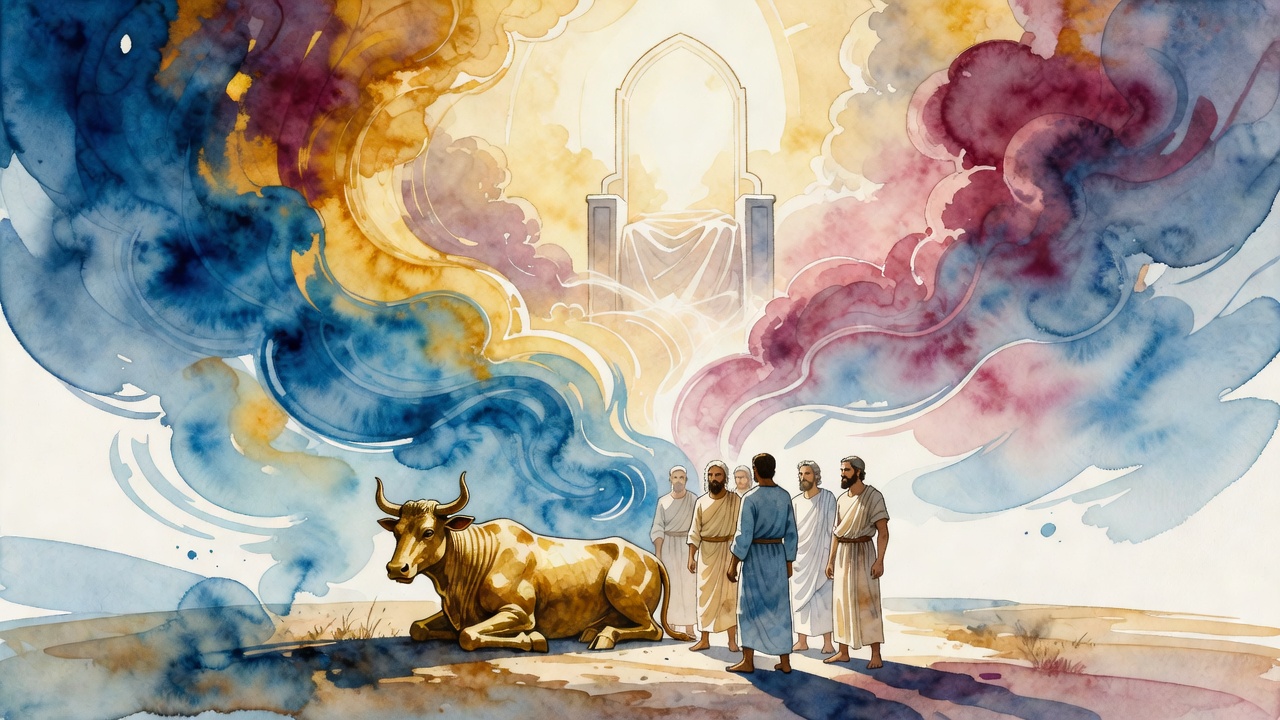
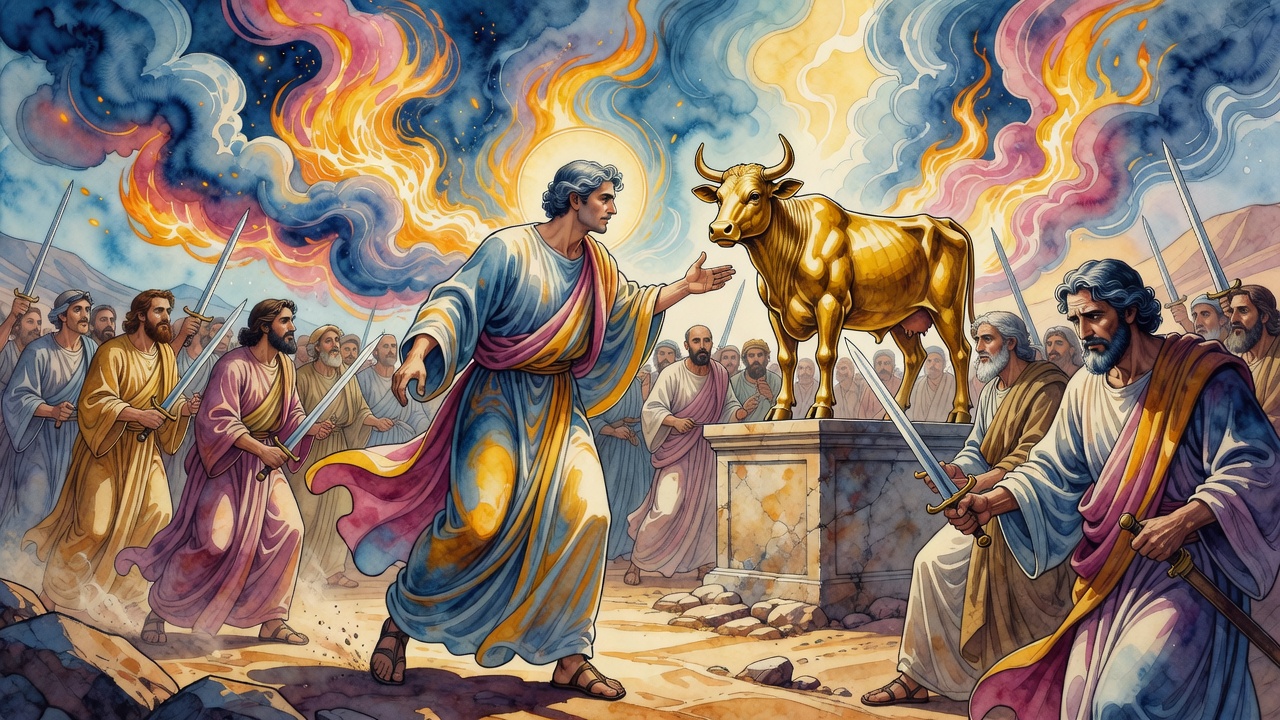
When the calf was still warm, God told Moses: go down to your people. Two words cut the nation off. Moses argued back like a fighter who cannot afford to lose.
Table of Contents
 Click for full size
Two words at the top of the mountain
Moses was on the mountain for forty days when the calf was made. God knew before Moses did. The divine knowledge arrived ahead of the news, and it came with a grammatical wound.
Go down, God told Moses, because your people have corrupted themselves.
Your people. Not mine.
The rabbis who compiled Bamidbar Rabbah dwelt on that pronoun as if it were a diagnosis. The same nation God had carried out of Egypt on eagles' wings, the bride He had brought to Sinai forty days earlier, was suddenly Moses' problem. Moses' tribe. Moses' wife. In those two Hebrew letters, the rabbis heard a husband who had caught his bride kissing a servant and was already calling the lawyers. The divorce decree was being drafted. The nation was about to become fatherless.
Moses girded his loins
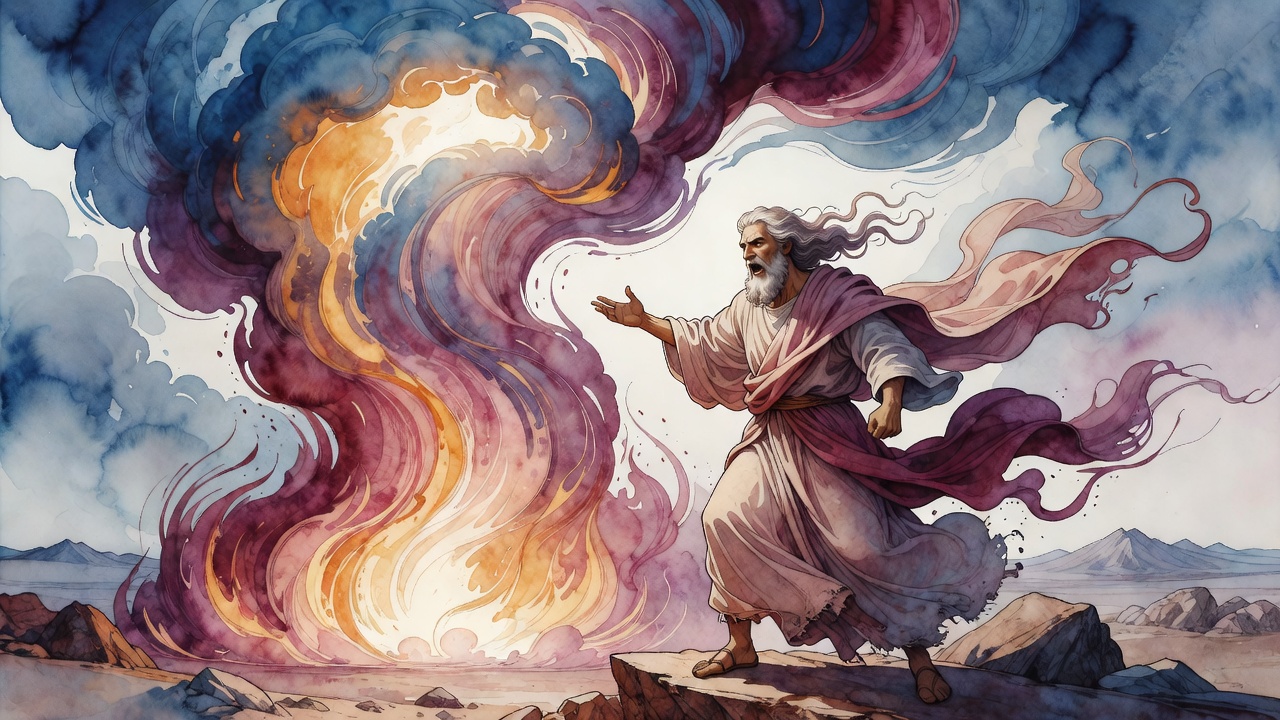
The text says Moses girded his loins to pray. Not bowed. Not prostrated himself. Girded. The way a fighter cinches his belt before a bout he cannot afford to lose. His argument was brutal in its logic.
The golden calf, Moses said, cannot bring rain. It cannot produce children. It cannot sustain crops or defeat armies or save a sick child. The nations of the world will look at Israel and see a people who traded a living God for a piece of metal that does nothing. God's name will be weakened among the nations every time the story is told, and the story will be told forever.
This was not flattery and it was not prayer in the ordinary sense. Moses was presenting a case. He was arguing that God's self-interest and Israel's survival were the same file.
The word that held the reversal
Bamidbar Rabbah 2:15 reads Hosea 2:1 as the resolution of this scene, playing out centuries later. Instead of being called not My people, they would be called children of the living God. The text the rabbis read as prediction was the aftermath of the worst possible pronouncement. God had said: these are not my people. The prophet, looking forward from that nadir, saw a future where the sentence was reversed.
The reversal was not automatic and it was not immediate. It required everything that came between the golden calf and the book of Hosea, which is to say it required most of the Hebrew Bible. But the seed of the reversal was already in Moses' girding. He refused to accept the pronoun. He refused to let your people stand as the final definition of whose people Israel was.
The Levites and the substitute arrangement
While Moses was arguing at the top of the mountain, a different rearrangement was being prepared at the base. The golden calf had contaminated the firstborn class. The firstborn of Israel had been consecrated to God on the night of the exodus. Now those same firstborn had organized around the calf, or stood by while it was cast.
God found a substitute. Take the Levites for Me, He would tell Moses, in place of every firstborn. The Levites had not bowed. When Moses came down the mountain and called out who was for God, the tribe of Levi gathered to him. Their loyalty in the worst moment of the desert became the reason the entire sacred service was restructured around them.
The firstborn lost the job they had been given by their survival at the exodus. The Levites took it, not as a reward but as a continuation of what they had already chosen when everyone else was choosing the calf. The family was rewritten. Moses had argued against the divorce, and God had found a different way to restructure the household.
← All myths