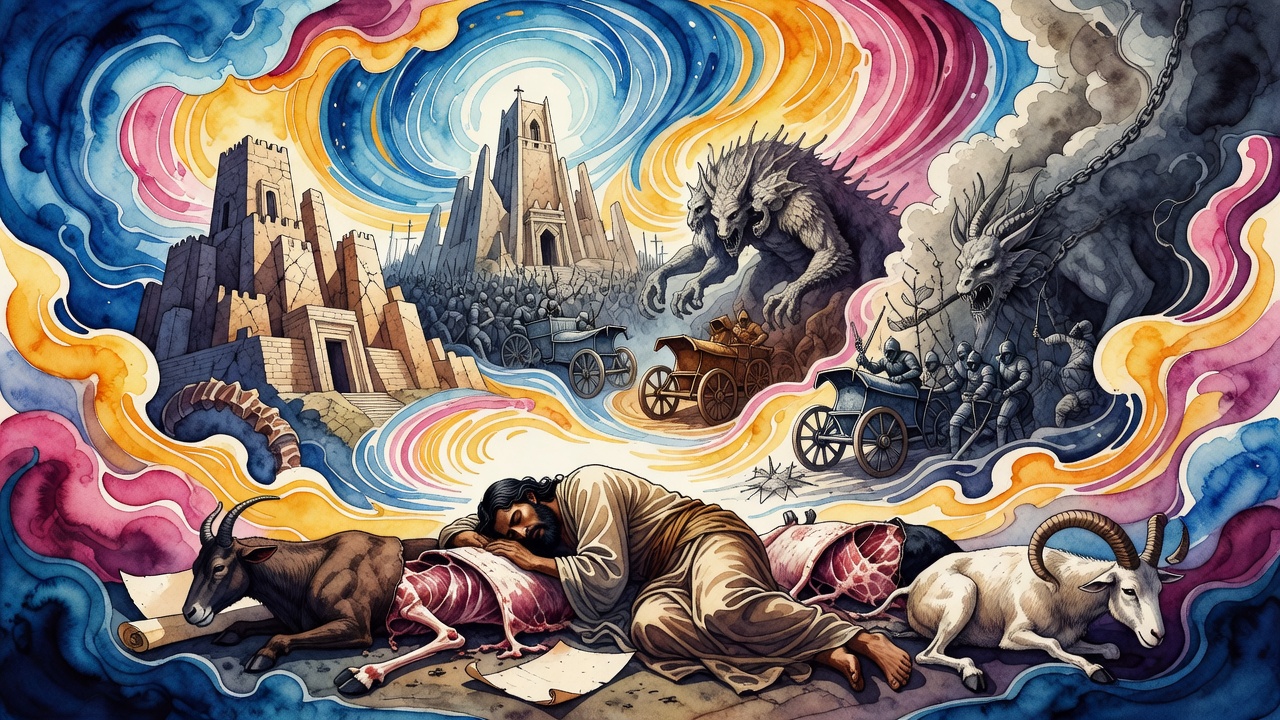
Gershon Was Born First and Counted Second
Levi's oldest son was Gershon. Moses counted Kehat first. Bamidbar Rabbah built a ladder of rank to explain why Torah knowledge beats birth order every time.
Table of Contents
 Click for full size
The older brother steps aside
Levi had three sons: Gershon, Kehat, Merari. Gershon came first. He was the eldest, and in the ancient world that should have ended the conversation about precedence.
It did not. When Moses took the census of the Levites in the wilderness, the Torah counted Kehat's family before Gershon's. Not afterward, not alongside, but before. The second son walked out of the census before the first son's name was even called.
Bamidbar Rabbah refused to let that reversal pass without an explanation, and the explanation it gave became a ladder with wisdom at the top and birth at the bottom.
The ladder before the fall
The midrash built the hierarchy carefully before knocking it over. A sage outranks a king. If a sage dies, there is no one to replace him, because wisdom is not heritable and cannot be transferred by appointment. If a king dies, any Israelite is fit to take the throne. The scarcer thing ranks higher.
A king outranks a High Priest. First Kings 1:33 shows Solomon appointing Zadok the priest to anoint him, not the other way around. The king commands; the priest consecrates at the king's instruction. Royal authority supersedes priestly authority in the political order.
A High Priest outranks a prophet. The priestly office is held continuously, generation after generation, with fixed duties and a fixed location. The prophet arrives when the prophet arrives, speaks what the prophet is given, and departs. The consistent presence outranks the intermittent one in the hierarchy of sacred office.
Torah beats all of them
But a mamzer, a person of illegitimate birth who has learned Torah, outranks a High Priest who has not studied. This was the ladder's final rung, and it inverted everything below it. The person the social order marks as disqualified, barred from the assembly, stripped of lineage, steps over the one anointed with oil and consecrated in linen if the one anointed has not learned the text.
The principle the proverb from Proverbs 3:15 named was wisdom. It is more precious than pearls, and all the objects of your desire do not equal it. Birth is an object of desire. Office is an object of desire. The census that counted Kehat before Gershon was not a bureaucratic error. It was the application of this rule to a genealogical list.
Kehat carries what Gershon cannot
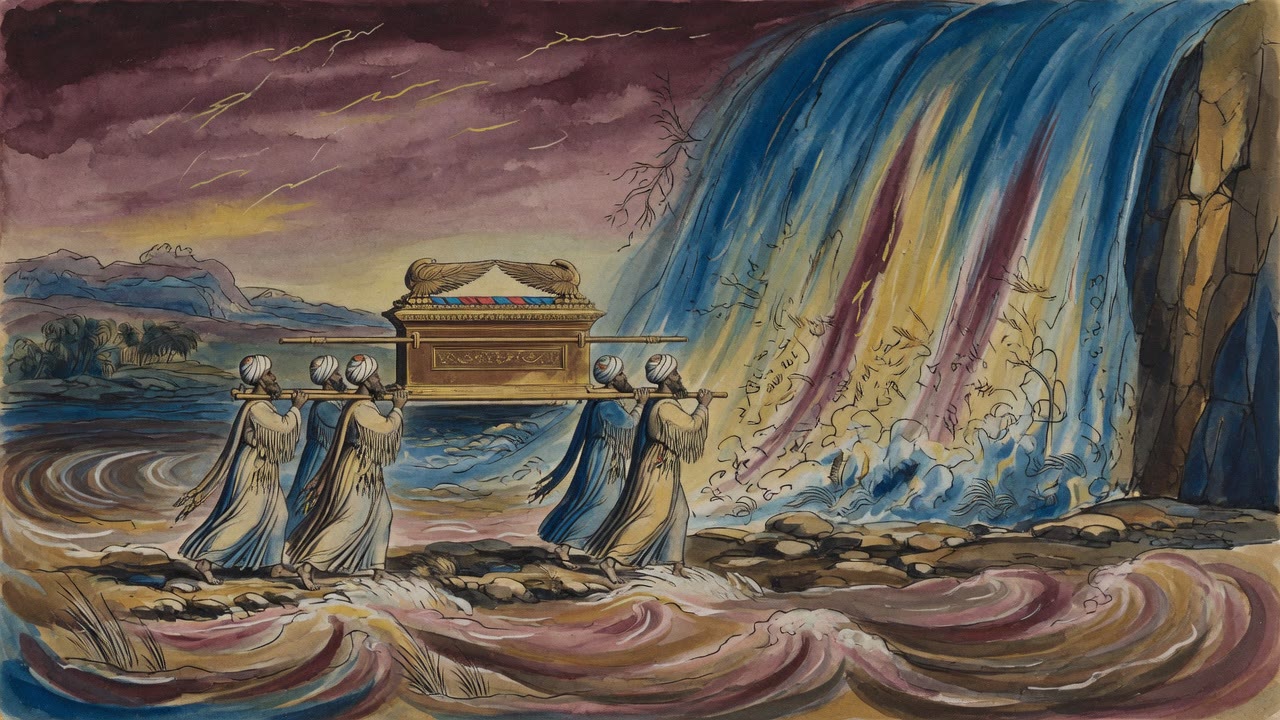
What Kehat carried was the Ark of the Covenant. The most sacred object in Israel, the chest that held the tablets, the mercy seat between the cherubim, the physical location where God's voice addressed Moses. Kehat's family walked with it on their shoulders, the poles balanced across four men, their faces turned away from the thing they held because looking at it directly could kill them.
Rabbi Yehuda ben Rabbi Simon, in the name of Rabbi Shmuel ben Rabbi Yitzhak, taught that the Kehatites had a special quality that set them apart from all other Levitical families. The other tribes were not responsible for the Tabernacle vessels themselves, only for the structure and coverings. The Kehatites were responsible for the objects that inhabited the structure, the heart of the heart of the camp.
Gershon's family, the firstborn clan, carried the tent and its coverings. They did important work. They sheltered what mattered. But they did not carry what the shelter was built to hold. Kehat carried what Gershon sheltered. The inner outranks the outer, and in that ranking, the second son walks first.
← All myths