5 min read

Metatron Kept the Name Youth Above Every Angel

Metatron carried seventy names through heaven, but the name Youth kept the mighty angel tied to service, speed, and human memory.

Curated by Arthur · Told by Maggid ·
Table of Contents
  1. Rabbi Yishmael Asked the Name
  2. The Man Lifted Before the Flood
  3. The Nest Below the Throne
  4. Seventy Names, One Restraint

Every title in heaven made Metatron larger, except the one that stayed.

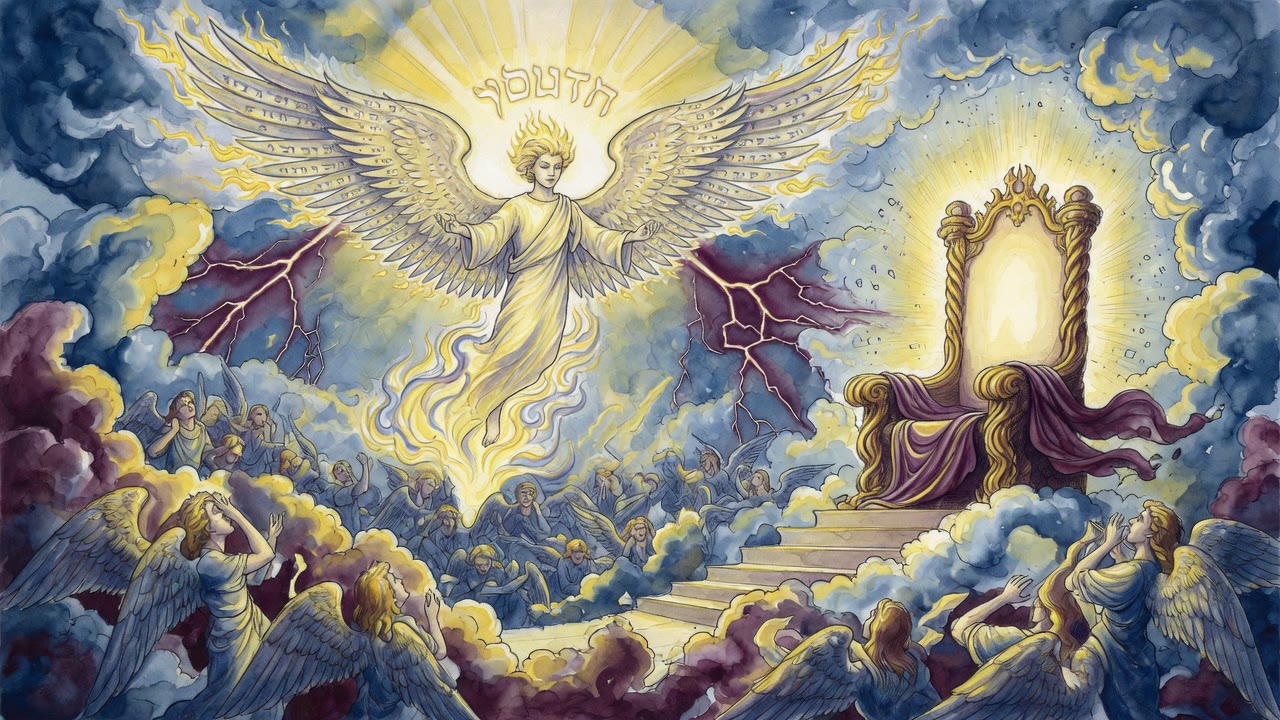
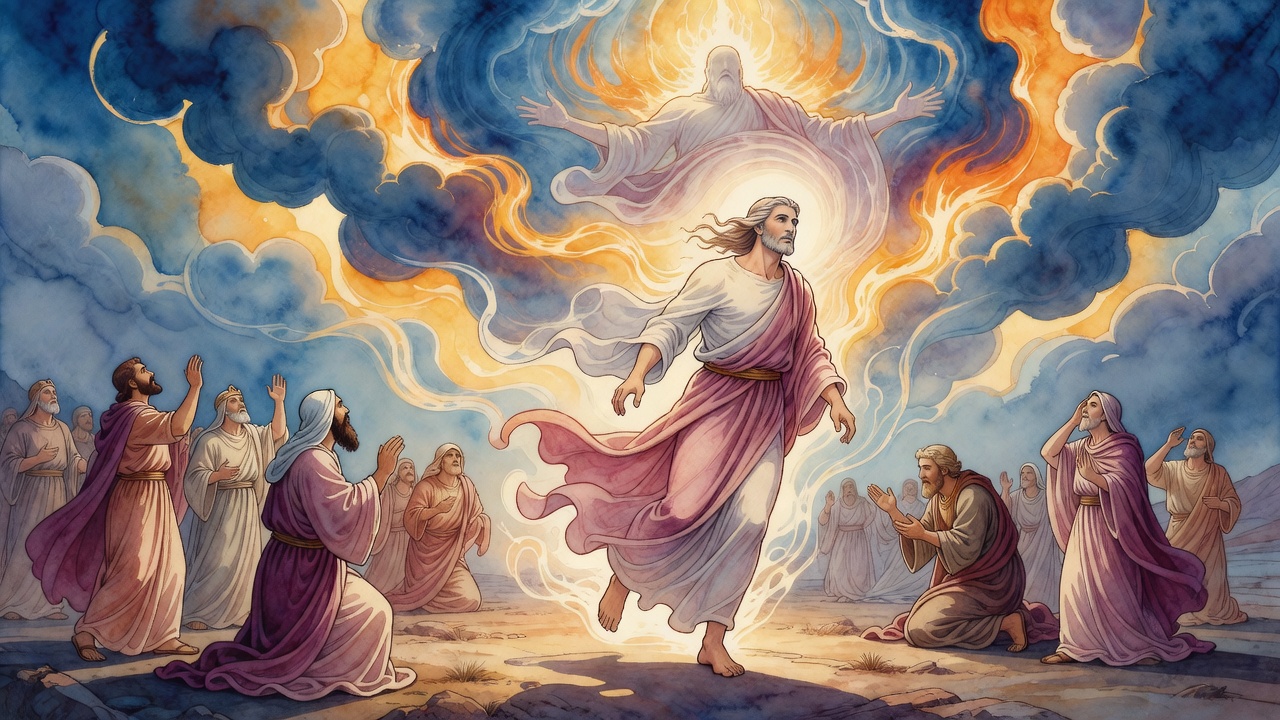
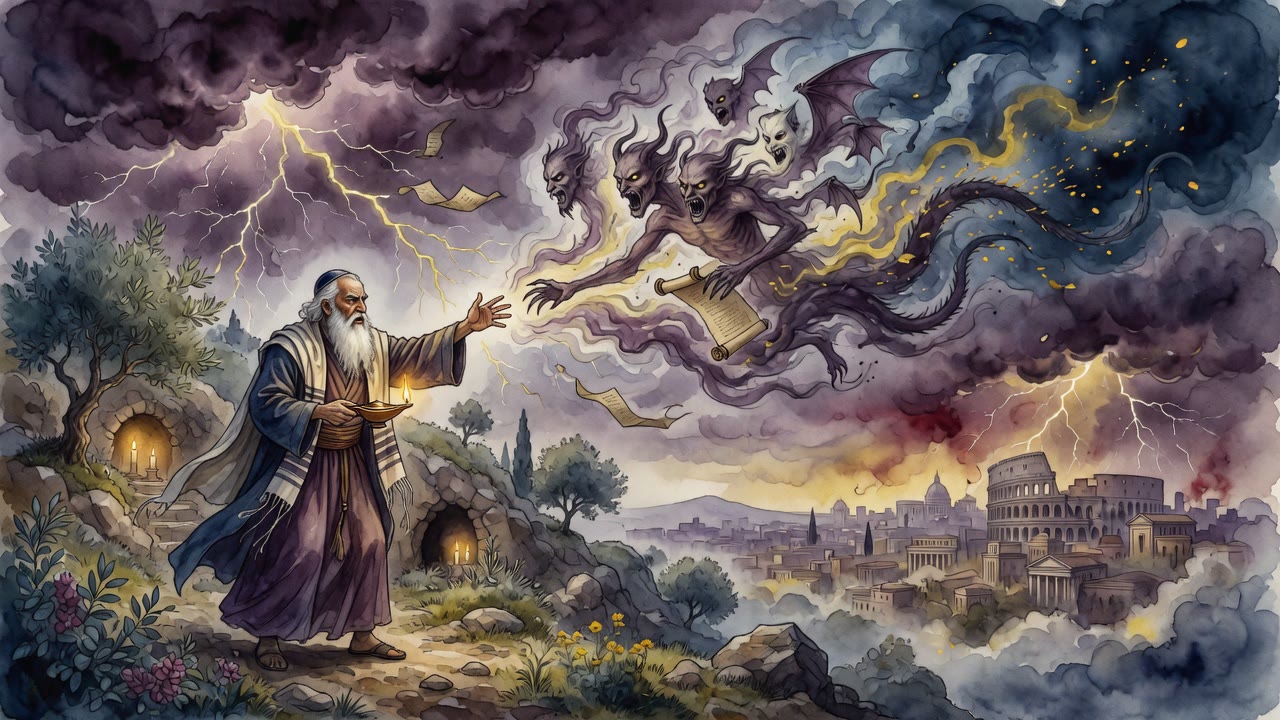
He carried names of command, names of nearness, names that sounded like doors opening inside the palace of the King. Angels knew his height. Sages feared his office. Rabbi Yishmael, lifted into the upper chambers, found a servant who stood closer to the throne than ordinary speech could safely describe.

Then he heard the name that seemed too small for such a being.

Youth.

Na'ar. Not king. Not second power. Not master. Youth, the attendant who runs when called, who stands ready, who remembers that speed is not sovereignty and nearness is not independence.

Rabbi Yishmael Asked the Name

The question was unavoidable.

Why would the heavenly court call its great officer Youth? Metatron had seventy names. They gathered around him like flames around a lamp, each one marking an office. He recorded. He escorted. He taught. He stood where command moved from above into the hosts below.

Names in heaven are not decorations. A name tells what a being is permitted to do. It can be a key, a boundary, a garment, or a warning. Rabbi Yishmael wanted to know why, among all those names, this small one had not been swallowed by the others.

Metatron answered by lowering the scale from throne room to service. He is called Youth because he serves before the King with the readiness of a young attendant. The highest angel keeps a name of motion, not possession.

The Man Lifted Before the Flood

The name also carried a human memory.

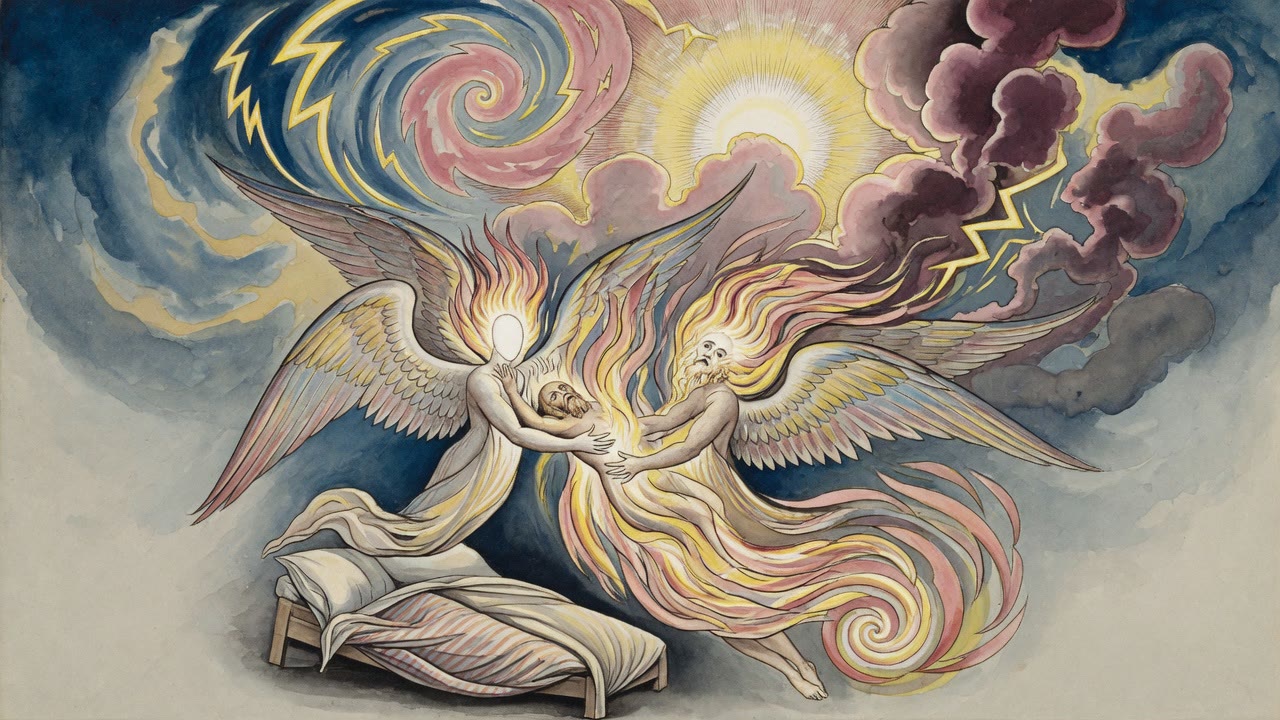
Enoch had walked with God while the generation around him rotted toward violence. The Torah says he was not, because God took him. The sentence is brief enough to feel like a locked door. Later imagination opened it upward. Enoch did not simply die. He was lifted from the earth before the waters came.

A man became an angelic servant.

That origin matters. Metatron's greatness began in removal, not conquest. He came from a world where human beings had been offered paths and chose corruption. God took him before the Flood because his walk had already separated him from the ground beneath his generation.

Youth kept that past alive. The title did not humiliate him. It refused to let heaven forget that this blazing servant had once been carried up from dust.

The Nest Below the Throne

Mystical teaching made the image stranger.

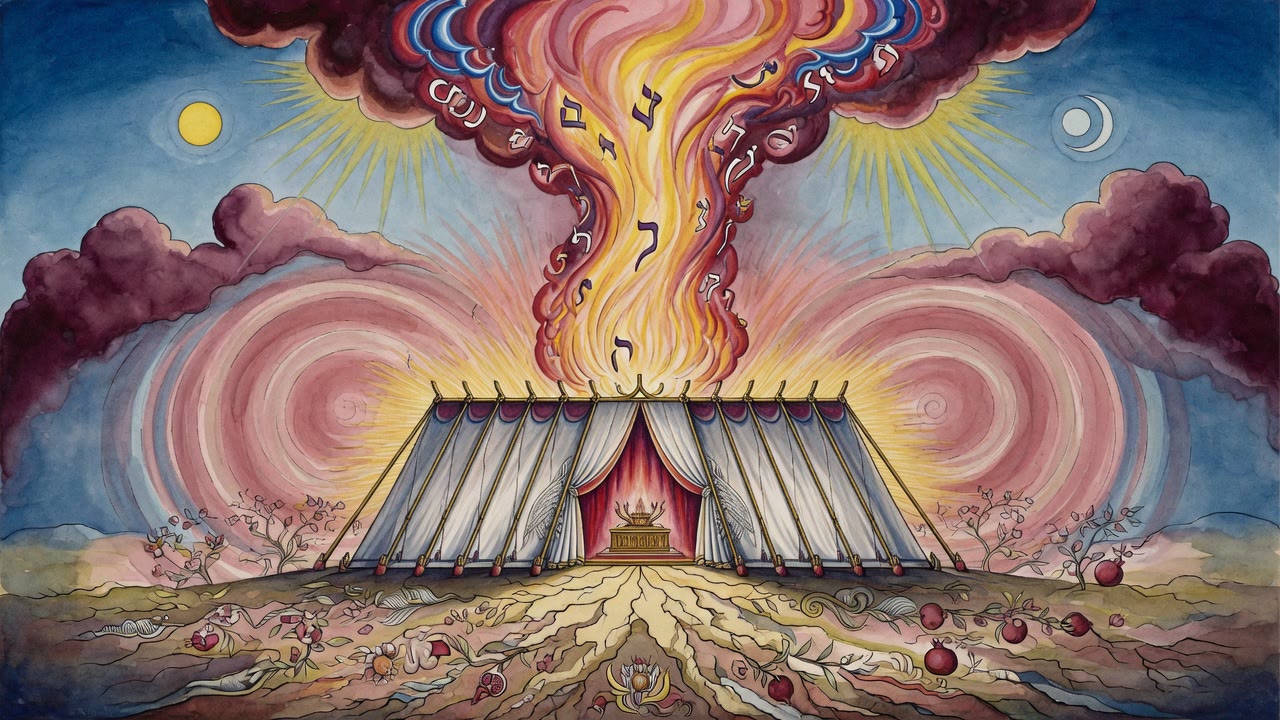
Above, there is a nest bound to the Throne. Below, the nest is Metatron. The word folds into verses of jealousy, vengeance, and divine refusal to acquit, as if heaven itself were warning that closeness to the throne is dangerous without obedience.

A nest shelters, but it also holds chicks who are not yet what they will become. Metatron stands in that tension. He is mighty, but not autonomous. Near, but not equal. Brilliant, but still a servant.

The title Youth keeps the line drawn. However high he rises, however many names cling to him, he remains under the King. The palace needs servants powerful enough to carry command and small enough not to mistake command for ownership.

Seventy Names, One Restraint

Seventy names could have become a danger.

A being with too many titles can begin to look like a rival. The sources answer by making every title point back to God. Metatron's names are tasks, not crowns. They describe his work in the palace and the fear surrounding that work. None gives him a throne of his own.

That is why Youth survives among the seventy. It is the leash made of memory and service. It says that even the angel who stands nearest must run when summoned. It says that heavenly greatness is measured not by escaping obedience but by perfecting it.

Rabbi Yishmael asked about a name. He received a map of safe authority. The higher the servant stands, the more fiercely the servant must remain a servant.

That map matters because heaven in these sources is crowded with ranks, doors, seals, and powers that can overwhelm a human visitor. Metatron's small name steadies the ascent. It tells Rabbi Yishmael where to look and where not to bow. The servant may blaze, but service is still the shape of the flame.

The name Youth therefore does two jobs at once. It honors readiness, and it guards against confusion. A servant can be swift, luminous, and terrifying, but he is still known by a name that makes him answer.


← All myths

From the tradition

Sources

3 sources

The texts this telling draws on, in full. Open a card to read inline, or expand it for a wider, quieter read.

Seventy Names of MetatronOtzar Midrashim (Eisenstein)

Rabbi Yishmael asks Metatron a question that sounds simple. Why are you called by so many names?

Otzar Midrashim's Seventy Names of Metatron answers with a flood. Metatron is called Na'ar, "youth," because he serves before the King with the speed and readiness of a young attendant. He is called by names tied to height, light, command, memory, and service. The names do not make him a second power in heaven. They mark the many jobs of an angel who stands close to the throne and still remains a servant.

The frame is Hekhalot literature at full intensity. Rabbi Yishmael has ascended on high. Metatron teaches him the hidden names and explains how heaven speaks about authority. A name is not decoration there. A name is a function. It tells you where an angel stands, what he carries, what fear surrounds him, and what permission he has been given.

The most important detail is restraint. Metatron may carry seventy names, but every one of them points back to God. He records, escorts, teaches, and serves. He does not rule on his own. The midrash turns the angel into a palace of titles, then keeps him inside the palace of the King.

That is why Rabbi Yishmael's question matters. In heaven, names are power. The righteous mystic has to learn which names reveal glory and which names still bow.

Full source
Tikkunei Zohar 41:14Tikkunei Zohar

Jewish mysticism touches on this feeling in some incredibly profound ways, and it all connects to… a bird's nest.

Sounds strange. But bear with me.

In Tikkunei (spiritual repair) Zohar 41, we find a fascinating, layered teaching that uses the image of a nest – qan in Hebrew - to explore divine concepts and the journey of redemption. It's dense, it's poetic, and it's absolutely worth diving into.

The passage starts by drawing a parallel between a “bird’s nest” above and a “nest” below. The “bird’s nest” above, we’re told, is the Divine Throne. And the nest below? That's Metatron, a powerful angel in Jewish mystical tradition, often seen as a mediator between God and humanity.

Then comes a really interesting twist. The verse "…and will surely not acquit" (Numbers 14:18) is invoked. The Hebrew word for "acquit" here is naqeh. The Tikkunei Zohar points out that hidden within this word is qan, the word for "nest." It then connects this to another verse: "jealous and revenging" (Nahum 1:2), where the words qano (jealous) and noqem (revenging) also echo that root. What does it mean? It hints at the idea that when a "nest," a place of belonging or stability, is missing, there can be jealousy and retribution. It's a powerful image of divine justice, and the consequences of being disconnected.

But the journey doesn’t stop there.

The text continues: "When a nest in which to abide is not found, then… 'on the way'..." (Deuteronomy 22:6). This phrase "on the way" becomes a key. What is this "way"? The Tikkunei Zohar connects it to the generation that died in the desert after leaving Egypt. As we find in (Joshua 5:4), they "died in the desert 'on the way,' in their going out from Egypt." They never reached their promised land, their ultimate "nest."

This idea of being "on the way" is further linked to the burial of Rachel. Her tomb, a place of immense significance in Jewish tradition, is described as being "upon a crossroads" – pharashat aurḥin in Aramaic. And that phrase "crossroads" echoes another verse: "Would that I had a guests’ lodging in the desert" (Jeremiah 9:1) – the word for "guests" here being aurḥim.

Why Rachel? Why a crossroads?

Because, according to the Tikkunei Zohar, this is the path that "the two messiahs" will take when they come to redeem Israel. This crossroads, this place of longing and potential, is where redemption will eventually emerge.

So, what are we left with?

The image of the nest, seemingly simple, becomes a symbol of our deepest desires: for belonging, for stability, for connection to the Divine. The journey "on the way," though filled with hardship and loss, ultimately leads to the possibility of redemption. Even when we feel lost, even when we're wandering in the desert, the promise of a future "nest," a place of ultimate belonging, remains.

It's a powerful reminder that even in our own lives, the detours, the setbacks, the feeling of being "on the way" without a clear destination, can ultimately lead us to a place of greater meaning and purpose. Maybe, just maybe, our own personal redemption lies at a crossroads we haven't even reached yet.

Full source
Ein Yaakov, Berakhot 1:18Ein Yaakov, Berakhot

R. Elazar b. Abina said: "He who recites Te-hila l' David (Ps. 145) three times a day may be sure of an inheritance in the world to come." What is the reason? Shall I say because that particular chapter is arranged alphabetically? Then why not prefer chapter 119 Ps., which has an arrangement of eight repetitions of each letter of the alphabet? Is it because it has the verse Thou openeth Thy hand and satisfieth the demands of all Thy creatures. [it influences men to be benevolent]? If so, then why not the Great Hallel? in which also is written (Ib. 136, 25.) He giveth food to all flesh. Because Tehila l' David has the advantages of both; [is arranged alphabetically and influences men to be benevolent] R. Jochanan said: "Why is the letter Nun missing in the [alphabetical course of] Ashrei? Because the letter Nun is used for bad tidings. It is said (Amos 5:2) She is fallen (Nafla) and will not rise again, the virgin of Israel." In Palestine they interpret [this prophecy of Amos as good tidings] thus: She is fallen and will not fall again! Rise! virgin of Israel! R. Nachman b. Isaac said: "Even so, David indicates [the prophecy of] the Nun for the purpose of strengthening Israel, through a holy vision; for he says (Ps. 145:14) The Lord upholdeth all who are fallen (Noflim)."

Full source