Moses Faced Korach and Akiva Before Midian Fell
Korach came with empty hands. Moses still wanted Midian with his own eyes, and he would not climb until the air was empty of Bilam.
Table of Contents
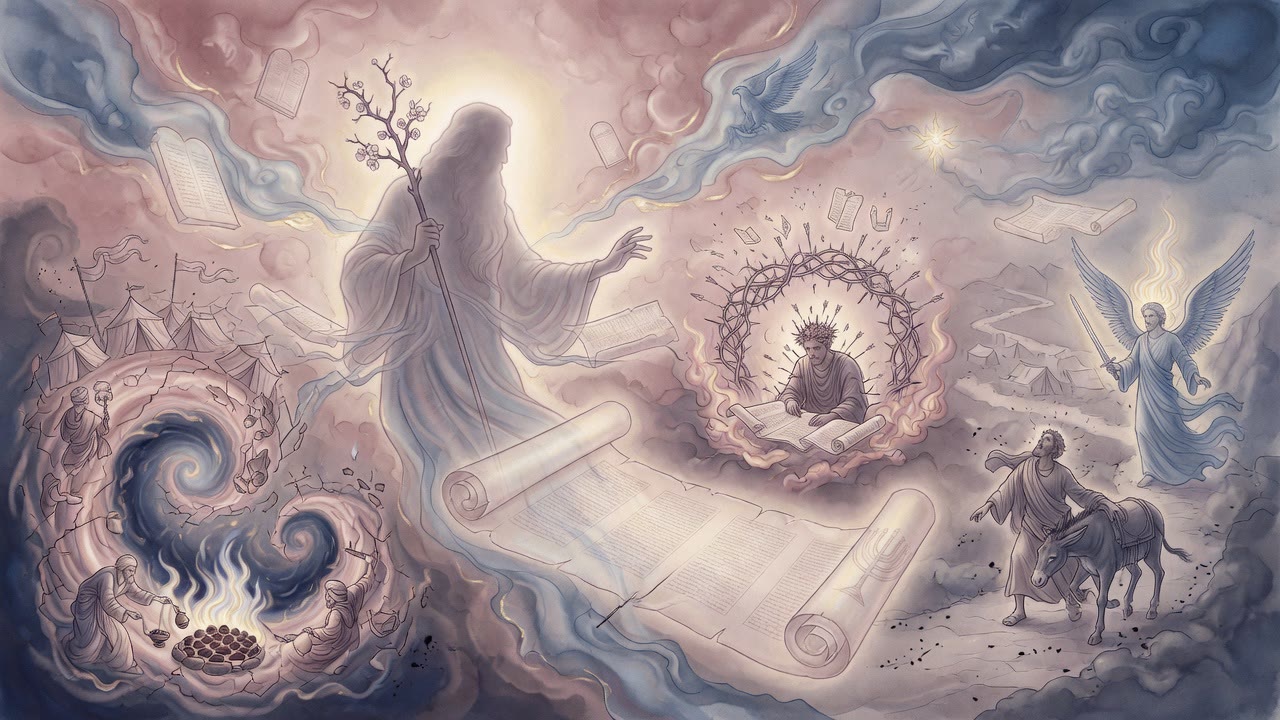 Click for full size
Empty Hands, a Taken Heart
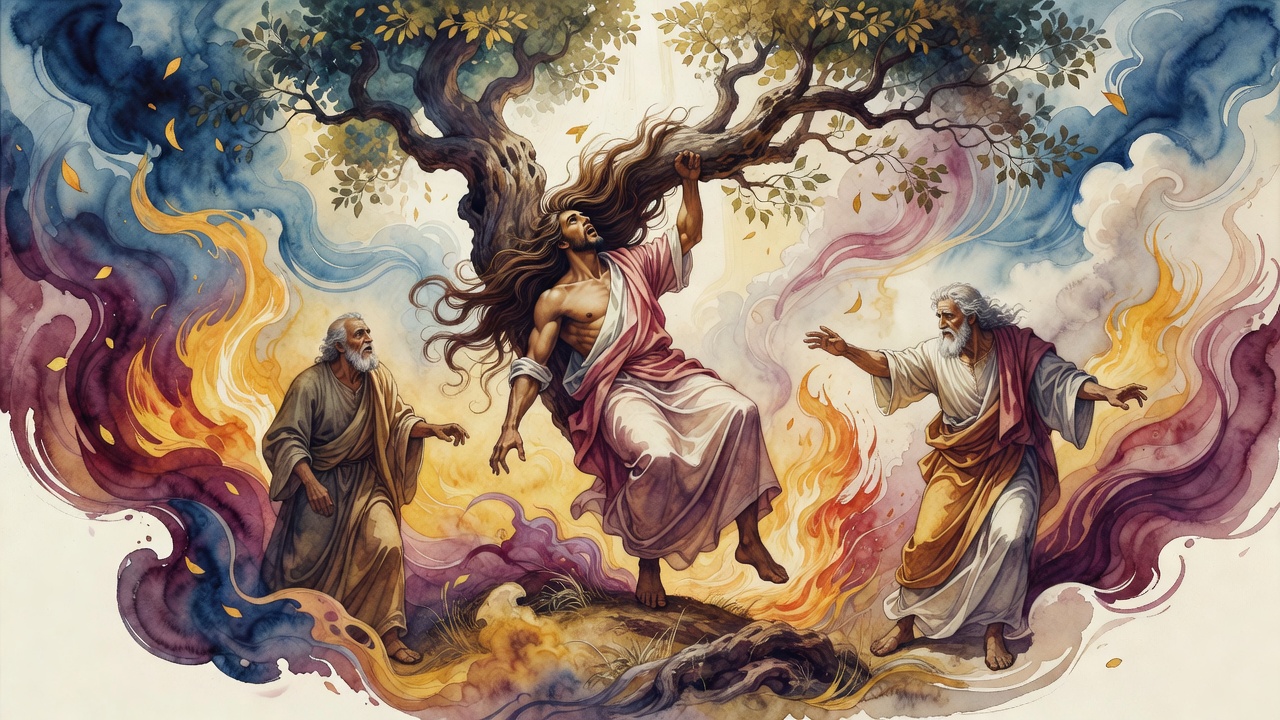
Korach took nothing in his hands. His heart took him. He walked into the quarrel with Moses the way a man walks into a room he has already furnished in his mind. Yitzhar's son. Oil's son. Oil rises. Pour it into any cup and it sits on top.
"Aaron was anointed," Korach said. "David will be anointed. I am a son of oil, and I carry furniture. Why does the oil stop before it reaches me?" He wanted priesthood and kingship in one grab. The grievance had a shape. The shape was wrong. Genealogy is not consecration. Moses fell on his face. He did not strike. He set a test of incense and let God choose. The ground opened. The account did not close in Moses' chest. A cousin had come with empty hands and left a hole.
Oil That Would Not Anoint Him
Korach had watched Aaron's oil run and had done the math of a Levite who sleeps beside holy things he may not touch. Pour oil into any cup and it sits on top. The verse about the sons of oil names Aaron and David, the priest and the king. Korach heard his own father's name in that word and took it as a deed of title.
Moses heard the argument for forty years after the earth had already answered it. He carried the unfinished quarrel with the dead the way a man carries a stone in a shoe. He limped. He did not always show it. In the final days, when God told him to prepare, that limp was still there. Korach had been wrong. Korach had also been family. The heart that took him had been a real heart.
What Moses Could Not See
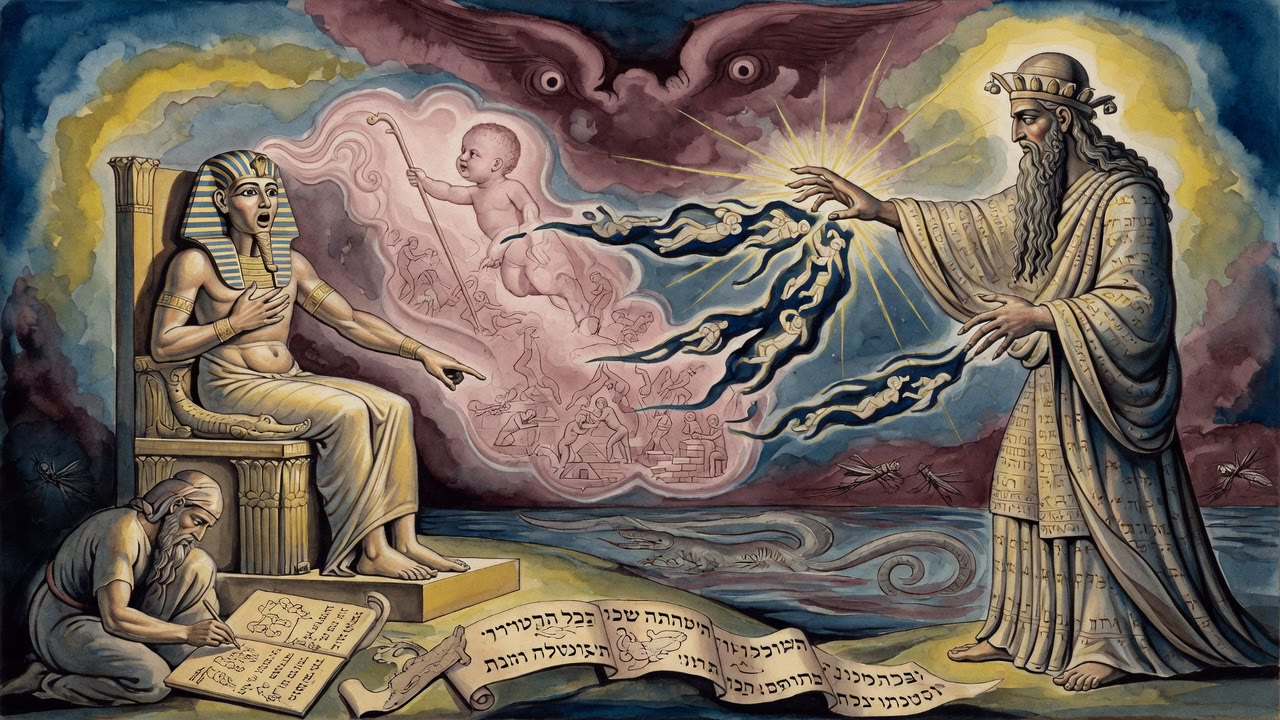
God told Moses to take a red heifer. Moses asked for the reason. God said, To you I am revealing it. For another, it remains a statute. Then a harder sentence arrived. Matters hidden from you in this world will float in the World to Come. They have already been done for Rabbi Akiva and his colleagues. What was not shown to Moses was shown to Akiva. A man not yet born would see farther than the man who had stood on Sinai.
Moses took that in the way a teacher takes a student who will outrun him. He did not pretend it was easy. The Torah he had carried down the mountain would open in a pair of eyes that were not his. Akiva's eye would see what had been obscure. Moses would die with the statute still a statute for everyone else, and with the knowledge that the seeing went on without him.
He could not have that seeing. He asked for a seeing he could have.
The Eyes That Wanted Midian
"Take vengeance on Midian, then you will be gathered to your people" (Numbers 31:2). Moses heard the order as a door and a clock at once. The war first. The death after. He asked God to let him see it with his own eyes. God does not withhold from the righteous what they desire with their eyes. Moses organized the army, twelve thousand men, and he did not climb the mountain while they were still crossing. He waited. He watched.
He told Pinhas and the captains what to look for. "I know the wicked Bilam is there to collect his payment. If the wolf comes to the flock, spread a net for him. If you see him performing sorcery and flying in the air, show him the frontplate, the tzitz (ציץ), with 'sacred to the Lord' written on it (Exodus 28:36). He will fall. Kill him."
Bilam in the Air
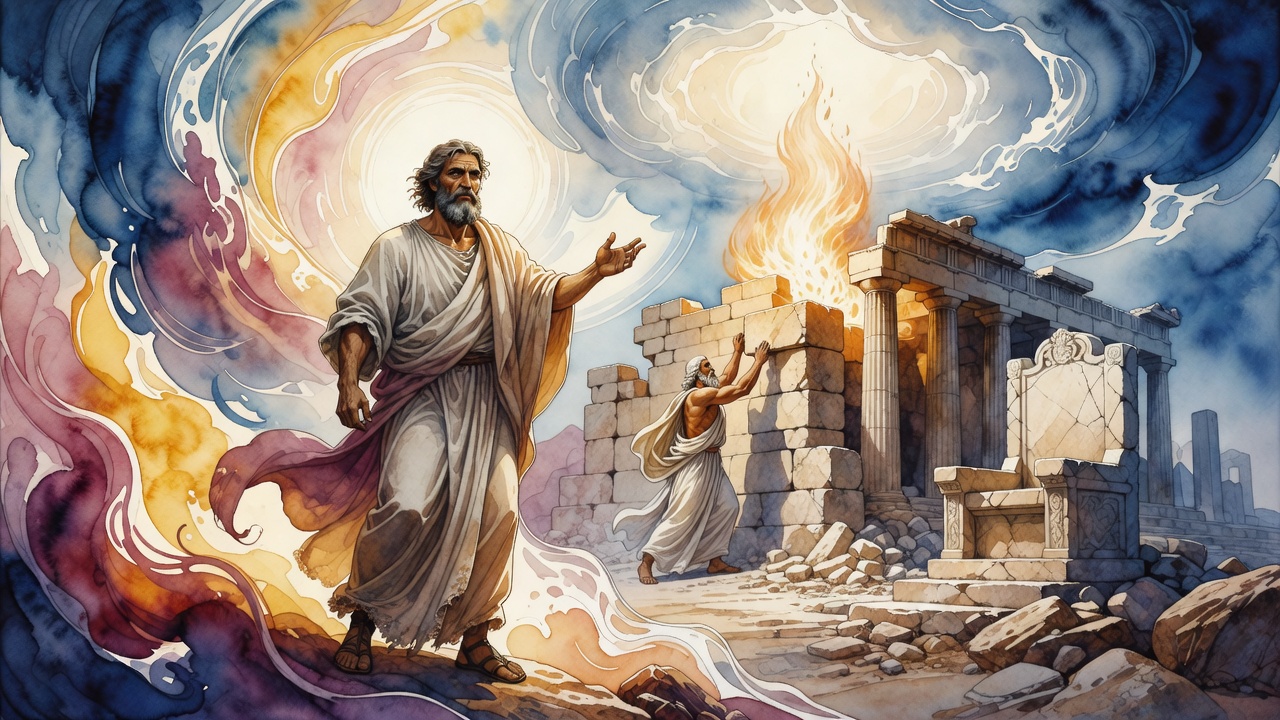
They found him in the air with the kings of Midian, working the old craft, flying. The priests lifted the frontplate. The Name on gold cut the spell. Bilam fell. The kings fell upon their slain. Moses saw it. The righteous one rejoiced in seeing vengeance. He washed the long account of Peor in that sight, the twenty-four thousand who had died while he stood at the Tent and could not stop the plague until Pinhas moved.
Korach's hole was still a hole. Akiva's future eyes were still not his. Midian was done. The air was empty of the sorcerer who had sold a curse against Israel and come back to collect. Only then did Moses let the clock run. He climbed. He looked at the land he would not enter. He closed the last account he had been allowed to close with his own eyes.
God waited for him. The death had a sequence, and Moses had insisted on the sequence. He faced Korach's heart and Akiva's seeing and then he watched Midian fall, and then, only then, he went.
← All myths