Nimrod Borrowed Adam's Garment and Abraham Saw Through It
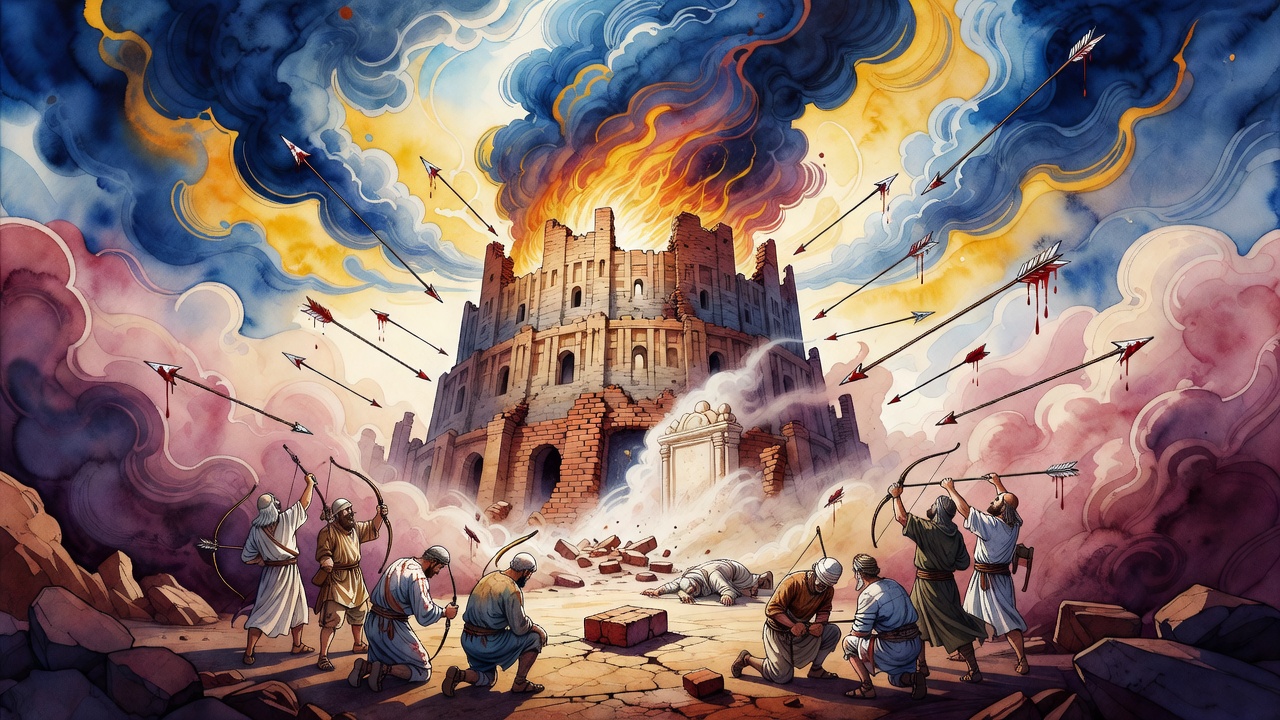
A brick fell off the tower and the whole work line sat down and wept. A man fell the same morning and nobody turned his head.
Table of Contents
 Click for full size
The Coat That Made the Animals Kneel
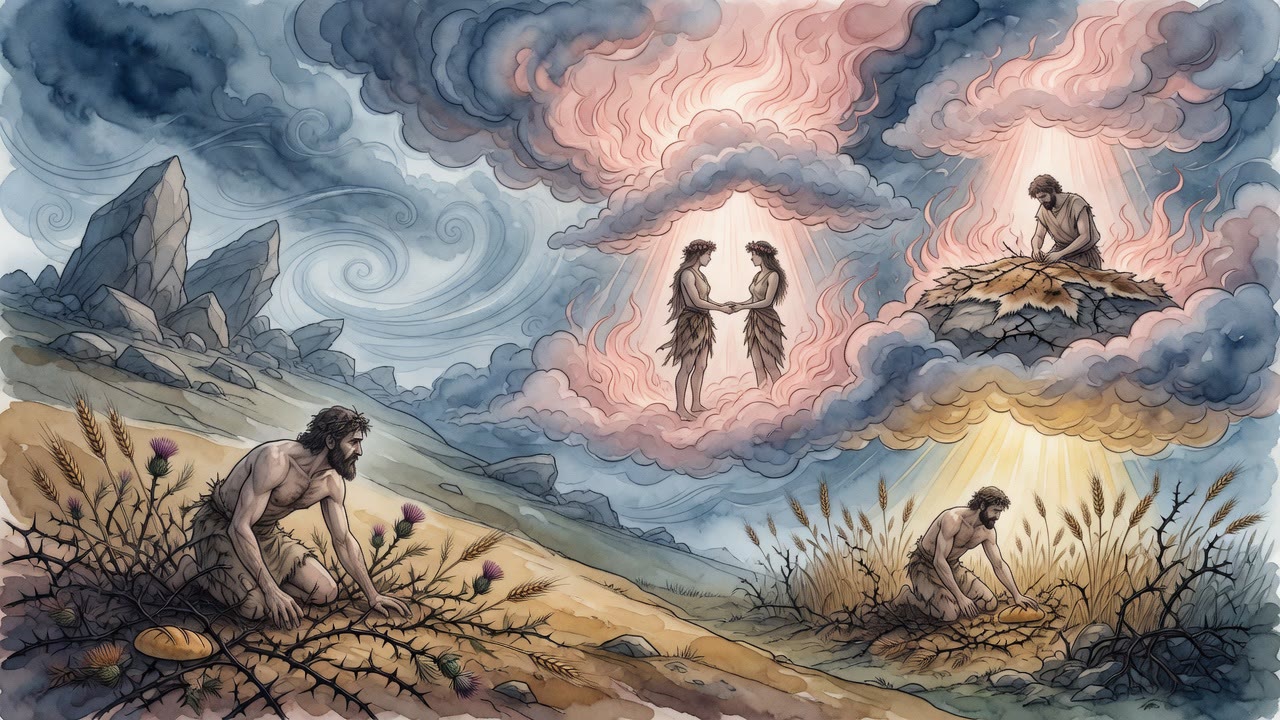
The coat came off the ark. God had sewn it for Adam and his wife on the day they left the garden, and it rode out the flood in Noah's hold, and it came down through the generations until it reached Nimrod.
He wore it out hunting. Cattle came across the fields toward him and lay down. Wild animals came and lay down. Birds dropped out of the air and folded themselves flat in the dust in front of him. Nimrod never explained the coat to anybody. He stood in the middle of a field of kneeling animals and let the men watching from the ridge work it out for themselves, and what they worked out was that they were looking at the strongest creature alive. They made him king. The whole kingdom rested on a borrowed coat.
Then he told them to build a city.
A Falling Brick Was Worth More Than a Falling Man
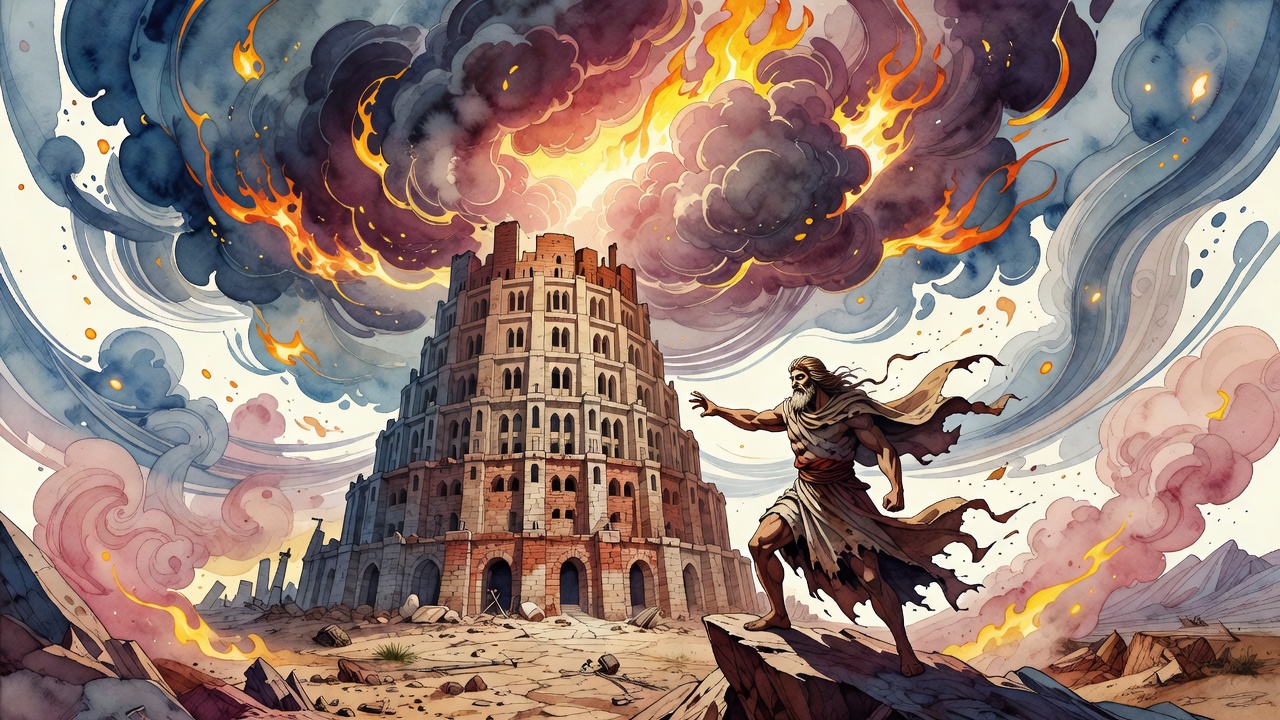
The tower went up twenty-seven miles. Stairs were cut into the east face for the men carrying bricks up and into the west face for the men coming back down empty, so the two lines never crossed and the work never stopped.
Men fell. When a man came off the scaffolding nobody on the line turned his head. When a brick came loose and broke on the ground, the whole line sat down where it stood and wept, and asked one another how long it would take to get another one back up to that height.
They had reasons, and the reasons were worse than the tower. The sky, they told each other, comes loose every one thousand six hundred and fifty-six years and has to be propped. A column at the north, a column at the south, a column at the west, and this one here for the east. Underneath that sat the real grievance. It was not right, they said, that He should keep the upper world for Himself and hand them the lower one. So the plan included an idol for the summit with a sword in its hand, posed up there like a man going to war.
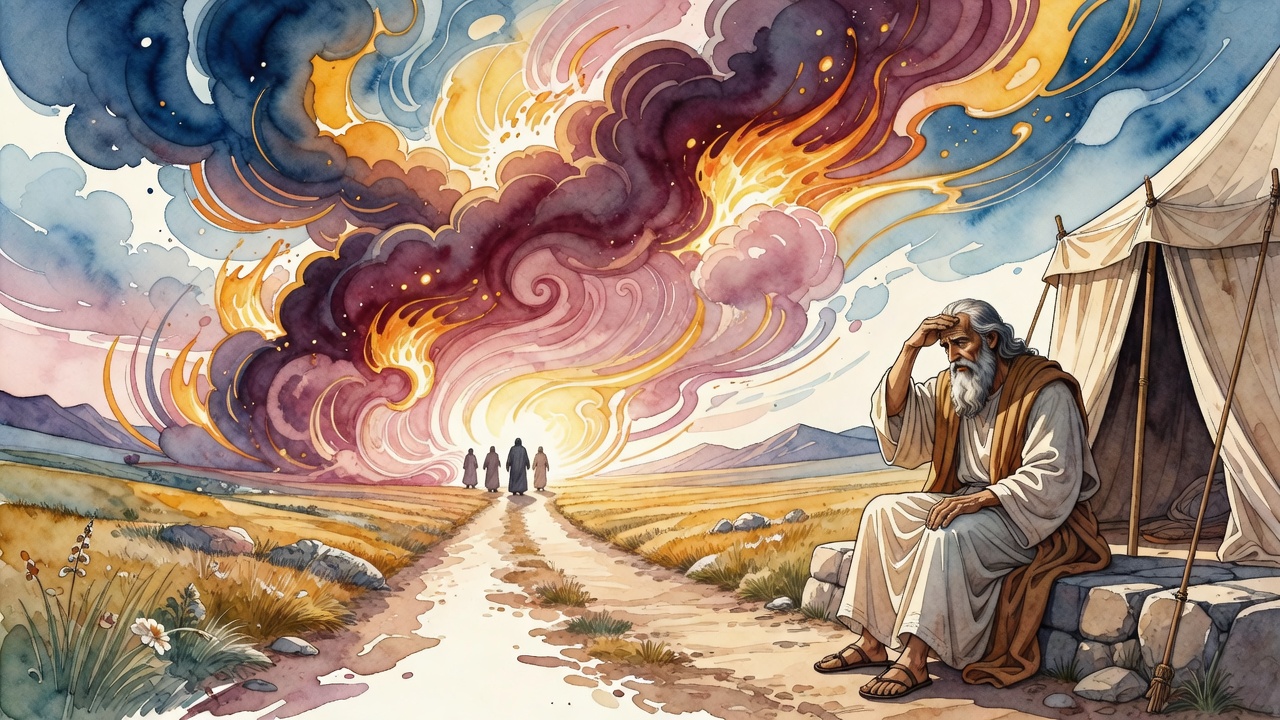
Abraham stood in the road under the scaffolding and laughed at them, and cursed them out loud in the name of his God. They threw his words away like a stone tossed on the ground and went back up the stairs.
Bring Me Water and He Handed Me Dirt
A way back was left open in front of them for a while. They looked at it and said no.
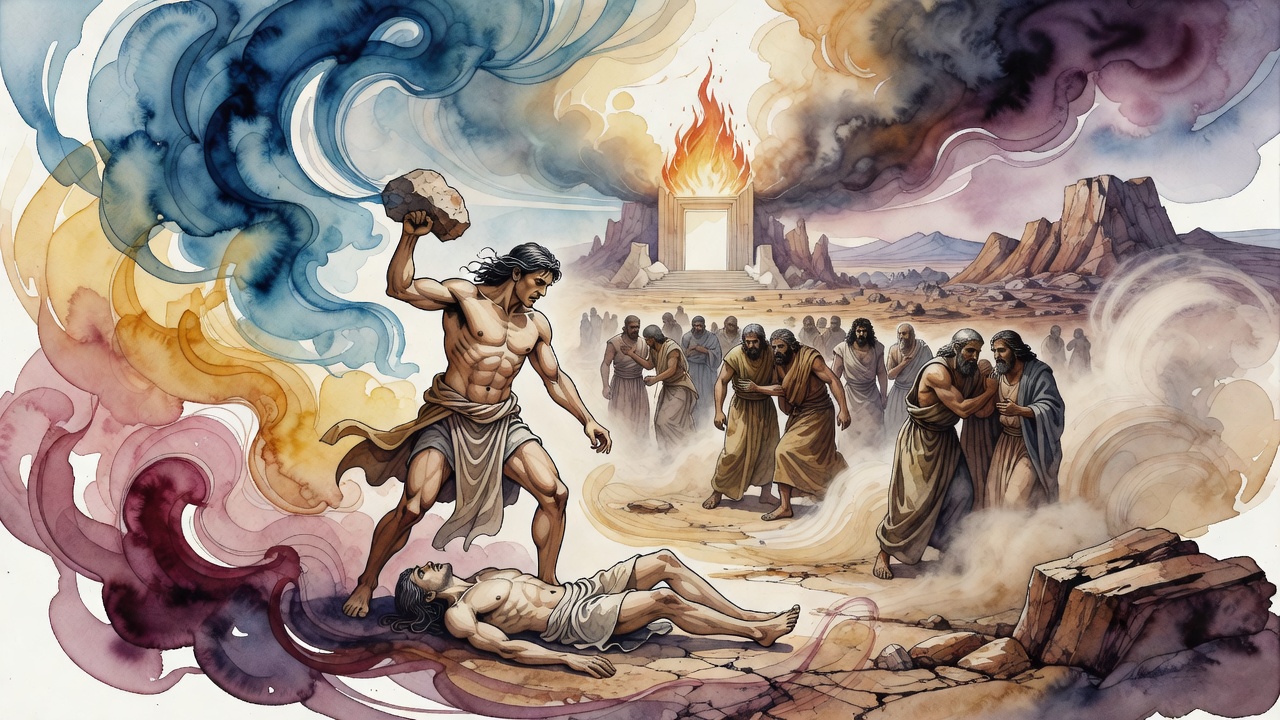
So the thing they were proudest of came apart in their hands. A man on the scaffolding called down for water and his partner passed up a lump of earth. He came off the ladder and split the man's skull. Another asked for an axe and was handed a shovel, and it ended the same way. No fire fell on the tower. No water rose against it. The whole project bled out in a morning because nobody could ask a neighbor for a drink.
God called the seventy angels who stand around the throne and told them to take the one language apart into seventy. They cast lots over the nations. The lot that came up in the Holy One's own hand was Abraham and everyone who would come out of him. That one, He said, My soul wanted.
The Boy Left Alone With the Merchandise
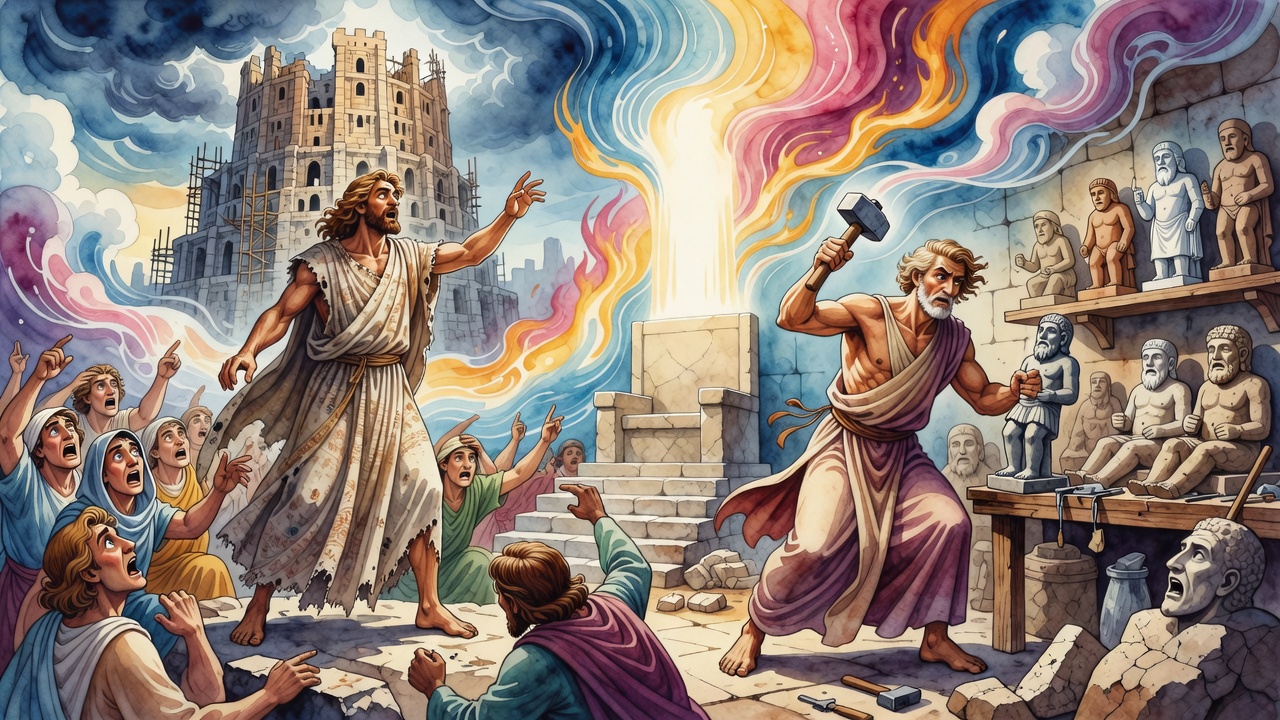
Terah sold idols. One afternoon he went out and left his son minding the shop.
A customer came in. Abraham asked how old he was. Sixty, the man said. "Sixty," Abraham said, "and you want to bow down to something that was made this morning." The man left without buying anything.
Then a woman came in with a bowl of fine flour and told him to set it out in front of them. Abraham took a stick and went down the row, and when he was finished there was one figure still standing, the biggest one, with the stick shoved into its hand.
Terah came back to the wreckage. "Who did this?"
"Why would I lie to you. A woman came in with a bowl of flour and told me to offer it to them. This one said I eat first. That one said I eat first. The big one got up, took the stick, and broke them."
"You are making fun of me. They do not know anything."
"Then let your ears hear what your own mouth is saying."
Terah took his son to Nimrod.
Nimrod Chose the Fire and Abraham Kept Climbing
"We will bow to the fire," Nimrod said.
"Bow to water," Abraham said. "Water puts fire out."
"Then we will bow to water."
"Bow to the cloud. The cloud carries the water."
"Then we will bow to the cloud."
"Bow to the wind. The wind pulls the cloud apart."
"Then we will bow to the wind."
"Bow to a man, then. A man stands up in wind."
Nimrod had brought a boy into his own hall and was losing to him in front of the whole court. "You are only making words," he said. "I bow to fire and to nothing else. I am putting you into it, and the God you bow to can come and take you out."
Haran Waited to See Who Would Win
Haran was Abraham's brother. He was standing in the crowd and he had committed to nothing. He did the arithmetic quietly. If Abram wins, I am Abram's. If Nimrod wins, I am Nimrod's.
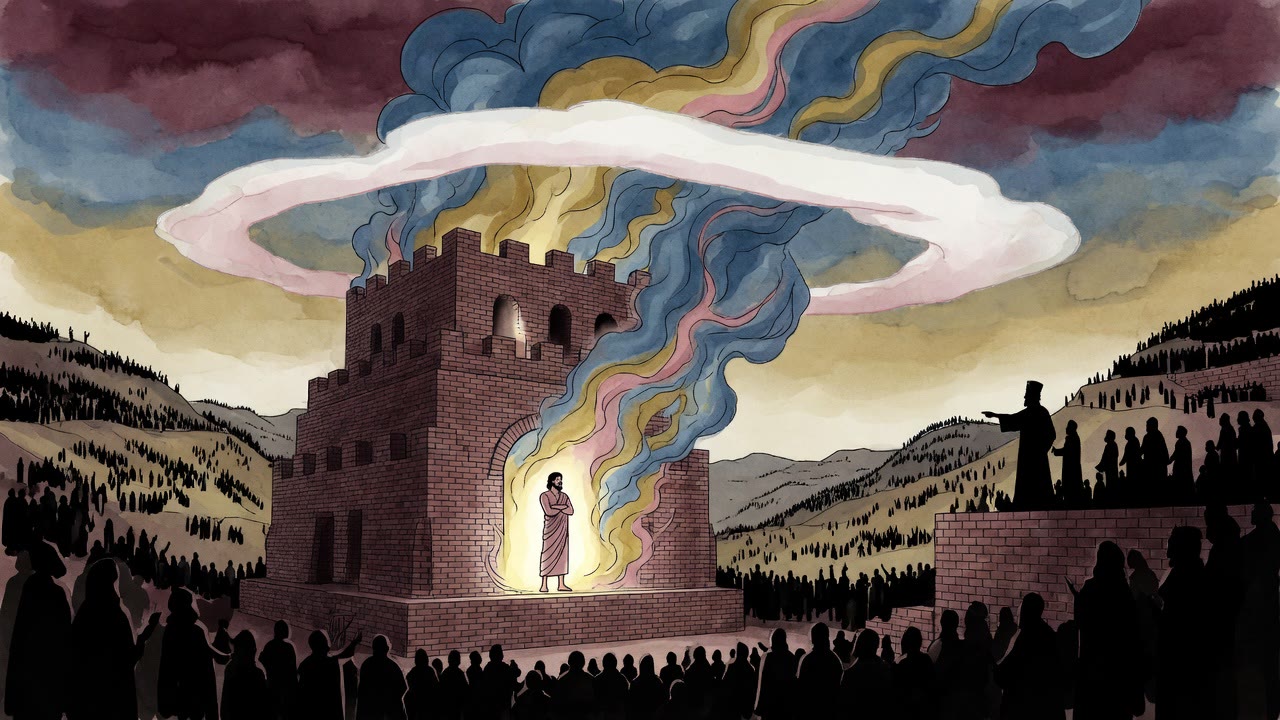
They put Abraham into the furnace and he walked out of it.
They turned around. "Whose are you?"
"Abram's."
They picked him up and threw him in, and the fire went through him from the inside, and he came back out and died in front of his father.
Nimrod still had the garment. The animals still came across the fields and lay down in front of it, and he still let anyone watching decide for himself what he was looking at. But a boy out of an idol shop saw through the whole arrangement, the coat and the fire and the king together, and said so in the king's own hall where every officer he had could hear it. Fire, and nothing above fire. Abraham walked out of the furnace and left him standing there with it.
← All myths