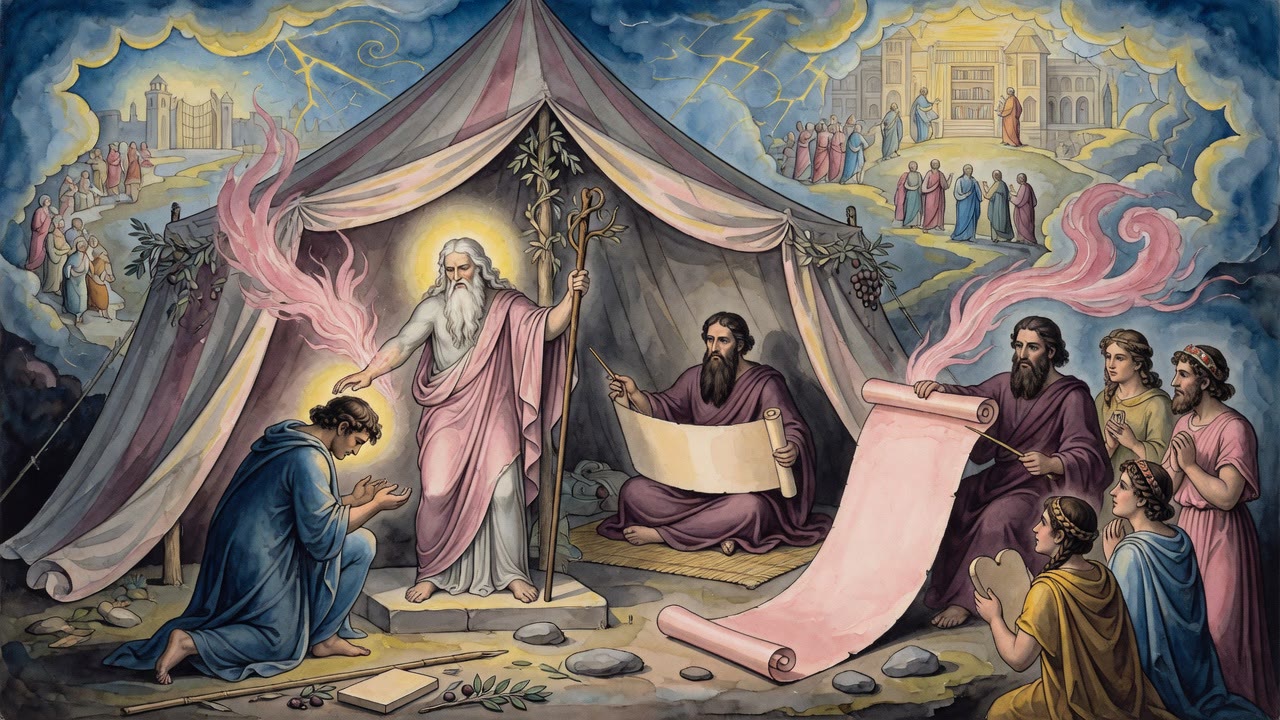
Noah Curses Canaan and the Words Wait for Joel
A drunk old man slurs a curse over his grandson Canaan. Generations later, the prophet Joel finally lets those words land.
Table of Contents
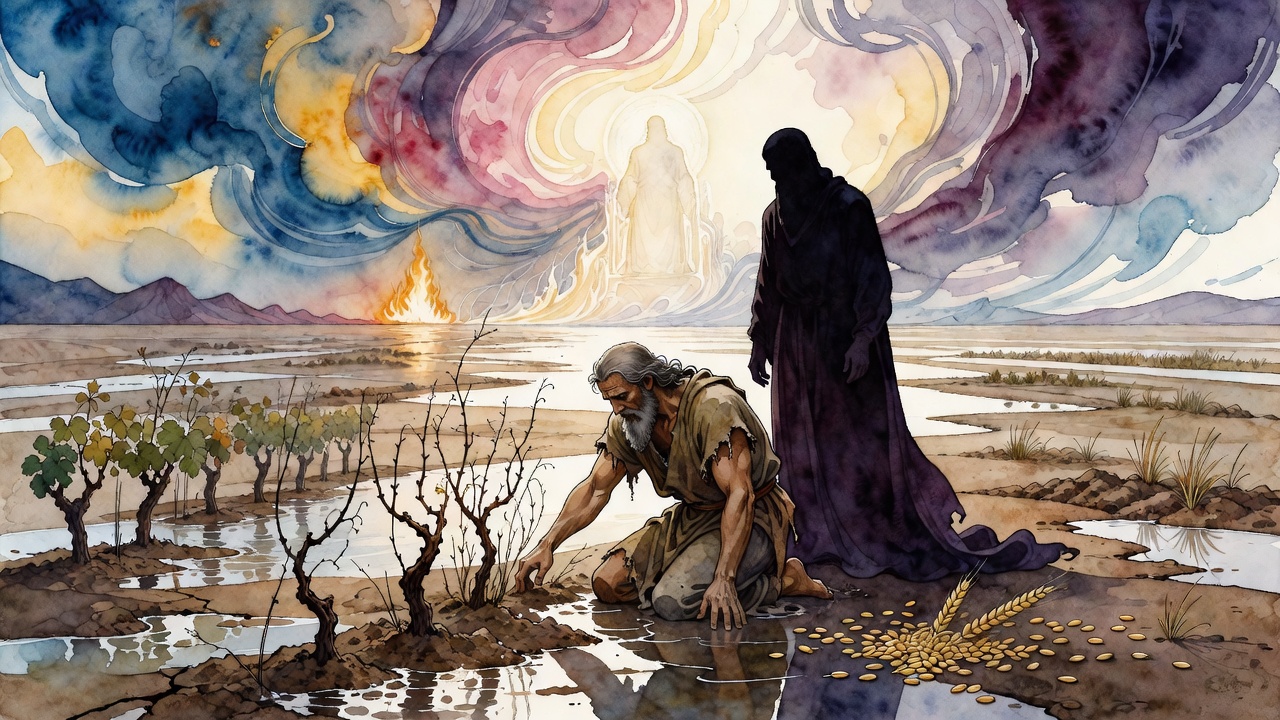
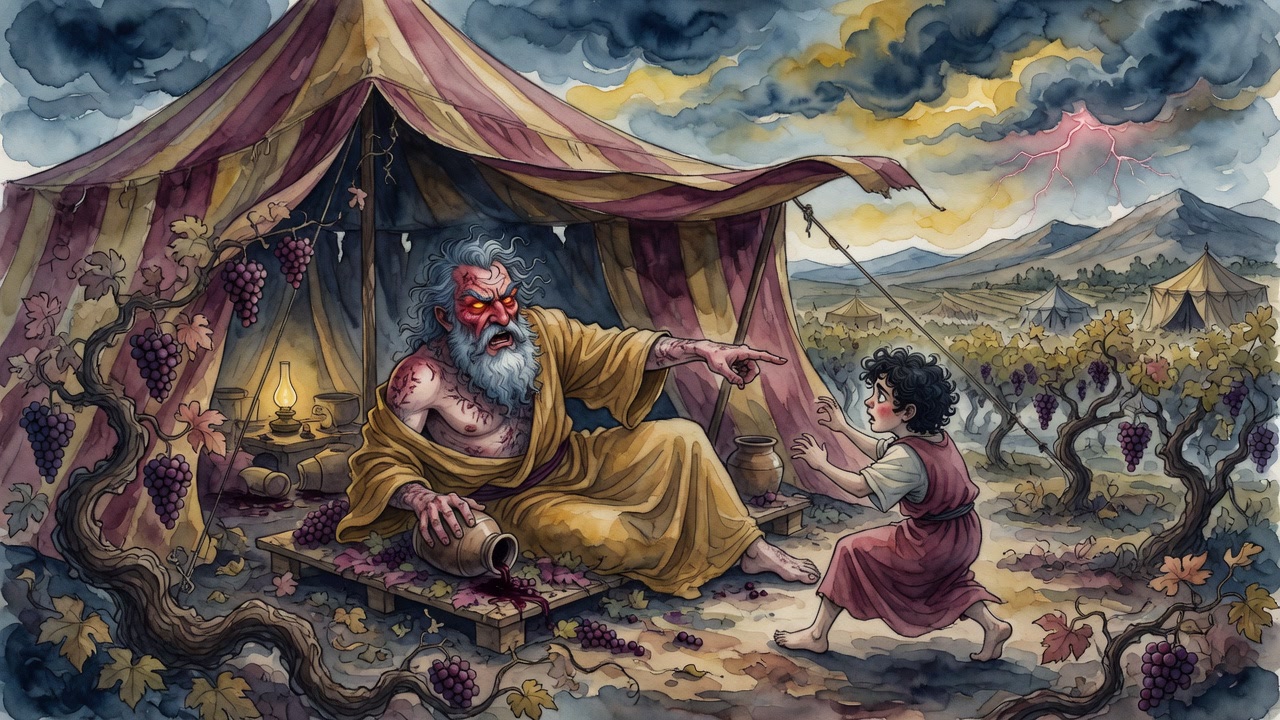
The vineyard was the first thing he planted on the drained earth. Noah had walked off the ark into mud that still smelled of the water that drowned the world, and he put grapevines in it. Months later the vines bore. He pressed the fruit. He drank what he pressed. And on a hot afternoon he lay in his tent with the wine working in him, his robe fallen open, asleep and uncovered, an old man whose body had outlived everyone he ever knew except his own sons.
 Click for full size
What Ham Saw in the Tent
Ham came in out of the sun. His eyes adjusted to the dimness and found his father stretched out, exposed, helpless. A son should have backed out, taken a cloth, walked in facing away, and laid it over the old man without ever looking. That was the whole of what the moment asked. Ham did not do it. He looked. Then he went back out into the light and told his brothers what was lying in there, told it the way a man tells a thing he wants others to see too.
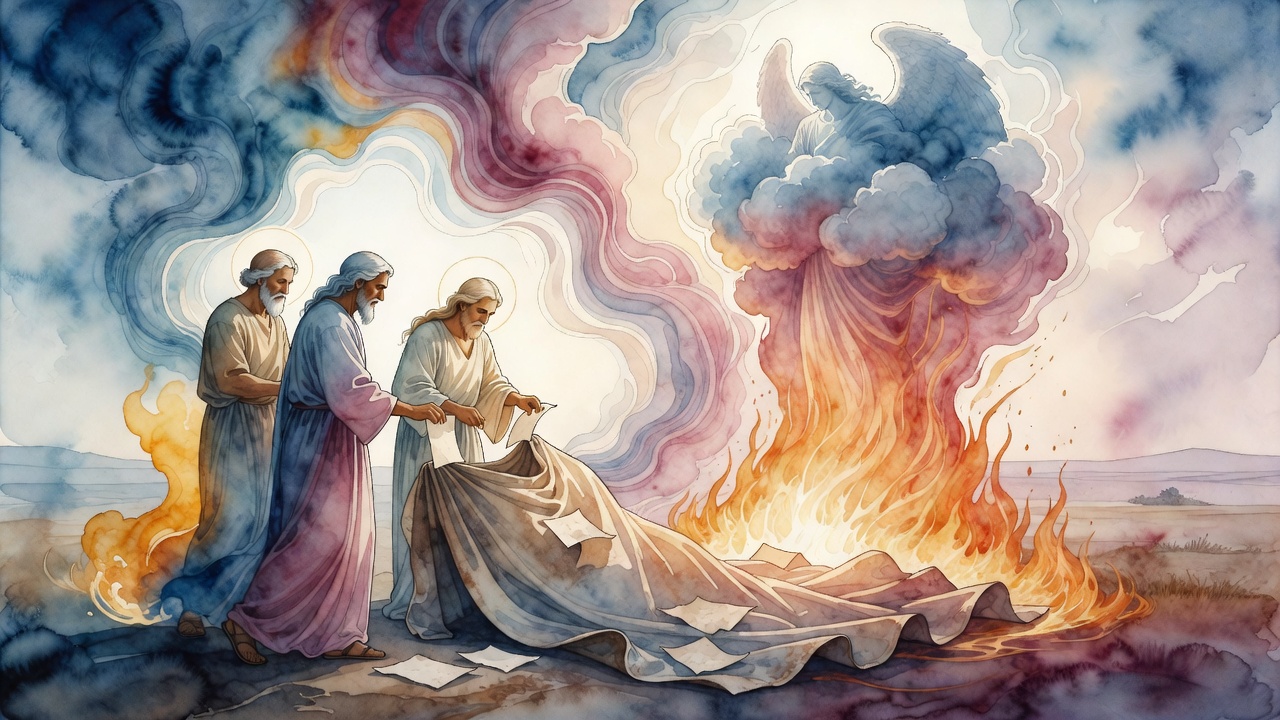
Shem and Japheth did not answer him. They took a garment, laid it across both their shoulders, and walked backward into the tent. They moved with their faces turned away the whole time, reaching behind them, and they let the cloth down over their father so that neither of them saw what Ham had stood and stared at. They came out the way they went in, backward, the looking carried by one brother and the covering by two.
The Curse That Skipped a Generation
Noah woke. The wine drained out of him and left him knowing exactly what had happened in the tent and outside it, who had looked and who had covered. Everyone watching expected the weight to fall on Ham. The eyes were Ham's. The mouth that told was Ham's.
The old man did not say Ham's name. He reached past his son to his son's son. "Cursed is Canaan," he said. "A servant of servants will he be to his brothers" (Genesis 9:25). A child who had done nothing, who in that moment may not even have been born, was bent under a sentence of bondage that ran down through whatever he would father. It looked like the misfire of a humiliated man, aiming his shame at the nearest small target because he could not bear to hit the one who deserved it. The words hung there, ugly and apparently spent, and the generations moved on past them.
Three Men Against Seventy Nations
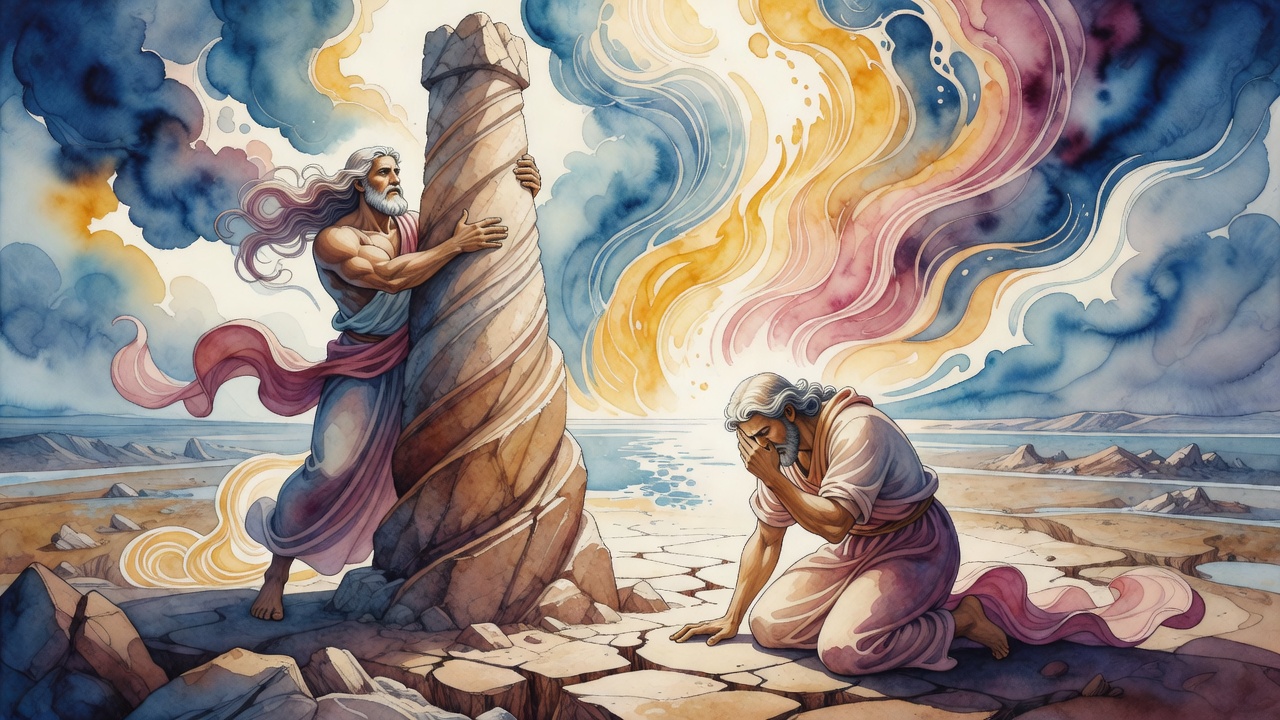
Out of that one ark came the whole repopulated world. Shem, Ham, and Japheth went forth (Genesis 9:18) with their wives into emptiness, and from the three of them the nations multiplied until they numbered seventy, a swarm of peoples spreading over every drained valley. The wicked had always been the ones who multiplied fastest. "A little that the righteous have is better than the abundance of many wicked" (Psalm 37:16).
The line worth watching was thin. From Shem came Abraham, and from Abraham, Isaac, and from Isaac, Jacob, and from Jacob the twelve tribes. A small bearing against a vast abundance, chosen for nothing it could boast about. "Not because you are the most numerous of peoples" (Deuteronomy 7:7), the word came down to them later. The smallest stream from the ark carried what no flood of nations could dilute. And down another channel, Canaan's, ran a curse that had never been answered.
The Coast That Sold Children
Generations later the people who lived where Canaan's seed had settled, the coastal traders of Tyre and Sidon and the towns of Philistia, did a thing that woke the old words. They took the sons and daughters of Israel and sold them, handed them off to merchants who carried them away to be slaves in distant places, children turned into cargo for the price they would fetch.
So the prophet Joel stood and spoke the verdict against the coast. "I will sell your sons and your daughters" (Joel 4:8). The reversal was exact. The sellers would be sold. Their own children would be loaded out and carried off to a far people, paid for and led away, the same trade run backward against the ones who had started it. It read as fresh judgment for a fresh crime, an oracle for the merchants of that one generation.
Where the Sentence Was First Spoken
It was not first spoken on the coast. Trace the sentence back through every century it crossed and it does not begin with Joel. It begins in a tent that smelled of new wine, in the mouth of an old man who had just learned what his son did while he slept. "A servant of servants will he be to his brothers." Bondage decreed over Canaan's line, and the selling of Canaan's children was that bondage finally coming due. Joel did not invent the punishment. He announced the moment it would land. The curse had not been the spite of a humiliated drunk after all. It had been a sentence pronounced and then left to wait, patient across the whole stretch of generations, until the people under it earned the day it fell.
← All myths