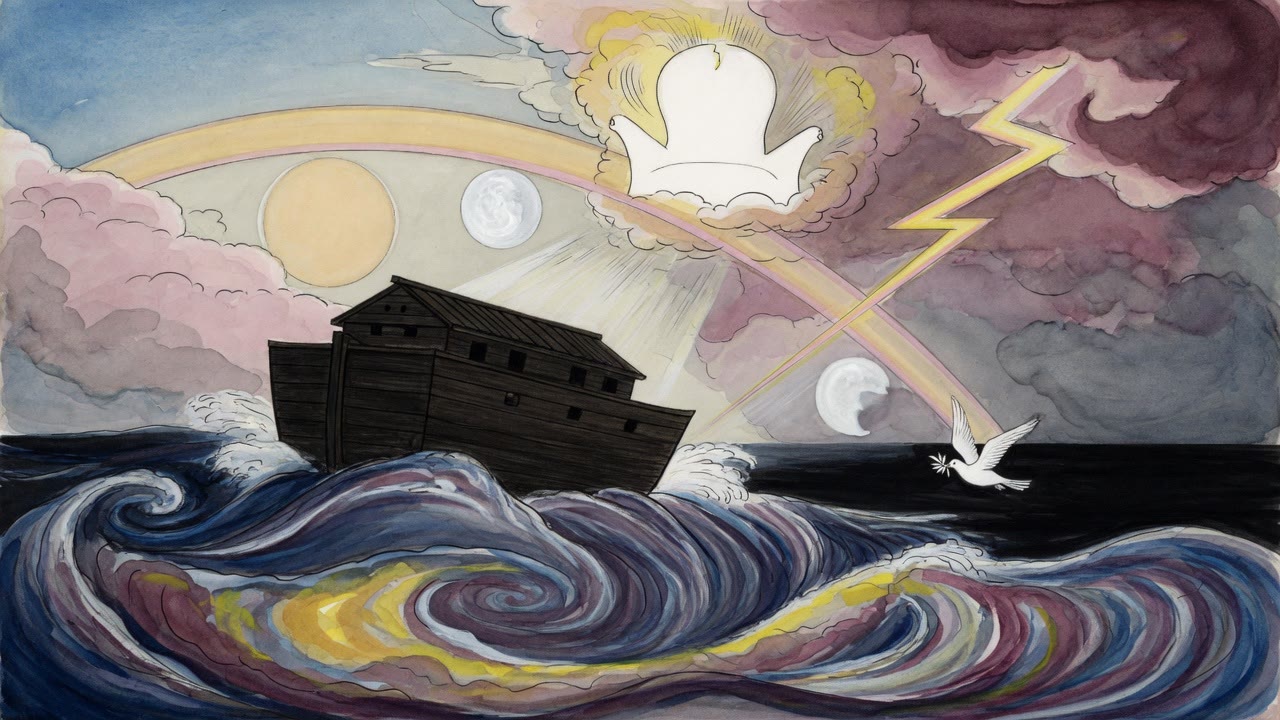
Noah Did Not Board Until the Water Reached His Knees
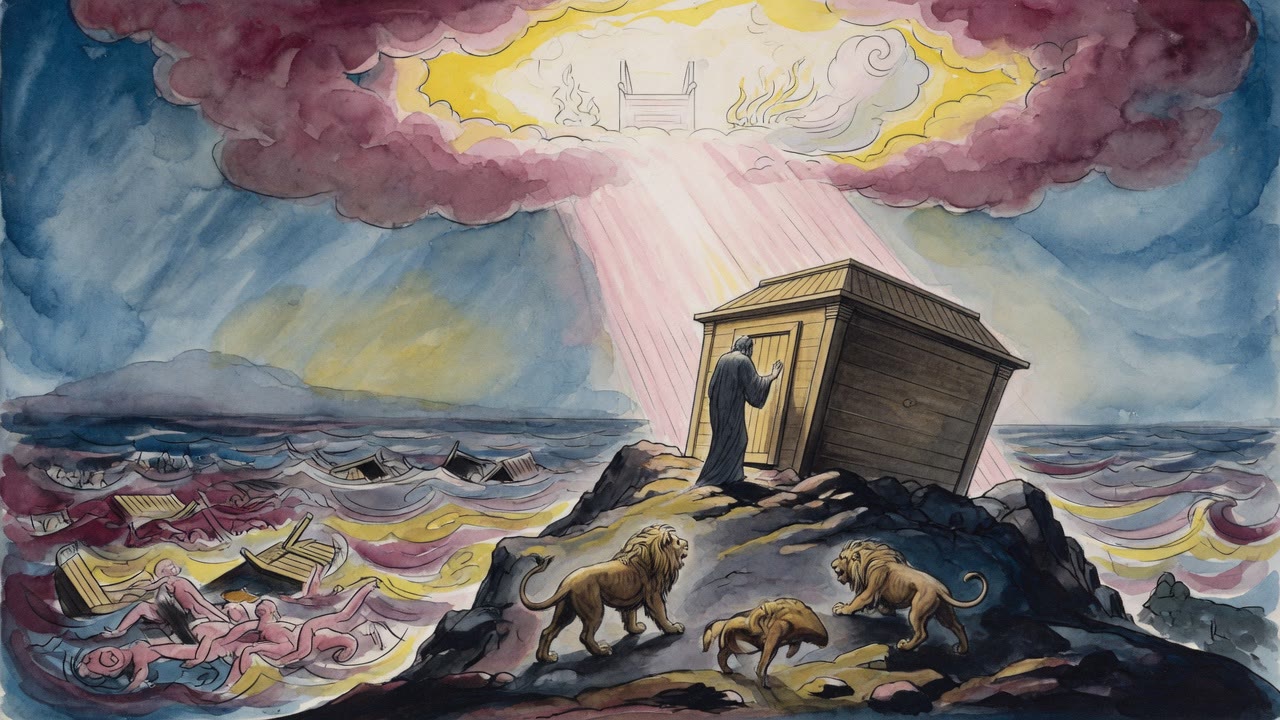
Seven hundred thousand people begged at the ark door and Noah shouted them down. He had been standing outside it himself a moment earlier.
Table of Contents
 Click for full size
They Stopped the Springs With Their Children
The water did not begin overhead. It began underfoot. The springs of the deep opened and pushed up through the ground, and the ground would not hold them.
The men of that generation ran to the nearest opening with what was closest to hand. They picked up their own small children and pushed them down into the springs to choke off the water.
It did not work. Nothing about that hour changed them. They were still exactly what they had been for one hundred and twenty years, and now they were that in front of their own drowning sons.
Seven Hundred Thousand at the Door
Then they turned and ran for the boat they had laughed at.
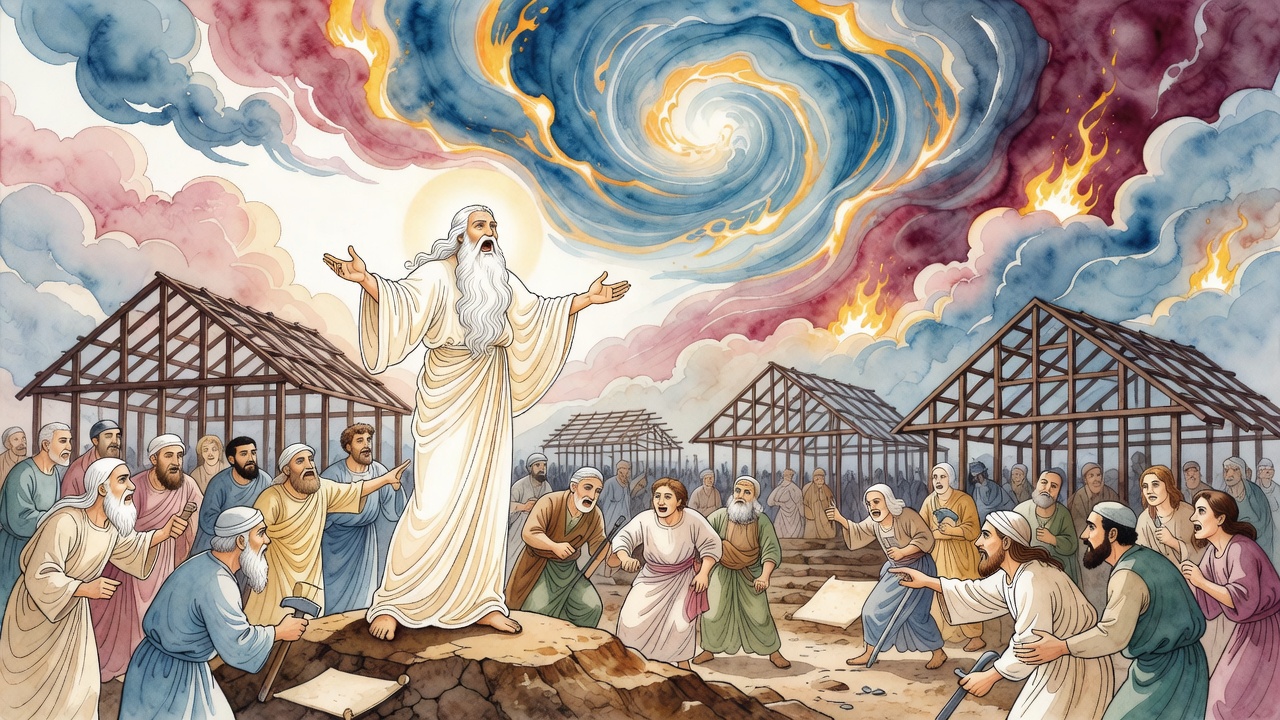
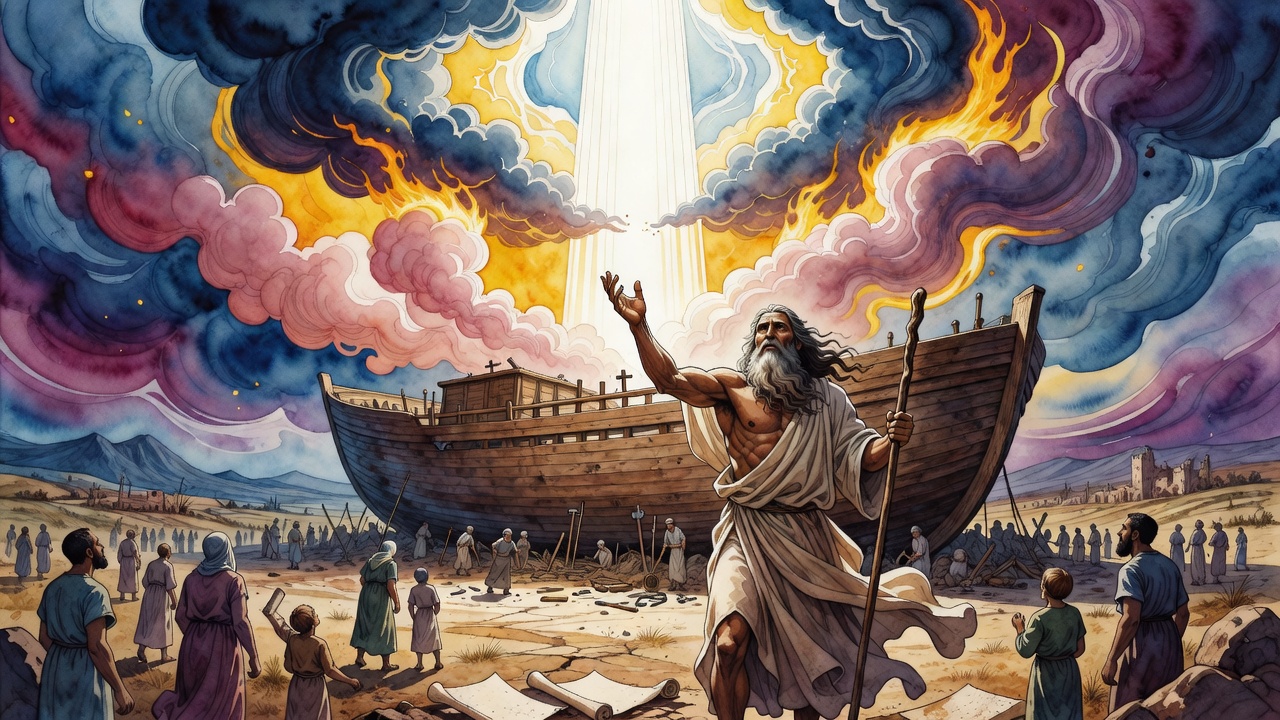
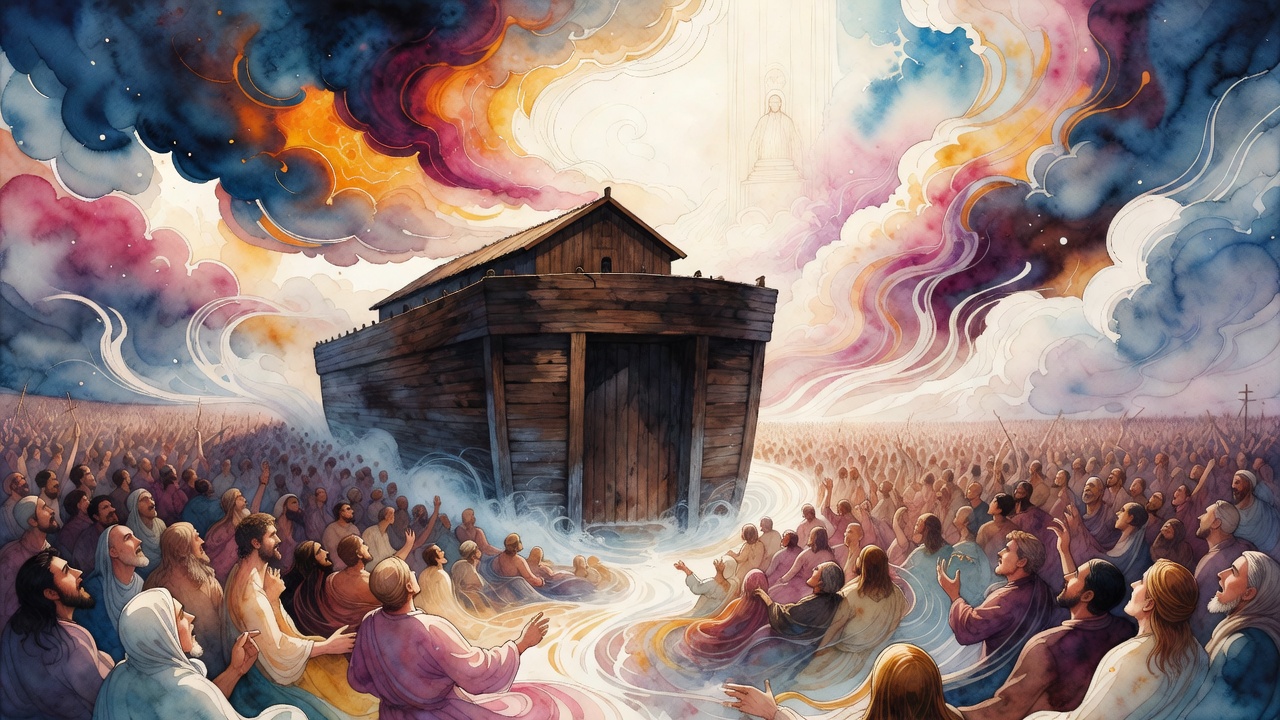
Seven hundred thousand of them came around the ark and pressed against the hull and begged Noah to take them in. He answered them at the top of his voice, over the noise of the water.
"Are you not the ones who were rebellious toward God, saying, there is no God? He has brought ruin on you for it, to wipe you off the face of the earth. Have I not been prophesying this to you for a hundred and twenty years, and you would not listen to the voice of God? And now you want to be kept alive."
They shouted back that they would take the terms. "So be it. We are all ready now to turn back to God, if only you will open the door of your ark and receive us, that we may live and not die."
"You do that now," Noah said, "because your need is pressing hard on you. Why did you not turn to God in all the hundred and twenty years the Lord appointed to you as the term of repentance? Now you come, and you speak like this, because distress is on your lives. God will not listen to you. You will accomplish nothing."
The door stayed shut.
The Man Inside Had Waited Too
He had not gone up the plank early either.
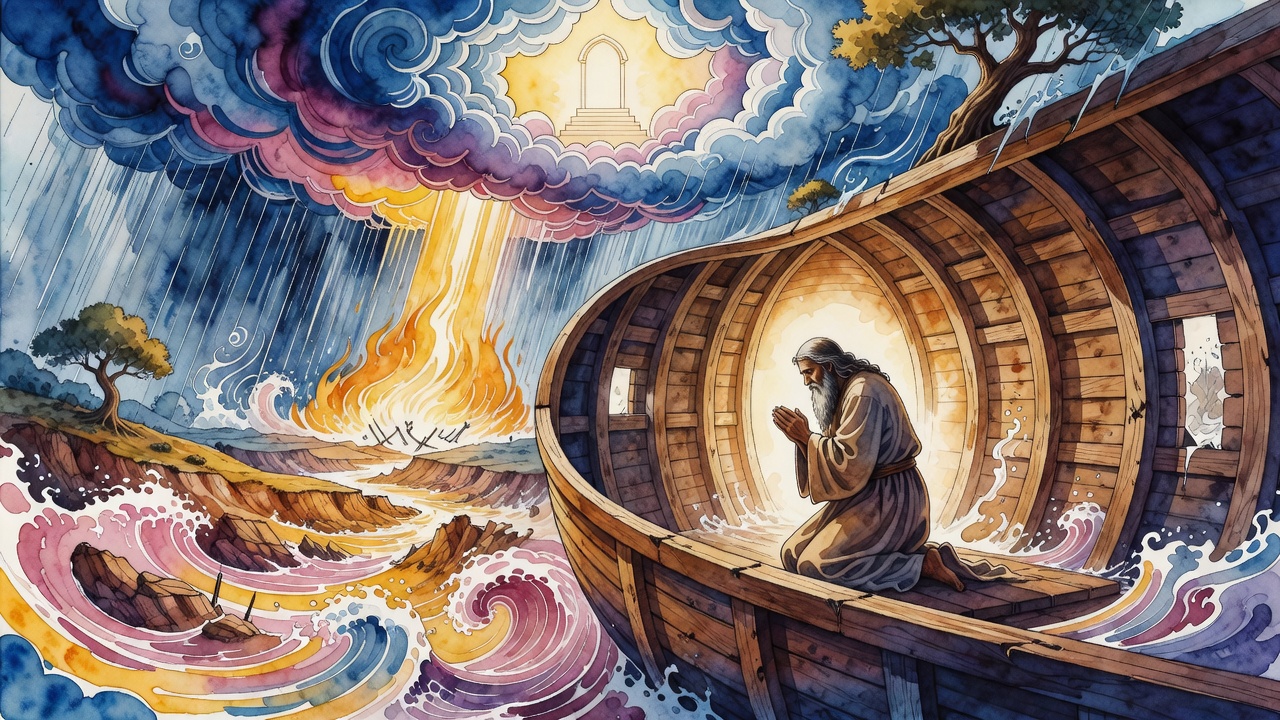
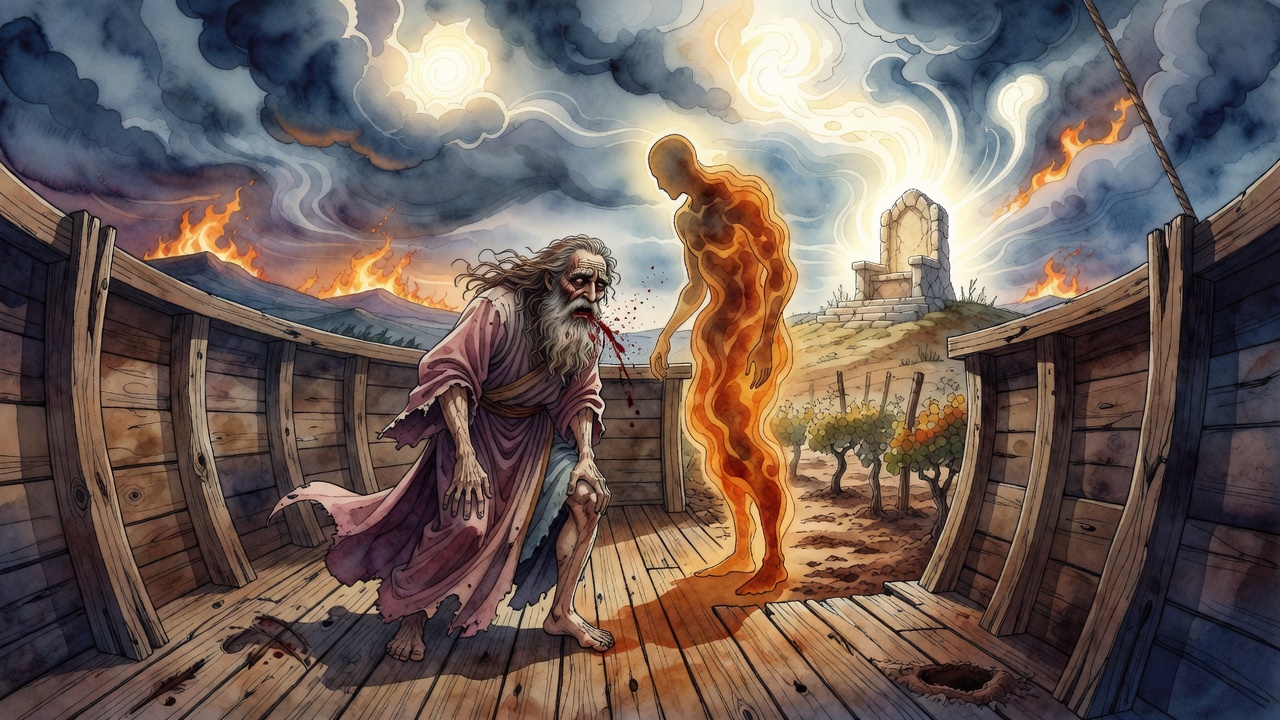
Noah was better than the men outside, but he was not a man for whom the order of nature should have been bent, and it was mercy and not merit that put a roof over him. He had believed his own prophecy so thinly that he did not board until the flood was at his knees. He stood on ground that was already gone, with the water climbing his shins, and only then went in.
His wife Naamah went in with him, the daughter of Enosh, and his three sons, and the three wives of his sons. Eight people, and the water shut behind them.
A Quarter of an Ell a Day
Inside, he counted.
On the first of Sivan the flood began to go down, and it went down a quarter of an ell a day, which is slow enough that a man has to mark a line on the wood to prove to himself it is happening at all. On the tenth of Tammuz he opened a hatch and let the raven go. A week after that he sent the dove out on the first of her three flights, and he sent her again at the end of each following week.
Sixty days of that quarter-ell descent brought the tenth of Av, and the tops of the mountains came up out of the water like knuckles. From the first of Av to the first of Tishri the rest of it drained off the face of the earth.
Then he had to keep waiting. The ground was mud, and mud will not carry a household or a herd. They stayed shut in until the twenty-seventh of Heshvan, which made a full solar year in that box, twelve moons and eleven days.
The World Under the Mud
When the door finally opened, what he stepped out onto was silt.
Somewhere below it were the springs the fathers had tried to plug, and the fathers, and the seven hundred thousand who had rehearsed their repentance too late and shouted it at a wall of pitch and gopher wood. Noah walked out over all of them on ground that was still soft.
← All myths