Potiphar's Wife Spent a Year Before She Grabbed the Cloak
The second eunuch paid eighty gold pieces and lied that it had been a hundred. Joseph saw the cheat and kept his mouth shut.
Table of Contents
 Click for full size
She Paid Gold Before He Crossed the Door
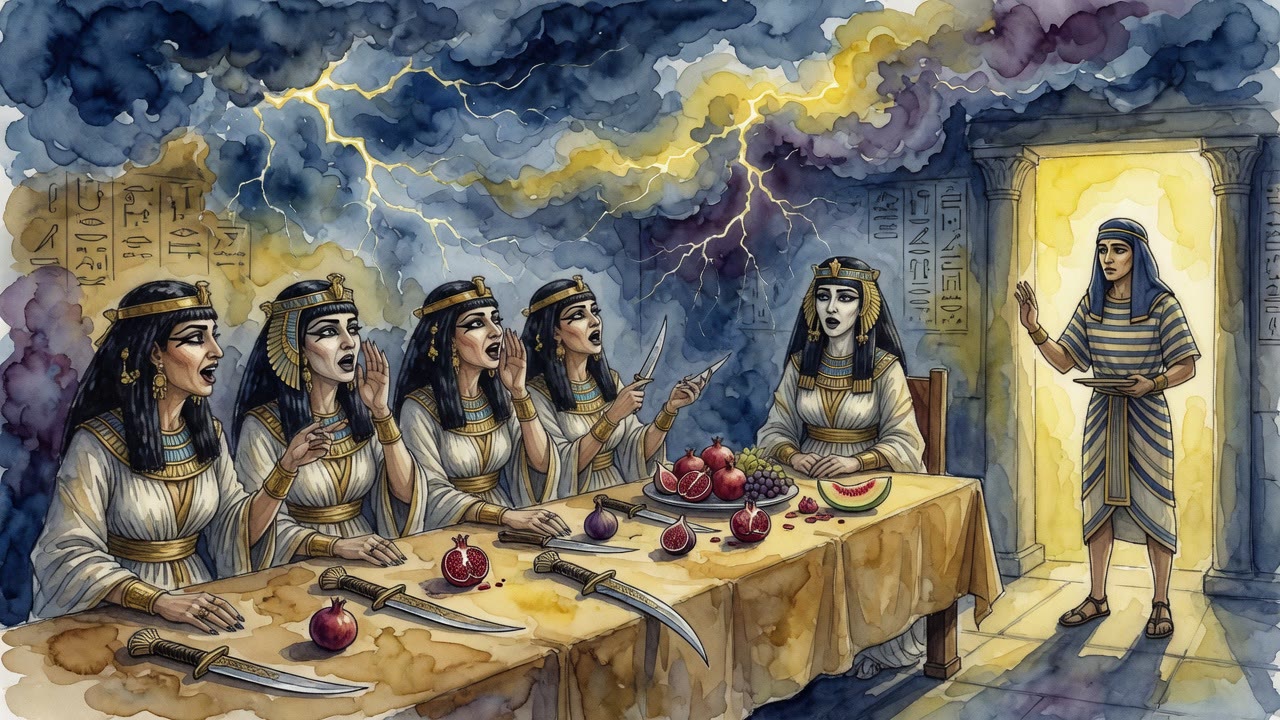
The Ishmaelite merchants had a Hebrew slave in the line, and Potiphar's wife did not wait for chance to bring him to her house. She sent a eunuch to buy him. The traders named a price that made the first eunuch turn around empty-handed. She sent a second man with orders that left no room to haggle. One mina of gold, even two. Pay it. Bring the slave.
The second eunuch handed over eighty pieces of gold. He told his mistress he had paid a hundred. Joseph watched the lie land and said nothing, so the eunuch would not be put to shame in the courtyard. He was already a slave. He would not add another man's disgrace to the ledger of the house that now owned him.
Potiphar set him over the accounts, the stores, the fields. The Word of the Lord was Joseph's helper, and the house prospered. Potiphar took no knowledge of anything except the wife with whom he lay. Joseph was of goodly form. She had paid for that form. She looked at it every day.
A Year of Closed Rooms
She asked him. He refused. She asked again the next day. He would not listen. A year went by like that. Three hundred and sixty-five days of a woman who controlled his schedule, his food, his movement, and the doors he walked through. She could have had him beaten on a word. She could have sold him. She could have had him killed. The power ran entirely in her direction.
He still refused.
"Lie with me," she said, in rooms where no servant had been posted. He kept a space between their bodies the width of a master's trust. "How can I do this great wickedness, and become guilty before the Lord?" He named the house that had been put in his hand. He named the one thing Potiphar had not given him. He would not take it.
The Day of the Great Judgment
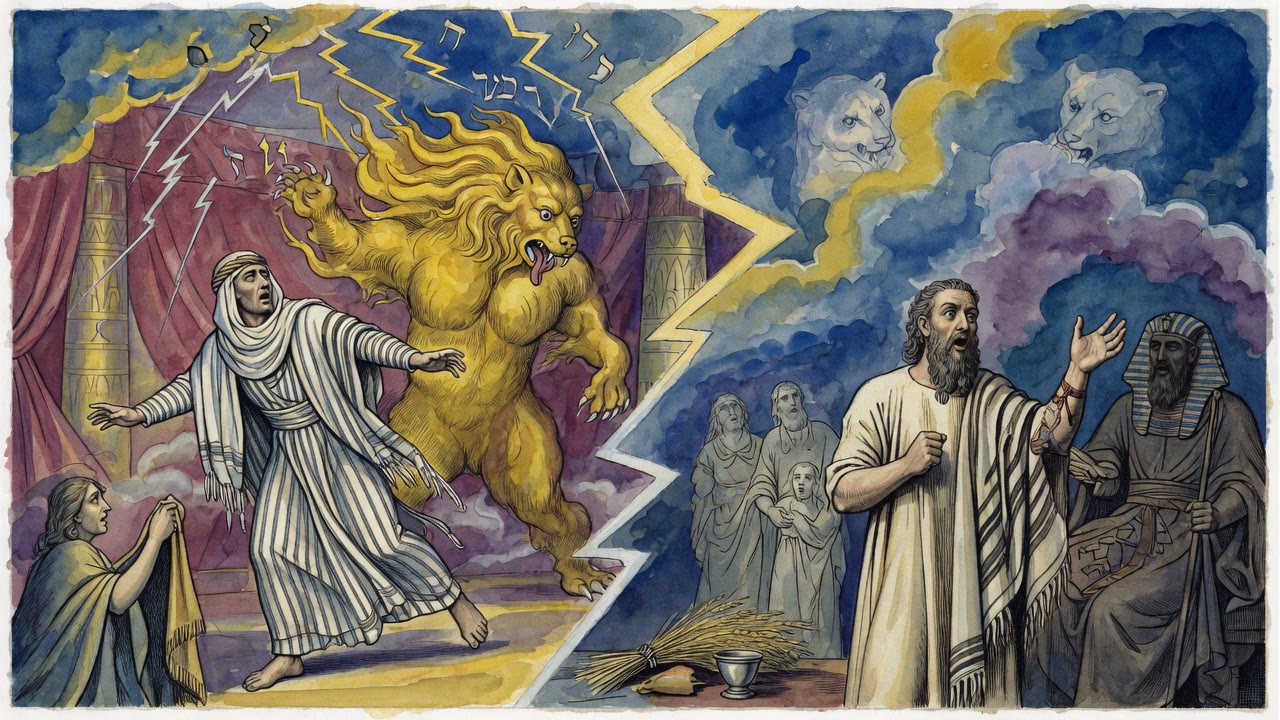
She spoke to him this day and the next. He would not hearken, lest with her he should be condemned in the day of the great judgment of the world to come. That was the argument that held. Not the fear of Potiphar's whip. Not the fear of a rumor in the market. He saw himself standing later, when every closed room is open, and he would not build his life in Egypt on a betrayal that would still be waiting for him there.
The Word of the Lord had been his helper in the granaries and in the fields. He would not spend that help on a secret the house already knew how to hide. He kept the tablets of the accounts. He kept the keys. He kept his body out of her reach for a full year while she learned that asking would never be enough.
Then she stopped asking.
He Broke Through the Door
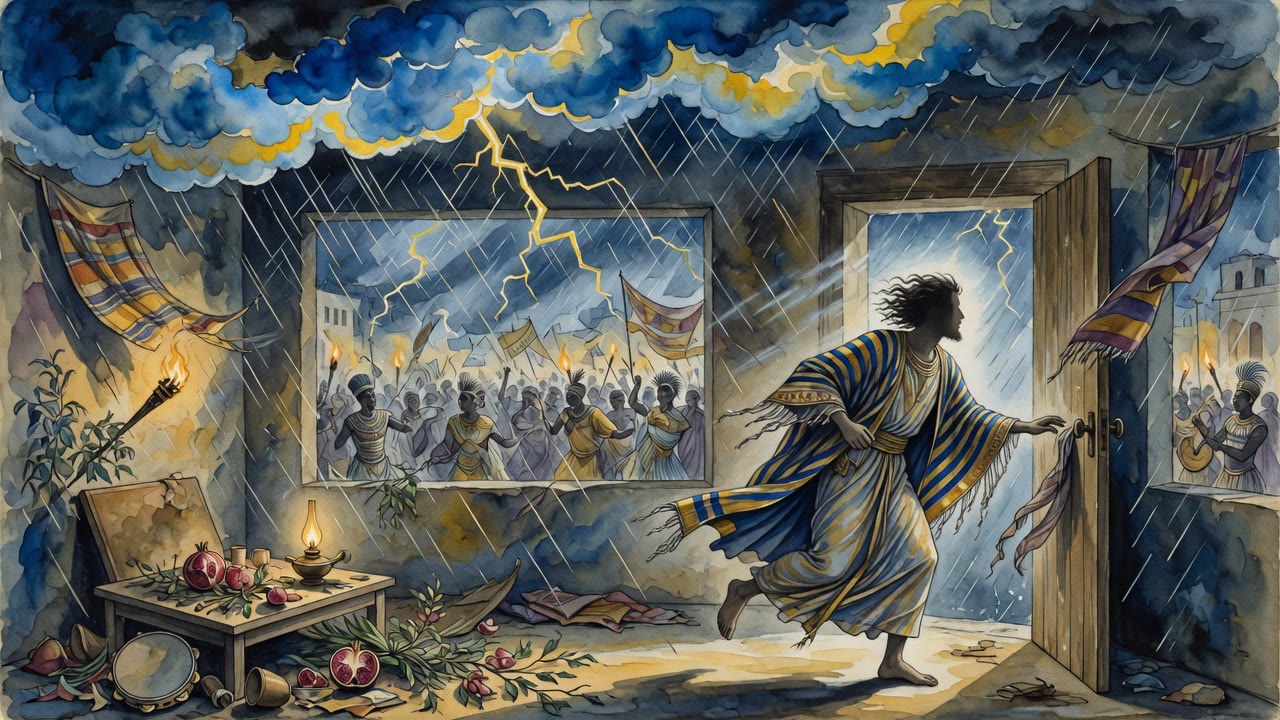
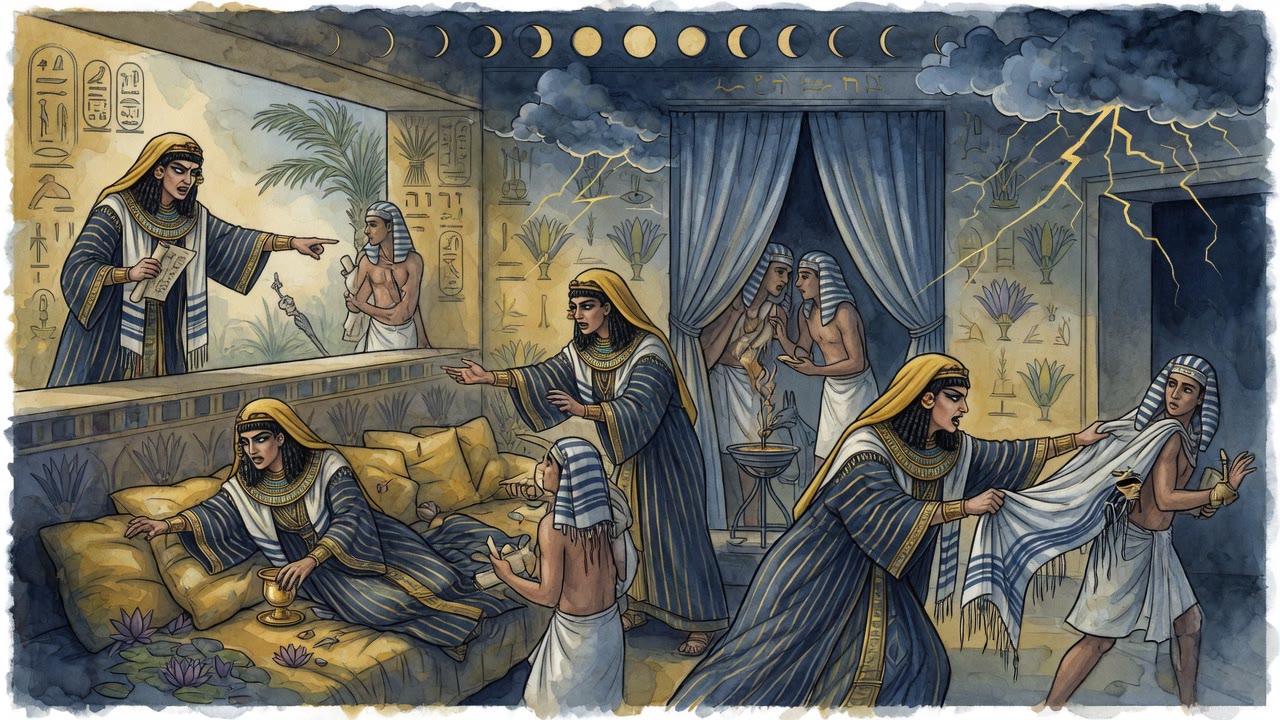
It was a festival day. Potiphar was gone, as she had known he would be. Joseph entered the house to examine the tablets of his accounts, and there was no man of the house within. She closed the doors. She embraced him and held him fast, so that he would have to lie with her or tear himself out of his own garment.
He left the cloak in her hands and broke through the door and fled into the street. Outside. Air. The year of pressure still on his skin, and the garment gone. She held the proof she needed. She called the men of the house back from the festival noise and lifted her voice.
"See this, which the Hebrew man hath done, whom your master hath brought to mock us. He came in to lie with me, and I cried with a high voice." She let the garment remain until his master came into his house. The cloak did the talking she had failed to do for a year.
She Chose the Hour He Could Not Answer
Potiphar came home and found her in low spirits. The cause was chagrin at a year that had ended in a slammed door, but she pretended it was anger at the slave. She chose the hour of conjugal intimacy, when she was certain of her influence, and she poured the charge into that hour.
"O husband, mayest thou not live a day longer, if thou dost not punish the wicked slave that hath desired to defile thy bed." She reminded him who Joseph had been when he arrived, and what bounty the house had poured on him. She said the design had been laid on the festival, when the master would be absent. Potiphar's anger burned.
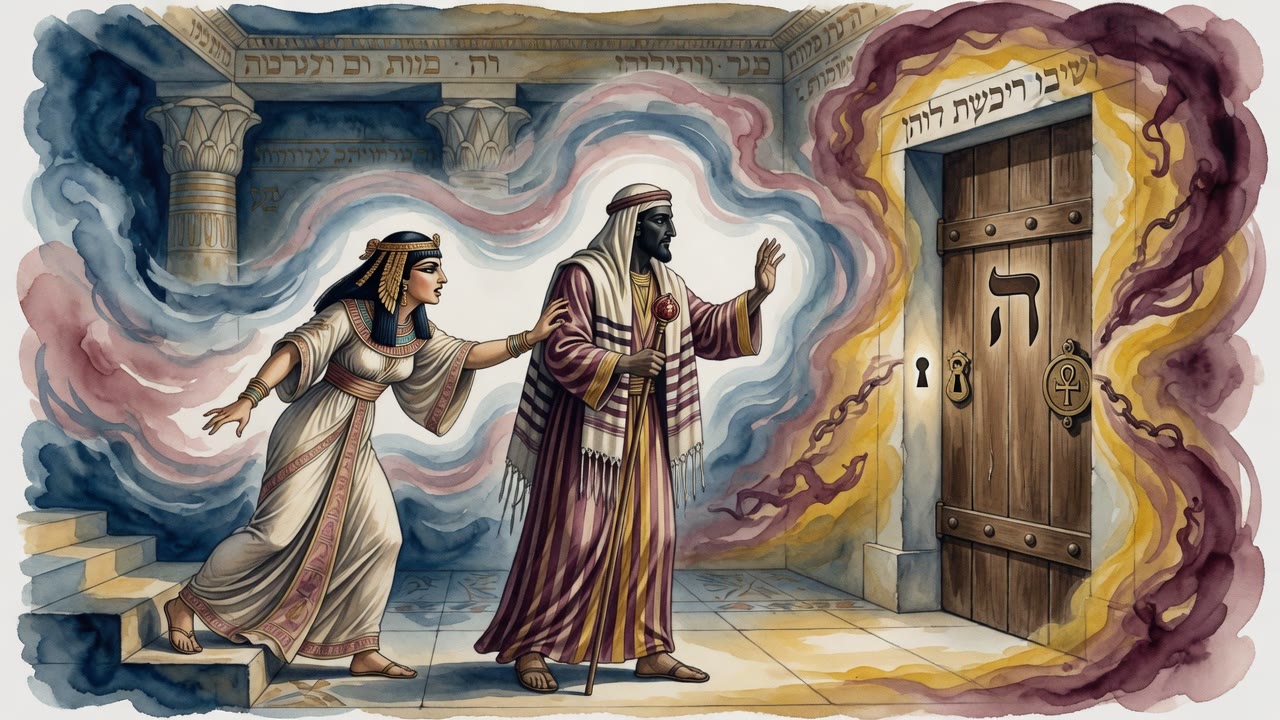
He did not kill Joseph. He had the authority and the motive. A man who believed his wife had been attacked by a slave in his own house would normally have executed the slave. He threw Joseph in prison instead. The cell took him. The cloak stayed in the house. The year she had spent trying to own him ended with a locked door of a different kind, and the Word of the Lord went into the prison after him.
← All myths