Ptolemy Learned a Crown Begins With Self-Rule
Other petitioners had waited days for an audience. The elders from Jerusalem came in at once, and the king's first question was how to keep his kingdom.
Table of Contents
 Click for full size
The King Dismissed His Counselors and Called the Elders In
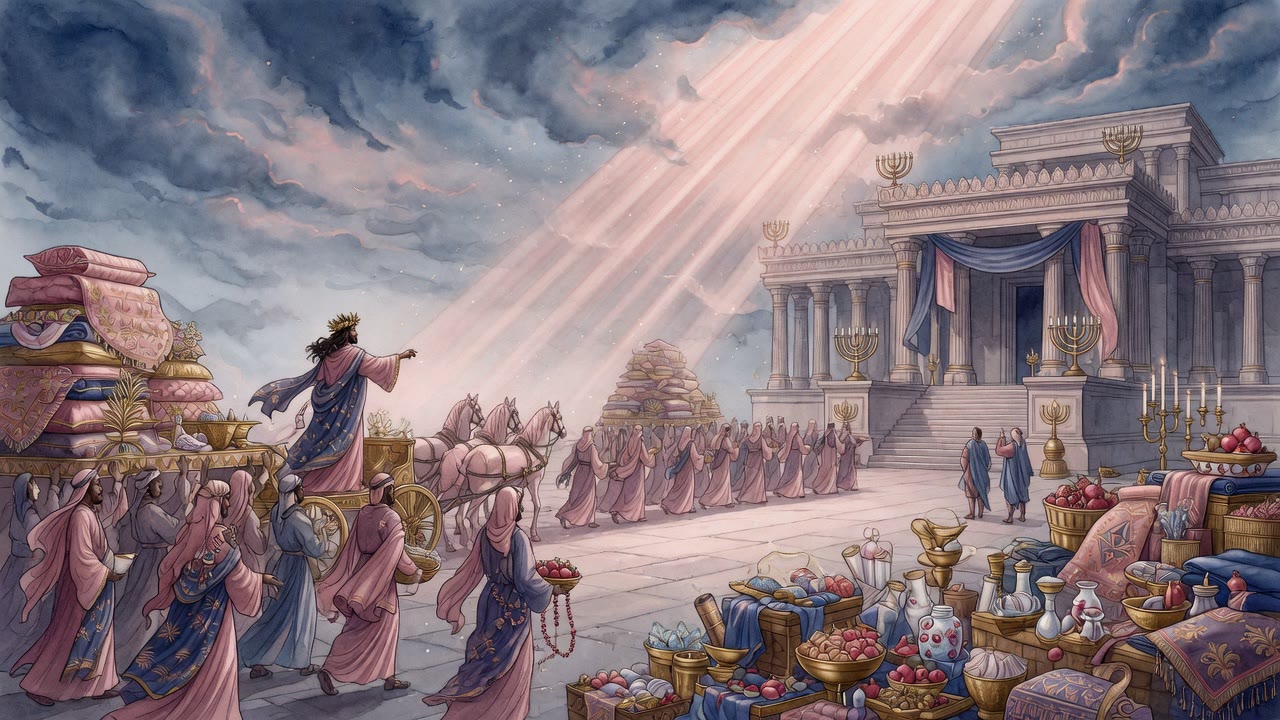
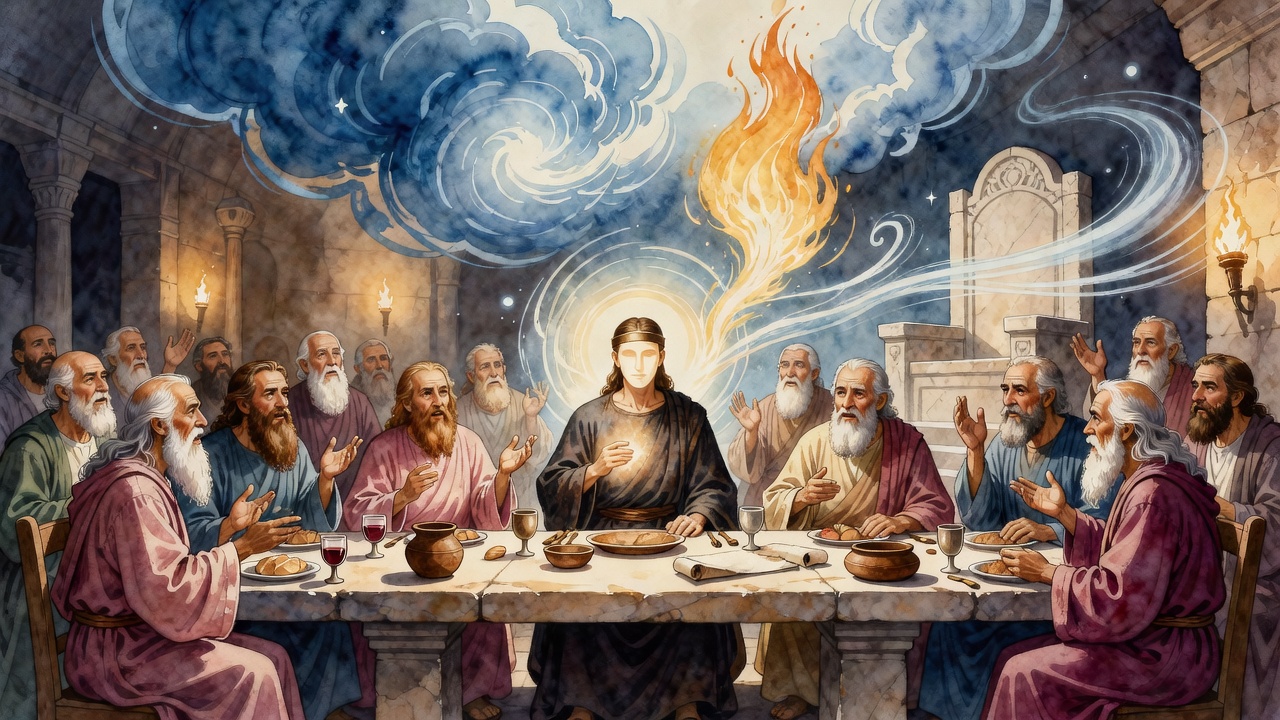
The banquet was set for the day the elders arrived in Alexandria, which happened also to be the anniversary of Ptolemy's naval victory over Antigonus. Other petitioners had waited days for an audience. These men were brought in immediately. The king announced that their arrival would be remembered throughout his lifetime, and he ordered the best quarters near the citadel assigned to them. Military triumph and Torah wisdom fell on the same day. The story asks quietly which of the two would teach the king more.
When the meal paused, Ptolemy did not ask about theology. He asked about power. How he could keep his kingdom unimpaired to the end. The elder in the seat of honor, arranged there by seniority, considered the question for a moment.
Every Answer Began With God and Returned to the Self
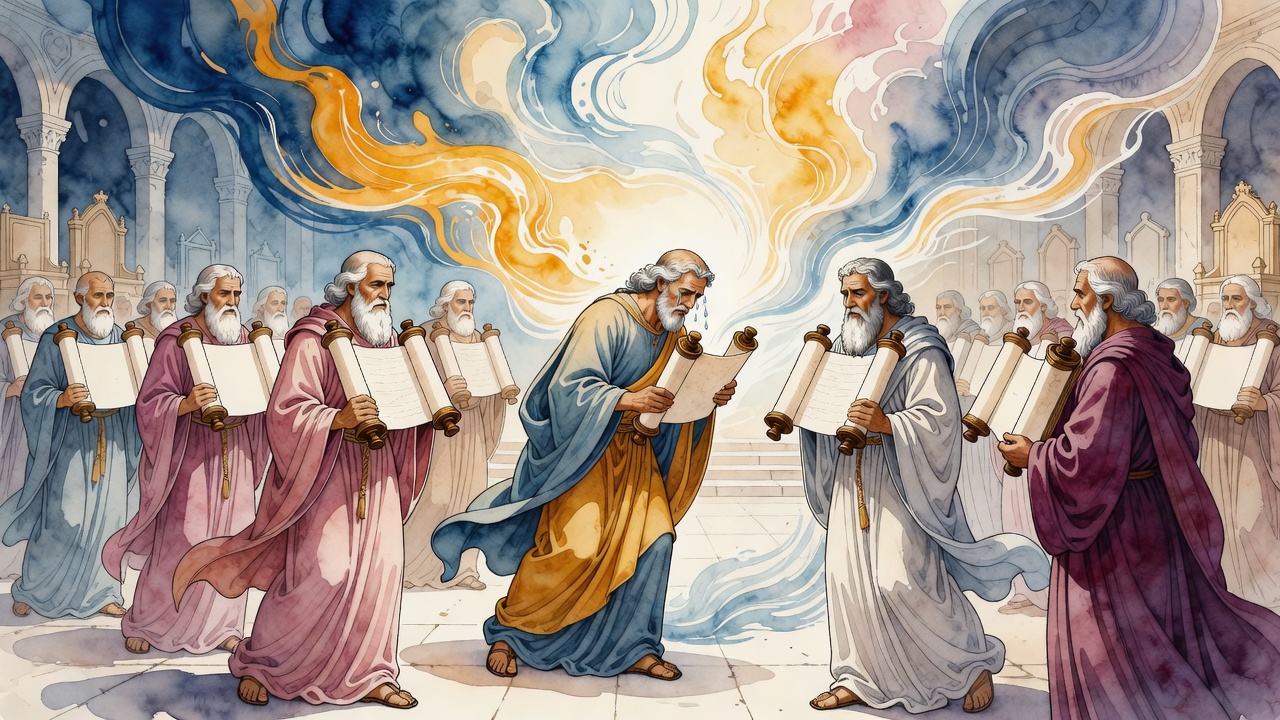
"If you exhibit clemency and inflict mild punishments on those who deserve them," the first elder said, "you will turn them from evil and lead them to repentance. You could best establish your kingdom's security if you imitated the unceasing kindness of God."
The next elder was asked how a king could do everything for the best in all his actions. "If a man maintains a just bearing toward all, he will always act rightly," the elder replied, "remembering that every thought is known to God. If you take the fear of God as your starting point, you will never miss the goal."
Ptolemy moved through his questions methodically. How could he have friends like-minded with himself? "Study the interests of the multitudes over whom you rule, and observe how God bestows benefits on the human race." How could he be invincible in military affairs? "By not trusting entirely to his forces, but calling on God continually while discharging his own duties in the spirit of justice."
The Scale of God's Power Was Different From a King's
One elder answered the question about how a king might become an object of dread to his enemies with a distinction that cut to the structure of power itself. "Maintain a vast supply of arms and forces," he said, "but remember that these things cannot achieve a permanent result. Even God instills fear not by annihilation but by granting reprieves and making a display of the greatness of His power." A king who understands this rules differently than one who does not.
When Ptolemy asked what the highest good in life was, an elder answered: "to know that God is Lord of the universe, and that in our finest achievements it is not we who attain success but God who by his power brings all things to fulfillment." And when the king asked how he could keep his possessions and hand them to his successors, the answer came back the same way: "by praying constantly and warning your descendants not to be dazzled by fame or wealth, for it is God who bestows these gifts. Men never by themselves win supremacy."
Courage Had a Direction
The last question was about courage. What is its true aim? "If a right plan is carried out in the hour of danger in accordance with the original intention," the elder said. "For all things are accomplished by God to your advantage, O king, since your purpose is good."
When all the philosophers present signified their agreement, Ptolemy said aloud what he had been thinking through the entire meal: that these men excel in virtue and possess extraordinary knowledge, because on the spur of the moment they have given fitting answers, and they have all made God the starting point of their words.
← All myths