Ptolemy Wept Before the Torah Scrolls and Asked How a King Should Rule
Seventy-two elders carried the Torah from Jerusalem into the Greek king's hall. He asked why no king before him had ever been given this book.
Table of Contents
Ptolemy had everything a king could want. Libraries, armies, revenue, the most cosmopolitan city in the world. What he did not have was the thing his librarian had told him about: a text that the Jewish people treated as the direct communication of the divine to humanity. He wanted it translated. He wanted it in his library.
 Click for full size
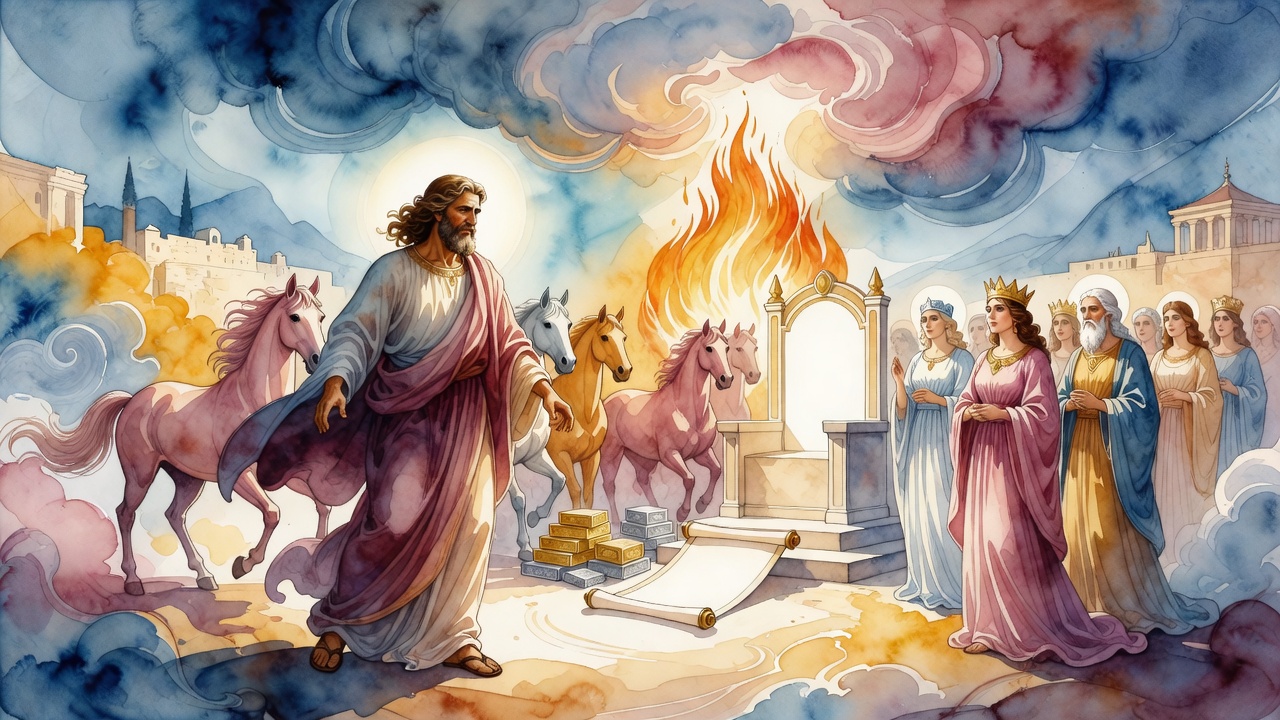
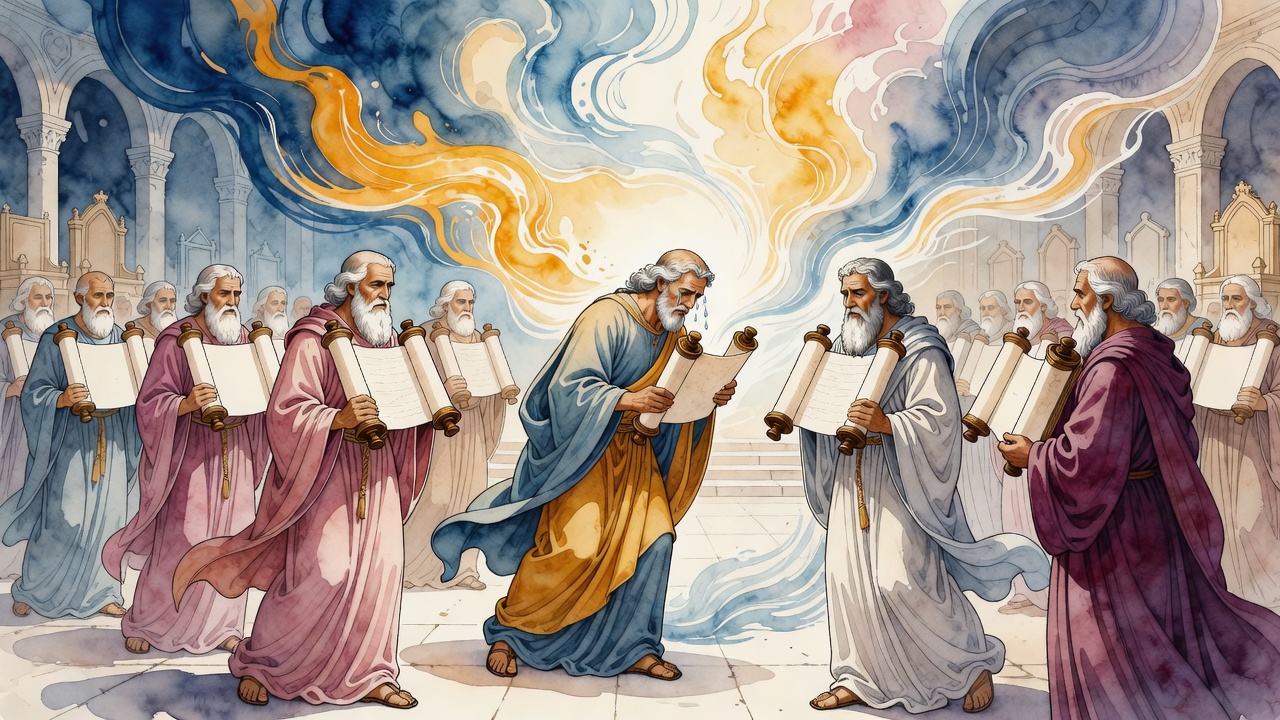
When the scrolls arrived, accompanied by seventy-two elders from Jerusalem, Ptolemy stood up. Then he wept.
The King Wept Before the Scrolls
The Letter of Aristeas, the document that records this event, describes the king's reaction with deliberate precision. The envoys and the people standing with them cried out together for God to save the king. Ptolemy, who had just seen the scrolls placed before him, was struck harder than flattery could have struck him. He asked the elders why his predecessors had never acquired this book. He asked with the tone of a man who realizes that something significant had been missed in his household across generations.
The elders answered him carefully. His predecessors had not possessed the book because the divine authority behind it was not interested in being owned by rulers who used power for impious ends. The ones who had tried to acquire it had been punished. The moment Ptolemy is moved to tears, he is already in a different category from those rulers. The weeping is the qualification.
What Kingship Looks Like When It Imitates the Divine
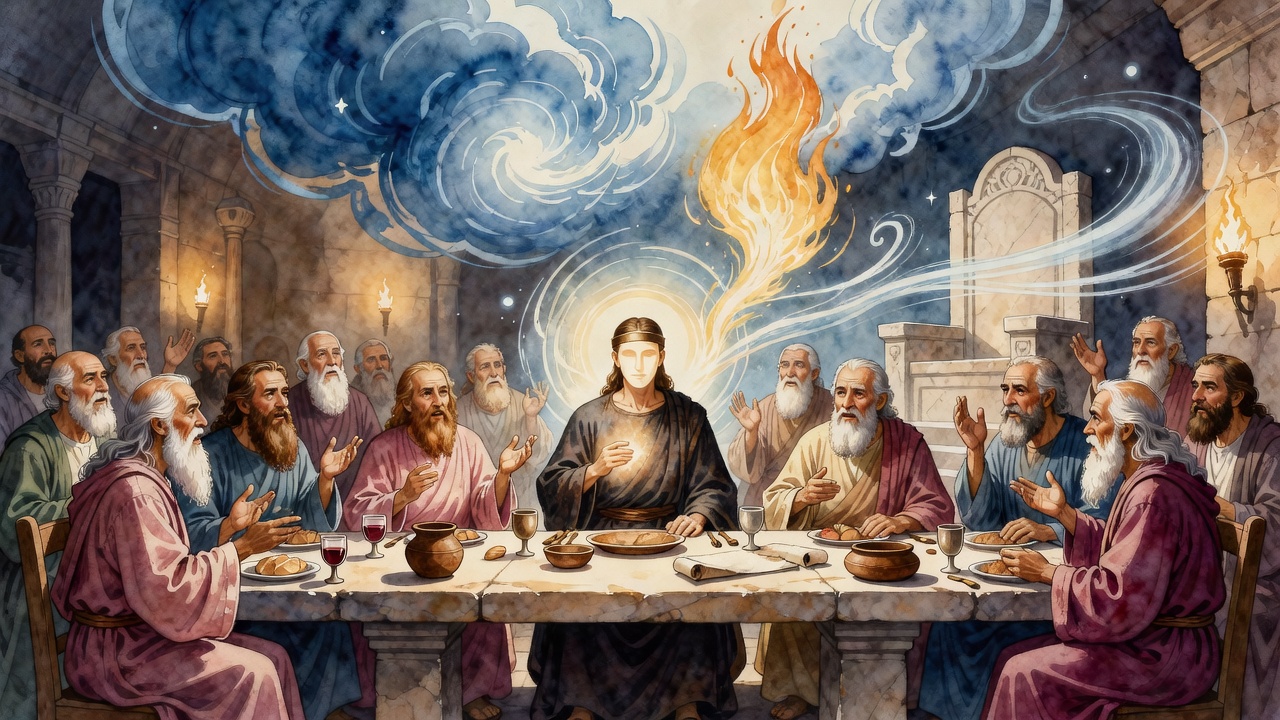
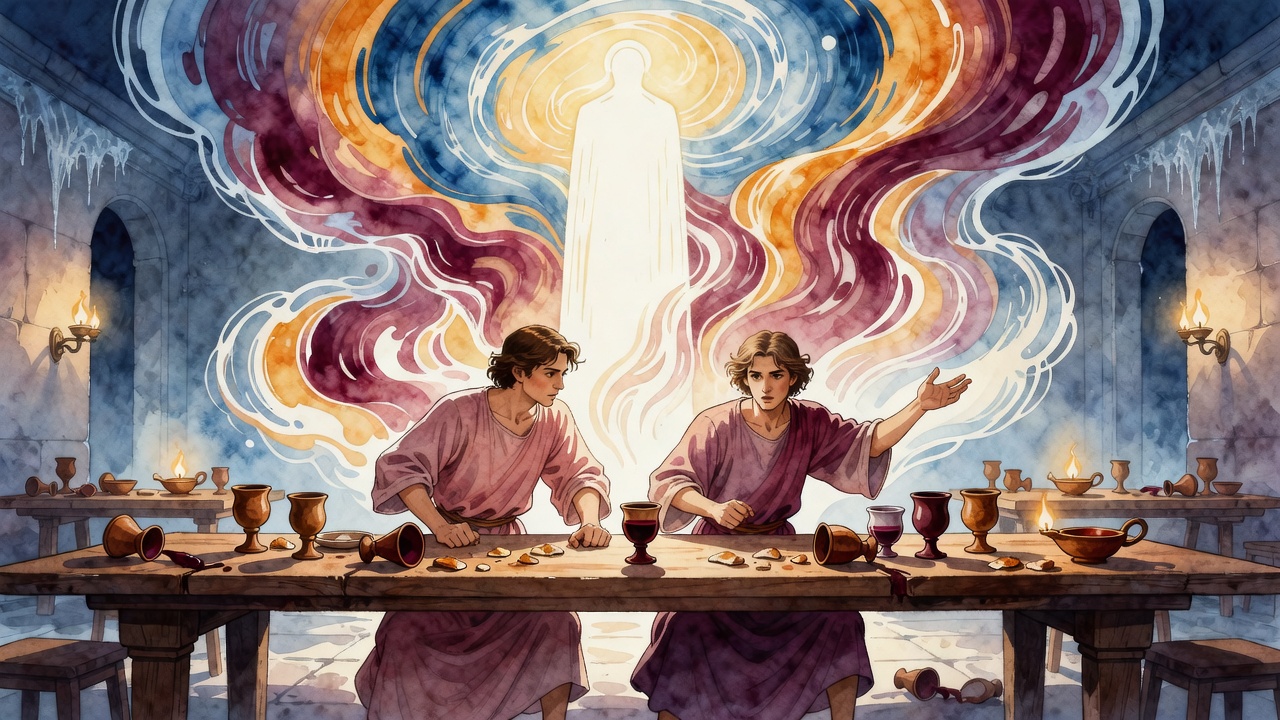
Ptolemy's banquet became a school. For seven days the king posed questions to the elders, one after another, and each elder answered in turn. The questions were not about the text they had brought. They were about governance, power, mercy, wisdom, and the conduct of a king who ruled well. Ptolemy, surrounded by wealth and authority, was asking people who had lived under foreign domination for centuries how a king should behave.
One of the elders answered a question about power with an answer that silenced the room. The all-powerful God, the elder said, has no need for wrath. Wrath is the instrument of the weak, of the person whose authority is uncertain and who must demonstrate it through force. A king who models his governance on the divine governance does not reach for anger when authority is questioned. He reaches for restraint, because restraint is what power looks like when it does not need to prove itself.
Ptolemy heard this and looked around at his own court, at the apparatus of enforcement that surrounded him, at the anger that most kings treated as a tool of governance, and understood that he had been handed a standard he could not easily meet but also could not honestly ignore.
The Tenth Question and the Essence of Beauty
The questions continued. When the tenth elder was asked about beauty, he did not describe physical form or artistic excellence. He described a clean conscience. The most beautiful thing, in the elder's answer, is justice practiced consistently in the face of temptation. A person who has been offered the opportunity to act unjustly and has declined it, not once but habitually, over a lifetime of such opportunities, carries a beauty that no physical attribute can match or age can diminish.
Ptolemy was being given, through a series of banquet questions, a portrait of what the Torah taught about human excellence. The elders were not translating a text. They were performing one.
The Curse Around the Translation
When the translation was complete and Ptolemy had heard it read aloud in its entirety, the elders and the Jewish community in Alexandria made a public declaration. Anyone who altered the translation, who added to it or subtracted from it, would be cursed. The book was not simply a translation. It was a sealed text, and the sealing was not a legal formality but a theological act: the text had arrived at its correct form, and that form was not to be disturbed.
Ptolemy asked that the same care be taken with the scrolls. He kissed them. He ordered that they be treated as holy objects rather than as acquisitions. The king who had wept at the beginning of the week now understood what he had been given and was determined not to be the ruler who diminished it.
← All myths