Rabbah Left His Bread in a Turning Window of Sky
Come, the merchant said, and I will show you where earth and the sky kiss. Rabbah followed him past the last caravan road.
Table of Contents
"Come," the merchant told Rabbah bar bar Chana, "and I will show you the place where earth and the sky kiss one another."
 Click for full size
They had been traveling together a long time by then, the sage and the camel-driver who knew roads no one else seemed to use. The man had already shown Rabbah things that did not belong in any ordinary account of the world. Rabbah followed him out past the last of the caravan routes, into country that grew stranger with every mile, and he kept following, because the merchant had not been wrong yet.
The Sleepers a Camel Could Ride Beneath
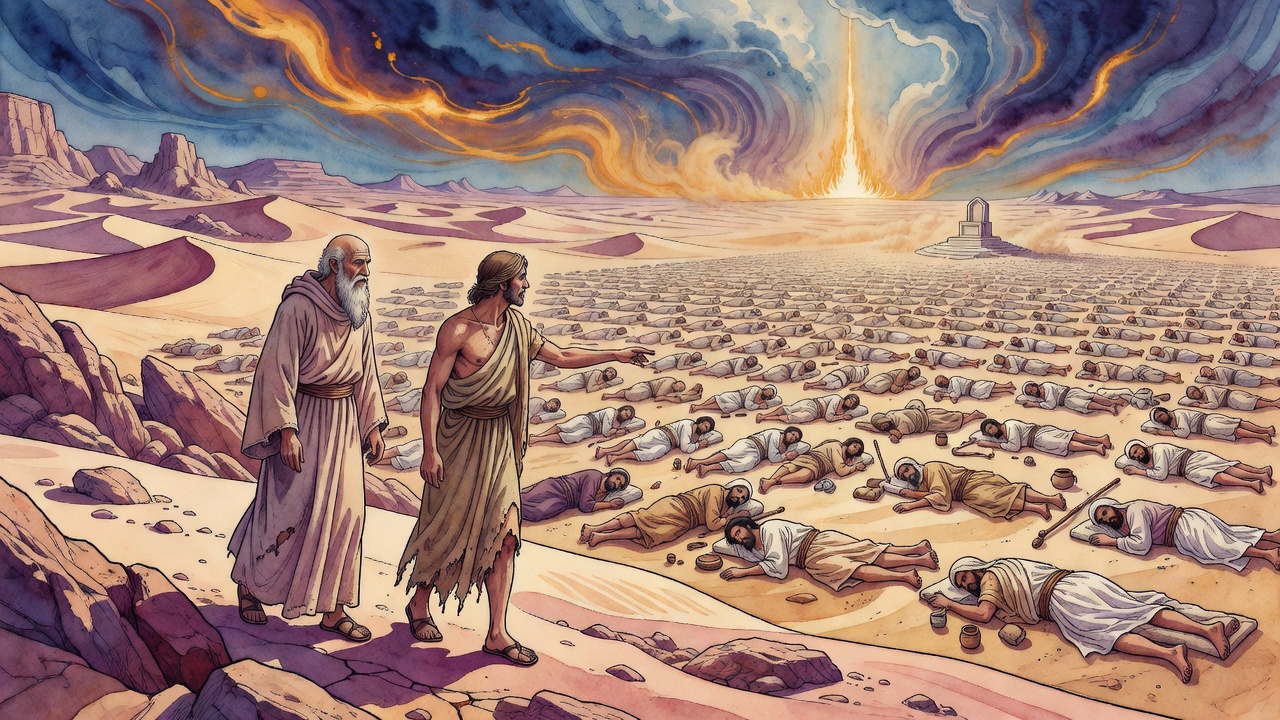
Before the window, there were the bodies in the sand.
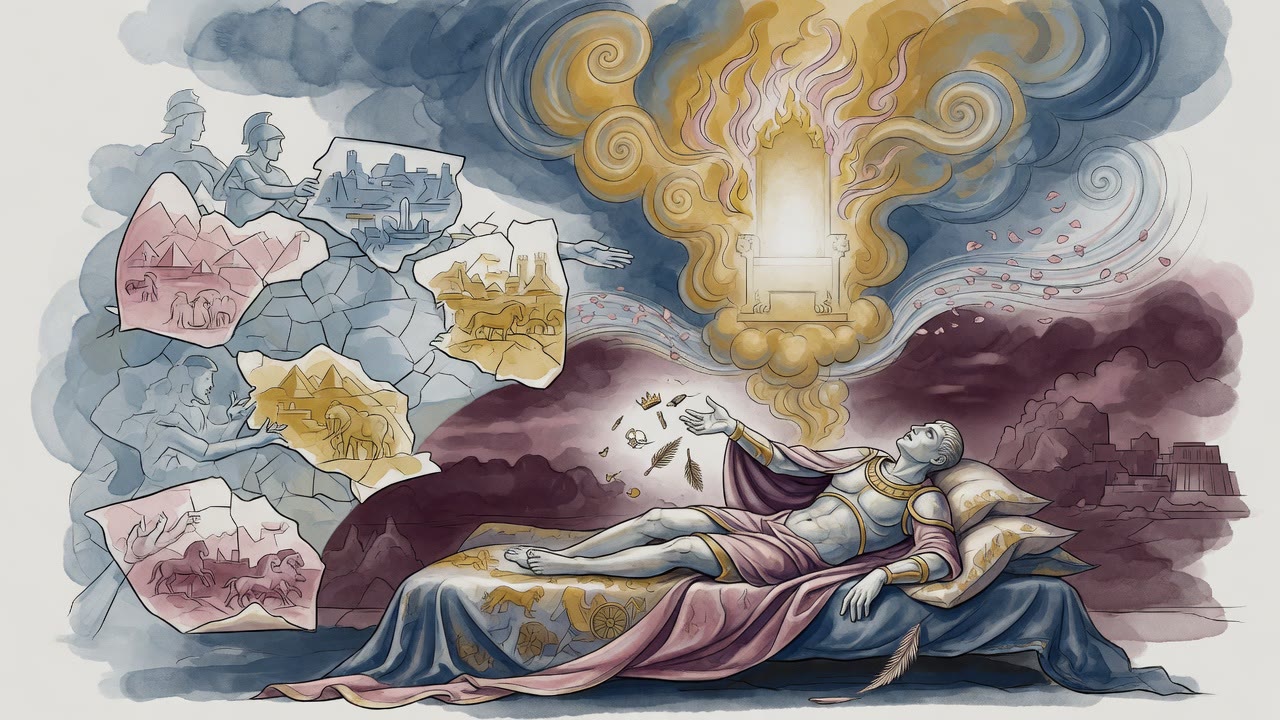
The merchant led him to where the dead of the wilderness lay on their backs, the generation that had perished in the desert, vast and uncorrupted. One of them had drawn up a knee. The knee rose so high that the merchant rode his camel beneath it, spear held straight up, and the spear-tip never grazed the sleeping man.
Rabbah leaned down and cut a single corner of the sky-blue fringe from one of their garments, the thread of tekhelet (תכלת) that marks a Jew's prayer shawl. He wanted to bring it back, to settle a question the schools argued over. He tucked it away and they tried to move on.
They could not. The camel would not walk. Rabbah's own feet would not carry him forward.
"Perhaps you took something from them," the merchant said. "There is a tradition. Whoever takes anything from these does not move again."
Rabbah went back and laid the blue thread where he had found it, against the cloth of a man who had died forty years' march from a land he never entered. Only then did the ground release them.
The Mountain That Asked to Be Released
"Come," the merchant said, "and I will show you Mount Sinai."
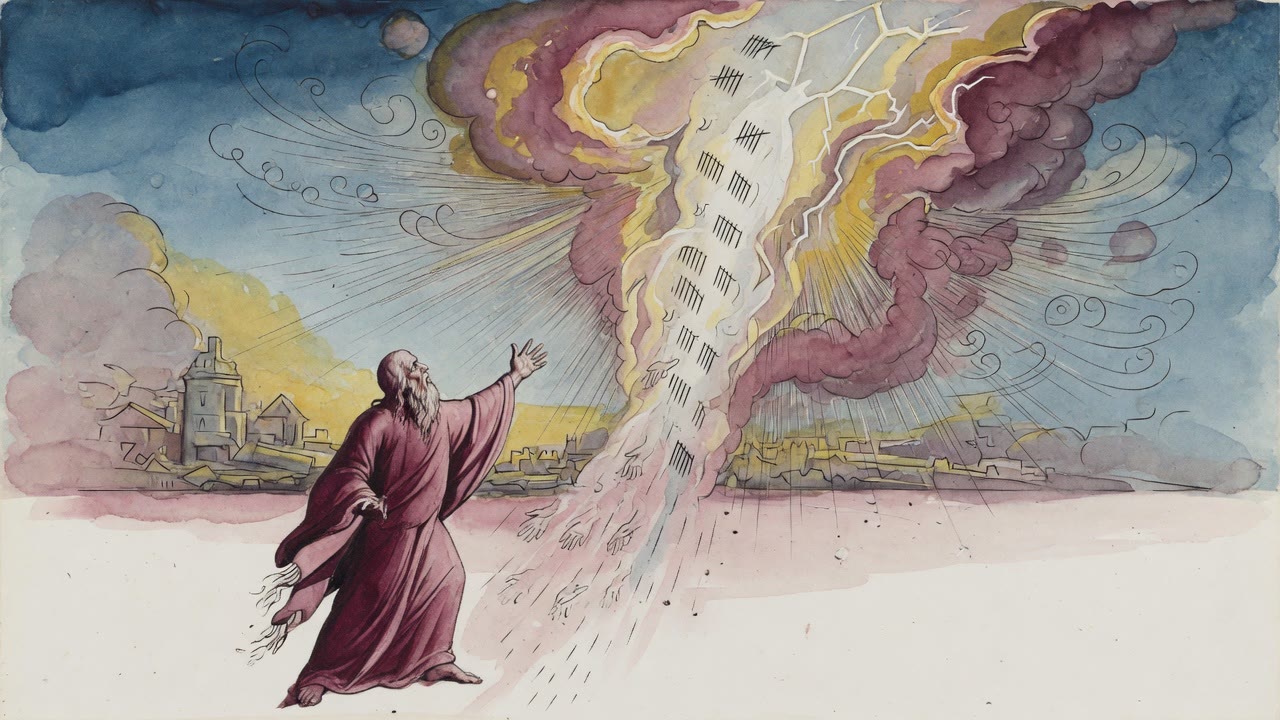
The mountain stood guarded. Scorpions circled its base, each one reared up as tall as a white donkey, and they did not let anything pass. From above the stinging ring, a voice came down out of the air, and the voice was grieving.
"Woe is Me," it said, "that I swore an oath. And now that I have sworn it, who will release Me from it?"
Rabbah stood and listened and said nothing. He did not know which oath the voice mourned. Later the sages would scold him for his silence. He should have called up to the mourning voice, "Your oath is released," they said, the way a court annuls a vow. He had stood at the foot of Sinai with heaven weeping over a promise it could not take back, and he had let the moment pass without a word.
The Pit That Still Confessed
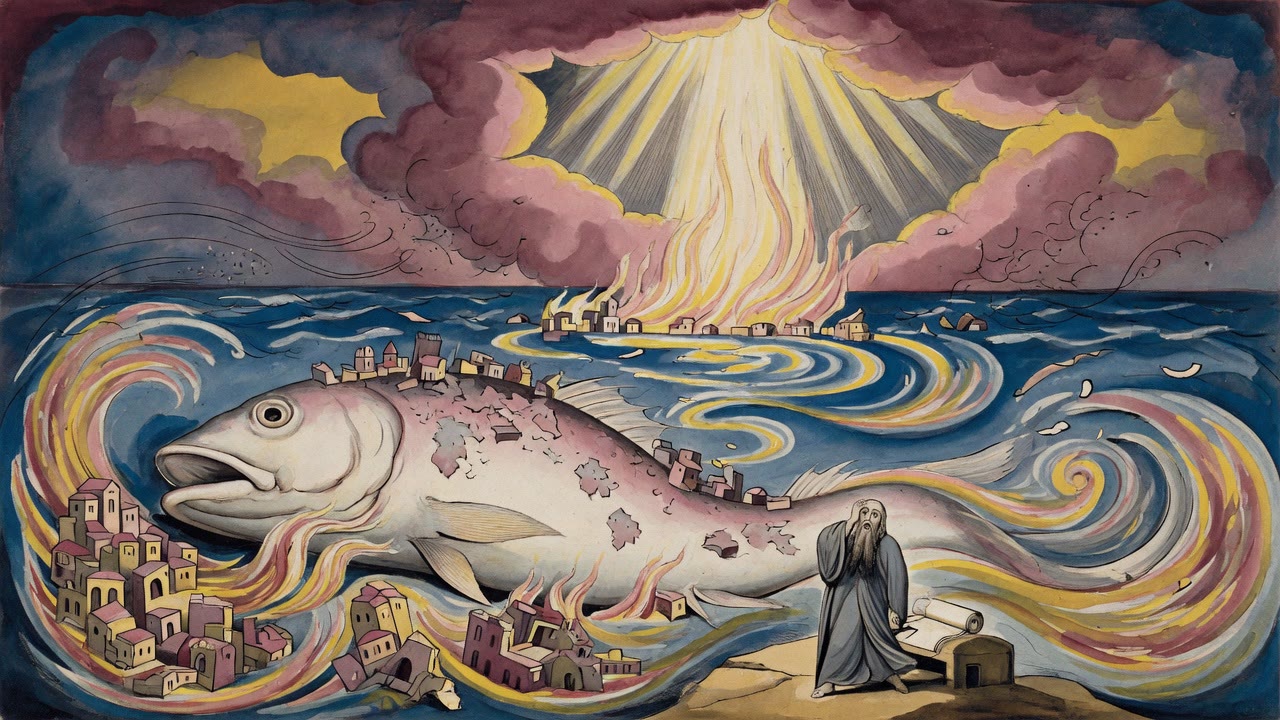
"Come," the merchant said, "and I will show you the men the earth swallowed for Korah's sin."
Two cracks in the ground breathed smoke. The merchant took a tuft of wool, soaked it in water, fixed it to the head of his spear, and lowered it into one of the rifts. When he drew it back up the wool was scorched dry and singed.
"Now listen," he said.
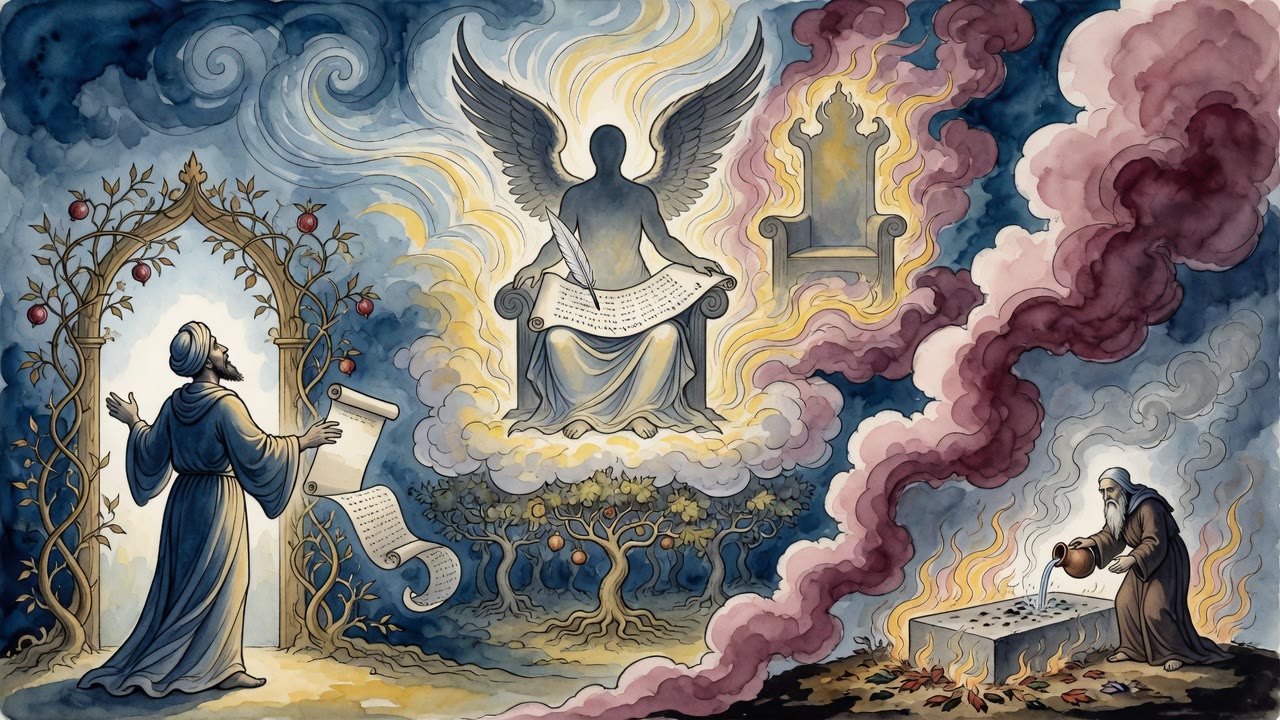
Rabbah bent toward the smoking earth. Out of the ground came voices, the same words over and over. "Moses is true, and his Torah is true, and we are liars." Every thirty days, the merchant told him, the fire of Gehinnom, the place where the wicked are punished after death, turns them back to this spot, the way boiling water tumbles meat in a pot, and every time they surface they say it again. Moses is true. His Torah is true. We were the liars.
The Window in the Wall of the Sky
Then the merchant brought him to the seam.
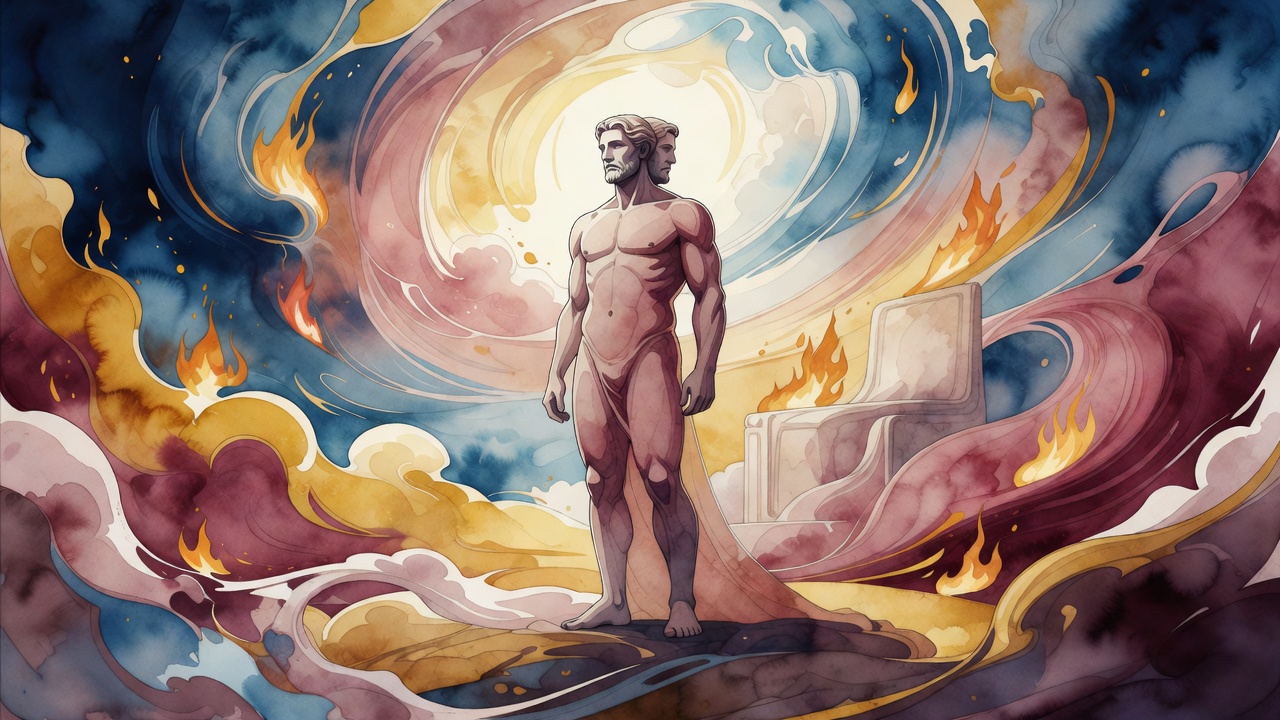
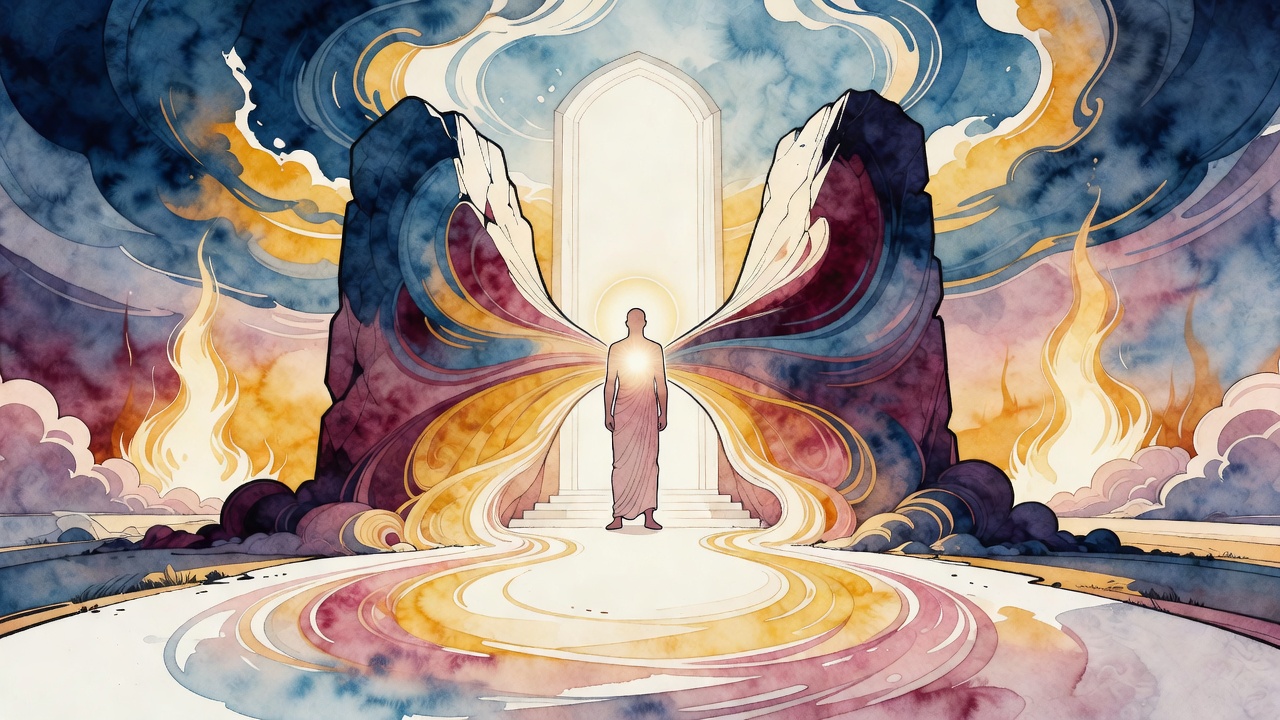
It was a place riddled with openings, a wall of the world worn through with windows, and behind each one the sky turned. This was what the man had promised at the start, the place where earth and heaven touch and the joints of the world show. Rabbah carried a basket of bread. He set it down in one of the windows of the firmament, the way a traveler sets his load on a sill, and he stood and began to pray.
He prayed a long time. When he finished and turned back for his basket, the window was empty.
He searched the other openings and found nothing. Bread does not walk off on its own.
"Are there thieves here?" Rabbah asked. "In this place? Do robbers live in heaven?"
The merchant almost laughed. "There are no thieves," he said. "This is the wheel of the firmament, and it is turning. The sky has moved on, and your basket with it. Wait here. Tomorrow, at this same hour, the window will come back around, and your bread will be in it."
Wait Until Tomorrow
So Rabbah waited at the wall of the world, beside a window with nothing in it, while the heavens carried his loaf away on their slow turn and promised to bring it home.
He had cut a thread and had to put it back before his feet would move. He had heard Sinai beg to be released and had kept his mouth shut. He had listened to Korah confess from the fire and could not pull a single man out of the pot. Now he had set something of his own in the opening between worlds and watched the universe pocket it without a thought, the way the sea takes a coin.
Finding the window was nothing like holding the sky. The border was real, and it had doors, and the doors did not stay still for anyone. Rabbah sat down beside the empty sill and watched the next window come around, a man who had ridden under a giant's knee and still had to wait on the turning of the world for a loaf of bread.
← All myths