Rabbi Banaah Measures Machpelah and Sees the Heels of Adam
Rabbi Banaah measures the burial caves so the living do not stumble, and at Machpelah glimpses the heels of Adam blazing underground like the sun.
Table of Contents
 Click for full size
The Sage Who Measured the Dwellings of the Dead
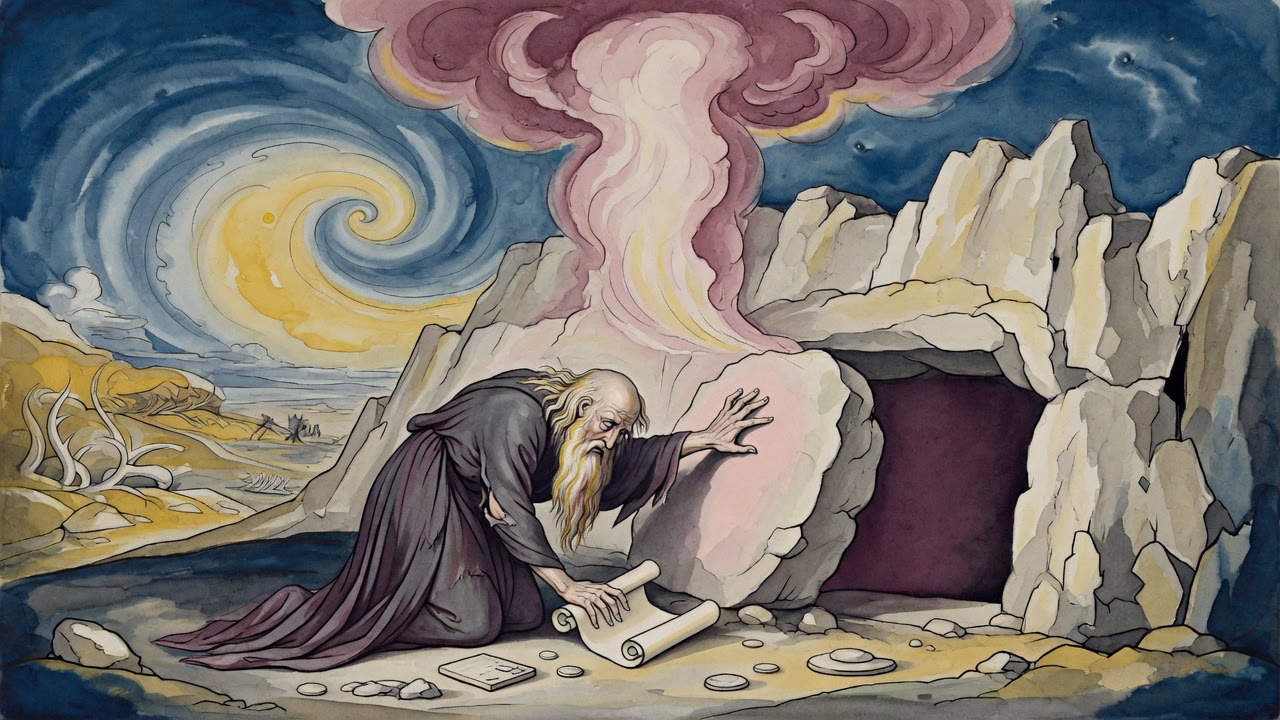
There was a man whose whole life was spent walking the edges of graves so that the living would not stumble into them. Rabbi Banaah went out with his measuring cord and his marker, finding the hidden caves of the rabbis and the buried, pacing their lengths, scoring their boundaries into the rock above. A man who did not know where the dead lay might tread upon a tomb and carry its impurity into the house of study without ever feeling it cling to him. So Banaah measured. Where a cave ended, he cut a line; where a body rested, he set a sign, and the careless were saved by his care.
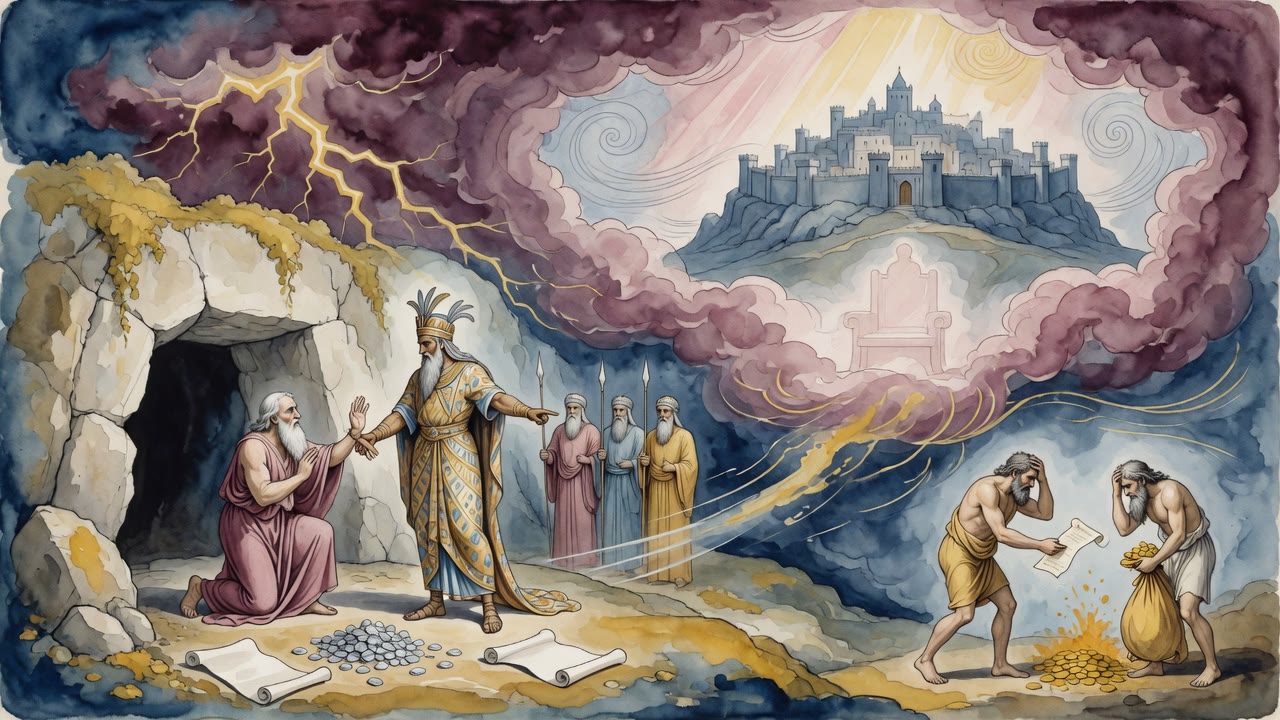
He believed, as he worked, that nothing a person did stayed small. He had taught it himself, that when the people of Israel turn from God's will the heavens hold back their rain and the earth holds back its bread, and the sky above and the ground below become witnesses against them. And when Israel does God's will, the heavens answer the earth and the earth answers the people with grain and oil and wine. Every deed climbed upward and sank downward at once. A man buried in the ground was not gone from that reckoning. He had simply gone over to the side of the witnesses.
The Servant Standing at the Gate
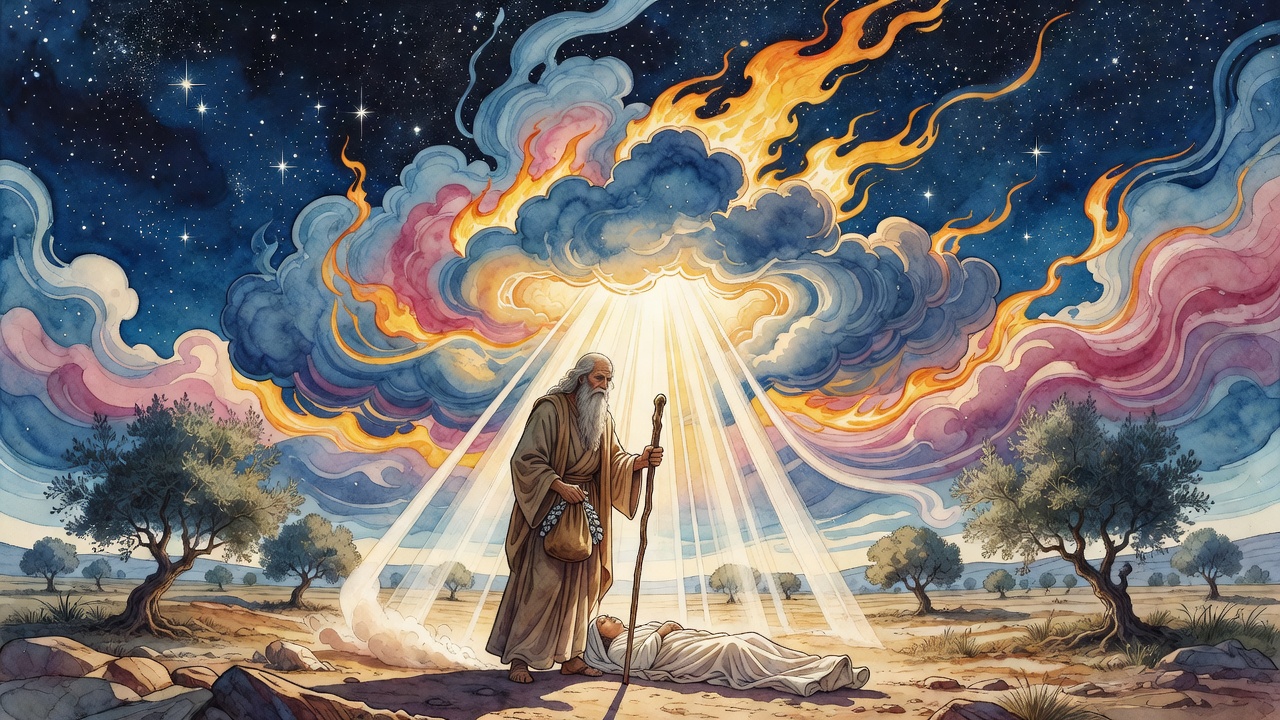
So Banaah came at last to the cave at the field of Machpelah, where the patriarchs lay, and there at the mouth of it stood a figure he had not expected. It was Eliezer, the old servant of Abraham, keeping the gate as he had kept his master's house in life.
"What is Abraham doing?" Banaah asked him.
"He is sleeping in the arms of Sarah," Eliezer said, "and she is gazing upon his head."
Banaah did not flinch at the strangeness of it, the dead resting as the living rest, tender and watched over. He had his cord and his task. "Go," he told the servant, "and tell him that Banaah stands at the gate."
Eliezer considered him. Then he said, "Let him enter. It is known that there is no evil inclination in this world." There was nothing in that chamber that needed a closed door against it. The hunger and the grasping and the heat that made the living guard their privacy had all been left on the other side of death. Banaah stepped through.
The Measure of the Inner Chamber
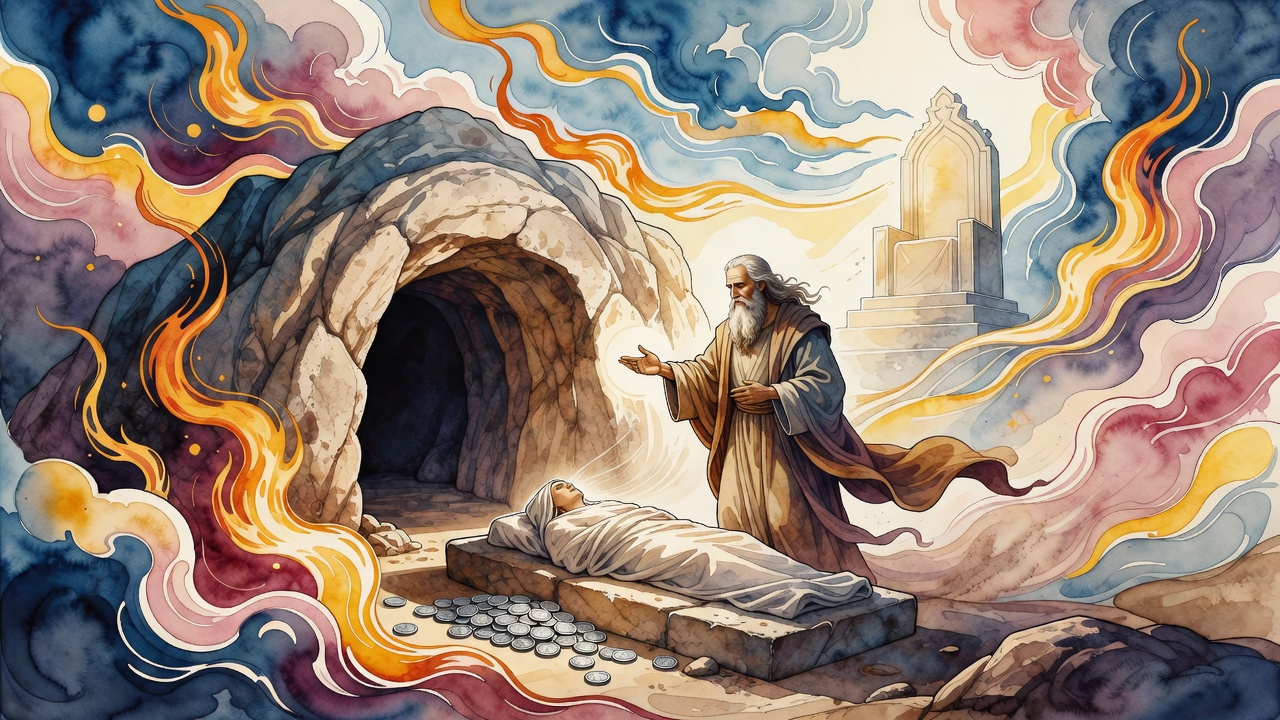
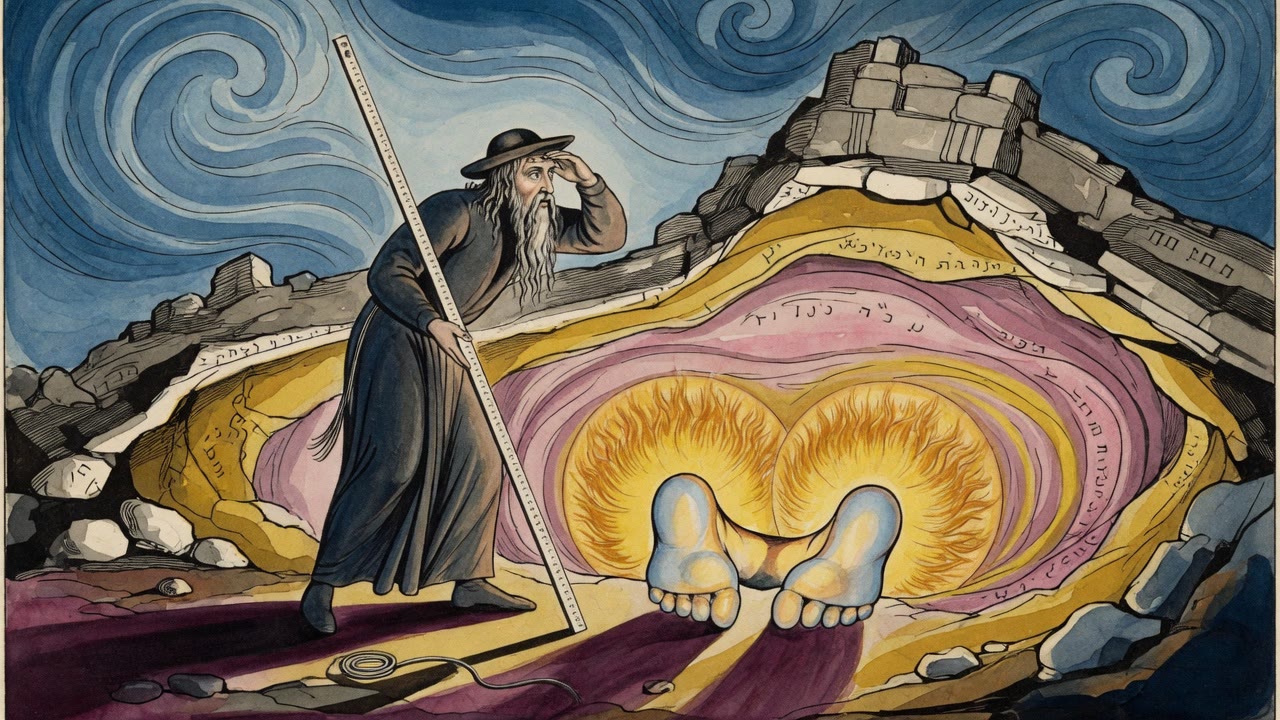
He entered the cave of Abraham, and he measured it, pacing its length in the close dark, scoring the boundary into the stone so that no foot above would fall where the patriarch slept. Then he came out, his work finished and clean, and went on, for there was a deeper cave still, and an older sleeper in it.
He reached the cave of the first man. As he stooped toward the entrance a voice broke from heaven and stopped him where he stood. "You have gazed upon the likeness of My image," it said. "Upon My image itself, do not gaze."
Banaah stood at the threshold of Adam and did not go in. But the cord was still in his hand, and the duty was still on him, and a measured cave was a safe cave. "I have need," he answered the voice, "to mark out the dwelling." If he did not, men would walk over the first man's bones and never know what lay beneath them.
The voice gave him a way. "As the measure of the outer cave, so the measure of the inner." Some said there were two chambers, one set above the other, and to that the voice answered the same: as the measure of the upper, so the measure of the lower. He need not look upon what he was forbidden to see. The chamber where Abraham slept was the rule of the chamber where Adam slept. Banaah marked the outer measure onto the rock, and the inner was sealed by it, unseen and counted both at once.
The Heels Like Two Orbs of the Sun
But he had seen something. Before the voice fell, in the first instant at the mouth of the cave, his eyes had caught the lowest part of the sleeper, the soles turned toward him in the dark. He had looked upon the two heels of the first man, and they burned. They were like two orbs of the sun, two suns risen underground, and he carried the brightness of them out into the light of the living world and could not set it down.
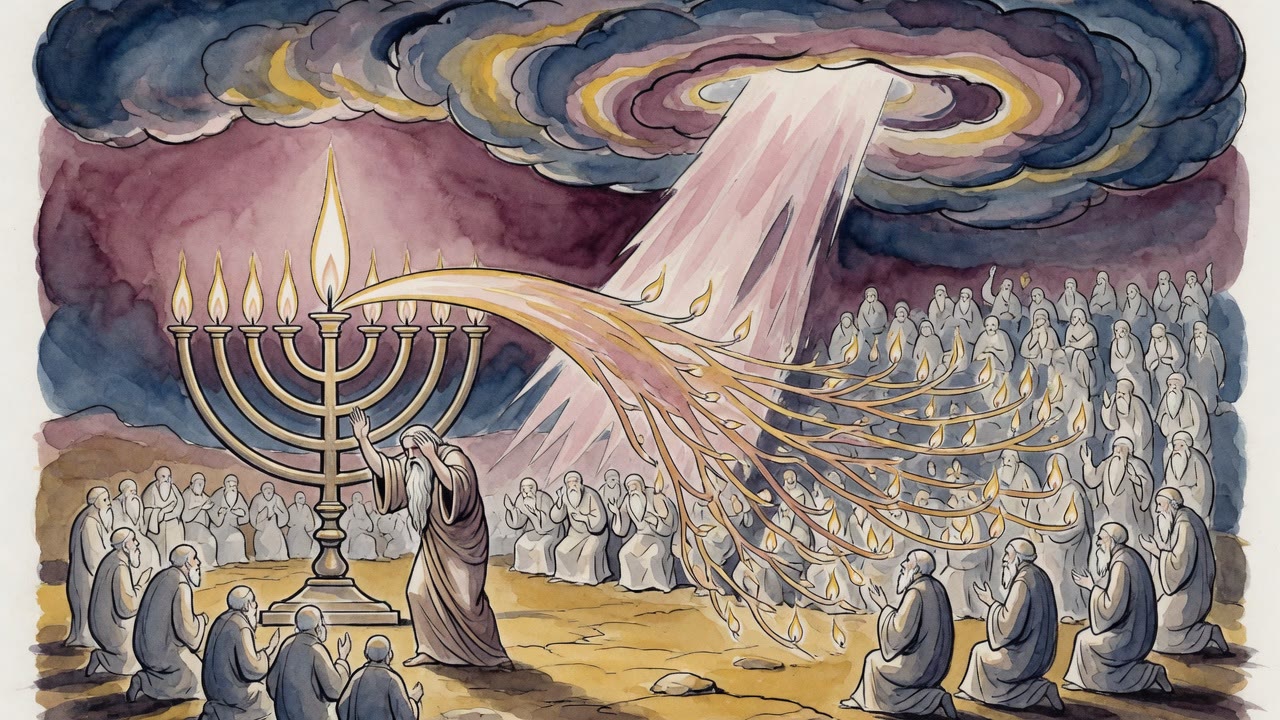
For he understood now what every beautiful face he had ever measured toward its grave had only borrowed. Set any lovely woman beside Sarah, and she was as an ape before a man. Set Sarah beside Eve, and Sarah was as an ape before a man. And the radiance of the great teachers ran upward in a ladder he could climb in his mind. The beauty of one sage was a faint gleam of the beauty of his master, and that master's beauty a gleam of Jacob's, and the beauty of Jacob the patriarch only a gleam of the beauty of the first man. And the first man's beauty, those two burning heels in the locked cave, was itself only a single gleam of the radiance of the Divine Presence.
What the Measurer Carried Back
Banaah went out from Machpelah with his cord coiled and his marks cut and his task done. He had measured the cave he was not permitted to enter. He had kept the living from the impurity of the dead. And he had learned, kneeling at a forbidden threshold, that the splendor he was forbidden to look upon was the same splendor that was always looking back, the heavens and the earth and the buried first man all of them witnesses, all of them turned toward the deeds of the living, and the heels of Adam shining underground like a memory of the light no grave could put out.
← All myths