Samuel Watched a Scorpion Ride a Frog to Its Verdict
A man stood under a tree on the far bank, looking at nothing. He never saw the frog swimming toward him, or the passenger balanced dry on its back.
Table of Contents
 Click for full size
The Passenger That Could Not Swim
The river ran low and slow that morning, and Samuel stood at its bank watching the water the way a judge watches a witness he does not yet trust. He had come to a town to settle a dispute, the kind a prophet is always being dragged into, and he had walked out to the river to be alone before the work. On the far side a man waited under a tree, doing nothing, looking at nothing. Samuel did not know him. He would learn the man's whole story before the sun moved a hand's width.
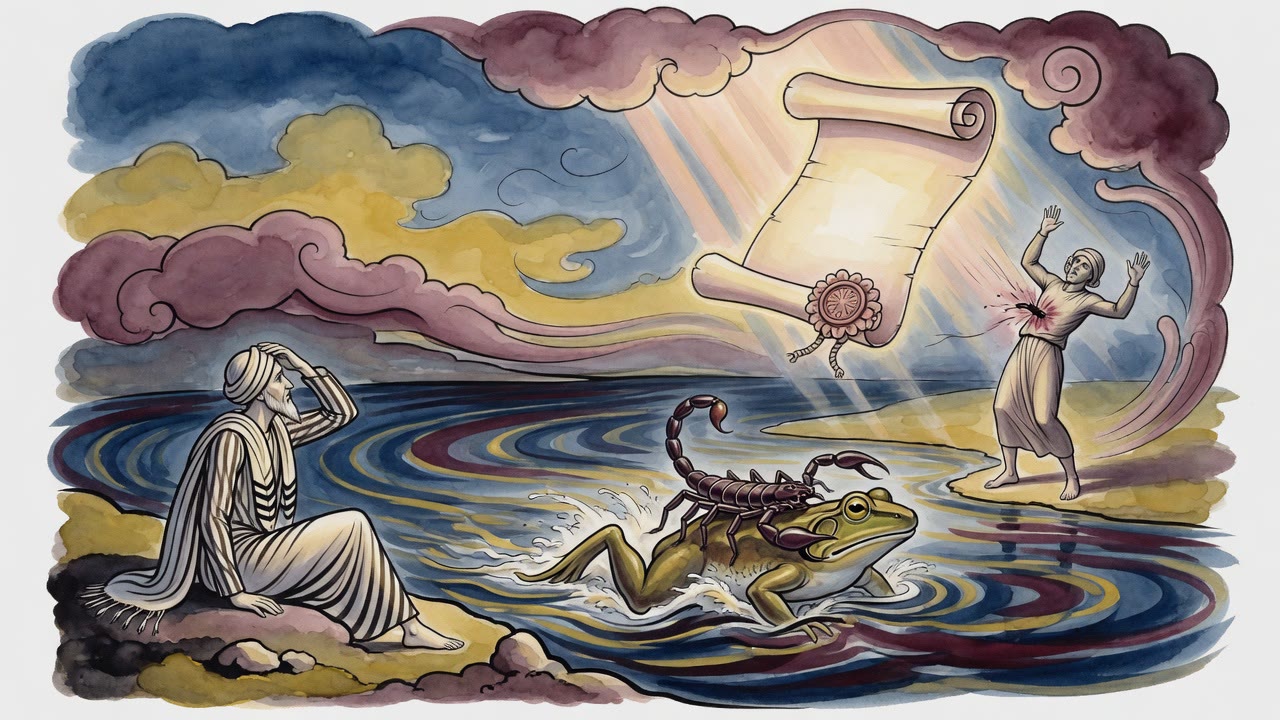
Something broke the surface near Samuel's feet. A frog, swimming hard, its legs scissoring against the current. That was ordinary. What rode on its back was not.
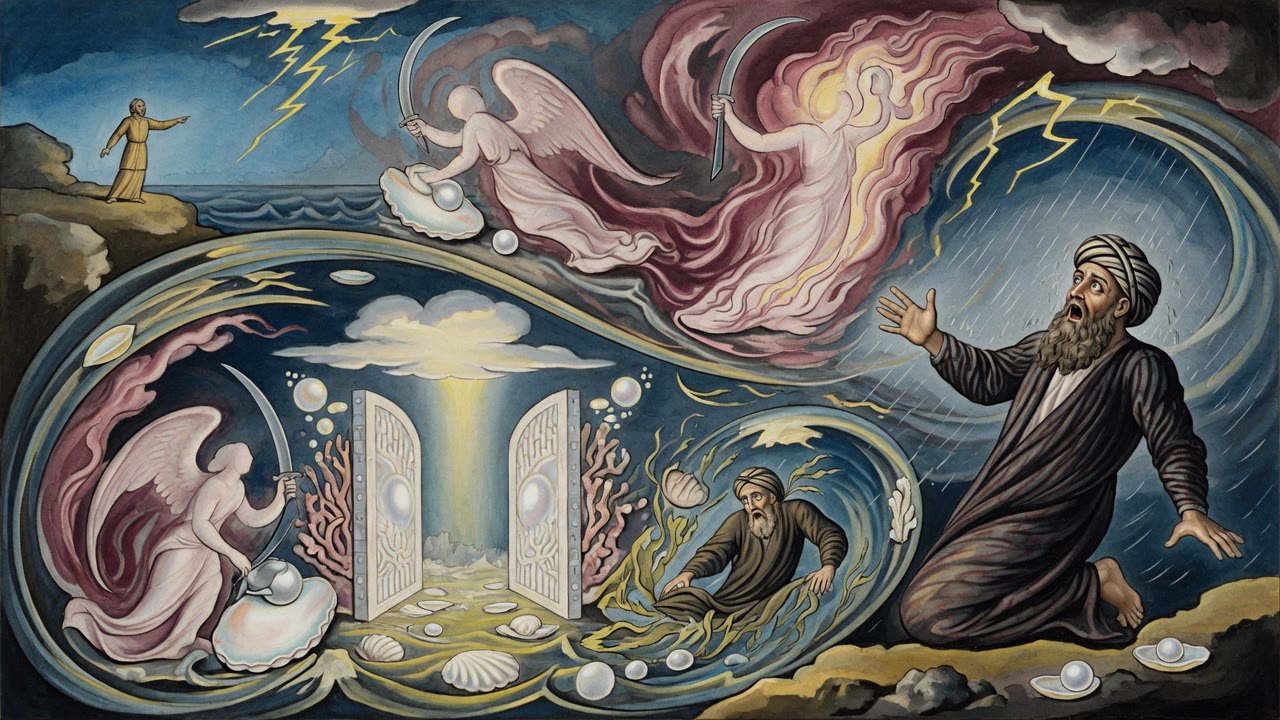
A scorpion sat balanced between the frog's shoulders, tail curled high and dry, claws gripping the wet skin. It did not slip. It did not sting. The frog did not throw it off or dive to drown it. The two of them moved as one creature across the river, the swimmer carrying the killer, the killer carrying nothing but its own venom.
Samuel knew what a scorpion was. He knew it could not cross water on its own. He knew a frog had no reason on earth to ferry the one animal whose sting it had every reason to fear. Here they came anyway, steady as a barge, aimed at the far bank where the stranger stood.
A younger man would have shouted. Samuel had anointed kings and buried his own teacher and heard the voice of God crack down out of heaven like a falling wall. He had learned the difference between a thing he was meant to stop and a thing he was meant to witness. He stood still. He let his hands hang. He watched.
The Crossing No Hand Interrupted
The frog reached the shallows on the far side and pushed up onto the mud. The scorpion stepped off its back onto dry ground without hurry, the way a traveler steps off a ferry he has already paid for. It moved toward the man under the tree.
The man did not see it. He was looking at the water, or at the sky, or at nothing. The scorpion climbed his foot, found the soft place above the ankle, and drove its tail home.
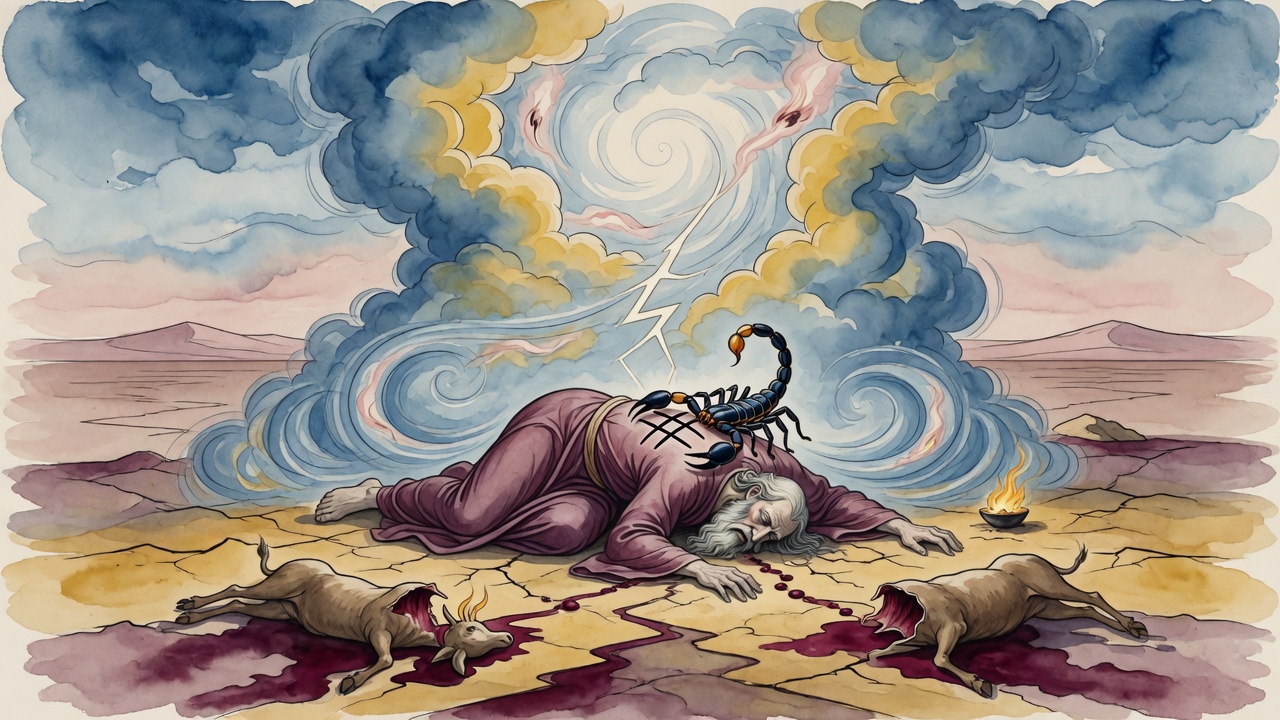
The man's whole body bent. He clutched at his leg, opened his mouth, made a sound the river half swallowed. Then he folded down into the grass and did not get up.
The frog turned in the shallows and swam back the way it had come, its passenger gone, its errand finished. The scorpion vanished into the weeds. The current closed over the place where the frog had been as if nothing had crossed it at all.
Samuel had not moved. He had not called out. He had watched a man die across a river and lifted no hand, and his face was as calm as the water.
They Stand This Day as Servants
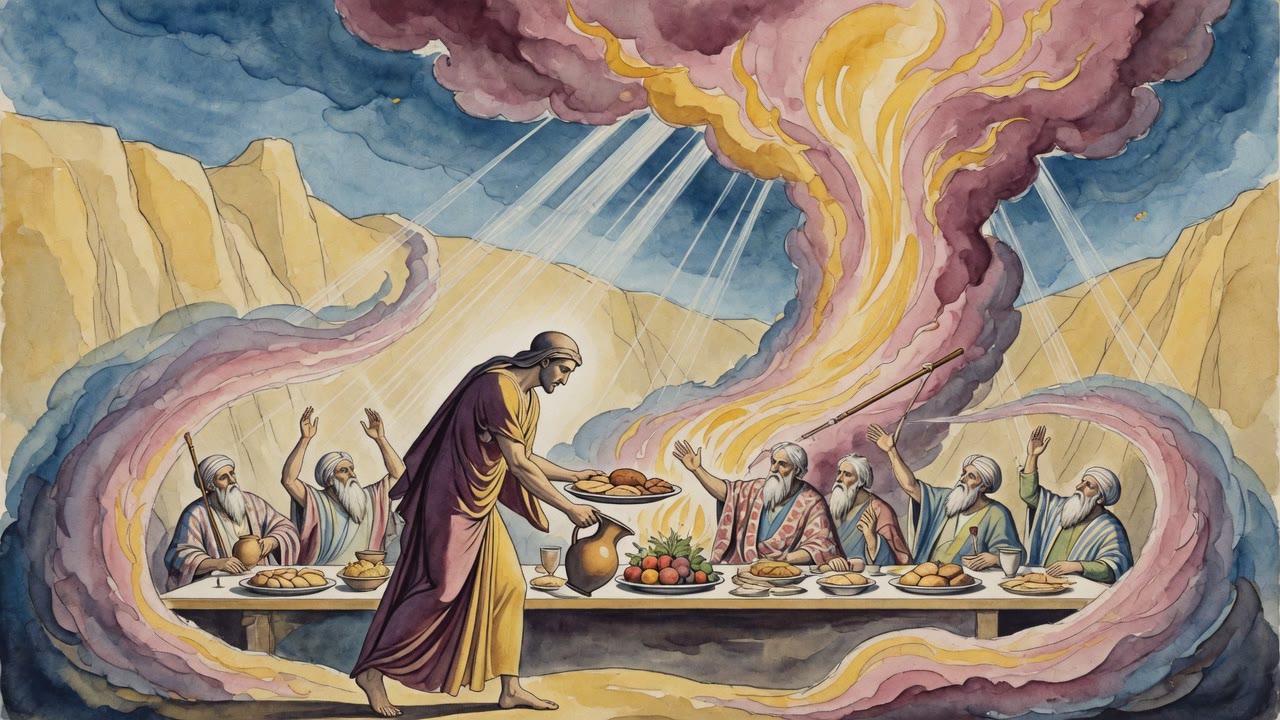
He opened his mouth and spoke a verse, not to the corpse, not to the frog, not to anyone living. "They stand this day according to your ordinances," he said, "for all are your servants" (Psalms 119:91). Every word of it he meant exactly. The frog was a servant. The scorpion was a servant. The river that carried them and the mud that gave the scorpion its footing and the soft skin above the ankle were all servants, enlisted in an order Samuel could see only the edge of.
The man under the tree had earned a verdict. Samuel did not know what the man had done. That was not given to him. What was given was the sight of the sentence arriving on schedule, ferried across moving water by two animals that should have been enemies. The scorpion could not swim. The frog could not sting. Heaven had needed both, and heaven had arranged both, and the arrangement had been finished before Samuel ever walked down to the river.
Scorn the Beard You Trust
Long after that morning, a teacher in Israel stood boasting that he was safe. His beard was thick. His luck was thick. His planning had walls. He had even counted the difference between his own beard and a thinner one as if hair could veto a sentence.
The sage cut him down with one line. "Scorn these things," he said, "because you do not know what has been decreed about you." Not the thickness of a beard. Not the speed of a frog. Not the patience of a man standing under a tree on a quiet morning with no idea that the water in front of him was already carrying his death.
The frog swam home. The water went flat. Somewhere a ledger that no living hand can open had one more line written and closed. Samuel had only watched it dock.
← All myths