Hanina ben Dosa Sets His Bare Heel on a Killing Scorpion
Worshippers had been dying at the door. Hanina put his bare heel over the hole and waited. The scorpion struck. The man did not fall.
Table of Contents
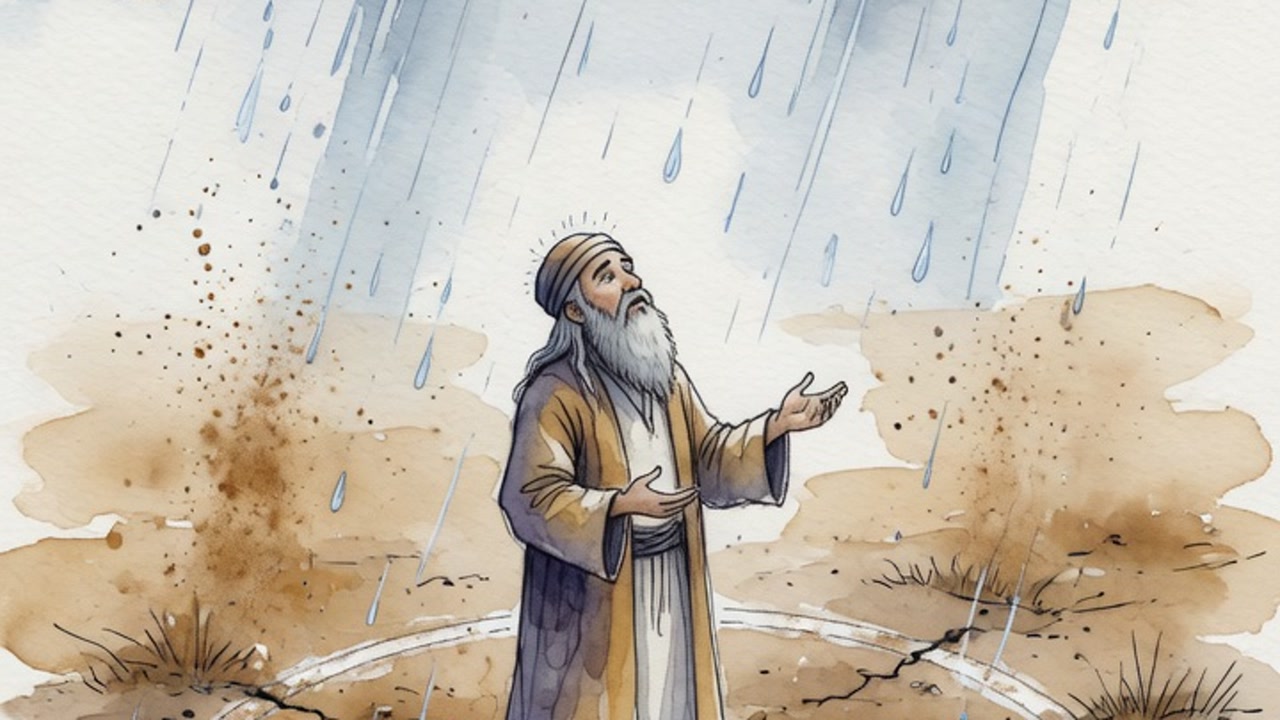
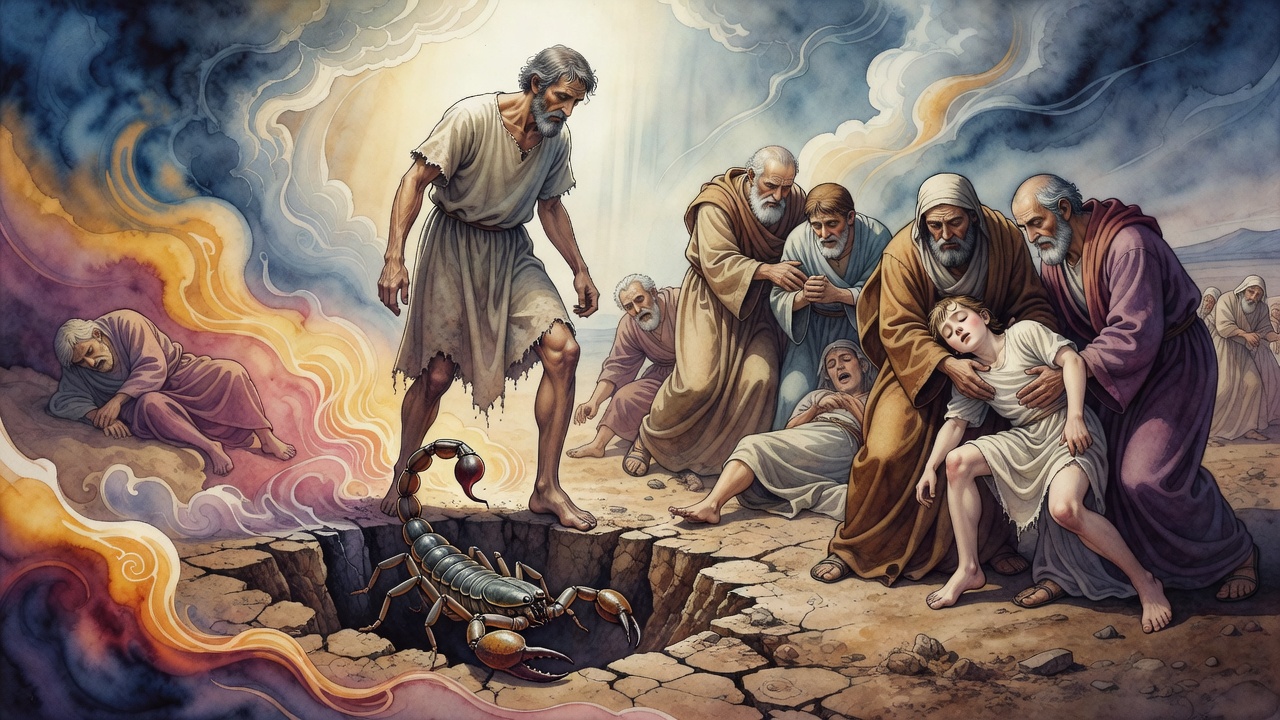
The hole sat beside the door of the house of study, no wider than a fist, and it had grown bold on human blood.
 Click for full size
Worshippers came at dawn. One by one they limped home swollen. A man would set his foot wrong in the dark, and the scorpion would strike out of its burrow and vanish before anyone could crush it. The bites festered. Some of the stricken did not rise again. The benches nearest the door emptied. Men began to pray standing far back, watching a patch of dirt as if it might open.
Word reached Hanina ben Dosa.
The Pauper Came Barefoot
He was the poorest man for miles. He fasted so often that hunger sat on him like a garment. His wife heated an empty oven on Friday afternoons so the neighbors would smell baking and not guess there was no bread in the house. He owned almost nothing. He asked heaven for almost nothing.
He did not bring a staff to beat the ground. He did not bring a healer's pouch. He came without sandals.
The men watching told him where the scorpion lived. They pointed at the small dark mouth in the earth and warned him back. Hanina walked to it, looked down, and set his own bare heel flat over the opening.
Then he stood there and waited.
The Sting and the Stillness
The scorpion came. It had to. A foot was blocking its door, warm and unprotected, the easiest target it had ever been offered. It drove its sting into the flesh with everything it had.
Hanina did not flinch. He did not pull the foot away. He did not cry out or reach for water. He let the venom go in.
The scorpion died.
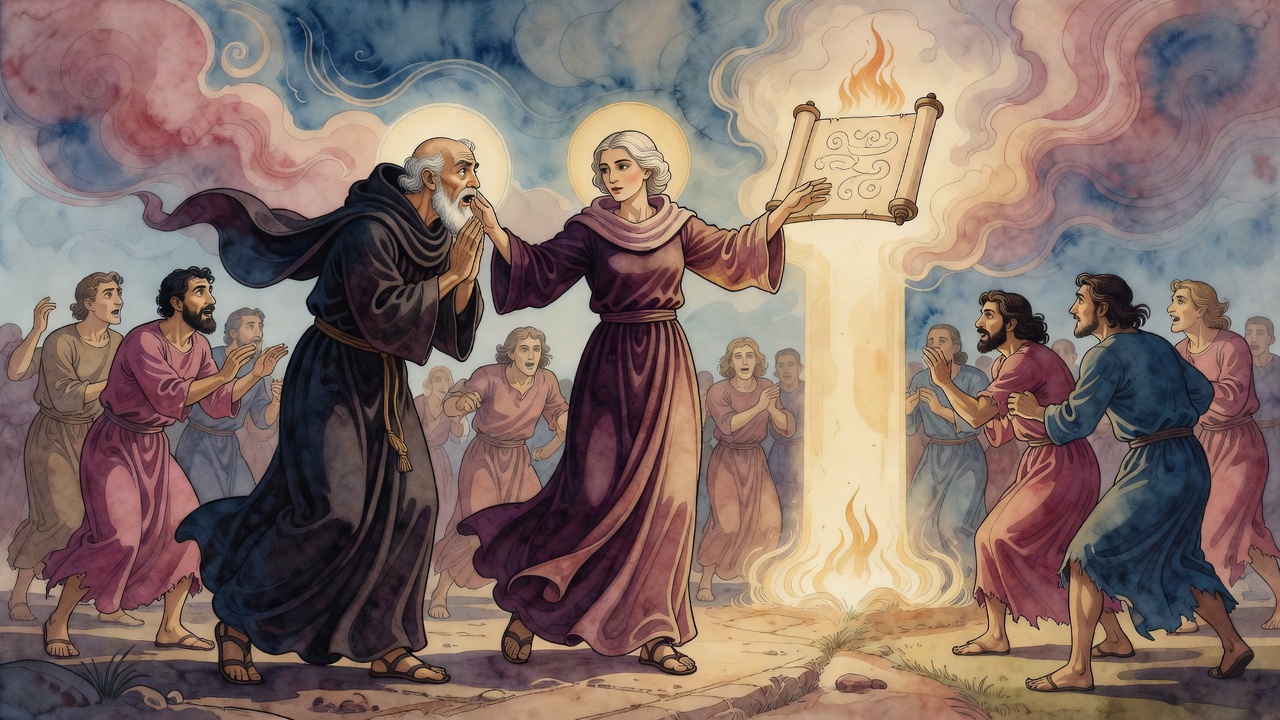
It curled and stilled against his heel, emptied of itself, while the man it had stung stood unharmed in the morning light. The watchers came closer, slowly. There was the dead scorpion. There was the living pauper. There was the patch of earth that had terrorized the street, gone quiet at last.
Hanina lifted his foot and carried the dead thing into the house of study. He held it up where the students could see it.
"It is not the scorpion that kills," he told them. "It is sin that kills."
A man who carried no sin gave the venom nothing to grip. The poison had no handle in him. He had walked toward the predator the way other men flee it, and the sting found nowhere to live.
Woe to the Scorpion
The saying went out after that morning. Woe to the man who meets a scorpion. Woe to the scorpion that meets Hanina ben Dosa.
Another day an adder found him while he was still standing in prayer. It bit. He did not break the blessing. The adder died against his ankle, and he finished the words as if the floor had not just tried to kill him. Snakes and scorpions learned his heels the way other men learn a locked gate.
He went home to an empty oven and a wife who kept up appearances with smoke. Poverty did not make him careful. It made him light. He had nothing a sting could use.
Two Students at the Stairs
The same heel belonged to a man whom the dying sent for from across the country.
He healed without medicine. He kept no roots, mixed no draughts. When a fever took hold of a body and would not let go, Hanina went up alone to an upper room and prayed. That was the whole of his art.
One day two students climbed to his door, breathless, sent by the great Rabban Gamliel, whose son lay burning and sinking fast. They begged him to do what he did. Hanina said nothing to comfort them. He turned and went up the stairs. They heard him praying through the floorboards over their heads.
When he came down his face had changed.
"Go home," he told them. "The fever has left him."
When the Prayer Ran Like Water
The students stared at this barefoot pauper making a promise about a child miles away whom he had never seen.
"Are you a prophet?" they asked him.
Hanina shook his head. "I am neither a prophet nor the son of a prophet," he said. "But I have a tradition. When my prayer flows smoothly from my mouth, I know it has been accepted. When it stumbles on my tongue, I know it has been refused." He looked at them steadily. "Today it flowed like water."
That was how he knew. Not by vision. Not by a voice from heaven. By the feel of the words leaving his own mouth. A prayer that ran clear meant the gates above had opened. A prayer that caught and tangled meant they had stayed shut, and the man he prayed for would not rise. He carried the verdict on his own tongue and read it there before any messenger could bring the news.
The students marked the exact hour. Then they went down the road to Rabban Gamliel's house.
The boy had recovered. Not near that hour. Not close to that time. At the precise moment Hanina had finished his prayer in the upper room, the fever had broken, and the child had sat up in his bed and asked for something to eat.
Hanina owned nothing. His wife had once kindled the Sabbath lamp with vinegar because there was no oil in the house, and the vinegar had burned through the night as if heaven were embarrassed to let his table go dark. He had no fortune and no standing in any court. He had one thing, and it was enough to turn a killing scorpion back on itself and pull a dying boy out of a fever from miles away.
← All myths