The King Who Burned the Book That Cured Every Sickness
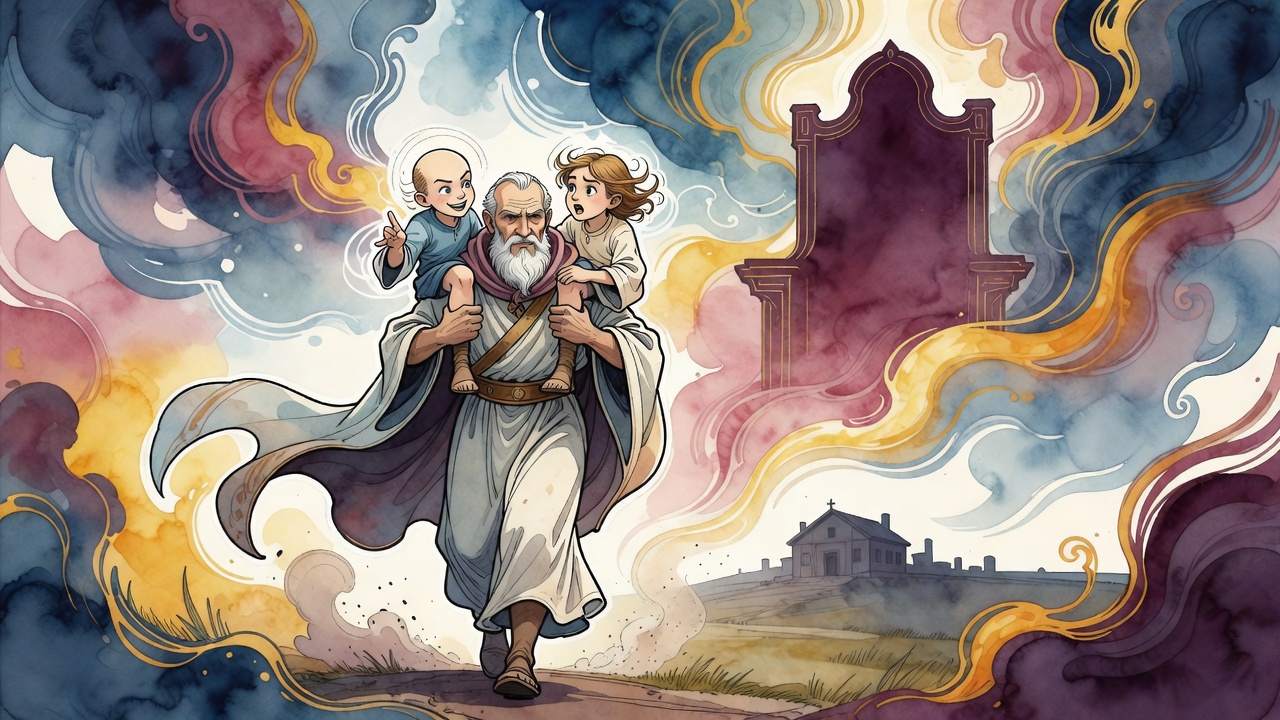
Hezekiah carried his two small sons toward the study house. Above his head they argued whether his bald scalp suited frying fish or offerings to idols.
Table of Contents
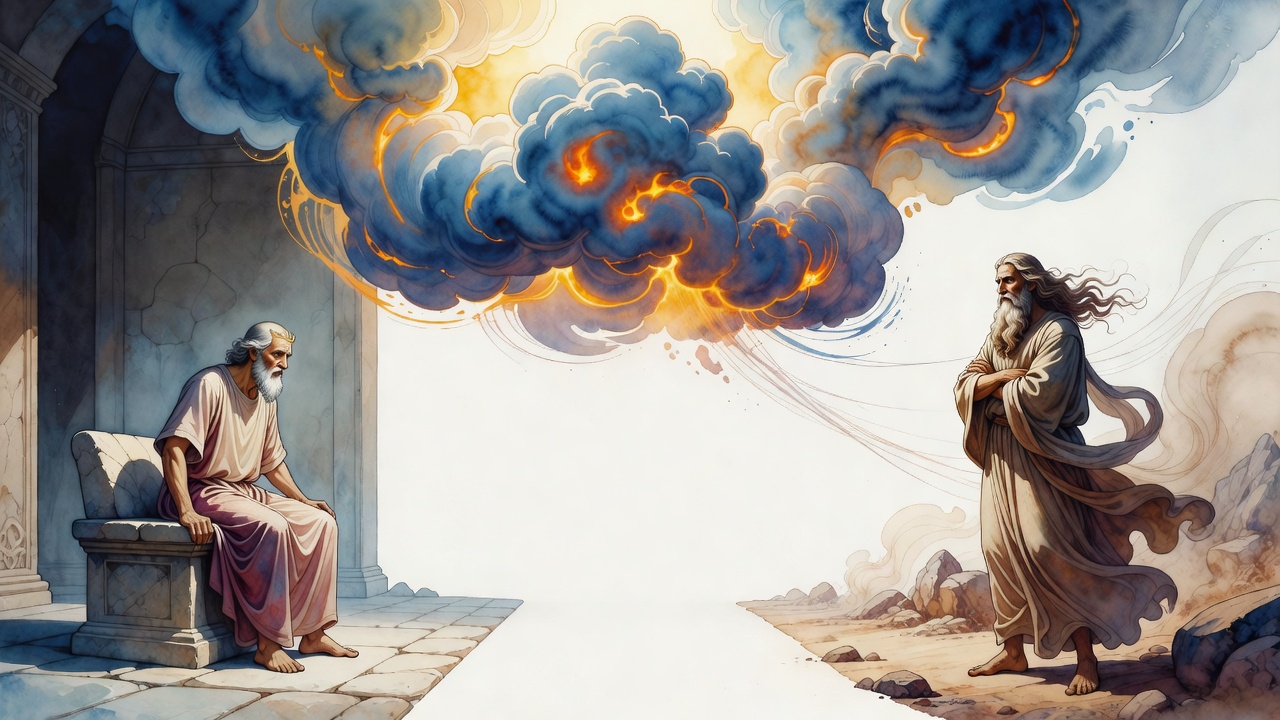
The prophet Isaiah came up the road outside Jerusalem with bad news folded into his face, and King Hezekiah went out to meet him knowing it would not be a courtesy. There was no embassy, no gift, no greeting. Isaiah carried a word from God, and the word was this. The king's own children would do evil.
 Click for full size
Hezekiah did not fall to his knees. He did not tear his robe. He stood in the dust and started to calculate.
The King Tries to Outflank the Prophecy
"Then give me your daughter," he said to Isaiah. "Marry her to me. If my line runs through a prophet's blood, through your house, maybe the wickedness can be turned. Maybe my prayers will climb to heaven on your daughter's merit, and the decree will break before it lands."
It was the move of a man who had buried his father's idols and reopened the doors his father had shut, a man used to bending a kingdom back toward Heaven by force of will. He treated the prophecy the way he treated everything else. As a problem with a workaround.
Isaiah gave him the girl. The marriage was made. And the strange thing, the thing the sages held onto, was that it worked, after a fashion. The prayers were heard. Hezekiah's own life would later be extended by fifteen years on the strength of his weeping. The man could move Heaven. What he could not do was outrun what came after him.
Two Boys on a Father's Shoulders
The sons came. Rabshakeh and Manasseh, born into the most pious house in Judah, raised under a father who had scoured idolatry out of the land.
There is a small, terrible scene that the tradition keeps. Hezekiah carrying his two little boys on his shoulders toward the house of study, the Bet ha-Midrash, the way any proud father would. And over his head, the two children talking to each other, not knowing he could hear.
"Our father's bald head," one said, "would do for frying fish."
"It would do better," said the other, "for offering sacrifices to idols."
The blood went out of the king's face. These were the babies he had fathered through a prophet's daughter, on a wedding made to break a curse, and the curse was sitting on his shoulders talking about idols. He let them slip. Rabshakeh fell and died. Manasseh lived, and grew, and put up altars to other gods inside the very Temple his great-grandfathers had served, and filled Jerusalem with so much innocent blood that the prophecy outside the gate looked gentle by comparison.
The Book That Made Prayer Unnecessary
So Hezekiah turned to the other front of his war, and here the king did something no other king in the line had dared.
Generations back, Solomon, the wisest of them all, had written a book. Not of incantations. A book of cures, a compendium of remedies so exact and so complete that a sick man had only to open it, read the prescription for his affliction, and recover. Any sickness. The scroll had been handed down and used for generations. A fever rose in a house, someone fetched Solomon's book, applied the cure, and the fever broke. It was, by any measure, a treasure. Healing on demand, written down, available to anyone who could read.
Hezekiah looked at his people and saw something the gift had quietly done to them. When sickness came, they opened the book. They never opened their mouths. The body recovered and the heart never turned, because there was nothing left to ask for. Solomon's mercy had become a wall between Israel and the Heaven Israel was supposed to be reaching toward.
The King Burns the Cure
So the king who had fought to save his bloodline through prayer destroyed the one object that was teaching his people to forget how to pray.
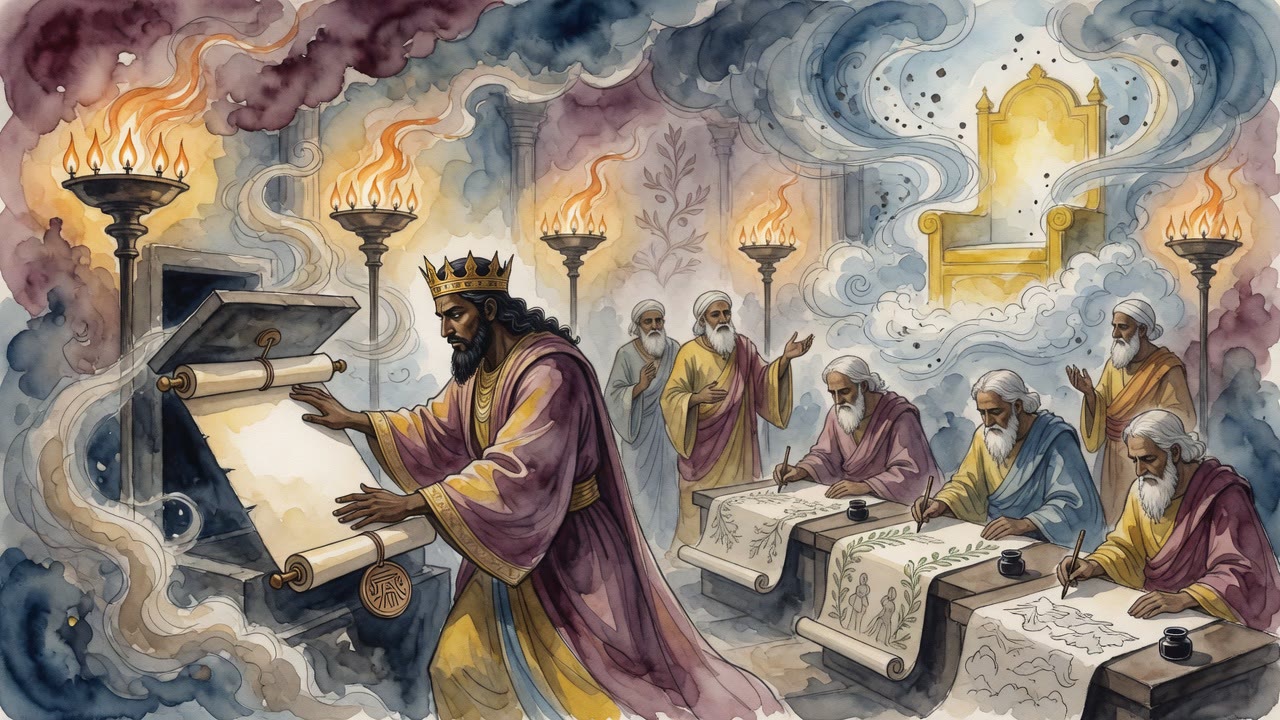
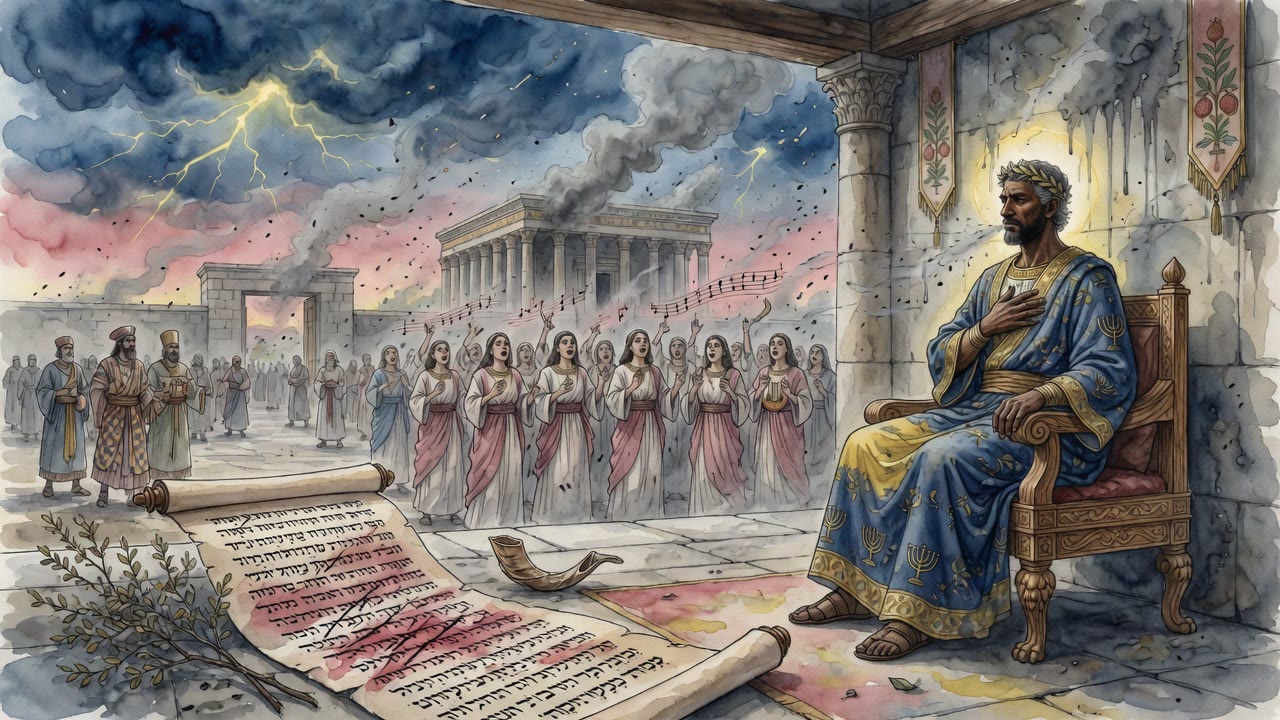
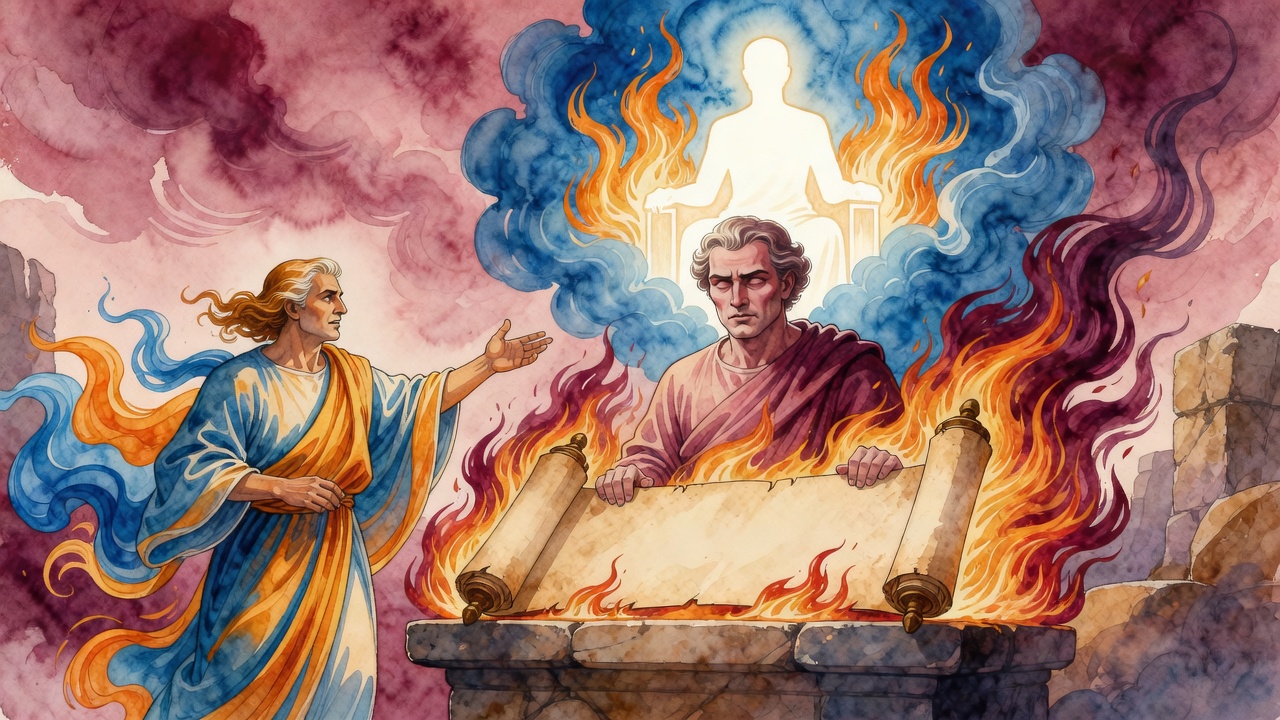
He had Solomon's book of cures burned.
It is hard to overstate how strange the act was. He took the most effective medicine in the kingdom, the inheritance of the wisest king who ever sat on the throne, a thing that demonstrably worked, and put it in the fire. From that day a man with a fever had nowhere to turn but the same place his ancestors had turned, the bare and undignified place where you have nothing in your hands and you ask. The book that answered every question was gone. Only the question was left.
And the sages, looking back, did not condemn him. They praised him. Of all the deeds of Hezekiah, this was counted among his finest. He had understood that a cure which kills the impulse to pray has stopped being a cure and started being an idol, no different in the end from the altars his own son would raise. A good thing, set in the place a person should be turning toward God, is still a thing standing where God should be.
So he burned the gift to protect the relationship the gift was supposed to serve. The smoke went up over Jerusalem, and underneath it a sick people learned again how to lift their faces and ask for what they could no longer simply look up.
← All myths