5 min read

Hezekiah Heard His Sons Plot Blasphemy While Carrying Them

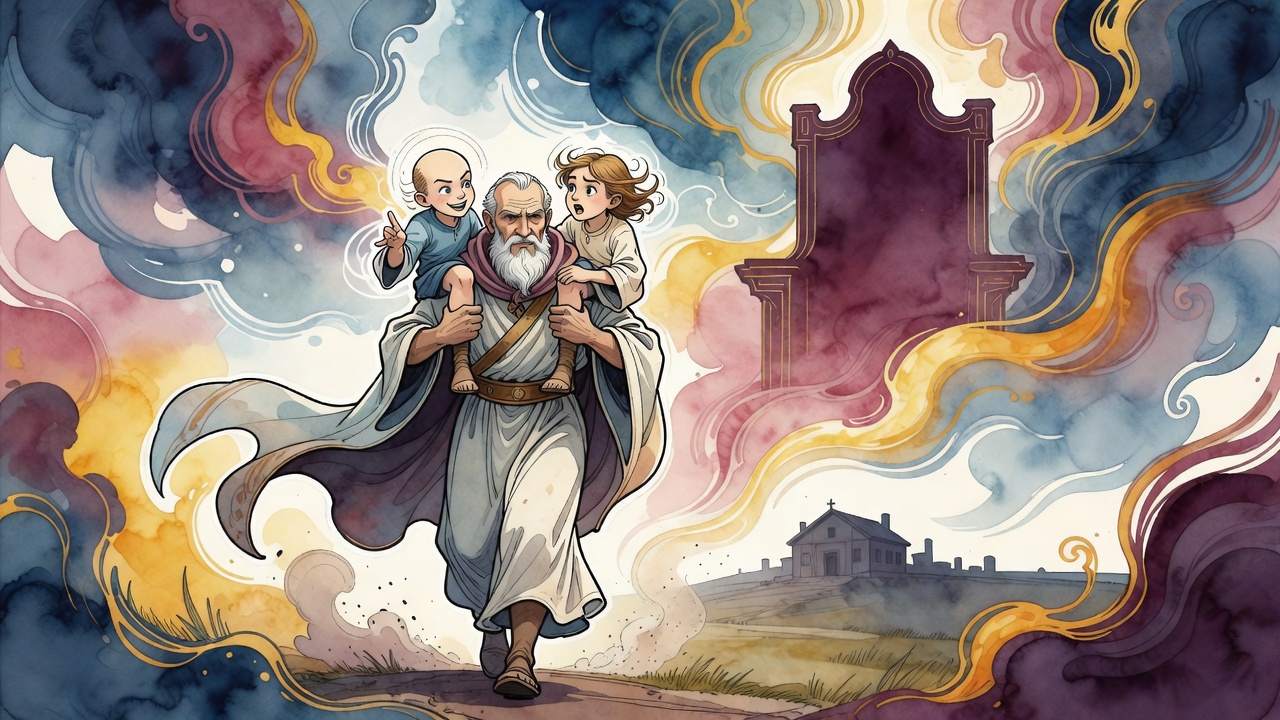
He had his two young sons on his shoulders, walking to the house of study. Riding over his head, they were already debating which idol his bald head resembled.

Curated by Arthur · Told by Maggid ·
Table of Contents
  1. On the Road to Study
  2. The Conversation He Heard
  3. What Happened When He Set Them Down
  4. The Son Who Survived to Rule
  5. What the Carrying Forward

On the Road to Study

Hezekiah was carrying his sons to the house of study. The boys were small enough to ride on his shoulders, one on each side, their weight familiar on a walk he had taken many times. He had married against a dark prophecy, had been warned that the sons born from this marriage would be wicked, had been told by Isaiah that his own father's pattern might repeat through his children. He had made the marriage anyway. He was taking the children to learn Torah as early as they could be taught. He was doing everything a righteous father does.

The boys were talking to each other over his head.

The Conversation He Heard

One of them looked down at his father's bald head and said it would do nicely for frying fish. The other one-upped him: it would do nicely as an altar for offering sacrifices to idols.

The first suggestion was contempt. The second was theology. These were young children, too small to walk the distance to the house of study, already rehearsing the men they intended to become. The first boy was mocking his father. The second boy had named his destination: idol worship, the practice of offering sacrifices at forbidden altars, the exact thing his grandfather Ahaz had normalized throughout Judah before Hezekiah spent his entire reign destroying it.

Hezekiah stopped walking. The boys were still on his shoulders when he heard it. The thing he had feared for years, the prophecy he had tried to outrun by taking them to study, had announced itself in his own sons' voices above his head.

What Happened When He Set Them Down

He set them down, or they slipped, or the combination of his rage and their position produced the fall. The account is not entirely clear on whose action caused it. Rabshakeh, the elder of the two, died from the fall. Manasseh survived.

The tradition draws no explicit line from Rabshakeh's name to the Assyrian officer who had stood outside Jerusalem's walls and shouted that God could not save the city. But the name is there, shared between Hezekiah's son and the man who had been Sennacherib's mouthpiece. The tradition does not explain this. It records both without connecting them and lets the shared name sit there, unremarked.

The Son Who Survived to Rule

Manasseh became king of Judah at twelve years old, after Hezekiah died. He reigned for fifty-five years, the longest reign in Judah's history, and in those decades he dismantled nearly everything his father had built. He rebuilt the high places Hezekiah had torn down. He reintroduced Baal worship. He set up asherah poles throughout the kingdom. He practiced divination and used sorcerers. He reinstated the Moloch rites, the passing of children through fire, the very practice that had nearly killed Hezekiah in infancy and that Hezekiah's mother had circumvented with salamander blood.

He also killed righteous people. The tradition says he killed Isaiah. He filled Jerusalem with innocent blood from end to end.

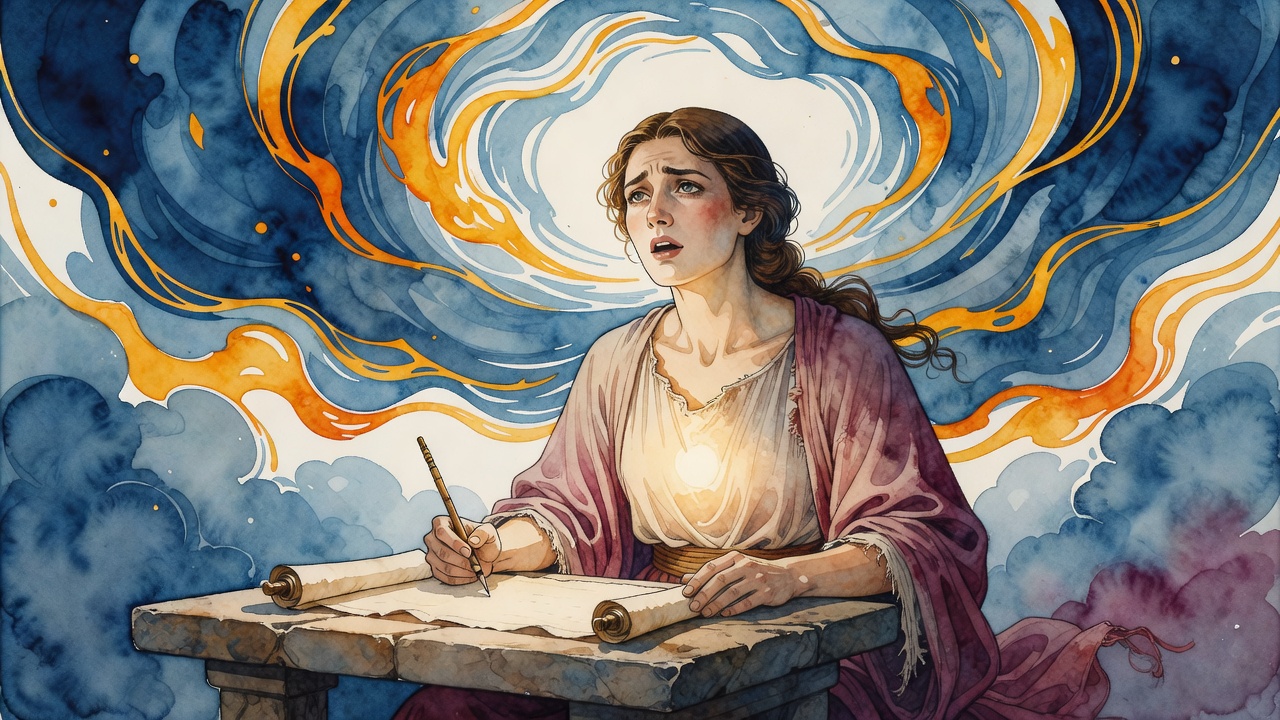
Late in his life, after the Assyrians took him captive to Babylon, Manasseh prayed and repented. God heard him and allowed him to return to Jerusalem, where he removed the foreign altars and repaired some of what he had broken. The tradition debates whether his repentance was genuine and whether a man of his record could earn it. He died in Jerusalem.

What the Carrying Forward

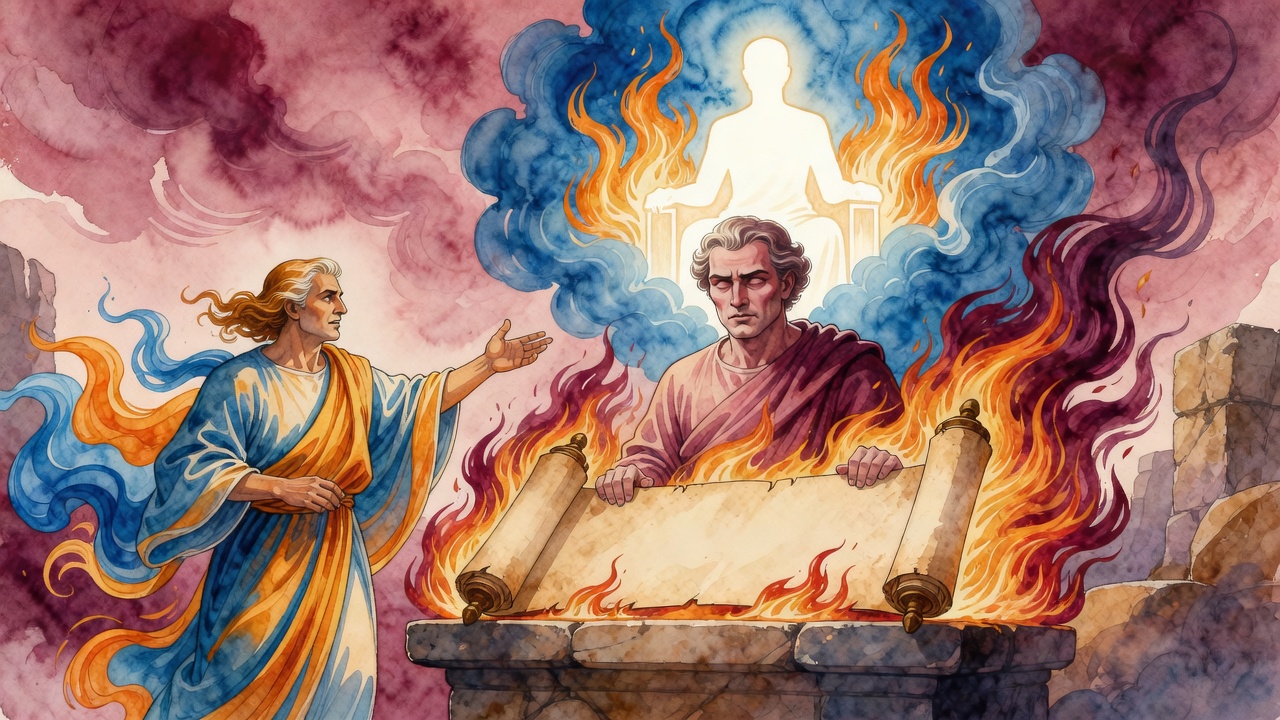
Hezekiah had rebuilt the entire apparatus of Torah observance in Judah from the ruins his father left. He had reopened every school, preserved every sacred text, mandated study across the entire kingdom. He had carried his sons to the house of study himself, personally, on his shoulders. He had done everything a righteous father could do.

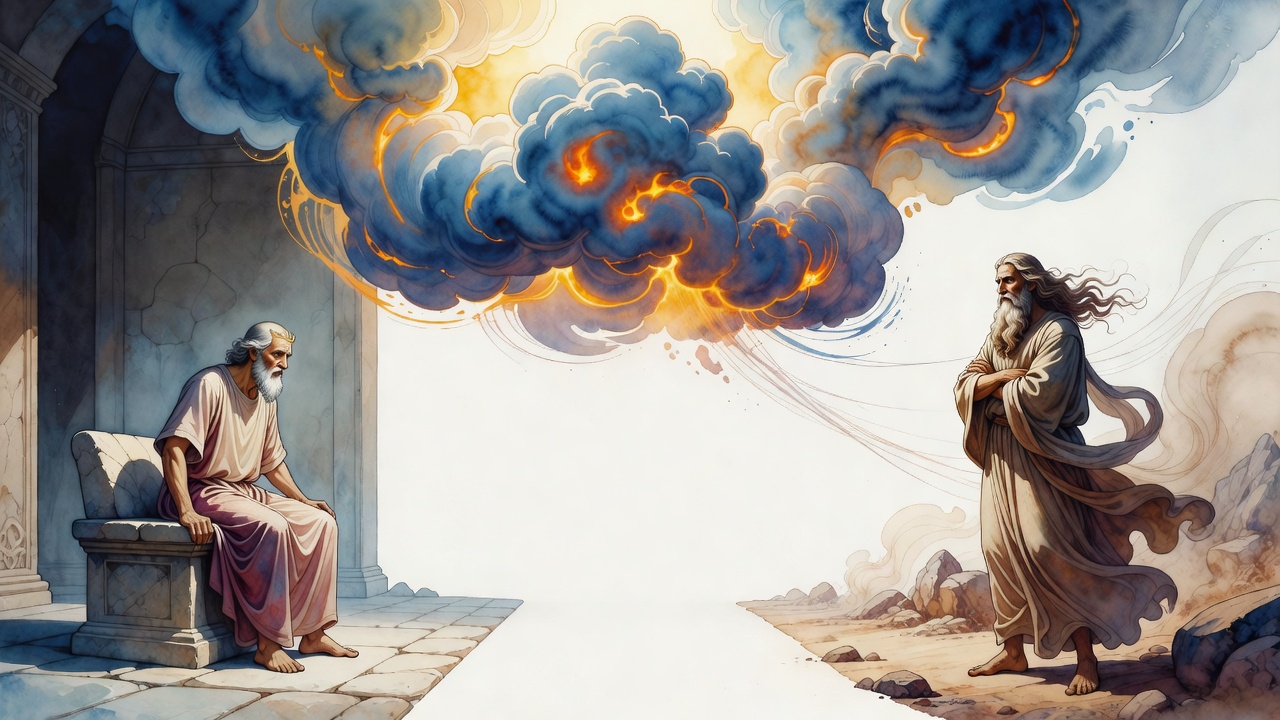
The prophecy he had tried to avoid by not marrying in the first place, the prophecy Isaiah had overruled by telling him his obligations were not negotiable, came true anyway. His son was what his son was going to be. What Hezekiah had built with decades of work, Manasseh had fifty-five years to take apart.


← All myths

From the tradition

Sources

2 sources

The texts this telling draws on, in full. Open a card to read inline, or expand it for a wider, quieter read.

Legends of the Jews 9:43Legends of the Jews

King Hezekiah knew the feeling. He finally listened to the prophet Isaiah and took a wife – Isaiah's daughter, no less! A match made in, if not heaven, then at least in spiritually-minded circles. But Hezekiah wasn’t exactly thrilled.

Why? Because he had a prophetic inkling – a bad feeling, really – that any sons he fathered would be, shall we say, less than ideal. In fact, he feared their wickedness would make death seem like a preferable option.

His two sons, Rabshakeh and Manasseh, were nothing like their pious parents. Ginzberg, in his Legends of the Jews, really paints a picture here.

There’s this story about Hezekiah carrying his two little cherubs on his shoulders, heading to the Bet ha-Midrash – the house of study. Adorable. Except… he overhears their conversation.

One says, "Our father's bald head might do for frying fish." Ouch. The other one-ups him: "It would do well for offering sacrifices to idols." Double ouch! You can almost hear the blood draining from Hezekiah's face.

Enraged – and who wouldn't be? – Hezekiah lets them slip from his shoulders. Rabshakeh, poor kid, dies from the fall. Manasseh, however, survives. And this is where the story takes an even darker turn.

According to the tale, it would have been better if Manasseh had joined his brother. Why? Because he went on to commit murder, embrace idolatry, and commit all sorts of other "abominable atrocities," as the story puts it. Manasseh's reign is described in 2 Kings 21, and let's just say it isn't a glowing review.

This little anecdote, though seemingly harsh, really highlights a recurring theme in Jewish tradition: the heavy burden of leadership and the constant struggle against evil, even within one’s own family. It’s a stark reminder that good intentions and even prophetic insights don’t guarantee a smooth path, especially when free will enters the equation. What do you think – did Hezekiah have any other options?

Full source
Shir HaShirim Rabbah 1:6Shir HaShirim Rabbah

A verse from Psalms (45:17): “Your sons will be in the stead of your fathers.” This seemingly simple statement kicks off a fascinating exploration of legacy and lineage, asking: What do we truly inherit? And how much of our parents' character shapes our own?

The Rabbis of the Midrash (rabbinic interpretive commentary) don't give us easy answers. They present a nuanced picture, suggesting that children can follow in their parents' footsteps – for good or ill – or they can deviate sharply. We see four possibilities laid out: a righteous person begetting a righteous person, a wicked person begetting a wicked person, a righteous person begetting a wicked person, and a wicked person begetting a righteous person. Each scenario, they say, is reflected in the Bible, in proverbs, and even in common sayings.

Take the case of a wicked person begetting a wicked person. The Midrash points to (Numbers 32:14): “Behold, you have risen in the stead of your fathers, a brood of sinful men.” Ouch. And the proverb cited is equally blunt: “As the ancient proverb says: From the wicked, wickedness will emerge" (I (Samuel 24:1)4). The commentary even throws in a colorful bit of common parlance: "What does the beetle bear? Ticks that are worse than it!" Pretty harsh. But it's not all doom and gloom. The Midrash also offers the hopeful image of a wicked person begetting a righteous one. For this, they turn to (Isaiah 55:13): “In the stead of a brier, a cypress will rise.” And the proverb? "From the thorn, a rose will emerge." Isn't that beautiful? It's a reminder that even in the most difficult circumstances, goodness can blossom.

Then, the Midrash pivots to King Solomon, the son of King David. Here’s where it gets really interesting. Solomon, a king, son of a king; a wise man, son of a wise man; a righteous man, son of a righteous man; a nobleman, son of a nobleman. The Rabbis meticulously draw parallels between David and Solomon. David reigned for forty years; so did Solomon. David reigned over Israel and Judah; so did Solomon. David laid the foundations of the Temple; Solomon built the superstructure.

The list goes on. Both wrote books, recited songs, spoke words of wisdom, and even… said vanities. Yes, both David and Solomon, despite their greatness, acknowledged the fleeting nature of worldly pleasures, as reflected in (Ecclesiastes 1:2): “Vanity of vanities, said Kohelet; vanity of vanities, everything is vanity.” The Midrash is keen to emphasize that both men, despite their flaws, were touched by the Divine.

The comparison is so thorough that Rabbi Simon, quoting Rabbi Yonatan of Bet Guvrin in the name of Rabbi Yehoshua ben Levi, makes a bold claim: since we equate them in so many ways, we should equate them in all aspects. Just as David was forgiven for his sins, as it is stated in II (Samuel 12:13) ("The Lord has also put away your sin; you shall not die"), so too was Solomon. The Shekhinah, the Divine Presence, rested upon Solomon, inspiring him to write Proverbs, Ecclesiastes, and Song of Songs.

So, what does all this tell us? Is destiny predetermined by our parents' actions? Is there a fixed pattern? Not necessarily. Instead, the Midrash seems to be highlighting the complex interplay of inheritance, free will, and Divine influence. We are shaped by our upbringing, but we also have the power to choose our own path. We can be “in the stead of our fathers,” or we can forge a new legacy.

Perhaps the real message is this: we are all part of a chain, a continuum of generations. We inherit the good and the bad, the triumphs and the failures. But what we do with that inheritance – that's up to us. And that, perhaps, is the most profound legacy of all.

Full source