A Butcher Shared Paradise With Rabbi Joshua Ben Levi
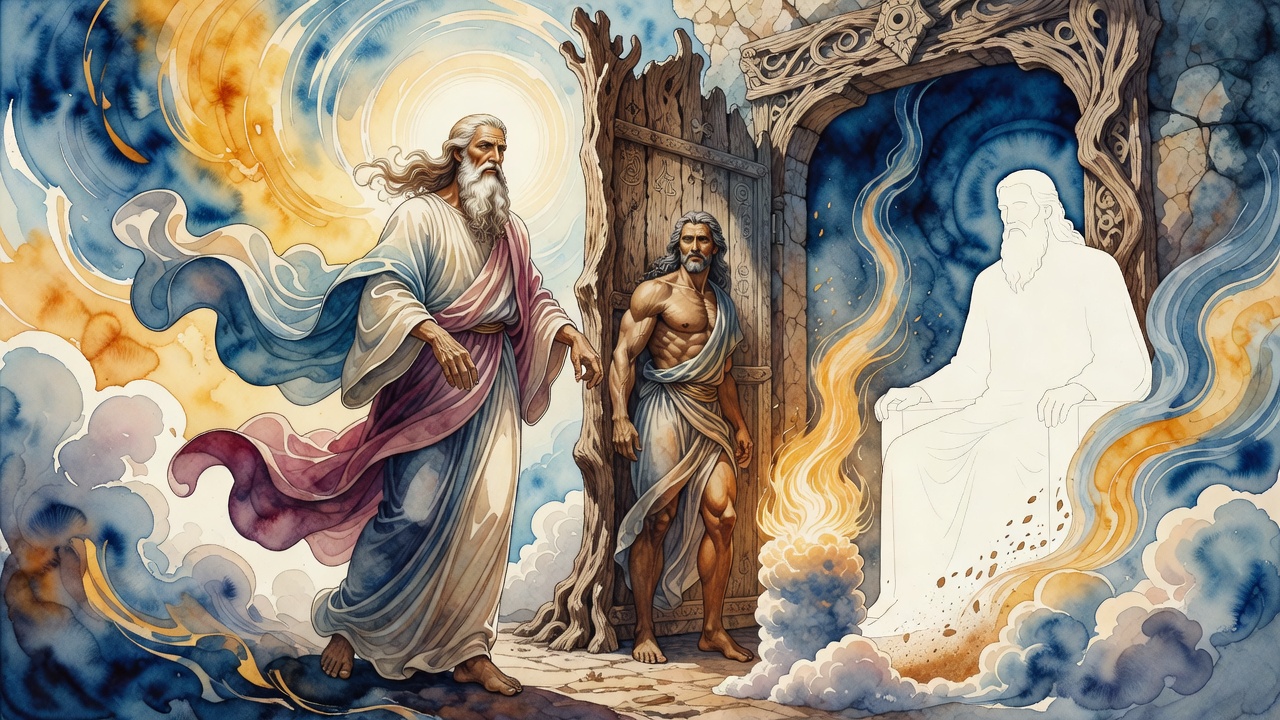
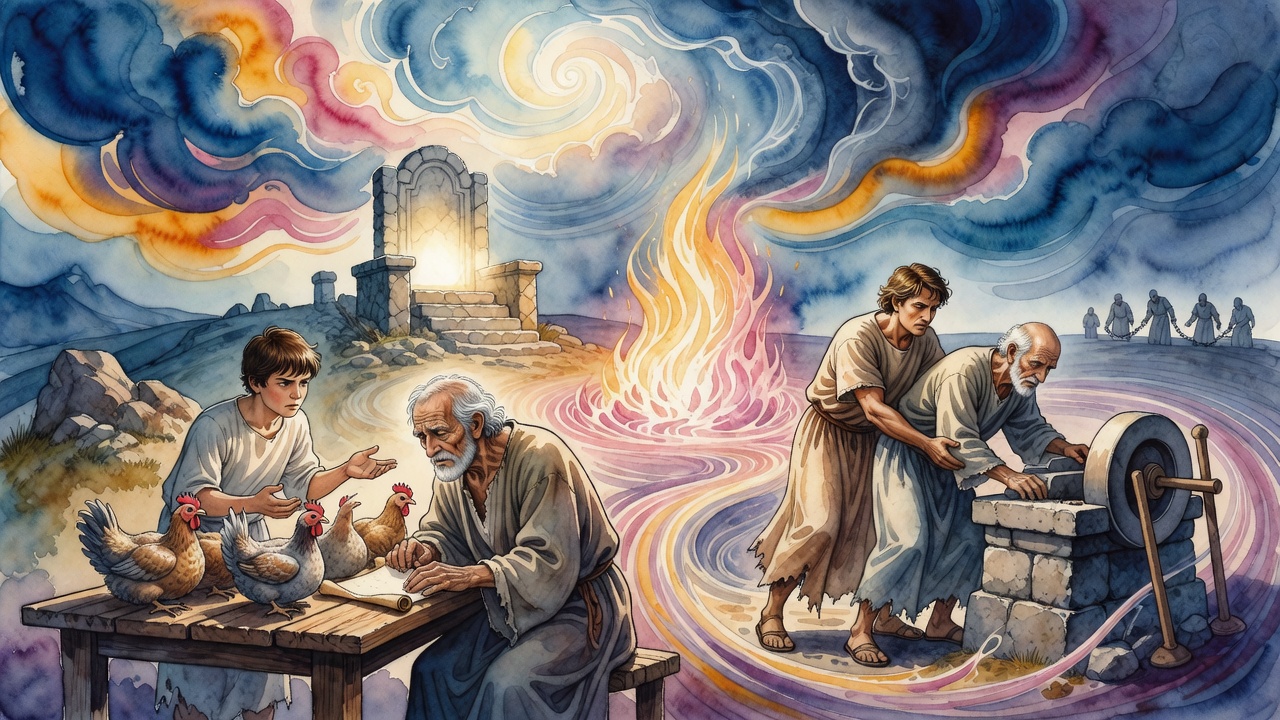
He washed his parents' faces before he opened the shop. Joshua ben Levi had asked Elijah for a name. The name was a butcher.
Table of Contents
"Who will sit beside me in the World to Come?" Rabbi Joshua ben Levi asked. He did not ask if he would get in. He asked for a name.
 Click for full size
Elijah did not give him a sage from the academy. He named a butcher in a certain town.
Joshua ben Levi closed his mouth and went. He was a sage of the third century who had spoken with Elijah before, and with the Angel of Death besides. He was not used to being sent to a shop.
Faces Washed Before the Shop Opened
He found the man at a block with a knife. Blood on the sleeves. Coins on the wood. Customers calling for shoulder and shank. Nothing around him glowed. No one in the street pointed and said, There goes a man of the World to Come.
Joshua ben Levi stood through a morning and an afternoon. He came back before dawn.
The butcher was not at the block. He was at home. He heated water. He bathed his father's face. He bathed his mother's face. He combed their hair, which had gone thin. He fed them with his own hands, slow, because their mouths no longer took a spoon the way they used to. He straightened the blanket. Then he wiped his hands, took his knife, and opened the shop.
He did it the next morning. And the morning after that. He did not look around to see if a rabbi stood in the doorway. Kibud av va-em (כיבוד אב ואם), honor of father and mother, was not a performance. It was the first work of the day, done in a room with no audience.
Joshua ben Levi went back to Elijah.
"I saw him," he said.
"Then you know," Elijah said.
Two Jesters at the Market Edge
Another day Elijah stood in a marketplace with Rabbi Beroka of Be Hozai and let the crowd pour past. Beroka asked the question Joshua had asked in different words. Is there anyone here for the World to Come?
Elijah looked at the stalls and the buyers and the men arguing over weights. He pointed at no one.
Then two men came in at the edge of the market, late, laughing at something that had happened on the road. Elijah pointed at them.
Beroka stopped them. He wanted a tractate, a fast, a hidden night of study. They told him they were jesters. When they saw a man sunk so deep in grief that his friends had stepped away, they went over and made him laugh. When they saw two people locked in a quarrel, they put a joke between them until the quarrel had nowhere to stand.
No academy. No title. Two men who walked into other people's worst hours and did not leave them there.
Elijah had pointed across a crowded market the way he had named a butcher.
The Cask in the Corner
In another town a woman had a name for piety. She came to every birth. She stood by the bed. She prayed aloud. The babies came slowly, and some did not come. People began to whisper, then to doubt their own whispering, because she was always there, always praying.
One day she left a boy alone in her house. He heard a noise from a cask in the corner. He lifted the lid. Inside were bundles of spells, each tied to a birth in the town. She had not been hurrying the deliveries. She had been holding them. Then she would go home, loosen a knot, and return as if her prayer had done the work.
They drove her out. The boy stood with the lid in his hands and the spells broken by the air.
Her piety had been a costume. The butcher's piety had been a basin of warm water at dawn, with no one to praise it.
Nanas Gave the Bride Away
A pious man dreamed that his companion in Paradise would be Nanas the butcher. He woke grieved. He went to see the man. People told him Nanas gave away half of what he owned. That was not enough for him. He pressed.
At last Nanas told him the thing he had not advertised. Years back he had ransomed a young girl carried off captive. She grew up in his house. He betrothed her to his own son. At the feast a young guest sat weeping and did not eat.
Nanas took him aside. The young man said the girl had been promised to him before the capture. Nanas walked back into the room and broke his son's match with his own mouth. He married the girl to the man who had been weeping. He loaded them with gifts and sent them home.
The pious man stopped being grieved.
Joshua ben Levi had wanted a name that matched his own rank. Heaven kept handing him tradesmen, jesters, and a butcher who could walk away from a wedding he had paid for. The knife stayed on the block. The faces got washed. The shop opened on time.
← All myths