The Cow Died, the Wall Was Rebuilt, and the Sage Demanded Why
A sage walks the road beside the disguised prophet and watches every verdict come out backward, until the hidden ledger is opened.
Table of Contents
The old man on the road did not look like a prophet. He looked like a traveler with dust on his sandals and nothing in his bag, and the sage who had begged to walk beside him had agreed to one hard condition. Whatever Elijah did, the sage was forbidden to ask why. The moment a question left his mouth, the walking would end.
 Click for full size
So the sage kept his mouth shut and his eyes open, and what his eyes reported made no sense at all.
The Poor House That Lost Its Cow
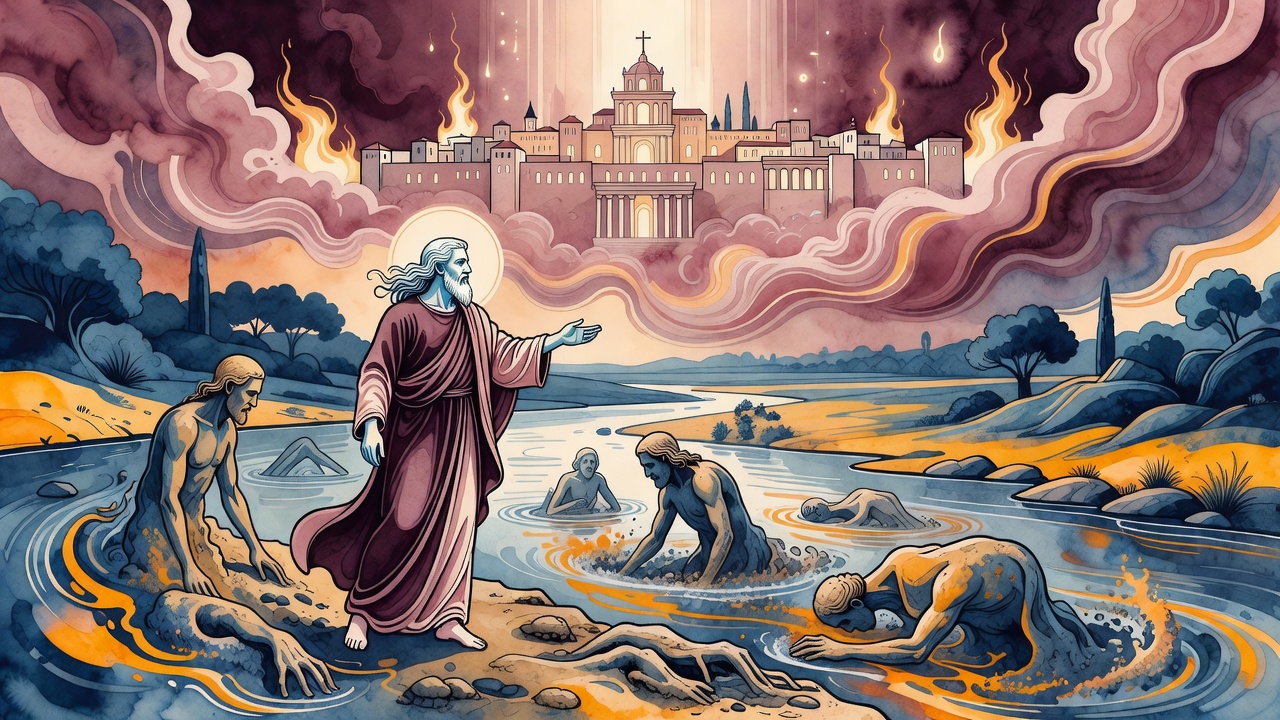
The first night, a poor couple took them in. There was almost nothing in the house, one room, one lamp, one cow tied in the yard, and the husband and wife gave it all. They spread their own bed for the strangers and slept on the floor. They poured out the last of the milk. They asked for no payment and offered no complaint, only warmth, as if feeding two beggars were a privilege.
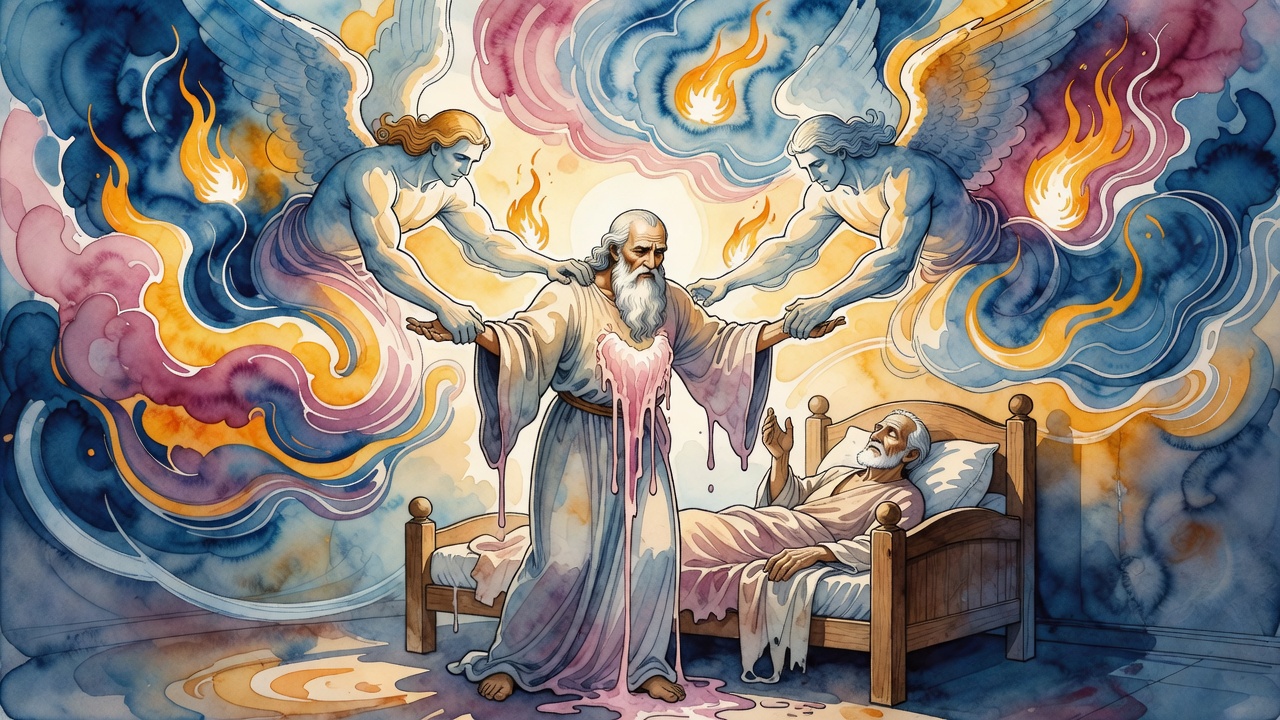
Before dawn Elijah rose, stood over the yard, and prayed. By the time the sun came up the cow lay dead in the dirt. It had died in the night without a sound. The couple wept over it. The animal had been their whole livelihood, the milk their only food, and the prophet they had sheltered had stood there and watched it die.
The sage bit down on the question burning in his throat and said nothing.
The Rich House That Got Its Wall
The next night they came to a great house, and the wealthy man inside looked them over like dirt tracked across his floor. He gave them no bed and no bread. He let them sleep against the cold outer wall of his courtyard and was glad to see them gone in the morning.
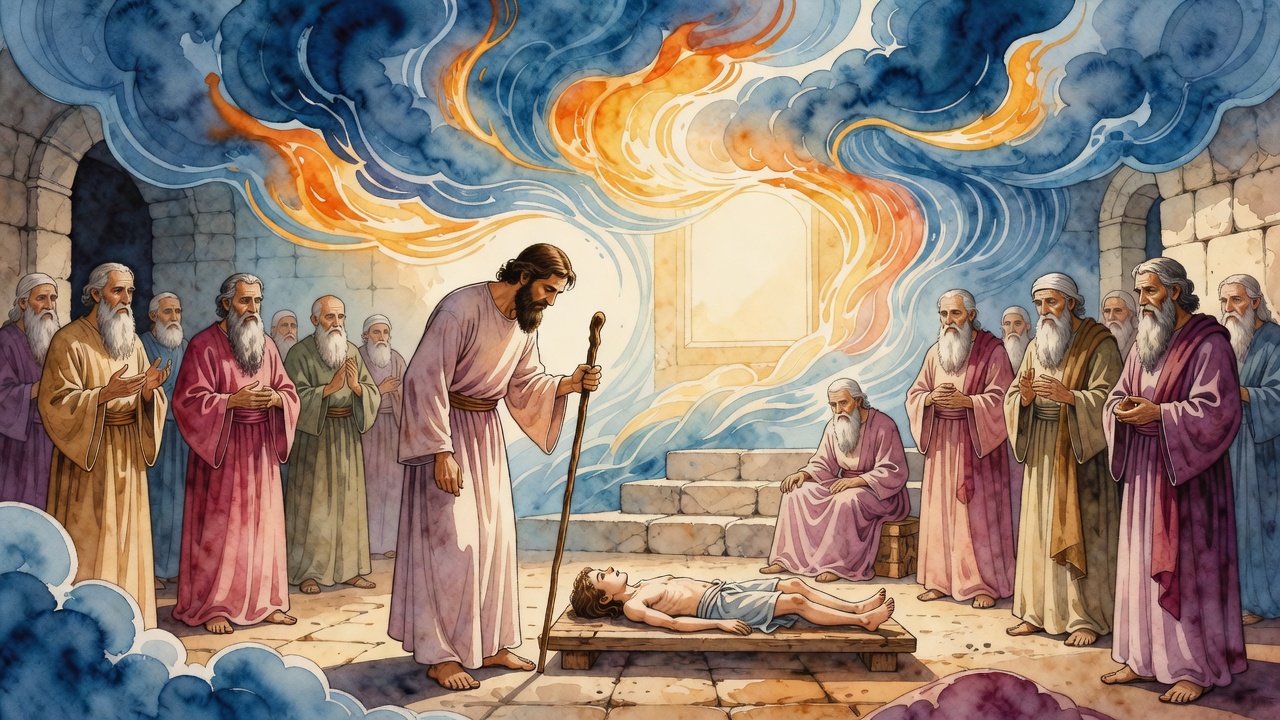
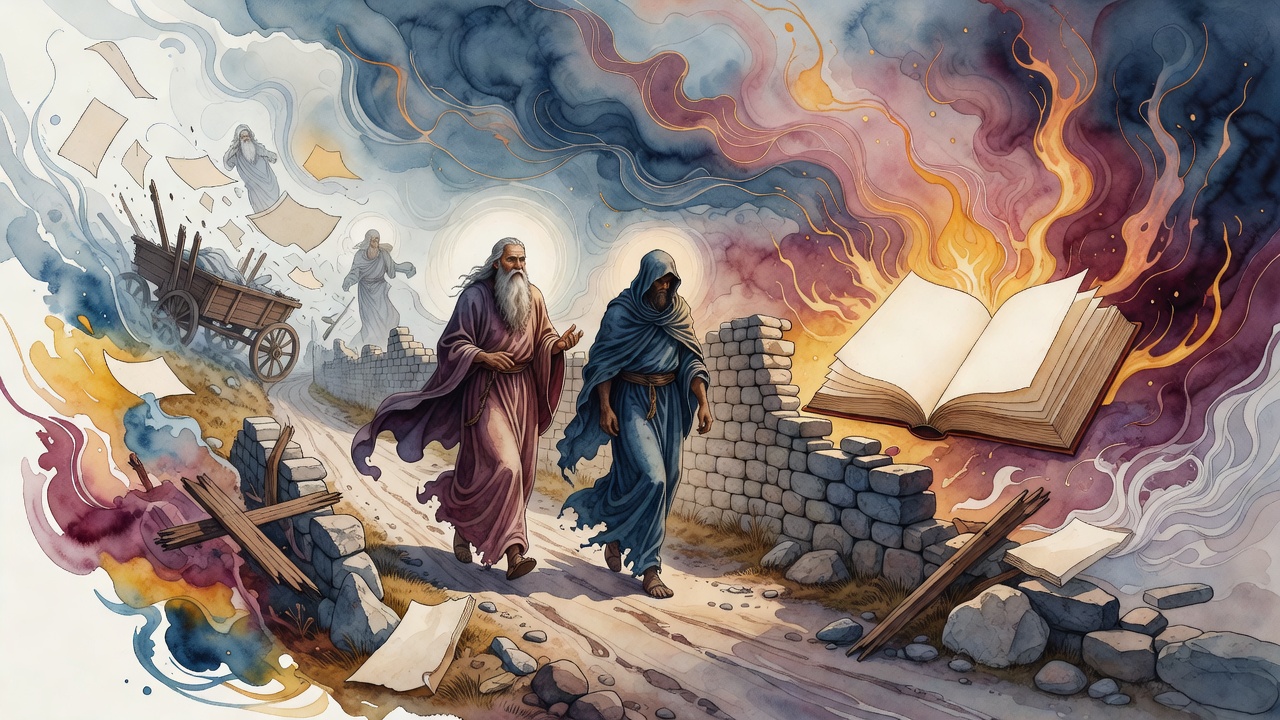
That wall was crumbling. A long crack ran down it, and one good rain would have brought it down. Elijah stopped in front of it. He laid his hands on the broken stones and the wall knit itself whole, straight and sound, a gift to a man who had refused them everything.
The sage's hands shook. He kept walking.
The Two Houses of Prayer
They came to a town where the assembly was proud and cold. No one rose to greet the travelers. No one offered a seat or a crust. When Elijah left, he turned back toward the doorway and said, "May God make every one of you a leader."
In the next town the house of prayer was poor and full of kindness. The people fed the strangers, argued over who would host them, walked them to the road. Elijah blessed them too. "May God raise up one leader among you," he said, "and only one."
That broke the sage. A blessing of many princes and a blessing of one, handed to the cruel and the kind, and he could not tell anymore which was the reward and which was the curse. He demanded an answer before he could stop himself.
"Your blessings and your curses look exactly the same."
The Ledger Opened on the Road
Elijah stopped walking. The condition was broken. There would be no more walking the road together. But before he left, he answered.
"Listen," he said, "and learn to trust in God even where you cannot understand His ways."
"The poor woman who fed us. It had been decreed in heaven that she would die that very day. I prayed that the cow be taken in her place. The trade was accepted. She is alive this morning in her husband's arms, and the price of her life was one cow."
"The rich man's wall. There is treasure buried under it, more than he could spend in ten lifetimes. Had it fallen, he would have dug a new foundation and struck it. I sealed the wall shut without ever breaking the ground, and now the gold lies under his feet where he will never find it. He keeps his stones and loses his fortune, and he earned that."
"The cold assembly I blessed with many leaders, because a town of many rulers tears itself to pieces. They will quarrel until nothing is left. The kind assembly I blessed with one, so that no rival could divide them and no quarrel could take root. One head, one peace."
The sage stood in the road with all of it rearranging itself behind his eyes. Every verdict he had cursed was mercy. Every gift he had envied was ruin. He had been staring at a row of shut doors and judging the houses by their paint.
"Do not envy the wicked when they prosper," Elijah told him. "Do not despair over the righteous when they suffer. You are seeing only the doors. You have never once seen the rooms behind them."
The Gates of the City That Will Not Burn
There is another walk the prophet took, with another sage, Rabbi Joshua ben Levi, the one rabbi the others envied because Elijah came to him as a companion.
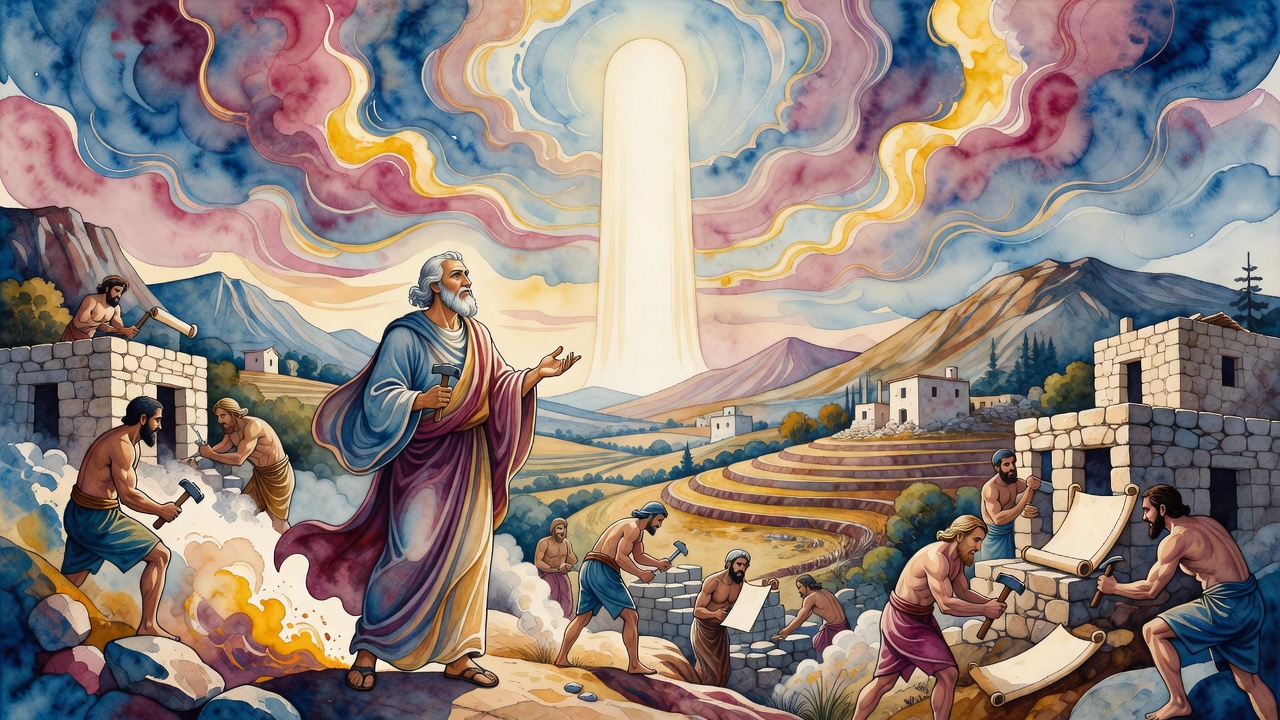
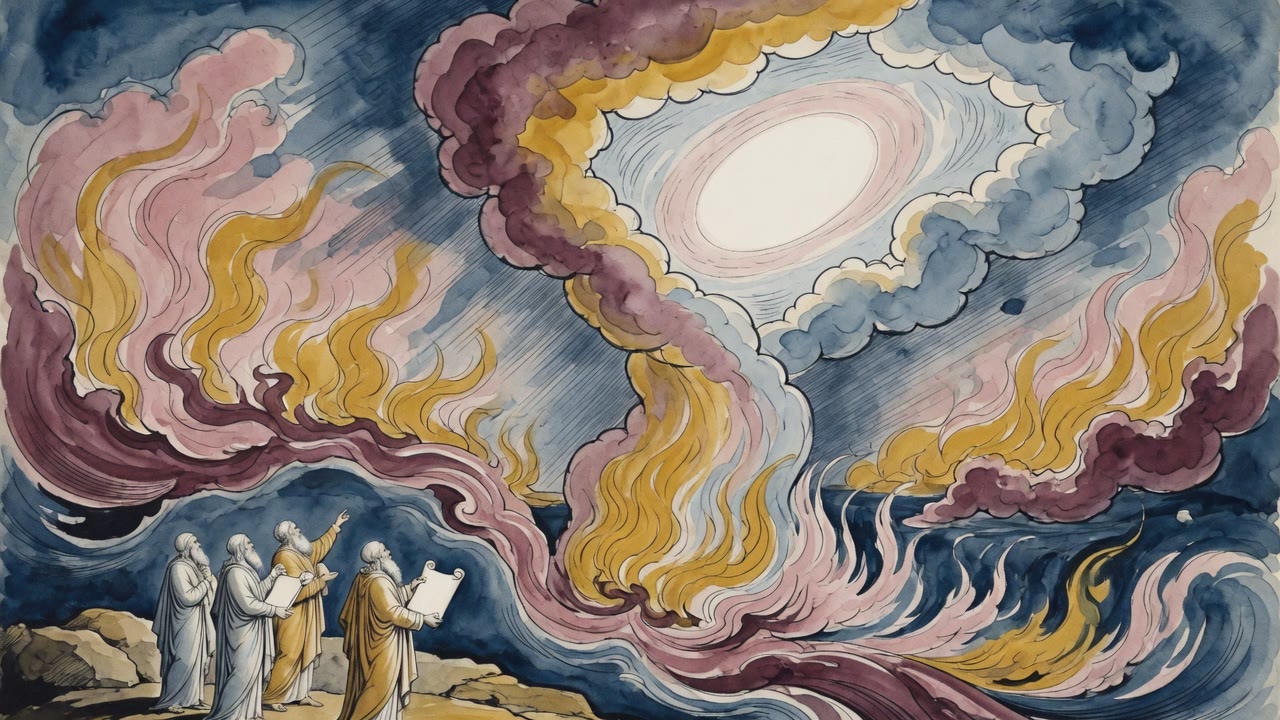
Elijah led him to the walls of Jerusalem and pointed upward. Not at the gates as they stood then, in the days after the legions came, scorched and battered and split by Roman siege. He pointed past those ruined gates to the gates that are coming, the gates of the city in the world to come.
They would not be cedar. They would not be bronze, or even gold. Each gate would be cut from a single carbuncle, one enormous gemstone hollowed into the shape of a doorway, a living ember of red light taller than a man. The prophet Isaiah had promised it, that the battlements would be rubies and the gates would be carbuncles and the whole border precious stone, and here was the promise standing in the air where the sage could look at it.
The future walls would not glow because someone lit torches on them. They would glow because they were fire made solid. No army could burn them. The flame was already inside the stone.
Rabbi Joshua stood at the foot of the present ruin and looked at the coming city, and understood what the first sage on the dusty road had been shown in a smaller key. The world is built with the same hand that handed down the cow and the wall. The doors that look like loss are the rooms where the treasure is kept. And the city that men keep burning down has already been rebuilt out of fire, waiting on the other side of a gate that cannot catch.
← All myths